Tag: Neutral

  • XRP Whale Inflows to Binance Surge to Seven-Month Peak

    XRP Whale Inflows to Binance Surge to Seven-Month Peak

    Whale Activity Surges as XRP Holders Deposit Billions to Binance

    XRP’s largest holders are once again moving significant amounts of the cryptocurrency onto exchanges. On-chain data from CryptoQuant reveals that 30-day inflows of XRP to Binance, the world’s largest cryptocurrency exchange by trading volume, reached 1.669 billion tokens by mid-October 2026. This figure represents the highest level seen in seven months and comes at a time when the token has experienced a volatile week, potentially unsettling traders.

    CryptoQuant’s analysis tracks the movement of XRP from large wallets to Binance. Over the past 30 days, this volume has climbed to approximately 1.669 billion XRP. This is not the first notable surge this autumn; in mid-September 2026, whale inflows to Binance had previously peaked at around 1.6 billion XRP, marking a six-month high at that time.

    The price action for XRP has been challenging in the interim. On October 15, 2026, XRP was trading around $1.31, a decline of approximately 5% over the preceding 24 hours.

    Interpreting Exchange Inflows

    The immediate interpretation of large volumes of coins moving onto an exchange is often bearish, suggesting potential sell-offs. However, this view may be incomplete. Such deposits can also indicate strategic moves by large holders, including wallet reallocations, liquidity management, the use of assets as collateral for derivatives positions, or other sophisticated trading strategies.

    What these inflows reliably signal is an increase in available liquidity on the exchange. A larger quantity of XRP held on Binance means a greater supply that could be deployed rapidly should market conditions shift, in either direction.

    ETF Demand as a Counterbalance

    Concurrently, while whales are depositing XRP onto Binance, U.S. spot XRP Exchange-Traded Funds (ETFs) have been consistently absorbing demand. These funds reported cumulative net inflows of $1.8 billion over 13 consecutive weeks, extending through mid-October 2026. This sustained period signifies more than three months without a single week of net outflows.

    On October 14, 2026, recent daily inflows into XRP ETFs amounted to approximately $740,000, a modest figure when compared to the overall cumulative total.

    Near-Term Outlook for XRP

    For traders, the immediate concern is whether the 1.669 billion XRP now deposited on exchanges will translate into sell-side pressure. The ETF channel serves as a significant counterweight. The thirteen consecutive weeks of net inflows, totaling $1.8 billion, demonstrate persistent demand that has provided support through turbulent market conditions.

    The daily ETF figures also warrant close observation. The roughly $740,000 recorded on October 14 is considerably lower than what the cumulative total might suggest on an average daily basis. A shift to net outflows from these ETFs would break a streak that has bolstered the bullish case for XRP.

    Furthermore, comparing the September and October inflow spikes is instructive. The September peak of nearly 1.6 billion XRP did not, in isolation, dictate the token’s subsequent direction, suggesting a need for caution before drawing definitive conclusions from the latest surge.


  • SEC Crypto: Coinbase, MARA Binary Options Explained

    SEC Crypto: Coinbase, MARA Binary Options Explained

    SEC Approves Binary Options Tied to Company Performance, Including Crypto Firms

    The U.S. Securities and Exchange Commission (SEC) has reportedly greenlit standardized binary options contracts that will pay a predetermined cash amount if a specific company performance condition is met. These conditions can be linked to metrics such as Coinbase’s trading volume and Marathon Digital Holdings’ (MARA) Bitcoin production.

    This development allows for regulated exposure to cryptocurrency market activity without the necessity of direct token ownership. However, it does not resolve the broader jurisdictional boundary between the SEC and the Commodity Futures Trading Commission (CFTC), nor does it authorize all products built around similar data.

    The reported approval comes as the Clarity Act, a proposed piece of legislation aimed at clarifying cryptocurrency regulation, remains stalled in the Senate. Consequently, the regulation of the crypto market is progressing through existing agency authority and decisions on a product-by-product basis. While related financial instruments have long offered exposure without direct asset holding—as seen with Exchange Traded Funds (ETFs) and total-return swaps—the legal structure of these instruments dictates which regulatory framework applies.

    In an October 13 statement, SEC Chairman Paul Atkins announced that the Commission had approved a rule change for securities exchanges that covers standardized options linked to key performance indicators (KPIs) reported by public companies. These contracts are described as European-style, meaning they can only be exercised at expiration, and they settle in cash. Their payout is contingent on whether a specified metric meets the condition outlined in the contract.

    The approved products are classified as National Market System securities and will be traded under existing rules for standardized options. These rules encompass aspects such as customer accounts, margin requirements, trading halts and auctions, order handling, and obligations for market makers regarding appointments and quoting.

    This regulatory framework is significant because the SEC’s decision is not a blanket authorization for binary wagers on corporate results. Chairman Atkins clarified that the order applies specifically to the approved exchange-traded contracts. Differently structured products, including those that might fall under the CFTC’s jurisdiction, remain outside the scope of this approval.

    This distinction aligns with a broader trend where crypto-linked products are assessed under existing securities laws rather than a comprehensive new legislative framework. The SEC’s approach to a proposed Lido-related ETF, for instance, also illustrates how product design and its classification under securities law can influence what issuers are permitted to offer.

    For Coinbase, the relevant indicators include trading volume, transaction revenue, total revenue, subscription and services revenue, and diluted net income per share. A contract’s outcome would depend on whether the company’s reported figure for a specific period meets the stipulated condition, rather than on the price movement of COIN shares or Bitcoin.

    In the case of Marathon Digital Holdings (MARA), the covered metric is Bitcoin production, linking the contract to the company’s mining output rather than the market price of BTC. The product concept has also been extended to include customer activity and revenue measures for Robinhood, broadening its application beyond crypto-native businesses.

    The distinction between company-reported data and asset prices is substantial. A contract based on Coinbase’s trading volume could settle in one direction even if the broader crypto market moves in the opposite direction. Similarly, a MARA production measure reflects the company’s operational performance rather than the value of its Bitcoin holdings.

    Recent company financial reports provide examples of the data that could be used, though they do not establish contract thresholds. For example, Coinbase reported second-quarter 2026 revenue of $1.22 billion, a 18.5% decrease year-over-year, and a net loss of $359.5 million. Marathon Digital Holdings produced 2,422 BTC in the same period, a 3% increase from the previous year.

    Jurisdictional Boundaries and Future Outlook

    The SEC’s recent action does not resolve how the same corporate data should be treated when incorporated into different legal structures. Chairman Atkins reiterated that the CFTC’s oversight of differently structured products remains in place, preserving a jurisdictional boundary that may hinge on whether a contract is structured as a securities option or another type of derivative.

    The two agencies have been actively examining this boundary. A joint SEC-CFTC consultation in June sought public feedback on swaps, security-based swaps, and related derivatives. According to reports, the CFTC also submitted two proposed rules concerning prediction markets for White House review on September 28.

    If these specific exchange-traded products proceed under the approved rules, traders could gain exposure to reported corporate performance without directly holding crypto assets. This is distinct from spot exposure, as payouts are tied to a defined company metric, and trading risk will be shaped by the contract’s terms, liquidity, and market pricing.

    With the Clarity Act still stalled, regulatory bodies will continue to shape the rules governing the crypto market through their existing authorities, consultations, rulemaking processes, and product-specific approvals, rather than through a new statutory framework. The reported approval establishes a narrowly defined route through securities exchanges, leaving the treatment of other KPI contracts and the broader SEC-CFTC division unresolved.

  • Evernorth’s $648M Strategy Fuels XRP Price Surge

    Evernorth’s $648M Strategy Fuels XRP Price Surge

    XRP Trades Near $1.30 as Inflation Fears Overshadow Institutional Treasury Plan

    XRP is currently trading around $1.30, marking a 6% decline over the past 24 hours. Traders are grappling with persistent U.S. inflation data while simultaneously assessing a significant institutional treasury initiative. Evernorth has appointed four execution partners to manage its substantial holdings of 473 million XRP, with deployment slated to commence in the fourth quarter of 2026. The question remains whether this announcement will influence the outlook for XRP’s price.

    Institutional Partnerships for XRP Holdings

    Ripple, Kraken, Coinbase, and BitGo have been selected to support Evernorth’s institutional strategies. The objective is to generate returns from the company’s XRP reserves, rather than allowing them to remain inactive. Evernorth, recently listed on Nasdaq under the ticker XRPN, stated that these partners bring essential infrastructure, licensing, and risk management expertise to the table.

    A tweet from @Ripple announced: “BREAKING: Evernorth begins deploying its $648 million, 473 million XRP treasury starting Q4, partnering with Ripple, Kraken, Coinbase and BitGo. @Ripple pic.twitter.com/g8m0FY7VEK”

    Macroeconomic Headwinds and XRP’s Price Action

    Despite the strategic treasury plan, the immediate concern for XRP appears to be macroeconomic factors rather than the 2026 deployment timeline. Stubbornly high inflation figures could temper expectations for interest rate cuts, thereby pressuring risk assets and complicating any bullish technical trends for XRP. The key question is whether the $1.30 level can hold as investors await further clarity.

    XRP’s price hovers near $1.30 after touching an intraday low of $1.28, with the daily trading range extending to $1.33. This intraday low places the $1.28 support zone under immediate pressure. A decisive breach of this level could lead to a decline towards $1.25, while a sustained recovery would likely require a move back above the $1.40–$1.42 resistance area. Analysts have previously identified $1.25 as a potential downside target if support falters.

    Treasury Management and Market Impact

    Evernorth’s valuation, the relatively thin float of its stock, and potential dilution concerns also warrant consideration. A large treasury does not automatically translate into immediate spot demand for XRP. For the time being, a patient approach appears to be the prevailing strategy.

    XRP’s near-term outlook remains under pressure, and Evernorth’s strategy is still months away from full implementation. This leaves traders with a familiar dilemma: await a confirmed support level and a volume-backed recovery, or consider allocating capital to other opportunities.

    The potential upside in an established asset may seem modest when facing overhead resistance. However, shifting focus to an early-stage token introduces significantly different risks, including uncertainties related to execution and liquidity.

    Maxi Doge Meme Token Emerges

    Separately, Maxi Doge ($MAXI), an Ethereum ERC-20 meme token, has garnered attention. Built around a canine persona and a high-leverage trading culture, its price is currently $0.0002844, with $4.8 million raised. The project also boasts a 60% APY staking reward, trading competitions exclusively for holders with leaderboard prizes, and a Maxi Fund treasury dedicated to liquidity and partnerships.

    Demand for meme tokens can surge rapidly. Investors are advised to research Maxi Doge thoroughly and assess its terms and risks before considering any investment.

    Discover: The Best Token Presales

  • Apple Intelligence Clears China Regulatory Hurdle

    Apple Intelligence Clears China Regulatory Hurdle

    Apple Intelligence Secures Chinese Regulatory Approval, Paving Way for Exclusive Foreign AI Service on iPhones

    Apple’s generative AI suite, Apple Intelligence, has received the necessary regulatory approvals in China, marking it as the sole foreign service of its kind permitted to operate on iPhones within the country.

    Regulatory Hurdles Cleared

    The initial approval was granted by the Cyberspace Administration of China, the nation’s internet regulator, on July 15, 2026. This clearance positioned Apple Intelligence alongside domestic competitors like Huawei and Xiaomi on the roster of AI services authorized for use on smartphones in China, with Apple being the only international entity in this group.

    A subsequent approval arrived on September 29, 2026, from the Ministry of Industry and Information Technology (MIIT). This endorsement updated network access permissions for forthcoming hardware, including the iPhone Duo and the iPhone 18 Pro. The MIIT’s decision also broadened network access to encompass Apple Intelligence in conjunction with Alibaba’s AI models.

    Phased Rollout and Key Partnerships

    Apple intends to introduce these features in December 2026 via iOS 27.3. However, the initial rollout will omit the new Siri AI assistant and certain creative tools developed by Apple.

    The generative text and image capabilities will be supplied by Alibaba, which will also manage the processing of cloud-based queries through its infrastructure. Baidu is slated to power the search functionalities within the AI suite.

    Market Performance and Strategic Implications

    The company recently reported a significant 24% year-on-year increase in iPhone shipments to China during the second quarter of 2026. This growth propelled Apple to the second position among smartphone vendors in the country, trailing only Huawei.

    The absence of the new Siri and some creative tools means Apple Intelligence in China will launch with features that Apple has highlighted as core to the user experience in other markets.

    The partnership with Alibaba is particularly noteworthy. With Alibaba’s models now integrated into the network access approval alongside Apple Intelligence, the Chinese tech giant secures a prominent role within one of the most popular premium smartphone lines in the country. For Baidu, powering search within Apple’s AI offering provides an additional avenue to engage with iPhone users.

    The MIIT’s updated permissions for the iPhone Duo and iPhone 18 Pro indicate Apple’s strategy to equip its next generation of devices with AI capabilities pre-installed upon shipping to China, rather than implementing them at a later stage.

  • VanEck Withdraws Proposed Lido Staked Ethereum ETF Registration Amid Regulatory Uncertainty

    VanEck Withdraws Proposed Lido Staked Ethereum ETF Registration Amid Regulatory Uncertainty

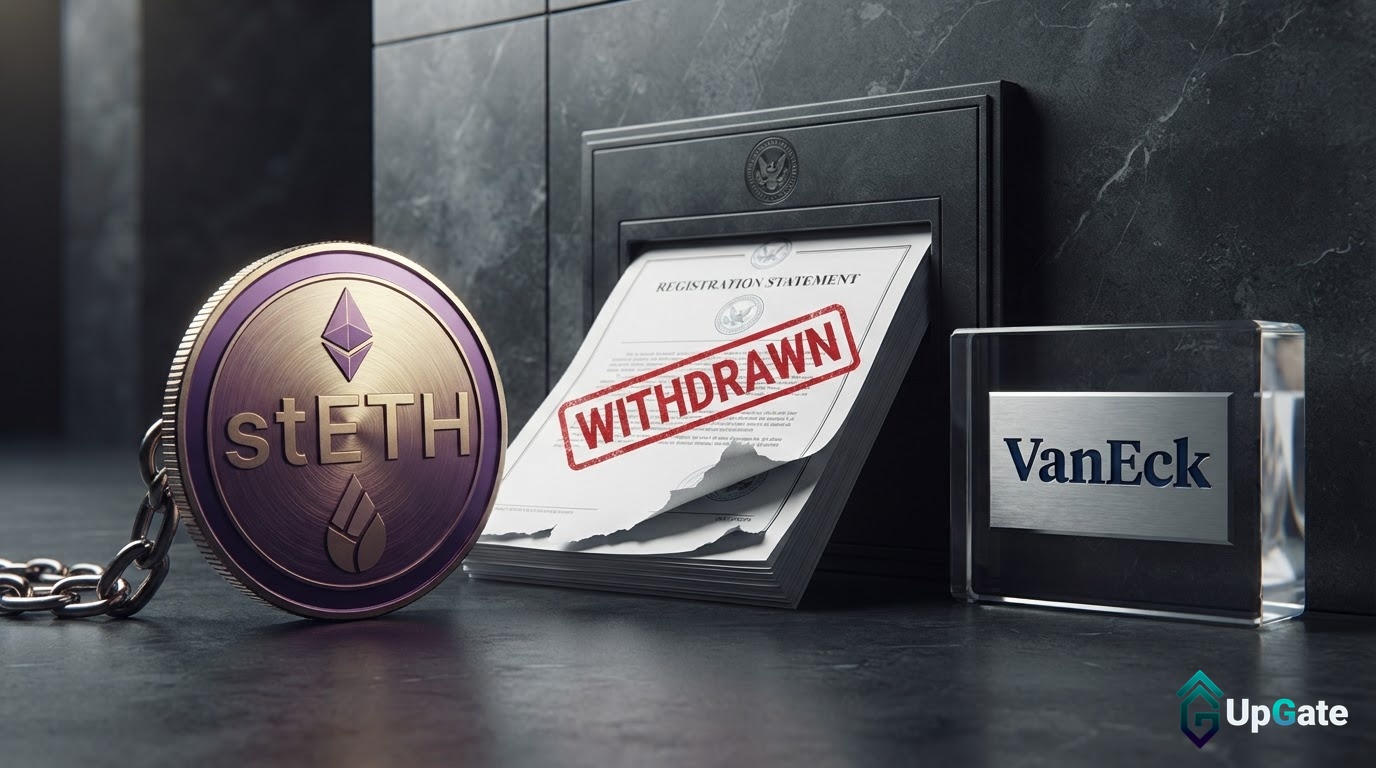
    VanEck has requested the withdrawal of its registration for a proposed Lido Staked Ethereum ETF, nearly a year after initially filing the application with the Securities and Exchange Commission (SEC). The asset manager stated it no longer intends to proceed with the fund. Crucially, no shares were ever issued or sold, meaning the withdrawal will not impact existing ETF holders or necessitate asset sales.

    The withdrawal, submitted last night UK time, concerns a planned product that would have offered investors exposure to staked Ether through a listed vehicle. The proposed ETF aimed to hold stETH, Lido’s liquid-staking token, and track its price while accruing staking rewards, utilizing a MarketVector benchmark. This structure differed from holding spot Ether directly, exposing investors to the specific market mechanics of stETH.

    Navigating Regulatory Ambiguity

    The decision to withdraw comes amidst a complex regulatory landscape for staked cryptocurrency assets. An SEC staff statement issued in August 2025 addressed certain liquid-staking arrangements, distinguishing between qualifying activities and those involving managerial or entrepreneurial efforts. However, this guidance was conditional and did not automatically provide a clear regulatory path for ETFs holding staking tokens.

    The prospectus for the VanEck ETF had identified several risks, including potential validator penalties, smart-contract vulnerabilities, liquidity constraints, and fluctuations in Ethereum’s market value. While Ethereum’s underlying network continues to evolve, network development alone does not resolve the regulatory or product risks outlined in the filing.

    Market Structure and Implications

    VanEck’s withdrawal highlights the product design challenges and regulatory ambiguities that remain for staked crypto products seeking institutional adoption. The Lido Ecosystem Foundation had previously welcomed VanEck’s application in October 2025, viewing it as a potential bridge between liquid staking and traditional investment markets. At that time, Lido reported that its users had earned over $2 billion in staking rewards since launch, with the protocol’s total value locked nearing $40 billion.

    This withdrawal does not affect any existing ETF holders, as the registration statement had not become effective and no securities were issued or sold. The SEC filing requests consent to make the withdrawal effective as of October 14 or at the earliest practicable date thereafter. VanEck has not indicated whether it plans to re-file or propose a different staking-linked ETF in the future.

    Why This Matters

    VanEck’s withdrawal of its proposed Lido Staked Ethereum ETF registration underscores the significant regulatory uncertainties and product development challenges inherent in bringing staked cryptocurrency assets to institutional investors. The SEC’s conditional guidance on liquid staking, coupled with the inherent risks detailed in the prospectus, suggests that a clear regulatory path for such products remains elusive. This event signals a cautious approach from major asset managers navigating the evolving landscape of digital asset investment vehicles.

    Broader Context

    VanEck Digital Assets asked the SEC last night, UK time, to withdraw the registration for its proposed Lido Staked Ethereum ETF, nearly a year after filing. The request concerns a planned route for brokerage investors to gain exposure to staked Ether through a listed product. The filing suggests the registration statement had not become effective, no securities had been or would be issued or sold under it, and no preliminary prospectus had been distributed. Those details matter for market structure: there are no ETF holders who need to redeem and no fund assets that must be sold to meet withdrawals. The SEC filing requests consent to make the withdrawal effective as of October 14 or at the earliest practicable date afterward.

  • White House Prioritizes Bitcoin Security Over New Purchases

    White House Prioritizes Bitcoin Security Over New Purchases

    The U.S. government is a significant Bitcoin holder, and before acquiring any more, it intends to ensure a precise accounting of its existing digital assets.

    Focus on Existing Holdings

    Patrick Witt, executive director of the President’s Council of Advisers on Digital Assets, stated on October 14, 2026, that the White House’s immediate priority is the safeguarding and accurate accounting of its current Bitcoin holdings. Any expansion of the Strategic Bitcoin Reserve would be a secondary consideration, if it occurs at all.

    Those anticipating immediate government purchases will need to remain patient. Witt indicated that no specific acquisition strategies have been finalized, nor are there any imminent policy changes or announced timelines for such actions.

    Scale of Government Holdings

    As of early October 2026, the government’s Bitcoin reserves were estimated to be between 319,000 and 328,000 BTC. At prevailing market prices of $82,000 to $83,000 per Bitcoin, this portfolio is valued at approximately $26 billion to $28 billion.

    Recent activity has seen these digital assets on the move. In early October, reports indicated the transfer of over $1 billion worth of Bitcoin, with substantial amounts directed to Coinbase Prime addresses. These movements suggest a consolidation of custody rather than an intent to liquidate, with the coins being secured in institutional-grade storage.

    The majority of the government’s Bitcoin holdings originated from forfeitures linked to cases such as the Silk Road marketplace and the Bitfinex hack.

    Strategic Bitcoin Reserve Established

    The Strategic Bitcoin Reserve was established by executive order on March 6, 2025. Its capitalization is exclusively derived from forfeited Bitcoin, meaning no taxpayer funds have been directly used to acquire these assets.

    This policy represents a departure from previous practices, where seized Bitcoin was typically auctioned off. The current strategy emphasizes strategic holding, with the deposited Bitcoin intended for retention rather than sale.

    Fiscal Constraints and Future Acquisition

    A key fiscal constraint is embedded within the plan: any future acquisition strategy must be budget-neutral, imposing no new costs on taxpayers. To date, no budget-neutral acquisition approach has progressed beyond the discussion phase, and no purchases have been made or detailed.

    Market Implications

    For market participants, the near-term outlook is straightforward: the government is neither actively buying nor selling, thereby removing a potential source of sudden supply or demand volatility. A holder of an estimated 319,000 to 328,000 BTC that commits to not selling effectively removes a significant potential overhang from the market.

    Conversely, the narrative of steady government demand as a future buying force is now deferred. Some market observers had viewed the reserve as a potential source of consistent demand, a scenario that Witt’s comments now push into an undefined future.

    Key Indicators to Monitor

    Several concrete developments warrant attention. Firstly, the administration’s potential publication of a formal accounting of its holdings would replace current estimates with official figures. Secondly, further on-chain movements from government addresses will be scrutinized; consolidation into custody aligns with the current narrative, while transfers to sale venues would contradict it. Thirdly, any tangible progress on a budget-neutral acquisition plan is crucial. Until such a plan advances beyond discussion, the Strategic Bitcoin Reserve will remain primarily a holding operation for seized assets rather than an active market participant.

  • Microsoft Copilot AI Forecasts Massive Chainlink (LINK) Surge

    Microsoft Copilot AI Forecasts Massive Chainlink (LINK) Surge

    Microsoft Copilot AI has generated a bold prediction for Chainlink (LINK), suggesting the cryptocurrency could reach between $200 and $350 by January 1, 2027. This forecast, however, hinges on a significant crypto bull market resurgence, potentially amplified by a major catalyst, which could even push LINK’s price beyond $500.

    Currently, LINK is trading in the $12.70–$13.05 range as of October 14, 2026.

    Speculative Bull Market Scenario

    The optimistic outlook anticipates a robust bull market emerging in late 2026. This surge would be fueled by the widespread adoption of Chainlink’s Cross-Chain Interoperability Protocol (CCIP) and its decentralized oracle network. The scenario envisions major asset managers and an international standards body designating these Chainlink services as the default for regulated tokenized funds and cross-border settlements.

    Under this speculative framework, staking LINK would become a critical component, driving substantial demand. Such a scenario could see LINK’s price ascend from its current approximately $12.80–$13.00 level to the predicted $200–$350 range, or even $500, by early 2027.

    This prediction relies on a confluence of institutional adoption and speculative interest. However, it remains a highly speculative scenario, requiring an unlikely level of coordination among various stakeholders.

    Technical Analysis and Price Targets

    On higher timeframes, LINK has been consolidating within the $12.50–$13.50 region, having pulled back from earlier peaks near $15–$16. The price is currently holding above key intermediate support levels and longer-term moving averages.

    In a typical bull market, a sustained break above the $15–$18 range would pave the way toward the previous all-time high of approximately $53. However, in the extraordinary scenario of adoption by standards bodies and asset managers, surpassing this prior high could trigger significant measured-move extensions and Fibonacci projections from its multi-year base. This could theoretically support a move into the $200–$350+ zone, contingent on a dramatic expansion in trading volume and institutional inflows.

    The Relative Strength Index (RSI) is currently neutral, indicating ample room for it to reach the extreme overbought levels often seen during parabolic price movements. Nearer-term support levels are identified in the $12.00–$12.50 and $11.00–$11.50 zones. Maintaining these levels would preserve the broader recovery structure, allowing the market to price in any significant narrative shifts.

    In summary, while current chart patterns suggest potential for continued upside in a standard bull market, achieving the multi-thousand-percent gains implied by the $200–$500 price targets would necessitate an exceptional surge in structural demand driven by regulated tokenized infrastructure.

    Broader Market Context

    Ethereum (ETH) is not experiencing a freefall, but consecutive outflows from exchange-traded funds (ETFs) and an uncertain macroeconomic outlook are putting pressure on the $2,500 support level. A failure to hold this support could lead to increased pressure on leveraged long positions. Conversely, positive inflation data (CPI) could boost risk appetite and potentially trigger a rebound.

    In this environment, a single large, unverified position should not be considered a substitute for broader market confirmation. Traders looking for diversification beyond single assets might consider exploring early-stage infrastructure projects.

    One such project is LiquidChain ($LIQUID), a Layer 3 infrastructure initiative on its own L3 network. LiquidChain aims to consolidate liquidity from Bitcoin, Ethereum, and Solana into a single execution environment. The project’s token is currently priced at $0.014965 and has raised over $984,000. It is offering a substantial 1100% Annual Percentage Yield (APY) reward, exclusively for presale buyers.

    Key features of the LiquidChain project include a Unified Liquidity Layer, Single-Step Execution, Verifiable Settlement, and a Deploy-Once Architecture. This design allows developers to deploy applications once and gain access to all three major ecosystems.

    Interested parties are advised to research LiquidChain before the presale window closes.

  • SEC Greenlights Cboe Prediction Market Options for Coinbase, Nvidia, Tesla

    SEC Greenlights Cboe Prediction Market Options for Coinbase, Nvidia, Tesla

    SEC Approves Novel Binary Options Tied to Company Performance Metrics

    The U.S. Securities and Exchange Commission (SEC) has greenlit a new class of financial products that allow investors to bet on specific company performance indicators, moving beyond traditional stock price speculation. Cboe Global Markets has received approval to list and trade binary options linked to key performance metrics reported by public companies, marking a significant development in the exchange-traded derivatives market.

    How the New Contracts Work

    These binary options function as straightforward “yes” or “no” propositions with financial stakes. Investors will wager on whether a company’s reported metric will meet or exceed a predetermined threshold. If the metric achieves the target, the contract pays out $1; if it falls short, it pays $0. The outcome is determined by the official figures disclosed by companies in their SEC filings.

    Initial Offerings and Participating Companies

    The initial rollout will feature over 100 metrics from 23 companies, including prominent names such as Coinbase, Nvidia, Tesla, and Apple. These metrics are distinct operational figures, such as Coinbase’s trading volume, Nvidia’s data-center revenue, and Tesla’s vehicle delivery numbers, rather than broader stock price movements.

    Retail Access and Fee Waivers

    Robinhood Markets is set to be the first retail broker to offer these new contracts to its clients. Both Cboe and Robinhood have announced plans to waive fees on these products until December 31, 2026, although this fee arrangement is subject to ongoing regulatory review.

    Trading Yet to Commence

    Despite the SEC’s approval, trading in these binary options has not yet begun. Cboe Clear U.S. is awaiting its temporary registration to handle the clearing of these contracts, meaning they are approved in principle but not yet live for trading.

    Investor Protections and Regulatory Distinction

    These new products will operate under existing securities-options investor protection frameworks. This distinguishes them from “event contracts” typically overseen by the Commodity Futures Trading Commission (CFTC), which generally governs similar derivative products.

    Market Reaction

    The market’s initial response was mixed. Cboe shares saw a gain of over 4% following the announcement, while Robinhood shares experienced a decline of nearly 9%.

    Crypto Market Implications

    The introduction of these contracts has a direct implication for the cryptocurrency sector. With Coinbase’s trading volume as one of the available metrics, a key indicator of crypto market activity can now be traded as a binary option. This provides traders with an avenue to speculate on specific exchange activity without the direct risk associated with holding Coinbase stock.

    Key Factors to Watch

    Several developments will be crucial moving forward. The securing of temporary registration by Cboe Clear U.S. is the immediate prerequisite for actual trading to commence. Additionally, the survival of the proposed fee waivers through regulatory review by the end of 2026 will be closely monitored.

  • Optimism Price Forecast: Will OP Fuel Ethereum’s Superchain Surge?

    Optimism Price Forecast: Will OP Fuel Ethereum’s Superchain Surge?

    Optimism’s OP Stack is enabling projects to construct bespoke blockchains leveraging shared technology and standards, a strategy that could significantly broaden the network’s influence beyond its native Layer 2.

    Superchain Ambitions and Ecosystem Growth

    The growth of Optimism’s “Superchain” concept, which envisions a network of interconnected blockchains built on common infrastructure rather than a singular Layer 2 solution, is central to its future prospects. This approach allows applications to operate with greater speed and lower costs compared to the Ethereum mainnet, while still settling transactions on Ethereum. The ecosystem is poised to accommodate a diverse range of applications, from decentralized finance (DeFi) and consumer-facing platforms to gaming and custom-built chains, according to recent analyses.

    The OP Stack: A Foundation for Custom Chains

    The OP Stack represents a more ambitious play than simply scaling Optimism’s own network. This technology empowers projects to launch their own independent blockchains, all while benefiting from shared infrastructure and standardized protocols. A successful expansion of this model could see Optimism gain from a flourishing, multi-chain ecosystem rather than being confined to the performance of a single network.

    Ethereum’s robust liquidity and active developer community present a significant opportunity for scaling solutions. However, a single blockchain architecture struggles to efficiently support the vast array of applications required at scale. Optimism’s Superchain vision aims to foster interconnected growth across multiple chains through unified technological foundations.

    Bullish Case and Potential Token Value

    The optimistic outlook for Optimism hinges on the potential for widespread adoption of the OP Stack. If a substantial number of prominent applications and corporations opt to build their Layer 2 networks using this framework, the OP Stack could emerge as a dominant standard for Ethereum scaling. This scenario could drive demand for the OP token, which has recently shown upward momentum and may target $0.25 or even $0.36 if demand continues to rise. Such a development would position Optimism at the forefront of a broader infrastructure trend.

    Risks and Challenges Ahead

    Despite the compelling technical narrative, adoption is not guaranteed, and the proliferation of new chains does not automatically translate into increased value for OP token holders. The competitive landscape for Ethereum scaling is fierce, with numerous projects vying for applications, developers, and liquidity. Optimism must offer more than just a sophisticated technical proposition to differentiate itself.

    A persistent challenge for the Superchain model is the question of how its expansion directly benefits the OP token. The success of the network and the performance of its native token are not always directly correlated.

    Measuring Progress Beyond Hype

    Ultimately, the trajectory of Optimism’s price prediction will likely depend less on speculative enthusiasm and more on tangible advancements. Key metrics to watch include Superchain activity, the rate of OP Stack adoption, the launch of new chains, stablecoin liquidity, decentralized exchange volume, developer growth, and the actual utility of the OP token. While the underlying infrastructure thesis is strong, the token must demonstrate its ability to capture value from the ecosystem it is designed to support.

  • Riot Platforms Shifts Bitcoin Custody to BitGo Bank & Trust

    Riot Platforms Shifts Bitcoin Custody to BitGo Bank & Trust

    Riot Platforms Shifts Digital Assets to BitGo in Custody Deal

    Riot Platforms has entered into a custody agreement with BitGo Bank & Trust, National Association, moving its digital assets from NYDIG Trust Company LLC to BitGo’s secure vaults.

    Custody Transition

    Under the new arrangement, Riot (NASDAQ: RIOT) will transfer its digital assets currently held by NYDIG Trust to BitGo, which will subsequently act as the custodian for these assets. The specific terms of the agreement, including the amount of Bitcoin being transferred and the effective date, have not been publicly disclosed by Riot.

    However, research suggests the custody transition is slated for September 2026. This timing aligns with another significant financial maneuver by Riot in the same month: the repayment of a $200 million Coinbase Credit facility. This repayment freed up Bitcoin collateral that had been held in custody with Coinbase.

    Regulatory Landscape and BitGo’s Expansion

    The move to BitGo comes as the company solidifies its position in the digital asset custody space. In December 2025, BitGo Bank & Trust received approval from the Office of the Comptroller of the Currency (OCC) to operate as a federally chartered national trust bank. This followed BitGo Holdings, Inc.’s acquisition of NYDIG’s institutional trading business in August 2026 for approximately $42.5 million.

    This acquisition is part of BitGo’s broader strategy to expand its trading, settlement, and custody services. Securing Riot as a custody client is seen as a significant step in this expansion. Riot had previously utilized NYDIG for segregated cold storage of its Bitcoin holdings since November 2023.

    Strategic Implications for Riot

    While Riot has not publicly detailed the reasons for switching custodians, the timeline indicates that NYDIG sold its institutional trading arm to BitGo just one month prior to the planned custody transition.

    For Riot shareholders, the primary concern is the security and accessibility of the company’s Bitcoin holdings. The shift from a state-chartered trust company to a federally chartered national trust bank is expected to enhance the regulatory standing of the entity holding the digital assets.

    This move aligns with a broader trend observed in the market, where institutional investors are increasingly favoring regulated bank custodians for their digital assets. Regulatory clarity has become a crucial factor for custody providers competing for major clients. BitGo’s acquisition of NYDIG’s trading business and the subsequent onboarding of a prominent client like Riot underscore the growing importance of scale and regulatory compliance in the digital asset custody market.

    With the $200 million Coinbase facility settled and its collateral released, Riot has reduced the amount of its Bitcoin tied up with lenders. Consolidating its custody with a single, regulated bank could streamline the company’s management and reporting of its digital asset holdings.

    Future Outlook

    Key developments to monitor include any forthcoming SEC filings that may detail the agreement’s terms, the final amount of Bitcoin transferred, and Riot’s strategy for utilizing its newly freed-up collateral, whether for new financing or to hold outright.