Tag: Neutral

  • Coinbase Anticipates Potential Weekend Service Disruptions

    Coinbase Anticipates Potential Weekend Service Disruptions

    Coinbase Warns of Possible Weekend Disruptions

    The leading U.S.-based cryptocurrency exchange has alerted its users to potential service disruptions this weekend. The company has been in the news recently following staff reductions and the implementation of various platform adjustments and other developments.

    System Upgrade Planned

    Coinbase has scheduled a system upgrade for Saturday, May 23rd, with an estimated duration of approximately 30 minutes. The company stated that trading will not be affected during this time, although order status updates across all markets may be delayed. Coinbase has pledged to provide updates as the maintenance progresses.

    These types of upgrades are considered standard practice and typically do not raise significant concerns. In October of last year, Coinbase experienced a temporary outage for a similar reason, with no major complications reported.

    Previous Disruptions

    Earlier this month, some Coinbase users encountered difficulties completing transactions, while others experienced slower service speeds due to an overheating issue with Amazon Web Services (AWS). The exchange quickly identified the problem and worked to restore trading across its markets.

    Some users noted on social media that the outage occurred shortly after Coinbase announced a 14% reduction in its global workforce. CEO Brian Armstrong cited ongoing market volatility and the rapid advancement of Artificial Intelligence (AI) as the primary reasons for the decision.

    Recent Developments

    In addition to these developments, Coinbase recently made headlines after becoming the official treasury deployer of USDC under Hyperliquid’s Aligned Quote Asset (AQA) framework. In this role, the exchange will manage USDC liquidity directly for the protocol, supporting its on-chain financial operations. This collaboration also positions Coinbase as a key player in the expanding decentralized derivatives ecosystem.

    Hyperliquid revealed that both Coinbase and Circle have agreed to stake HYPE tokens to support the activation of AQAv2, the next upgrade to the Aligned Quote Asset (AQA) on the decentralized exchange.

    Coinbase has also delisted several trading pairs. Last week, it removed six non-USD trading pairs, including ICP/USDT and ICP/GBP. This was followed by a 10% price decline for Internet Computer, dropping to just under $3. The asset has since failed to recover, and is currently trading near $2.50.
  • Crypto Compliance Project Completes First Trade After Nearly 10 Years

    Crypto Compliance Project Completes First Trade After Nearly 10 Years

    Prometheum Executes First Crypto Trades Amid Shifting Regulatory Landscape

    After years of industry skepticism and navigating a changing regulatory environment, Prometheum has launched its first cryptocurrency trades, aiming to prove its critics wrong by integrating digital assets with traditional investments under a single regulatory framework.

    The company, which has raised nearly $100 million since its founding almost a decade ago, began offering access to crypto trading last week. While the service currently focuses on Ethereum, founder and co-CEO Aaron Kaplan said the firm plans to introduce additional digital assets soon.

    “We’ve just kept our heads down and kept moving forward,” Kaplan told Decrypt. “Our goal is to be able to service the broker-dealer and [Registered Investment Advisor] channels and the major asset issuers, and I think that there’s a lot of comfort.”

    Industry Indifference

    This development comes as the broader market focuses elsewhere. While investors have embraced vehicles like spot Bitcoin ETFs following their debut in 2024, Prometheum’s long-awaited milestone has largely gone unnoticed by the wider crypto sector.

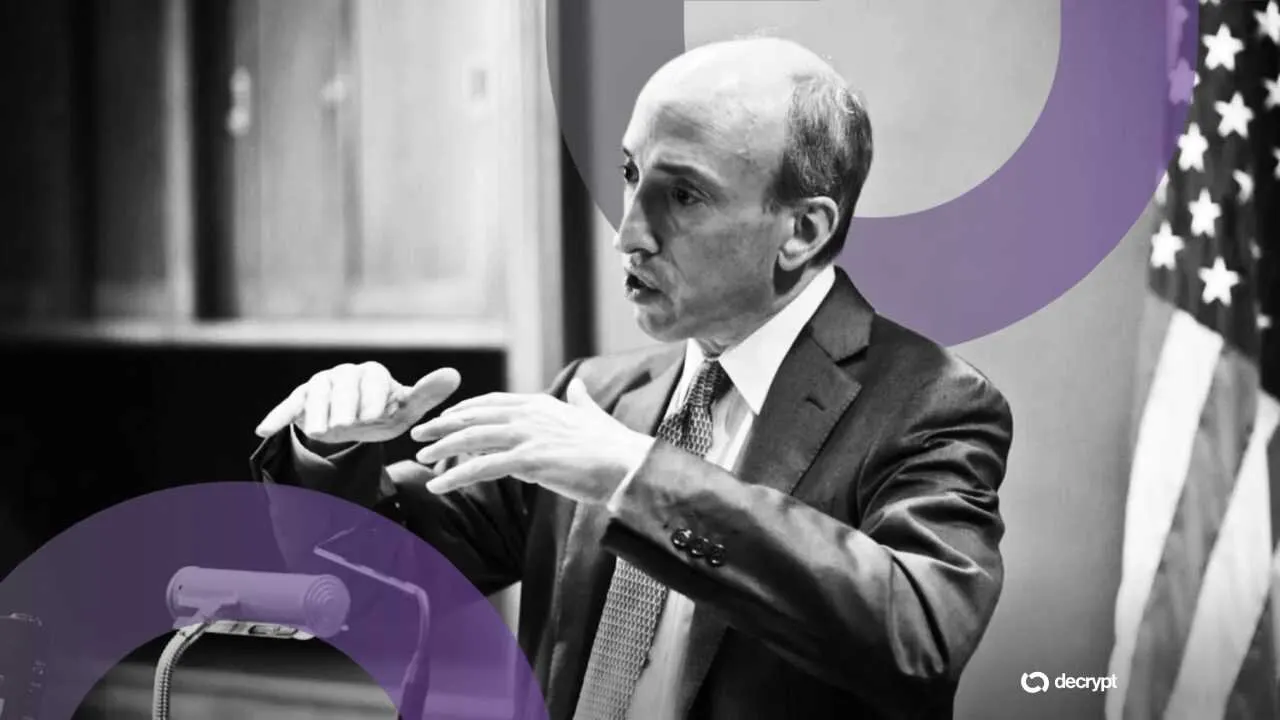
    This indifference stems from a contentious history. In 2023, Kaplan faced criticism for testifying before U.S. lawmakers that the SEC had established a clear path for compliance, effectively validating the enforcement tactics of then-SEC Chair Gary Gensler. While major players like Coinbase challenged the regulator in court, Prometheum pursued a business model that treated digital assets like Ethereum as securities.

    At the time, observers criticized Prometheum’s lack of trading volume, comparing the firm’s cautious approach to a “bicycle with no wheels” or a “vending machine with no snacks.”

    New Opportunities

    Now, however, the company is moving forward, and Kaplan believes Prometheum is well-positioned to capitalize on the tokenization of U.S. capital markets. With the launch of its corresponding clearing system, he argues that broker-dealers can now offer clients direct access to crypto alongside traditional assets, avoiding the management fees and “layer of abstraction” associated with ETFs.

    “This is good for crypto,” Kaplan said. “This is bringing in hundreds of millions of accounts that now all of a sudden could invest in crypto.”

    Regulatory Shift

    However, Prometheum’s launch occurs in a significantly altered landscape. The strict regulatory environment it was built to satisfy has changed. Following Gary Gensler’s departure from the SEC, the agency’s lawsuit against Coinbase was officially dropped and dismissed, along with most of the regulator’s other crypto-related lawsuits and investigations.

    Before executing its first transaction, Prometheum spent years building its custody infrastructure and securing regulatory approvals. In 2023, the firm became the first to receive a license from the SEC and FINRA to operate as a special purpose broker-dealer, allowing Prometheum to legally safeguard digital asset securities under federal law.

    Adding to the challenge, the exclusive regulatory advantage Prometheum spent years preparing for may no longer be necessary.

    Revised guidance released by the SEC last year indicated that the regulator’s specialized framework is optional. According to an analysis by the global law firm Winston & Strawn LLP, traditional broker-dealers can now custody digital asset securities under standard customer protection rules, without needing the license Prometheum obtained.

  • Minnesota’s Prediction Market Ban Promptly Sued by Trump Administration

    Minnesota’s Prediction Market Ban Promptly Sued by Trump Administration

    This week, Minnesota became the first state to ban prediction markets, a move swiftly challenged by the Commodity Futures Trading Commission (CFTC) and the Department of Justice (DOJ), who filed a lawsuit alleging the ban was illegal.

    This rapid sequence of events represents the latest escalation in a jurisdictional battle between states and the Trump administration concerning the future of prediction market platforms like Kalshi and Polymarket.

    State-Level Challenges

    Numerous states, representing a range of political affiliations, have sued prediction market platforms for failing to comply with state gambling laws. These states argue that wagers on prediction markets, including those related to sports, politics, and entertainment, constitute illegal, unlicensed gambling.

    Federal Jurisdiction Asserted

    Conversely, prediction market platforms maintain they are exempt from state-level regulation, asserting that their wagers, structured as event contracts, fall under the exclusive federal jurisdiction of the CFTC. The Trump administration has strongly supported this view, countersuing several states this year over the issue.

    The ultimate resolution of this conflict is likely to rest with the U.S. Supreme Court.

    Minnesota’s Ban and Federal Response

    On Monday, Minnesota enacted a law prohibiting prediction market platforms. Governor Tim Walz signed a bill making it a felony to create, operate, manage, or advertise such platforms within the state.

    Hours later, the CFTC and the DOJ filed a lawsuit, alleging that Minnesota’s ban violated federal law and infringed upon the regulator’s jurisdiction.

    The complaint stated that if Minnesota’s law is enforced, “the exchanges that offer these longstanding contracts—as well as those who partner with them—can be prosecuted as felons.” It further argued that this action constituted “a flagrant and unprecedented incursion into the Commission’s exclusive regulatory sphere” and requested a preliminary and permanent injunction.

    In a statement, CFTC Chair Mike Selig accused Walz of prioritizing “special interests” over “American farmers and innovators” by signing the ban into law. Selig highlighted the reliance of farmers, a significant constituency in Minnesota, on event contracts to mitigate weather and crop-related risks.

    However, farmers have long utilized CFTC-regulated futures contracts without drawing the attention of state gambling regulators.

    The controversy has emerged in the last 18 months with the introduction of new prediction market platforms offering bets on a wider range of subjects, including sports, military conflicts, the existence of aliens, and celebrity social media activity. These new offerings have drawn the ire of state regulators.

  • Google Launches Gemini Omni: New AI Builds Realistic Videos

    Google Launches Gemini Omni: New AI Builds Realistic Videos

    Google unveiled Gemini Omni on Tuesday, a new multimodal AI model integrating its Gemini AI models with its media-generation tools, including Veo, Nano Banana, and Genie.

    Model Capabilities

    The announcement was made during Google I/O 2026, where DeepMind CEO Demis Hassabis described Gemini Omni as a model capable of creating content from any input. “It combines Gemini’s intelligence with the best of our generative media models for a new level of world understanding, multimodality, and editing,” Hassabis stated.

    Google announced that the initial release, Gemini Omni Flash, will be launched through Flow, the company’s AI filmmaking platform, and Flow Music, which focuses on AI-assisted music creation.

    Advancing AI

    Hassabis called Omni a “step towards artificial general intelligence,” explaining that Google has spent the past year expanding Gemini into “a world model AI that can understand and simulate the world.”

    Google’s Omni rollout builds on the success of Nano Banana, the company’s earlier AI image-editing model. Nano Banana helped propel Gemini to the top of Apple’s App Store last September and became widely used for meme generation and conversational image editing. This briefly allowed Gemini to surpass ChatGPT in app downloads and Google search interest for the first time since OpenAI’s chatbot launched in 2022.

    In a comparison earlier this month, Nano Banana 2 outperformed OpenAI’s GPT Image 2 in anime illustration and spatial composition tests, while OpenAI’s model performed better with photorealism and text rendering. Google now appears to be extending many of those editing features into video through Gemini Omni.

    Demonstration and Features

    During the presentation, Google demonstrated Omni generating a claymation-style educational video explaining protein folding. The company also showcased conversational editing tools that modified a selfie video by adding new visual elements and changing the surrounding environment.

    Google says Omni can maintain consistent characters, backgrounds, and movement even after users make changes to a video, a challenge for many AI video models. The company also stated that Omni utilizes Gemini’s reasoning abilities to understand broader instructions, allowing users to describe desired scenes without manually detailing every aspect.

    The company also introduced Flow Agent, an AI assistant integrated into Google Flow that can brainstorm scenes, organize assets, recommend plot changes, and batch-edit projects. Additional updates include Flow Tools, which allows users to create custom editing workflows using natural-language prompts without coding experience.

    Hassabis said Google is starting with video generation but plans to expand access to Omni, describing it as the long-term vision behind Gemini’s multimodal design. “This was always our goal with Gemini, and why we built it to be multimodal from the very start,” he said.

  • XRP Plunges as Derivatives Traders Bail

    XRP Plunges as Derivatives Traders Bail

    XRP is trading below $1.40 as market selling pressure and uncertainty compress the price into a range, offering little clarity on future movements. While the decline is concerning, a CryptoQuant report analyzing on-chain activity and derivatives behavior identifies a structural condition beneath the price action, reframing the current weakness.

    Data Analysis

    The report examines two independent data streams, both pointing to the same conclusion. On-chain, XRP’s total daily transaction count has decreased by 20% compared to three months ago, settling at approximately 1.78 million daily transactions. This indicates a meaningful cooling of network activity, a measure of real, organic utility flowing through the XRP ledger.

    Derivatives markets show equally subdued activity. Funding rates on Binance have fallen into negative territory at -0.003, reflecting a mild bearish sentiment among perpetual traders. More notably, total liquidations have plummeted by 99%, dropping to just a few thousand dollars daily from previous levels in the millions.

    The simultaneous retreat of on-chain utility and derivatives activity to near-silence has a specific meaning in market structure analysis. The CryptoQuant report’s interpretation of what this historically precedes is the most important takeaway.

    The Volatility Vacuum

    The CryptoQuant report connects the two data streams into a single structural diagnosis. The simultaneous decline in on-chain transaction counts and negative funding rates describes a dormant market. Organic network utility is cooling, and perpetual traders are leaning mildly bearish, paying a small premium to maintain short positions against an asset that is not moving significantly in either direction.

    The leverage data reveals the report’s most significant finding. The Estimated Leverage Ratio on Binance is at 0.173, significantly suppressed compared to its six-month peak of 0.260. This suppression is not a warning sign. Instead, it changes the interpretation of the negative funding. When funding turns negative alongside high leverage, it signals aggressive, over-leveraged shorting, creating fragile market conditions. However, when funding turns negative alongside a low leverage ratio, it indicates that the market has simply run out of speculative fuel in both directions.

    The 99% collapse in liquidations confirms this reading. There is no crowded short position waiting to be squeezed, nor is there an overcrowded long position waiting to be unwound. The speculative excess has been completely flushed from the system.

    The CryptoQuant report identifies this condition as a Volatility Vacuum. This state of absolute structural exhaustion combines the absence of leverage, aggressive directional positioning, and on-chain activity to create the environment that historically precedes major volatility events. The market is not broken; it is resetting, coiling, and awaiting a catalyst—macroeconomic, regulatory, or fundamental—to ignite the next directional move from a base with nothing left to liquidate in either direction.

    XRP’s Consolidation

    XRP is trading near $1.37 after weeks of sideways consolidation, with the price continuing to compress below major long-term resistance levels. The daily chart reflects a market that has largely lost directional momentum following the sharp February selloff, entering a low-volatility structure defined by reduced participation from both spot and derivatives traders.

    After collapsing toward the $1.15 region during the February selloff, XRP stabilized and formed a prolonged range between roughly $1.30 and $1.50. Since then, every recovery attempt has failed to generate meaningful continuation. The price has repeatedly rejected near the descending 100-day moving average. Meanwhile, the 200-day moving average remains significantly higher near the $1.70 region, reinforcing the broader bearish structure still dominating the market.

    Volume has also declined steadily throughout the consolidation phase, confirming the absence of aggressive buyers or sellers. This aligns with the collapse in derivatives liquidations and the heavily suppressed leverage environment currently visible across XRP markets. The chart now reflects a structurally exhausted market rather than an actively trending one.

    Importantly, XRP continues to hold above the $1.30 support zone, which has acted as the foundation of the current range since March. A decisive breakdown below this region could trigger another wave of weakness. Conversely, reclaiming the $1.45-$1.50 resistance area would likely be needed to revive bullish momentum and break the current volatility compression phase.

  • Cardano’s Quantum-Safe Plan Fails to Lift ADA

    Cardano’s Quantum-Safe Plan Fails to Lift ADA

    Cardano’s Price Stagnation Amidst Quantum Security Push

    Cardano’s native token, ADA, is currently trading near $0.25, confined within a narrow intraday range of $0.25 to $0.28. Despite neutral funding rates and whale accumulation at a 30-day low, the cryptocurrency is undertaking an aggressive push towards post-quantum cryptography. This includes a live governance vote, an imminent formal research proposal, and a roadmap positioning it ahead of Ethereum in terms of quantum readiness.

    This juxtaposition presents a challenge for the market, which has yet to reflect these technical advancements in ADA’s price. The market appears to be grappling with whether crypto security infrastructure holds any near-term pricing power, or if ADA is simply trapped within a broader altcoin liquidity drought.

    Quantum Readiness Strategy

    Charles Hoskinson, the founder of Cardano, has framed the platform’s quantum resistance strategy as a proactive measure, not a reactive response. He described the quantum threat as a “slow-moving but terminal risk” that decentralized networks must address before it triggers a market shock.

    A formal research proposal from IOHK is expected next week, building upon the ongoing governance vote. The technical architecture under consideration involves a phased migration model. Hoskinson highlighted Cardano’s established hard fork cadence as a structural advantage, enabling regular protocol upgrades without fragmentation.

    Technical Developments and Market Performance

    The planned approach involves layering post-quantum cryptographic signatures alongside existing ones, ensuring compatibility while enhancing security. Google Quantum AI reportedly ranked Cardano second among major blockchains for post-quantum security posture, behind Bitcoin and ahead of Ethereum and Solana. This ranking contributed to ADA’s inclusion in the Hashdex Nasdaq Crypto Index ETF, despite its price underperformance.

    Cardano also demonstrates high development activity, with approximately 680 GitHub commits per week across roughly 80 repositories. However, the market has not yet assigned a premium to this activity.

    Broader Industry Context

    Cardano is not alone in its pursuit of quantum resistance. Ripple has outlined a four-phase roadmap for the XRP Ledger, targeting quantum resistance by 2028. Bitcoin developers have proposed migration frameworks, including BIP-360 and BIP-361. Cardano’s governance-first approach to this migration distinguishes it from these proposals, but the market has not yet valued this distinction.

    ADA is currently trading approximately 80% below its all-time high of $3.10 and is down roughly 49% year-to-date. The $0.25–$0.28 range has served as a soft floor throughout much of Q1 and Q2 2024, while the 200-day moving average sits near $0.46.

    Market Outlook

    Resistance at $0.28 capped the intraday high this week, while support near $0.258 held the low. Funding rates have normalized to neutral. Traders are using ADA as a volatility vehicle, which suppresses the impact of any fundamental catalyst, including the quantum security roadmap.

    If ADA breaks $0.28 on volume following the release of the formal IOHK quantum research proposal and Protocol 11 hard fork confirmation, a retest of $0.34–$0.36 could be targeted. The catalyst for such a move would be an institutional re-rating of crypto security infrastructure.

    Conversely, a break below $0.258 support on sustained risk-off conditions could lead to a retest of $0.22–$0.24. Invalidation of the current range would erase the modest recovery from Q1 lows and delay any narrative re-rating.

  • SEC Changes Stance on Tokenized Stocks, Fuels Excitement

    SEC Changes Stance on Tokenized Stocks, Fuels Excitement

    SEC Reverses Course on Tokenized Stocks

    The Securities and Exchange Commission (SEC) is reportedly shifting its stance, potentially allowing third-party platforms to tokenize stocks without requiring issuer consent, according to a Bloomberg Law report published on Monday.

    This represents a significant departure from the agency’s January 28 guidance, which distinguished between issuer-approved tokenization and third-party products, cautioning that the latter often provided synthetic exposure rather than genuine equity ownership.

    If formalized, this shift would introduce a new model for tokenized equities. Under the January framework, only companies that integrated blockchain into their official shareholder records, such as DTCC’s planned July launch, could offer legitimate tokenized stock exposure. Third-party platforms like Kraken’s xStocks, Robinhood’s Arbitrum-based tokenized equities, and OKX’s private company perps were operating in a legal gray area. The new approach, as reported by Bloomberg Law, would allow these platforms to operate without waiting for issuer participation.

    This development could significantly impact the tokenized securities market, which has grown 200% year-over-year to $30 billion. DTCC, BlackRock, JPMorgan, and Franklin Templeton have all filed or launched tokenized products in the past month.

    Hyperliquid is likely to benefit the most, at least in the short term, and the market responded by sending it to $48 and a new local high.

    Strategy Buys $2 Billion in Bitcoin, Bitcoin Goes Lower

    Strategy purchased 24,869 BTC between May 11 and May 17 for approximately $2.01 billion at an average price of $80,985 per coin. The purchase was primarily funded by $1.949 billion in STRC preferred stock issuances and $83.7 million in MSTR common shares.

    Despite the significant investment, the price of Bitcoin did not increase. In fact, Bitcoin traded approximately 5% lower on Monday compared to last week’s average. Spot Bitcoin ETFs also experienced outflows, with approximately $1 billion in net outflows last week, marking the worst weekly ETF bleed of 2026. IBIT, FBTC, and GBTC all posted outflows as US 30-year Treasury yields crossed 5% and CME FedWatch began pricing 44% odds of a rate hike at a 2026 FOMC meeting.

    With STRC now trading below par and Saylor likely having limited funds for the next few weeks, Bitcoin will need to find support elsewhere.

    Iran Launches Bitcoin Maritime Insurance

    Iran has launched a state-backed maritime insurance platform called “Hormuz Safe,” enabling sanctioned shippers to pay premiums in Bitcoin for instant coverage on Hormuz transit.

    The platform bypasses SWIFT and traditional banking, activating coverage upon Bitcoin confirmation and processing claims on-chain. Iranian officials project over $10 billion in annual revenue if the service captures a significant market share of the 20% of global seaborne crude that transits the strait.

    Iran is building infrastructure that institutionalizes Bitcoin as its primary financial workaround, providing a revenue model independent of Hormuz’s reopening. Each Hormuz Safe policy purchased results in a Bitcoin transaction flowing to the Iranian state, potentially exposing the buyer to OFAC liability regardless of whether the premium reaches its intended destination. The risks may outweigh the rewards, at least for now.

    Nine Polymarket Accounts Won $2.4 Million on Iran, With a 98% Win Rate

    A cluster of nine interlinked Polymarket accounts netted $2.4 million by betting almost exclusively on US military actions in Iran, according to a Bubblemaps investigation first shared with 60 Minutes.

    The anonymous accounts were created days before the initial US bombardment of Iran in late February. Across more than 80 bets, they won 98% of the time, including accurately predicting the timing of the first US strikes, the ousting of Supreme Leader Khamenei, and the announcement of a ceasefire.

    Bubblemaps CEO Nicolas Vaiman commented, “This might be the most insane pattern we have found on Polymarket so far. Luck alone cannot explain those numbers.”

    The accounts lost money on only a few occasions, always small amounts, in the hundreds of dollars, which Bubblemaps suggests were intentional losses to mislead investigators. Winnings were ultimately routed to Bybit, Binance, and HTX, though the accounts cannot be publicly traced to specific individuals.

    Inside trading on prediction markets was initially touted as a feature, not a bug. That theory is being tested.

  • XRP Price Poised for Breakout Amid Regulatory and Tech Advancements

    XRP Price Poised for Breakout Amid Regulatory and Tech Advancements

    XRP is trading in a narrow price range around $1.38, demonstrating resilience by absorbing selling pressure without significant price declines. This comes despite Goldman Sachs’ recent exit.

    Macro Catalysts

    Two significant macro factors are currently influencing XRP’s price. The first is the timeline of the CLARITY Act within the Senate Banking Committee. The second is a potential weekly Ichimoku cloud breakout.

    Technical Analysis

    Technical indicators suggest market indecision. The Relative Strength Index (RSI) is at 50, the Moving Average Convergence Divergence (MACD) histogram is flat, and open interest has decreased to $430 million. While whales hold 75% long positions, smart money appears to be reducing exposure. The buy/sell ratio of 0.87 further indicates market tension.

    XRP is currently trading near $1.38, close to the upper Bollinger Band, which could signal a sharp price movement. The 20-day Exponential Moving Average (EMA) is at $1.41. A 24-hour price range of $1.37–$1.39 is projected.

    Resistance and Support Levels

    Immediate resistance is at $1.40, with $1.51 being a critical level that has been rejected three times. Breaking above $1.51 could open the path to $1.65 in the medium term. Support levels are at $1.35 and $1.32, the latter being a crucial level for bulls to maintain.

    CLARITY Act Impact

    If the CLARITY Act progresses through the committee before the end of the month, it could trigger a weekly close above $1.50. However, net-sell taker flow currently dominates, and the decline in open interest, coupled with the price retesting $1.38, weakens the near-term breakout scenario.

    The CLARITY Act’s Senate markup deadline is a key event for XRP. Institutional interest, potentially through ETF structures, could further drive demand, but institutions often await regulatory clarity before making significant investments.

    Market Dynamics

    XRP, with its established market capitalization and risk profile, requires substantial market cap growth to generate significant returns. This contrasts with early-stage infrastructure projects.

    LiquidChain

    LiquidChain ($LIQUID) is a Layer 3 infrastructure protocol that integrates Bitcoin, Ethereum, and Solana liquidity into a single execution environment.

    Its Unified Liquidity Layer enables single-step cross-chain execution with verifiable settlement, eliminating bridging friction and fragmented capital pools. Developers can deploy once and access all three ecosystems simultaneously.

    The presale is priced at $0.01461, with over $770,000 raised to date. LiquidChain offers a 1,400% APY bonus for early buyers.

    For traders monitoring XRP’s consolidation and seeking asymmetric upside potential, researching LiquidChain is recommended.

  • Iran Introduces Crypto Insurance for Ships in Strait of Hormuz

    Iran Introduces Crypto Insurance for Ships in Strait of Hormuz

    Nearly 20% of the world’s oil supply transits the Strait of Hormuz. Iran is now seeking to profit from this vital waterway, not through military means, but via Bitcoin.

    A Geographically-Focused Platform

    On May 16, 2024, Iran’s Ministry of Economy launched Hormuz Safe, a maritime insurance platform enabling cargo operators to pay with Bitcoin and other cryptocurrencies instead of relying on traditional banking systems. Upon successful on-chain payment, cargo receives immediate insurance coverage and a digitally signed receipt. The platform targets ships traversing the Persian Gulf and the Strait of Hormuz, a critical global shipping route. Iranian media outlets have suggested the platform could generate over $10 billion annually, although no official figures have been released to substantiate this claim.

    Bypassing the Dollar

    For years, Western sanctions have restricted Iran’s access to the global banking system, limiting its use of tools like SWIFT and dollar-denominated transactions. Hormuz Safe aligns with Iran’s broader strategy of utilizing cryptocurrency as a workaround. Reports indicate the country has been exploring Bitcoin, stablecoins, and blockchain technologies to facilitate trade despite these restrictions. The platform aims to capitalize on existing traffic through the Strait of Hormuz, rather than resorting to threats to disrupt the shipping lane during periods of heightened tension.

    Early Stage, Significant Concerns

    Despite the attention surrounding its launch, Hormuz Safe remains in its nascent stages. Reports indicate the platform currently has only a basic online presence, and crucial legal and technical details remain unresolved. The primary concern for potential customers is the risk of sanctions exposure. U.S. regulators have a history of pursuing companies that engage in business with Iranian state-linked entities. Any shipping operator utilizing the platform could face secondary sanctions or compliance issues in their home countries. Furthermore, insurance certificates issued through an Iranian crypto platform may not be recognized by ports and regulatory bodies in other nations. Hormuz Safe is an early-stage initiative that has garnered more attention than actual business activity. Nevertheless, it reflects a growing trend: cryptocurrency is increasingly becoming a tool for nations seeking alternatives to financial systems that have historically been used against them.

  • AI Fails to Replace On-Call Engineers: The Reasons

    AI Fails to Replace On-Call Engineers: The Reasons

    AI Falls Short in Replacing Human Site Reliability Engineers

    Artificial intelligence companies are increasingly promoting autonomous site reliability engineer (SRE) agents – AI designed to investigate production incidents in place of human engineers. However, a recent benchmark conducted by Datadog reveals that current AI models are not yet capable of outperforming the engineers they are intended to replace.

    The benchmark, known as ARFBench (Anomaly Reasoning Framework Benchmark), was developed jointly by Datadog and Carnegie Mellon University. It is based on 63 real production incidents, drawing data from engineers’ Slack threads during live emergencies. The benchmark comprises 750 multiple-choice questions covering 142 monitoring metrics and 5.38 million data points, with each question verified manually. The data used is entirely real-world, avoiding synthetic data or textbook scenarios.

    Researchers note that system outages result in trillions of dollars in losses annually, and the benchmark aims to assess whether AI can effectively mitigate these losses.

    The study’s authors highlight the uncertainty surrounding the ability of modern foundation models to reliably answer the time series questions that engineers routinely face during incident response.

    The questions in ARFBench are categorized into three tiers. Tier I assesses the existence of an anomaly in a chart. Tier II focuses on identifying the start time, severity, and type of the anomaly. Tier III, the most challenging, requires cross-metric reasoning to determine if one chart is causing a problem in another. It is in Tier III that AI models struggle. For example, GPT-5 achieved only a 47.5% F1 score on Tier III questions, a metric that penalizes models for selecting the most common answer.

    GPT-5 led the existing models with an accuracy of 62.7%, compared to a 24.5% success rate for random guessing. Gemini 3 Pro scored 58.1%, Claude Opus 4.6 scored 54.8%, and Claude Sonnet 4.5 scored 47.2%.

    In contrast, domain experts achieved 72.7% accuracy, while non-domain experts – time series researchers at Datadog without extensive observability experience – scored 69.7%.

    No AI model surpassed either human baseline.

    The top-performing model overall was Datadog’s hybrid approach, Toto-1.0-QA-Experimental, which combines their internal time series forecasting model, Toto, with Qwen3-VL 32B. Toto-1.0-QA-Experimental achieved 63.9% accuracy, slightly exceeding GPT-5 while utilizing fewer parameters. Specifically, it outperformed all other models by at least 8.8 percentage points in F1 when identifying anomalies.

    The study’s findings support the expectation that a domain-specific model, trained on observability data, would outperform a general-purpose system in this specific task.

    The most significant finding of the research is not which model scored highest.

    Researchers observed that leading models and human experts exhibit substantially different error profiles, suggesting their strengths are complementary. AI models are prone to hallucination, missing metadata, and losing domain context, while humans may misinterpret timestamps or struggle with complex instructions. The errors made by each group rarely overlap.

    By creating a theoretical “Model-Expert Oracle” – a perfect judge that always selects the correct answer between the AI and the human – the researchers achieved 87.2% accuracy and an 82.8% F1 score, significantly higher than either approach alone.

    This research provides a documented target, based on real-world emergencies, that quantifies the potential performance gains of human-AI collaboration. The leaderboard is available on Hugging Face, with GPT-5 currently at 62.7% accuracy, and the potential ceiling at 87.2%.