Tag: Neutral

  • OpenAI’s 722 Math Papers Render Years of Scholar Work Obsolete

    OpenAI’s 722 Math Papers Render Years of Scholar Work Obsolete

    Mathematicians Weigh In on OpenAI’s 722 Math Papers: Promising, But Verification Will Take Years

    Four days after OpenAI released 722 AI-generated mathematics manuscripts, The Verge spoke with over 30 mathematicians who concluded that the papers contain genuine breakthroughs, though discerning which results are reliable could take years.

    Initial Reactions and Concerns

    Mathematicians’ initial assessment of OpenAI’s batch of AI-generated math papers is that they contain “real stuff,” but it will likely take years to determine which papers are correct. OpenAI uploaded the 722 AI-produced math manuscripts to GitHub on October 7th, only to retract three of them the following day in an update log.

    The Verge’s interviews with more than 30 mathematicians revealed descriptions of the work as “astonishing,” “unprecedented,” and “surreal.” The majority agreed that simply understanding what OpenAI has released will take years, and expressed concern that OpenAI might release another batch before the mathematical community has had a chance to digest the current one.

    The Challenge of Verification

    Currently, no one can definitively answer the question of accuracy, and OpenAI itself admits uncertainty. The README states that the model was tested on approximately 4,000 problems during its evaluation, which OpenAI then grouped and filtered to produce the current catalog of 719 manuscripts, organized into 372 groups. These numbers cannot be directly divided to calculate a success rate, as a single problem might be incorporated into multiple groups after categorization.

    The degree of verification varies significantly. Lean, a programming language for computer-assisted proof checking, offers a higher degree of logical certainty for results that have been formalized in Lean. OpenAI’s update log indicates that 300 out of 719, or about 42%, of the main results have formalizations, less than half. The README also concedes that results without formalization may be problematic.

    Furthermore, formalization does not guarantee correctness. Interviewees pointed out that the statements verified by computers do not always align with the claims made in the papers, requiring individual verification.

    Kevin Buzzard of Imperial College London noted that in his field of algebraic number theory, only about six of the papers immediately appeared noteworthy, and almost none of these had undergone Lean verification. He faces the choice of reading “potentially incorrect garbage” or waiting for others to read and formalize the work before confirming its accuracy.

    Some researchers have privately commented that certain papers seem to retrace paths already explored by others, while others mentioned that results originally intended for hundreds of pages have been condensed into a few dozen.

    Errors and Retractions Emerge

    Errors have already surfaced. The update log reveals a sign error in a paper discussing Weil classes, rendering its argument invalid. Two other papers related to the Hodge conjecture, which built upon this work, were also retracted. An additional 14 papers have been revised. Crucially, none of the results have yet undergone peer review.

    High Standards, Despite Presentation

    Setting aside the presentation, multiple interviewees believe the overall standard of the work is high. Before the advent of AI, many of these findings would have been sufficient for publication in top journals and would have secured academic positions for their authors. Jared Duker Lichtman of Stanford University even suggested that “dozens” of the results are strong enough to make their authors serious contenders for the Fields Medal, one of mathematics’ highest honors. These include advancements towards the Riemann Hypothesis, special cases of the Hodge Conjecture, and the four-dimensional Kakeya Conjecture. This is his personal assessment.

    However, OpenAI’s README notes that the Riemann and Hodge conjecture papers were not produced through the same standardized process as the other results, and does not explain the differences. One version of the Riemann conjecture paper also underwent manual editing.

    Scott Armstrong of Sorbonne University emphasized that these are not obscure problems; many are well-known challenges that have eluded mathematicians for decades.

    Impact on the Research Community

    For some mathematicians, OpenAI’s release of these papers feels like their own research projects have been rendered obsolete overnight. Colva Roney-Dougal of the University of St Andrews stated, “A group of my friends and colleagues just had their research grant applications completely wiped out.” Armstrong is aware of an entire research program by a team that has been nearly eliminated. Tristan Buckmaster of New York University has also heard of three individuals whose projects have been erased.

    The most severely affected are PhD students, early-career researchers, and those without tenure, as unsolved problems often form the basis of doctoral dissertations, grant applications, and job searches. Bartosz Naskręcki of Adam Mickiewicz University in Poland commented, “This is a social problem that AI labs are completely ignoring.”

    Mixed Feelings on AI in Mathematics

    The majority of interviewees do not oppose the use of AI in mathematics, and many use AI tools themselves.

    The unease stems from OpenAI’s approach: a high-profile announcement, preliminary drafts, leaving the mathematical community to digest the findings, and then immediately moving on to the next objective. Rumors are already circulating among mathematicians about a potential next wave of releases, and OpenAI has not responded to The Verge’s inquiries about whether another batch is forthcoming. Armstrong remarked, “Something will come along in two months to overshadow this.” Despite being one of the more optimistic mathematicians about AI and using it himself, he admitted, “I have trouble sleeping at night,” with his immediate goal being to complete his current research “before OpenAI beats me to it.”


  • Empire Market Founder Sentenced to 40 Years, $100M in Bitcoin Seized

    Empire Market Founder Sentenced to 40 Years, $100M in Bitcoin Seized

    Raheim Hamilton Sentenced to 40 Years for Operating Empire Market, Millions in Assets Seized

    A Virginia man has been sentenced to 40 years in prison for his role in co-managing Empire Market, a major dark web marketplace for illicit goods. Raheim Hamilton will also forfeit 1,230 Bitcoin (BTC) and pay a $5 million fine. His partner, Thomas Pavey, previously pleaded guilty and surrendered 1,584 BTC last year.

    Justice Department Cracks Down on Dark Web Drug Economy

    The U.S. Department of Justice has delivered a significant blow to the dark web drug trade. Raheim Hamilton, from Suffolk, Virginia, was sentenced by a federal court in Chicago to 40 years in prison for co-founding and operating the dark web drug platform Empire Market. He has also agreed to forfeit 1,230 Bitcoin, valued at approximately $101 million, along with three properties. Hamilton was also fined $5 million. His co-conspirator, Thomas Pavey, pleaded guilty last year and surrendered 1,584 Bitcoin and other assets.

    Empire Market Facilitated Millions in Illicit Transactions

    According to the Department of Justice (DOJ), Hamilton and Pavey operated Empire Market from 2018 to 2020, facilitating over 4 million drug transactions. The platform generated nearly $375 million from drug sales alone. When combined with sales of stolen account credentials, personal information, counterfeit currency, and hacking tools, the total transaction volume exceeded $430 million.

    Hamilton, 30, also agreed to surrender 24.4 Ethereum (ETH), worth about $60,000, and three real estate properties, in addition to the Bitcoin.

    Pavey, 41, from Ormond Beach, Florida, surrendered 1,584 Bitcoin, two boxes containing 25 ounces of gold bars, three vehicles, and two properties when he pleaded guilty last year. Pavey is scheduled for sentencing later this month.

    Cryptocurrency as the Backbone of Dark Web Commerce

    The DOJ noted that Hamilton and Pavey mandated cryptocurrency payments and encouraged customers to use mixing services to obscure transaction trails. This model is standard in the dark web criminal ecosystem, utilizing Bitcoin as the payment layer and mixers or mixing services as the laundering layer, making it difficult for law enforcement to trace funds.

    The total Bitcoin seized in this case amounts to approximately 2,814 BTC (1,230 from Hamilton and 1,584 from Pavey), valued at over $200 million at current prices. This represents one of the largest seizures of Bitcoin from a single dark web platform by U.S. authorities in recent years, underscoring that cryptocurrency has evolved from a mere “auxiliary tool” to the fundamental infrastructure of the dark web economy.

    Broader Crackdown on Dark Web Platforms

    Empire Market is not the only dark web platform targeted by the DOJ. In February, Ruis-Sian Lin, a Taiwanese national suspected of operating Incognito Market, was sentenced to 30 years in federal court. Earlier that month, the U.S. government seized $400 million in cryptocurrency assets, properties, and cash linked to Helix, a dark web Bitcoin mixing service.

    The DOJ stated that Helix was used by drug traffickers and other criminals for money laundering, processing at least 354,468 Bitcoin, which would be worth approximately $29 billion at current prices.

    The Enduring Resilience of the Dark Web Economy

    While the seizure of 2,814 Bitcoin and the imprisonment of two key figures represent a significant success, the dark web economy has historically demonstrated remarkable resilience. For every platform that falls, a new one emerges to take its place. Following the seizure of $400 million from Helix, more decentralized mixing tools appeared on the market, and after Empire Market was shut down, new platforms quickly filled the void.

    The focus moving forward should not solely be on the amount of Bitcoin seized in this instance, but on the DOJ’s pursuit of Helix. The scale of money laundering, involving 354,468 Bitcoin and $29 billion, indicates that the financial pool of the dark web economy is far larger than the $430 million in transactions from a single platform.

    As law enforcement increasingly targets the mixing layer, the arms race between on-chain analysis tools and mixing technologies is set to intensify. The pseudo-anonymous nature of Bitcoin means that every “perfect crime” could potentially be unraveled years later through on-chain data.

  • Turkey Enacts Social Media Age Restrictions for Users Under 15

    Turkey Enacts Social Media Age Restrictions for Users Under 15

    Turkey has implemented new regulations, effective November 1, that restrict social media access for individuals under the age of 15. The measures mandate age verification for all social media users, requiring them to use age certificates issued by the Turkish government’s e-Devlet system.

    Under the new rules, existing accounts belonging to users under 15 will be closed after a verification period. Users aged between 15 and 17 will be transitioned to a segregated service designed specifically for teenagers. Social media platforms face significant penalties for non-compliance, including fines up to 3% of their global annual revenue and potential reductions in internet bandwidth.

    The regulation, which amends Law No. 5651, defines individuals under 18 as children. The age verification process, managed through the e-Devlet system and an age certificate issued by the Presidential Digital Transformation Office, will determine if a user is under 15, between 15 and 18, or over 18. Platforms are prohibited from using this age certificate for purposes other than age verification and must continuously verify user ages, suspending accounts if usage is inconsistent with the verified age. Appeals against account suspensions cannot be solely based on automated mechanisms.

    For users aged 15-17, the segregated service will include restrictions on addictive features, default private accounts, and limitations on public profile options. Features such as synchronized friend lists, account recommendations, and the ability to screenshot profile pictures and posts will be prohibited. Live streaming, infinite scrolling feeds, sequential short video playback, personalized content, and targeted advertising based on behavior will also be disallowed for this age group. Parents will have the ability to manage account settings, require parental consent for purchases, monitor usage time, and set time limits for users aged 15-17.

    The government’s move comes amid concerns about the impact of social media on young people. President Erdoğan has previously stated that some digital sharing applications are “corrupting children’s minds.” The Minister of Family and Social Services has also highlighted concerns about excessive screen time affecting sleep and its links to depression and anxiety.

    Penalties for non-compliance are substantial. Platforms failing to adhere to the regulations may face a ban on new advertising contracts and payments from Turkish advertisers. Continued non-compliance could lead to a 50% reduction in internet bandwidth, potentially increasing to 90% after further non-compliance.

    This development in Turkey aligns with a broader global trend of countries implementing stricter regulations for social media platforms concerning minors. Australia is set to implement a ban for under 16s starting in December 2025, with platforms responsible for age determination. Indonesia will prohibit under 16s from certain digital services starting in March 2026. The UK, France, and Spain are also considering or have implemented similar measures.

    Uncertainties remain regarding the specific technical guidelines for the age certificates, their structure, format, and the process for their issuance by the Presidential Digital Transformation Office. The timeline for the release of these detailed guidelines is also not yet clear, potentially creating challenges for social media companies in achieving full compliance by the effective date.

    Why This Matters

    The materials describe a narrow update: Turkey has enacted a new regulation, effective November 1, prohibiting social media platforms from allowing users under 15 to create accounts. The exact structure, format, and process of the age certificates to be issued by the Presidential Digital Transformation Office.

    Broader Context

    Source materials place the factual news in this context: The regulation was announced shortly after a school shooting incident where a 14-year-old boy killed 9 students and 1 teacher.

  • SUI Token Surges Amidst Ecosystem Growth, Yet Key Uncertainties Persist

    SUI Token Surges Amidst Ecosystem Growth, Yet Key Uncertainties Persist

    The native token of the Sui Network, SUI, has experienced a notable price increase of approximately 54% over a 30-day period concluding in early October 2026, outperforming major cryptocurrencies like Bitcoin and Ether during the same timeframe. However, this rally is accompanied by significant uncertainties regarding the sustainability of these gains and the interpretation of on-chain metrics.

    Why This Matters

    The materials describe a narrow update: The native token of the Sui Network, SUI, increased in value by approximately 54% over a 30-day period ending in early October 2026. The sustained real-world usage performance of Sui’s network compared to its off-chain stress test results.

    Ecosystem Developments as Potential Drivers

    The recent price surge for SUI coincided with several key developments within the Sui ecosystem. According to the article, the total value locked (TVL) in Sui’s decentralized finance (DeFi) applications grew by 15.5% over the four weeks leading up to early October 2026. This growth contributed to Sui’s DeFi TVL peaking at approximately $1.21 billion on September 22, 2026, with NAVI Protocol being a notable contributor. Despite this overall growth, the source states that SUI experienced a 5.2% decline in price over the most recent week. This weekly TVL drop is presented as a reminder of how tightly Sui’s DeFi metrics track its token.

    Further bolstering the ecosystem narrative, Bitwise launched its PPLUS Premium+ RWA Vault on the Sui Network. This vault is designed to target a net yield of more than 10% for institutional assets, introducing real-world assets onto the blockchain. Additionally, during the Sui Basecamp conference, held from October 7-8, 2026, an off-chain stress test of the Sui network recorded an impressive throughput of 40.6 million transactions per second. While this demonstrates the underlying technology’s potential under controlled conditions, the source cautions that this is different from sustained real-world usage on the live network.

    Samsung also announced support for USDC on its Galaxy devices, with integrated Sui capabilities, potentially exposing millions of users to Sui-powered features. These developments, according to the article, did not happen in a vacuum and may have contributed to the positive sentiment surrounding SUI.

    Market Context and Performance Metrics

    In terms of market performance, SUI traded between $1.15 and $1.27 during the 30-day period leading up to early October 2026. By early October 2026, SUI was trading at approximately $1.12 to $1.15, with a market capitalization around $4.6 billion. Approximately 4.1 billion SUI tokens were in circulation, representing about 41% of the eventual maximum supply of 10 billion tokens. Investors evaluating SUI’s market cap are advised by the source to consider the fully diluted picture.

    Despite the recent gains, SUI remains significantly below its all-time high. The token reached a peak of around $5.35 in January 2025. At its early October 2026 price, SUI was roughly 78% below this all-time high. This suggests that a holder who bought at the peak would need the token to roughly quadruple from its current price just to break even, highlighting the potential for continued volatility.

    Navigating Uncertainty

    Key uncertainties remain for the Sui Network and its token. The source states that the sustained real-world usage performance of the network compared to its off-chain stress test results is a point of ambiguity. Furthermore, the impact of the remaining 59% of SUI tokens entering the market over time on its price is also uncertain. The correlation between SUI’s price and its DeFi TVL, as indicated by the recent weekly decline, suggests that token price fluctuations can directly impact reported ecosystem metrics, reinforcing the need for cautious interpretation.

  • CFTC Clarifies Prediction Markets vs. Gambling in New Rules

    CFTC Clarifies Prediction Markets vs. Gambling in New Rules

    CFTC Moves to Define Prediction Markets as Swaps, Clarify Gambling Exclusion

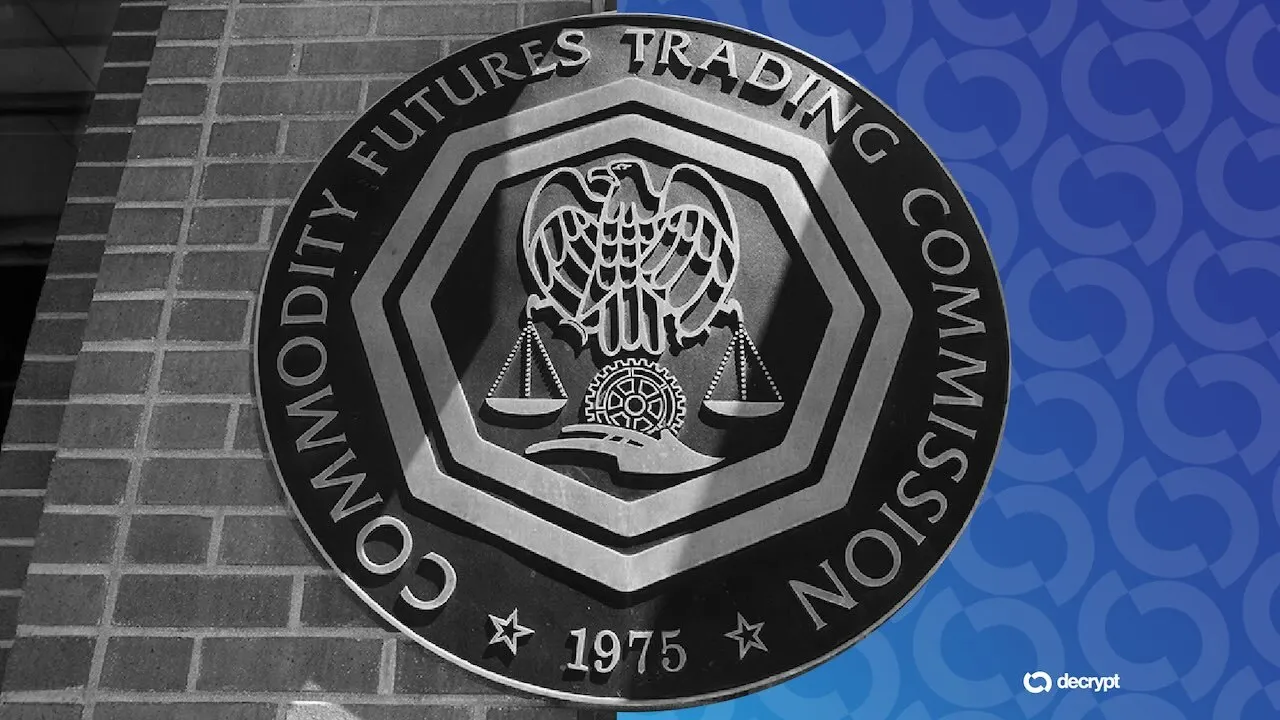
    The Commodity Futures Trading Commission (CFTC) is intensifying its efforts to assert authority over prediction markets, unveiling two measures Friday that would formally classify event contracts as “swaps” under federal law, while simultaneously excluding traditional gambling activities.

    The first measure, a proposed rule now open for public comment, aims to explicitly broaden the definition of a “swap” to encompass event contracts. These contracts can be tied to a wide array of outcomes, including sports, politics, cultural events, and weather. The CFTC stated that these contracts are financial instruments “commonly known to the trade as swaps,” and that this action will eliminate any uncertainty regarding their regulatory status. “These products are commodity derivatives squarely within the CFTC’s regulatory remit under the Commodity Exchange Act and are within the agency’s exclusive jurisdiction,” CFTC Chairman Michael Selig said in a statement.

    The second measure, an interim final rule effective immediately upon publication, draws a contrasting boundary. It codifies the agency’s long-standing position that casino-style gambling products, such as sportsbook wagers and casino games, are not considered swaps. “Casino-style gambling products are not derivatives,” Selig explained, characterizing this step as a clarification of “the limits of its regulatory remit.” Both proposals include a 30-day public comment period.

    Collectively, these two rules sharpen a critical distinction at the center of an intense jurisdictional dispute. If event contracts are deemed swaps, they fall under the CFTC’s purview, which Selig has argued is exclusive, thereby shielding platforms like Kalshi and Polymarket from the oversight of state gambling regulators. Several states have initiated lawsuits against prediction market operators, alleging illegal gambling, and the CFTC has filed counter-suits to defend its regulatory territory.

    These filings formalize proposals that the agency submitted to the White House for review late last month. This move is part of a broader strategy by the CFTC to proactively assert its authority rather than await congressional action.

    The agency has generally adopted an industry-friendly approach towards both traditional and cryptocurrency markets. The Commission recently issued no-action relief that permits crypto applications to offer regulated derivatives and has advanced separate rulemakings concerning crypto markets.

    The legal stakes for prediction markets are escalating. A judicial disagreement over whether event contracts qualify as federally regulated swaps, which has pitted the NFL and other entities against Kalshi, has attracted the attention of the Supreme Court. This means the question the CFTC is now attempting to resolve through regulation may ultimately be decided by the nation’s highest court.

  • Bitcoin Still Reeling One Year After Crypto’s Largest Liquidation

    Bitcoin Still Reeling One Year After Crypto’s Largest Liquidation

    October’s Double-Edged Sword: Remembering Crypto’s Worst Liquidation Day

    October has long been dubbed “Uptober” in cryptocurrency circles, a period historically associated with significant gains. Last year, however, the month delivered a starkly contrasting experience. While Bitcoin (BTC) surged to a then-record high, it also witnessed its most devastating liquidation event, the first anniversary of which falls this weekend.

    The Peak and the Precipice

    In the days leading up to October 10, 2025, Bitcoin was on an upward trajectory, living up to the “Uptober” moniker. The cryptocurrency reached its latest all-time high of approximately $126,000 on October 7. Analysts and staunch supporters of the market enthusiastically celebrated the surge, projecting further gains to $200,000 or even $500,000 by year-end.

    A Violent Correction

    The reality proved far more severe. On October 10, 2025, escalating US-China trade tensions, among other factors, triggered a sharp sell-off. This downturn was amplified by a massive amount of leveraged positions, leading to what is estimated to be the worst liquidation event in the 16-year history of the cryptocurrency industry. Within a 24-hour period, the value of liquidated positions reportedly exceeded $19 billion.

    Bitcoin spearheaded this decline, plummeting from around $122,000 to $105,000 on most exchanges, and even dipping to $101,000 on some. Over 1.6 million traders were caught off guard and saw their positions liquidated. The timing of the crash was particularly brutal, occurring just 48 to 72 hours after Bitcoin had achieved its record high above $126,000. Today, that peak price seems like a distant memory.

    The Lingering Aftermath

    That crash marked the beginning of a prolonged bear market, which saw Bitcoin’s price fall below $58,000 by July 1. In the months following its most significant liquidation event, Bitcoin experienced a 53% decline. It currently trades in the $82,000 to $83,000 range, still approximately 34% below its 2025 peak.

    While the market sentiment has improved considerably since July, some cautionary signs remain. A recent correction saw Bitcoin dip from $87,000 to $80,400 before recovering to current levels. On a more positive note, at least five indicators tracked by BIT have recently shifted into territory typically associated with bullish market conditions.

    Lessons Unlearned?

    The events of October 10, 2025, serve as a critical reminder. Ideally, it would offer a valuable lesson to traders who tend to overcommit during market upturns and retreat entirely during downturns. However, a pullback last week, which saw over $1 billion in leveraged positions wiped out in less than a day, suggests that some may not have fully absorbed the impact of that historic liquidation event.

  • Papertrade Sees $3B Bitcoin Open Interest Amid Perpetual Exchange Launch

    Papertrade Sees $3B Bitcoin Open Interest Amid Perpetual Exchange Launch

    Papertrade, a fully on-chain perpetual futures exchange built on HyperEVM, launched on October 10, 2026, with Bitcoin futures open interest quickly reaching $3 billion.

    Rapid Market Entry

    Trading commenced at 10 a.m. ET (14:00 UTC). Within the first 10 minutes, the platform recorded $14.4 billion in notional trading volume. Ether futures open interest followed closely, reaching $2.66 billion, with activity predominantly concentrated in these two markets.

    Open interest represents the total value of outstanding positions at a specific time, while volume includes all trades, both opening and closing. Both metrics are notional, reflecting the full value of leveraged positions rather than the actual capital deposited by traders. This distinction is crucial given Papertrade’s offering of up to 1,000x leverage on its synthetic perpetual contracts. At this leverage, a trader can control $1,000 in exposure with just $1 in margin, meaning substantial notional activity can be supported by a relatively small pool of actual deposits.

    Prior to its launch, the exchange had secured pre-deposits estimated between $85 million and $138 million from over 11,000 addresses.

    Novel Trading Mechanism

    Papertrade eschews a traditional order book. Instead, positions are opened and closed atomically, in a single transaction, bypassing the need to match against existing orders. Pricing is derived from the midpoint of Hyperliquid’s best bid and offer, a design intended to mitigate slippage and eliminate conventional trading fees.

    To manage anticipated launch-day congestion, initial trades were processed through Papertrade’s proprietary frontend, with support from whitelisted relayers. The platform incorporates built-in risk management, featuring $1 billion in open-interest headroom for each market side and individual position caps of $10 million in atomic size.

    Unique Liquidity Model

    A distinctive feature of Papertrade is its house liquidity pool, which began empty. This pool is designed to grow as traders incur losses, with losing positions funding the pool, which in turn pays out winning traders. Consequently, the model relies on trader losses or delayed settlement to finance payouts. The combined trader balances and house liquidity are not entirely available to cover winning trades.

    The exchange also implements a profit haircut, an asymmetric fee on profit and loss inherited from earlier trading models, meaning winners may not receive their full gross gains.

    Papertrade’s native token, PAPER, was launched with no initial supply and is minted only when traders realize losses. While the current liquidity pool holds less than $2 million, the protocol generates 100 PAPER for every $1 lost, a rate that decreases as the pool expands. Initially, PAPER transfers are restricted to staking purposes.

    Dependency and Risk Factors

    Operating on HyperEVM and referencing Hyperliquid for pricing, Papertrade effectively overlays a new risk model onto an existing market’s price discovery mechanism. The reliability of its pricing is directly tied to the reference market, meaning any disruption on Hyperliquid could impact Papertrade’s contracts.

    The zero-initialized house liquidity pool is sustainable when traders experience aggregate losses. However, a significant, unidirectional market movement in Bitcoin or Ether could invert this dynamic, with payouts becoming contingent on delayed settlement and the haircut mechanics.

  • French Committee Approves Crypto Tax Amendments, Budget Rejection Creates Uncertainty

    French Committee Approves Crypto Tax Amendments, Budget Rejection Creates Uncertainty

    A French National Assembly Finance Committee has voted on amendments that would introduce taxes on stablecoin swaps and impose an exit tax on wealthy cryptocurrency holders relocating abroad. However, the committee’s subsequent rejection of the entire budget revenue section introduces significant uncertainty regarding the future of these proposed measures.

    These amendments, initially intended for inclusion in the government’s budget, do not automatically carry over following the revenue section’s rejection. Consequently, proponents must reintroduce them for consideration during the full Assembly’s debate, scheduled to begin on October 13.

    Stablecoin Swap Tax Proposal

    One key amendment approved by the committee targets stablecoin swaps. Currently, swapping cryptocurrencies like Bitcoin for stablecoins—tokens pegged to official currencies such as the dollar or euro—does not trigger a tax event in France unless gains are converted into fiat currency. The proposed amendment, filed by Nicolas Sansu of the GDR group and co-signers, aims to close this perceived loophole. From January 1, 2027, swapping into an electronic money token, as defined by the EU’s MiCA regulation, would be considered a sale. The gain would be calculated based on the original purchase price, and the tax rate would align with France’s existing flat tax, which currently stands at 31.4%.

    Supporters of this amendment argue that stablecoins function as investment vehicles and that deferring taxation on swaps into them is unjustified. They contend that the amendment applies existing tax law to a scenario it previously missed, rather than introducing a new burden.

    Crypto Exit Tax Proposal

    A second amendment also approved by the committee would extend France’s exit tax to cryptocurrency holdings. This tax is levied on unrealized gains when a taxpayer moves their tax residence abroad. The proposed exit tax would apply to individuals whose combined crypto assets exceed €800,000 and who have been French tax residents for at least six of the preceding ten years, effective from January 1, 2027. The threshold and deferral rules are reportedly aligned with those for traditional stock assets. Swaps between different cryptocurrencies, without a cash component, would not be considered sales for the purpose of this exit tax. Proponents argue this measure addresses the disparity where crypto assets can be moved across borders more easily than traditional investments, potentially avoiding taxation.

    Loss Carry-Forward Amendment

    Additionally, an amendment proposed by Daniel Labaronne, which won committee approval, would allow investors to carry forward crypto losses for up to 10 years to offset future gains, mirroring the treatment of stock losses. Currently, unused crypto losses cannot be carried over.

    Legislative Uncertainty

    The committee rejected the budget’s revenue section by a vote of 31 to 3. The floor debate on the original budget revenue section is set to commence on October 13, with a formal vote anticipated on October 20. If the crypto tax amendments are reintroduced and successfully navigate the legislative process, the stablecoin swap tax and the crypto exit tax would be effective from January 1, 2027.

    In related news, Coinbase announced in October 2024 that it would delist stablecoins not compliant with MiCA for its European customers by December 30, encouraging the use of compliant alternatives like USDC and EURC.

    Uncertainties remain regarding whether the proposed stablecoin and exit tax amendments will be successfully reintroduced and passed by the full National Assembly. The specific tax rate for stablecoin swaps and the detailed implementation of the exit tax are also subject to further legislative action. The outcome of the formal vote on October 20 will provide further clarity on the budget’s revenue section.

    Why This Matters

    The materials describe a narrow update: The French National Assembly Finance Committee approved amendments to tax stablecoin swaps and impose an exit tax on wealthy crypto holders moving abroad. Whether the stablecoin swap tax amendment will be reintroduced and pass the full Assembly.

    Broader Context

    Source materials place the factual news in this context: France’s National Assembly Finance Committee voted this week to tax crypto holders who swap into stablecoins—tokens tied to a single official currency, such as the dollar or the euro—and to charge an exit tax on wealthy holders who move abroad.

  • Bitcoin Rally Boosts Confidence Amidst Lagging Open Interest

    Bitcoin Rally Boosts Confidence Amidst Lagging Open Interest

    Bitcoin Stages a Comeback, But Leveraged Traders Remain on the Sidelines

    The world’s largest cryptocurrency has experienced a significant rebound, climbing approximately 35% from its August 2026 lows near $63,500 to reach the $83,000-$84,000 range by late September. However, this rally has not been accompanied by a corresponding increase in futures open interest, which remains below its previous peak.

    Open interest, a measure of the total value of outstanding futures contracts, typically rises in tandem with price as traders place new bets. A divergence, where price increases but open interest falls, signals a quieter market despite improving scores. This is precisely what has occurred, with futures open interest, measured in Bitcoin terms, declining by nearly 20% during the recent price surge.

    A Significant Pullback in Leveraged Positions

    Analysts at Bitfinex noted that aggregate BTC futures open interest dropped to approximately 625,000 BTC. This represents a substantial reduction in leveraged positions and a notable low for the year 2026. Measuring open interest in BTC rather than U.S. dollars provides a clearer picture, as rising prices can artificially inflate dollar-denominated open interest. Counting in coins effectively removes this effect, revealing whether overall positioning is expanding or contracting.

    Liquidation Event Fuels Decline

    A significant portion of this decline can be attributed to a liquidation event on August 19, 2026. The derivatives market experienced a sweep, with 85% of liquidations targeting short positions. In the immediate aftermath of this event, open interest contracted by 11%.

    Spot Demand Powers the Rally

    Beyond the liquidation squeeze, the rally appears to have been primarily driven by demand in the spot market. Reports indicate institutional inflows into exchange-traded funds (ETFs) and short covering, rather than new leveraged long positions being opened by traders.

    Stabilization and Shifting Dynamics

    By early October, Bitcoin had settled into a trading range between $82,000 and $85,000. ETF flows fluctuated, and open interest ceased its decline, beginning to stabilize. Across various trading venues, perpetual futures open interest, in notional terms, ranged between $35 billion and $54 billion during this period.

    The Double-Edged Sword of Lower Leverage

    The reduction in leverage has both positive and negative implications. On the upside, fewer overextended positions reduce the risk of sudden liquidation cascades. However, the trade-off is speed. Leverage is typically what transforms a solid rally into an explosive one. Without renewed participation from derivatives traders, the potential for sharp, rapid price gains appears limited unless new capital enters the market.

    Key Signals for Traders

    For traders, ETF flow data is likely the most critical indicator to monitor. The October trading range of $82,000 to $85,000 coincided with swings in these flows, suggesting that institutional demand is currently dictating the market’s pace.

    Open interest serves as a secondary gauge. A gradual rebuilding of BTC-denominated open interest, coupled with steady spot demand, would signal renewed conviction in the market. Conversely, a sudden surge in leverage without corresponding spot buying could reintroduce the fragility that the market has been shedding in recent months.

    Cautious Optimism Prevails

    The current market setup suggests a reason for cautious optimism. Rising prices, reduced leverage, and consistent institutional participation could pave the way for more sustainable growth, punctuated by occasional periods of volatility.

  • Strive Adopts Saylor’s Strategy, Secures Funds for 638 Bitcoin

    Strive Adopts Saylor’s Strategy, Secures Funds for 638 Bitcoin

    Strive’s preferred stock, designed to track Bitcoin’s performance, generated an estimated $55 million this week. This sum is sufficient to purchase approximately 638 Bitcoin, despite the shares trading below the issuance stop price for three out of the five trading days.

    Bitcoin Acquisition Details

    The figure of 638 Bitcoin is derived from a weekly dashboard snapshot that presents three key metrics.