Tag: Positive

  • Uniswap Launches Pools.trade for Token Launches on Robinhood Chain

    Uniswap Launches Pools.trade for Token Launches on Robinhood Chain

    Uniswap Launches Token Launchpad on Robinhood Chain, Igniting Trader Interest

    Uniswap has unveiled its inaugural token launchpad, Pools.trade, on the Robinhood Chain, offering users a unified platform for creating and trading new digital assets. The introduction of Pools.trade has swiftly re-centered attention on Uniswap, drawing in traders eager to participate in early-stage token launches.

    According to a Santiment report dated August 6, Pools.trade facilitates token creation through either a four-hour “Crowd Launch” or an “Instant Launch” option. Following the launch, liquidity is automatically channeled into Uniswap v4 pools and permanently locked. This strategic move expands Uniswap’s operational scope beyond its traditional function as a decentralized exchange, positioning it at the very inception of a token’s lifecycle rather than solely managing post-launch trading.

    The launch leverages Uniswap’s established role as the primary automated market maker on the Robinhood Chain. Robinhood’s Ethereum-compatible Layer 2 solution already integrates multiple Uniswap versions, alongside its own offerings like UniswapX, its wallet, web application, and API.

    As previously reported, the Robinhood Chain has emerged as the largest blockchain by the number of real-world asset holders. However, trading of meme coins continues to dominate decentralized exchange activity on the network. Initial interest in Pools.trade has focused on tokens such as FRONG and POOLS. Santiment noted that many traders are treating FRONG as an unofficial launchpad token, despite no formal confirmation from Uniswap linking it to the platform.

    Concurrently, competing launchpad tokens on the Robinhood Chain, like PONS, have faced downward pressure as traders shift their focus to the new narrative. Data from CoinGecko indicates that PONS had fallen nearly 14% in the 24 hours prior to writing, with its weekly chart showing a substantial decline of almost 48%. The total market capitalization of the leading tokens launched on Pons also decreased by over 12% in the last day, falling below $20 million.

    The debut of Pools.trade was marked by an unusually secretive rollout, featuring hidden web pages, teaser files, frog-themed imagery, and last-minute adjustments. One X user, The Smart Ape, described it as “the most documented secret launch in DeFi,” a characterization that sparks debate on whether it was a calculated marketing strategy or simply a confusing process.

    Santiment also highlighted an improvement in on-chain data for UNI, Uniswap’s native token. Exchange balances have dropped by 15.7% over the past month, while the token’s price has risen approximately 47% since early July. This suggests a reduced immediate supply for sale as interest in the Uniswap ecosystem grows.

    The analytics firm further reported that Uniswap’s share of cryptocurrency-related social media discussions has reached its highest point since November 2025, following the announcement of Pools.trade.

    At the time of writing, UNI was trading just above $4.00, marking a nearly 3% increase over 24 hours and an almost 30% rise over the past month. Despite this recovery, the token remains approximately 91% below its all-time high of $44.92, recorded in May 2021.

    Santiment concluded that Pools.trade has the potential to become a significant new driver of activity for Uniswap, provided it continues to attract a steady stream of token launches.
  • XRP Analyst Predicts $27 Price Target Based on Long-Term Pattern

    XRP Analyst Predicts $27 Price Target Based on Long-Term Pattern

    Chart Analyst Identifies Major XRP Pattern, Targets $27

    A prominent chart analyst, known as ChartNerd, has identified an 8.5-year cup-and-handle pattern on XRP, suggesting the cryptocurrency is approaching a key Fibonacci retracement level that could pave the way for significant long-term price appreciation. The analyst posits that XRP could eventually reach targets of $8, $13, and $27.

    This bullish outlook comes as XRP currently trades near $1.06, having experienced a substantial correction that has erased most of its gains from the past year.

    In a post on X on August 4, ChartNerd described XRP’s cup-and-handle formation as “one of the largest macro setups” in the market. The analyst highlighted the token’s proximity to the 0.618 Fibonacci retracement level, which he believes could serve as a foundation for a move towards the aforementioned Fibonacci extension targets.

    ChartNerd expressed strong conviction in these targets, stating they are a matter of “when, not if.” However, he also cautioned that short-term price action remains unpredictable. The analyst attributed XRP’s recent weakness not to inherent issues with the asset itself, but rather to a broader market correction affecting the cryptocurrency space.

    Alternative Scenarios and Divergent Views

    Despite the long-term bullish thesis, ChartNerd presented an alternative scenario where XRP might consolidate around the $1 mark for the remainder of the year. He drew a parallel to the asset’s bottoming process in June 2022, where a Gaussian channel indicator gradually caught up to the price rather than experiencing a sharp decline.

    This consolidation scenario, ChartNerd clarified, is an alternative to an earlier projected target range of $0.90 to $0.70 and does not negate the long-term outlook. He noted that the initial roadmap toward the $1 area was developed when XRP was trading significantly higher, between $1.80 and $2.

    However, not all market participants share ChartNerd’s optimistic projections. Trader CryptoBull, in a recent post, dismissed the lower short-term targets, expressing confidence that XRP would bypass levels like $0.87 and $0.73 entirely. “Those waiting for $0.87 or $0.73, I will see you at $23,” CryptoBull stated.

    Other Analysts Weigh In on XRP’s Technicals

    Other analysts have also focused on XRP’s current technical standing. EGRAG CRYPTO pointed out that the Ripple token has fallen below its 50-day moving average and is approaching the 100-day exponential moving average, a level he described as historically crucial for long-term support.

    According to EGRAG CRYPTO, a move towards the $1 to $0.95 range could represent a normal retest if XRP manages to hold this area. He outlined a potential downside target near $0.80 if the token breaks towards the lower boundary of its long-term channel, while maintaining his own long-term targets of $15, $27, and above $50.

    Analyst Ali Martinez also identified $1.06 as a pivotal level for XRP’s next directional move. In a report dated August 4, Martinez suggested that holding this price could open the door to $1.35 and $1.64, whereas a failure to do so could lead to a decline towards $0.62.

    At the time of reporting, XRP was trading around $1.06. Data from CoinGecko indicated a decline of approximately 2% over the past seven days and more than 6% over the last 30 days. Year-to-date, XRP has fallen by about 65%, placing it nearly 71% below its all-time high of $3.65.

  • Visa Expands Stablecoin Payment Capabilities with Zerohash Integration

    Visa Expands Stablecoin Payment Capabilities with Zerohash Integration

    Visa is expanding its stablecoin payment offerings through a new arrangement with crypto infrastructure provider Zerohash. The integration allows eligible Visa Direct clients to prefund accounts and send payouts using stablecoins, a move designed to offer businesses greater liquidity management flexibility outside traditional banking hours and recipients the option to receive payouts directly in stablecoins.

    According to Zerohash, the enhanced capabilities will be accessible via Visa Direct, Visa’s money movement network. “Unlocking stablecoin use cases at the core network level further accelerates adoption globally,” stated Edward Woodford, Zerohash founder and CEO. This functionality enables businesses to fund Visa Direct accounts with stablecoins prior to making payments, thereby managing liquidity more effectively outside standard banking hours. Recipients also have the choice to receive their payouts in stablecoins.

    Zerohash, founded in 2017, provides crypto infrastructure for financial institutions. The company applied for a national trust bank charter in March to expand its custody and settlement services. In July, Zerohash was instrumental in powering Morgan Stanley’s introduction of Bitcoin, Ethereum, and Solana trading on E*Trade.

    This partnership represents Visa’s latest initiative in the stablecoin sector. In January, Visa collaborated with BVNK to pilot stablecoin prefunding and payouts on Visa Direct. This was followed by the launch of the Visa Stablecoin Platform in July, which equips banks and fintechs with tools to issue, hold, and transfer stablecoins, integrating them into existing treasury and payment systems.

    “Stablecoins are creating new opportunities to make money movement faster and more flexible, particularly for cross-border use cases,” said Mark Nelsen, Visa’s global head of product. “Working with Zerohash helps us bring stablecoin capabilities to our clients at scale, in a way that’s reliable and interoperable with the financial systems they already rely on today.”

    Why This Matters

    The materials describe a narrow update: Visa is expanding its stablecoin payment offerings by partnering with Zerohash. The integration lets businesses fund Visa Direct accounts with stablecoins before making payments, allowing them to manage liquidity outside traditional banking hours.

    Broader Context

    Source materials place the factual news in this context: Visa is expanding its stablecoin payment offerings through an arrangement with crypto infrastructure provider Zerohash, allowing eligible Visa Direct clients to prefund accounts and send payouts using stablecoins.

  • Circle’s Arc Blockchain Mainnet Set for September 16 Launch with Major Financial Backing

    Circle’s Arc Blockchain Mainnet Set for September 16 Launch with Major Financial Backing

    Circle is scheduled to launch the public mainnet of its Arc blockchain on September 16, bolstered by a founding validator cohort that includes prominent financial institutions such as BlackRock, Visa, and Mastercard. The company also reported robust second-quarter financial results, highlighting growth in USDC utility and partnerships, and achieving net income.

    Arc Blockchain Launch and Validator Support
    The Arc blockchain’s mainnet launch will be secured by a consortium of traditional finance firms, including BlackRock, DTCC, Galaxy, Global Payments, ICE, Mastercard, MoneyGram, SBI Group, Standard Chartered, Sumitomo Corporation, and Visa, in addition to Circle. Circle CEO Jeremy Allaire characterized this group as “a cohort of network validators no other network can match.”

    Financial Performance and Growth
    In its second-quarter financial reporting, Circle announced total revenue and reserve income of $701 million, marking a 7% increase year-over-year. The company achieved a net income of $48 million, a significant improvement from a loss in the prior year. USDC in circulation closed the quarter at $73.3 billion, up 19%, and on-chain transaction volume reached $14.8 trillion, an increase of 151%.

    Circle’s share of the fiat-backed stablecoin market decreased to 27% during the quarter. The company’s distribution agreement with Coinbase has been renewed on its existing terms. Circle also reported that its Circle Payments Network reached $14.7 billion in annualized transaction volume, up 76% quarter-over-quarter, with this figure growing to $23 billion by July 31.

    Regulatory Milestones and Future Outlook
    Further solidifying its operational framework, Circle received final approval from the Office of the Comptroller of the Currency (OCC) to establish Circle National Trust. This federal bank charter enables Circle to hold regulated digital asset custody and potentially manage the USDC reserve itself. Allaire indicated that this infrastructure bank “becomes a way to project Circle’s infrastructure into global markets for payments, for capital markets, and for use of digital dollars in corporations all around the world.”

    Circle has also revised its full-year guidance for other revenue upwards, now projecting between $310 million and $330 million, a substantial increase from the previous guidance of $150 million to $170 million. The company attributes this upward revision partly to recognized revenue from the ARC token presale.

    While the Arc testnet has processed over half a billion transactions across nearly 3 million wallets, and the private mainnet has over 100 builders, uncertainties remain. These include the exact deployment details of BlackRock’s BUIDL on Arc and the precise timeline for DTCC enabling asset tokenization beyond the second half of 2027. The ongoing weakness in digital asset markets also presents a factor for future performance.

    Circle’s Q2 results indicate continued growth and profitability, with increasing USDC utility, liquidity, and partnerships. The OCC National Trust Bank charter positions Circle as one of the first stablecoin issuers to hold a federal bank charter, enhancing its regulatory standing and operational capabilities.

    Why This Matters

    The materials describe a narrow update: Circle’s Arc blockchain public mainnet is scheduled to launch on September 16. The exact nature and extent of BlackRock’s BUIDL deployment on Arc.

    Broader Context

    Source materials place the factual news in this context: Circle will open the public mainnet of its Arc blockchain on September 16, and named a founding validator cohort drawn almost entirely from traditional finance alongside second-quarter results on Wednesday.

  • Cardano Surges 20% Weekly, Igniting Trader Interest

    Cardano Surges 20% Weekly, Igniting Trader Interest

    Cardano’s ADA Surges Amidst Broader Crypto Slump, Igniting Bullish Speculation

    While Bitcoin (BTC), Ethereum (ETH), and other major cryptocurrencies have struggled in the past week, Cardano’s ADA has bucked the trend with a significant double-digit price increase. This unexpected rally has captured the attention of market observers, with some forecasting that the upward momentum may just be beginning.

    A Resurgence After a Prolonged Downturn

    ADA had been among the digital assets most heavily impacted by the extended bear market, with its price briefly falling below $0.14 in June, a level not seen since 2020. However, a notable resurgence occurred last weekend, potentially fueled by the return of significant investors, often referred to as “whales,” who collectively purchased over 240 million tokens in less than a week.

    Technical Indicators and Analyst Projections

    The upward trajectory has continued, with Cardano’s native token trading around $0.193 at press time, marking a 20% gain over the past seven days. Analyst JAVON MARKS has drawn parallels between ADA’s recent performance and its trajectory in 2020-2021, a period that preceded a substantial price surge. Based on this historical comparison, MARKS has set a price target of $2.90.

    Other analysts, Sssebi and CW, have also weighed in. Sssebi pointed out that ADA is nearing a cross above its 20-week Moving Average after being heavily oversold, a technical setup that has historically preceded significant price increases. Meanwhile, CW observed that ADA is approaching a key resistance level at $0.2305, suggesting that a successful breach of this mark could signal the end of its prolonged downtrend.

    Wallet Activity and Shifting Market Dynamics

    Interestingly, the rally in ADA’s price is occurring at a time when the number of active Cardano wallets has been declining, according to analytics platform Santiment. The firm suggests this divergence indicates that stronger buyers are absorbing available supply, while retail investors have yet to fully re-engage with the market. Santiment noted, “Rising price with falling holders can mean stronger buyers are absorbing supply, and retail confidence has not fully followed the move yet.”

    In contrast, recent data from Martinez indicates a substantial increase in trader interest in ADA. Futures trading volume has reportedly surged by 380% in a single week, rising from $150 million to $650 million. Such a sharp increase in volume typically signals heightened market participation and could lead to increased volatility for the asset in the short term.

  • BNB Chain Hackathon Aims to Build Official AI Agent Marketplace Amidst Growing Ecosystem

    BNB Chain Hackathon Aims to Build Official AI Agent Marketplace Amidst Growing Ecosystem

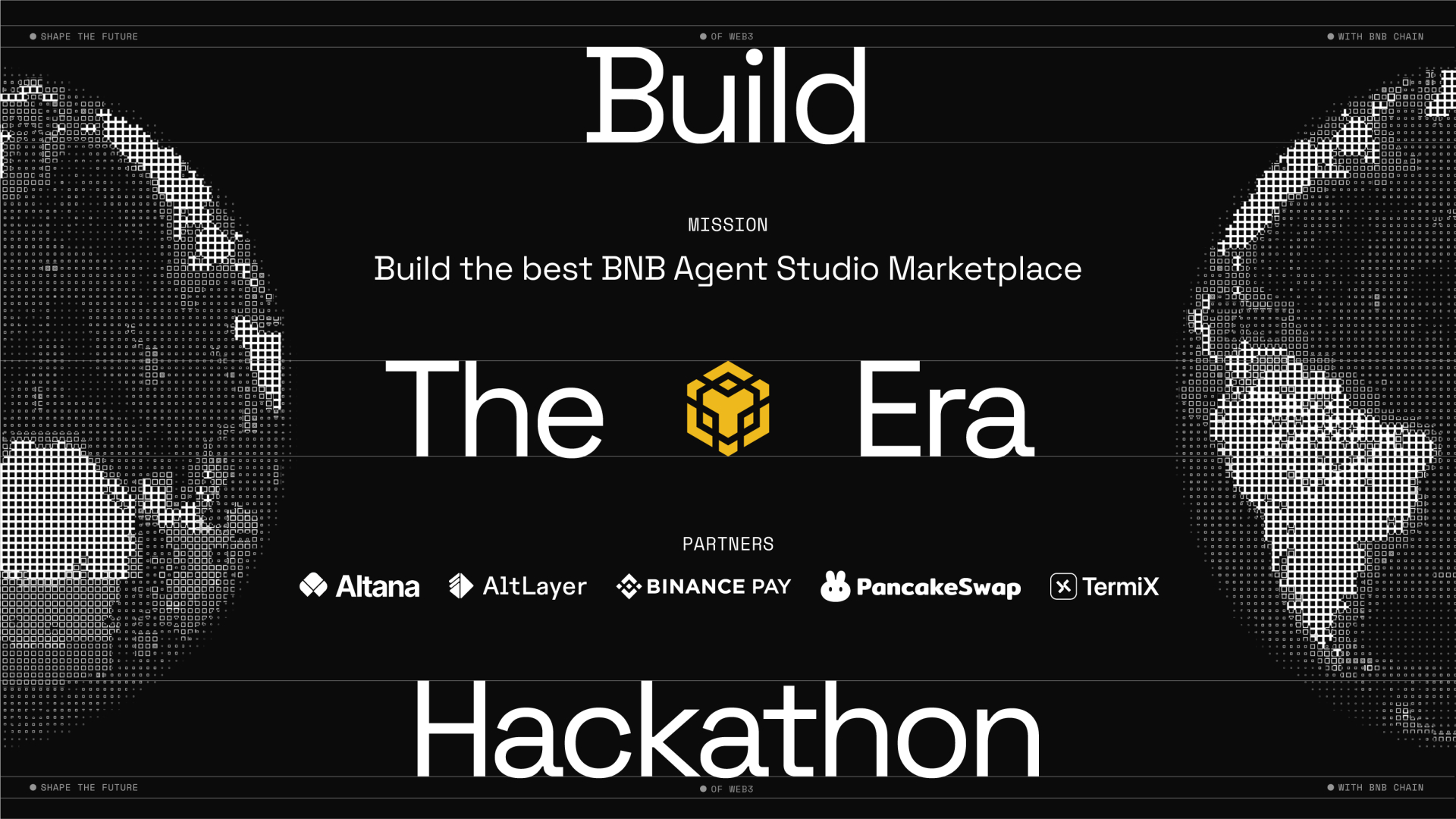
    BNB Chain has announced the ‘Build the Era’ hackathon, an initiative designed to foster the development of an official AI agent marketplace on BNB Smart Chain (BSC). This event addresses the increasing challenge of discoverability for the more than 200,000 AI agents currently registered on BSC under the ERC-8004 standard.

    The hackathon’s core objective is to encourage developers to create a functional and user-friendly marketplace that may facilitate the identification and utilization of AI agents. The winning submission has the potential to be adopted as the official BNB Agent Studio marketplace, receiving backing and resources from BNB Chain to operate as a standalone product with its own brand and team.

    To guide participants, BNB Chain will share reference agents and skills across four categories: monitoring, grid trading, health factor, and yield agents. The hackathon offers a total prize pool exceeding $40,000, contributed by BNB Chain and its partners, to incentivize participation and innovation.

    Submissions will be evaluated based on functionality, data quality, agent diversity, and potential for real-world application. While specific judging criteria for the main hackathon will be released at the start of the build period, partner tracks will be judged according to each sponsor’s individual criteria.

    BNB Chain operates as a community-driven decentralized blockchain ecosystem supporting a wide range of Web3 applications, including DeFi, AI, gaming, and consumer use cases. Its multi-chain architecture comprises BNB Smart Chain, opBNB, and BNB Greenfield, designed to support large-scale application deployment. The hackathon represents a strategic move to enhance the utility and accessibility of AI agents within this ecosystem, addressing a key challenge that has emerged as agent activity has scaled.

    This initiative aims to make autonomous agents more accessible, allowing users on BSC to more readily find, hire, and deploy them for various tasks. The central task for participants involves making agent data legible and understandable for individuals seeking to hire AI agents. This effort is part of BNB Chain’s broader strategy to organize and improve the utility of its rapidly expanding AI agent ecosystem.

    Why This Matters

    The materials describe a narrow update: BNB Chain has launched an open hackathon called ‘Build the Era’ to encourage developers to create a marketplace for AI agents on BNB Smart Chain. The exact criteria for judging submissions will be available when the build period opens.

    Broader Context

    Source materials place the announcement in this context: BNB Chain is one of the most active blockchain ecosystems worldwide.

  • Circle Taps BlackRock, Visa, Mastercard for Arc Blockchain’s Founding Validator Cohort, Eyes September 2026 Launch

    Circle Taps BlackRock, Visa, Mastercard for Arc Blockchain’s Founding Validator Cohort, Eyes September 2026 Launch

    Circle has announced the formation of the founding validator cohort for its new open blockchain network, Arc, with a public mainnet launch scheduled for September 16, 2026. The network is currently in a private mainnet phase, hosting over 100 ecosystem and institutional builders.

    The founding validator group includes major financial institutions such as BlackRock, The Depository Trust & Clearing Corporation (DTCC), Galaxy, Global Payments, ICE, Mastercard, MoneyGram, SBI Group, Standard Chartered, Sumitomo Corporation, and Visa. Circle stated that this group represents a model where institutions building on the network also contribute to its security, aiming to establish a foundation of trusted and globally distributed operators capable of supporting secure and scalable on-chain financial applications.

    Institutional Integration and Asset Tokenization

    BlackRock is expected to deploy its BlackRock USD Institutional Digital Liquidity Fund (BUIDL) on Arc, leveraging the network’s native USDC integration. This setup is intended to allow institutional investors to subscribe to, redeem, and deploy fund assets within a single on-chain environment. Furthermore, Circle is collaborating with DTCC to enable the tokenization of assets custodied by The Depository Trust Company on Arc, with this integration planned to commence in the second half of 2027. The primary objective is to allow market participants to utilize third-party applications on the blockchain for stablecoin-native settlement against DTC-tokenized assets. DTCC indicated that this integration aligns with its multi-chain strategy, and DTC-tokenized assets will retain the same protections as traditionally held assets.

    Mastercard’s Chief Product Officer, Jorn Lambert, commented on the development, stating, “As stablecoins and other digital assets move into real-world payments, settlement, and treasury flows, Mastercard is focused on helping customers operate across an increasingly diverse payments ecosystem. Our participation as a founding validator on Arc reflects that commitment — supporting trusted, interoperable infrastructure that can help connect emerging blockchain networks with the broader financial systems businesses rely on every day.”

    Ecosystem Support and Product Suite

    The Arc network is set to be supported by a range of DeFi protocols and capital allocators, including Aave, Aerodrome, FalconX, Galaxy, GSR, Keyrock, Morpho, Nonco, Uniswap, and XFX, which will facilitate borrowing, trading, and on-chain capital deployment. Payment providers such as Rain, Thunes, and Wirex will handle stablecoin payment and settlement flows. Additionally, Binance Wallet, Chainlink, Fireblocks, Kraken, Ledger, MetaMask, Uniswap Labs, and Upbit will provide access to USDC on Arc, custody services, and cross-chain asset movement.

    At its launch, Circle plans to introduce a product suite for Arc. This suite will include tools for common on-chain workflows, AI-powered applications, smart contract development, tokenized real-world asset management, and interfaces designed for developers, users, and agents. The public mainnet launch is scheduled for September 16, 2026, with the DTCC integration expected to begin in the latter half of 2027.

    Why This Matters

    The materials describe a narrow update: Circle has launched the founding validator cohort for its new open blockchain network, Arc. The exact nature and extent of ‘AI-powered applications’ to be introduced at launch.

    Broader Context

    Source materials place the factual news in this context: Wall Street Meets Web3: BlackRock, Visa, and Mastercard Back Circle’s New Arc Blockchain.

  • DOGECOIN PLUMMETS TO 3-YEAR LOW AMID BULLISH ANALYST FORECAST

    DOGECOIN PLUMMETS TO 3-YEAR LOW AMID BULLISH ANALYST FORECAST

    Dogecoin (DOGE), the largest meme coin by market capitalization, has experienced a significant downturn, falling to its lowest point since the autumn of 2023. The cryptocurrency is currently trading below $0.07, with a market cap of approximately $10.8 billion, placing it as the 10th-largest cryptocurrency. This performance significantly lags behind major cryptocurrencies like Bitcoin (BTC) and Ethereum (ETH) over the past month.

    Analysts Remain Optimistic Amidst Downturn

    Despite the recent slump, a wave of optimism is sweeping through the analyst community, with many anticipating a strong short-term rebound for Dogecoin.

    X user Ash Crypto highlighted that Dogecoin recently plummeted to a three-year low of around $0.067, marking a 90% decrease from its all-time high. The analyst also pointed out that Dogecoin’s monthly Relative Strength Index (RSI) has reached its most oversold level since the market bottom in 2022. Historically, such an oversold condition is viewed as a bullish signal, suggesting potential seller exhaustion and a weakening downtrend.

    MikybullCrypto echoed this sentiment, predicting a surge to a new all-time high during the next bull run. “You don’t remain bearish at this current macro support level. The most oversold level in RSI. $1 is coming next during its bullish reversal,” the analyst stated.

    On-Chain Activity Shows Signs of Life

    Further bolstering the bullish outlook, renowned analyst Ali Martinez observed a 16% increase in weekly active Dogecoin addresses. This metric rose from approximately 38,000 at the end of July to around 44,000 currently, indicating a notable uptick in on-chain activity. Such an increase often signals renewed user engagement and can contribute to stronger momentum, potentially supporting upward price movements.

    Martinez also noted that Dogecoin’s TD Sequential indicator has flashed buy signals across multiple timeframes, including monthly, weekly, 3-day, and daily charts. He described this as a rare configuration that could precede a substantial price rally.

  • USDT Perpetual Tick Size Change August 11, 2026

    USDT Perpetual Tick Size Change August 11, 2026

    Bybit to Adjust Tick Sizes for Perpetual Contracts to Enhance Market Liquidity

    Singapore – [Date of Publication] – Cryptocurrency exchange Bybit announced today that it will be adjusting the tick size for a number of its Perpetual Contracts, a move intended to boost market liquidity and refine the trading experience for its users. The changes are scheduled to take effect on August 11, 2026, at 8:30 AM UTC.

    Tick Size Adjustments

    The adjustment will see the tick size for most of the affected Perpetual Contracts increase from 0.000001 to 0.00001. This change applies to a comprehensive list of trading pairs, including:

    • ZEREBROUSDT
    • MONUSDT
    • LRCUSDT
    • PLUMEUSDT
    • STABLEUSDT
    • GOATUSDT
    • MOVEUSDT
    • HUMAUSDT
    • ENJUSDT
    • SPKUSDT
    • AIXBTUSDT
    • AZTECUSDT
    • ROBOUSDT
    • DRIFTUSDT
    • C98USDT
    • DYMUSDT
    • SUNUSDT
    • FIDAUSDT
    • WOOUSDT
    • PUFFERUSDT
    • DBRUSDT
    • CGPTUSDT
    • ESPORTSUSDT
    • USUSDT
    • HANAUSDT
    • QUSDT
    • ETHBTCUSDT

    A select group of contracts will see their tick size adjusted from 0.0000001 to 0.000001. These include:

    • DOODUSDT
    • 1000CATUSDT
    • AKEUSDT
    • PUMPFUNUSDT
    • JCTUSDT

    Trader Advisory

    Bybit advises its users to review and, if necessary, adjust their trading strategies to align with the new tick size specifications. The exchange expressed its understanding for any potential inconvenience this may cause and thanked its users for their continued support.

  • Cardano Ecosystem Developments Include Cross-Chain Integration, Governance Updates, and ADA Price Movements

    Cardano Ecosystem Developments Include Cross-Chain Integration, Governance Updates, and ADA Price Movements

    The Cardano ecosystem has seen several developments, including a new cross-chain connection with Injective, progress on the Dijkstra development era, and changes to governance representation. These events coincide with a notable increase in the price of its native cryptocurrency, ADA.

    Cardano and Injective have established their first connection on the testnet through the Inter-Blockchain Communication protocol. According to an official announcement from Injective, this integration is designed to eventually enable ADA to enter the Injective ecosystem, while INJ will become fully available on Cardano. This testnet deployment is intended to represent a step toward improving Cardano’s compatibility with external blockchain networks, with both tokens slated for availability across both ecosystems.

    Following the van Rossem upgrade, Cardano developers are now focusing on the upcoming Dijkstra development era. The latest update indicates that planned work includes Nested Transactions and Linear Leios, with both features targeted for mainnet implementation by the end of the year. These advancements are intended to enhance the network’s capabilities and performance.

    In governance, Cardano has transitioned the election of its Constitutional Committee onto the blockchain, aiming to increase transparency and verifiability. This committee is tasked with ensuring that major governance decisions adhere to the Cardano constitution. Furthermore, a new portal has been introduced for community members to test proposed changes to the constitution, and ADA holders can now vote on adjustments to the network’s technical settings, collectively aiming to provide the community with a more direct role in Cardano’s management and development.

    However, the ecosystem has also faced internal governance challenges. EMURGO announced its immediate resignation from the Intersect board, with plans to deregister its delegated representatives. This decision followed significant community criticism concerning governance participation and the delegation experience within the Yoroi Wallet. EMURGO stated these changes are intended to address specific concerns related to the responsibilities of their positions. The departure has reportedly reignited discussions regarding accountability among key Cardano ecosystem organizations.

    On the market front, ADA has seen a price increase. The cryptocurrency rose from approximately $0.15 in late July to a one-month high of around $0.195 on August 4th. This price movement was partly fueled by increased buying activity from large investors, with “whales” accumulating over 240 million ADA within a five-day period. ADA is currently testing a resistance area between $0.19 and $0.20. Some analysts believe that a sustained break above this level could potentially lead to further price appreciation, with targets cited around $0.28 to $0.30. However, from a technical standpoint, maintaining a position above the $0.17 support level is considered important for preserving ADA’s short-term structure.

    The Cardano ecosystem is navigating a phase of technical advancement, governance evolution, and market fluctuations. While new integrations and development milestones offer potential, ongoing governance discussions and market uncertainties necessitate careful observation.

    Why This Matters

    The materials describe a narrow update: Cardano and Injective established their first connection via the Inter-Blockchain Communication protocol on the testnet, enabling ADA to enter the Injective ecosystem and INJ to become available on Cardano. Whether the cross-chain integration will be fully implemented on mainnet.

    Broader Context

    Source materials place the factual news in this context: Cardano’s ecosystem recorded several important developments between July 30 and August 5th.