Tag: Project Updates

  • MapleStory Universe Unveils MSU Space, Launches Global Game Jam

    MapleStory Universe Unveils MSU Space, Launches Global Game Jam

    MapleStory Universe Launches Global Game Jam and Builder Hub as Part of Major Expansion

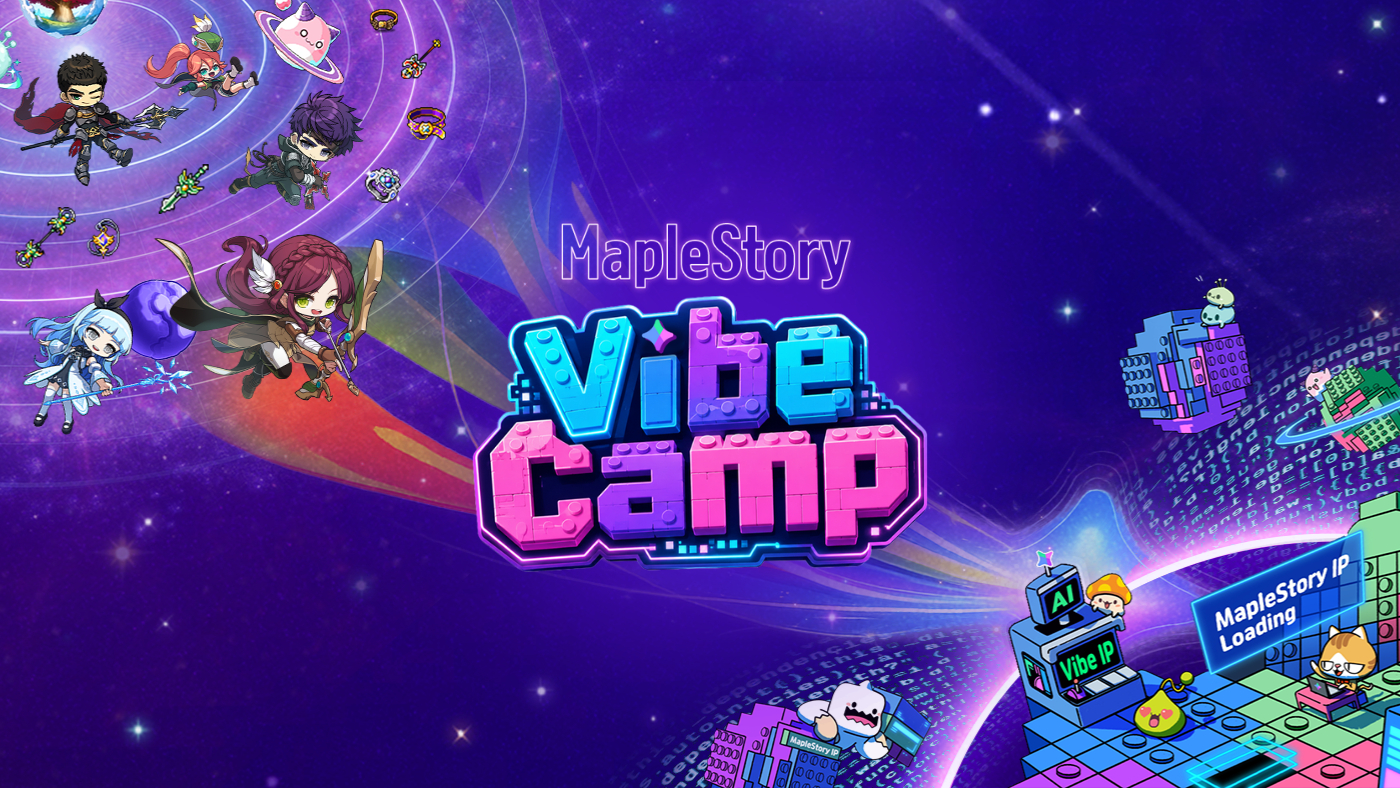
    Abu Dhabi, UAE – June 8, 2026 – MapleStory Universe (MSU), the blockchain-powered evolution of Nexon’s beloved MapleStory franchise, today unveiled MapleStory Vibe Camp, a global competition inviting creators to develop original games and experiences using official MSU resources. The initiative coincides with the launch of MSU Space, a dedicated builder hub developed in partnership with AI-powered game creation platform Verse8.

    The MapleStory Vibe Camp, running from June 8 to June 29, boasts a total prize pool of $60,000 in NXPC and is open to creators worldwide. Through MSU Space, participants will gain access to tools and assets to build and publish MapleStory-inspired experiences, with select projects eligible for recognition, rewards, and potential future involvement in the ecosystem.

    This launch marks the first significant public activation of MSU 2.0, the next phase of MapleStory Universe’s growth following its inaugural year. The platform recently celebrated surpassing 150 million cumulative on-chain transactions and generating approximately 49.1 million NXPC, valued at $31 million, in ecosystem revenue. This expansion signifies MSU’s transition from a singular game environment to a comprehensive platform designed to foster creation, distribution, and monetization opportunities leveraging the MapleStory intellectual property.

    “Over the past year, MapleStory Universe has proven that a large-scale game economy can operate successfully on-chain,” said Sun Young Hwang, Chief Executive Officer at Nexpace. “The next chapter is about broadening participation in its development. As AI continues to lower the barriers to game creation, the lines between player and builder are blurring, and MapleStory IP is becoming the foundation from which both groups create. MapleStory Vibe Camp and MSU Space are crucial first steps toward realizing this vision by reducing creation hurdles and introducing new avenues for communities to build with our legacy IP.”

    Opening MapleStory IP to a New Generation of Creators

    At the core of this initiative is MSU Space, an environment within Verse8 that grants users access to official MapleStory Universe assets, resources, and development tools. Creators can utilize MapleStory-themed characters, monsters, items, environments, and lore, enhanced by Verse8’s AI-assisted game creation capabilities. The platform allows participants to develop projects using natural language prompts, refine gameplay concepts, and publish completed experiences directly.

    This launch aligns with the broader objectives of MSU 2.0, which aims to transform MapleStory from a traditionally closed IP into a programmable ecosystem where communities can generate new experiences, applications, and services using the MapleStory IP. MSU 2.0 seeks to dismantle the traditional barriers associated with IP-based creation by integrating on-chain infrastructure, AI-assisted creation tools, and community-driven participation into a unified framework.

    Why MSU Space on Verse8

    As MapleStory Universe expands beyond a single game, creating accessible entry points is paramount. The collaboration with Verse8 provides a platform for creators to discover ecosystem opportunities, experiment with novel concepts, and contribute to the overarching vision of MSU 2.0. This initiative also introduces MapleStory Universe to a wider audience of developers and AI-native creators who may be new to the ecosystem.

    “For decades, building with major gaming IPs has largely been confined to professional studios and approved partners,” stated Kevin Lee, CEO of Verse8. “However, through MSU Space and AI, creators can now engage with MapleStory IP in a more accessible manner and bring their ideas to life faster than ever before. We are excited to empower the next wave of MapleStory creators.”

    Collectively, MSU Space serves as an accessible gateway to the burgeoning builder economy underpinning MSU 2.0, connecting users with the necessary tools, resources, and infrastructure to create with MapleStory IP.

    MapleStory Vibe Camp will run until June 29, 2026, with winning entries selected from projects submitted via MSU Space. Further details and participation information can be found at https://vibecamp.msu.io.

    About Nexpace
    Nexpace, an Abu Dhabi-based blockchain company, is spearheading an IP-expansion initiative powered by blockchain technology and NFTs to cultivate a community-driven ecosystem. With a mission to redefine interactive entertainment, Nexpace fosters a dynamic space for exploring, sharing, and engaging with diverse content and gameplay developed by its community members. The company’s ecosystem is built on principles of transparency, security, and trust, empowering creators and enabling users to enjoy immersive experiences within a secure, collaborative digital community.

    About Verse8
    Verse8 is an AI-native creation and publishing platform enabling anyone to transform ideas into interactive games and stories. By integrating generative AI, an embedded game engine, and on-chain ownership, Verse8 significantly lowers the barrier to interactive creation and supports a new generation of creator-led digital worlds. Developed by Planetarium Labs in collaboration with Jake Song, the platform leverages extensive gaming expertise and strategic partnerships to deliver high-fidelity interactive experiences at scale.


  • Pi Network Hits Major Milestone Amidst Price Plunge

    Pi Network Hits Major Milestone Amidst Price Plunge

    Pi Network Completes Major Milestone Amidst Price Plunge

    The team behind the controversial cryptocurrency project has rolled out a significant upgrade aimed at bolstering its entire ecosystem. However, this positive development has failed to spur a recovery for PI, whose valuation has plummeted to a new all-time low.

    Recent Protocol Advancements

    Pi Network has demonstrated considerable progress in recent months. In February, the Core Team introduced protocol version 19.6, followed by an upgrade to v19.9. Subsequently, they launched the highly anticipated v20.2, which laid the groundwork for smart contract functionalities.

    Last month, the team announced a migration to protocols v22 and v23, setting June 2 as the deadline for transitioning to v24. This update was shared on Pi Network’s official X account earlier today, June 5.

    “Great job to all Nodes! This was one of the most challenging migrations,” the announcement stated.

    The upgrade to protocol 24 primarily focuses on enhancing the underlying infrastructure that supports node operations and mainnet activity. The Core Team has indicated that migration to v25 is the next step, with June 18 designated as the completion deadline.

    Expansion into Gaming

    In addition to protocol updates, Pi Network has recently made further strides in the gaming sector. CiDi Games, a company within the Pi Network Ventures portfolio, has released four new games for Pioneers: Coin Whack, Fruit Stack, Gemnova, and RainbowCubes.

    Persistent Price Suppression

    Despite these developments, PI’s valuation remains heavily impacted by the prevailing bear market and the recent market-wide pullback across the cryptocurrency landscape.

    Earlier this week, the token’s price collapsed to a new all-time low of approximately $0.12. This represents a 33% decrease for the month and a staggering 96% drop from its historic peak of $3, recorded at the beginning of 2025. PI’s market capitalization has consequently fallen to around $1.3 billion, positioning it as the 58th-largest cryptocurrency.

    Indicators of Further Correction

    Several factors suggest that an additional price correction may be imminent. Data indicates a substantial increase in PI coins held on exchanges, with over 500,000 coins added in the past 24 hours, bringing the total to over 550 million. This surge suggests that a significant number of investors have moved their holdings to centralized platforms, potentially increasing immediate selling pressure.

    Upcoming token unlocks also present a potential challenge, with approximately 160 million PI tokens slated to enter circulation within the next 30 days. June 11 is projected to be a notable day, with 16 million coins scheduled for release. While this does not guarantee a steeper decline, it could provide an opportunity for some investors to liquidate long-held tokens.

  • Whale.io Unveils Whale Printer for $WHALE Token Staking

    Whale.io Unveils Whale Printer for $WHALE Token Staking

    Whale.io Unveils “The Whale Printer” Staking System for $WHALE Token

    Mahe, Seychelles – June 3rd, 2026 – Whale.io, a prominent online crypto casino and sportsbook, has officially launched “The Whale Printer,” an integrated platform staking system designed for its native $WHALE token. The new feature allows eligible token holders to lock their $WHALE tokens for specified durations in exchange for guaranteed token rewards.

    Staking Structure and Yields

    The Whale Printer staking system is built around three distinct lock-up periods. Each period is associated with a fixed multiplier and a corresponding annual percentage yield (APY). Multipliers are set at the moment a staking position is established, ensuring predictable reward terms throughout the chosen lock-up duration.

    Reward Pool and Sustainability

    All rewards distributed through The Whale Printer will be drawn from a dedicated pool of 20 billion $WHALE tokens, which constitutes 20% of the total token supply. This pool is finite and will not be replenished. Once depleted, The Whale Printer will permanently cease operations, and no new staking positions will be accepted. This mechanism is intended to incentivize early participation while promoting long-term sustainability and value accrual for $WHALE stakers.

    How to Stake $WHALE

    To engage with The Whale Printer, users must have $WHALE tokens available in their Whale.io account balance. Staking positions can be initiated via the token page on the platform, where users select the amount of tokens to stake and their preferred lock period.

    The system permits up to 10 concurrent staking positions per account. Each position operates independently, with its own token allocation, lock period, and completion timer. The minimum staking requirement is determined by platform parameters. It is important to note that early withdrawal of funds from active staking positions is not permitted.

    Utility of $WHALE Token

    $WHALE functions as the native utility token within the Whale.io ecosystem. According to the project, token distribution has historically occurred through platform gameplay, missions, and general user activity, with no allocations made to private sales, presales, or venture capital investors.

    The Whale Printer enhances the utility of the $WHALE token by introducing a staking mechanism that rewards users with $WHALE based on their chosen lock periods and the platform’s predefined reward structures.

    The Whale Printer is now accessible on whale.io/token.

    About Whale.io

    Whale.io operates as a leading online crypto casino and sportsbook, offering a range of features including exclusive Whale Originals games, blockchain-integrated rewards, substantial cashback programs, and a strong commitment to transparency, community ownership, and on-chain verifiability. With $WHALE as its core utility token, Whale.io aims to cultivate one of the most rewarding ecosystems in the crypto gaming industry.

  • Pi Network Token Nears All-Time Low Amid Gaming Gains

    Pi Network Token Nears All-Time Low Amid Gaming Gains

    Pi Network Token Nears All-Time Low Amid Market Downturn

    The native token of Pi Network is experiencing a significant downturn, mirroring the broader cryptocurrency market’s struggles. The token’s price has fallen sharply, approaching its all-time low recorded in February, despite recent project developments and the release of new games aimed at its user base, known as Pioneers.

    The past week has been particularly challenging for cryptocurrency markets. Bitcoin (BTC) saw a substantial drop to just over $65,000, while Ethereum (ETH) plunged to $1,800. Most altcoins have followed suit, and PI has not been an exception. The token has declined by 22% over the past month, reaching $0.136 earlier today, its lowest point since February.

    In February, PI faced repeated rejections at the $0.20 mark, leading to an all-time low of $0.1312. The subsequent month saw a significant recovery, with PI more than doubling in value by “PiDay 2026” (March 14) after its listing on Kraken. However, this surge proved to be a classic “sell the news” event, followed by a substantial crash to below $0.18.

    Today’s drop below $0.14 occurred amidst sustained selling pressure and the loss of several key support levels, including $0.18 and $0.16.

    Data from PiScan indicates that the average daily number of tokens scheduled for release in the coming month is relatively modest, around 5.4 million. However, certain days are expected to see unlockings exceeding 10 million tokens, with one day slated for 16 million. These substantial unlocks could potentially intensify immediate selling pressure and contribute to further price declines.

    In parallel with these market movements, CiDi Games, a company within the Pi Network Ventures portfolio, recently announced the upcoming launch of new games for Pioneers. A portion of these games has already been made available.

    CiDi Games aims to provide Pioneers with new avenues to utilize Pi through gaming, while simultaneously expanding the Pi ecosystem with infrastructure designed to support a growing number of games and developers over time.

    The newly released games include:

    • Coin Whack, an arcade roguelike.
    • Fruit Stack, a match-3 fruit puzzle.
    • Gemnova, a cosmic match-3 adventure.
    • RainbowCubes, a colorful elimination puzzle.

    Separately, the Pi Network Core Team recently confirmed the successful deployment of protocol update version 23. The next update, version 24, was anticipated to be completed by June 2, though official confirmation was pending at the time of reporting.

  • Sui Network Suffers Second Day of Outage, Token Value Plummets.

    Sui Network Suffers Second Day of Outage, Token Value Plummets.

    The native token of the Sui blockchain, SUI, has fallen 20% this week following a “network stall” that caused downtime on the layer-1 blockchain for the second consecutive day.

    Price Performance

    Recently trading at $0.89, SUI has dropped an additional 2% in the last 24 hours and is now more than 83% below its January 2025 all-time high of $5.35. According to CoinGecko data, its weekly decline has placed it among the five worst-performing assets in the top 100 cryptocurrencies by market capitalization.

    Network Outage

    “Sui mainnet is currently experiencing a network stall. Network activity may be paused at this time,” the network’s team posted on X on Friday morning.

    Sui developers shared the same message on Thursday when the layer-1 blockchain was down for over five hours before a patch was deployed to validators, temporarily restoring the network.

    “Activity on Sui mainnet has resumed after a halt due to a crash bug in the gas charging logic introduced by the 1.72 release. A full incident review will be shared in the coming days,” the network announced.

    Investigation and Response

    While a comprehensive postmortem of the incident is pending, the network indicated that Thursday’s outage was caused by a bug introduced in its latest release.

    It remains unclear whether Friday’s outage is related to Thursday’s incident or the subsequent patch. Representatives for the network and Mysten Labs, the core team behind it, did not immediately respond to requests for comment.

    Previous Issues

    These outages follow a similar network stall in January, which resulted in six hours of downtime for the layer-1 blockchain’s mainnet.

    Background

    Hailed as a “Solana-killer,” the network has faced some of the same challenges as the high-speed layer-1 network, which has also experienced major outages in the past.

    Sui was launched in 2023 by Mysten Labs, which raised $300 million in a Series B funding round in 2022, valuing the company at approximately $2 billion at the time. Despite the recent decline, the network’s token currently trades with a market capitalization of around $3.6 billion.

  • Sui Network Suffers Hours-Long Outage, Again.

    Sui Network Suffers Hours-Long Outage, Again.

    Built to rival other high-speed layer-1 blockchains, the Sui network has again experienced downtime, echoing issues previously faced by Solana.

    Network Stall

    The “network stall,” first identified and investigated on Thursday morning, resulted in a major outage lasting over five hours as the Sui team worked to resolve the issue.

    Around 10:30 a.m. ET, the blockchain posted on X, stating, “Sui Mainnet is currently experiencing a network stall. Be aware that transactions may be paused at this time. Updates will be shared as soon as they are available.”

    An update on the Sui network status page at 3:40 p.m. ET indicated that a “fix is rolling out to validators.”

    Previous Outages

    This latest “stall” follows a similar event that plagued the layer-1’s mainnet in January, resulting in over six hours of downtime. Prior to that, the network faced a significant validator issue in 2024 that prevented transaction processing.

    While the network’s engineers identified the issue shortly after beginning their investigation, a fix had not yet been implemented as of the time of this writing, according to the blockchain’s status page.

    Token Impact

    Amid the downtime, the network’s native token, SUI, may have been affected, falling 5.4% in the last 24 hours to trade at $0.92. This decline outpaced losses from Bitcoin, Ethereum, and other leading cryptocurrencies.

    ETF Developments and Historical Performance

    Earlier this year, the first SUI ETFs were launched, with products from Canary and Grayscale providing exposure to the SUI token and staking reward access to traditional investors through equity markets.

    The network’s native token reached an all-time high of $5.35 in January 2025 but has since fallen by over 82% from that peak.

    Background

    Launched in 2023, the network was developed by Mysten Labs, a spin-off of Meta’s Diem project. The network previously raised $300 million in a Series B round in 2022, valuing it at $2 billion.

  • Grayscale Spotlights Hyperliquid’s Future

    Grayscale Spotlights Hyperliquid’s Future

    On Tuesday, the Hyperliquid token (HYPE) reached a new all-time high of $65, briefly placing the cryptocurrency among the top ten by market capitalization and highlighting the platform’s ongoing momentum. Grayscale Research released a report on Wednesday analyzing the factors behind Hyperliquid’s success, its expansion beyond crypto trading, and what investors should consider moving forward.

    Hyperliquid Beyond Crypto Perps

    In its report, Grayscale compared Hyperliquid’s scale and growth to the largest crypto derivatives platforms, citing increasing activity alongside its open interest and fees. The firm noted that Hyperliquid processed approximately $2.9 trillion in perpetual futures (perps) volume in 2025 and currently holds roughly $7 billion in open interest.

    The asset manager also ranked Hyperliquid as the third or fourth-largest perpetual futures exchange by open interest, emphasizing that volume, open interest, fees, and market awareness have risen in tandem as the platform has expanded beyond crypto-native products to include a wider range of tradable assets.

    A key theme in Grayscale’s analysis was that Hyperliquid has not limited its expansion to traditional crypto perps, instead adopting an open architecture approach to offer a broader range of products.

    HIP-3 And HIP-4’s Success

    New functionality is introduced through Hyperliquid Improvement Proposals (HIPs), with third-party teams, rather than Hyperliquid’s original creators, building and deploying these products. Grayscale highlighted HIP-3 as a significant step in this direction. HIP-3 allows builders to launch new perpetual markets, including non-crypto assets like stocks, commodities, and index-based products.

    Grayscale cited volume data to support this view. During the February silver price surge, silver HIP-3 perps reportedly reached over $4 billion in daily volume. On February 5, 2026, HIP-3 silver perp volume traded at approximately 1% of COMEX’s silver notional volume.

    Building on this momentum, Grayscale pointed to HIP-4, which it described as extending the model to outcome markets—binary options that resemble prediction-market contracts.

    4 Reasons Behind The Platform’s Growth

    Alongside its product expansion, Grayscale identified several factors contributing to Hyperliquid’s success. The report emphasized product focus, arguing that Hyperliquid was built around the perpetuals trading use case rather than treating trading as one feature among many.

    Grayscale believes this focus allowed the platform to prioritize what active traders value most: fast order entry, reliable execution, clear and readable positions, and a familiar exchange-style interface.

    The firm also highlighted distribution, arguing that the builder-code and frontend approach incentivizes third parties to direct users to the same liquidity base, avoiding fragmentation across separate venues.

    Grayscale added that the economics have already been significant, citing Phantom’s integration of Hyperliquid perps through builder codes, with Phantom earning roughly $19.7 million from routed trading fees.

    Finally, Hyperliquid’s token distribution was structured to reward platform users rather than venture investors or pre-selected insiders, which Grayscale said helped foster a different type of early ownership.

    Key Risks For HYPE

    Despite the positive growth narrative, Grayscale concluded by cautioning investors to consider both standard crypto risks and platform-specific concerns. It noted that HYPE’s annualized price volatility is about 80%, roughly 40 percentage points higher than Bitcoin.

    It added that Hyperliquid’s growth potential partly depends on changes to United States financial services regulations that could broaden user access. Without these changes, Grayscale warned that the platform’s expansion may be limited primarily to other jurisdictions, potentially restricting its growth.

    Nevertheless, the report’s concluding message was that if Hyperliquid continues to execute effectively, retains and grows its community, and benefits from regulatory developments that facilitate broader adoption, it could become a “financial services juggernaut.”

  • XRP Could Surge to $10 on Ledger Update

    XRP Could Surge to $10 on Ledger Update

    XRP Price Prediction: Tomorrow’s XRP Ledger Update Could Send XRP Toward $10

    XRP is currently trading sideways, with no clear price prediction indicating its next move. The XRP Ledger Foundation’s version 3.1.3 release introduces fixes across non-fungible tokens (NFTs), permissioned domains, vaults, and the lending protocol, and operators have been urged to upgrade nodes immediately.

    XRP Ledger Foundation Announces Upgrade

    On May 8, the XRP Ledger Foundation announced on X that rippled v3.1.3 is available. This is a maintenance and bug-fix upgrade that requires no manual voting. The fixCleanup313 amendment bundles patches for NFT logic, permissioned domain handling, vault mechanics, and the lending protocol.

    Technically, it is a housekeeping release. However, tomorrow’s mainnet upgrade could potentially push XRP above its current flatline zone.

    Forced Upgrade Deadline

    The XRP Ledger has a forced upgrade deadline on Tuesday, and nodes that miss it will go dark. Joel Katz, XRPL co-creator and Ripple CTO, confirmed that the rippled 3.1.3 amendment activates on May 27. Nodes that do not upgrade will become amendment-blocked, losing the ability to validate the ledger.

    Market Position and Potential Price Movement

    XRP holds an $83 billion market capitalization, maintaining its position as the world’s fifth-largest cryptocurrency, competing with BNB. With altcoin sentiment shifting towards a constructive phase, the upgrade arrives at a moment when even a modest narrative shift could influence the price.

    Currently, $1.37 represents the first significant resistance level, with $1.39 as the next potential ceiling. Short-term momentum appears neutral, with the intraday trend showing limited directional conviction.

    While there is no breakout signal yet, the range is coiled. The v3.1.3 upgrade could act as a sentiment catalyst if it attracts renewed developer and institutional attention to the XRPL ecosystem, particularly regarding its lending protocol and vault infrastructure.

    If XRP can surpass $1.40 due to upgrade momentum, it could target $1.90, with a long-range base scenario placing XRP in the $10+ region in the long run.

    However, a break below $1.30 would suggest the consolidation is resolving lower, negating near-term bullish setups entirely. The $10 headline target remains a multi-year thesis, with this week’s upgrade serving as a foundational step.

    Market Dynamics and Alternative Investments

    XRP’s $82.6 billion market cap means that even a doubling from current levels would require billions in fresh capital. While not impossible, early-stage infrastructure plays may offer greater potential.

    Bitcoin Hyper is positioning itself at a category-defining intersection: the first-ever Bitcoin Layer 2 with full Solana Virtual Machine (SVM) integration. This means sub-second finality and fast smart contract execution built on top of Bitcoin’s security layer, not on a sidechain compromise, but a genuine infrastructure bridge.

    The project has raised close to $33 million at a current presale price of $0.0136, with 36% APY staking available for presale participants. The core thesis is to address Bitcoin’s three core limitations: slow transactions, high fees, and zero programmability, while preserving BTC’s trust model.

    Hyper also features a Decentralized Canonical Bridge for BTC transfers and high-speed, low-cost transaction execution via SVM integration.

  • XRP Ledger Update: What Holders Need to Know

    XRP Ledger Update: What Holders Need to Know

    The XRP Ledger Gears Up for Version 3.2.0 Update

    The XRP Ledger is undergoing another significant update, with version 3.2.0 currently in development. According to Hussein Zangana, Director of Community at the XRP Ledger Foundation, known on X as Vet, this update aims to further fortify the underlying infrastructure of the XRP Ledger. This follows the recent activation of version 3.1.3 in early May.

    Focus on Strengthening the Foundation

    The upcoming update, version 3.2.0, is less about introducing flashy new features and more about reinforcing the network’s core functionality. Vet emphasized that the update is designed to strengthen the foundation upon which the XRP Ledger operates. He highlighted the use of AI-powered red and blue team efforts, along with attackathons and bug bounties, as key contributors to this strengthening process.

    Version 3.1.3: A Precursor to 3.2.0

    The development of version 3.2.0 follows the release of version 3.1.3 on May 8. According to the official XRPL blog, version 3.1.3 included the fixCleanup313 amendment, which addressed issues related to NFTs, Permissioned Domains, Vaults, and the Lending Protocol. The importance of these fixes led to a default “Yes” vote for the release. This update was particularly significant as it followed the January introduction of Single Asset Vaults and the Lending Protocol in version 3.1.0. The Single Asset Vaults are pools of a single asset designed for use with the Lending Protocol, which facilitates fixed-term, uncollateralized loans using funds from these vaults.

    Impact on XRP Holders

    While no specific release date for version 3.2.0 has been announced, the update is primarily an infrastructure upgrade and is not expected to directly impact short-term price movements. However, such updates are crucial for long-term holders. A consistently updated ecosystem demonstrates an active community, which can foster confidence in XRP’s value over time. Version 3.1.3 demonstrated the developers’ commitment to refining newer aspects of the protocol, particularly concerning NFTs, Vaults, Permissioned Domains, and Lending. Version 3.2.0 appears to build upon this work by further solidifying the XRP Ledger’s foundation.

  • SNC Scandic Coin Launches on Multiple Exchanges

    SNC Scandic Coin Launches on Multiple Exchanges

    Scandic Finance Group Launches SNC Scandic Coin

    SEOUL, SOUTH KOREA – May 26, 2026 – Scandic Finance Group (SFG) is launching the SNC Scandic Coin (SNC), aiming to establish a comprehensive ecosystem integrating real-world services and digital financial technology. The global conglomerate, which owns over 115 daily newspapers and various companies in mobility, technology, security, and real estate, is introducing a common currency designed to function beyond a simple payment method. The new coin will also serve as an access key, loyalty program, and store of value for users worldwide.

    Starting today, May 26, 2026, the SNC Scandic Coin (SNC) is available for direct purchase. The token can be acquired securely via the official website, https://www.sncCoin.dev, using a proprietary payment system, as well as on the exchanges BingX, BitMart, L‑Bank, and Biconomy, all of which are launching the SNC simultaneously. Investors can also utilize an integrated staking tool within the SNC Scandic ecosystem, allowing them to deposit their SNC coins and earn rewards, thereby expanding the token’s utility.

    Ecosystem of Services

    The SNC Scandic Coin (SNC) is designed to connect the services offered by the Scandic platforms. SCANDIC FLY provides luxury private-jet charters, while SCANDIC CARS offers premium vehicle rentals. SCANDIC ESTATE focuses on property development and estate agency services.

    Other divisions within the network include SCANDIC YACHTS, which organizes yacht charters and brokerage, and SCANDIC MINING, which is set to launch a German-authority-certified raw-materials project valued at €1.5 billion in high-quality clay. SCANDIC TRADE offers algorithmically controlled trading and staking bots, giving users control over their funds. SNC SCANDIC DEV develops AI assistants for various business applications.

    SNC DOMAIN provides high-performance domains, and SCANDIC SPORT is an elite sports-marketing agency. SCANDIC PORT operates a logistical infrastructure in Wolgast, Germany, including a deep-water port. SCANDIC DATA operates a hyperscale center, and SCANDIC SEC supports the Group’s security.

    Token Economics and Compliance

    The SNC Scandic Coin’s token economics are structured transparently, with a total supply of one billion units and an issue price of approximately two cents per SNC. A phased release plan aims to prevent speculative spikes and provide long-term planning certainty. Proceeds from the sale will be invested in security, audits, infrastructure, liquidity, further projects, and marketing. The developers highlight a comprehensive smart-contract audit by CertiK, which found no critical security vulnerabilities in the SNC Scandic Coin as of March 2, 2026. Additionally, the group is working with CRIF for know-your-customer and anti-money-laundering checks, ensuring sustainable ESG (Environmental, Social, Governance) certificates. This multi-stage compliance architecture aims to build investor trust and meet regulatory requirements.

    Exchange Listings and Future Plans

    As of May 26, 2026, the SNC SCANDIC COIN (SNC) is listed on BingX, BitMart, L‑Bank, and Biconomy.

    BingX is a global crypto exchange popular for active traders and social-trading features. BitMart, with over thirteen million registered users, is a regulated platform with high liquidity. L‑Bank reaches an audience of over twenty million users across 160 countries. Biconomy serves over one million users in over one hundred countries. Further exchange listings are being finalized. The Scandic Finance Group (SFG) aims to reach a global audience while controlling price discovery, with an emphasis on rational trading.

    The SNC Scandic Coin (SNC) combines real services, regulatory security, and modern technologies. It unites private aviation, luxury cars, property, yachts, media expertise, commodity investments, algorithmic trading, artificial intelligence, and digital identities under a single currency. The ability to purchase, stake, and access exclusive offers makes this project attractive to users seeking stability and utility.