Tag: Regulation & Policy

  • Backpack Exchange’s BP Token Surges to Record High After SEC Exemption

    Backpack Exchange’s BP Token Surges to Record High After SEC Exemption

    Backpack Exchange’s native token, BP, surged to an all-time high of $1.65 on October 1, 2026, a dramatic leap from its trading price below $0.50 in mid-September.

    Regulatory Catalyst Fuels Token Surge

    The significant price movement was directly attributed to a regulatory development. On September 17, the U.S. Securities and Exchange Commission (SEC) unveiled what it terms the “Innovation Exemption.” This exemption permits limited on-chain trading of tokenized stocks, a move that proved exceptionally timely for Backpack Exchange, which has been actively developing its business model around this very concept for months.

    Understanding the Innovation Exemption

    The exemption specifically applies to qualifying Tokenized Securities Venues (TSVs). These designated venues are authorized to facilitate limited on-chain trading of tokenized National Market System (NMS) stocks. NMS stocks broadly encompass shares listed on major U.S. exchanges, representing what most investors recognize as the core of the stock market.

    However, this regulatory relief is not without its conditions and limitations. The exemption is temporary, set to expire in September 2031, providing a five-year window. Furthermore, TSVs are subject to strict trading volume caps, limited to 0.25% of the average daily volume for prominent securities.

    BP Token Performance and Tokenomics

    The BP token’s trajectory mirrored the market’s reaction to the exemption. It climbed from below $0.50 in mid-September to its peak of $1.65 on October 1, marking a more than threefold increase in approximately two weeks.

    The token currently boasts a market capitalization of roughly $375 million, with a circulating supply of about 250 million tokens. The total supply is capped at 1 billion BP, with only a quarter currently in circulation, a factor that could influence future dilution for investors.

    BP was launched on March 23, 2026, with 25% of its total supply airdropped to the community, and no allocations reserved for insiders.

    Backpack’s Proactive Development

    Backpack Exchange did not await regulatory clarity before building its infrastructure. On July 10, 2026, the exchange commenced round-the-clock trading of tokenized U.S. equities, notably backed by actual shares. This distinction is crucial, as many tokenized stock products are synthetic, merely tracking an asset’s price without granting ownership of the underlying security. Backpack’s model is designed to ensure users hold actual shares.

    The operational framework for this model is managed by Backpack Securities, a subsidiary of Backpack Exchange. The exchange has also forged partnerships with platforms such as Sunrise on Solana to bolster its trading capabilities.

    Initial listings for tokenized equities on the platform include those tied to prominent companies like SpaceX, Micron, and SanDisk.

    On-Chain Market Dominance

    Backpack Exchange has demonstrated significant influence in on-chain markets. In certain periods, the exchange has captured approximately 73% of issuer-level decentralized exchange (DEX) volume for tokenized equities, despite holding only about 5% of the total supply share within this category.

    BP Token Utility Beyond Speculation

    The BP token offers utility beyond speculative trading. Holders can stake BP to receive fee discounts on the exchange. More significantly, staking may unlock potential equity conversion rights. After a one-year staking period, these rights could extend up to 20% of the company’s aggregate shares. This feature is described as a potential conversion right linked to an Initial Public Offering (IPO), rather than a guaranteed claim on equity at present.

  • EU Demands Binance Clarify User Exemption

    EU Demands Binance Clarify User Exemption

    European regulators are scrutinizing how Binance continues to offer services within the European Union months after failing to obtain a license under the bloc’s new crypto regulations, according to a report by The Financial Times, which cited individuals familiar with the matter.

    Regulatory Scrutiny

    The European Securities and Markets Authority (ESMA) and national financial watchdogs in countries including France, Germany, and Greece are investigating Binance’s reliance on “reverse solicitation.” This is an exemption under Article 61 of the Markets in Crypto Assets (MiCA) regulation that allows firms based outside the EU to provide services at the client’s “own exclusive initiative.” Some regulators have reportedly requested information from Binance and may pursue enforcement actions, including fines, if they are not satisfied with the exchange’s responses.

    Under the MiCA framework, firms operating without a license were expected to cease their EU operations by July 1, with existing customers only being served to facilitate the transfer or sale of their holdings.

    Interpretation of Reverse Solicitation

    ESMA’s guidelines emphasize that the reverse solicitation exemption should be interpreted narrowly. The authority stated that whether a client was solicited is a factual matter, and that “contractual arrangements or disclaimers cannot supersede contrary facts.” ESMA further clarified that the exemption is “very narrowly framed” and should “not be used to circumvent MiCA requirements.”

    The Dutch regulator, the AFM, has also indicated that firms “cannot simply claim reverse solicitation,” and that clear requirements and guidelines must be met. Regulators in France, Germany, and Greece, along with ESMA and the AFM, declined to comment specifically on Binance’s situation.

    Operational Structure and Lapsed Registrations

    In practice, customers outside the countries where Binance held local registrations are reportedly served by an entity regulated in Abu Dhabi, which received authorization in December 2025. This arrangement was described by one user and two individuals familiar with the matter. Binance previously held registrations in six EU member states: France, Italy, Lithuania, Poland, Spain, and Sweden. These registrations have all lapsed under the MiCA rules.

    Binance has stated that it “complies with applicable regulatory requirements” in all jurisdictions where it operates and that it continuously reviews its products against relevant obligations. The company added that it is “actively working toward becoming MiCA-authorised.”

    Withdrawal from Greece and Compliance Efforts

    The exchange withdrew its MiCA application in Greece in June, a week after reports indicated that the Hellenic Capital Market Commission was poised to reject it. At the time, Binance announced it would seek authorization in another member state while taking necessary steps to remain compliant before the July deadline. The company had warned that some users might be affected by these changes.

    There was no grace period for compliance. Days before the July cutoff, the chairman of Spain’s securities regulator ruled out any exceptions or extensions and confirmed that supervisors were in contact with unlicensed firms to ensure they had plans for transferring client assets.

    Regulators are also reportedly examining other, smaller firms in a similar manner, according to one source.

  • A16z Crypto: Genius Act Locks In Onchain Shift

    A16z Crypto: Genius Act Locks In Onchain Shift

    GENIUS Act Designed to Withstand Policy Shifts, a16z Exec Argues

    Seoul, South Korea – October 1, 2026 – In a political landscape where policy often shifts with changes in leadership, the recently enacted GENIUS Act is designed to be a bulwark against such volatility, according to Miles Jennings, head of policy and general counsel at a16z Crypto. Speaking at the a16z Crypto Korea Summit in Seoul, Jennings asserted that the U.S. stablecoin legislation creates significant hurdles for future administrations seeking to reverse the ongoing migration of finance onto blockchain networks.

    Jennings delivered the keynote address on global digital asset policy at the summit, held at the Chosun Palace Gangnam Hotel, with the GENIUS Act taking center stage. His core argument revolved around how the act embeds stablecoin regulations within a robust, structured legal framework. This inherent structure, he contended, is precisely what makes the law resilient to potential rollbacks by subsequent administrations.

    Signed into law on July 18, 2025, the GENIUS Act establishes a comprehensive framework for payment stablecoins in the United States. These dollar-pegged tokens are crucial for facilitating value transfer across cryptocurrency networks. The legislation imposes stringent requirements on issuers, notably mandating that they maintain reserves of high-quality liquid assets on a 1:1 basis.

    Jennings characterized the act as a foundational measure, designed to foster the growth of decentralized protocols while simultaneously injecting clarity and stability into the broader regulatory environment.

    The summit attracted a diverse array of participants from the crypto industry, including representatives from projects such as Morpho, Digital Asset, and OP Labs. Discussions explored the transformative potential of decentralized finance for institutional finance and the implications of on-chain infrastructure for artificial intelligence integration.

    This event marks a significant step in a16z’s expansion into Asia, a strategic push that began in earnest with the firm’s announcement of a new Seoul office in December 2025, its first in the region. The a16z summit also coincided with a period of intense policy discussions in the city. In September 2026, events like the Upbit Institutional Summit (UIS 2026) featured discussions on stablecoins with the participation of U.S. officials. Additionally, EastPoint: Seoul 2026 hosted high-profile policy conversations where U.S. officials reaffirmed their commitment to refining legislation surrounding stablecoins and related technologies.

    The distinction between a statutory law and agency guidance is critical. Unwinding legislation passed by Congress typically requires a new act of Congress, a process that is considerably slower and more public than reversing an administrative directive. By codifying stablecoin rules into law with firm requirements, such as the 1:1 reserve standard, the GENIUS Act significantly increases the cost and complexity of any future attempts to alter its course.

    A clearly defined regulatory landscape is expected to grant stablecoin issuers enhanced access to traditional financial markets and institutional investors, thereby bolstering liquidity and market stability. As South Korea and the wider Asian market increasingly engage with digital asset infrastructure, alignment with U.S. regulations could stimulate cross-border investment and collaborative initiatives. U.S. officials in Seoul indicated that the refinement of stablecoin legislation and the pursuit of effective market structures and compliance suggest the GENIUS Act serves as a foundational step rather than a definitive conclusion.

  • Solana Co. Chairman Suggests China May Shift Crypto Stance From Prohibition to Management

    Solana Co. Chairman Suggests China May Shift Crypto Stance From Prohibition to Management

    Joseph Chee, Executive Chairman of Solana Co., has suggested that China may transition from its current strict prohibition of cryptocurrency activities towards a system of management and regulation. Speaking at Korea Blockchain Week, Chee indicated that such a shift could be influenced by the regulatory framework being adopted in Hong Kong.

    China has historically maintained a stringent stance against cryptocurrencies. In 2017, Beijing banned initial coin offerings (ICOs) and crypto-based fundraising. This was followed by a significant expansion of these restrictions in 2021, when China declared crypto transactions illegal and moved to restrict mining operations. Despite these measures, Chee’s observations suggest that interest in crypto from investors, academics, and developers has persisted within China.

    Chee’s perspective is that China might find it more practical to manage crypto activities rather than maintain a complete ban. This potential shift could involve allowing more crypto activity over time while maintaining strong oversight. He noted that the process is likely to be gradual.

    Hong Kong’s approach offers a potential model for such a transition. In 2023, Hong Kong introduced a licensing regime that permits approved platforms to serve retail crypto investors. This dual-track system, where strict rules remain on the mainland and a more flexible, licensed environment operates in Hong Kong, could provide a blueprint for future mainland policy. Chee suggested that if Hong Kong’s regulated market continues to operate without major issues, it could strengthen the argument for crypto being manageable through supervision rather than outright prohibition.

    Solana Co., a treasury company focused on acquiring the SOL token, has an interest in potential shifts in Chinese demand for crypto. Chee’s company is a separate entity from the Solana Foundation. The company’s push into Chinese cities, with events like Solana Accelerate APAC in Shenzhen in October 2025 and further events scheduled for October 2026, suggests a desire to establish relationships in anticipation of any policy changes.

    However, significant uncertainties remain regarding China’s crypto policy. The exact timing of any potential shift, the specific methods of management, and the extent to which existing bans will be modified are unclear. China’s stated concerns regarding crypto have historically centered on speculation, fraud, capital flight, and financial instability. The existing bans on domestic trading, mining, and related activities on the mainland remain in force.

    Chee’s argument is partly based on the observation that despite China’s attempts to remove crypto from its financial system, interest has persisted. Developer meetups, focusing on building and technical education rather than trading, have continued, presenting a different profile from the activities China has outlawed. Nevertheless, the risks associated with crypto activities in China are real, and even developer events have drawn police attention in the past.

    Ultimately, Chee’s remarks suggest a potential direction of change—a slow drift toward management—rather than a definitive timeline or immediate policy reversal. The situation remains fluid, with existing prohibitions still in effect on the mainland.

    Why This Matters

    The materials describe a narrow update: Joseph Chee, Executive Chairman of Solana Co. The exact timing of any potential shift in China’s crypto policy.

    Broader Context

    Source materials place the factual news in this context: China banned crypto trading years ago. The interest never really left.

  • SEC FAQ Clarifies ‘Managerial Efforts’ for Functional Crypto Assets Under Howey Test

    SEC FAQ Clarifies ‘Managerial Efforts’ for Functional Crypto Assets Under Howey Test

    The U.S. Securities and Exchange Commission (SEC) has issued a Frequently Asked Questions (FAQ) document to clarify how federal securities laws apply to certain crypto assets and transactions, with a particular focus on the “managerial efforts” prong of the Howey Test after a crypto system becomes functional.

    The FAQ, released by the SEC’s Division of Corporation Finance, aims to address ambiguities in prior guidance. It clarifies when ongoing efforts by issuers or participants in a crypto system, once functional, would no longer be considered “managerial efforts.” This distinction is critical for determining if a crypto asset qualifies as an investment contract, and thus falls under federal securities laws.

    According to the SEC, activities such as providing security, maintenance, improvement, or enhancement services for a functionalized crypto system, or promoting network effects, do not constitute managerial efforts. The FAQ clarifies that if a functionalized crypto system lacks a central controlling entity, it is generally unlikely for an issuer’s statements to form a new investment contract. Additionally, announcing a buyback program for a functionalized non-security crypto asset does not, by itself, imply a promise of profit through managerial efforts, a contrast to scenarios involving non-functionalized systems.

    The FAQ also addresses other industry-specific issues, including the classification of staking receipt tokens, redeemable wrapped tokens, the definition of “receipts,” promotional statements, and the role of trading platforms as promoters. For instance, staking receipt tokens from liquid staking providers might be classified as digital commodities, intrinsically linked to the programmatic execution of a functionalized crypto system. “Receipts” are defined as proof of deposit and ownership without altering asset rights or providing additional benefits, with the issuer unable to use the deposited assets.

    It is crucial to note that the FAQ is not a formal rule and carries no legal effect. It serves to delineate the regulator’s understanding of the boundary between “non-security crypto assets” and “investment contracts.” The SEC stated that vague, visionary statements about future utility may not necessarily constitute promises of managerial efforts unless other factors are present, and promotional information does not automatically equate to such promises.

    Regarding trading platforms, the FAQ clarifies they are considered promoters only if they meet the specific definition under Securities Act Rule 405. The FAQ also touches upon functionalization and decentralization, noting that issuer-defined standards are key, rather than the terms themselves determining compliance.

    For the crypto industry, these clarifications may influence token issuance, market promotion, network operations, and buyback arrangements. The FAQ provides a new reference for understanding the U.S. crypto asset securities regulatory boundary, though certain uncertainties remain. These include the specific “other factors” that might cause promotional information to be considered a promise of managerial efforts, the precise criteria for determining when a crypto system is sufficiently “functionalized” or “decentralized” in practice, and the exact conditions under which a staking receipt token might be classified as a digital commodity versus a digital instrument.

    Why This Matters

    The materials describe a narrow update: The SEC’s Division of Corporation Finance issued a FAQ to address ambiguities in previous guidance regarding crypto assets and investment contracts. The specific ‘other factors’ that would cause promotional or marketing information to constitute a promise of managerial efforts.

    Broader Context

    Source materials place the factual news in this context: SEC released crypto asset FAQ, clarifying the regulatory boundary of key managerial efforts after functionalization.

  • SEC’s Innovation Exemption Offers DeFi a Conditional Path to Test Tokenized Stock Trading Efficiency

    SEC’s Innovation Exemption Offers DeFi a Conditional Path to Test Tokenized Stock Trading Efficiency

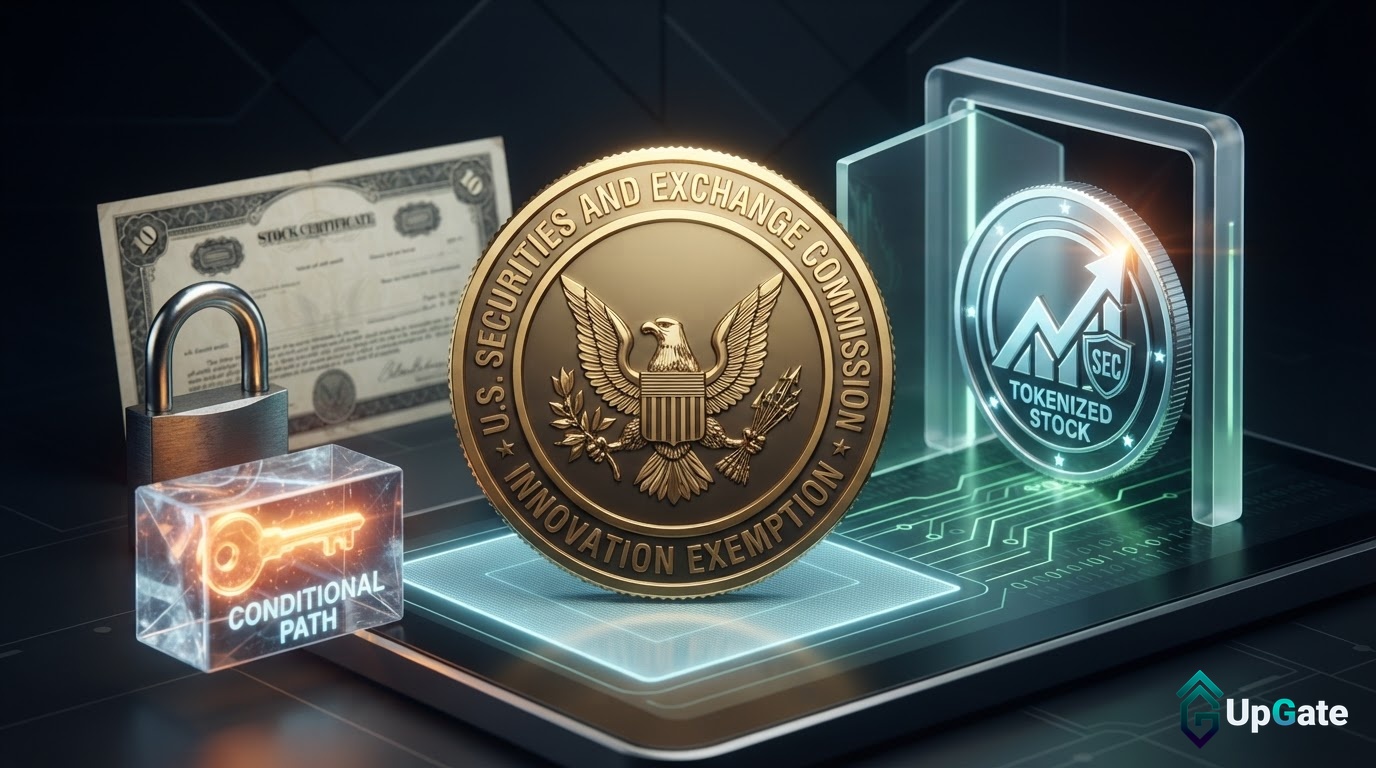
    The U.S. Securities and Exchange Commission (SEC) has introduced an innovation exemption, providing a conditional, five-year pathway for select decentralized finance (DeFi) entities to test the efficiency of blockchain technology in trading tokenized U.S. stocks under regulatory supervision. This framework, effective from September 17, 2026, to September 17, 2031, aims to create a controlled environment for DeFi to demonstrate its potential advantages over traditional market structures.

    A Controlled Testbed for Blockchain Efficiency

    The exemption permits Tokenized Securities Venues (TSVs) and liquidity providers to conduct permissioned trading of tokenized U.S.-listed National Market System (NMS) stocks. Designed with automated market makers (AMMs) and liquidity pools on public blockchains in mind, this framework offers an alternative to traditional exchanges. AMMs use asset pools and pricing formulas for trade execution, differing from the order book model with intermediaries. Crucially, the exemption allows these pools to operate without requiring parties to register as traditional exchanges or dealers, provided they implement sanctions screening and obtain issuer consent.

    Industry Involvement and Regulatory Distinctions

    Christopher Montagano, Chief Legal Officer at Orca, noted that this exemption allows DeFi to test its efficiency claims against established markets. Orca has been engaged in discussions with the SEC on similar frameworks since at least 2025, and has facilitated trading of tokenized stocks, including Forward Industries common stock, on its platform since November 2025. The SEC has emphasized that this exemption is not a broad ruling on DeFi but a specific pathway for entities willing to build permissioned layers, establish issuer relationships, and implement compliance controls. This approach clearly distinguishes it from fully permissionless DeFi, where trading is open to any wallet holder.

    Adoption and Future Outlook Remain Uncertain

    The exemption incentivizes projects that develop these compliance-focused layers, while protocols prioritizing open access may fall outside its scope. The ultimate success of this initiative hinges on market adoption: the number of TSVs launched, the liquidity drawn to tokenized stock pools, and the willingness of issuers to permit on-chain trading of their shares. As the exemption is conditional and time-limited, its outcome by September 17, 2031, could shape whether a permanent regulatory framework emerges or if the experiment concludes. This provides DeFi a critical opportunity to gather real-world data on the efficiency of on-chain trading for listed stocks, a long-standing claim within the DeFi community when compared to traditional Wall Street operations. The broader implications for market structure and the future of tokenized securities remain uncertain pending observed adoption and performance.

    Broader Context

    Source materials place the factual news in this context: DeFi has spent years claiming it can move markets faster and cheaper than Wall Street. Now it gets a chance to suggest it under regulatory supervision.

  • Crypto Group Backed by Coinbase Announces Midterm Picks After Clarity Act Fails

    Crypto Group Backed by Coinbase Announces Midterm Picks After Clarity Act Fails

    Crypto Advocacy Group Backs Bipartisan Slate in Key Midterm Races

    Stand With Crypto, the advocacy organization launched by Coinbase in 2023, revealed a bipartisan list of endorsements for Senate and House races on Wednesday, intensifying its electoral efforts just a month before November’s midterm elections and two weeks after the collapse of the Clarity Act in the Senate.

    The group’s initial Senate endorsements cover three contests. In Ohio, it is supporting Republican Senator Jon Husted, who is competing against Sherrod Brown, the former Chair of the Senate Banking Committee and a long-standing skeptic of cryptocurrency.

    Stand With Crypto also announced its backing for Republican Representative Ashley Hinson, who is running for a Senate seat in Iowa, and Democratic Representative Chris Pappas, campaigning in New Hampshire against former Republican Senator John Sununu. The organization stated that its candidate selections are based on their stances on cryptocurrency policy, “regardless of party affiliation.”

    On the House side, endorsements include Iowa Republican Mariannette Miller-Meeks and Alabama Democrat Shomari Figures. The group indicated it plans to increase its advertising in six House campaigns. This follows an earlier round of endorsements in August, when Stand With Crypto backed 32 incumbent House members it described as “proven digital asset policy champions.”

    The timing of these endorsements is particularly significant, given the recent failure of the Clarity Act and the subsequent, thinly veiled threats issued by the lobbying group towards lawmakers who voted against it.

    The Senate failed to advance the Clarity Act last month in a 49-50 vote, with Democrats voting as a unified bloc amid concerns regarding President Donald Trump’s cryptocurrency dealings. Stand With Crypto characterized this legislative setback as a pivotal moment, warning at the time that senators’ votes would be recorded on its public scorecard and that its supporters would hold lawmakers accountable at the ballot box.

    Executive Director Mason Lynaugh has stated that the group’s more than three million advocates are now fully concentrated on electing pro-cryptocurrency candidates.

    These endorsements emerge amidst a significant influx of political funding into the cryptocurrency sector. Unlike super PACs, Stand With Crypto does not make direct campaign contributions. Instead, it focuses on voter mobilization and evaluates candidates through its Voter Hub.

    However, candidates who receive high ratings from the group often benefit from funding from industry-aligned PACs. The Fairshake super PAC, for instance, recently launched a $30 million spending campaign targeting Brown, and combined political spending from cryptocurrency-aligned groups has approached approximately $200 million for the current election cycle.

    The endorsement of Husted highlights the critical nature of the Ohio race. Brown’s potential return to the Senate would grant cryptocurrency skeptics a powerful voice on the Senate Banking Committee, making Ohio a crucial test case for the industry’s electoral influence and its ability to sway voter behavior.

    For the moment, the message from the grassroots wing of the cryptocurrency sector is unambiguous: with legislative progress stalled in Congress, the battleground has shifted to the campaign trail.

  • Senate’s Clarity Act Failure Spurs Faster, Less Durable Crypto Regulatory Actions

    Senate’s Clarity Act Failure Spurs Faster, Less Durable Crypto Regulatory Actions

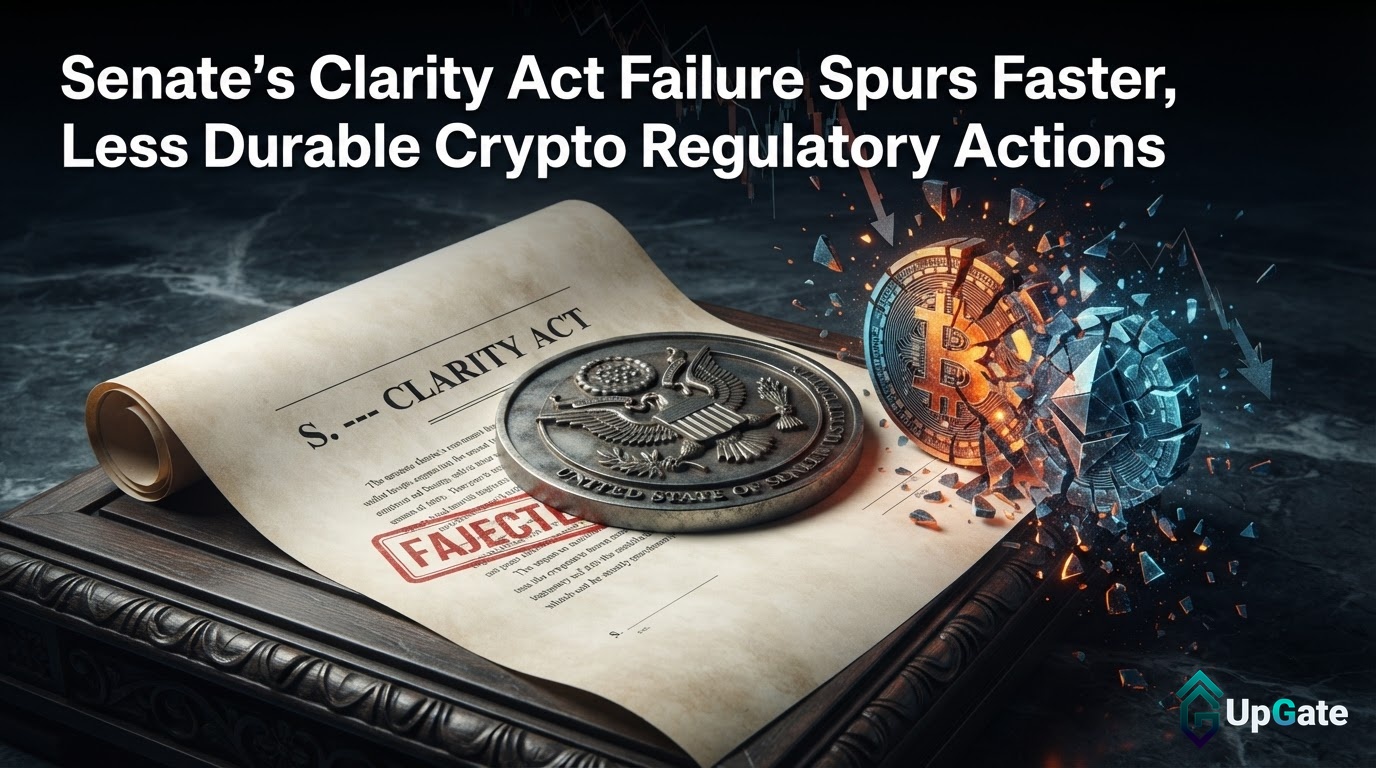
    The US Senate’s failure to advance the crypto market structure bill, known as the Clarity Act, on September 15 has coincided with a rally in the cryptocurrency market. This outcome suggests a trade-off where the industry may have gained faster, albeit less durable, regulatory actions from agencies in exchange for legislative certainty.

    Following the procedural vote in the Senate, which fell short of the 60 votes required to move forward, Bitcoin saw gains of approximately 8%, and Ether rose by about 7%. Tokens such as NEAR, Uniswap, and Avalanche experienced even more substantial increases. This market reaction aligns with the view that the industry may have prioritized immediate regulatory flexibility over the long-term stability that legislation could have provided.

    Bitwise Chief Investment Officer Matt Hougan argues that several compromises within the Clarity Act would have been less favorable to certain segments of the crypto industry than regulatory actions subsequently taken by federal agencies. For instance, Hougan said the bill’s failure benefits platforms like Coinbase that utilize stablecoin rewards to attract customers. He also noted that with the legislation stalled, established crypto exchanges can retain advantages derived from their existing state licenses and infrastructure.

    In the wake of the legislative setback, regulators have moved more swiftly than Congress might have on key issues. Two days after the Senate vote, the Securities and Exchange Commission (SEC) approved a five-year conditional “innovation exemption.” This exemption allows qualifying venues to trade tokenized US-listed stocks through permissioned automated market makers and liquidity pools without needing to register as traditional exchanges. Certain liquidity providers also received conditional relief from dealer registration.

    Further clarifying the regulatory landscape, SEC staff provided guidance on September 25 regarding revenue-generating tokens. This clarification, which is not an SEC rule and does not carry the force of law, stated that announcing a buyback program for a non-security crypto asset does not, by itself, constitute a promise of “essential managerial efforts” under the Howey test, a key factor in determining if an asset is an investment contract. This guidance reduces uncertainty for protocols including Hyperliquid, NEAR, and Uniswap.

    However, Hougan acknowledged that the accelerated pace of agency action comes with a trade-off in durability. Rules and exemptions established by agencies like the SEC and the Commodity Futures Trading Commission (CFTC) can be modified by future administrations or challenged in courts, unlike legislation, which provides a more difficult-to-reverse framework. JPMorgan analysts have also commented on this distinction between the durability of agency action versus legislation.

    Despite the potential for future shifts, the growing adoption of digital assets by major financial institutions could eventually make a broad reversal of current regulatory approaches increasingly difficult. The current environment presents a complex interplay between immediate regulatory opportunities and the inherent uncertainties of agency-driven frameworks compared to congressionally enacted laws.

    Why This Matters

    The materials describe a narrow update: The US Senate failed to advance the crypto market structure bill (Clarity Act) on September 15. The long-term durability of agency interpretations and exemptions compared to legislative rules.

    Broader Context

    Source materials place the market analysis in this context: The Clarity Act was a crypto market structure bill.

  • Garlinghouse: XRP Key to Ripple’s Payments

    Garlinghouse: XRP Key to Ripple’s Payments

    Ripple CEO Brad Garlinghouse has detailed the company’s strategy for XRP, cross-border payments, and the broader digital asset market, emphasizing the critical need for clear cryptocurrency regulations.

    Practical Use Cases and XRP’s Role

    In a recent interview, Garlinghouse asserted that cryptocurrencies must offer tangible utility and solve specific problems. He identified cross-border payments as a key area where Ripple leverages XRP. The company utilizes XRP to overcome challenges in international transactions, citing the digital asset’s rapid transaction speeds and comparatively low costs.

    Garlinghouse also touched upon the potential for digital assets in machine-to-machine and micro-payment scenarios, suggesting these applications might necessitate payment systems capable of handling transactions valued at fractions of a cent. He clarified, however, that XRP is not universally applicable and that different digital assets are suited for distinct purposes.

    The Impact of Regulation

    The Ripple CEO underscored the significant influence of regulation on cryptocurrency adoption. He noted that financial institutions exhibit caution when adopting digital assets amidst regulatory ambiguity. Garlinghouse pointed to the GENIUS Act as an example of legislation that enhanced clarity for stablecoins, particularly concerning disclosure and reserve requirements. He observed an increase in stablecoin payment activity following the implementation of these clearer rules.

    Garlinghouse also referenced Ripple’s protracted legal battle with the U.S. Securities and Exchange Commission, stating the company incurred approximately $150 million and four years defending the case. He highlighted the court’s determination that XRP itself is not a security, a finding that provided greater clarity for Ripple. Nevertheless, he acknowledged that the broader cryptocurrency industry continues to grapple with regulatory uncertainty regarding the classification of various digital assets.

    Strategic Expansion and Distribution Channels

    Ripple’s initial focus was on banks and payment providers, but the company is now broadening its reach through strategic acquisitions. Garlinghouse cited the acquisition of GTreasury, a treasury management firm serving large corporations, as a prime example. He noted that companies utilizing GTreasury collectively processed around $13 trillion in payments last year. Ripple views the network of corporate finance teams and treasurers on the GTreasury platform as a potential distribution channel for its payment technologies. Garlinghouse suggested that Ripple could offer stablecoin or XRP-based payment solutions to companies seeking alternatives for international transactions.

    Ripple’s Relationship with XRP

    The Ripple CEO also addressed the company’s connection to XRP. He explained that the XRP Ledger is open-source and decentralized, with Ripple controlling approximately 2% of its validators. Garlinghouse emphasized that ownership of XRP does not confer control over the network’s governance, as the ledger does not operate on a proof-of-stake system. Consequently, he argued, Ripple’s holdings of XRP should not be construed as control over the XRP Ledger.

    Cryptocurrencies as Long-Term Assets

    Garlinghouse also discussed the potential for cryptocurrencies to serve as long-term financial assets. He characterized Bitcoin as a store of value and posited that other digital assets could evolve to support diverse use cases, specifically identifying payments as XRP’s primary focus. He anticipates that financial institutions will continue to explore digital assets as the cryptocurrency industry matures. For XRP, the ongoing emphasis remains on payments, financial institutions, and the application of blockchain technology for cross-border value transfer.

  • Polymarket Adds Sportsbook-Style Protections Amid Regulatory Pressure

    Polymarket Adds Sportsbook-Style Protections Amid Regulatory Pressure

    Polymarket Faces Dual Pressure as Legal Battle Intensifies

    Polymarket, a prominent prediction market platform, is currently navigating a complex defensive strategy on two distinct fronts. On September 30, 2026, the company quietly introduced a suite of consumer protection tools, features that would be instantly recognizable to users of licensed sports betting platforms. Simultaneously, Polymarket is engaged in a legal dispute with New York’s top legal officials, who contend that the platform is operating as an unlicensed and illegal gambling enterprise within the state.

    The timing of these developments is notably conspicuous. The rollout of the new consumer protection measures occurred less than a week after New York Attorney General Letitia James and Governor Kathy Hochul initiated legal action against Polymarket US on September 24, 2026. The lawsuit alleges that the platform has been facilitating unlicensed sports-related gambling contracts within New York.

    New Consumer Protections Introduced

    The newly implemented consumer protection measures include self-imposed deposit limits, a self-exclusion list allowing users to temporarily or permanently block themselves from trading, and access to mental health resources through a partnership with Birches Health. The latter initiative is specifically designed to assist users identified by the platform as exhibiting compulsive trading behaviors.

    These features are standard offerings on regulated sportsbooks in states such as New Jersey and Colorado, where licensed operators are legally mandated to provide them. Polymarket’s decision to offer these tools is voluntary.

    Voluntary Measures and Enforcement Gaps

    This distinction is significant. Voluntary consumer protections lack inherent enforcement mechanisms. On a regulated platform, if a user exceeds their self-imposed deposit limit, the operator is legally obligated to intervene. In contrast, Polymarket’s system is opt-in, meaning these safeguards are only effective if users actively choose to utilize them.

    Polymarket’s defense hinges on the argument that blockchain’s inherent transparency provides a level of accountability that traditional gambling platforms cannot match. The platform operates on-chain, ensuring that every transaction is publicly verifiable. Polymarket asserts that its multi-layered surveillance systems, combined with this transparency, can establish a model for responsible operations within the prediction market sector.

    Legal Maneuvers and Federal Preemption Claims

    Polymarket has not passively accepted the New York lawsuit. The company has filed a countersuit and sought to move the case to federal court, invoking the doctrine of federal preemption. Polymarket contends that its U.S. operations fall under the oversight of the Commodity Futures Trading Commission (CFTC) through its subsidiary, QCX LLC. Essentially, the argument is that federal commodity trading law supersedes state gambling statutes concerning Polymarket’s contracts.

    Polymarket acquired QCX LLC in July 2025, using this acquisition to re-establish its U.S. operations in December 2025. This relaunch occurred nearly three years after the platform was compelled to block American users following a 2022 settlement with the CFTC. That settlement, which involved a fine and an agreement to cease operations for U.S. traders, now looms over the current legal proceedings as evidence of past regulatory challenges.

    Complicated Relationship with the CFTC

    The relationship between Polymarket and the CFTC is complex. In June 2026, the agency initiated a separate investigation into Polymarket, reportedly examining its marketing practices. This places Polymarket in the position of arguing that federal oversight legitimizes its operations, while simultaneously being investigated by that same federal regulator.

    Focus on Sports Contracts and Regulatory Scrutiny

    The New York lawsuit specifically targets sports-related contracts, a category of prediction market that closely resembles sports betting under most state gambling laws. New York maintains one of the most stringently regulated sports betting markets in the United States, with licensed operators facing substantial fees and ongoing oversight. Polymarket’s engagement in sports-related contracts without adhering to this licensing framework is the direct catalyst for the Attorney General’s action.

    Prediction markets have seen substantial trading volume in 2026, driven in part by major election cycles and the expansion into sports contracts. This growth has made them a focal point for regulators.

    Industry Reactions and Potential Precedents

    Traditional sportsbooks argue that voluntary compliance is insufficient, having invested considerable time and capital in obtaining licenses, establishing compliance infrastructure, and meeting state-mandated responsible gambling requirements.

    For traders and market participants, the immediate concern is the impact of these legal battles on Polymarket’s operational viability in key jurisdictions. An unfavorable ruling in the New York case could lead to another wave of restrictions on U.S. users, mirroring the consequences of the 2022 CFTC settlement.

    The broader cryptocurrency and decentralized finance ecosystem is closely observing these proceedings, as the arguments presented in the Polymarket case carry implications beyond a single platform. If federal CFTC oversight is deemed sufficient to preempt state gambling laws for on-chain prediction markets, it could establish a precedent for other platforms. Conversely, a victory for New York would signal that states retain the authority to impose their own licensing requirements irrespective of federal commodity oversight, potentially creating a more fragmented and costly regulatory environment for platforms operating nationwide.