Tag: Regulation & Policy

  • SEC’s Non-Binding Crypto Guidance Offers Clarification Amidst Regulatory Uncertainty

    SEC’s Non-Binding Crypto Guidance Offers Clarification Amidst Regulatory Uncertainty

    The U.S. Securities and Exchange Commission (SEC) has updated its frequently asked questions (FAQ) on crypto assets, providing staff guidance that certain token buybacks, network maintenance services, and staking receipt tokens may not necessarily constitute investment contracts under federal securities laws. However, the SEC explicitly stated that this guidance is not legally binding and does not alter existing regulations or create new obligations.

    Guidance Details and Caveats
    The SEC’s updated FAQ, released on Friday, offers interpretations of the Howey test. It suggests that in cases where a crypto system is operational and decentralized, token buyback plans might not be viewed as investment contracts. Similarly, services aimed at maintaining and upgrading operational networks, along with staking receipt tokens, may not automatically fall under securities regulations. This development follows similar guidance issued by the Commodity Futures Trading Commission (CFTC) on tokenized assets and blockchain accounting in the previous week.

    Regulatory Vacuum and Agency Action
    This move by the SEC and CFTC comes after legislative efforts to provide comprehensive crypto regulation stalled. The CLARITY Act, intended to define digital assets and their regulatory frameworks, failed to pass the Senate. In the absence of congressional legislation, regulatory agencies are utilizing staff guidance as a means to signal their current thinking and enforcement intentions. While not legally binding, this guidance serves as a practical reference for market participants assessing compliance risks.

    Nuanced Approach and Persistent Uncertainty
    The SEC’s approach, as indicated by this FAQ, suggests a potentially tiered regulatory framework for crypto projects. Stricter standards might apply to early-stage, centralized projects, while more lenient interpretations could be afforded to mature, decentralized networks. This nuanced approach aims to provide some direction for the industry, though the specific criteria for distinguishing between these categories remain subject to interpretation.

    Despite the clarifications, significant regulatory uncertainty persists. The SEC emphasized that the FAQ is staff guidance and has no legal binding force, meaning it could be subject to change by future administrations. This lack of definitive legal standing means that market participants must still navigate a complex and evolving regulatory landscape. The specific implications of the SEC’s guidance for individual crypto projects remain unclear, and the exact criteria for differentiating between early-stage and mature decentralized networks are not explicitly defined.

    Personnel Changes
    Adding to the evolving landscape, Hester Peirce, often referred to as “Crypto Mom” and known for her generally crypto-friendly stance, is scheduled to leave the SEC on October 2nd, after eight years of service. She is expected to join Regent University School of Law in November. Her departure marks the end of a tenure that saw significant debate and development in the SEC’s approach to digital assets.

    In summary, the SEC’s latest crypto FAQ offers directional clarification on specific activities, but its nature as non-binding staff guidance underscores the ongoing lack of comprehensive legislative clarity in the United States. Market participants will need to continue monitoring regulatory developments and exercising caution due to the inherent uncertainties.

    Why This Matters

    The materials describe a narrow update: The SEC released an updated FAQ on crypto assets, providing new interpretations of the Howey test. Whether future administrations will uphold the current staff guidance.

    Broader Context

    Source materials place the factual news in this context: SEC and CFTC are issuing staff guidance after the CLARITY Act stalled in the Senate.
  • Senate Report: Tether Fuels Iran’s Shadow Banking, 87% Terror Funds Linked to USDT

    Senate Report: Tether Fuels Iran’s Shadow Banking, 87% Terror Funds Linked to USDT

    Senate Panel Report Alleges Tether Fuels Iran’s Shadow Banking System

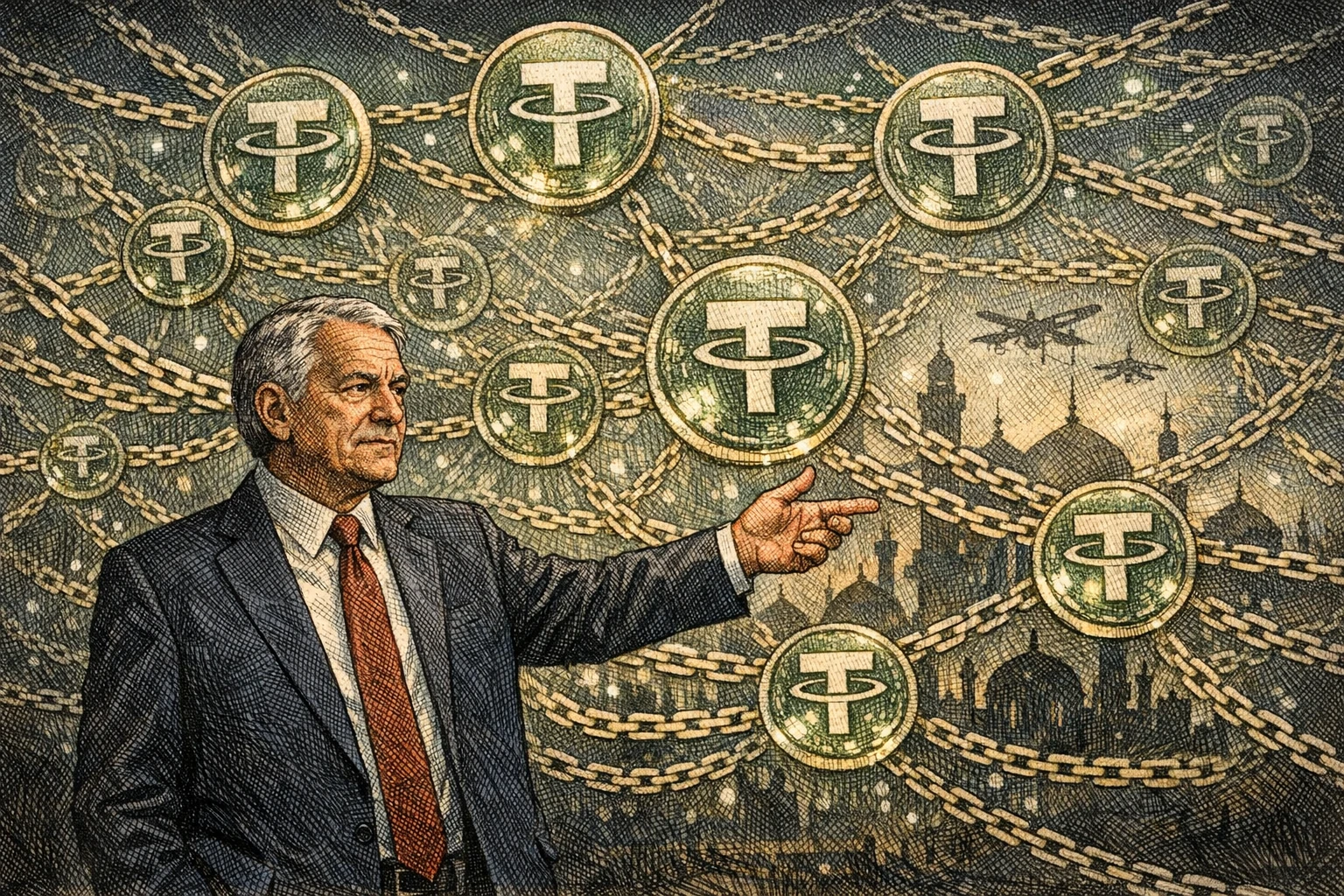
    A 28-page report released by the Democratic staff of the Senate Permanent Subcommittee on Investigations (PSI) has accused Tether and its flagship stablecoin, USDT, of becoming a core tool for Iran’s “shadow banking system.” The report claims this allows Tehran to circumvent sanctions, funding regional proxies, missile and drone programs, and human rights abuses. According to the report, 87% of the USDT transactions from 757 sanctioned, Iran-linked wallets flagged for terror financing originated from wallets primarily trading USDT. Tether, in its response, stated that it had frozen $550 million in Iran-related USDT over the past year.

    USDT as a Sanctions Evasion Tool

    The report, led by Senator Richard Blumenthal, analyzed on-chain transaction data from 846 sanctioned or Iran-related crypto wallets. It revealed how Tehran is utilizing USDT to bypass U.S. sanctions, channeling funds to regional proxies, drone and missile programs, and to finance human rights abuses. Blumenthal stated that the report exposes how Tether and its token have enabled the Iranian government to defy the sanctions regime.

    The core data presented in the report is striking: 87% of USDT transactions from 757 wallets implicated in Iranian terror financing originated from wallets that primarily traded USDT. Investigators noted that Iran’s preference for USDT is unsurprising, given its widespread use on Iranian crypto exchanges and its significantly higher liquidity compared to alternative stablecoins. This suggests that as traditional banking channels are cut off by sanctions, Iran’s financial networks naturally gravitate towards on-chain stablecoins, with USDT emerging as the preferred choice due to its dominant market share and deep liquidity.

    Allegations of Tether’s Passive Approach

    The report’s central argument is not that “Iran used USDT,” but rather that “Tether did not actively address it.” The report directly accuses Tether of repeatedly failing to freeze and block suspicious wallets. Investigators wrote, “Beyond receiving formal notices of sanctions or seizures, Tether has failed to take action against wallets exhibiting strong indicators of illicit finance, even when their association with Iranian entities or terrorist organizations has been public.”

    The key accusation in this report is not that “Tether assisted Iran,” but that Tether was “passive.” The report implies that Tether’s freezing mechanism is reactive, only acting upon formal requests from the U.S. government or other jurisdictions. However, for wallets with anomalous on-chain transaction patterns, financial dealings with known Iranian entities, and sufficient publicly available information for judgment, Tether has not proactively intervened. This, the report suggests, falls short of the Anti-Money Laundering (AML) obligations expected of traditional banking institutions.

    Calls for Investigation and Regulatory Action

    In a letter to Attorney General Todd Blanche and Treasury Secretary Scott Bessent, Blumenthal urged them to investigate potential sanctions and banking law violations by Tether. This letter signals that the PSI’s investigation will not end with the report and that more substantial regulatory actions may follow.

    The report also shifts focus to Tether’s political connections in the U.S. Blumenthal specifically mentioned Commerce Secretary Howard Lutnick, who led Cantor Fitzgerald, a firm that serves as Tether’s custodian, before entering government. Lutnick’s sons now manage the company’s operations. Separately, Bo Hines, former executive director of the White House crypto task force, is now the CEO of Tether U.S.

    Blumenthal questioned whether the continued use of USDT by the Iranian regime, given Tether’s deep ties to the Trump administration, implies that Tether has received lenient enforcement and less oversight from federal authorities regarding its anti-money laundering obligations. The implication is clear: has Tether enjoyed a “regulatory exemption” due to its political relationships?

    Tether’s Defense and the Stablecoin Dilemma

    On Monday, Tether issued a statement emphasizing its role in freezing $550 million worth of Iran-related USDT over the past year. In a Tether press release, CEO Paolo Ardoino stated that USDT is not a haven for sanctioned individuals, terrorist organizations, or criminal networks. He stressed that public blockchains offer greater visibility into fund flows than cash, and Tether acts when provided with credible information by law enforcement.

    Ardoino’s core argument is that Tether’s role is to “cooperate with law enforcement,” not to “conduct its own investigations.” While on-chain data is transparent, Tether’s position is that they freeze assets when law enforcement provides clear directives, and proactive screening is not their obligation.

    The report places stablecoins in a paradoxical position: on one hand, USDT is a powerful tool for U.S. sanctions against Iran, with Tether’s freezing capabilities allowing it to track and lock illicit funds. On the other hand, USDT also serves as a conduit for Iran to circumvent sanctions, as anyone can use it to transfer funds as long as the wallet is not flagged.

    Following the passage of the GENIUS Act, U.S. stablecoin issuers are required to hold substantial short-term U.S. Treasury debt, further integrating stablecoins with the U.S. financial system. This PSI report could become a focal point for future regulatory pressure, demanding that stablecoin issuers assume more proactive AML screening obligations, rather than merely “freezing upon notification.” For Taiwan, this also serves as a reminder to regulators: as stablecoins become mainstream tools for cross-border payments, ensuring local institutions are not entangled in international sanctions disputes will be a critical future challenge.

  • Senate Report Links Tether’s USDT to Iran’s Shadow Banking

    Senate Report Links Tether’s USDT to Iran’s Shadow Banking

    Senate Report Alleges USDT Fuels Iran’s Sanctions Evasion

    A new report from the U.S. Senate has identified Tether’s USDT stablecoin as a critical component of Iran’s efforts to circumvent international sanctions, detailing significant financial flows through the cryptocurrency. The findings, released by Democrats on the Senate Permanent Subcommittee on Investigations (PSI) on September 28, 2026, suggest that USDT has become a primary tool for Iran’s shadow banking network.

    USDT Dominance in Sanctioned Wallets

    The 28-page report, titled “Tethered to Terrorism: Crypto and Iran’s Shadow Banking Network,” analyzed 846 sanctioned crypto wallets linked to Iran. It found that 84% of these wallets transacted primarily in USDT. The reliance on the stablecoin is even more pronounced in wallets specifically connected to terrorism financing, where USDT accounted for 87% of transactions across 757 analyzed wallets.

    Iran’s Central Bank Amasses USDT Reserves

    According to the report, Iran’s Central Bank has accumulated at least $507 million in USDT. This reserve effectively provides the sanctioned nation with access to dollar-denominated liquidity without needing to engage with the traditional global banking system.

    Oil Smugglers and Broader Crypto Activity

    The investigation also revealed that sanctioned oil smugglers alone transferred over $603 million in USDT between 2021 and 2025. In 2025, Iran conducted an estimated $2 billion in cryptocurrency transactions, with USDT being the dominant currency. The report further indicated connections to Hezbollah, the Lebanese militant group designated as a terrorist organization by the U.S.

    The subcommittee has forwarded its findings to the Treasury Department and the Justice Department for further investigation.

    Tether’s Response and Senate Criticism

    Tether has stated that it is cooperating with U.S. authorities and has frozen approximately $550 million in USDT associated with Iran in 2026, including $344 million in April and over $130 million in July.

    However, the Senate report contends that these actions are insufficient and too slow. Investigators criticized Tether for delays in freezing certain wallets and for failing to proactively block others, suggesting that these lags created opportunities for funds to be moved before freezing orders could be implemented.

    The report posits that USDT’s prevalence over alternatives like Bitcoin within Iranian networks stems from its combination of dollar stability, high liquidity, and widespread acceptance, which outweigh the perceived risk of eventual freezing for illicit actors.

    Sanctions on Iranian Exchanges

    In a related development, four Iranian crypto exchanges were sanctioned on June 2, 2026, for their alleged ties to the Islamic Revolutionary Guard Corps (IRGC) and involvement in money laundering.

    Competitive Landscape Shifts

    The scrutiny of Tether’s role could benefit competing stablecoins, such as USDC, issued by Circle. Circle has positioned itself as a compliance-focused alternative and has consistently emphasized its alignment with U.S. regulatory frameworks. The report linking USDT to terrorism financing sharpens this competitive distinction.

    The report highlights an irony: the centralized control that makes USDT useful for regulators in tracking transactions is also the feature that draws criticism when that control is not exercised swiftly enough.

  • Coinbase Launches USDC-Native Clearinghouse Post-CFTC Approval

    Coinbase Launches USDC-Native Clearinghouse Post-CFTC Approval

    Coinbase Secures Key Financial License, Unveiling First USDC-Native Derivatives Clearinghouse

    Coinbase has obtained a crucial license in a segment of finance that cryptocurrency companies have long sought to penetrate. On September 28, the U.S. Commodity Futures Trading Commission (CFTC) officially registered Coinbase Clearing LLC as a derivatives clearing organization, marking a significant milestone as the nation’s first clearinghouse for derivatives operating natively with USDC.

    A New Paradigm for Clearing

    A clearinghouse functions as both a guarantor and an administrator in financial transactions. When two parties engage in a trade of futures contracts or options, the clearinghouse acts as an intermediary, ensuring that each side fulfills its obligations and receives payment. Traditionally, this process relies on the movement of U.S. dollars through conventional banking systems. Coinbase’s innovative approach replaces these established channels with USDC, Circle’s stablecoin pegged to the U.S. dollar, for both settlement and collateral purposes.

    Roots in Regulatory Evolution

    This landmark registration is the culmination of a multi-year effort to adapt financial regulations to the digital asset landscape. The groundwork was laid with the CFTC’s launch of a digital assets pilot program in December 2025. This initiative paved the way for Bitcoin, Ether, and USDC to be recognized as acceptable collateral within regulated derivatives markets, deliberately dismantling outdated restrictions that had previously excluded virtual currencies from such roles.

    Strategic Maneuvers and Partnerships

    Coinbase moved swiftly to leverage this regulatory opening. The company forged a partnership with Nodal Clear, with the aim of launching a platform in 2026 that would utilize USDC as collateral for futures trading. Prior to this registration, Coinbase Derivatives, a CFTC-recognized designated contract market, had utilized Nodal Clear as a third-party clearinghouse while pursuing direct access to USDC for its clearing operations. The establishment of Coinbase Clearing LLC represents the successful execution of this strategy, transforming a pilot program experiment into a fully authorized clearing operation.

    The Advantages of 24/7 Settlement

    The integration of USDC offers a significant operational advantage: round-the-clock settlement. Because stablecoins operate on blockchain infrastructure, collateral transfers and margin calls are no longer constrained by traditional banking hours. This capability provides institutional traders managing global risk with a substantial upgrade, enabling more agile and efficient operations across different time zones.

    Navigating New Risks

    While this development represents a significant advancement, it does not eliminate inherent risks. The stability of any clearinghouse is contingent on its risk management framework. Operating on stablecoin rails introduces specific considerations, including questions surrounding redemption reliability, potential blockchain congestion, and smart contract vulnerabilities. However, the CFTC’s approval suggests that the agency has determined these risks to be manageable within its existing supervisory structure.

    Coinbase’s Integrated Vision

    For Coinbase, the strategic implications are clear. The company already commands a significant presence in the U.S. with one of the largest cryptocurrency exchanges, a robust custody business, and an expanding institutional services division. The addition of a registered clearinghouse allows Coinbase to offer its clients a comprehensive, vertically integrated suite of services, encompassing trade execution, custody, and now clearing, all under a single corporate entity.

    Boosting USDC Demand

    The registration of Coinbase Clearing LLC is poised to generate substantial new demand for USDC. Each dollar of margin posted in USDC at Coinbase Clearing represents stablecoin supply actively engaged in a productive financial use case, rather than remaining idle on an exchange. This dynamic also benefits Circle, the issuer of USDC, as each circulating USDC is backed by reserves that generate yield for the company.

  • Polymarket Launches Rapid Bitcoin Prediction Markets Amid Regulatory Questions

    Polymarket Launches Rapid Bitcoin Prediction Markets Amid Regulatory Questions

    Polymarket has launched new 15-minute Bitcoin price prediction markets on its US app, a move that immediately surfaces regulatory questions regarding the classification of these novel, high-frequency contracts. The product, which became available on September 22, 2026, at 12:00 PM ET, allows users to wager on whether Bitcoin’s price will finish above or below a specified reference price at the conclusion of each 15-minute interval.

    These markets operate continuously, 24 hours a day, seven days a week, with automated settlement and resolution data sourced from Chainlink’s BTC/USD oracle. Bitcoin is the sole asset currently offered in this format. Polymarket’s US app operates under the regulation of the Commodity Futures Trading Commission (CFTC), meaning any new product introduced is subject to potential regulatory scrutiny.

    Regulatory Ambiguity Surfaces

    The central uncertainty revolves around how the CFTC will classify these new contracts. Polymarket has historically specialized in longer-duration event contracts, such as those predicting election outcomes or Federal Reserve rate decisions. However, the rapid, 15-minute cadence of these new Bitcoin markets introduces ambiguity, blurring the line between event contracts and derivatives. This distinction is critical from a regulatory perspective, and the CFTC has been examining Polymarket’s operations. A key question regulators must address is where an event contract concludes and a derivative begins.

    Should the CFTC determine that these contracts are, in essence, derivatives disguised as event contracts, Polymarket could face requirements for different registration or product modifications. This potential regulatory classification remains a significant uncertainty. Furthermore, Polymarket’s services already have restricted access in certain US states, and the introduction of high-frequency trading products could heighten state-level regulatory attention.

    Historical Context and Competitive Landscape

    Polymarket previously settled with the CFTC in 2022, a resolution that coincided with the platform’s temporary withdrawal from US markets before its regulated return. This history underscores the sensitivity of its operations to regulatory oversight.

    The commercial success and regulatory reception of Polymarket’s new product will be closely observed by competitors, including Kalshi, which also operates under CFTC oversight. If Polymarket’s 15-minute Bitcoin markets achieve commercial success without drawing regulatory intervention, it could prompt competitors to introduce similar offerings within months. However, the potential for regulatory challenges persists as a notable uncertainty.

    The launch positions Polymarket in more direct competition with crypto derivatives exchanges, a sector with distinct regulatory expectations. The CFTC’s ongoing examination of Polymarket’s operations and this new product could potentially lead to broader regulatory discussions concerning the classification of such contracts within the evolving digital asset market.

    Why This Matters

    The materials describe a narrow update: Polymarket introduced a new product on its US app allowing users to wager on whether Bitcoin’s price will be above or below a reference price at the end of each 15-minute interval. The CFTC’s classification of Polymarket’s 15-minute contracts: whether they are considered event contracts or derivatives.

    Broader Context

    Source materials place the factual news in this context: Polymarket built its reputation on longer-duration event contracts, such as presidential election outcomes and Fed rate decisions.

  • SEC Greenlights Token Buybacks for Crypto

    SEC Greenlights Token Buybacks for Crypto

    SEC Clarifies Token Buybacks, Easing Crypto Network Concerns

    The U.S. Securities and Exchange Commission (SEC) has issued a significant clarification regarding token buybacks for cryptocurrency networks, potentially resolving a long-standing area of uncertainty for the industry. In an update to its crypto Frequently Asked Questions (FAQ) on Friday, the SEC’s Division of Corporation Finance stated that announcing a token buyback does not constitute a promise of “essential managerial efforts” once a network is operational.

    This distinction is crucial under the Howey test, which determines whether an asset qualifies as a security based on an expectation of profit derived from the efforts of others. By clarifying that a buyback announcement alone does not meet this threshold for functional networks, the SEC has provided much-needed clarity for protocols that have operated in a state of regulatory ambiguity.

    The SEC staff further elaborated that maintaining, upgrading, or expanding a functional network, or promoting its current activities, does not qualify as an investment contract. Similarly, vague aspirational statements that do not promise profit are also excluded. Gabriel Shapiro, a securities attorney at MetaLeX Labs, noted that the buyback guidance “goes further than I expected,” suggesting that the SEC’s application of securities laws to crypto is becoming increasingly nuanced.

    However, the guidance maintains a clear boundary. If a network is not yet functional and an issuer promotes a buyback as a source of yield or returns for token holders, it can still fall under securities regulations. Therefore, the guidance acts as a filter rather than a blanket exemption. The message is clear: launching a working product and subsequently engaging in token buybacks is permissible, whereas promising returns before a product is developed carries regulatory risk.

    The announcement is poised to benefit numerous projects that have implemented token buyback programs. Data from DefiLlama indicates that protocols such as HYPE, PUMP, ENA, AAVE, SKY, LDO, PENDLE, AERO, RAY, JTO, NEAR, ETHFI, SYRUP, LIT, ASTER, KMNO, MET, CC, CARDS, PONS, and STONK, among others, operate live products with revenue streams that fund these buybacks. For instance, Hyperliquid utilizes USDC reserve yield for HYPE buybacks, while Pump.fun has burned $451 million worth of tokens. Pons directs approximately 80% of its V1 revenue to buybacks, and Ethena’s holders have approved routing 95% of net revenue to ENA buybacks. These initiatives, previously operating in a legal gray area, now appear to have regulatory endorsement.

    The SEC’s guidance quietly validates a model that the industry has increasingly adopted: viewing tokens as claims on protocol cash flow rather than speculative bets on future development. This “revenue meta” has now received regulatory approval, suggesting a potential re-evaluation of the valuations for projects demonstrating strong revenue generation.

  • Polymarket’s US stock foray sparks regulatory worries

    Polymarket’s US stock foray sparks regulatory worries

    Polymarket Ventures into Private Company Valuations with New Prediction Markets

    Polymarket, a prominent prediction market platform, is venturing into the highly exclusive realm of private company valuations. In May 2026, the company launched contracts tied to the milestones of “unicorn” companies—privately held startups valued at over $1 billion. These new offerings encompass approximately 1,600 private companies with a collective valuation exceeding $5 trillion.

    New Contracts Target Unicorn Milestones

    The newly introduced contracts allow users to speculate on various outcomes for some of the world’s most significant privately held firms. These include the timing of initial public offerings (IPOs), valuation thresholds, and activity in secondary share markets. Data for resolving these markets will be sourced exclusively from Nasdaq Private Market. Notably, these equity-linked markets are accessible only through Polymarket’s offshore platform, which is unavailable to U.S. residents.

    U.S. Operations and Regulatory Scrutiny

    Polymarket’s domestic operations are managed by QCX LLC, a subsidiary regulated by the Commodity Futures Trading Commission (CFTC). Polymarket acquired QCX LLC in July 2025, three years after settling with the CFTC for $1.4 million due to prior unregistered activities. The U.S. platform currently hosts prediction markets focused on public stock metrics, such as the daily direction of the S&P 500 and market capitalization rankings.

    Legal Experts Raise Concerns Over Jurisdiction

    Legal experts have voiced concerns that equity-tied contracts could be classified as security-based swaps. Such a classification would place them under the jurisdiction of the Securities and Exchange Commission (SEC) rather than the CFTC. Security-based swaps are subject to distinct registration requirements, disclosure obligations, and anti-fraud provisions.

    New York Lawsuit Targets Gambling Operations

    On September 24, 2026, New York Attorney General Letitia James and Governor Kathy Hochul initiated a lawsuit against Polymarket, alleging illegal unlicensed gambling operations. This legal action specifically targets Polymarket’s sports-related contracts.

    Federal Preemption and State Enforcement

    The extent to which federal preemption shields CFTC-regulated platforms from state-level gambling statutes remains an open question. Even if Polymarket’s U.S. platform, regulated by the CFTC, is protected from state gambling laws, the offshore platform offering the equity contracts operates in a different legal landscape. New York’s lawsuit could potentially establish a precedent that prediction market operators with any U.S. connection face state enforcement actions, irrespective of where specific contracts are offered.

    Information Asymmetry in Private Markets

    A significant challenge in private company prediction markets is the inherent asymmetry of information. Employees, investors, and board members often possess material nonpublic information that could provide them with substantial advantages in markets tied to company milestones. Unlike public equity markets, which have established regulatory frameworks to prevent insider trading and informational edge, private company prediction markets currently lack such safeguards.

    Potential SEC Intervention and Regulatory Framework

    Should the SEC determine that these equity-linked contracts qualify as security-based swaps, Polymarket would be compelled to adhere to a significantly different regulatory framework. This could involve registering as a security-based swap execution facility, implementing mandatory reporting, and complying with Regulation SCI for market infrastructure.

    Industry Precedent and Trader Risks

    Other prediction market operators, such as Kalshi, are also expanding into financial event contracts. A definitive ruling on the regulatory classification of equity-linked prediction markets would set a crucial precedent for the entire industry. For traders currently utilizing the offshore platform to speculate on unicorn milestones, the primary risk is the potential for regulatory actions to disrupt markets, necessitate contract unwinding, or alter resolution terms with little advance notice. Polymarket has previously settled with the CFTC once.

  • South Korea’s Financial Services Commission Explores Digital Asset Market-Making

    South Korea’s Financial Services Commission Explores Digital Asset Market-Making

    South Korea’s Financial Services Commission (FSC) is reportedly considering the introduction of a market-making system for digital assets, a move that could significantly alter the country’s regulatory landscape for cryptocurrencies. This consideration follows a notable price surge of the JPYC stablecoin on the Upbit exchange, which highlighted issues of limited liquidity in the domestic market.

    Currently, market-making activities for digital assets are restricted in South Korea under existing rules designed to prevent market manipulation. However, recent events and discussions suggest a potential shift in the FSC’s stance. Yoo Young-joon, director of digital finance policy at the FSC, indicated that the commission is reviewing the possibility of implementing market-making systems to enhance the efficiency and stability of the digital asset market.

    The JPYC stablecoin, a yen-backed digital asset, experienced a significant price spike on Upbit on September 17, 2024. It reached a high of 37.6 Korean won, more than four times its pegged value, which was reportedly due to limited liquidity on the exchange. The stablecoin had opened trading at 12 Korean won on the same day.

    This incident has brought renewed attention to the challenges posed by the absence of a formal market-making framework in South Korea. Yoonyoung Choi, from the Korbit Research Center, previously argued in a paper published in the Seoul Law Review that the domestic crypto market suffers from “serious liquidity problems.” According to Choi, this lack of a formal market maker system leads to price discrepancies and high volatility, citing the “Kimchi premium” as an example of market inefficiency.

    Academics have previously debated the merits of allowing market makers in the South Korean crypto space. In a 2024 paper, Lee Min Jung, a researcher at KB Securities, noted that regulators at the time did not permit crypto market making due to concerns about potential market manipulation. Lee suggested that regulators might consider carve-outs for market makers once the market achieves greater stability.

    The FSC’s exploration of a market-making system comes as South Korea works to establish a more comprehensive regulatory framework for its digital asset industry. In July 2024, the FSC announced plans to introduce a consolidated Digital Asset Basic Act. This proposed legislation aims to cover stablecoins and the broader crypto market, including provisions for digital asset businesses, exchanges, disclosures, and internal controls. However, key aspects of this act, such as rules governing issuers of won-denominated stablecoins, are still under discussion among lawmakers.

    While the FSC is considering market-making systems, uncertainties remain regarding the specifics and timeline of any potential regulatory changes. The extent to which lawmakers will finalize the Digital Asset Basic Act also remains to be seen. The reported consideration by the FSC suggests a potential evolution in South Korea’s approach to digital asset regulation, aiming to balance market stability and investor protection with the need for efficient and liquid markets.

    Why This Matters

    The materials describe a narrow update: Following a significant price spike of the JPYC stablecoin on the Upbit exchange, South Korea’s FSC is reviewing its stance on crypto market making, which is currently restricted under market manipulation rules. Whether South Korea will formally introduce a market-making system for digital assets.

    Broader Context

    Source materials place the factual news in this context: Crypto market making is effectively restricted under South Korea’s manipulation rules.

  • Newsom Signs First-in-Nation Ban on Public Officials Using Meme Coins

    Newsom Signs First-in-Nation Ban on Public Officials Using Meme Coins

    California Bans Public Officials from Issuing Memecoins

    Sacramento, CA – California Governor Gavin Newsom has signed AB 2409 into law, making the state the first in the nation to explicitly prohibit state and local public officials from issuing memecoins. The legislation also restricts cryptocurrency service providers from offering tokens associated with public officials to California residents. The new law will take effect on January 1, 2027.

    Governor Newsom publicly criticized former President Donald Trump’s 2025 memecoin launch, highlighting the discussion around “political-business conflicts of interest.”

    New Legislation Targets Political Memecoins

    Governor Gavin Newsom signed AB 2409 on Sunday, explicitly banning California state and local public officials from issuing memecoins. This move establishes California as the first jurisdiction to legislate against “political memecoins.” The bill also prohibits digital asset service providers from offering tokens issued by or in collaboration with public officials to California residents. The regulations will apply to federal, state, and local levels, with tokens issued after January 1, 2027, falling under the new controls.

    Addressing Conflicts of Interest

    AB 2409, introduced by Assemblymember Avelino Valencia on February 20, 2026, directly addresses the potential conflicts of interest arising from public officials leveraging their political influence to profit from token issuance. At the signing ceremony, Newsom stated, “No public official should profit from their position, and we are building stronger safeguards to ensure this does not happen in our state.”

    While existing California law already prohibits state officials and employees from engaging in business activities or enterprises inconsistent with their duties, AB 2409’s innovation lies in codifying the prohibition of “issuing memecoins” into the Government Code as a distinct provision. This means public officials are not only barred from using public resources to promote tokens but are fundamentally prohibited from issuing them, regardless of whether they use their real name, a pseudonym, or a third-party custodian. Any issuance traceable to a public official’s status will be subject to the ban.

    Enforcement and Penalties

    The bill empowers the California Attorney General, district attorneys, city attorneys, or county attorneys to initiate civil lawsuits to enforce the ban. While no criminal penalties are specified, civil judgments could include the forfeiture of profits and injunctions.

    Trump Memecoin Criticism

    Newsom directly criticized former President Donald Trump’s 2025 memecoin launch during the signing event, drawing a parallel between this legislation and federal-level cryptocurrency controversies. This marks the first time a California governor has publicly framed a “presidential token” as a political-business conflict requiring legislative intervention, signaling that memecoins have evolved from a “community meme” to a “political risk.”

    Trump’s memecoins have been mired in controversy since their release. Previous reports indicated that Trump’s various crypto ventures have led to retail investors accumulating losses of $4.7 billion, with the TRUMP memecoin experiencing the most significant declines and volatility. California’s legislative action at this juncture, whether as a policy check or a symbolic political countermeasure, elevates AB 2409 beyond a mere regulatory measure.

    Restrictions on Crypto Service Providers

    AB 2409 extends its reach beyond just public officials issuing tokens to encompass the sale of these tokens by crypto companies. The bill prohibits digital asset service providers from offering memecoins associated with public officials to California residents. This necessitates that exchanges, aggregators, and decentralized trading protocols serving California users must identify and delist such tokens to ensure compliance.

    The issue of jurisdiction resurfaces for global crypto platforms: would an exchange not based in California be required to remove public official memecoins simply because “California residents can access them”? AB 2409 does not detail specific compliance mechanisms but authorizes prosecutors to file civil lawsuits, indicating that the cost of non-compliance would be significant enough for major platforms to take it seriously.

    Effective Date and Existing Tokens

    Notably, the bill’s effective date applies to tokens “issued” after January 1, 2027. Public official memecoins already in circulation are not subject to the prohibition, potentially creating a gray area where existing tokens may continue to trade in California. However, any new public official tokens issued after 2027 would trigger a violation if crypto businesses offer them to California residents.

    Broader Regulatory Push

    On the same day, Newsom also signed SB 1208, which expands the scope of California’s existing anti-money laundering laws to include digital assets. This legislation authorizes law enforcement agencies to freeze, seize, and confiscate crypto assets linked to criminal activities, providing clear legal grounds for California police investigating crypto-related financial crimes.

    SB 1208 and AB 2409 can be viewed as a “soft and hard” approach to California’s crypto regulatory policy: the former closes loopholes in conflicts of interest related to public officials issuing tokens, while the latter addresses enforcement gaps for crypto assets in criminal investigations. The simultaneous signing of both bills signifies California’s redefinition of cryptocurrency from an “emerging innovation” to a “new asset class requiring comprehensive regulation.”

    California has consistently led the nation in cryptocurrency regulation, with its models often adopted by other states, from the California Consumer Privacy Act (CCPA) to draft AI regulations and now the memecoin ban. If AB 2409 is implemented successfully, it could serve as a template for similar legislation in Democratic states like New York and Massachusetts during the next legislative session.

    Another point of observation is the potential federal response. Trump’s memecoin has already sparked a constitutional debate about whether presidents should hold cryptocurrency assets. If California’s ban receives a positive market response, the Democratic party might use it as a basis to push for a federal “Public Official Cryptocurrency Asset Disclosure Act,” requiring all federal officials to report and limit crypto-related investments. The intersection of cryptocurrency and politics is just beginning.

  • Ripple CLO: CLARITY Act Fate Irrelevant to XRP

    Ripple CLO: CLARITY Act Fate Irrelevant to XRP

    Ripple Chief Legal Officer Stuart Alderoty asserted that XRP has already achieved the regulatory clarity that much of the cryptocurrency industry is still striving for, irrespective of whether Congress ultimately passes the CLARITY Act. This certainty, he explained, stems from two distinct avenues: the resolution of Ripple’s own lawsuit with the Securities and Exchange Commission (SEC) and a joint guidance from the SEC and the Commodity Futures Trading Commission (CFTC) that affirmed XRP and several other digital assets are to be classified as commodities. “We have clarity, lowercase ‘c’, with or without clarity, uppercase ‘C’, the legislation,” Alderoty stated.

    A Status Earned Through Adversity

    Alderoty candidly acknowledged that this clarity was not easily attained, nor did it initially garner significant support from the broader industry. He recalled that Ripple had publicly declared from the outset its intention to challenge the SEC not only for its own benefit but for the entire crypto sector, a claim that was initially met with skepticism. “They just didn’t believe us,” he said.

    “There were many in the industry that probably would just have been happy if Ripple got run out of town,” Alderoty added. He noted that industry sentiment has since evolved, with a growing recognition of Ripple’s pivotal role in shaping the current legal framework within which the industry operates.

    What the SEC’s New Guidance Confirms

    Alderoty highlighted the SEC’s recently proposed 400-page “Regulation Crypto Assets” guidance, released less than 24 hours prior to the interview, as further validation. He pointed out that the document directly references Ripple’s own comment letters, incorporating several legal positions that the company advocated for during its lawsuit into the SEC’s official proposal.

    Why Ripple Isn’t Awaiting Congressional Action

    Alderoty argued that regulatory bodies should not remain inactive while Congress deliberates on legislation that may or may not be enacted. He emphasized that the SEC and CFTC operate under a statutory mandate to protect consumers and ensure market integrity, a mandate that does not permit indefinite waiting for legislative action. “Their job is not to wait for Congress to change the laws,” he stated. “Their job is to work within the laws as they currently exist.” He further suggested that should the CLARITY Act eventually pass, the SEC and CFTC would likely adapt their existing rules to align with it, rather than starting anew.

    Implications for Ripple’s Future Business

    Against this backdrop, Alderoty’s central argument was that while the passage of the CLARITY Act would remain highly significant for the rest of the crypto industry, which continues to navigate an environment lacking clear rules, Ripple and XRP have already surpassed that hurdle. Regardless of the bill’s fate in Washington, XRP’s regulatory standing, hard-won through years of litigation, is no longer contingent on its outcome.