Tag: Regulation & Policy

  • Security Firm Questions THORChain’s Decentralization Over Transaction Halting Ability

    Security Firm Questions THORChain’s Decentralization Over Transaction Halting Ability

    GoPlus Security has publicly challenged THORChain’s decentralization claims, citing the protocol’s ability to halt transactions and its role in processing funds linked to the Democratic People’s Republic of Korea (DPRK). The critique, which emerged on September 26, centers on THORChain’s threshold signature scheme (TSS) vaults, arguing they represent a fundamental difference from the architecture of Bitcoin and Ethereum.

    According to GoPlus Security, THORChain’s TSS vaults allow validators shared control over outbound transfers and the capability to halt transactions. This contrasts with Bitcoin and Ethereum, where users hold their own private keys, and no validator committee can collectively freeze or halt fund movements. GoPlus asserts that THORChain halts require a minimum of three validators to enact and four to reverse. This technical distinction, GoPlus argues, means a system where validators can collectively halt transactions resembles a financial intermediary more than a base-layer blockchain.

    Context: Bitget Hack and DPRK-Linked Funds

    The security firm’s challenge gained prominence following the Bitget exchange hack, which resulted in losses of approximately $387.5 million. GoPlus identified funds processed through THORChain during the incident as ‘highly likely DPRK-linked.’ Specifically, around 101.5 BTC, valued at about $8.5 million, and approximately 27.63 million XRP, worth around $43 million, were processed via THORChain in the aftermath of the hack.

    This is not the first time THORChain has been associated with funds linked to illicit activities. According to multiple trackers, since at least 2023, the protocol has processed over $1 billion in funds attributed to DPRK operations. The typical pattern observed involves converting stolen Ethereum into Bitcoin using THORChain’s cross-chain capabilities.

    THORChain’s Architecture and Governance

    THORChain operates as a cross-chain liquidity protocol utilizing its native token, RUNE. It features a validator set of approximately 100 nodes and is designed to allow users to swap assets across different blockchains without centralized intermediaries. The protocol employs a governance system called Mimir for parameter changes and emergency halts.

    GoPlus Security’s argument suggests that THORChain’s architecture, which necessitates active validator participation in signing transactions and allows for collective control over outbound transfers, fundamentally differs from the permissionless nature often associated with networks like Bitcoin. This difference, GoPlus implies, challenges THORChain’s ability to claim a similar level of decentralization.

    While THORChain’s defenders may argue that blocking specific transactions would compromise the protocol’s neutrality and turn validators into compliance officers, the technical architecture remains a point of contention. The distinction is significant, as regulatory frameworks increasingly differentiate between protocols based on their operational architecture rather than their stated goals.

    Uncertainties and Implications

    Uncertainties remain regarding the practical application of THORChain’s halting mechanism, such as whether validators have collectively refused to sign a transaction. The exact total amount of DPRK-linked funds processed by THORChain is also not definitively established. However, the core technical capability for validators to halt transactions, as highlighted by GoPlus Security, presents a significant point of discussion regarding THORChain’s decentralization claims and its potential classification within the evolving regulatory landscape.

    Why This Matters

    The materials describe a narrow update: GoPlus Security publicly questioned THORChain’s decentralization narrative on September 26, arguing that its threshold signature scheme (TSS) vaults, which allow validators shared control over outbound transfers and the ability to halt transactions, are structurally different from Bitcoin and Ethereum. Whether THORChain’s validators have ever collectively refused to sign a transaction.

    Broader Context

    Source materials place the factual news in this context: The critique didn’t arrive in a vacuum. It landed one day after the Bitget exchange hack, which resulted in losses of roughly $387.5 million.

  • Kalshi Loses Appeal: Prediction Market Contracts Not Futures

    Kalshi Loses Appeal: Prediction Market Contracts Not Futures

    Sixth Circuit Rules Unanimously: Kalshi Sports Contracts Not Futures Exchanges, State Gambling Laws Apply in Ohio and Tennessee

    The U.S. Sixth Circuit Court of Appeals ruled unanimously on Friday that sports contracts offered by prediction market platform Kalshi do not meet the definition of futures exchanges, allowing gambling laws in Ohio and Tennessee to apply. This decision solidifies Kalshi’s losses in both states and signals a growing jurisdictional battle over prediction markets that is now heading toward the Supreme Court.

    The three-judge panel on the Sixth Circuit found that Kalshi failed to adequately demonstrate that its sports event contracts fit the definition of an “exchange” under the Commodity Exchange Act. The Act defines an exchange as pertaining to events with “potential financial, economic, or commercial consequences.” The court interpreted this to include only events inherently carrying financial ramifications, such as interest rate hikes or debt defaults. The impact of sporting events on sponsors, advertisers, and local businesses, the court argued, was “too indirect, too vague, and too speculative” to qualify.

    The ruling upholds a March decision by Ohio Chief Judge Sarah D. Morrison, which denied Kalshi’s request for a preliminary injunction. Simultaneously, it overturns a February injunction granted to Kalshi by Tennessee Chief Judge Aleta A. Trauger, remanding the case to the district court.

    Kalshi began listing sports event contracts in January 2025. The Ohio Casino Control Commission demanded the platform cease operations without a license, prompting Kalshi to file a lawsuit. In January, Tennessee’s Sports Gambling Committee also issued an order, adding Polymarket and Crypto.com’s Nadex to a watchlist.

    Dani Lever, a spokesperson for Kalshi, told Courthouse News that the company disagrees with the ruling, stating, “The law does not require exchanges to have ‘inherent’ financial consequences, and even if it did, sports clearly do.”

    Lever added that the decision highlights how “fragmented rules between states do not work… markets cannot function when rules change at every state border, which is why Congress created a single federal regulator to set nationwide rules.”

    The core of the dispute lies in the Dodd-Frank Act’s definition of an exchange as encompassing contracts related to events with “potential financial, economic, or commercial consequences.” The court found the impact of sporting events too indirect, deeming even Kalshi’s “mention markets” insufficient.

    Judge Julia Smith Gibbons wrote in the opinion, “It is not conceivable that a market would need to know the probability of a random word being spoken by a broadcaster on television.”

    The ruling points out that Kalshi itself acknowledged in earlier litigation that its sports contracts “lack inherent economic significance.” A biography of former CFTC Chairman Gary Gensler’s associate mentions that Kalshi’s interpretation would lead to “vast amounts of ordinary gambling activity” being subject to criminal penalties, including “all sports wagers made in casinos, on online sports betting platforms, or among friends at a bar.”

    As of the end of September, over a dozen states have initiated lawsuits or enforcement actions against Kalshi. New Jersey won a Third Circuit ruling in April, Ohio and Tennessee secured Sixth Circuit victories in September, and Nevada won a Ninth Circuit ruling in August. Kalshi’s record across three circuit courts stands at one win and three losses.

    New Jersey Attorney General Jennifer Davenport formally requested the U.S. Supreme Court to review the Third Circuit’s decision on September 2. A ruling from Maryland’s Fourth Circuit Court of Appeals is still pending.

    Kalshi’s data indicates that trading volume reached $38.67 billion in August, underscoring the rapid expansion of prediction markets.

    This latest ruling signifies that the jurisdictional war over prediction markets is advancing to the Supreme Court. With New Jersey, Ohio, and Tennessee having secured victories in different circuit courts, the Supreme Court’s final decision will shape the regulatory landscape for prediction markets nationwide. A Kalshi victory would place sports contracts on prediction markets under unified CFTC jurisdiction, while a win for the states could necessitate state-by-state licensing for prediction markets.

  • Bitwise NEAR ETF Clears Regulatory Hurdles, Launch Nears

    Bitwise NEAR ETF Clears Regulatory Hurdles, Launch Nears

    Bitwise Secures Key Approvals for NEAR Protocol ETF, Eyes Late September Launch

    Bitwise Investment Advisers has successfully navigated two significant regulatory milestones for its proposed spot NEAR Protocol Exchange Traded Fund (ETF), paving the way for a potential launch around September 29, 2026. On September 24, 2026, NYSE Arca approved the ETF’s listing application, and the Securities and Exchange Commission (SEC) confirmed the effectiveness of the trust’s registration statement via Form 8-A on the same day.

    The ETF, slated to trade under the ticker symbol NRR, is structured to hold NEAR Protocol tokens directly. A key feature of the fund is its intention to stake the entirety of its holdings, aiming to generate additional yield from staking rewards on top of any potential price appreciation of the underlying asset. This approach distinguishes it from Bitcoin or Ether ETFs, which typically hold their assets in cold storage without actively generating yield.

    Coinbase Custody will be responsible for the safekeeping of the NEAR tokens, while BNY Mellon will provide cash custody and administrative services. The fund’s annual management fee has been set at 0.75%.

    The trust was established as a Delaware statutory trust in April 2025, indicating a regulatory journey of approximately 17 months from its formation to the recent listing approval.

    Initial seed capital for the filing was modest, comprising 8 shares valued at $25 each, totaling $200 in net assets as of July 28, 2026. A planned subsequent seed basket of 20,000 shares, valued at $500,000, is expected to establish the necessary working capital base prior to the public debut.

    Following the news of the regulatory approvals, the price of NEAR’s token experienced a notable surge, climbing approximately 20% within 24 hours and extending its gains to around 26% over the subsequent week.

    It is important to note that the SEC’s approval of the registration statement does not constitute an endorsement of the NEAR Protocol token itself or the ETF security.

  • CFTC Clarifies Tokenized Asset Use for Futures Firms with No Action Letter

    CFTC Clarifies Tokenized Asset Use for Futures Firms with No Action Letter

    The Commodity Futures Trading Commission (CFTC) has issued a “No Action Letter” this week, establishing a regulatory pathway for futures commission merchants (RIAs) to manage client funds using tokenized assets and to accept blockchain ledgers as official records. This guidance, a direct response to a petition from the Futures Association (FIA), clarifies bookkeeping and record-keeping requirements under the Commodity Exchange Act (CEA) in the context of tokenized assets.

    The “No Action Letter” permits RIAs to utilize tokenized traditional assets for client fund management and employ blockchain technology for official record-keeping, provided specific conditions are met. These include ensuring that the tokenized assets are investable under U.S. federal or state law, that investment decisions remain with the regulated RIA, and that on-chain records are verifiable, immutable, and fully accessible to the CFTC for enforcement.

    This development is poised to streamline operations for futures firms by potentially eliminating the need for parallel ledgers, thereby reducing compliance costs associated with tokenized assets. The FIA has stated that this guidance removes a significant hurdle for asset tokenization within the futures industry, suggesting a potential acceleration in the expansion of real-world asset (RWA) tokenization.

    It is important to note that the CFTC’s guidance specifically applies to tokenized traditional assets, such as tokenized Treasuries, commercial paper, structured products, and stocks, and does not extend to crypto-native assets like Bitcoin or Ethereum. The “No Action Letter” serves as informal guidance, not a formal regulation, and applies solely to CFTC-regulated futures commission merchants, not to SEC-regulated advisors or banks.

    The CFTC’s action complements recent regulatory steps, such as the SEC’s exemption for on-chain U.S. stock trading. While other bodies like the SEC and Federal Reserve continue to explore regulations for stablecoins and tokenized assets, the CFTC’s stance offers a defined framework for a segment of the financial market. However, uncertainties remain regarding the precise standards for blockchain record verifiability, immutability, and accessibility as defined by the CFTC, and the extent to which other regulatory bodies will adopt similar guidance is yet to be determined.

    Why This Matters

    The materials describe a narrow update: The CFTC released a No Action Letter in response to a petition from the FIA, clarifying that registered futures commission merchants (RIAs) can use tokenized assets to manage client funds and use blockchain ledgers as official records, provided certain conditions are met. The specific conditions under which blockchain records are deemed ‘verifiable, immutable, and fully accessible’ by the CFTC.

    Broader Context

    Source materials place the factual news in this context: CFTC issued ‘No Action Letter’.

  • Tether Partner Bank Frozen by US with $89M; USDT Stable, But Stablecoin Risks Exposed

    Tether Partner Bank Frozen by US with $89M; USDT Stable, But Stablecoin Risks Exposed

    Tether’s Partner Bank Faces Asset Freeze, Highlighting Stablecoin Counterparty Risk

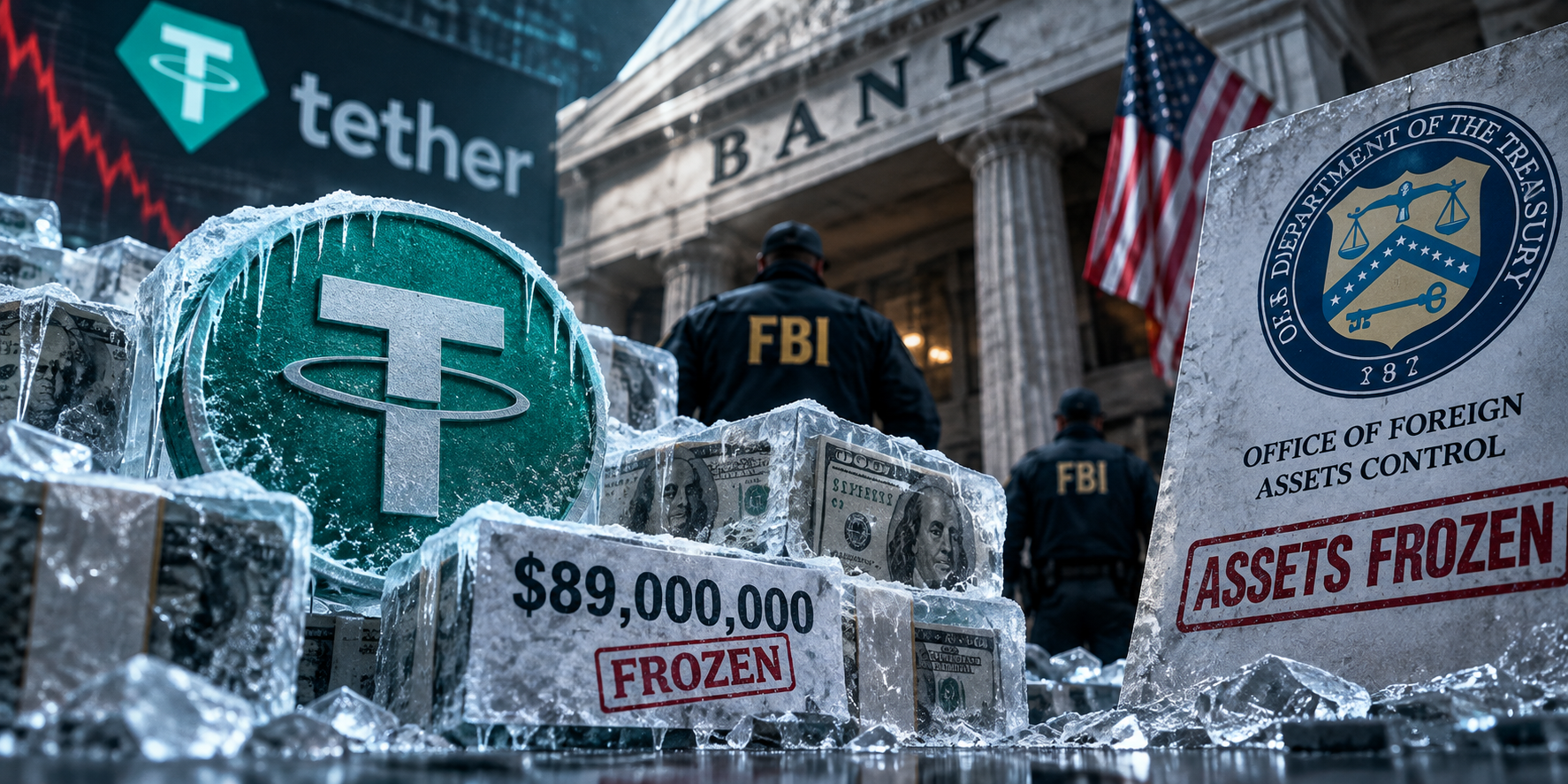
    Tether, the issuer of the world’s largest stablecoin, USDT, confirmed on Thursday that its partner bank, EQIBank, has had $89 million in assets frozen by U.S. prosecutors. While this represents a relatively small portion of Tether’s overall holdings, the incident underscores the persistent counterparty risk inherent in the banking relationships underpinning stablecoins.

    A Tether representative stated that the frozen assets constitute “less than 0.034%” of the group’s total assets, which stood at $18.775 billion as of June. This translates to approximately $6.4 million, a figure that would have a negligible impact on Tether’s reserve ratios and poses no direct threat to USDT’s peg to the U.S. dollar.

    However, the asset freeze, as reported by the Financial Times and The Information, has illuminated an often-overlooked risk for stablecoin issuers. Stablecoins do not directly hold U.S. dollars; instead, they rely on a complex network of banks and payment processors to manage customer deposits and redemptions.

    EQIBank’s funds originated from payment processor Capstone, which held funds for EQIBank within the U.S. and routed customer money through accounts at Wells Fargo and JP Morgan. According to court filings, Capstone allegedly misrepresented its business activities to the banks.

    U.S. prosecutors subsequently seized funds from these accounts and initiated civil forfeiture proceedings, accusing Capstone of misrepresenting its business model to financial institutions. EQIBank later announced that the $89 million freeze included cryptocurrency assets, such as 450,000 BTC and 150,000 ETH.

    In an email, a Tether representative stated, “Tether was unaware of Capstone’s actions” and reiterated that the EQIBank assets held by the group represented “less than 0.034% of the group’s assets.”

    Tether’s total assets, as declared in June, included approximately 50% in short-term U.S. Treasury bills maturing within one year, with the remainder held by custodian banks in New York and various partner institutions. EQIBank was responsible for facilitating wire transfers for USDT purchases and redemptions but did not hold Tether’s primary reserves.

    In contrast, Circle, the issuer of USDC, employs a more transparent strategy, holding assets across multiple banks and clearinghouses in various jurisdictions and publishing monthly reserve details.

    Meanwhile, EQIBank also provides banking services to several cryptocurrency exchanges, including processing some transactions for Binance, Kraken, and Coinbase. This interconnectedness means that the failure of a single banking partner could simultaneously impact the liquidity of multiple platforms.

    This incident demonstrates that even a stablecoin leader like Tether is not entirely immune to banking risks. The operational model of stablecoins depends on a chain of “banking conduits,” from deposit banks to payment processors and clearinghouses, each presenting potential counterparty risks.

    Compared to the liquidation of Bitcoin holdings, the risks associated with stablecoins are more “institutional” in nature, driven not by market sentiment but by the operational efficiency of the funding channels themselves.

    While a hypothetical collapse of EQIBank would reduce Tether’s reserve ratio by 0.034%, it would not materially affect USDT’s dollar peg. However, the event serves as a reminder that stablecoin “reserves” are not entirely insulated and are distributed across a network of banks and payment processors.

    Future observations will focus on whether Tether will disclose more detailed reserve breakdowns and whether EQIBank’s network of banking partners harbors additional potential liquidity risks.

  • SEC Staff Guidance Offers Nuanced Clarifications on Crypto Asset Classification and Issuer Activities

    SEC Staff Guidance Offers Nuanced Clarifications on Crypto Asset Classification and Issuer Activities

    The U.S. Securities and Exchange Commission (SEC) has issued new staff guidance providing nuanced clarifications on the regulatory treatment of certain crypto assets and issuer activities, particularly concerning staking tokens and buybacks. This guidance aims to offer a more detailed understanding of how existing securities laws, specifically the Howey Test, apply to these areas within the digital asset market.

    Staking Tokens and Digital Tools
    The SEC staff guidance addresses the classification of staking receipt tokens. According to the watchdog, a staking receipt tied to a digital commodity that is not subject to an investment contract can be considered a digital tool. This classification hinges on the receipt simply evidencing ownership of the underlying asset. In certain circumstances, such a token may qualify as a digital commodity when issued by a protocol-based liquid staking provider. The distinction, SEC staff indicated, depends heavily on the specific rights the receipt creates. A true “receipt,” the agency stated, should not transfer ownership or control of the deposited asset to the issuer, nor permit the issuer to lend, pledge, rehypothecate, or otherwise use it.

    Issuer Activities and the Howey Test
    Furthermore, the guidance delves into the application of the Howey Test concerning ongoing efforts by issuers. The SEC staff indicated that continuing to secure, maintain, improve, or enhance a functional blockchain network, including funding development or encouraging network effects, does not constitute the type of “essential managerial efforts” typically associated with an investment contract under Howey. Once a crypto system is functional and lacks a central controlling party, statements by an original issuer are generally less likely to create a new investment contract around the native asset.

    Regarding issuer buybacks, the SEC staff guidance suggests that announcing a buyback of a non-security token for a functional crypto system would not amount to a promise of essential managerial efforts. However, this assessment changes if the network is not yet functional and the issuer markets the buyback as a mechanism designed to generate yield or returns for holders. Broader marketing efforts receive similar treatment; the SEC staff noted that simply promoting a network’s existing utility or capabilities would generally not be enough to establish an investment contract. Even aspirational statements about future features may fall outside this threshold if they do not promote the prospect of profit.

    Context and Limitations
    This guidance follows the recent failure of the CLARITY Act in the U.S. Senate on September 15, an event that highlighted the ongoing legislative challenges in defining a clear regulatory path for digital assets. While the legislative process has stalled, the SEC’s staff guidance provides interpretive clarity on existing frameworks. It is important to note that this guidance represents staff interpretation and does not constitute new law or a definitive ruling on any specific asset or transaction.

    The SEC staff guidance emphasizes that the classification of crypto assets and the assessment of issuer activities are highly contextual. Factors such as the rights created by a token, the functionality of the underlying network, and the nature of marketing and issuer efforts are critical in determining whether an arrangement constitutes an investment contract. The guidance underscores that the distinction depends heavily on the specific facts and circumstances of each case.

    Why This Matters

    The materials describe a narrow update: The SEC released new FAQs to clarify crypto regulation, specifically addressing when tokens might be outside securities regulation and how issuer activities relate to the Howey Test. The exact rights created by a staking receipt token determine its classification.

    Broader Context

    Source materials place the factual news in this context: The failure of the CLARITY Act in the US Senate on September 15 hasn’t deterred the two largest local regulators from trying to clear the air on crypto regulation in the country, with the Securities and Exchange Commission now issuing fresh staff guidance addressing several long-running questions.

  • Crypto Industry Pivots to Regulators as Legislative Path Stalls

    Crypto Industry Pivots to Regulators as Legislative Path Stalls

    The cryptocurrency industry is recalibrating its strategy, shifting its focus from seeking legislative clarity in Congress to engaging with federal regulators, following the recent failure of a key market-structure bill in the Senate. This pivot means the regulatory landscape for digital assets will likely be shaped by agency rulemaking rather than a comprehensive act of Congress.

    Legislative Roadblock
    The Clarity Act, a significant market-structure bill that had been in development for over a year, failed to advance in the Senate last week after a procedural vote of 49-50, falling well short of the 60 votes needed for passage. Senator Cynthia Lummis, a lead architect of the bill, indicated that the legislative effort was effectively stalled for the year. This outcome has prompted a strategic realignment within the crypto sector.

    Regulators Step In
    In the wake of the legislative setback, federal regulatory agencies have moved swiftly to fill the perceived vacuum. Within 48 hours of the Clarity Act’s failure, the Securities and Exchange Commission (SEC) introduced an “innovation exemption” for digital assets. This framework allows qualifying venues to trade tokenized U.S. stocks on-chain without needing to register as national securities exchanges. This move signals the SEC’s intent to establish crypto policy through its own regulatory authority.

    The Commodity Futures Trading Commission (CFTC) is also actively pursuing regulatory pathways. CFTC staff issued a no-action position that permits passive software providers, such as crypto wallet applications, to offer users access to regulated derivatives without requiring them to register as introducing brokers. Additionally, the CFTC has sent a broader crypto-markets rulemaking proposal to the White House for review.

    The Federal Reserve has also entered the fray, proposing new rules for stablecoin issuers. These proposed regulations would require issuers to fully back their tokens with safe, liquid assets and maintain capital reserves against operational risks. This action is part of a multi-agency rollout related to the GENIUS Act, a stablecoin law signed by President Donald Trump in 2025. The Office of the Comptroller of the Currency (OCC) is also working to finalize its own stablecoin rules by November, ahead of a statutory deadline in January.

    Industry’s New Path
    Industry participants appear to be adapting to this new reality. Kristin Smith, President of the Solana Policy Institute, stated that the sector is “now looking to regulators for guidance,” characterizing this as “the more viable path forward right now.” This sentiment suggests a pragmatic acceptance of agency rulemaking as the primary avenue for policy development.

    Uncertainty Ahead
    However, this shift to regulatory rulemaking presents its own set of challenges. Agency rules are generally slower to develop, more susceptible to legal challenges, and easier for a future administration to alter or unwind compared to legislation passed by Congress. The SEC, under Chairman Gary Gensler, previously pursued a “regulation by enforcement” strategy during the Joe Biden administration, which created significant uncertainty for the industry. While a market structure law was intended to provide a more stable framework, the current path relies on rules established by agencies that have historically been viewed with caution by the crypto sector.

    The long-term implications of this regulatory-driven environment remain uncertain. Key questions persist regarding the durability of these agency-established rules, the specific details of ongoing CFTC rulemaking, and how future political administrations might influence the current regulatory landscape. The crypto industry’s journey toward regulatory clarity has thus transitioned from the legislative halls of Congress to the administrative offices of federal agencies, marking a significant evolution in its approach to policy engagement.

    Why This Matters

    The materials describe a narrow update: Following the failure of the Clarity Act in the Senate, federal regulatory agencies including the SEC, CFTC, Federal Reserve, and OCC have initiated or proposed rules and exemptions related to digital assets, stablecoins, and derivatives, effectively shaping crypto policy through regulatory action rather than legislation. Whether the rules established by agencies will hold in the long term.

    Broader Context

    Source materials place the factual news in this context: For nearly two years, the crypto industry’s Washington strategy rested on a single word: clarity.

  • Federal Reserve Seeks Public Comment on Proposed Stablecoin Regulations Under GENIUS Act

    Federal Reserve Seeks Public Comment on Proposed Stablecoin Regulations Under GENIUS Act

    The US Federal Reserve Board is seeking public comment on two proposed rules for regulating supervised payment stablecoin issuers under the GENIUS Act. These proposals, released on Thursday, aim to establish a federal regulatory framework for stablecoins, a year after the GENIUS Act was signed into law.

    The first proposed rule requires stablecoin issuers to fully back their stablecoins with high-quality liquid assets, such as short-term Treasury bills. It also standardizes capital requirements to address credit and operational risks and sets risk-management standards.

    The second proposal outlines an application process for banks seeking to issue payment stablecoins, requiring them to submit business plans and financial information. This proposal also includes provisions for appeals, hearings, and final determinations.

    Following publication in the Federal Register, the public will have 60 days to submit comments. The GENIUS Act, signed into law by President Donald Trump on July 18, 2025, established the first comprehensive federal regulatory framework for stablecoins in the US.

    While regulatory agencies have been developing rules related to the GENIUS Act, the Federal Reserve’s proposals represent a significant step toward concrete regulations. The timeline for finalizing these rules depends on the public comment period and subsequent review, with uncertainties remaining regarding the specific details of the final framework and the issuance of final regulations.

    Why This Matters

    The materials describe a narrow update: The Federal Reserve has proposed two frameworks for stablecoin issuers under the GENIUS Act. Whether final regulations will be issued before the next deadline.

    Broader Context

    Source materials place the factual news in this context: US regulatory agencies missed a rule-making deadline under the GENIUS Act, a year after the law was signed.

  • US and China Highlight Divergent AI Philosophies in Trump-Xi Meeting, No Sweeping Agreements Reached

    US and China Highlight Divergent AI Philosophies in Trump-Xi Meeting, No Sweeping Agreements Reached

    The recent meeting between US President Donald Trump and Chinese President Xi Jinping underscored the fundamentally different approaches the two global powers are taking toward the development and regulation of Artificial Intelligence (AI). While the summit did not result in any sweeping agreements to slow AI advancement or impose new restrictions, it highlighted distinct philosophies: the US favoring a light-touch approach to encourage rapid development, and China emphasizing human control and state oversight.

    Trump maintained his stance on a less regulated environment for AI, reportedly suggesting that China shares this position. Conversely, Xi Jinping stressed the importance of ensuring AI development remains “under human control,” a sentiment that, while not endorsing specific international frameworks, signaled a call for guardrails. This divergence reflects a broader geopolitical dynamic where both Washington and Beijing view AI leadership as strategically critical, but are pursuing it through contrasting national strategies.

    Bilateral Dialogue Proposal Unagreed

    One significant proposal put forth during preparatory talks by US Treasury Secretary Scott Bessent was the establishment of a bilateral AI dialogue. This dialogue would include a mechanism for notifying each other of significant national security incidents related to the AI industry. The aim of this proposal was to enhance transparency and mitigate the risk of escalation in the event of a serious AI-related incident affecting critical infrastructure or military systems. However, the meeting between Presidents Trump and Xi did not lead to a formal agreement on this initiative.

    Semiconductor Controls Unchanged

    Discussions on advanced semiconductor restrictions, a key area of US policy aimed at slowing China’s access to cutting-edge computing capacity, also did not yield breakthroughs. Officials said chip export controls were not a topic of discussion during the preparatory economic talks, and the summit itself did not alter the existing framework.

    Symbolism Over Substance

    The meeting, which included prominent figures from the AI sector such as representatives from OpenAI, Nvidia, and Alphabet, as well as notable tech leaders like Elon Musk and Jeff Bezos, underscored the importance of AI on the international agenda. Despite the high-profile attendance, the summit appeared to prioritize symbolism over concrete policy shifts, failing to resolve the underlying disagreements on how aggressively AI should be developed, regulated, or constrained.

    Uncertainties remain regarding the full extent of Xi Jinping’s approval of Trump’s suggestion to rename AI to “super intelligence,” and the precise nature of the “tremendous things” Trump anticipates. Furthermore, it is unclear whether chip export controls were discussed at any point during the preparatory talks. The fundamental disagreement over the pace and control of AI development persists, indicating a continued divergence in the strategies of the US and China in this critical technological domain.

    Why This Matters

    The materials describe a narrow update: The meeting between Trump and Xi did not result in any sweeping agreements to slow AI development or impose new restrictions. Whether Xi Jinping formally approved the renaming of AI to SUPER INTELLIGENCE.

    Broader Context

    Source materials place the factual news in this context: The meeting between US President Donald Trump and Chinese President Xi Jinping produced no sweeping agreement to slow its development or impose new restrictions or regulations.

  • OG.com Submits Application to CFTC for Single-Stock Perpetual Futures

    OG.com Submits Application to CFTC for Single-Stock Perpetual Futures

    OG.com has submitted a rule application to the U.S. Commodity Futures Trading Commission (CFTC) to offer single-stock perpetual futures contracts, making it the fourth applicant seeking regulatory consideration for such products in the United States. This move signifies a continued effort by crypto-native exchanges to introduce derivatives popular in the digital asset space into the U.S. equity derivatives market.

    Perpetual futures contracts, which have no expiration date and trade 24 hours a day, have been a staple in the cryptocurrency market since their introduction by BitMEX in 2016. Their appeal lies in their continuous trading capability and the ability for traders to speculate on price movements without holding the underlying asset. OG.com’s application aims to bring this model to U.S. stocks.

    The CFTC has been navigating the regulatory pathway for these products. In May, the commission established a case-by-case review mechanism for perpetual contracts and approved Kalshi’s Bitcoin perpetual futures product. Further, in June, the CFTC issued temporary regulatory relief that allowed some exchanges to convert existing crypto futures into perpetual contracts. This evolving regulatory stance is occurring against a backdrop where broader crypto regulatory efforts, such as the CLARITY Act, have faced legislative hurdles, with the bill failing to advance in the U.S. Senate on September 15.

    OG.com is not the first to seek this type of regulatory consideration. Coinbase applied for single-stock perpetual futures on September 18, following earlier applications from Kalshi and Payward, the parent company of Kraken. OG.com itself is a derivatives platform that was spun off from Crypto.com and has an existing agreement with Robinhood to utilize its CFTC-regulated derivatives exchange.

    The potential introduction of single-stock perpetual futures could lead to increased competition within the U.S. stock derivatives market. If approved, these products might offer an alternative to traditional zero-commission brokers like Robinhood and Webull by providing extended trading hours and potentially higher leverage. The funding rate mechanism, commonly used in crypto perpetual futures, could also introduce new pricing references and arbitrage opportunities if applied to U.S. stocks, though specific implementation details remain subject to regulatory review.

    Significant uncertainty remains regarding the approval process and timeline for OG.com’s application and similar filings. The CFTC’s case-by-case review approach indicates a deliberate regulatory process. The ultimate decisions will shape the pace at which these new products are integrated into the U.S. market, with considerable potential implications for market dynamics, trading volumes, and the ongoing convergence of crypto and traditional finance.

    Broader Context

    Source materials place the factual news in this context: OG.com is a derivatives platform spun off from Crypto.com.