Tag: Regulation & Policy

  • Trump, Regulators Push for Perpetual Futures in US

    Trump, Regulators Push for Perpetual Futures in US

    Perpetual Futures Expand Beyond Crypto into Mainstream U.S. Markets

    Perpetual futures, the financial instruments that fueled the cryptocurrency market’s ascent to a trillion-dollar valuation, are now poised to enter the mainstream U.S. financial system, targeting oil, gold, and equities. A regulatory push, spearheaded by President Donald Trump and the Commodity Futures Trading Commission (CFTC), aims to integrate these never-expiring derivatives contracts into the broader financial landscape.

    Unlike traditional futures contracts, which are bound by a specific expiration date for settlement, perpetual futures eliminate the calendar entirely. These contracts function as an open-ended bet on an asset’s price, remaining active until a trader chooses to close their position. Instead of expiration dates, a “funding rate” mechanism is employed to keep the contract’s price aligned with the underlying asset’s spot market price. This system involves periodic payments between traders who are long and those who are short, creating an economic incentive for the contract price to remain close to the real-time market value.

    Originating in cryptocurrency markets, perpetual futures gained significant traction due to their ability to offer leveraged exposure without the recurring administrative burden of rolling over contracts. Offshore platforms, such as Hyperliquid, have reported annual trading volumes in the tens of trillions of dollars solely from these perpetual contracts.

    The CFTC’s approval of Kalshi’s Bitcoin perpetual futures contract, designated BTCPERP, on May 29, 2026, marked a pivotal regulatory moment. By classifying BTCPERP as a futures contract rather than a swap, the CFTC established a legal precedent for introducing perpetuals into regulated U.S. markets.

    The agency’s initiative extends beyond cryptocurrencies. The CFTC issued a policy statement mandating that perpetual futures referencing precious metals, oil, energy commodities, equities, and other traditional financial instruments will undergo individual reviews under Regulation 40.3. This approach ensures each new contract is evaluated on a case-by-case basis, rather than receiving a blanket approval or denial.

    Kalshi has moved swiftly to capitalize on this regulatory shift. On July 21, 2026, the platform, which began as a prediction market before expanding into derivatives, filed applications for perpetual futures contracts on gold, silver, and platinum. By September 2026, perpetual contracts for gold and silver were operational, offering round-the-clock trading five days a week.

    The CFTC also initiated a public comment period from June through August 2026 regarding the potential for 24/7 trading in energy commodities.

    President Trump has actively supported these regulatory developments. At a White House event in August 2026, he lauded the regulatory efforts and specifically encouraged offshore platforms like Hyperliquid to comply with U.S. regulations, underscoring an ambition to position the United States as a leading global hub for derivatives trading.

    However, this expansion is not without its critics. CME Group, a major player in traditional futures trading based in Chicago, filed a lawsuit against the CFTC in June 2026. Their central contention is that perpetual futures should be classified as swaps, not futures contracts.

    This distinction carries significant regulatory weight. Swaps are subject to different, generally more stringent, regulatory requirements than futures, including variations in margin rules, reporting obligations, and oversight structures. If CME’s legal challenge proves successful, it could lead to perpetual contracts facing a regulatory framework that significantly increases their cost and complexity to offer.

    CME Group’s opposition is also driven by competitive concerns. The exchange’s revenue model is largely based on traditional futures contracts with expiration dates. The continuous trading of perpetual contracts presents a direct challenge to this established business model. The ability for traders to hold gold perpetuals indefinitely without the need for contract rollovers could diminish the appeal of standard monthly gold futures.

    The challenges posed by geopolitical tensions, such as those surrounding Iran in 2026, highlighted the risks investors face from overnight market movements when trading is restricted. Perpetual contracts offer a solution by enabling continuous trading, allowing investors to hedge against such risks.

    Perpetual futures are inherently high-leverage instruments. In crypto markets, leverage ratios of 10x, 50x, or even higher are common. Extending this level of leverage to retail investors trading oil or equities raises significant concerns regarding investor protection. The CFTC’s case-by-case review process under Regulation 40.3 appears to be designed to address these potential risks.
  • SEC Greenlights AMMs for Tokenized Stocks; XRPL Poised to Lead

    SEC Greenlights AMMs for Tokenized Stocks; XRPL Poised to Lead

    SEC Decision Puts XRP Ledger’s AMM Tech in Spotlight

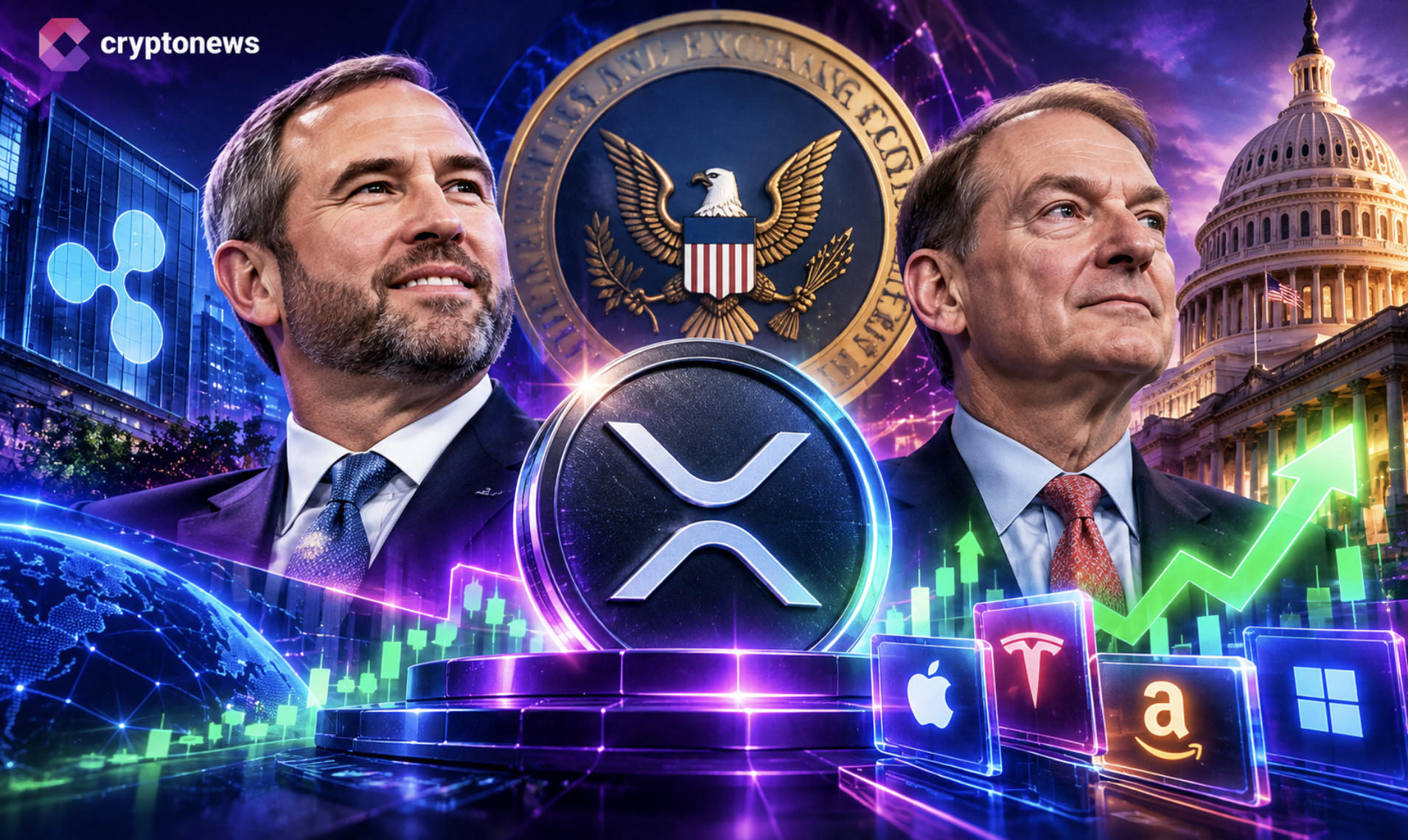
    The U.S. Securities and Exchange Commission (SEC) has opened a new regulatory pathway for tokenized stocks to trade via automated market makers (AMMs), a move that has placed the XRP Ledger (XRPL) back in the spotlight. The SEC’s September 17 decision grants a temporary exemption to certain blockchain-based platforms, allowing them to facilitate the trading of tokenized U.S. stocks through permissioned AMM liquidity pools.

    While the SEC’s order does not specifically mention XRP, Ripple, or the XRP Ledger, it establishes a framework for “Tokenized Securities Venues.” This framework permits eligible platforms to operate AMM-based markets under defined conditions.

    Potential Bullish Implications for XRP

    The decision could be seen as bullish for XRP due to the XRP Ledger’s existing native AMM functionality. The XRPL’s AMM amendment went live on its mainnet in March 2024, integrating built-in liquidity pools alongside its established decentralized exchange (DEX). This pre-existing infrastructure makes the SEC’s recent decision particularly significant for the XRP ecosystem.

    The SEC’s “Innovation Exemption” offers temporary relief from specific securities regulations for these Tokenized Securities Venues. These venues can leverage AMMs and liquidity pools to connect buyers and sellers of tokenized National Market System (NMS) stocks.

    Conditions and Requirements for Tokenized Trading

    The exemption is conditional, not a blanket approval for tokenized equities across all crypto markets. The SEC has stipulated that participating venues must operate permissioned systems and adhere to stringent investor protection requirements. These include ensuring that tokenized stocks grant holders the same rights and privileges as traditional shares, such as dividend and voting rights.

    Furthermore, the framework allows the original stock issuer to object if a third party tokenizes its shares. Trading of tokenized stocks must also cease if trading in the underlying traditional stock is halted on its primary listing exchange.

    For the broader crypto market, a key takeaway is the SEC’s explicit acknowledgment of AMM liquidity pools as a component of an on-chain securities trading structure. The SEC’s order also provides conditional relief for liquidity providers supplying tokenized stocks to these pools. These exemptions are set to last for five years, allowing regulators to monitor market development.

    XRP Ledger’s Integrated AMM

    This regulatory development has spurred renewed interest in blockchain networks that already possess native AMM infrastructure. The XRP Ledger’s AMM functionality, introduced via the XLS-30 amendment, became active on its mainnet on March 22, 2024. Unlike a separate application, the XRPL’s AMM is integrated directly into its DEX. This allows users to create liquidity pools for asset pairs, contribute liquidity, and receive LP tokens representing their stake.

    The XRPL’s DEX is designed to combine order-book liquidity with AMM liquidity for trade execution, enabling transactions to utilize whichever route offers the most favorable exchange rate. This native design is gaining relevance as regulators begin to address on-chain securities markets.

    Infrastructure Over Immediate Endorsement

    However, it is premature to interpret the SEC’s decision as an approval of tokenized stocks on the XRP Ledger itself. The Innovation Exemption is technology-neutral and sets requirements for eligible Tokenized Securities Venues, rather than endorsing specific blockchains.

    For XRP holders, the significance lies more in the potential for infrastructure development than an immediate new use case for XRP. If regulated tokenized equity markets eventually expand onto public blockchains, networks with existing AMM and DEX infrastructure, like XRPL, could possess a foundational advantage. The SEC has now provided a regulatory framework that explicitly considers AMM-based trading.

    The crucial next step is whether financial firms will opt for public networks such as the XRP Ledger for these markets. The SEC has opened the door, but the industry must now decide whether to walk through it.

    Ultimately, the current XRP news centers on a regulatory development that could enhance the relevance of XRPL’s AMM architecture for tokenized assets, rather than an explicit SEC endorsement of XRP.

  • Trump Discloses Up to $100K Stock Purchase in Ethics Filing

    Trump Discloses Up to $100K Stock Purchase in Ethics Filing

    Trump Discloses Significant Investment in Bitcoin Holder MicroStrategy Amidst Crypto Policy Push

    President Donald Trump revealed a substantial purchase of MicroStrategy shares in July, a move that coincides with his administration’s ongoing efforts to shape cryptocurrency policy through federal regulators and legislative channels.

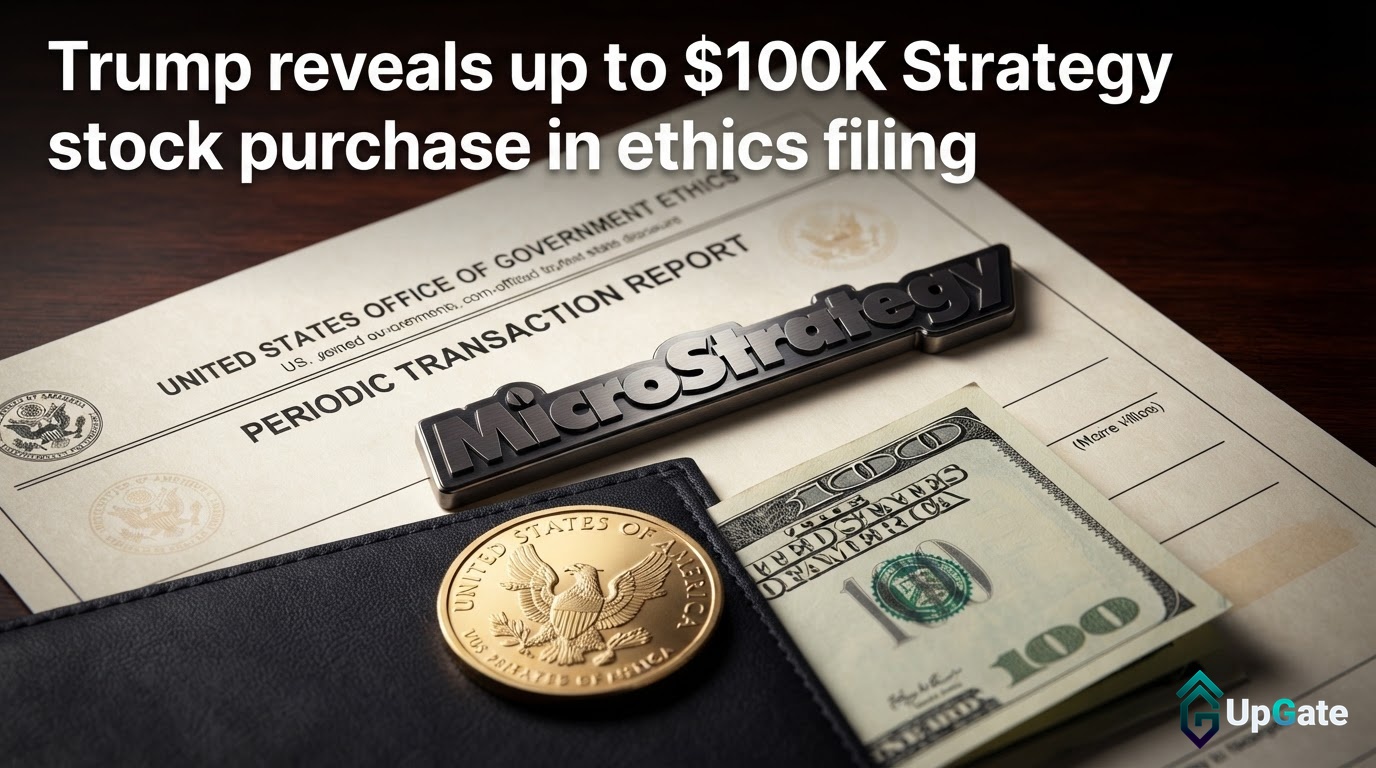
    According to a filing with the U.S. Office of Government Ethics released Tuesday, Trump acquired between $50,001 and $100,000 worth of MicroStrategy stock on July 27. This followed a smaller investment of $1,001 to $15,000 in the company just three days prior. MicroStrategy is recognized as the world’s largest publicly traded corporate holder of Bitcoin, possessing 846,000 BTC, according to data from BitcoinTreasuries.net.

    The filing also detailed other cryptocurrency-related transactions by Trump in July, including the purchase of Coinbase stock and the sale of shares in Bitcoin mining companies MARA Holdings and CleanSpark. The July 27 MicroStrategy purchase marked the largest among these crypto-linked transactions identified in the disclosure.

    This latest investment mirrors Trump’s previously disclosed largest MicroStrategy purchase, a $50,001 to $100,000 acquisition on February 12, as reported by BitcoinTreasuries.NET. His financial disclosures have also indicated several smaller purchases and sales of MicroStrategy shares throughout the year. The filings do not specify the exact number of MicroStrategy shares held, as transactions are reported within value ranges rather than as a precise share balance.

    The MicroStrategy investment represented a minor component of Trump’s broader portfolio activities in July. The filing indicated sales of Microsoft and Amazon stocks, each valued between $5 million and $25 million, on July 20, alongside multiple other purchases and sales ranging from $1 million to $5 million.

    On Tuesday, the White House stated to CNBC that Trump’s stock and bond portfolio is managed independently by third-party financial institutions, without any involvement from Trump or his family.

    MicroStrategy shares have experienced a notable rally, climbing nearly 30% over the past five trading days and approximately 37% over the last month, according to data from Yahoo Finance.

    Administration Advances Crypto Initiatives Amid Legislative Stalemate

    Trump’s disclosure of his MicroStrategy holdings comes as his administration has actively pursued a range of policies designed to support the U.S. cryptocurrency industry, even as comprehensive market structure legislation remains stalled in Congress.

    Despite the Senate’s failure to advance the CLARITY Act on September 15, federal regulators have continued to implement measures utilizing their existing authorities. Two days after the failed cloture vote, the Securities and Exchange Commission (SEC) approved limited on-chain trading of tokenized U.S. stocks under a temporary exemption. Concurrently, the Commodity Futures Trading Commission (CFTC) relaxed registration requirements for certain software providers offering access to regulated derivatives markets.

    The CFTC also separately submitted a broader initiative for crypto market rulemaking to the White House for review on September 17. This initiative, tentatively titled “Regulation Crypto Asset Transactions and Regulation Crypto Asset Markets,” is still in its preliminary stages and has not yet been formalized as a proposal.

    The administration’s engagement with the crypto sector has also extended to Bitcoin itself. Last week, the House Financial Services Committee voted 28-21 to advance legislation that would codify Trump’s proposed Strategic Bitcoin Reserve into law, mandating that any Bitcoin placed in the reserve be held for a minimum of 20 years. The U.S. government currently holds an estimated 324,527 BTC, according to data from Arkham Intelligence.

  • MoonPay Acquires North Capital to Enter Tokenized Securities Market

    MoonPay Acquires North Capital to Enter Tokenized Securities Market

    MoonPay has announced its acquisition of North Capital, a US-based private market infrastructure provider, for over $60 million in an all-stock transaction. This strategic move grants MoonPay crucial SEC-registered broker-dealer and ATS trading system licenses, marking its official entry into the tokenized securities market and the trading of tokenized real-world assets (RWAs).

    North Capital: The Regulatory Key

    The acquisition, announced on a recent Wednesday, is a significant step for MoonPay, which has been systematically building out its financial infrastructure. North Capital, based in Midvale, Utah, brings not only regulatory licenses but also a proven track record, having supported over $8.7 billion in primary and secondary trading volume to date. This positions MoonPay to legally issue, custody, and trade private securities, including tokenized assets.

    Strategic Expansion and Market Entry

    MoonPay CEO Ivan Soto-Wright stated that the company is building a complete financial infrastructure stack, and the acquisition of North Capital fills a critical compliance piece. This strategy mirrors the expansion paths of companies like Stripe and Plaid, moving from payment processing to broader financial infrastructure. The company’s current valuation stands at $3.4 billion.

    The timing of this acquisition aligns with evolving regulatory developments in the tokenized securities space. On September 18th, SEC Chairman Atkins introduced a 5-year innovation exemption, allowing eligible trading venues to trade US stocks on the blockchain without registration for a specified period. This regulatory easing creates a more favorable environment for companies like MoonPay looking to engage in tokenized asset trading.

    Previously, MoonPay has bolstered its capabilities through other acquisitions, including Sodot for institutional-grade custody, DFlow for Solana on-chain trading, and Entendre for financial process automation. These moves indicate a broader strategy to create a comprehensive ecosystem for digital and tokenized assets.

    Integration and Future Outlook

    North Capital’s last known funding round was a $2.18 million seed round in October 2021. The acquisition by MoonPay is subject to regulatory approval and other customary closing conditions. The success of this venture will depend on MoonPay’s ability to effectively integrate North Capital’s private trading capabilities with its on-chain infrastructure to launch attractive tokenized securities products.

    Uncertainties remain regarding the full integration of North Capital’s trading capabilities and the ultimate business synergy between the two companies. The transaction requires regulatory approval before it can be finalized. MoonPay’s ambition appears to be transforming its crypto payment network into an entry point for traditional financial assets to be tokenized on-chain, potentially setting a new standard for tokenizing private assets.

    Why This Matters

    The materials describe a narrow update: MoonPay has acquired North Capital, a US-based private market infrastructure provider, for over $60 million in an all-stock transaction. Whether MoonPay can successfully integrate North Capital’s private trading capabilities with its on-chain infrastructure.

    Broader Context

    Source materials place the factual news in this context: MoonPay previously acquired key management company Sodot to strengthen institutional-grade custody capabilities.

  • MoonPay Acquires SEC-Registered North Capital for $60 Million in Stock to Expand Institutional Crypto Services

    MoonPay Acquires SEC-Registered North Capital for $60 Million in Stock to Expand Institutional Crypto Services

    Miami-based MoonPay is set to acquire North Capital, an SEC-registered firm, in an all-stock deal valued at $60 million. This strategic acquisition is a significant step in MoonPay’s ongoing efforts to build out its institutional crypto services and expand its regulatory capabilities.

    Regulatory Expansion for Institutional Ambitions
    The acquisition of North Capital, which is registered with the Securities and Exchange Commission (SEC), directly addresses MoonPay’s need for a broader regulatory footprint. This move is designed to enable MoonPay to offer a wider range of services that require oversight from bodies like the SEC, such as those involving broker-dealer or investment adviser functions. While MoonPay already holds a New York BitLicense and a Limited Purpose Trust Charter, adding an SEC-registered entity is seen as a crucial component for its institutional ambitions.

    A Pattern of Strategic Acquisitions
    This deal is part of a larger strategy by MoonPay to position itself as a comprehensive financial infrastructure provider for the cryptocurrency industry. Evidence suggests MoonPay has been aggressively pursuing acquisitions to build out its capabilities. In April 2026, the company acquired Sodot for approximately $100 million, bringing cryptographic key management expertise into the fold. Prior to that, MoonPay acquired Helio, a move that enhanced its payment processing capabilities. Since 2025, MoonPay has reportedly made at least nine acquisitions, indicating a consistent pattern of strategic growth.

    The integration of these acquired companies, including North Capital, aims to create a full-stack financial services provider capable of serving both retail and institutional clients. The goal is to offer services spanning custody, payments, and compliant investment products. MoonPay’s business model, which relies on transaction and service fees rather than token inflation, is considered more legible by institutional clients and regulators.

    Deal Structure and Integration Risks
    This all-stock transaction allows MoonPay to preserve its liquidity while giving North Capital’s shareholders an opportunity to invest in MoonPay’s future growth. The $60 million valuation for North Capital, while modest in the context of some of MoonPay’s other acquisitions, is significant for the regulatory registration it provides.

    However, the rapid pace of acquisitions also introduces integration risks. The successful consolidation of these diverse entities into a cohesive product offering remains a key uncertainty. The extent of this integration risk is a factor that may not be immediately apparent in deal announcements.

    MoonPay’s strategic direction has clearly evolved beyond its initial focus on enabling retail users to purchase Bitcoin with credit cards. The acquisition of North Capital underscores this shift, emphasizing a commitment to regulatory compliance and the development of robust institutional-grade services in the crypto space.

    Why This Matters

    The materials describe a narrow update: MoonPay, a payments company, is acquiring North Capital, a firm registered with the SEC, through an all-stock transaction valued at $60 million. Whether MoonPay can integrate its numerous acquisitions into a coherent product experience.

    Broader Context

    Source materials place the factual news in this context: MoonPay already holds a New York BitLicense and a Limited Purpose Trust Charter, two of the harder-to-obtain licenses in the US financial landscape.

  • Consumer Stablecoin Adoption Intent Linked to Bank-Level Protections, Regulatory Frameworks Evolving

    Consumer Stablecoin Adoption Intent Linked to Bank-Level Protections, Regulatory Frameworks Evolving

    Consumer adoption intent for stablecoins increases significantly when bank-level protections are offered, according to research. This trend is occurring alongside substantial growth in stablecoin settlement volumes and the implementation of new regulatory frameworks.

    Consumer research conducted by FIS in November 2025 revealed that 74.8% of US respondents would consider using stablecoin services if offered by their primary bank. Furthermore, 66.3% of consumers stated that FDIC-style insurance would increase their likelihood of using stablecoins. In contrast, fewer than 4% of US respondents expressed willingness to try unregulated stablecoin alternatives, highlighting a clear preference for security and familiarity.

    This demand for protected digital assets coincides with significant market activity. Visa reports $20 billion in annualized stablecoin settlement volume. Payment volumes across Visa’s stablecoin-linked card programs have surged nearly 200% year-over-year, with these programs now operating in over 100 markets globally and more than 160 stablecoin-linked card programs active worldwide. Visa’s onchain analytics data shows a dramatic increase in retail-sized stablecoin transfers (under $250), growing from $0.5 billion in 2019 to $69.8 billion in 2025.

    The regulatory landscape has also evolved, with the GENIUS Act being signed into law on July 18, 2025. This legislation established a federal regulatory framework for payment stablecoins in the US. The act introduced stringent reserve mandates, requiring issuers to back their tokens with high-quality liquid assets, and created consumer protection rules that align stablecoins more closely with the regulatory treatment of bank deposits.

    The FIS survey data, indicating strong consumer interest in bank-offered stablecoin services, was captured shortly after the GENIUS Act’s passage, suggesting that regulatory clarity has unlocked a positive sentiment shift. This environment presents different strategic pressures for the two dominant stablecoin issuers, Circle and Tether.

    Circle’s USDC, with its emphasis on regulatory compliance and established banking partnerships, appears well-positioned for a future where stablecoins are integrated with traditional banking services. Tether’s USDT, while commanding a larger market share, has faced persistent questions regarding reserve transparency. The new regulatory mandates under the GENIUS Act may require Tether to adapt its operations to meet these evolving market demands for security and transparency.

    While the research indicates a strong consumer preference for protected stablecoin services, uncertainties remain regarding the specific nature of the questions surrounding Tether’s reserve transparency and the exact strategic adaptations the issuer may need to undertake.

    Why This Matters

    The materials describe a narrow update: Consumer research indicates a strong preference for stablecoin services when they are offered with bank-like protections, such as FDIC-style insurance. The specific nature of the persistent questions about Tether’s reserve transparency.

    Broader Context

    Source materials place the factual news in this context: Research into consumer attitudes toward stablecoins consistently reveals the same pattern: offer people the speed and convenience of blockchain-based dollars, wrap them in the kind of protections they expect from a checking account, and adoption intent climbs dramatically.

  • CFTC Reviews Kalshi Ether Futures Trading Amid Wash Trading Allegations

    CFTC Reviews Kalshi Ether Futures Trading Amid Wash Trading Allegations

    The Commodity Futures Trading Commission (CFTC) is examining unusual trading activity on the derivatives exchange Kalshi involving ether perpetual futures, a development that has prompted allegations of wash trading, according to The Wall Street Journal. Kalshi has denied these allegations, offering explanations for the trading patterns observed.

    The CFTC is reviewing a pattern of nearly one million ether perpetual futures trades on Kalshi that occurred in almost identical amounts around the $5,500 mark, collectively totaling over $5 billion in volume in the past month. The Journal’s analysis of public data indicates that more than one-third of trades in the market in recent weeks were clustered around this price point.

    This concentrated trading activity has coincided with allegations of wash trading, a practice involving trades that lack genuine economic purpose and can create a misleading impression of market activity. However, Kalshi has refuted these claims. The exchange stated that hundreds of distinct traders participated in the transactions and that the repeated trade sizes resulted from market makers maintaining fixed resting orders that were repeatedly hit by faster traders. Kalshi also asserted that self-trading is mechanically blocked on its platform and that coordinated wash trading is prohibited and actively monitored.

    Furthermore, Kalshi explained that its liquidity programs are designed to compensate market makers for maintaining orders at specific sizes and spreads, rather than rewarding trading volume. A temporary program also refunds trading fees for qualifying self-clearing members, but it does not allow traders to receive more in rebates than they paid in fees.

    Firms such as Jump Trading and Wintermute were among those involved in these transactions, according to the Journal. Jump Trading stated that it trades for profit, utilizes self-match prevention tools, and does not coordinate its activity with other traders.

    The CFTC’s review is a preliminary step before determining whether to open a formal enforcement investigation, though the agency declined to comment on whether an investigation is currently underway. The scrutiny comes as Kalshi seeks to expand its derivatives business. The exchange launched its cryptocurrency perpetual futures contracts in May and has since applied for regulatory approval to offer similar contracts tied to individual U.S. stocks.

    Key uncertainties remain regarding whether the CFTC will proceed with an enforcement investigation and the ultimate intent behind the observed trading pattern. The regulatory examination highlights potential market integrity concerns within the growing crypto derivatives sector.

    Why This Matters

    The CFTC’s examination of unusual trading activity on Kalshi’s ether perpetual futures market, including allegations of wash trading, raises questions about market integrity in the rapidly evolving crypto derivatives space. The outcome of the CFTC’s review could have implications for regulatory oversight and the platform’s expansion plans.

    Broader Context

    The Commodity Futures Trading Commission is examining unusual trading activity on Kalshi after nearly one million ether perpetual futures trades occurred in almost identical amounts, according to The Wall Street Journal. This review is occurring as Kalshi seeks to expand its derivatives business, having launched crypto perpetual futures in May and applying for approval for similar contracts tied to individual U.S. stocks.

  • CFTC Reviews Kalshi Ether Futures Trading Activity Amidst Unusual Patterns

    CFTC Reviews Kalshi Ether Futures Trading Activity Amidst Unusual Patterns

    The Commodity Futures Trading Commission (CFTC) is examining trading activity on Kalshi’s newly launched Ether perpetual futures contracts, a development that places a significant crypto derivatives product under federal scrutiny and highlights evolving market oversight in the digital asset space.

    Kalshi, one of the first U.S.-licensed platforms to offer perpetual futures, launched its Ether perpetual futures, traded under the ticker KXETHPERP, on June 4, 2026. Within the first two weeks of its launch, these contracts generated over $5.5 billion in cumulative volume. However, public analyses of September 2026 trading data revealed patterns of repetitive, fixed-size orders clustering tightly around specific price levels.

    These analyses indicated that between 47% and 63% of the notional volume on various days in September comprised trades fixed almost exclusively between $5,499 and $5,500, later shifting to approximately $5,425. The volume-to-open-interest ratios observed during the same period ranged from 61x to 174x. A ratio of 174x means the contracts were effectively turned over 174 times relative to the amount of outstanding positions. Approximately 120,000 trades were flagged in these analyses.

    Kalshi’s Explanation

    Kalshi has attributed these repetitive, fixed-size orders to a single market maker operating under a liquidity provision program. According to the company, this market maker utilized automated systems designed to execute trades in standardized increments, which, when viewed in aggregate, naturally produces uniform trade sizes. Kalshi also noted a temporary fee reduction filed with the CFTC on September 16, which brought rates to 0.003% for eligible self-clearing participants.

    Addressing concerns about wash trading, Kalshi asserted that its rulebook explicitly prohibits self-trading and that the trades involved a legitimate variety of counterparties on the taking side. Similar fixed-size patterns have been observed in Kalshi’s Bitcoin perpetual data, though the Ether contracts have drawn the primary focus of scrutiny.

    Regulatory Context and Uncertainties

    The CFTC, which holds regulatory oversight over Kalshi as a designated contract market, is reviewing this activity. As of the latest reporting, no formal enforcement action has been announced. The outcome of this review remains uncertain, as does whether the observed trading activity constitutes market manipulation or is solely a result of automated market maker programs.

    Kalshi’s position as a regulated venue for perpetual futures in the U.S. is a significant development in the market structure for digital assets. For years, American traders seeking perpetual futures lacked a domestic, regulated offering. Kalshi’s contracts changed this landscape, making it one of the first U.S.-licensed platforms to provide such a product. By late September 2026, the platform reported over 350,000 cumulative traders and had filed for additional perpetual contracts, signaling expansion amidst the ongoing regulatory review.

    Why This Matters

    The materials describe a narrow update: The CFTC is investigating Kalshi’s Ether perpetual futures contracts due to concerns about a significant portion of trading volume consisting of repetitive, fixed-size orders clustered around specific price levels. The outcome of the CFTC’s review.

    Broader Context

    Source materials place the factual news in this context: The Commodity Futures Trading Commission is taking a closer look at Kalshi’s Ether perpetual futures contracts after analysts flagged a striking pattern: a massive share of reported trading volume consisted of repetitive, fixed-size orders clustering tightly around the same price levels.

  • SEC’s ‘Innovation Exemption’ Offers Five-Year Path for Tokenized Securities Trading Amidst Legislative Stalemate

    SEC’s ‘Innovation Exemption’ Offers Five-Year Path for Tokenized Securities Trading Amidst Legislative Stalemate

    The U.S. Securities and Exchange Commission (SEC) has introduced an “Innovation Exemption” that provides a five-year period of temporary relief for venues trading tokenized National Market System (NMS) stocks. This move, spearheaded by Jamie Selway, Director of the SEC’s Division of Trading and Markets, aims to foster innovation in digital asset markets while navigating a landscape where comprehensive digital asset legislation has stalled in Congress.

    According to Jamie Selway, the SEC is actively building a framework to modernize markets through digital assets, advocating for bipartisan support for tokenization and crypto. The “Innovation Exemption,” issued on September 17, 2026, allows these trading venues to operate without full exchange registration for a period of five years. A key provision of the exemption permits the use of Automated Market Maker (AMM)-style liquidity pools for tokenized stocks. This mechanism could potentially enhance liquidity, particularly during off-peak hours when traditional market makers are less active, leveraging the inherent 24/7 nature of blockchain technology.

    Selway has consistently championed the principle of “innovation without arbitrage,” emphasizing that tokenized assets are subject to the same regulatory rules as their traditional counterparts. this may indicate that tokenized stocks will not receive special advantages but will also not face additional penalties. The SEC stated that its approach ensures a level playing field, with no special advantages for tokenized assets, but no extra penalties either.

    The SEC’s proactive stance through exemptions and guidance is a direct response to the lack of legislative progress on digital assets in the Senate. Without Congressional action, the SEC is essentially charting the regulatory path on its own. This approach is strategic, as Selway’s call for bipartisan support is aimed at building consensus for future legislative action. The five-year window for the exemption is designed to be long enough for businesses to develop and operate, yet short enough to create urgency for permanent legislation.

    This regulatory development has potential implications for market structure. Selway has previously connected his tokenization framework to discussions about extending equity market trading hours beyond the current 9:30 AM to 4:00 PM Eastern window. The introduction of AMM-style pools for tokenized securities could facilitate continuous trading and liquidity provision, aligning with the 24/7 capabilities of blockchain rails.

    Major exchanges like Nasdaq and the NYSE have signaled intentions to develop platforms for trading tokenized securities, suggesting a growing industry interest in this evolving market. Furthermore, Selway has been a proponent of enhanced coordination between the SEC and the Commodity Futures Trading Commission (CFTC), particularly concerning swap reporting and portfolio margining, indicating a broader effort to integrate digital assets within existing financial regulatory structures.

    However, uncertainties remain. It is unclear whether bipartisan support for tokenization and crypto may materialize into concrete legislative action. The long-term outcome of digital asset regulation remains in flux, and the extent to which Nasdaq and NYSE will implement their tokenized securities platforms is yet to be seen. The specific impacts of SEC-CFTC coordination also await further clarity. The five-year duration of the “Innovation Exemption” will be closely watched as it could spur significant developments in the tokenized securities market while awaiting a more permanent legislative framework.

    Broader Context

    Source materials place the factual news in this context: Jamie Selway, Director of the SEC’s Division of Trading and Markets, is making a case that tokenization and crypto shouldn’t be a partisan football.

  • Adani Group Settles Regulatory Cases with SEBI and US SEC, No Wrongdoing Admitted

    Adani Group Settles Regulatory Cases with SEBI and US SEC, No Wrongdoing Admitted

    The Adani Group has resolved significant regulatory proceedings with India’s Securities and Exchange Board of India (SEBI) and the U.S. Securities and Exchange Commission (SEC), a development that reduces the regulatory scrutiny surrounding the conglomerate since early 2023. Crucially, in both settlements, the involved parties did not admit or deny any wrongdoing.

    SEBI Settlement
    Five Adani Group companies settled allegations of disclosure lapses and corporate governance violations with SEBI by collectively paying ₹1.51 crore (approximately $158,000 USD). Adani Enterprises Ltd contributed ₹76.05 lakh to this settlement, Adani Green Energy Ltd paid ₹45.50 lakh, and three other companies—AWL Agri Business Ltd, Adani Total Gas Ltd, and Adani Energy Solutions Ltd—each paid ₹9.75 lakh.

    US SEC Settlement
    In a separate action, Gautam Adani and Sagar Adani settled civil fraud charges with the US SEC for $18 million. These charges were related to alleged bribery in connection with Indian solar energy contracts.

    Key Terms and Implications
    A central tenet of both settlements is the absence of any admission of guilt or findings of fraud. The Adani Group entities and individuals involved maintained that they did not admit or deny the allegations. Consequently, these settlements did not result in any finding of fraud and did not impose structural remedies that would restrict the group’s operations.

    The financial outlay for these settlements is considered minimal relative to the Adani Group’s overall scale. The ₹1.51 crore paid to SEBI and the $18 million paid to the US SEC are modest sums in the context of the conglomerate’s substantial business operations.

    Background Context
    These regulatory resolutions follow a period of intense scrutiny, notably initiated by a January 2023 report from Hindenburg Research, which accused the conglomerate of extensive corporate malfeasance. The allegations in that report coincided with a significant, albeit temporary, decline in the market capitalization of Adani Group companies. It is noteworthy that SEBI had previously dismissed key manipulation charges against the group by September 2025.

    In related developments, Hindenburg Research announced its dissolution in early 2026. The SEBI settlement was announced on September 22, 2026, and the US SEC settlement was finalized in May 2026.

    The resolution of these SEBI and SEC proceedings effectively diminishes the regulatory cloud that has been over the Adani Group. While the financial impact of the settlements is negligible, the reduction in ongoing legal uncertainty represents a significant development for the conglomerate.

    Why This Matters

    The materials describe a narrow update: Five Adani Group companies settled allegations of disclosure lapses and corporate governance violations with SEBI by paying ₹1. The specific details of the alleged bribery in Indian solar energy contracts.

    Broader Context

    Source materials place the factual news in this context: The regulatory cloud that has hung over Gautam Adani’s sprawling conglomerate since early 2023 just got a lot thinner.