Tag: Regulation & Policy

  • Morning Minute: Clarity Act Gains Momentum with Trump’s Ethics Deal

    Morning Minute: Clarity Act Gains Momentum with Trump’s Ethics Deal

    Clarity Act Gains Momentum Ahead of Tuesday Vote

    Senate Democrats convened Sunday evening to discuss the Clarity Act, a pivotal piece of legislation concerning cryptocurrency market structure, just two days before a crucial vote that will determine its fate this year. The meeting followed a Friday discussion between President Trump and his advisors regarding the bill’s ethics provisions, the very issue that has stalled its progress since July. Overnight, the probability of the bill’s passage surged to 31%, more than doubling from its previous low.

    Sources indicate that President Trump has reportedly agreed to revised ethics provisions that would impose restrictions on his and his family’s activities within the cryptocurrency space, as well as on other elected officials. This concession addresses a primary concern for many Democratic lawmakers.

    The Senate is scheduled to vote on cloture at 2:15 p.m. ET on Tuesday. Securing sixty votes would advance the bill to floor debate. A failure to reach this threshold would effectively end any comprehensive cryptocurrency legislation for 2026, with the next viable opportunity not expected until 2029. With Republicans holding 53 seats and at least two anticipated to vote against the bill, supporters will likely require the backing of nine Democrats. As of Friday, no Democrat had publicly committed to supporting the bill, and Senator Cory Booker (D-NJ) had stated that the revised text still fell short of his expectations.

    The latest iteration of the bill, released Thursday, spans 630 pages and includes over 114 provisions added at the request of Democrats. A significant amendment places protocols that are “decentralized-in-name-only” under the purview of the Commodity Futures Trading Commission (CFTC) registration and the Bank Secrecy Act. However, the ethics language reportedly remains unchanged, which continues to be a point of contention.

    Even if the Clarity Act fails to pass, progress is being made. CFTC official Mike Selig has already instructed his staff to explore regulatory frameworks under existing authority should Congress not act. The Securities and Exchange Commission (SEC) has proposed allowing blockchains to serve as official stock ownership records, and the CFTC has moved to dismiss CME’s lawsuit concerning perpetual futures. Coinbase has also filed to bring single-stock perpetual futures onshore. These developments have occurred within the last two weeks, without new legislation.

    Should the Clarity Act pass, the market implications are significant and appear to be largely unpriced. Ether (ETH) is expected to be a major beneficiary, along with revenue-generating protocols such as Hyperliquid and Lighter. A broad rally across the cryptocurrency market is also considered highly probable. This suggests a pivotal week ahead for the digital asset sector.

    Corporate Treasuries & ETFs

  • CLARITY Act to Senate: Which Crypto Will Surge Higher? 3 AIs Predict

    CLARITY Act to Senate: Which Crypto Will Surge Higher? 3 AIs Predict

    CLARITY Act Vote Looms: AI Predicts Ethereum Could Outpace Bitcoin in Potential Rally

    A pivotal piece of cryptocurrency legislation, dubbed the CLARITY Act, is set to undergo a crucial Senate cloture vote tomorrow, September 15. The bill aims to establish a definitive regulatory framework for digital assets in the United States, a development many in the industry believe could be transformative. Securing at least 60 votes will be necessary to advance the debate. While recent amendments were made to garner broader Democratic support, the bill’s ultimate passage remains uncertain.

    In anticipation of this significant event, we sought to gauge which of the two leading cryptocurrencies, Bitcoin (BTC) or Ethereum (ETH), might experience a more substantial price surge should the CLARITY Act progress. We presented this question to three prominent AI-powered chatbots to gather their insights.

    AI Chatbots Weigh In on Potential Market Impact

    OpenAI’s platform indicated that Ethereum is more likely to see a greater percentage increase if the bill moves forward. It posited that Bitcoin would benefit from an overall improvement in market sentiment, but noted that the asset already possesses a relatively clear commodity status, and the legislation would not fundamentally alter its regulatory standing.

    ChatGPT echoed this sentiment, suggesting that Ethereum has considerably more to gain. The chatbot reasoned that the CLARITY Act would alleviate uncertainty surrounding whether Ethereum and other network tokens could be classified as securities. Consequently, ChatGPT projected that Bitcoin could see a 5-10% jump following a successful vote, while Ethereum might experience an immediate surge of 10-20% on the news.

    Perplexity offered a similar outlook, forecasting that Ethereum could make a significant upward move, potentially reaching the high $2,000s to low $3,000s after such a development. The AI further suggested this could pave the way for a substantial bull run, potentially propelling Ethereum to a new all-time high above $5,000. For Bitcoin, Perplexity anticipates an initial valuation surge beyond $83,000. However, it cautioned that a clear failure of the bill could lead to a significant drop for Bitcoin, potentially to a local bottom around $55,000.

    Google’s chatbot also favored Ethereum, explaining that it is generally expected to achieve a larger percentage rally than Bitcoin if the CLARITY Act overcomes its legislative hurdles. “While both assets stand to gain from regulatory progress, the structural dynamics of the CLARITY Act favor ETH for sharper upside potential,” the AI stated.

    Gemini’s analysis suggested that the bill would generally benefit altcoins more broadly than Bitcoin. It pointed out that due to their lower relative market capitalization compared to Bitcoin, the industry leader, the same volume of institutional capital inflow could trigger larger percentage price swings in altcoins.

    Further details regarding the upcoming vote are available in our accompanying video.

  • US Senate Procedural Vote on CLARITY Act: Navigating Market Hype and Regulatory Reality for XRP

    US Senate Procedural Vote on CLARITY Act: Navigating Market Hype and Regulatory Reality for XRP

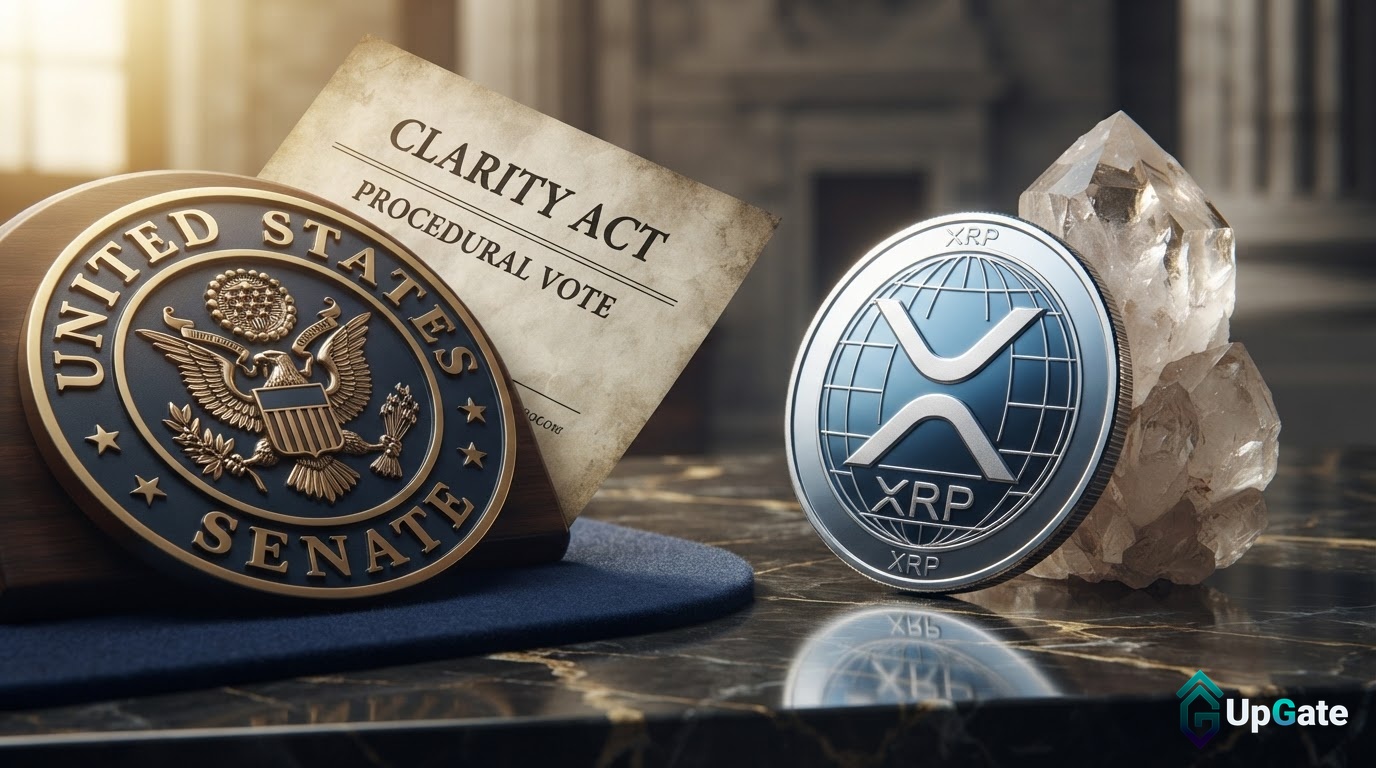
    The US Senate is set to conduct a procedural vote on H.R. 3633, the CLARITY Act, on September 15 at 2:15 pm ET. This vote is a critical distinction: it determines whether the Senate will begin debating the bill, not whether it may pass into law. While market participants are closely observing this development for its potential impact on XRP’s price, analysis suggests the market may be overestimating the immediate significance of this procedural step.

    The CLARITY Act’s objective is to establish a defined legal framework for digital assets. However, the upcoming vote is a cloture motion, requiring 60 ‘yes’ votes to advance the bill for further debate. With Republicans holding 53 seats in the Senate, bipartisan support is essential. The distinction between a vote to proceed and a vote to pass is crucial, as the former does not guarantee the latter. This nuance is reportedly being lost in market discussions, potentially leading to mispriced expectations.

    XRP is currently trading at $1.39, up 2% on the day. Over the weekend, XRP saw a dip towards $1.33, after trading above $1.40 last week. Support for XRP is identified between $1.31 and $1.33, with resistance stacked between $1.38 and $1.42. Despite recent price movements and bullish sentiment surrounding potential regulatory clarity, the long-term outlook for the CLARITY Act remains uncertain. According to the FactSheet, a prediction market indicates that the odds of the CLARITY Act becoming law by 2026 are just below 20%, a low probability that may temper significant price rallies.

    Even if the CLARITY Act were to be passed, its impact on XRP’s price may not be as dramatic as some anticipate. Standard Chartered has set a $10 price target for XRP for 2026, contingent on the bill’s eventual passage. However, analysis suggests that at XRP’s current market capitalization, the potential for substantial asymmetric upside is limited. This gap is often targeted by presale tokens, such as Maxi Doge ($MAXI), which is currently priced at $0.0002838 and has raised $4.8 million.

    The upcoming Senate vote represents a procedural hurdle rather than a definitive legislative outcome. The market’s reaction to this vote highlights the sensitivity of digital asset prices to regulatory news, even when the news pertains to preliminary legislative steps. Investors are advised to consider the low probability of the CLARITY Act’s passage and the limited potential for extreme upside for established assets like XRP, focusing instead on a balanced assessment of regulatory developments and market realities.

    Broader Context

    Source materials place the market analysis in this context: The article discusses the potential impact of the CLARITY Act on XRP’s price.

  • CLARITY Act Revised with Ethics, Enforcement Changes Ahead of Senate Vote

    CLARITY Act Revised with Ethics, Enforcement Changes Ahead of Senate Vote

    The CLARITY Act, a proposed cryptocurrency market structure bill, has undergone significant last-minute revisions as Senate Republicans seek to secure Democratic support for an upcoming procedural vote. The latest version, now 635 pages, includes an ethics framework, revised enforcement authority, and adjustments to the Blockchain Regulatory Certainty Act (BRCA).

    A key addition is an ethics framework, which has President Donald Trump’s voluntary agreement. This framework aims to restrict public officials, judges, and their spouses from issuing or sponsoring digital assets, requiring them to divest holdings or place them in a blind trust. This section incorporates elements of the Tillis-Gallego proposal and addresses Democratic concerns about the Department of Justice (DOJ) having sole enforcement authority over ethics provisions, particularly in light of potential conflicts involving President Trump and his family’s financial interests in the crypto sector.

    To satisfy Democratic objections, enforcement authority has been expanded to include state attorneys general alongside the DOJ. Senate Banking Digital Assets Subcommittee Chair Cynthia Lummis stated the bill is ready after a year of bipartisan negotiations.

    Revisions to the Blockchain Regulatory Certainty Act (BRCA) narrow its scope to primarily cover the Bank Secrecy Act and civil enforcement. Language extending protections to criminal proceedings, including cases under Section 1960, has been removed. However, amendments would still extend BRCA protections to miners and validators.

    The bill’s stablecoin yield section now features a “circuit breaker” mechanism, first proposed by Senator Tillis in July. This mechanism would empower federal regulators to intervene if stablecoins trigger significant withdrawals from community banks. Stricter limits on vertical integration have also been introduced, addressing potential conflicts of interest involving digital commodity exchanges, brokers, and dealers, including rules on affiliate trading.

    The updated text suggests that state consumer protection laws remain in effect and that developer protections will not override existing regulations for derivatives markets or prediction markets.

    Coinbase CEO Brian Armstrong voiced support for the CLARITY Act on September 10, indicating that the company’s primary concerns had been addressed. Armstrong claimed the bill has garnered support from law enforcement groups, banks, and other crypto companies.

    The CLARITY Act is scheduled for a procedural vote in the US Senate on Tuesday. Uncertainties remain regarding the extent of Democratic support and the ultimate impact of the revised provisions on the cryptocurrency market structure.

    Why This Matters

    The materials describe a narrow update: The CLARITY Act has been amended with a 635-page version that includes an ethics framework, revised enforcement authority for the DOJ and state attorneys general, changes to the Blockchain Regulatory Certainty Act (BRCA), a stablecoin yield ‘circuit breaker’ mechanism, and stricter limits on vertical integration. Whether Democrats will ultimately provide sufficient support for the CLARITY Act’s procedural vote.

    Broader Context

    Source materials place the factual news in this context: The CLARITY Act is a cryptocurrency market structure bill.

  • DOJ Busts Scam Marketplace, Seizes $52M in Crypto

    DOJ Busts Scam Marketplace, Seizes $52M in Crypto

    Justice Department Disrupts Chinese Scam Network, Seizes Millions in Cryptocurrency

    The Justice Department’s Scam Center Strike Force, in collaboration with the Treasury Department, has dismantled a Chinese-language scam marketplace known as Xinbi Guarantee, seizing approximately $52 million in cryptocurrency in a single day, U.S. Attorney Jeanine Pirro announced this week. This operation brings the total amount restrained by the Strike Force since its inception to roughly $938 million.

    In a parallel effort, another Strike Force team assisted authorities in Madagascar in taking down 13 Chinese-operated scam compounds. This action significantly expands the reach of a crackdown initiated last November, which had previously been concentrated in Southeast Asia.

    Xinbi operated primarily on the Telegram platform, using Chinese to facilitate its illicit activities. It functioned as a marketplace where vendors offered services to scam center operators, including the creation of fraudulent investment websites, the laundering of funds obtained through wire fraud, and the recruitment of trafficking victims to staff scam compounds.

    Prosecutors explained that Xinbi held payments in escrow until a vendor completed their service. This mechanism allowed investigators to trace specific victim funds to vendors who had posted their cryptocurrency wallet addresses on the Telegram channel. A federal court in Washington authorized the seizure of these Telegram channels on September 7, with prosecutors unsealing the warrant on Wednesday.

    Investigators seized two cryptocurrency wallets used by Xinbi to collect vendor payments, valued at approximately $12 million. They also sought the restraint of 47 additional wallets linked to the network, bringing the total value confiscated from the platform and its vendors to over $52 million.

    On the same day, the Treasury’s Office of Foreign Asset Control (OFAC) designated Xinbi as a transnational criminal organization, along with two other entities accused of supporting its operations. This designation freezes any assets they may hold within the United States.

    U.S. Attorney Pirro highlighted the broad impact of these scams, stating, “Every American with a retirement account is in the blast radius.” She added, “My Strike Force will continue to dismantle Chinese organized crime, those who facilitate it, and protect Main Street America.”

    In conjunction with the Xinbi operation, U.S. Attorney Michael Heyman of Alaska noted that the Strike Force’s two-week deployment in Madagascar, which involved processing over 3,200 devices and interviewing approximately 400 arrested individuals, illustrates the evolving nature of this fight. “Transnational criminal organizations don’t care about borders, and the Department of Justice won’t either,” he remarked.

    Earlier this year, the British government sanctioned Xinbi. Chainalysis estimated that the platform had processed nearly $20 billion in cryptocurrency between 2021 and 2025, offering a range of illicit goods and services, from stolen personal data to satellite equipment used to target fraud victims. However, this previous action had minimal impact, with the criminal group simply establishing new Telegram channels to continue its operations. The Scam Center Strike Force itself was established in November 2025 by Pirro to target Chinese organized crime involved in running scam centers.

    Federal data released on Wednesday indicated that reported losses from cryptocurrency investment fraud reached $8.65 billion in 2025, an 89% increase from $4.57 billion in 2023. The FBI cautions that these figures are likely an underrepresentation, as many fraud victims do not report their losses.

  • XRP’s Fate Uncertain as CLARITY Act Vote Looms

    XRP’s Fate Uncertain as CLARITY Act Vote Looms

    CLARITY Act Vote Looms: XRP Faces Potential Setback as Senate Debates Crypto Bill

    A pivotal vote on the Digital Asset Market Clarity Act, scheduled for September 15, is not a final passage vote but carries significant weight for the cryptocurrency market. Senators will determine whether to advance debate on the legislation, a process requiring 60 votes for cloture. This means that even with unanimous Republican support, the bill would still need backing from some Democrats or independents to proceed.

    XRP, a cross-border token, is particularly intertwined with the proposed legislation, making a potential failure to advance the bill a considerable risk to its price. To gauge the potential impact, ChatGPT was consulted for its outlook on the matter and its predictions for XRP.

    The CLARITY Act aims to establish a comprehensive federal framework for the cryptocurrency market. This includes defining clearer responsibilities for the Securities and Exchange Commission (SEC) and the Commodity Futures Trading Commission (CFTC), as well as setting rules for exchanges, brokers, dealers, and digital commodities. This regulatory clarity is especially pertinent for XRP, given Ripple’s protracted legal battle with the SEC.

    Following the conclusion of the lawsuit initiated in late 2020, the SEC classified XRP as a digital commodity. The proposed legislation would solidify this classification and the broader regulatory landscape into federal law, offering greater durability than the SEC’s historically shifting allegiances with different administrations.

    While a failure to pass the CLARITY Act next week would remove a potential bullish catalyst, it is unlikely to negate all of the regulatory progress XRP has achieved over the past eighteen months.

    From a technical perspective, XRP is currently trading near $1.40, holding above key support levels between $1.34 and $1.35, but has yet to reclaim the critical resistance at $1.40. If cloture fails but Bitcoin and the broader crypto market remain stable, ChatGPT anticipates an initial reaction of a 7% to 10% dip for Ripple’s token, potentially falling to the $1.20-$1.25 range.

    A more aggressive selloff could push the asset lower, toward $1.10, particularly if markets interpret the vote’s outcome as a sign that comprehensive U.S. crypto legislation could be significantly delayed beyond the midterm elections.

    An additional concern emerges the following day, with the Federal Reserve’s conclusion of its September 15-16 FOMC meeting. A failed CLARITY Act vote, coupled with a hawkish Fed decision, could escalate an XRP-specific regulatory disappointment into a broader crypto market selloff. In such a scenario, the AI platform predicted a more severe decline, potentially reaching $1.00.

    On a more optimistic note, ChatGPT indicated that a lack of progress on the CLARITY Act alone would not be a strong enough catalyst to drive XRP below the $1.00 mark.

  • Senate Eyes CLARITY Act with 60-Vote Threshold

    Senate Eyes CLARITY Act with 60-Vote Threshold

    CLARITY Act Odds Plummet as Senate Vote Looms

    The odds of the CLARITY Act becoming law by 2026 have significantly decreased, standing at just 25% on September 13, a sharp drop from 82% in February. Concurrently, a separate market on the prediction platform Kalshi indicated a 94% probability of a U.S. Senate vote on the measure before October 1.

    This divergence highlights two critical junctures: first, whether the Senate will even consider the legislation, and second, whether it will successfully navigate the full legislative process to be enacted into law – a development many believe is crucial for a potential cryptocurrency bull market.

    Senate Set for Procedural Vote

    The Senate is scheduled to consider the measure on September 15. The Kalshi market’s concern is focused on whether H.R. 3633, previously known as the CLARITY Act, will be passed by both chambers of Congress and signed into law by December 31, 2026. A vote on the motion to proceed represents an earlier procedural step, distinct from final enactment.

    More than $8 million has been wagered on Kalshi’s contract related to the bill’s enactment. The market’s implied probability for this outcome fell from 82% in February to 16% by September 7.

    Divergent Projections for Passage

    Estimates regarding the Senate’s threshold for passage vary. Coinbase CEO Brian Armstrong expressed optimism in a CNBC interview, suggesting he was confident about securing the necessary 60 votes and characterizing the negotiations as largely successful in meeting the demands of both sides.

    However, other assessments have been more cautious. Ian Katz of Capital Alpha Partners revised his estimate of the bill’s chances of passage downward from approximately 40% to 25%. Galaxy Digital’s August estimate stood at a mere 10%. These projections, much like the prediction market prices, address the prospects for legislation that must overcome a procedural Senate vote before advancing further.

    Key Senate Vote Approaches

    In related CLARITY Act news, the September 15 vote is expected to focus on a motion to proceed, a procedural step that would authorize debate on the bill rather than passing it outright. Supporters require 60 favorable votes to advance. With Republicans holding 53 Senate seats, at least seven Democrats would need to join them to overcome a potential filibuster.

    The CLARITY Act previously passed the House of Representatives in July 2025 by a vote of 294-134. The bill aims to establish a federal regulatory framework for the U.S. cryptocurrency market.

    Contentious Issues Remain

    Under the proposal, the Commodity Futures Trading Commission (CFTC) would be granted exclusive authority over spot markets for digital commodities, while the Securities and Exchange Commission (SEC) would retain oversight of certain securities offerings and crypto exchange activities.

    However, three key areas of disagreement persist. A contingent of Democrats, including Senator Kirsten Gillibrand, are advocating for a binding ban on public officials holding cryptocurrency assets. Traditional banking institutions have also resisted compromise on issues related to stablecoin rewards. Furthermore, lawmakers remain divided over protections for decentralized finance (DeFi) protocols and non-custodial software developers, with concerns that certain language could inadvertently create regulatory loopholes.

    The Path Forward

    If the motion to proceed garners the necessary votes, the legislation would advance to formal debate. The outstanding disagreements concerning ethics, stablecoin rewards, and protections for DeFi and non-custodial developers would still need to be resolved. Failure to achieve cloture would halt the bill’s progress at this procedural stage.

    It is important to note that the legislative route is not the sole avenue for cryptocurrency policy. The SEC and CFTC are actively pursuing regulatory measures without waiting for congressional action. Under the leadership of Paul Atkins, the SEC has reportedly abandoned certain enforcement actions and outlined a taxonomy of crypto assets. The CFTC is also addressing issues related to leveraged exchanges and DeFi.

    While regulatory action can establish a framework outside of legislation, agency rules are also subject to change by future administrations. Therefore, the September 15 proceeding remains a significant indicator of whether the CLARITY Act can initiate Senate debate, while prediction markets underscore the separate challenge of its potential enactment into law by 2026.

  • India’s Demat 2.0 Pilot Integrates Tokenized Bonds into Regulated Market

    India’s Demat 2.0 Pilot Integrates Tokenized Bonds into Regulated Market

    India has launched Demat 2.0, a pilot infrastructure for issuing, holding, trading, and settling corporate bonds as digital tokens. This initiative integrates directly into the nation’s existing regulated securities market and connects with the Reserve Bank of India’s (RBI) wholesale digital rupee via the Unified Market Interface (UMI) to enable atomic delivery-versus-payment.

    The Demat 2.0 system allows corporate bonds to be created natively on a distributed ledger, with ownership records managed by statutory depositories. This integration aims to streamline the bond issuance and trading process by enabling simultaneous transfer of securities and cash, thereby eliminating the settlement risk inherent in traditional, multi-day processes.

    Early transactions under the pilot have seen significant activity. On September 7, REC Limited issued the first tokenized bonds, raising ₹500 crore from 18 investors. Larsen & Toubro also issued tokenized bonds worth ₹500 crore. On September 9, IIFL raised ₹25 crore from a single investor. Collectively, these initial issuances total ₹1,025 crore (approximately $116 million).

    According to SEBI, issuers can now receive funds on the same day as bidding, a marked improvement over the traditional two-to-three-day settlement period. Secondary-market investors can also receive their proceeds immediately. Furthermore, the infrastructure supports smart contracts for automating coupon and redemption payments directly to investors’ central bank digital currency (CBDC) wallets.

    Crucially, tokenized bonds issued under Demat 2.0 remain legally identical to conventional bonds. Existing regulations concerning credit ratings, disclosures, debenture trustees, and investor protection continue to apply. The infrastructure is private and permissioned, with nodes operated by depositories and stock exchanges, ensuring it operates within the established financial system.

    The rollout of Demat 2.0 is planned in three stages. The current phase focuses on institutional corporate bond issuance. The second stage will introduce secondary-market trading and expand access to retail investors. The final stage may involve bringing additional regulated entities onto the network and exploring the tokenization of other financial instruments.

    While the pilot demonstrates a clear path for integrating distributed ledger technology into India’s financial markets, specific details regarding the timeline for the second and third stages, as well as the exact nature of additional entities and instruments to be included, remain to be clarified.

    Why This Matters

    The materials describe a narrow update: SEBI and RBI have introduced Demat 2. The exact date for the second and third stages of the Demat 2.0 rollout.

    Broader Context

    Source materials place the factual news in this context: Unlike many tokenization experiments built on standalone blockchain platforms, India’s Demat 2.0 model is being integrated directly into the nation’s existing regulated securities market.

  • Reform UK Receives £72 Million in Donations Amidst Funding Investigations and Regulatory Scrutiny

    Reform UK Receives £72 Million in Donations Amidst Funding Investigations and Regulatory Scrutiny

    Reform UK has received a combined £72 million ($97 million) in donations from two billionaires, Ben Delo and Christopher Harborne, over two days. Delo donated £36 million, and Harborne matched this with another £36 million. These contributions are notable for their scale, potentially representing the largest single donation and a significant matching donation to a British political party.

    The donations occur while Reform UK is under criminal investigation regarding its funding. The Metropolitan Police opened an inquiry on Tuesday into allegations from Channel 4 footage concerning methods to circumvent the ban on foreign political donations. This inquiry is being integrated into an existing investigation into payments received by the party before the last general election.

    Britain banned crypto political donations in March. Both Delo and Harborne stated that their recent donations, as well as previous ones, were not made using cryptocurrency. The timing of these large donations also coincides with the government considering tighter regulations on political funding. While there is no limit on donations from UK-based individuals, Labour has proposed capping gifts from Britons living overseas and plans similar restrictions for recent returnees. Donors giving more than £100,000 annually must have been on the electoral register for at least 12 months.

    Ben Delo, co-founder of BitMEX, announced his £36 million donation in The Telegraph on Friday. This amount is reportedly more than four times the £8 million he had already contributed to Reform UK this year. Reports suggest Delo is providing the funds upfront, equivalent to £1 million per month until the latest possible election date in 2029, potentially to preempt future government caps on large donations. Delo, who previously pleaded guilty to anti-money laundering failures at BitMEX, has stated his intention to return from Hong Kong. He was pardoned by U.S. President Donald Trump in 2025.

    Christopher Harborne, an investor in Tether, matched Delo’s donation on Saturday. Harborne, who has previously donated £15 million to Reform UK since the last election, cited a “competitive spirit” as his motivation, adding that he expected “nothing, personally.” The Parliamentary Commissioner for Standards is reviewing whether Nigel Farage, the leader of Reform UK, should have declared a £5 million personal gift from Harborne.

    A spokesperson for Reform UK stated that the funds would be used to hire “the brightest and best minds to work on policy” and to recruit 400 campaign managers, one for each target seat, indicating the party is “now on election footing.”

    Reform UK has denied any wrongdoing and pledged full cooperation with the ongoing investigations. The party faces scrutiny not only over its funding but also concerning past declarations, such as the £5 million gift to Farage. The Metropolitan Police’s inquiry focuses on allegations of circumventing foreign donation bans, separate from the recent large contributions from Delo and Harborne.

    This situation highlights the complex interplay between significant political funding, evolving regulatory frameworks, and ongoing investigations into party finances. While the donations represent a substantial financial boost for Reform UK, their context within the current scrutiny and potential future regulatory changes adds layers of uncertainty to their ultimate impact. The donations are significant given the government is considering tighter rules on donations and the party is under criminal investigation.

    Why This Matters

    The materials describe a narrow update: Ben Delo and Christopher Harborne donated a combined £72 million ($97 million) to Reform UK over two days. Whether Nigel Farage declared a £5 million personal gift from Harborne.

    Broader Context

    Source materials place the factual news in this context: Two crypto billionaires have given Nigel Farage’s Reform UK £72 million ($97 million) in two days, more than every British party raised last year combined.

  • Bankman-Fried Appeals Fraud Conviction to Supreme Court

    Bankman-Fried Appeals Fraud Conviction to Supreme Court

    Sam Bankman-Fried Appeals Fraud Conviction to Supreme Court

    Sam Bankman-Fried, the founder of the collapsed cryptocurrency exchange FTX, has asked the U.S. Supreme Court to overturn his conviction on fraud charges. The appeal follows recent high-profile pardons granted to figures like Silk Road founder Ross Ulbricht and Binance co-founder Changpeng “CZ” Zhao.

    Bankman-Fried is currently serving a 25-year prison sentence after being convicted in 2023. His legal team is also challenging an approximately $11 billion forfeiture order. The Supreme Court will first decide whether to hear the case, a decision that comes after thousands of such requests are made annually, with the court typically agreeing to hear arguments in only about 60 cases.

    Legal Challenges to Conviction and Forfeiture

    The petition filed with the Supreme Court targets key aspects of the case against Bankman-Fried, including his conviction and the forfeiture order. He was found guilty on seven counts of fraud and conspiracy following a month-long federal jury trial. In June, a three-judge panel of the U.S. Court of Appeals for the Second Circuit upheld the original judgment.

    The appellate court’s description of the case highlighted the relationship between FTX, the cryptocurrency exchange, and Alameda Research, a crypto trading firm that Bankman-Fried controlled.

    Bankman-Fried’s lawyers have argued that FTX and Alameda possessed sufficient assets to reimburse customers and that the trial court’s restrictions on evidence related to these assets prevented him from receiving a fair trial. The petition references FTX’s bankruptcy plan, which promised virtually all creditors cash payments, including interest, to recover their losses.

    Prosecutors’ Stance on Customer Funds

    Federal prosecutors, however, maintained that FTX customers were defrauded by Bankman-Fried’s management of their funds, including the misappropriation of billions of dollars. The Second Circuit noted that the government’s trial theory posited that Bankman-Fried assured customers their funds were secure on the platform and would only be used for cryptocurrency transactions. Instead, he allegedly transferred customer funds to Alameda and other entities for unauthorized purposes. The court affirmed the district court’s verdict.

    Rise and Fall of FTX

    Bankman-Fried founded FTX in 2019, rapidly building it into one of the world’s largest crypto exchanges. The company’s expansion brought him significant wealth and public recognition, making him one of the youngest billionaires and a prominent donor to Democratic causes.

    FTX collapsed in 2022 amid a run on deposits, leading to the firm’s bankruptcy. Bankman-Fried was arrested later that year in the Bahamas, where he resided, and subsequently extradited to the United States to face trial. According to the Second Circuit’s account, FTX filed for bankruptcy in November 2022 after being unable to meet customer withdrawal requests.

    Bankman-Fried has consistently maintained his innocence. Prosecutors characterized the case as one of the most significant financial frauds in history, alleging that he stole billions of dollars from FTX customers while portraying himself as a responsible philanthropist.

    The Supreme Court has not yet indicated whether it will consider Bankman-Fried’s petition. Its decision on whether to hear the case will determine if his challenge proceeds to further review.

    Separately, a pardon application is pending. The Office of the Pardon Attorney, a division of the Justice Department, lists this application as a request for a pardon after the completion of a sentence and marks it as pending.