Tag: Regulation & Policy

  • SEC Greenlights Cboe Prediction Market Options for Coinbase, Nvidia, Tesla

    SEC Greenlights Cboe Prediction Market Options for Coinbase, Nvidia, Tesla

    SEC Approves Novel Binary Options Tied to Company Performance Metrics

    The U.S. Securities and Exchange Commission (SEC) has greenlit a new class of financial products that allow investors to bet on specific company performance indicators, moving beyond traditional stock price speculation. Cboe Global Markets has received approval to list and trade binary options linked to key performance metrics reported by public companies, marking a significant development in the exchange-traded derivatives market.

    How the New Contracts Work

    These binary options function as straightforward “yes” or “no” propositions with financial stakes. Investors will wager on whether a company’s reported metric will meet or exceed a predetermined threshold. If the metric achieves the target, the contract pays out $1; if it falls short, it pays $0. The outcome is determined by the official figures disclosed by companies in their SEC filings.

    Initial Offerings and Participating Companies

    The initial rollout will feature over 100 metrics from 23 companies, including prominent names such as Coinbase, Nvidia, Tesla, and Apple. These metrics are distinct operational figures, such as Coinbase’s trading volume, Nvidia’s data-center revenue, and Tesla’s vehicle delivery numbers, rather than broader stock price movements.

    Retail Access and Fee Waivers

    Robinhood Markets is set to be the first retail broker to offer these new contracts to its clients. Both Cboe and Robinhood have announced plans to waive fees on these products until December 31, 2026, although this fee arrangement is subject to ongoing regulatory review.

    Trading Yet to Commence

    Despite the SEC’s approval, trading in these binary options has not yet begun. Cboe Clear U.S. is awaiting its temporary registration to handle the clearing of these contracts, meaning they are approved in principle but not yet live for trading.

    Investor Protections and Regulatory Distinction

    These new products will operate under existing securities-options investor protection frameworks. This distinguishes them from “event contracts” typically overseen by the Commodity Futures Trading Commission (CFTC), which generally governs similar derivative products.

    Market Reaction

    The market’s initial response was mixed. Cboe shares saw a gain of over 4% following the announcement, while Robinhood shares experienced a decline of nearly 9%.

    Crypto Market Implications

    The introduction of these contracts has a direct implication for the cryptocurrency sector. With Coinbase’s trading volume as one of the available metrics, a key indicator of crypto market activity can now be traded as a binary option. This provides traders with an avenue to speculate on specific exchange activity without the direct risk associated with holding Coinbase stock.

    Key Factors to Watch

    Several developments will be crucial moving forward. The securing of temporary registration by Cboe Clear U.S. is the immediate prerequisite for actual trading to commence. Additionally, the survival of the proposed fee waivers through regulatory review by the end of 2026 will be closely monitored.
  • Industry Groups Seek Expedited Review of Illinois’s 0.2% Crypto Tax Amid Legal Uncertainty

    Industry Groups Seek Expedited Review of Illinois’s 0.2% Crypto Tax Amid Legal Uncertainty

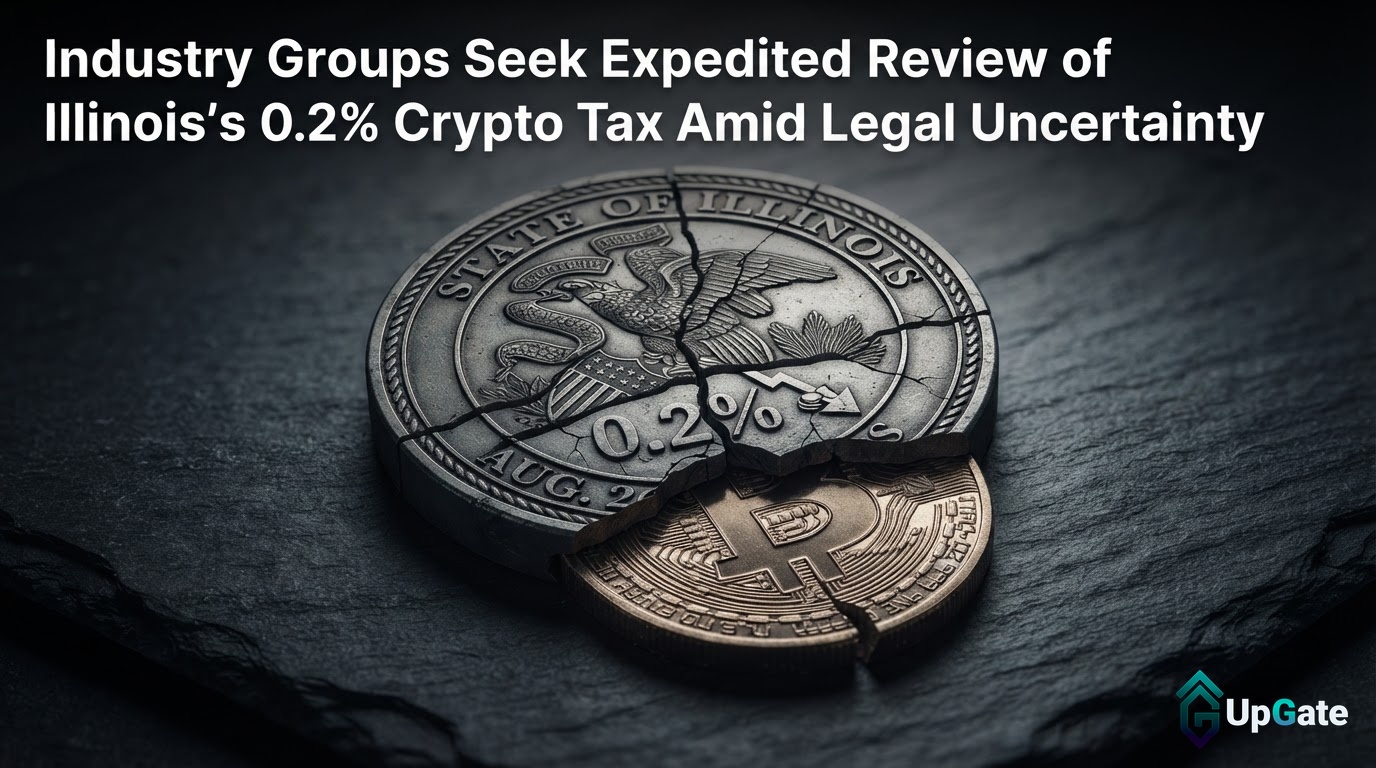
    Industry organizations are pushing for an expedited court review of Illinois’s 0.2% digital-asset tax, seeking a swift resolution on the lawfulness of the measure. The tax is currently slated to take effect on July 1, 2027, following a six-month delay.

    In a filing with the Circuit Court of Sangamon County, Illinois, groups including the Crypto Council for Innovation (CCI) and the Blockchain Association (BA) have requested an expedited schedule for summary judgment. This move aims to resolve the legal merits of the tax as quickly as possible, with a potential decision on its lawfulness by March.

    Legal Challenge and Expedited Timeline

    The organizations are joining existing legal challenges against the tax. The Digital Chamber and the Illinois Blockchain Association have also filed lawsuits. The request for expedited review consolidates the efforts to address the tax’s legality.

    According to the filing, the CCI and BA are seeking to “reach a decision on the tax’s lawfulness as quickly as possible.” This push for an accelerated legal process comes after Illinois officials agreed to delay the tax’s implementation. The delay, which extends from January 1 to July 1, 2027, was part of a settlement in a lawsuit filed by the Digital Chamber.

    Background of the Tax Delay

    This delay was reportedly agreed upon in response to claims that the Digital Asset Tax Act was included in the state’s budget without adequate debate or public feedback. Digital Chamber CEO Cody Carbone stated that the organization would continue legal proceedings “until this tax is struck down for good.”

    CCI CEO Ji Kim commented on the urgency, stating, “While pausing enforcement of the Digital Asset Tax Act protects Illinois consumers and businesses from this onerous and legally flawed tax until July 1, it remains imperative that the merits are determined as soon as possible.”

    The outcome of the request for an expedited schedule remains uncertain, as it is subject to court approval. If granted, a decision on the merits of the law could be reached by March, significantly sooner than the tax’s current effective date.

    Why This Matters

    The push for an expedited review by industry organizations highlights a proactive legal strategy to resolve regulatory uncertainty surrounding Illinois’s digital-asset tax. The potential for a court decision by March, should the expedited schedule be approved, could provide clarity on the tax’s lawfulness sooner than anticipated, influencing future regulatory approaches to digital assets in the state.

    In related news, Summer Mersinger is scheduled to step down as CEO of the Blockchain Association. Kristin Smith is expected to take over as interim head. Mersinger is anticipated to remain with the organization until the end of 2026.

    Broader Context

    Source materials place the factual news in this context: Illinois officials already agreed to delay implementation of a 0.2% tax on crypto assets, but industry-aligned organizations are pushing for summary judgment on the merits.

  • Injective Eyes Wall Street with INJC Staking ETF Proposal

    Injective Eyes Wall Street with INJC Staking ETF Proposal

    Proposed ETF Could Bring Injective Token to Mainstream Brokerages

    Injective’s native token, INJ, may soon trade under a ticker symbol familiar to traditional investors: INJC. Canary Capital is behind the proposed Staked INJ Exchange-Traded Fund (ETF), having submitted an amended registration statement to the U.S. Securities and Exchange Commission (SEC) on September 24, 2026. The fund aims to provide investors with exposure to INJ without the need for a cryptocurrency wallet, with plans to stake the majority of its holdings to generate additional yield.

    Injective, a Layer 1 blockchain designed for finance and tokenization, is now part of a growing wave of digital asset-related ETF applications. The company’s CEO believes regulators might act more swiftly than the market anticipates.

    The INJC ETF would directly hold INJ tokens, offering investors spot exposure to the asset’s price fluctuations. Furthermore, the fund’s structure is designed to stake approximately 90% of its assets. Staking involves locking up tokens to support the security of a blockchain network, with participants receiving rewards in return.

    BitGo is slated to act as the custodian, responsible for holding the fund’s tokens. The ETF is intended for listing on the Cboe BZX exchange. An S-1 filing is the registration document companies or funds submit to the SEC before offering securities to the public. Amendments to these filings typically follow feedback or updates, suggesting the application process is progressing rather than stalled.

    Canary Capital is not the sole entity pursuing an INJ-related ETF. At least three such applications are currently pending with the SEC. Alongside Canary’s INJC proposal, filings from 21Shares and REX-Osprey are also in review.

    Injective CEO Eric Chen has indicated that the timeline for approval could be sooner than some expect. In an interview on October 5, 2026, he suggested that a 2027 launch for U.S. INJ-linked ETFs might be overly conservative. With multiple active applications underway, Chen posited that U.S. INJ ETFs could potentially launch before 2027.

    In early October 2026, the Injective Foundation introduced its Trench Treasury program. This initiative aims to fund smaller projects being developed on the Injective blockchain and to reward community contributors. The initial funding round is targeting projects such as Sprout and RunUp.

    The inclusion of staking within an ETF structure introduces a yield component, positioning it more as an income-generating investment rather than solely a bet on price appreciation. However, staked tokens can be less liquid, requiring a fund that stakes a significant portion of its holdings to manage redemptions carefully. Maintaining a portion of assets in an unstaked state is one method to address this.

    If approved, the INJC ETF could attract investors who might otherwise avoid setting up cryptocurrency exchange accounts. The presence of three distinct INJ ETF applications suggests that issuers perceive significant investor demand.

    Regulatory approval timelines can be subject to delays, and Chen’s projection of a pre-2027 launch remains an outlook, not a certainty. Staking also presents its own technical and liquidity considerations that traditional ETF investors may not be accustomed to evaluating.

    Key developments to monitor include further amendments to Canary’s S-1 filing, any progress on the 21Shares and REX-Osprey proposals, and signals from the SEC regarding its comfort level with staking mechanisms within an exchange-traded fund structure. On the Injective ecosystem front, the progress of Sprout, RunUp, and other Trench Treasury recipients will be indicative of whether the blockchain’s on-chain activity can align with its ambitions in the traditional financial markets.

  • Qivalis Secures Dutch Central Bank Authorization for Euro Stablecoin Plans

    Qivalis Secures Dutch Central Bank Authorization for Euro Stablecoin Plans

    Qivalis, a European banking consortium, has received Electronic Money Institution (EMI) authorization from De Nederlandsche Bank (DNB), the Dutch central bank. This regulatory approval is a significant step towards the company’s goal of launching a euro-denominated stablecoin.

    The authorization, announced Wednesday, permits Qivalis to issue euro-denominated electronic money tokens and subjects the consortium to ongoing supervision by the DNB. However, the actual issuance of a stablecoin is contingent upon meeting additional requirements under the Markets in Crypto-Assets Regulation (MiCA) and the publication of Qivalis’s white paper.

    Qivalis aims to introduce a stablecoin denominated in euros into a market currently dominated by US dollar-based stablecoins. According to DefiLlama, Tether USDt (USDT) holds a market capitalization of $183 billion, representing over 60% of the total stablecoin market, which is valued at $303 billion.

    “We believe Europe should have a euro-denominated on-chain settlement asset issued under European law and subject to European regulatory standards,” said Jan-Oliver Sell, CEO of Qivalis. This strategic intent aims to provide a regulated, European-law compliant alternative in the stablecoin space.

    In May, Qivalis expanded its backing, adding 25 new banks across 15 countries, bringing its total institutional support to 37 institutions. The timeline for the stablecoin’s launch remains subject to further regulatory developments and the completion of Qivalis’s internal documentation, including its white paper, with issuance anticipated in the coming months, pending these conditions. The market reception and competitive impact of this new euro-denominated stablecoin are yet to be determined.

    Why This Matters

    The materials describe a narrow update: Qivalis, a European banking consortium, received Electronic Money Institution (EMI) authorization from the Dutch central bank, De Nederlandsche Bank (DNB). Exact timing of stablecoin issuance is subject to additional MiCA requirements and white paper publication.

    Broader Context

    Source materials place the factual news in this context: Qivalis is looking to introduce a euro-denominated stablecoin into a market largely dominated by US dollar-based stablecoins.

  • Coins.ph License Unaffected by Central Bank Revocation Claims

    Coins.ph License Unaffected by Central Bank Revocation Claims

    Coins.ph Reaffirms Central Bank License Amid Offshore Gambling Probe

    MANILA – Digital wallet and cryptocurrency exchange Coins.ph has stated that its license from the Philippine central bank remains valid, despite reports suggesting a potential revocation due to alleged transactions with offshore gambling operators.

    Coins.ph, a prominent player in the Philippine crypto market with a reported 24-hour spot trading volume of approximately $52 million on Wednesday, according to CoinGecko, is facing scrutiny. The reported risk to its license follows restrictions imposed by the Bangko Sentral ng Pilipinas (BSP) on incoming InstaPay and PESONet transfers linked to DCPay Philippines, the entity responsible for Coins.ph’s peso e-wallet services.

    “Coins.ph firmly denies any claim that it knowingly serves offshore gaming or gambling operators,” the company said in an official statement provided to Cointelegraph. “Our users’ funds are safe; we continue to operate as a BSP-licensed institution.”

    While Coins.ph denied knowingly facilitating transactions for offshore gambling entities, it did not directly confirm or deny whether such operators had utilized its platform. When pressed on whether it processed transactions involving these operators irrespective of its awareness, a company spokesperson indicated that internal clarification would be sought but offered no further details at that time.

    In a prior advisory, Coins.ph had indicated that the BSP had directed it to enhance its internal controls. The company noted that its cash-in services and QRPh collections were temporarily suspended, while crypto trading, cash-outs, bill payments, and merchant QRPh payments remained operational. QRPh payments refer to the central bank’s national QR standard.

    Local media outlet BitPinas reported that the restrictions were enacted under BSP Monetary Board Resolution No. 839. DCPay holds an electronic money issuer license, and Betur Inc. manages the exchange’s crypto asset services under a separate virtual asset service provider license. The reported restrictions appear to target DCPay’s payment operations rather than Betur’s cryptocurrency services.

    In 2025, the central bank had previously mandated supervised financial institutions to remove links providing access to gambling websites from their payment applications. However, the BSP has not publicly connected this directive to the current restrictions affecting Coins.ph.

    Cointelegraph also reached out to the BSP for confirmation and comment. A representative from the central bank stated they would investigate the inquiry but had not provided further remarks by the time of publication.

  • Sberbank Added to Bank of Russia’s Crypto Exchange Register

    Sberbank Added to Bank of Russia’s Crypto Exchange Register

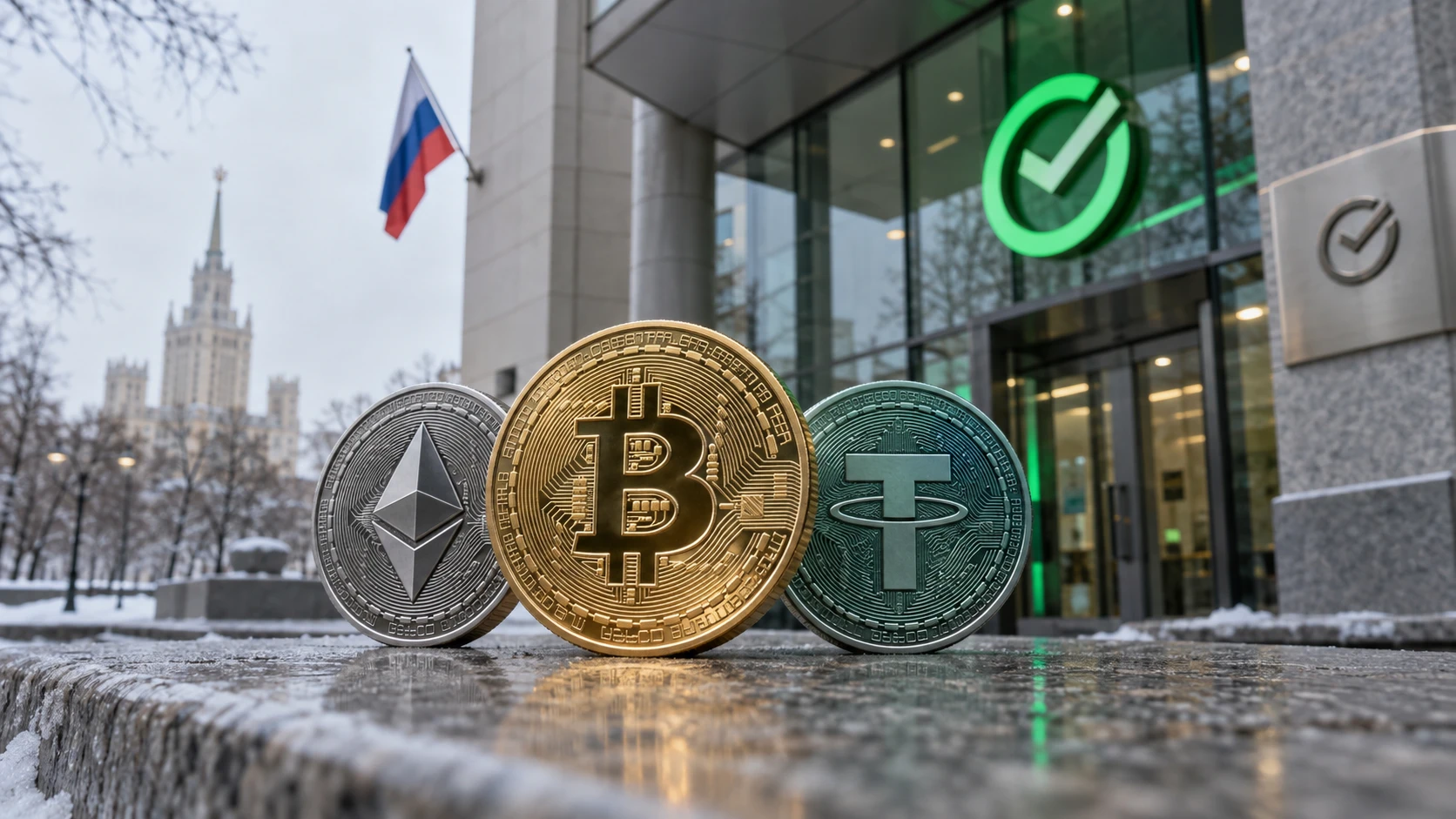
    Sberbank has been added to the Bank of Russia’s register of crypto exchange organizations, a development that brings the financial institution closer to launching its cryptocurrency trading services. This inclusion permits Sberbank to engage in buying and selling digital currencies on its own account, operating outside of organized trading as defined by the central bank.

    The move follows Sberbank’s earlier placement on the Bank of Russia’s separate register of digital depositories. Sberbank and VTB are currently the only two firms that appear on both of these regulatory lists. A digital depository is responsible for maintaining records of clients’ cryptocurrency holdings, facilitating transfers between them, and providing access to the addresses where these assets are stored.

    Firms were able to apply for inclusion on both the crypto exchange and digital depository registers starting October 5. The Bank of Russia made its initial additions to these registers on October 6, including four crypto exchange organizations and five digital depositories. Among the first entities listed for crypto exchange operations were VTB, T-Invest Lab (part of T-Technologies, which also owns T-Bank), Zefir, and Sistema-Crypto.

    Subsequently, on October 8, the non-bank credit organization FinPilot and Professional Bank were added to the crypto exchange list. Moi Bitcoin and the Kirov-based lender Khlynov joined the same register on October 9. Sberbank and Paradise Technology were the most recent additions to the crypto exchange register, joining on Monday. On the same day, the digital depository list expanded to six firms with the addition of TT.

    The Bank of Russia stated that the initial nine entities admitted to these registers were processed under the transitional provisions of Russia’s law on digital currencies and digital rights, which came into effect on September 1. Registered firms are required to adhere to the central bank’s regulations for cryptocurrency transactions from their respective listing dates. The deadline for full compliance with the law is set for September 1, 2027.

    Sberbank has been active in the digital asset space, having secured a license to issue and exchange digital assets in March 2022. Since 2025, the bank has been involved in selling structured bonds and digital financial assets linked to Bitcoin (BTC) and Ethereum (ETH). In December 2025, Sberbank also completed a pilot program for loans collateralized by cryptocurrency.

    On July 24, Alexander Vedyakhin, First Deputy Chairman of Sberbank, indicated the bank’s intention to develop crypto trading infrastructure and a digital depository, with a target launch date of December 1. This announcement followed the State Duma’s passage of the crypto law in its third reading, which occurred three days prior.

    Sberbank applied for depository status on the very first day that applications were accepted. The bank has announced that its initial cryptocurrency offerings will support Bitcoin (BTC), Ethereum (ETH), and Tether (USDT). These services are planned to be integrated directly into existing Sberbank platforms, including SberBank Online, SberInvestments, and SberBusiness, without the need for a separate application.

    Broader Context

    Source materials place the factual news in this context: Sberbank joined the Bank of Russia’s register of crypto exchange organizations on Monday, bringing the list to ten firms.

    Why This Matters

    Sberbank’s addition to the Bank of Russia’s register of crypto exchange organizations signifies a step towards offering digital currency trading services. This dual registration, alongside its presence on the digital depository register, positions Sberbank as one of the few entities prepared to operate within Russia’s evolving digital asset regulatory framework. The bank aims to launch these services by December 1, supporting key cryptocurrencies within its existing banking platforms.

  • US Government Bitcoin Holdings Drop to 328,372 BTC in 2026

    US Government Bitcoin Holdings Drop to 328,372 BTC in 2026

    US Government’s Bitcoin Holdings See Slight Decline Amidst Custody Shifts

    The United States government’s Bitcoin holdings have experienced a modest reduction this year, with an estimated 1,635 BTC removed from its reserves in 2026. As of early October, the government’s digital asset portfolio is believed to comprise approximately 328,372 BTC, according to data compiled by sources including BitcoinTreasuries.

    Tracking the Digital Coffers

    The precise balance of government-held Bitcoin remains subject to interpretation, with tracked holdings as of October 7, 2026, fluctuating between 319,000 and 328,000 BTC. This variance stems from the decentralized nature of digital wallets, which are not officially designated by federal agencies. Consequently, different tracking services may attribute various addresses to government entities, leading to discrepancies in the final count. This spread, however, clearly indicates a downward trend in holdings throughout the year.

    Significant Transfers to Coinbase Prime

    More notable activity occurred in the first week of October, when approximately 17,733 BTC were moved from wallets associated with the U.S. government. These transfers were predominantly directed to Coinbase Prime, the cryptocurrency exchange’s specialized division for institutional custody and trading services.

    Crucially, no sales of these Bitcoins have been officially confirmed. The observed transfers are consistent with a consolidation of custody arrangements, suggesting a reallocation of assets between different storage solutions rather than an outright liquidation on the open market.

    Origin of Government Bitcoin Holdings

    It is important to note that the government’s entire Bitcoin holdings were acquired through law enforcement seizures and forfeitures, not through direct purchases. The vast majority of these assets originate from two major cases: approximately 94,643 BTC linked to the 2016 Bitfinex hack and around 127,271 BTC recovered from operations related to the Silk Road marketplace.

    Strategic Bitcoin Reserve and Sale Prohibition

    Executive Order 14233, enacted in March 2025, established the Strategic Bitcoin Reserve and explicitly prohibited the sale of seized digital assets. This directive aimed to put an end to the long-standing practice of auctioning off forfeited Bitcoin.

    Valuation and Market Fluctuations

    With Bitcoin trading between $82,000 and $83,000 per coin in early October, the estimated total value of the government’s Bitcoin holdings ranged from $26 billion to $28 billion. This valuation represents a significant decrease of approximately $16 billion from a peak of nearly $40.7 billion recorded in late October 2025. The primary driver of this decline is attributed to market price fluctuations rather than a substantial reduction in the number of coins held.

    Reorganization, Not Liquidation

    Given the prohibition on sales under Executive Order 14233, the substantial transfers to Coinbase Prime are more indicative of a strategic reorganization of custody rather than a liquidation pipeline. This suggests that the market may face less of a supply overhang from forfeited coins than previously anticipated.

    Unexplained Decline and Future Outlook

    Despite the sales prohibition, the reported decline of approximately 1,635 BTC this year remains unexplained by the available data. Potential reasons, such as court-ordered restitution to victims or shifts in wallet attribution by trackers, have not been confirmed. The discrepancy between various tracker estimates, which differ by as much as 9,000 BTC, far exceeds the reported decline itself.

    Key developments to monitor include any further large-scale transfers to Coinbase Prime following the October activity, official clarifications regarding the 1,635 BTC reduction, and how the reserve’s dollar value will track Bitcoin’s price movements. At current prices, the reserve’s valuation remains considerably below its late-2025 peak.

  • UK Court Rules Chinese Law Governs Claims Over Seized Bitcoin

    UK Court Rules Chinese Law Governs Claims Over Seized Bitcoin

    A UK High Court judge has ruled that Chinese law must govern claims over more than 61,000 Bitcoin seized in connection with a large-scale fraud orchestrated in China. The decision, which determines the legal framework for victims seeking to recover their assets, marks a significant preliminary step in a complex international case.

    The ruling by Justice Turner rejected arguments that English law should apply. According to the judge, the contracts, investor payments, and Bitcoin purchases were fundamentally rooted in China, and the location of the cryptocurrency in England did not alter which law applied to the underlying rights. This decision addresses a preliminary question raised under Section 281 of the Proceeds of Crime Act 2002, which allows claimants to ask a court to declare recovered property as theirs.

    The fraud, arranged by Zhimin Qian, took place in China between 2014 and July 2017. It involved approximately 10 schemes, including those related to digital currencies, through entities such as Tianjin Lantian Gerui Electronic Technology. An audit indicated that at least 128,409 investment contracts were associated with these scams, which collected an estimated 40.23 billion yuan (approximately £4.1 billion or over $5 billion).

    During the period of the fraud, more than 100,000 Bitcoin were reportedly purchased via a Huobi trading account. Zhimin Qian fled China in July 2017, eventually arriving in London in September of that year. Following her arrival, she and an associate began converting Bitcoin into other assets. Subsequently, the Metropolitan Police investigated and seized over 61,000 Bitcoin, found in a safety deposit box and a property.

    Zhimin Qian pleaded guilty at Southwark Crown Court to possession of criminal property in the form of cryptocurrency. This plea formed the background to the subsequent civil dispute over the legal ownership of the recovered assets.

    However, the UK High Court’s recent ruling does not determine whether the victims can establish ownership of the cryptocurrency under Chinese law, nor does it specify how much they may ultimately recover. The judge’s decision focused solely on identifying the applicable law. Section 281 of the Proceeds of Crime Act requires victims to establish a proprietary interest in the property, rather than simply demonstrating that they lost money in the fraud.

    Uncertainty remains regarding the prospects for victims to recover their losses. The application of Chinese law introduces a new layer of complexity, as the legal requirements for establishing ownership and the potential avenues for restitution under that jurisdiction are yet to be determined by the court. The ruling underscores the challenges inherent in cross-border cryptocurrency fraud cases, where the location of seized assets may not align with the jurisdiction governing the original transactions and claims.

    Why This Matters

    The materials describe a narrow update: A UK High Court judge determined that Chinese law, not English law, will be used to assess claims made by victims seeking ownership of over 61,000 Bitcoin recovered from a large-scale fraud orchestrated in China. Whether victims can establish ownership of the cryptocurrency.

    Broader Context

    Source materials place the factual news in this context: This case arises from investment scams arranged by Zhimin Qian in China from 2014 until July 2017.

  • Russia Approves Sberbank for Crypto Trading Ahead of December Launch

    Russia Approves Sberbank for Crypto Trading Ahead of December Launch

    Sberbank Secures Crypto Exchange Authorization, Eyes December Launch

    Russia’s largest bank, Sberbank, has obtained authorization to operate as a cryptocurrency exchange, signaling its readiness to offer trading in Bitcoin, Ether, and Tether USDt. The move comes as the financial institution prepares for a planned launch in December.

    The Bank of Russia’s updated registry, updated on Tuesday, now lists 10 authorized crypto exchange operators and six digital custodians, an increase from four and five, respectively, just a week prior. Prominent financial institutions such as Sberbank and VTB are included on these lists, alongside non-banking entities like T-Invest Lab and Atomyze.

    Sberbank has previously announced its intention to introduce crypto products supporting Bitcoin (BTC), Ether (ETH), and Tether’s USDt (USDT) on December 1, 2026. These offerings are slated to be accessible through its existing SberBank Online, SberInvestments, and SberBusiness platforms.

    According to a report by Russian business newspaper Vedomosti on Thursday, citing the bank’s press office, Sberbank has already commenced testing cryptocurrency transactions, including purchases, sales, deposits, and withdrawals, via its SberBank Online application. The bank has indicated that the definitive launch schedule is contingent upon further regulations from the central bank.

    These registrations follow the implementation of Russia’s new cryptocurrency regulations on September 1, which brought exchange operators and custodians under the purview of the central bank. It is important to note that the country continues to prohibit the use of cryptocurrencies for the payment of goods and services.

    Sberbank was among the initial companies to secure digital custodian status last Tuesday.

  • Sberbank Cleared for Crypto Trading, Plans Bitcoin, Ether, USDT Launch in December

    Sberbank Cleared for Crypto Trading, Plans Bitcoin, Ether, USDT Launch in December

    Sberbank Secures Central Bank License for Crypto Trading

    Russia’s largest bank, Sberbank, has officially received authorization from the central bank to engage in cryptocurrency trading. The financial institution plans to offer trading services for Bitcoin, Ether, and USDT through its proprietary platforms starting December 1st, marking a significant step in the implementation of Russia’s cryptocurrency regulatory framework.

    Expansion of Licensed Crypto Operators

    The Russian Central Bank updated its registry on Tuesday, October 13th, listing 10 authorized cryptocurrency trading operators and 6 digital custody institutions. Sberbank is among these licensed entities, alongside other major players like VTB, T-Invest Lab, and Atomyze. This represents a substantial expansion from the previous week, when only four trading operators and five custody institutions were registered, doubling the number of trading operators and adding one custody institution in just seven days.

    Sberbank’s Crypto Product Rollout

    Sberbank previously announced its intention to launch crypto products on December 1st, supporting Bitcoin (BTC), Ether (ETH), and Tether’s USDT. These services will be integrated into three of its existing platforms: SberBank Online, SberInvestments, and SberBusiness. SberBank Online, Russia’s largest retail banking app, boasts tens of millions of users. SberInvestments caters to individual investors, while SberBusiness serves corporate clients. This multi-channel approach is expected to provide cryptocurrency trading access to a broad segment of Russia’s banking customer base.

    Testing and Regulatory Oversight

    According to a report by the Russian business daily Vedomosti on October 8th, Sberbank has been testing cryptocurrency buying, selling, deposit, and withdrawal functionalities within the SberBank Online app. However, Sberbank has stated that the final launch timeline is contingent on further detailed regulations to be issued by the central bank, indicating flexibility around the December 1st target date.

    New Regulatory Framework

    The current wave of registrations is based on Russia’s new cryptocurrency regulations, which came into effect on September 1st. These laws bring exchange operators and digital custody institutions under the purview of the central bank. The regulations maintain existing prohibitions, meaning cryptocurrencies cannot be used for the payment of goods or services but are restricted to investment and trading purposes.

    Sberbank had already secured a digital custody license last week, becoming one of the first companies to do so. With the addition of the trading license, the bank now holds dual licenses for custody and trading, enabling it to offer comprehensive cryptocurrency services.

    Geopolitical Context and Regulatory Shift

    Sberbank’s foray into the cryptocurrency space is occurring against the backdrop of Russia’s geopolitical situation. Since 2022, Russia has faced extensive Western financial sanctions, including restrictions on the SWIFT system and the freezing of foreign exchange reserves, placing pressure on its traditional financial system. In this context, cryptocurrencies have emerged as an alternative tool for fund movement and asset allocation.

    While the Russian Central Bank has historically maintained a cautious stance on cryptocurrencies, current realities have prompted a move towards “limited openness.” The underlying logic of the new legislation appears to be to bring private cryptocurrency trading under regulatory oversight, taxation, and anti-money laundering frameworks, while still preventing their use as a medium of exchange.