Tag: Regulation & Policy

  • SEC Staff Grants Conditional Relief for Franklin Templeton’s Tokenized Fund Integration

    SEC Staff Grants Conditional Relief for Franklin Templeton’s Tokenized Fund Integration

    The U.S. Securities and Exchange Commission (SEC) staff has issued specific relief to Franklin Templeton, permitting its tokenized money market fund to be held within conventional mutual funds and exchange-traded funds (ETFs). This action, detailed in an August 12 staff letter, is explicitly not a rule or regulation and is contingent upon twelve stringent conditions. This nuanced approach highlights the cautious regulatory stance on integrating digital assets into traditional investment vehicles.

    The relief allows Franklin Templeton to incorporate its Franklin OnChain U.S. Government Money Fund, which reported net assets of $720,928,224 as of July 31, into its conventional fund and ETF portfolios. This involves setting aside specific provisions of Rule 17f-2 under the Investment Company Act of 1940, which traditionally govern the custody of share certificates. Franklin Templeton has characterized this relief as the first U.S. regulatory clearance for digitally native products within conventional funds.

    Crucially, the SEC staff letter emphasizes that it does not constitute a rule, regulation, or statement of the Commission, and the Commission has neither approved nor disapproved its content. The staff further noted that the letter possesses no legal force or effect. This distinction is vital, underscoring that the action represents a specific staff position rather than a broad regulatory endorsement.

    Key Conditions and Requirements

    Twelve conditions are attached to the relief, focusing on robust oversight and verification. These include mandates for the fund’s board of trustees to approve the arrangement and conduct annual reviews. Independent public accountants must verify each fund’s holdings at least three times per fiscal year, with two of these verifications conducted without prior notice. Franklin Templeton Investor Services will retain unilateral control over the official ownership record and smart contracts, with provisions for correcting errors, freezing or migrating wallet records, and transferring administrative control to a successor if necessary.

    Regulatory Precedent and Context

    The SEC staff granted this position by analogy to a September 24, 1992, letter concerning a master-feeder arrangement where an affiliated transfer agent held fund shares in book-entry form. Franklin argued that a Stellar wallet, used for its onchain fund, presents a similar situation as FTIS maintains the official ownership record and unilateral control.

    The Franklin OnChain U.S. Government Money Fund (FOBXX) reported a seven-day net yield of 3.50%. Franklin Templeton plans to establish a separate wallet on the Stellar blockchain for each investment fund. The firm is also in the process of acquiring 250 Digital, a firm spun out of CoinFund, as its digital asset arm.

    This development precedes the SEC’s August 18 proposal of Regulation Crypto Assets, which includes proposed offering paths and a 60-day comment period. The relief granted to Franklin Templeton, signed by Navid J. Tofigh, Senior Associate General Counsel, and answered by Taylor Evenson, Senior Counsel, provides a specific pathway for a tokenized fund within existing regulatory frameworks, albeit under strict conditions.

    While this relief may signal a potential pathway for other digital asset integrations, uncertainties persist regarding the long-term legal standing of such staff letters and the broader implications of the imposed conditions for future onchain fund structures. The SEC staff’s action is a conditional allowance, not a general approval, reflecting the ongoing, careful evolution of regulatory approaches to digital assets in traditional finance.

    Why This Matters

    The materials describe a narrow update: The SEC staff provided relief to Franklin Templeton, allowing its $721 million onchain money market fund to be held within conventional mutual funds and ETFs. The long-term legal force and effect of SEC staff relief letters.

    Broader Context

    Source materials place the factual news in this context: Franklin Templeton Wins SEC Staff Relief for Its $721M Onchain Fund.


  • CZ Explains Why He Faced US Charges, Not UAE Citizenship, and His Surprise at Prison Sentence

    CZ Explains Why He Faced US Charges, Not UAE Citizenship, and His Surprise at Prison Sentence

    Binance founder Changpeng Zhao (CZ) has detailed his reasoning for confronting US charges directly, opting against leveraging his United Arab Emirates (UAE) citizenship to avoid them. Speaking on August 19 at the Wyoming Blockchain Symposium in Jackson Hole, CZ stated that using his UAE citizenship, which lacks an extradition treaty with the US, would have been dishonorable. He believed that resolving the case was the most beneficial course of action for himself, Binance, BNB holders, and the wider cryptocurrency industry.

    CZ revealed that he obtained UAE citizenship approximately six months before the Binance case became public. Despite this, he chose not to utilize this status to evade US legal proceedings, asserting, “When the US government is going after you, you don’t dodge it. You shouldn’t be hiding or running away from it.” He reiterated that this alternative path “didn’t feel honorable” to him.

    Furthermore, CZ expressed surprise at receiving a prison sentence. He had anticipated no jail time, explaining that his case involved only a Bank Secrecy Act violation and no fraud. He contrasted his situation with that of Arthur Hayes, former BitMEX executive, who received six months of home confinement after pleading guilty to a similar Bank Secrecy Act violation. CZ ultimately received a four-month prison sentence.

    “I think I’m still the single only person that went to jail for a single violation of a Banking Secrecy Act,” CZ remarked, suggesting a perceived disparity in sentencing for similar offenses. The Justice Department had initially recommended a three-year sentence for CZ, while his legal team had requested no prison time.

    Binance, the cryptocurrency exchange founded by CZ, agreed to a $4.3 billion settlement with US authorities to resolve its legal issues. As part of the resolution, CZ paid a $50 million personal penalty before beginning his four-month sentence at the Federal Correctional Institution (FCI) Lompoc II in Santa Barbara, California. He is expected to be released near the end of September 2024.

    CZ, who is 48 years old, also reflected on Binance’s position as the world’s largest crypto platform. He noted that while Binance was not US-based or China-based, its “look Chinese” profile made it an “easy target” for US authorities, a situation he accepted.

    Key details from the case include CZ’s four-month prison sentence for one Bank Secrecy Act violation, Binance’s $4.3 billion settlement, and CZ’s $50 million personal penalty. Uncertainties remain regarding the exact date CZ was granted UAE citizenship and the full scope of reasons beyond honor that influenced his decision not to leverage it.

    Why This Matters

    The materials describe a narrow update: Changpeng Zhao (CZ), founder of Binance, revealed in an interview that he chose not to use his UAE citizenship to avoid US charges related to an AML violation case. The exact date CZ was granted UAE citizenship.

    Broader Context

    Source materials place the factual news in this context: CZ revealed why he didn’t use UAE Citizenship to Avoid US Charges.

  • Ripple CEO Shares Insights After White House, CFTC Talks

    Ripple CEO Shares Insights After White House, CFTC Talks

    Ripple CEO Breaks Silence on White House and CFTC Engagements

    Ripple CEO Brad Garlinghouse has spoken for the first time following his participation in a cryptocurrency meeting at the White House earlier this week and his appointment to the CFTC’s Innovation Advisory Committee, an initiative he described as “the Olympic rules of crypto.”

    Garlinghouse highlighted a consensus among attendees, which included numerous figures from traditional finance, that existing regulations are ill-suited for the current market environment.

    Beyond significant market fluctuations in the past week, a notable development that may have contributed to the market’s revival was a gathering at the White House, organized by the Trump administration. President Trump met with executives from prominent crypto firms such as Coinbase, Ripple, and Gemini, alongside the chairs of the Securities and Exchange Commission (SEC) and the Commodity Futures Trading Commission (CFTC).

    A central focus of the discussions was the long-awaited CLARITY Act. Policymakers have been engaged in ongoing debates over this key legislation, which has struggled to gain bipartisan support. Reports indicate that President Trump urged Congress to pass a “fair version” of the bill, emphasizing its importance for maintaining U.S. leadership over China.

    The legislation successfully passed the House of Representatives in July 2025 but encountered a stalemate in the Senate due to disagreements over provisions related to ethics, stablecoin incentives, and tokenized equities. Following the event, Garlinghouse expressed his pleasure at “being back at the White House” alongside President Trump, CFTC’s Mike Selig, and SEC’s Paul Atkins.

    He underscored the clear reality that with one in four Americans owning digital assets, “crypto isn’t a fringe industry. And Washington, DC, knows the crypto voter is alive and well.”

    Garlinghouse concluded his remarks by stating, “This President’s incredible commitment to innovation and leadership around digital assets in the US has been profound. The future is bright.”

    Speaking after the CFTC meeting, Garlinghouse reiterated that all participants, including those from traditional finance, agreed that current regulatory frameworks were designed for a different era and are “aren’t good enough” for today’s landscape. He argued that these regulations are insufficient for both businesses and innovation.

    He referenced an open letter he penned in 2019, in which he called for U.S. authorities to establish clearer rules for the cryptocurrency sector. Seven years later, the industry continues to await such clarity. On a positive note, Garlinghouse believes the Trump administration, along with appointees like Selig and “a myriad of bold leaders in Congress,” are finally moving in the right direction, with the industry “never been closer” to achieving these necessary regulations.

  • Justin Sun’s Claims Against World Liberty Financial to Stay in Open Court, Judge Rules

    Justin Sun’s Claims Against World Liberty Financial to Stay in Open Court, Judge Rules

    A California federal judge has ruled that Justin Sun’s individual claims against World Liberty Financial will proceed in open court, rejecting the company’s attempts to move the dispute to private arbitration and seal the case from public view. The decision keeps a significant legal battle in the public eye, raising ongoing questions about World Liberty Financial and its USD1 stablecoin.

    The judge also ordered the parties to confer on which company-related claims should be arbitrated versus remain in court, rather than accepting World Liberty Financial’s position that all such claims should be arbitrated. This ruling allows Sun’s individual claims to continue in the public court system.

    Background of the Dispute

    Justin Sun’s lawsuit against World Liberty Financial dates back to April. He alleges that the company froze his WLFI tokens, removed his governance rights, and threatened to burn the tokens. Sun is seeking hundreds of millions of dollars in damages.

    The dispute escalated after Sun questioned the project’s control over its token contracts. Reports from April indicated the existence of a blacklist function and a “batch reallocation” feature within a later version of the WLFI contract. According to Sun, World Liberty also built freeze-and-burn capabilities into its USD1 stablecoin, warning USD1 holders of the company’s willingness to use these functions.

    Financial Scrutiny and Stablecoin Concerns

    Further complicating the situation, Sun highlighted World Liberty’s practice of depositing approximately 5 billion WLFI tokens, representing about half of its treasury, as collateral on Dolomite, a lending platform co-founded by its chief technology officer. This collateral was used to borrow at least $75 million in stablecoins, including its own USD1. Analysts have drawn comparisons between this structure and the circular leverage that contributed to the collapse of FTX.

    Sun has expressed concerns about the financial backing of USD1, noting that its reported $4 billion market cap is derived from user collateral, not readily available funds to cover a court judgment. He stated that there is no indication World Liberty holds sufficient capital to satisfy a claim worth hundreds of millions of dollars.

    Governance Dispute and Counter-Lawsuit

    This legal fight originated from a governance dispute over more than 62 billion WLFI tokens. Sun had objected to a proposal that would alter vesting terms for locked tokens and questioned an alleged separate control structure involving an anonymous guardian address and a 3-of-5 multisignature group. He characterized the arrangement as “a dictatorship wearing the mask of a DAO.”

    World Liberty Financial has rejected Sun’s accusations, stating on X, “We have the contracts. We have the evidence. We have the truth. See you in court pal.” The firm subsequently filed its own defamation lawsuit in Florida, accusing Sun of spreading false claims. Sun dismissed this lawsuit as “nothing more than a meritless PR stunt.”

    Next Steps and Uncertainties

    The ruling means that the core of Sun’s individual claims will be heard in open court, allowing for public scrutiny of the allegations and the company’s financial practices. However, uncertainties remain regarding which company-related claims will be subject to arbitration and which will stay in court, as well as the ultimate financial capacity of World Liberty Financial to meet potential judgments.

    Why This Matters

    The materials describe a narrow update: A California federal judge ruled that Justin Sun’s individual claims against World Liberty Financial will proceed in open court, denying World Liberty Financial’s request for private arbitration and to seal the case. Which company-related claims will proceed through arbitration versus remain in court.

    Broader Context

    Source materials place the factual news in this context: Justin Sun said Thursday that a California federal judge ruled his individual claims against World Liberty Financial will stay in open court, rejecting the Trump-linked project’s push to force the dispute into private arbitration and seal the case from public view.

  • US Agencies Advance Crypto Regulation Amidst Legislative Push

    US Agencies Advance Crypto Regulation Amidst Legislative Push

    U.S. government entities have taken multiple actions this week concerning cryptocurrency regulation and industry engagement, signaling a dynamic period for the sector. The Securities and Exchange Commission (SEC) unveiled its first crypto-specific rulemaking proposal, President Donald Trump met with crypto executives to advocate for the Clarity Act, and the Commodity Futures Trading Commission (CFTC) convened the inaugural meeting of its Innovation Advisory Committee.

    The SEC formally proposed “Regulation Crypto Assets” on Tuesday, a new framework for crypto fundraising. This proposal was approved via a “seriatim” process, where commissioners voted individually, following the cancellation of a previously scheduled open meeting. Reports suggest that pressure from both the White House and Wall Street contributed to the cancellation. According to Semafor, the White House was concerned that the SEC’s proposal and a separate innovation exemption for tokenization could complicate negotiations over the Clarity Act. Wall Street groups also reportedly raised legal concerns about the innovation exemption, arguing such significant changes should follow formal rulemaking.

    President Trump hosted crypto industry executives at the White House on Wednesday, emphasizing the importance of passing the Clarity Act. Discussions focused on the bill’s potential impact on U.S. jobs, economic growth, and the repatriation of crypto companies. Industry executives reportedly left the meeting optimistic about the Clarity Act’s prospects. President Trump urged Congress to pass a “fair version” of the bipartisan bill, referencing ethics provisions proposed by Sens. Thom Tillis (R-NC) and Ruben Gallego (D-AZ). The group also discussed remaining hurdles, including ethics, and how the White House could facilitate bipartisan agreement.

    On Thursday, the CFTC held the first meeting of its Innovation Advisory Committee, bringing together leaders from traditional finance, crypto, prediction markets, and AI. CFTC Chairman Mike Selig indicated that the agency would act to establish a regime for crypto asset markets if Congress fails to pass legislation. “Passing Clarity is the surest way that we can prevent another Gary Gensler from running a rogue campaign of lawfare against the individuals and companies in this room today,” Selig stated, referencing the former SEC chief under whom the agency brought 125 crypto-related enforcement actions. He added that if the Clarity Act continues to stall due to “Democratic obstruction,” the CFTC will utilize its existing authorities and has directed agency staff to begin exploring rules for crypto asset markets.

    The SEC’s proposed Regulation Crypto Assets would allow certain offerings of up to $5 million over four years or $75 million annually without full SEC registration. It also includes a conditional safe harbor for crypto assets once an issuer’s essential managerial efforts have ended and would preempt certain state securities registration requirements.

    Key industry figures, including Coinbase CEO Brian Armstrong, a16z Managing Partner Chris Dixon, Ripple CEO Brad Garlinghouse, and Kraken co-CEO Arjun Sethi, were reportedly involved in these discussions, with some meeting privately with Commerce Secretary Howard Lutnick.

    Uncertainties remain regarding the Clarity Act’s passage by Congress, the specific ethics provisions causing dispute, the exact nature of any “White House mix-up” that may have contributed to the SEC meeting cancellation, and the specific rules the CFTC might explore if legislative action is delayed.

    Why This Matters

    The materials describe a narrow update: The SEC proposed a new crypto fundraising framework, President Trump met with crypto executives to push for the Clarity Act, and the CFTC held its first Innovation Advisory Committee meeting. Whether the Clarity Act will be passed by Congress.

    Broader Context

    Source materials place the factual news in this context: Washington’s usual August lull disappeared this week.

  • Armstrong: Crypto Regulation Expected by Mid-September

    Armstrong: Crypto Regulation Expected by Mid-September

    Coinbase CEO Anticipates Crypto Regulatory Clarity by Mid-September

    Coinbase CEO Brian Armstrong anticipates a significant development in U.S. cryptocurrency regulation by mid-September, potentially arriving through a Senate vote or new rules from the Securities and Exchange Commission (SEC) and the Commodity Futures Trading Commission (CFTC).

    These expectations follow a White House meeting between Armstrong, other crypto executives, and President Donald Trump, as lawmakers prepare to re-examine the CLARITY Act.

    Armstrong shared his outlook on X (formerly Twitter) on August 21, stating that “clarity is coming either way,” and identifying September 15 and September 16 as pivotal dates. He projected that the CLARITY Act could secure over 60 votes in the Senate on September 15, or alternatively, that new regulations from the CFTC and SEC could be introduced the following day.

    His post referenced remarks from CFTC Chairman Mike Selig, who had indicated earlier that his agency would not indefinitely await congressional action if the CLARITY Act faced continued delays attributed to what Selig termed Democratic obstruction.

    In a video accompanying his post, Selig elaborated that “the CFTC will utilize its existing authorities to begin establishing a regime” for crypto markets. He suggested this plan could allow both registered and unregistered exchanges to seek a new designation that would permit leveraged and margin crypto trading under CFTC supervision. Selig also stated he had instructed staff to collaborate with developers of on-chain finance protocols to facilitate the legal offering of their products in the U.S. He cautioned that if Democrats did not support a bipartisan version of the CLARITY Act, the CFTC would proceed with its own rulemaking.

    Following the meeting with President Trump and other crypto leaders, Armstrong described the potential September 15 vote as crucial for ensuring the administration’s crypto initiatives achieve lasting impact for decades. He credited the administration for advancements such as the GENIUS Act, the concept of a strategic Bitcoin reserve, and a recent SEC proposal that would enable crypto companies to raise up to $5 million over four years or $75 million within 12 months. This capital-raising proposal offers a glimpse into what agency-driven regulations might entail if legislative efforts falter again.

    The Coinbase chief also highlighted the extensive amendments contributed by Democratic senators, countering the notion that support for the bill is strictly divided along party lines.

    Senate Majority Leader John Thune initiated a cloture filing for the CLARITY Act before the August recess, paving the way for the September 15 vote. However, the bill requires 60 votes for passage. With Republicans holding 53 seats, at least seven Democrats or independents would need to vote in favor.

    Galaxy Research recently revised its probability of the bill’s passage this year downward from 50% to 30%, citing ongoing disagreements regarding ethics provisions, illicit finance rules, and language originating from the Senate Agriculture Committee.

    In parallel, a bipartisan proposal from Republican Senator Thom Tillis and Democratic Senator Ruben Gallego, aimed at strengthening restrictions on public officials issuing their own cryptocurrencies and expanding the enforcement role of state attorneys general, has stalled due to a lack of timely response from the White House.

  • CFTC Exploring Potential Crypto Framework Amid Congressional Uncertainty

    CFTC Exploring Potential Crypto Framework Amid Congressional Uncertainty

    The Commodity Futures Trading Commission (CFTC) is exploring the development of its own regulatory framework for crypto asset markets, should congressional legislation stall. CFTC Chair Michael Selig announced on Thursday that agency staff have been directed to investigate and formally propose rules for digital assets, indicating a potential regulatory path independent of legislative action.

    Selig reiterated that while legislative action remains his preferred route, the CFTC is prepared to utilize its existing authorities to establish a regulatory regime if Congress does not enact new laws. This agency-driven approach could extend the commission’s oversight to include existing CFTC registrants and currently unregistered crypto exchanges. It is anticipated that leveraged and margined crypto trading might be permitted under such a framework, with staff also tasked to engage with developers of onchain finance protocols.

    The CFTC’s exploration comes as legislative efforts to create a comprehensive crypto regulatory framework face challenges. The Clarity Act, for example, has been stalled in the Senate since lawmakers departed for August recess, reportedly lacking sufficient Democratic support for passage. Selig has previously voiced a preference for legislation, citing concerns that agency rules can be overturned by future administrations, a point he raised in the context of preventing what he termed “lawfare against crypto.”

    This development occurs alongside other regulatory activities in the digital asset sector. On Tuesday, the Securities and Exchange Commission (SEC) proposed its initial formal crypto rules. Political engagement on crypto legislation has also been noted, with reports indicating that former President Trump urged the Senate regarding the Clarity Act on Wednesday.

    Significant uncertainties persist regarding the future regulatory landscape. It remains unclear whether the Clarity Act will ultimately pass the Senate. Furthermore, the specific details of any rules the CFTC might propose are yet to be determined, and the extent to which onchain finance protocol developers will engage with the CFTC’s efforts is also uncertain. Selig emphasized that agency rules, unlike legislation, carry the inherent risk of being superseded by subsequent administrations, underscoring the ongoing discussion about the most durable approach to crypto regulation in the U.S.

    Why This Matters

    The CFTC’s announcement signals a potential shift in regulatory approach for crypto assets, especially as legislative efforts stall, creating uncertainty and potential new pathways for market participants. The CFTC is preparing to create its own crypto regulatory framework if Congress does not pass legislation, which could lead to new rules for digital asset markets but also carries the risk of being overturned by future administrations.

    Broader Context

    Morning Minute is a daily newsletter written by Tyler Warner.

  • Ripple’s SEC Legal Battle: A Cautionary Tale Driving US Crypto Regulation Debate

    Ripple’s SEC Legal Battle: A Cautionary Tale Driving US Crypto Regulation Debate

    The protracted legal battle between Ripple and the U.S. Securities and Exchange Commission (SEC), which concluded after more than four years and approximately $150 million in legal costs, is now being presented as a significant cautionary tale for the future of cryptocurrency regulation in the United States. The outcome, which distinguished between institutional sales and secondary market trading of XRP, is being leveraged by Ripple’s leadership to advocate for clearer legislative frameworks.

    Why This Matters

    The materials describe a narrow update: Ripple and its executives spent over four years and approximately $150 million fighting a lawsuit with the SEC over unregistered securities sales of XRP. Whether the CLARITY Act framework will move through Congress this session.

    Broader Context

    Source materials place the factual news in this context: Ripple CEO Brad Garlinghouse is using his company’s own legal bill as evidence that Washington’s approach to digital assets has a direct, measurable cost.

    The Cost of Ambiguity

    According to Ripple CEO Brad Garlinghouse, the substantial financial and operational toll of the lawsuit underscores the negative impact of regulatory ambiguity. He stated that a majority of the company’s hiring during the legal stretch occurred outside the United States, suggesting that regulatory uncertainty pushes capital and jobs offshore. This sentiment aligns with the broader industry concern that a lack of clear rules hinders innovation and drives businesses to more favorable jurisdictions.

    Case Outcome and Its Nuances

    The SEC initially sued Ripple, Garlinghouse, and co-founder Chris Larsen in December 2020, alleging that the company had raised funds through unregistered securities sales of XRP. The case navigated numerous rulings before both parties filed a joint stipulation dismissing their appeals in August 2025. Per the SEC’s own litigation release, this resolution left a civil penalty of $125,035,150 and a registration-related injunction in place.

    This outcome, however, did not categorically declare XRP exempt from securities law but rather differentiated between how it was sold to institutional investors and its trading on secondary markets. Ripple views this distinction as a template for how crypto assets should be regulated going forward, arguing for a more defined approach than the case-by-case litigation model that consumed its legal budget.

    Garlinghouse has previously called the resolution a “long overdue surrender by the SEC,” contending that the agency pursued the case to intimidate the industry rather than to police fraud. He emphasized that “America needs clear crypto rules to protect users and keep innovation at home.”

    Shifting Regulatory Signals

    Recent developments suggest a potential shift in regulatory sentiment. Around August 19, a White House innovation meeting brought together crypto executives and regulators to discuss digital-asset policy. During this meeting, CFTC Chair Michael Selig indicated a move away from an enforcement-led regulatory approach. Selig said that innovators were now being welcomed to the White House, contrasting with a previous environment where they might have been “railroaded to the big house.” He also noted that additional regulatory roadmap details would follow at the CFTC’s inaugural Innovation Advisory Committee meeting on August 20, which included digital assets and emerging financial products on its agenda.

    Selig’s comments, made with Ripple’s leadership present, are seen by some as tightening the odds that market-structure legislation will be prioritized before the next election cycle. The practical argument for such legislation, like the proposed CLARITY Act, is that it would replace the current litigation-heavy model with a defined split of jurisdiction between the SEC and the Commodity Futures Trading Commission (CFTC). This approach mirrors industry proposals for a token safe harbor, which would allow projects to raise funds and build networks without facing enforcement actions years into their operational history.

    Uncertainty Ahead

    However, uncertainties remain regarding the legislative path forward. Whether the CLARITY Act or similar frameworks will successfully move through Congress this session is an open question. Ripple’s post-litigation position and financial standing are likely to remain reference points in this ongoing debate, regardless of the legislative outcome.

    For traders, the immediate takeaway is that the SEC’s case against Ripple is closed, with the established penalty and injunction standing as final. The broader signal, however, is political: a shift in regulatory posture from a key agency, coupled with industry advocacy, may increase the impetus for legislative action to define the future of digital asset regulation in the United States.

  • Prediction Markets Navigate Regulatory Uncertainty Amid Industry Debate

    Prediction Markets Navigate Regulatory Uncertainty Amid Industry Debate

    The integrity and oversight of prediction markets are subjects of ongoing debate, with established players like CME Group expressing concerns about manipulation and newer platforms like Kalshi advocating for regulatory frameworks to address market risks. This tension was evident during a recent Commodity Futures Trading Commission (CFTC) roundtable in Washington, D.C., where executives from traditional finance, crypto, and prediction markets discussed the evolving regulatory landscape.

    During the roundtable, CME Group Chairman Terry Duffy voiced concerns regarding the potential for market manipulation and the types of contracts offered by platforms such as Kalshi. According to Duffy, “We are running the most envious markets in the United States of America,” and he questioned the nature of some prediction market contracts, referencing the “Nathan’s hot dog eating contest” as an example. He also commented on regulatory resources, stating, “I have more people in my regulatory department than you have in your whole company.”

    Kalshi co-founder Luana Lopes Lara responded by emphasizing that all markets carry risks and that regulation is the appropriate mechanism for addressing issues. Lara stated, “Every market has risk and every nascent market may have risks as well, and there have been issues in every single traditional market and every single exchange here, onshore and offshore.” She added, “And I think the point of having regulation is that you find these issues, you address these issues, and there’s a way to address them in a correct way.”

    DraftKings CEO Jason Robins urged participants to focus on the issues at hand and avoid personal attacks, underscoring a desire for more constructive discourse as the industry navigates regulatory questions.

    Prediction markets allow users to wager on the outcomes of future events through futures contracts, with a typical settlement value of $1. The CFTC has been actively scrutinizing these markets, contributing to significant regulatory uncertainty. The agency has taken legal action against states attempting to regulate event contracts under gambling laws, asserting its own jurisdiction.

    In June, the CFTC proposed restrictions on certain contracts, particularly those involving war, assassination, or specific sports proposition bets, which are considered more susceptible to manipulation. Earlier this month, nine Democratic senators also urged the CFTC to prohibit wildfire event contracts, citing concerns about potential incentives for arson, insider trading, and disaster profiteering.

    Adding to the complex regulatory environment, a Washington judge recently ordered Kalshi to cease offering certain contracts within the state, finding they likely violated state gambling and consumer protection laws. This ruling came shortly after the CFTC ordered Kalshi to continue trading amidst a separate dispute concerning New York’s attempt to block its contracts, illustrating the fragmented and contested nature of regulatory oversight.

    The core of the debate revolves around whether these contracts constitute federally regulated derivatives or gambling products subject to state law. This ongoing regulatory uncertainty impacts the future development and oversight of prediction markets, with the ultimate framework for their operation remaining unclear. The differing perspectives from established exchanges and newer platforms highlight the challenges in defining market integrity and appropriate regulatory measures in this evolving financial space.

    Why This Matters

    The materials describe a narrow update: During a CFTC roundtable discussion on prediction markets, CME Group Chairman Terry Duffy expressed concerns about market manipulation and the types of contracts offered by Kalshi. The ultimate regulatory framework for prediction markets.

    Broader Context

    Source materials place the factual news in this context: The confrontation unfolded during a Commodity Futures Trading Commission meeting in Washington, D.C., as executives from traditional finance, crypto, and prediction markets debated how event contracts should be regulated.

  • CFTC Prepares Crypto Rulemaking as Congress Considers Clarity Act

    CFTC Prepares Crypto Rulemaking as Congress Considers Clarity Act

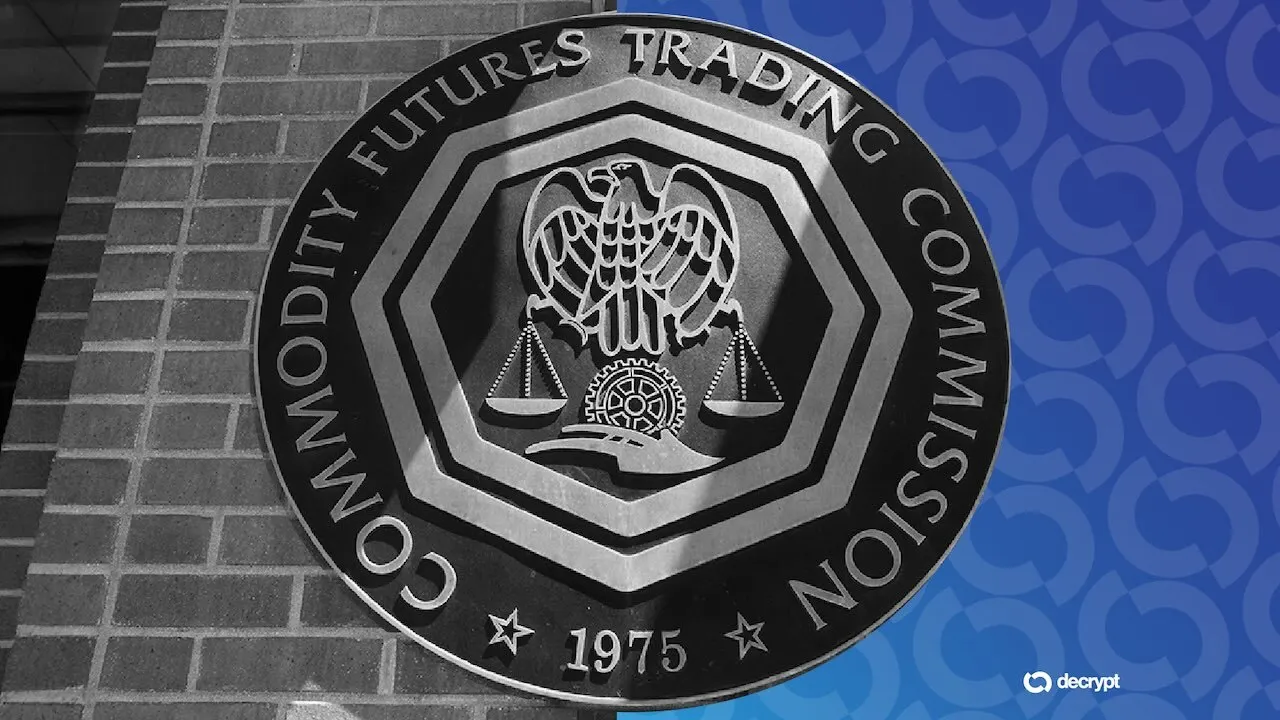
    The Commodity Futures Trading Commission (CFTC) is initiating the development of its own cryptocurrency market structure rules as a contingency measure, should Congress fail to pass the Clarity Act. CFTC Chair Michael S. Selig has directed agency staff to begin this preparatory work, signaling the commission’s readiness to establish a regulatory framework if legislative efforts stall.

    Selig emphasized that passing bipartisan market structure legislation remains his preferred path. However, he stated that if the Clarity Act remains stalled, the CFTC will leverage its existing authority to create a regulatory framework for crypto markets. This announcement was made during the inaugural meeting of the CFTC’s Innovation Advisory Committee on Thursday.

    The Clarity Act is designed to establish a federal framework for digital assets and delineate the regulatory roles of the CFTC and the Securities and Exchange Commission (SEC). Selig suggested that legislative action would result in more durable rules, less susceptible to reversal by future administrations. He also commented that passing the Clarity Act is the most effective way to prevent what he termed “lawfare” against industry participants.

    On Wednesday, President Donald Trump encouraged Congress to pass a “fair version” of the Clarity Act. He also indicated that Selig is working to facilitate the entry of the decentralized perpetual futures exchange Hyperliquid into the United States.

    Should Congress not advance the Clarity Act, Selig indicated the CFTC is prepared to proceed independently. “To achieve this, I’ve directed the CFTC staff to begin exploring rules to codify a CFTC market structure for crypto assets using the agency’s existing authorities,” he stated. This potential framework could bring current CFTC registrants and unregistered crypto exchanges under the commission’s oversight, allowing them to offer leveraged or margined crypto trading under rules tailored for digital asset markets.

    Furthermore, Selig directed staff to engage with developers of on-chain finance protocols. The objective is to identify compliant methods for developers to offer their protocols within the United States, which he described as “future-proofing developer protections.”

    Despite these preparations, the CFTC intends to allow Congress additional time to pass the Clarity Act before formally proposing its own rules. “Rest assured, I will direct CFTC staff to move swiftly to propose these rules for the industry,” Selig added.

    Significant uncertainties persist regarding the specific details of the crypto market structure rules the CFTC might develop, as well as the ultimate passage of the Clarity Act. The timeline for the CFTC to propose its own rules, in the event the legislative path is not pursued, remains undefined.

    Why This Matters

    The materials describe a narrow update: CFTC Chair Michael S. The specific details of the crypto market structure rules the CFTC would develop.

    Broader Context

    Source materials place the factual news in this context: Commodity Futures Trading Commission Chair Michael S. Selig has directed agency staff to begin developing crypto market structure rules, preparing the regulator to act if Congress fails to pass the Clarity Act.