Tag: Regulation & Policy

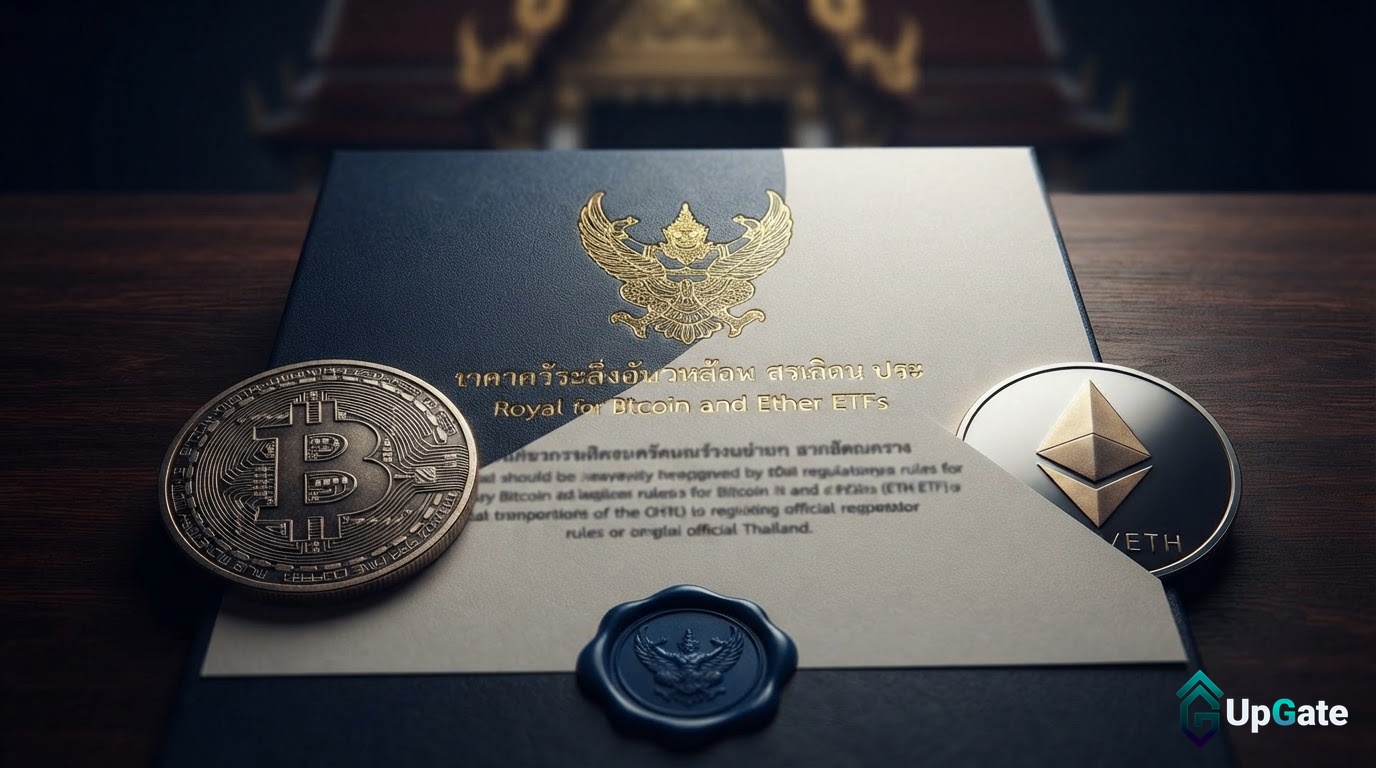
  • Thailand Finalizes Rules for Bitcoin and Ether ETFs, Effective October 16

    Thailand Finalizes Rules for Bitcoin and Ether ETFs, Effective October 16

    Thailand’s Securities and Exchange Commission (SEC) has finalized a comprehensive rulebook for Bitcoin and Ether exchange-traded funds (ETFs), with the new framework set to take effect on October 16, 2026. This development marks a significant shift towards a regulated, domestic approach for investors seeking exposure to digital assets.

    Broader Context

    Source materials place the factual news in this context: Previous measures included limited institutional exposure to foreign crypto products, which meant exposure ran through overseas vehicles and was open to a restricted group of investors.

    Framework Details

    The SEC issued 11 notifications establishing the regulatory framework, which will initially permit ETFs to hold Bitcoin and Ether as their underlying assets. These ETFs are slated to trade on the Stock Exchange of Thailand (SET). The rules mandate that these funds must be passive, track a single asset, and maintain an average net exposure of at least 80% to the underlying cryptocurrency over each accounting year. Furthermore, the digital assets must be held by onshore custodians supervised by the SEC.

    Investor Protections and Access

    To enhance investor protection, the framework includes requirements for risk education, suitability assessments, and a confirmation process for investors. The use of margin lending to purchase these ETFs will not be permitted. This regulatory path contrasts with previous measures that relied on foreign investment vehicles and were accessible only to a restricted group of investors.

    For investors, the primary benefit of this new framework is access through a regulated and familiar channel. Investing in an ETF on the SET eliminates the need for self-managed wallets, seed phrase management, and the assessment of offshore exchange trustworthiness. This move aims to provide a more secure and accessible entry point into the cryptocurrency market.

    Market Implications

    The new regulations also present distinct implications for market participants. Asset managers may find themselves competing primarily on operational efficiency, execution costs, and the speed of their approval processes, given the requirement for funds to be passive and single-asset focused. For onshore custodians, the mandate to hold the underlying crypto assets represents a clear business opportunity, as demand for their services is expected to grow directly with any inflows into these ETFs.

    Context and Future Outlook

    Previously, Thailand’s approach to crypto investments involved limited institutional exposure through overseas products, which had a narrower reach. The SEC had previously conducted consultations on the principles and structure for these crypto ETF products earlier in 2026, paving the way for the finalized rules.

    While the framework is now reported, several uncertainties remain. It is not yet clear which asset managers will secure approval to launch these ETFs, how quickly approved products will become available on the SET after the effective date, or whether the list of eligible underlying assets will expand beyond Bitcoin and Ether in the future. The practical implementation of the investor protection measures also remains to be seen.

    The regulator has not committed to an expansion of eligible assets beyond Bitcoin and Ether, though the current structure leaves room for future additions. The finalized rules are designed to provide a regulated pathway for crypto investments, moving away from reliance on foreign products and offering a more structured environment for both investors and service providers within Thailand.

  • BNY Mellon Expands Regulated Digital Asset Custody to EU Clients Under MiCA Framework

    BNY Mellon Expands Regulated Digital Asset Custody to EU Clients Under MiCA Framework

    BNY Mellon has expanded its Digital Asset Custody platform to select institutional clients within the European Union, operating under the Markets in Crypto-Assets (MiCA) regulations. This strategic move follows the inclusion of its European banking entity on the European Securities and Markets Authority (ESMA) MiCA register, establishing a regulated framework for holding and managing crypto assets in the region.

    The expansion enables BNY Mellon to offer its digital asset custody services to institutional clients navigating the EU’s MiCA framework. This development is significant as it provides one of the world’s largest custody banks with a regulated pathway to administer crypto assets within the EU.

    The registration of BNY Mellon’s European banking entity on the ESMA MiCA register is a key component of this expansion. It signifies compliance with MiCA’s requirements, which aim to create a harmonized regulatory environment for digital assets across the EU. For institutional clients, this offers enhanced security and regulatory certainty when engaging with digital assets.

    BNY Mellon’s move underscores a growing trend of traditional financial institutions increasing their involvement in the digital asset space, driven by evolving regulatory landscapes and client demand. The availability of regulated custody solutions is crucial for the broader institutional adoption of digital assets, providing essential infrastructure and trust for larger market participants.

    Why This Matters

    The materials describe a narrow update: BNY Mellon has made its Digital Asset Custody platform available to select institutional clients within the European Union. The move gives one of the world’s largest custody banks a regulated route to hold and administer crypto assets in the region.

    Broader Context

    Source materials place the factual news in this context: BNY has expanded its Digital Asset Custody platform to selected institutional clients across the European Union under MiCA.

  • Blumenthal Investigates Tether-Cantor Fitzgerald Links

    Blumenthal Investigates Tether-Cantor Fitzgerald Links

    Tether Under Scrutiny as Senator Links Stablecoin to Terrorist Financing

    The world’s leading stablecoin, Tether (USDT), is once again facing intense scrutiny from Congress, with allegations now extending to its ties with Wall Street firms. A report released on September 28, 2026, by Democratic Senator Richard Blumenthal claims that Tether’s USDT has become a significant payment channel for Iran-linked networks and sanctioned entities associated with terrorist proxies. The report also questions Tether’s relationship with Cantor Fitzgerald, a firm that holds an equity stake in Tether and manages a substantial portion of its U.S. reserves.

    “Tethered to Terrorism” Report Highlights USDT’s Role

    Titled “Tethered to Terrorism,” the report details findings from a review of 846 cryptocurrency wallets designated by the U.S. Treasury’s Office of Foreign Assets Control (OFAC) and Israel’s National Bureau for Counter Terror Financing. The analysis, covering the period from June 2021 to August 2026, revealed that 84% of these flagged wallets heavily utilized USDT, making it the predominant digital asset transacted through these addresses.

    The report further breaks down the usage by designation list. Among wallets flagged by Israeli authorities, USDT was used in 87% of cases, while for OFAC-designated wallets, the figure stood at 57%. The report specifically identifies two sanctioned Iranian oil smugglers who allegedly moved over $603 million in USDT through networks connected to Hezbollah and Houthi factions.

    Concerns Over Potential Self-Dealing with Cantor Fitzgerald

    Cantor Fitzgerald’s involvement with Tether includes a 5% equity stake and the management of a significant portion of Tether’s U.S. reserves, estimated to be over $100 billion. Senator Blumenthal’s report raises concerns about potential self-dealing arising from these connections. The core worry, as outlined in the report, is that a firm with both an ownership interest and a custodial role in Tether’s reserves may lack the necessary neutrality when overseeing the stablecoin’s usage.

    Calls for Investigations into Sanctions Compliance and AML Practices

    To address these concerns, Senator Blumenthal has formally requested that Treasury Secretary Scott Bessent and Attorney General Todd Blanche initiate inquiries into Tether’s operations. The focus of these potential investigations would be on the company’s adherence to sanctions regulations and its anti-money laundering (AML) practices.

    Tether has stated its commitment to cooperating with law enforcement agencies. The company claims to have assisted in freezing approximately $550 million in Iran-affiliated USDT during 2026. Unlike decentralized cryptocurrencies such as Bitcoin, USDT is issued by a central entity, Tether, which possesses the ability to freeze tokens at specific addresses. Tether highlights this capability as evidence of its collaboration with authorities.

    Enforcement Gaps and Investor Caution

    While the freezing of $550 million is noted as significant, critics point out that the two alleged smugglers alone are reported to have moved over $603 million in USDT. This discrepancy could be interpreted as a sign that Tether’s enforcement tools are more reactive than preventive.

    For traders and investors, the immediate question is whether these senatorial requests will translate into formal regulatory action. A senator’s letter does not constitute an indictment, and neither the Treasury Department nor the Department of Justice has announced any investigations in response.

    The report suggests that investors may adopt a more cautious approach, particularly those with substantial exposure to USDT. Heightened scrutiny could potentially impact USDT’s liquidity and its adoption among institutional investors.

    Broader Implications for Stablecoin Regulation

    The involvement of Cantor Fitzgerald introduces an additional layer of risk. If concerns about self-dealing gain traction, the investigation could broaden to encompass how Tether’s reserves are managed, not solely how its tokens are utilized.

    According to the research, should probes uncover systemic issues within Tether’s operations, regulators might impose stricter operational rules across the entire stablecoin sector. This could lead to significant changes in how dollar-pegged tokens handle wallet screening, transaction freezes, and reporting requirements.

    Key Developments to Watch

    Several key developments will be closely monitored in the coming weeks. These include public responses from Secretary Bessent’s Treasury Department and Attorney General Blanche’s Justice Department to Senator Blumenthal’s requests. Additionally, attention will be paid to whether Tether expands its token-freezing activities or provides more detailed information on its sanctions screening processes. Finally, the public’s response from Cantor Fitzgerald regarding its dual role as a shareholder and reserve manager will be significant.

  • RedStone Launches Sanctions Oracle for Ethereum Compliance

    RedStone Launches Sanctions Oracle for Ethereum Compliance

    RedStone Launches On-Chain Sanctions Screening Tool

    RedStone, a modular oracle network, has introduced its Sanctions Oracle directly onto the Ethereum mainnet, a move that allows smart contracts to vet cryptocurrency wallets against 463 official sanctions lists. The service, launched on October 7, 2026, aims to integrate compliance checks seamlessly into blockchain transactions.

    On-Chain Registry for Sanctioned Addresses

    The Sanctions Oracle functions by compiling a registry of sanctioned addresses directly on the blockchain. Smart contracts can then query this registry before authorizing a transaction, effectively blocking any interaction with a flagged wallet. The data powering this registry is sourced from 463 official lists, aggregated via OpenSanctions, and includes designations from entities such as the Office of Foreign Assets Control (OFAC), the European Union, the United Kingdom, and the United Nations.

    Real-Time, On-Chain Verification

    With this new oracle, a smart contract can perform a single read call to verify a counterparty’s wallet. If the wallet appears on a sanctions list, the contract can automatically halt the transaction. This screening process occurs within the transaction itself, eliminating the need for any off-chain review. RedStone has committed to updating the sanctions list weekly, with each update timestamped on-chain. This allows smart contracts to confirm the recency of the data before relying on it.

    Enhanced Security and Interoperability

    Updates to the oracle are secured through a multisignature (multisig) mechanism, requiring approval from multiple parties rather than a single key holder. This enhances the security and integrity of the sanctions list. RedStone designed the Sanctions Oracle to be compatible with the interface of the Chainalysis Sanctions Oracle. This compatibility means protocols currently utilizing the Chainalysis version can transition to RedStone’s offering by simply updating a single contract address, preserving their existing functionality.

    RedStone’s Track Record and Product Suite

    RedStone, operational since 2021, reports a history of zero downtime and no mispricing incidents. The company states its infrastructure currently secures billions of dollars in asset value across more than 100 blockchain networks. The Sanctions Oracle expands RedStone’s existing product portfolio, which includes Bolt, a high-frequency oracle optimized for low latency, and Atom, an oracle designed for liquidation-aware data feeds.

    Implications for Decentralized Finance

    The integration of sanctions checks directly into smart contracts offers automated blocking of flagged wallets, removing the need for manual intervention and potentially mitigating risks associated with human error or delays. While the multisig mechanism protects against single points of failure, it also places control over the sanctions list within a defined group. Although weekly updates are guaranteed, the dynamic nature of sanctions designations means protocols will need to establish their own thresholds for data staleness when configuring timestamp checks.

  • ESMA Guidance: MiCA Firms to Phase Out Non-Compliant Stablecoins, Including Tether’s USDT, by January 8, 2027

    ESMA Guidance: MiCA Firms to Phase Out Non-Compliant Stablecoins, Including Tether’s USDT, by January 8, 2027

    The European Securities and Markets Authority (ESMA) has issued guidance requiring crypto-asset service providers (CASPs) authorized under the Markets in Crypto-Assets (MiCA) framework to cease services related to non-compliant stablecoins, including Tether’s USDT, by January 8, 2027. This directive targets asset-referenced tokens and e-money tokens that do not meet MiCA’s regulatory standards.

    According to ESMA, MiCA-authorized firms were required to immediately halt new trading in non-compliant stablecoins and prevent clients from increasing their positions upon the opinion’s publication. This initial restriction is to be followed by a supervised wind-down process. Importantly, individual holders of these stablecoins are not directly impacted and can continue to own or use them outside of licensed platforms.

    Tether, the issuer of USDT, did not apply for e-money token authorization under MiCA. The company’s decision was reportedly influenced by MiCA’s reserve rules, particularly a stipulation requiring at least 60% of reserves to be held in European bank deposits. This condition appears to have been a significant factor in Tether’s choice not to pursue authorization within the EU regulatory framework.

    The MiCA licensing transition period for CASPs concluded on July 1, 2026, after which only compliant stablecoins are permitted on licensed platforms within the European Union. In anticipation of these regulatory changes, several major crypto exchanges have already taken steps to restrict USDT access for users in the European Economic Area. Coinbase and Binance began implementing these restrictions as mid-2026 approached, while Revolut completed its phase-out of USDT by August 31, 2026.

    In contrast, stablecoins such as Circle’s USDC and EURC have met MiCA’s standards and remain available on licensed EU platforms, providing regulated options for dollar and euro exposure. For traders in the EU holding USDT on a licensed platform, decisions regarding selling, converting, or withdrawing these assets must be made before the January 8, 2027 cutoff. Moving holdings to a self-custody wallet is an option for individuals who wish to retain ownership, as private ownership itself is not banned.

    The ESMA opinion, issued on October 8, 2026, signifies a broader trend where stablecoin issuers may need to balance their reserve management strategies with the requirements of tightly regulated jurisdictions. For Tether, the impact of this directive primarily concerns market access within the EU’s regulated venues, rather than its overall survival, as holders outside these platforms can continue to use the token. The directive leaves licensed platforms approximately three months to complete the wind-down of services related to non-compliant stablecoins.

    Why This Matters

    The materials describe a narrow update: ESMA issued an opinion requiring MiCA-authorized crypto firms to stop services related to non-compliant stablecoins, including Tether’s USDT, by January 8, 2027. The exact nature of the ‘limited menu of services’ that firms can still offer during the supervised wind-down period.

    Broader Context

    Source materials place the factual news in this context: The European Securities and Markets Authority (ESMA) has told MiCA-authorized crypto firms to stop dealing in non-compliant stablecoins by January 8, 2027.

  • Canton CEO: Crypto Needs Solid Adoption to Weather US Policy Changes

    Canton CEO: Crypto Needs Solid Adoption to Weather US Policy Changes

    Blockchain Adoption as a Shield Against Policy Reversals

    Singapore – Yuval Rooz, co-founder and CEO of Digital Asset, has urged the cryptocurrency industry to leverage the current regulatory landscape to accelerate institutional adoption, drawing parallels to the rise of disruptive tech giants like Uber and Airbnb. Rooz argued that by embedding blockchain technology deeply into the fabric of commerce and daily life, the industry could create a bulwark against potential policy reversals by future administrations.

    Speaking at the Token2049 conference in Singapore, Rooz emphasized the need for widespread blockchain integration, stating that the goal should be to reach a point where “there is no going back,” regardless of political shifts. This sentiment comes as the United States approaches its next presidential election on November 7, 2028, a date that could usher in a new administration with potentially altered regulatory priorities.

    Rooz likened the current opportunity to the early days of ride-sharing and short-term rental platforms. “By the time people got their act together and decided, OK, we wanna legislate against those companies, it was too late,” he explained, suggesting that these companies achieved critical mass and public integration before regulators could effectively curb their growth.

    These remarks follow the recent procedural setback for the CLARITY Act in the Senate in September. Meanwhile, the Securities and Exchange Commission (SEC) and the Commodity Futures Trading Commission (CFTC) have continued to advance cryptocurrency regulations under their existing mandates.

    During the same Token2049 panel, Binance co-CEO Richard Teng echoed the desire for legislative clarity, expressing hope that the CLARITY Act would eventually become law. Teng posited that clear legislation could serve as a deterrent against regulatory backtracking and foster greater confidence among institutional investors. He identified the potential for reversing current industry progress as “the biggest fear” for the sector.

    Jenny Johnson, CEO of Franklin Templeton, also addressed the need for legislative certainty, though she advised the industry against solely depending on the passage of the CLARITY Act. Johnson noted that the SEC and CFTC are actively working to provide regulatory clarity, which she believes will enable continued innovation and institutional adoption.

  • Winklevoss Asset Services Files for Proposed Zcash ETF with SEC

    Winklevoss Asset Services Files for Proposed Zcash ETF with SEC

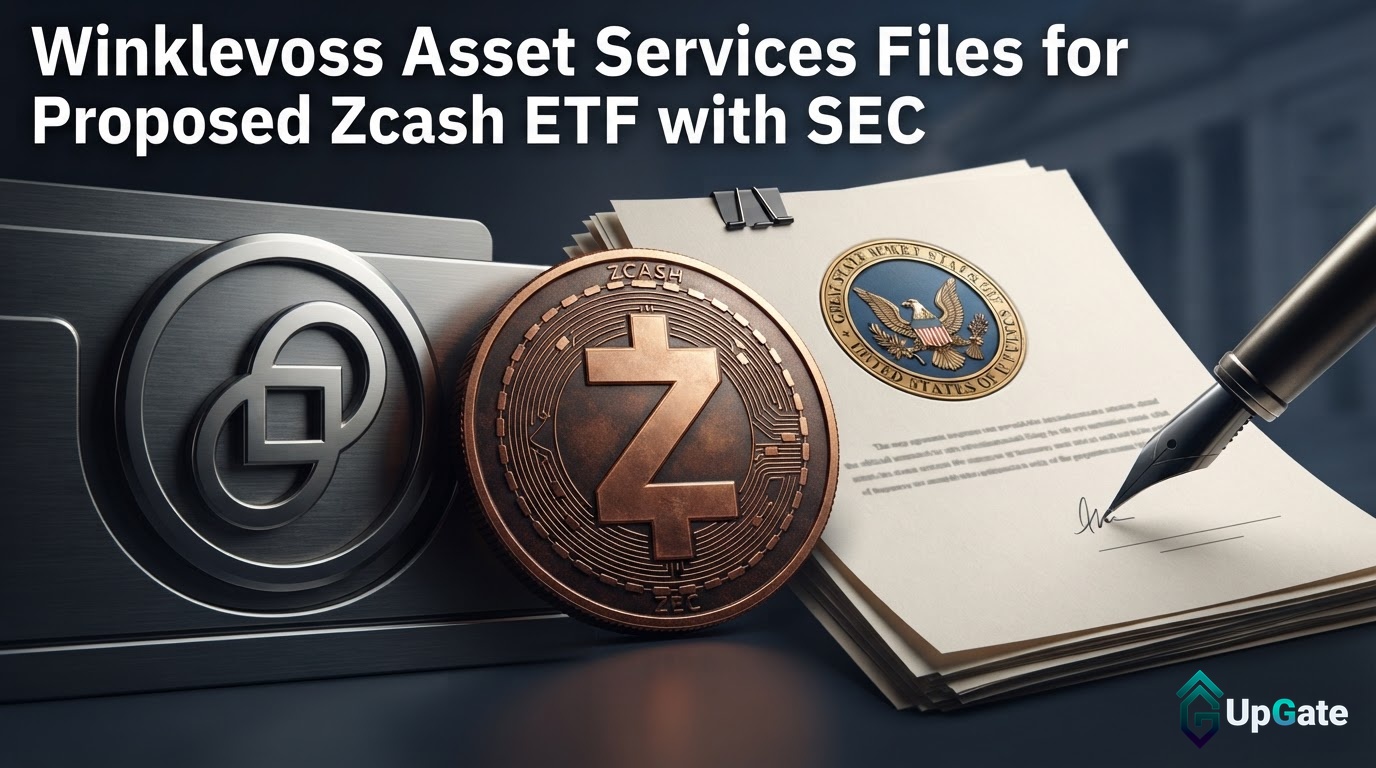
    Winklevoss Asset Services has filed an S-1 registration statement with the U.S. Securities and Exchange Commission (SEC) for a proposed exchange-traded fund (ETF) that would directly hold Zcash (ZEC). The ETF, intended to be listed on the Nasdaq, is named the Winklevoss Zcash ETF.

    The preliminary prospectus outlines a sponsor fee of 0.25%. Winklevoss Capital has indicated nonbinding interest in purchasing up to $100 million of the ETF’s shares.

    It remains uncertain whether the SEC will approve the Winklevoss Zcash ETF, and the exact listing date on Nasdaq is undetermined. The final sponsor fee is also subject to change.

    Why This Matters

    The filing by Winklevoss Asset Services for the proposed Zcash ETF is a documented update.

    Broader Context

    Winklevoss Asset Services has filed an S-1 with the SEC for the Winklevoss Zcash ETF, a proposed Nasdaq-listed product designed to hold ZEC directly. The preliminary prospectus sets a 0.25% sponsor fee, while Winklevoss Capital has indicated nonbinding interest in purchasing up to $100 million of shares.

  • Coinbase Links US Traders to Global Derivatives

    Coinbase Links US Traders to Global Derivatives

    Coinbase Opens Door to Offshore Crypto Derivatives for U.S. Traders

    New Platform Integrates Deribit, Offering Global Liquidity Under Regulatory Oversight

    For years, the most active cryptocurrency derivatives markets operated offshore, largely inaccessible to U.S. traders. That changed on October 7, 2026, when Coinbase announced it had secured regulatory approval to bridge this gap.

    The cryptocurrency exchange revealed it has completed the integration of Deribit, the prominent options trading venue it acquired for approximately $2.9 billion in August 2025. The resulting platform, dubbed the Coinbase Global Exchange, is designed to provide eligible U.S. traders with access to global liquidity for options and perpetual futures.

    Coinbase asserts it is now the sole regulated exchange enabling U.S. traders to tap into international derivatives liquidity through a unified collateral pool.

    The Coinbase Global Exchange operates under Coinbase Financial Markets, a subsidiary regulated by the Commodity Futures Trading Commission (CFTC). Coinbase Financial Markets functions as a futures commission merchant (FCM), acting as a licensed intermediary that handles customer funds and directs futures orders to the market.

    A pivotal regulatory development occurred in May 2026 when the CFTC issued guidance that designated Coinbase Financial Markets as the first U.S.-regulated FCM capable of directly connecting American clients to global derivatives markets. Coinbase views the Deribit integration as the first structured pathway for U.S. traders to access offshore-style derivatives markets under this new guidance.

    The concept of a “single collateral pool” is crucial for practical trading. Imagine a casino where each game requires a separate bankroll, leaving your funds idle at one table while you’re short at another. A single collateral pool allows traders to use their deposited assets to back positions across multiple products simultaneously. For active traders, this means their capital can be deployed more efficiently, reducing idle time.

    As of October 1, 2026, perpetual futures previously traded on the Coinbase International Exchange have been migrated to this new Deribit-powered gateway. Perpetual futures, which lack an expiry date, are a popular instrument for leveraged cryptocurrency trading.

    Access to the new platform will be rolled out in stages, with institutional clients being the first to gain entry.

    Coinbase also plans to introduce additional features to the platform, including spot margin trading and unified portfolios. Spot margin allows traders to borrow against their holdings to purchase actual cryptocurrencies, as opposed to contracts. Unified portfolios will offer traders a consolidated view and management interface for positions across various products, aligning seamlessly with the shared collateral model.

    In a separate development, the company has committed to reintroducing its Pro platform for professional traders by the end of 2026.

    As of September 30, 2026, open interest in Bitcoin options on the platform exceeded $30 billion. Open interest represents the total value of outstanding contracts, indicating the amount of capital currently committed to Bitcoin options.

    In the year preceding its integration, Deribit processed over $1 trillion in trading volume. The depth of these markets is significant, as it allows large orders to be executed without causing substantial price fluctuations, a key concern for institutional trading desks.

    Derivatives have historically constituted approximately 80% of total cryptocurrency trading volume, meaning spot trading, the direct purchase and sale of digital assets, represents a smaller portion of the overall market activity.

    Deribit established itself as a major player in crypto options, operating outside the U.S. regulatory framework. The acquisition in August 2025, valued at roughly $2.9 billion, was predicated on the expectation that regulators would eventually permit such a connection. The May 2026 CFTC guidance appears to have provided the necessary regulatory clearance, with approximately 14 months elapsing between the acquisition and the full integration.

    The most immediate impact is expected to be on institutional investors. Many large players have avoided unregulated venues due to compliance concerns, as wiring client funds to exchanges outside U.S. oversight is often problematic. A CFTC-regulated channel into global options and perpetual futures markets removes a significant barrier for these investors. Coinbase Prime’s rollout is anticipated to serve as a conduit for institutional capital.

    For retail traders in the U.S., access to options trading is anticipated later in 2026.

    Several key developments will be closely watched. Firstly, whether the institutional launch proceeds as scheduled in the coming weeks. Secondly, the rate at which the open interest in Bitcoin options, already exceeding $30 billion, grows with direct participation from U.S. institutions. Thirdly, the timely delivery of the revived Pro platform and the promised spot margin and unified portfolio features.

    This new arrangement is contingent upon the CFTC’s May 2026 guidance, which is subject to revision. While Coinbase has successfully created a valuable bridge, its stability relies on the continued approval of regulatory bodies.

  • Rep. French Hill: Current Crypto Rulemaking Insufficient, Legislative Action Urged

    Rep. French Hill: Current Crypto Rulemaking Insufficient, Legislative Action Urged

    The U.S. digital asset industry faces a persistent gap in regulatory clarity, as agency rulemaking by the Securities and Exchange Commission (SEC) and the Commodity Futures Trading Commission (CFTC) is increasingly viewed as insufficient to provide the durable legal framework needed for market stability, according to Rep. French Hill.

    Rep. French Hill, who chairs the House Financial Services Committee, stated this week that the current rulemaking efforts by the SEC and CFTC regarding digital assets do not substitute for comprehensive legislation. He believes a legislative solution is necessary for permanent law changes to ensure U.S. leadership in digital assets and blockchain technology. Hill argued that agency actions, such as exemptions and guidance, are fragile and can be challenged in court or unwound by a future administration, whereas a statute is durable.

    Regulatory Actions vs. Legislative Imperative

    This perspective emerges as the SEC and CFTC have been active in developing rules and guidance for the crypto market. The SEC has introduced an ‘innovation exemption’ for tokenized stocks and proposed new rules for how investment advisers and funds can custody crypto assets. Meanwhile, the CFTC has sent crypto-market rulemakings to the White House and floated a plan to bring crypto exchanges under federal oversight.

    However, according to Rep. French Hill, these regulatory moves fall short of what is required. He emphasized that “These regulatory policies fall short of what we have to do, which is a legislative solution.” The urgency for such a solution is underscored by the fact that a significant piece of crypto legislation, the Clarity Act, stalled in the Senate last month in a 49-50 vote. Hill expressed hope that the Clarity Act or similar legislation could still pass during the current Congress’s lame-duck session, though uncertainty remains whether a bill that failed in the Senate can be revived before the year’s end.

    Persistent Uncertainty and the Path Forward

    The core assertion is that regulatory uncertainty persists in the U.S. crypto market despite these agency actions. The limitations of current rulemaking highlight the need for legislative action as the only path to long-term stability for the U.S. digital asset industry. Hill has consistently framed legislation as the industry’s only path to lasting certainty, aiming to ensure America remains at the forefront of digital assets and blockchain technology.

    The situation presents a critical juncture for the U.S. digital asset sector. While agencies are taking steps to regulate, the lack of a durable legislative framework leaves the market vulnerable to shifts in policy and legal challenges. The long-term durability and legal standing of SEC and CFTC crypto guidance and exemptions remain uncertain, as does the future direction of crypto regulation in the U.S. without comprehensive legislation. The question of whether a bill that couldn’t clear the Senate weeks ago can be revived before year’s end looms large over the industry’s prospects.

    Why This Matters

    The materials describe a narrow update: Rep. French Hill’s continued emphasis on the need for legislative action in the digital asset space, highlighting the fragility of current agency rulemaking and the uncertainty surrounding future legislative efforts.

    Broader Context

    Source materials place the factual news in this context: The article discusses the ongoing efforts of the SEC and CFTC to regulate the cryptocurrency market through rulemaking and exemptions, contrasted with the stalled legislative efforts in Congress.

  • US Government Moves $470 Million in Seized Bitcoin and Tether to Coinbase Prime

    US Government Moves $470 Million in Seized Bitcoin and Tether to Coinbase Prime

    The U.S. government has transferred approximately $470 million in seized Bitcoin and Tether to Coinbase Prime, the institutional platform designated by the U.S. Marshals Service (USMS) for handling such assets. This move is notable for the inclusion of Tether, a stablecoin, which has not been a prominent feature in previous reported government transfers of seized cryptocurrency.

    Coinbase Prime was selected by the USMS in July 2024 to manage the custody and trading of digital assets seized in federal criminal cases. The USMS is responsible for overseeing the management of these forfeited assets. On-chain data, tracked by Arkham Intelligence, has previously shown significant shipments of seized crypto assets to Coinbase Prime.

    In mid-July 2026, for instance, an estimated $288 million to $297 million in seized assets, primarily Bitcoin, were moved to Coinbase Prime. More recently, on October 7, 2026, a larger asset shift of approximately $103 million included about 833.6 Bitcoin, valued at $71.6 million, and 40,285 BNB, worth around $31.6 million, which also landed on Coinbase Prime addresses.

    The current transfer’s specific date is not explicitly stated but is implied to be recent, with activity tracked on platforms like X. The inclusion of Tether in this $470 million transfer is a distinguishing factor, as earlier reported government transfers of seized crypto did not feature USDT, despite the government holding significant amounts of the stablecoin.

    This development occurs within the context of a broader U.S. government digital asset strategy. In March 2025, President Trump signed an executive order establishing a Strategic Bitcoin Reserve, which includes a no-sale policy for seized Bitcoin. While this policy specifically addresses Bitcoin, the movement of Tether, a stablecoin pegged to the U.S. dollar, raises different considerations. Unlike Bitcoin, selling or redeeming Tether would not typically create price pressure on the market, but it signals active management of crypto assets outside the direct protection of the Bitcoin reserve’s no-sale policy.

    Transfers to a custodian like Coinbase Prime are administrative actions and do not inherently constitute a sale. Coins can be moved for consolidation, safekeeping, or administrative handling without being placed on an exchange for sale. However, the handling of seized Bitcoin may be subject to scrutiny to determine if the government’s no-sale policy is being consistently applied.

    Estimates suggest the U.S. government holds a substantial amount of cryptocurrency, potentially between $20 billion and $28 billion, including an estimated 324,000 to 325,000 Bitcoin. The exact reasons for this specific $470 million transfer, beyond administrative handling, remain uncertain, as do the specific cases from which these assets were seized, although previous transfers have been linked to individuals like Ryan Farace and Brian Krewson.

    The government’s active management of its seized crypto portfolio, particularly the inclusion of stablecoins like Tether alongside Bitcoin, highlights the evolving nature of its digital asset strategy and the ongoing questions surrounding adherence to its stated policies, such as the Strategic Bitcoin Reserve.

    Why This Matters

    The materials describe a narrow update: The US government moved $470 million worth of seized Bitcoin and Tether to Coinbase Prime, the platform selected by the US Marshals Service for handling seized digital assets. The exact date of the $470 million transfer to Coinbase Prime.

    Broader Context

    Source materials place the factual news in this context: The US government has moved $470 million in Bitcoin and Tether from seized funds to Coinbase Prime, according to a post on X tracking the activity.