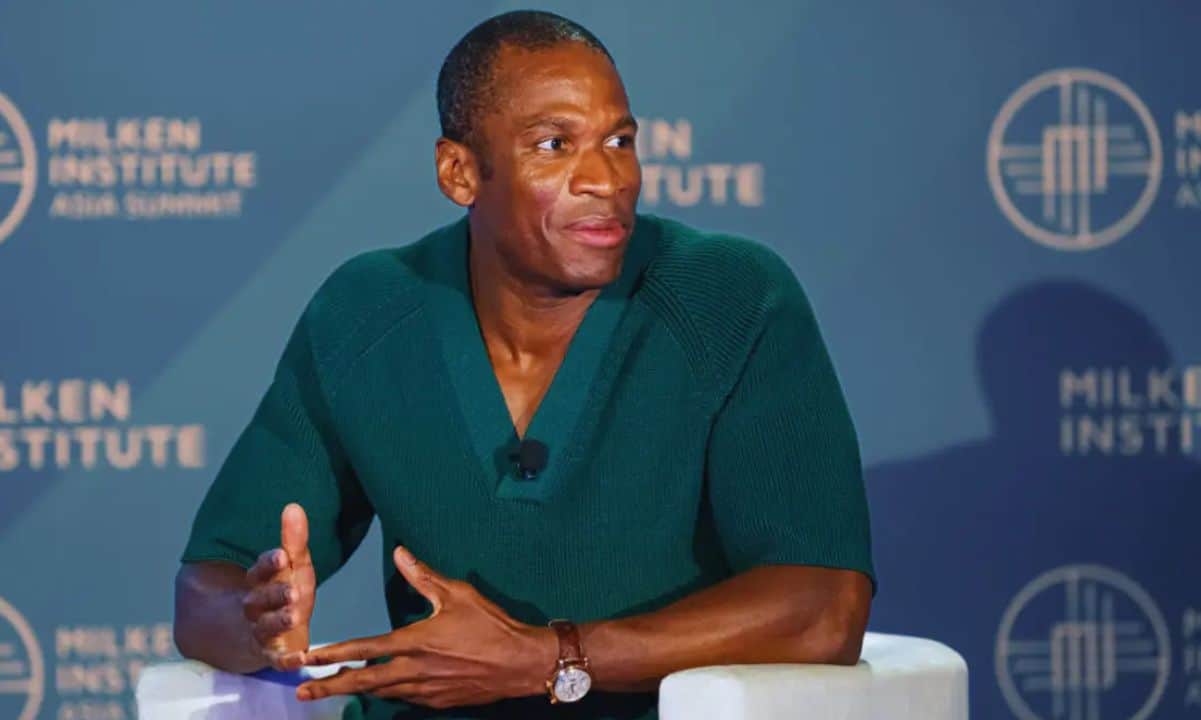
Hayes Exits Zcash Holdings Amid Privacy Pool Vulnerability
The cryptocurrency market was jolted on June 5 by the discovery of a significant vulnerability within Zcash’s Orchard privacy pool. The revelation prompted Arthur Hayes, co-founder of BitMEX, to liquidate his entire ZEC position mere hours after the flaw’s details became public.
This sell-off has reignited a long-standing debate surrounding privacy-focused cryptocurrencies: can users truly trust systems where certain supply-related exploits might go undetected for extended periods?
Hayes announced his decision on X, declaring “The Holy Trinity is dead” and confirming the sale of his ZEC holdings following reports of the Orchard Pool vulnerability. Zcash founder Zooko Wilcox and members of Shielded Labs initially disclosed the issue, noting that security researcher Taylor Hornby identified the flaw on May 29.
According to the team, a malicious actor could have exploited this weakness to generate an unlimited supply of fake ZEC within Orchard, Zcash’s shielded transaction environment, without immediate detection.
While developers acted swiftly to implement a fix by June 1, a critical concern remained: the inherently private nature of Orchard meant there was no cryptographic means to definitively prove whether the bug had been exploited prior to its resolution. This uncertainty appears to have been the decisive factor for Hayes.
“While I think it’s extremely unlikely of any minting, it cannot be formally cryptographically proved impossible,” Hayes wrote, emphasizing that privacy-focused assets demand “perfection not improbability.”
The market’s reaction was swift and severe. CoinGecko data indicated that ZEC plummeted by over 35% in the 24 hours leading up to the report, trading around $386 after reaching highs of $611 within the same timeframe. The token has also seen a nearly 27% decline over the past week and a more than 40% drop over two weeks. Trading activity surged by nearly 46% as investors scrambled to reassess risk, pushing daily spot volume above $1.7 billion.
CoinGlass data revealed that the heightened volatility triggered approximately $49 million in liquidations over the past day, with long positions accounting for over $41 million of these losses.
This marks the second instance in recent days where Hayes has divested a position shortly after expressing bullish sentiment. Just the previous day, he disclosed selling his HYPE and NEAR holdings, having previously projected HYPE could reach $150.
The news of the vulnerability elicited varied responses from the crypto community. Investor Udi Wertheimer argued that privacy coins inherently carry a different risk profile than transparent blockchains, as counterfeit issuance can remain hidden for significant durations. He referenced a past Zcash inflation bug that was disclosed years after its existence.
Others adopted a more tempered perspective. Mert Mumtaz, CEO of Helius, pointed out that major software bugs have been a recurring issue across the cryptocurrency landscape, including Bitcoin. He stated that the immediate priority is determining whether exploitation occurred before the patch was applied.
Furthermore, Mumtaz highlighted that Zcash developers are already working on a future network upgrade designed to verify supply integrity through a migration to a new shielded pool.
Barry Silbert, founder of Digital Currency Group, also countered the prevailing negative sentiment, asserting that the disclosure underscored Zcash’s robust security processes rather than revealing a systemic failure.
“The AI-enabled assault on blockchains is here and I’m proudly on Team Zcash,” he posted.
Leave a Reply