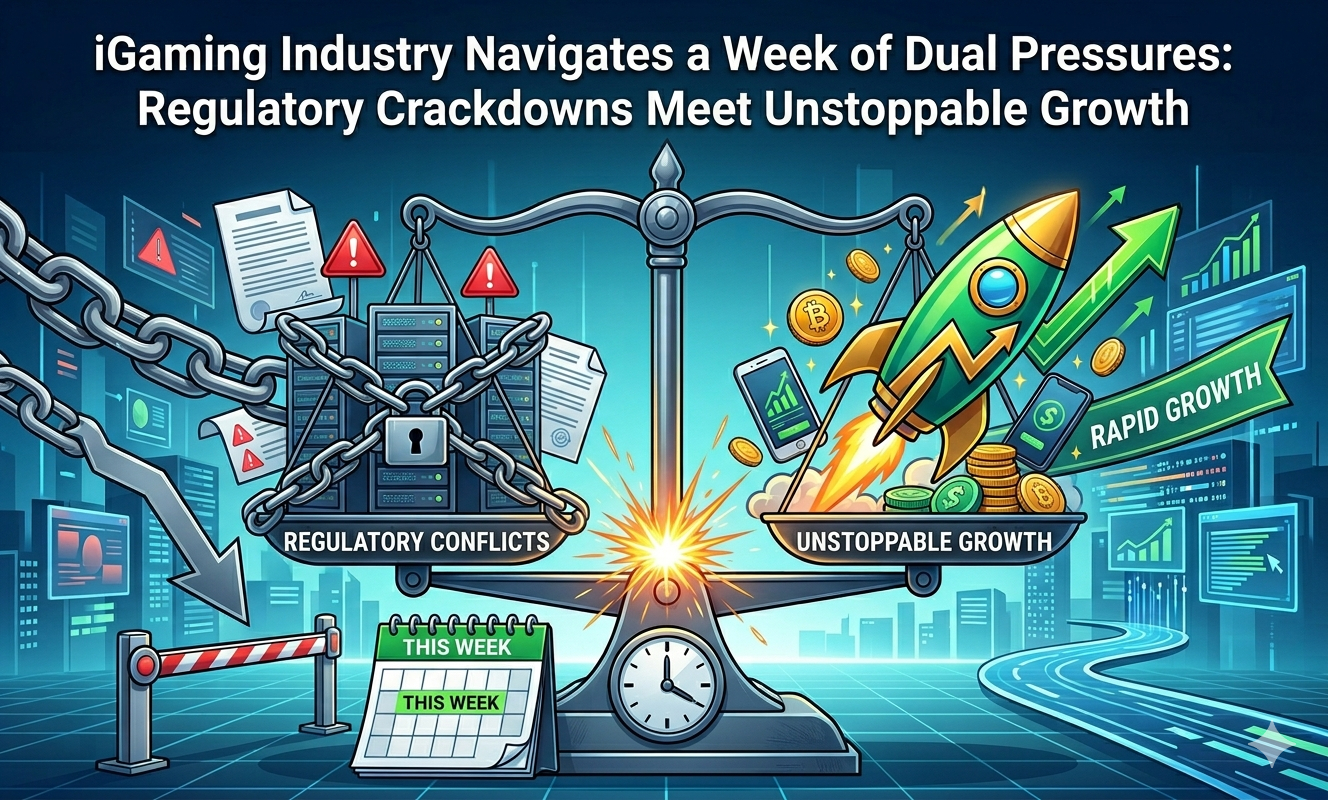
iGaming Sector Faces Dual Pressures of Intensifying Regulation and Global Expansion
Norwich, United Kingdom – June 15, 2026 – The iGaming industry is navigating a complex landscape defined by heightened regulatory scrutiny and persistent global market expansion, according to a new industry overview released by NyesteCasino.com, a prominent iGaming analysis resource. Operators are grappling with a delicate balance between risk management and aggressive growth strategies, a challenge underscored by U.S. Senate hearings, evolving legal interpretations, the localization of crypto casinos, and a surge in World Cup betting activity.
Across the United States, Europe, Southeast Asia, and South America, regulators have been tightening rules concerning prediction markets, sweepstakes casinos, and the use of credit cards for deposits. Simultaneously, online gambling platforms, content providers, and policy advisors have accelerated product innovation and launched targeted, region-specific sports marketing campaigns.
NyesteCasino.com’s analysis suggests these developments signal a significant structural shift within the industry, where agility in compliance is rapidly becoming as crucial for success as product quality. Despite increasing regulatory headwinds, the pace of innovation and sustained market demand indicate continued sector growth.
Prediction Markets: A Battlefield of Courts, Congress, and Cross-Border Bans
The week commenced with a highly anticipated hearing before the U.S. Senate Commerce Subcommittee, titled “No Sure Bets.” Held on May 20 under the chairmanship of Senator Marsha Blackburn, the session signaled further deliberations to come. A central point of contention emerged between American Gaming Association CEO Bill Miller and former Congressman Patrick McHenry regarding the future of prediction markets. Miller argued that sports event contracts function as clandestine betting operations, circumventing state licensing, tax regulations, and integrity safeguards. McHenry, representing the Coalition for Prediction Markets, countered that existing Commodity Futures Trading Commission (CFTC) oversight is effective.
Adding to the legal complexities, on May 22, a panel from the Ninth Circuit Court of Appeals rejected stay requests from both Kalshi and Polymarket, refusing to halt state enforcement proceedings in Nevada and Washington. The court ruled that a federal preemption defense under the Commodity Exchange Act alone does not establish federal jurisdiction. This decision strengthens the ongoing dispute in the New Jersey appeals court, which had previously upheld an injunction against Kalshi, and further accelerates the process towards a potential Supreme Court review of state jurisdiction over event contracts.
In Indonesia, the Ministry of Communication and Digital Affairs classified Polymarket as an online gambling site, disregarding its crypto-based structure, and requested a national ban on the platform on May 25. This action was prompted by a viral contract concerning whether President Prabowo Subianto would resign before the end of his term in October 2029, which generated approximately $46,000 in trading volume. Polymarket is now inaccessible in over 33 jurisdictions worldwide, including India, Brazil, and Singapore, with more countries implementing bans.
State-Level Regulations: Tennessee Enacts Anti-Sweepstakes Bill
State-level restrictions on online gambling law have also emerged in Tennessee. Governor Bill Lee signed two significant bills into law during the week. Senate Bill 2136 designates Tennessee as the ninth U.S. state to completely ban sweepstakes casinos and dual-currency systems, empowering the attorney general to enforce the ban. Senate Bill 1992, the second bill signed by the governor, classifies anyone who deliberately influences the outcome of an event while holding a prediction market contract with a Class E felony. These legislative actions are expected to influence other state legislatures considering similar regulations.
Europe and Brazil: Tax Proposals, Ad Restrictions, and Credit Bans
The European Parliament held a plenary debate on May 20 concerning a proposed EU-level gambling levy. Budget Commissioner Piotr Serafin confirmed that the Commission is actively evaluating this option, alongside levies on digital services and crypto-assets, as part of the next Multiannual Financial Framework. Proponent Member of the European Parliament Victor Negrescu estimated the levy could generate between €2 and €4 billion annually for education, youth, and addiction prevention programs. However, opponents from the EPP and ECR blocs voiced concerns regarding subsidiarity, competitiveness, and national tax sovereignty, with any operational package anticipated for January 2028.
In anticipation of the FIFA World Cup tournament, scheduled from June 11 to July 19, Belgium’s Kansspelcommissie and the Netherlands Gambling Authority issued formal advertising warnings to licensed operators. France’s ANJ reported a year-on-year increase of over 25% in operator marketing budgets as the tournament approaches. Meanwhile, Brazil formalized rules on May 25 to prohibit Pix Crédito as a deposit method on regulated betting platforms. This move was partly influenced by a Folha de São Paulo audit that revealed major banks, including Bradesco and Banco do Brasil, were still processing credit transfers into betting accounts as recently as mid-May.
Editorial Perspective
“This week clearly illustrates that the iGaming sector is entering a phase where regulatory acumen is as strategically vital as product development,” stated the editorial team at NyesteCasino.com. “The debate surrounding prediction markets alone spans courtrooms, congressional hearings, and international bans, and it remains far from resolved. Operators adept at tracking and adapting to this multi-jurisdictional complexity, while simultaneously executing World Cup campaigns and localization strategies, will be best positioned for the latter half of 2026.”
Leave a Reply