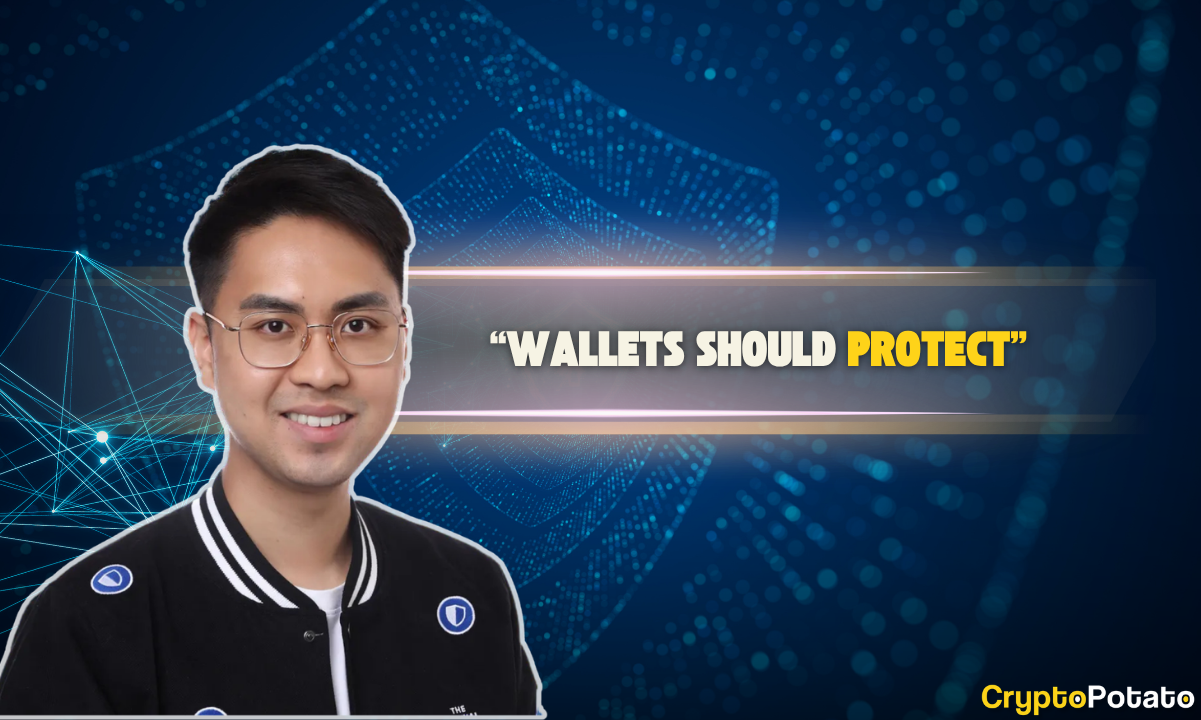
Self-Custody Has Won the Argument, Now It Has to Work: Trust Wallet CEO
For years, the cryptocurrency space has asked users to accept complexity in exchange for ownership. But as self-custody moves closer to the mainstream, Trust Wallet’s new CEO, Felix Fan, argues that the real challenge is no longer proving why people should control their assets – it’s making that control feel effortless.
In an interview, Fan discusses the product lessons shaping his leadership, why wallets must take more responsibility for user protection, and how payments, trading, stablecoins, AI agents, and clearer regulation are pushing crypto into a more mature phase.
His message is clear: self-custody may have won the philosophical argument, but the user experience has some catching up to do.
Navigating a Mainstream, Complex Landscape
Fan stepped into his new role at Trust Wallet at a moment when self-custody is becoming both more mainstream and more complex. He believes his own journey, marked by expertise in product development and experience as a serial entrepreneur, has prepared him for leading a product used by hundreds of millions.
“My expertise lies in product, complemented by my experience as a serial entrepreneur,” Fan stated. “Before Trust Wallet, I spent years thinking about how to make complex financial tools feel simple to people who don’t have time or patience to become experts.”
Leading at this scale is different. Trust Wallet already has millions of users. “The job isn’t only to convince people that self-custody is the future,” Fan explained. “It’s to make that future feel obvious in the product experience every day. That means listening, moving fast, and being ruthlessly honest about where we fall short so we can fix it quickly.”
He emphasized that the best products don’t need extensive explanation. “If a user has to read a guide to understand what just happened, we haven’t finished building yet,” he said.
Product-Centric Leadership in Crypto
Fan’s background as a product leader shapes his approach, especially in a sector where user trust, security, and speed of execution are paramount.
“Product thinking means you start with the user problem, not the solution,” Fan noted. “That sounds obvious, but it’s genuinely rare in crypto, where the default is to lead with technology and hope users catch up.”
He views security, trust, and execution speed not as competing priorities but as a “product sequencing problem.” He elaborated, “Security can’t be a tax on speed — if it slows users down in a way that’s perceptible, we lose them to worse choices. So the answer is to engineer security that protects users before they know they need protection.”
Fan highlighted Trust Wallet’s Security Scanner, which has prevented $458 million in losses from malicious contracts. “Users didn’t have to become security experts for that to happen. The product did the work. That’s what good product leadership looks like in this sector.”
The Infrastructure’s Coming of Age
Crypto has undergone numerous identity shifts, from speculation and DeFi to NFTs, institutional adoption, stablecoins, AI agents, and tokenized real-world assets (RWAs). Fan defines the current phase as “the infrastructure coming of age.”
“For years, crypto had the vision, but the experience was too rough for most people to stay,” he said. “The phases you describe, ‘speculation, DeFi, NFTs,’ each added something real, but also came with so much friction that only the committed stayed.”
What’s different now, according to Fan, is that “the rails are catching up with the ideas.” He pointed to deep onchain liquidity, the real-world utility of stablecoins, increased accessibility of tokenized RWAs, and the emerging interaction between AI and onchain systems.
“We’re at the point where the question isn’t ‘Can crypto do this?’, it’s ‘Can we make it simple enough that the next hundred million people don’t need to already believe in it to try it?’”
Making Self-Custody Intuitive
While the principle of self-custody is gaining traction, it can still feel intimidating to mainstream users. Fan outlined three key areas that need to change for it to become as intuitive as mobile banking, without compromising ownership.
First, the language needs to evolve. Terms like “private keys,” “seed phrases,” and “non-custodial” are insider jargon. “We have to build products that protect users deeply without requiring them to understand the underlying mechanics,” Fan stated, drawing a parallel to mobile banking where users feel safe without understanding the authentication stack.
Second, recovery mechanisms must feel secure. “The thing that stops most people from trying self-custody isn’t the setup — it’s the fear of losing access permanently,” he explained. Developing recovery options designed for everyday users, not just cryptographers, is a critical industry challenge.
Third, the surrounding user experience must align with existing digital tools. “If trading onchain is harder than using an app they already have, we lose,” Fan said, acknowledging that while the gap is closing, work remains.
“The principle of self-custody is already winning the argument,” he concluded. “The product experience is what has to catch up.”
Near-Term Use Cases: Payments and Trading
Trust Wallet operates at the intersection of wallets, DeFi, payments, stablecoins, and AI. For the near term, Fan sees payments and trading as the biggest use cases for crypto.
“Trading because onchain liquidity has matured,” he explained. Integrations with platforms like Hyperliquid for perpetuals, prediction markets, and tokenized stocks through bStocks allow users to perform complex financial activities within a self-custodial wallet that previously required traditional brokerage accounts or centralized exchanges.
While AI agents are a significant focus for the medium term, Fan believes “we’re at the early-infrastructure stage there.” The ability to automate strategies within user-defined rules while maintaining control of private keys on a device could revolutionize the financial landscape. However, in the immediate future, “payments and trading are where the real use is happening.”
Wallets’ Responsibility in User Protection
Security remains a major hurdle for crypto adoption. Fan believes wallets should take significant responsibility for user protection, pushing back against the notion that this conflicts with user sovereignty.
“The false version of user sovereignty is: ‘we give you total freedom and total exposure.’ That’s not empowering; that’s abandonment,” Fan asserted. “Real sovereignty means users have full control over their assets and real protection against threats they can’t always see.”
He reiterated the impact of Trust Wallet’s Security Scanner, which has flagged over $458 million directed at malicious contracts and alerted users to more than $191 million in suspicious transactions in 2025 alone. The recent addition of Address Poisoning Protection, which detects and alerts users to lookalike scam addresses in real-time, further exemplifies this commitment.
“Users don’t have to understand address poisoning or malicious smart contracts to be protected from them. That’s what we should expect from a wallet,” Fan stated.
He defined the line between user sovereignty and platform safeguards: “we warn, we protect, we give users the information to make a decision — but we don’t make decisions for them.” If a user chooses to interact with a flagged risky element, Trust Wallet will clearly inform them and respect their decision. “Sovereignty with information is the goal. Sovereignty without information isn’t freedom, it’s exposure.”
Navigating Regulation and Decentralization
As regulatory landscapes become clearer in some markets and remain fragmented in others, wallet companies like Trust Wallet must balance decentralization, compliance, and user access across jurisdictions.
“Regulatory clarity is genuinely good for this industry,” Fan said. “Uncertainty can create more problems than it solves; for users, for builders, and for the long-term credibility of crypto.”
He clarified Trust Wallet’s position: “We’re a self-custodial software interface. We don’t hold customer funds, we don’t operate markets, we don’t match orders, and we’re not anyone’s counterparty. That’s a different regulatory conversation than the one centralized exchanges are having.”
Trust Wallet’s approach involves constructive engagement, transparency about its product, and ensuring users have access to the best available services. “When regulation creates real clarity, it helps us by setting clear expectations for the industry,” Fan noted.
He cautioned against regulation becoming a barrier to access. “The populations who benefit most from self-custody — people without access to traditional banking, people in economies with currency instability — are often the least served by fragmented regulatory environments. Good regulation should protect users, not exclude them.”
Leave a Reply