Europe’s Push for Economic Independence and the Role of Household Savings
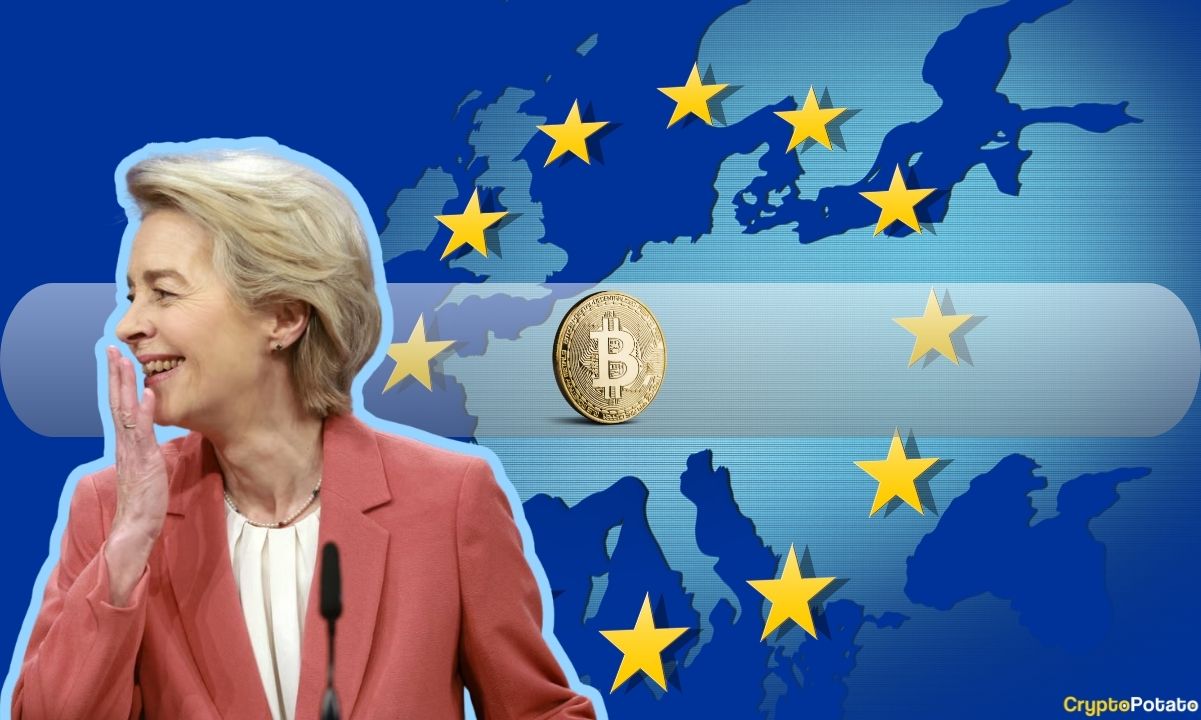
European Commission President Ursula von der Leyen delivered a significant address at the annual “La Rencontre des Entrepreneurs de France 2026” conference on August 26th, a speech that has rapidly circulated across crypto-focused social media. Her core message underscored a changing global landscape, urging Europe to bolster its independence, industrial capacity, and strategic capital allocation.
Von der Leyen posited that many foundational assumptions of the European Union’s economic model are no longer valid. She emphasized the need for the continent to become a proactive entity that “produces, invests and protects.” The era of unquestioned access to China, unfettered global trade, American strategic protection, cheap imported energy, and Western technological supremacy, she argued, is over.
While acknowledging the validity of some of her points from a European perspective – particularly the challenges faced by companies due to high energy costs, regulatory hurdles, and intensifying competition from China – one particular aspect of her speech raises significant concern.
The European Union currently holds approximately 10 trillion euros in household savings within bank accounts, with a substantial portion of Europe’s overall savings invested beyond the continent. Von der Leyen suggested that these savings need to be mobilized to support European businesses.
Although the stated intention may be to stimulate economic growth, the language employed reveals a potentially troubling perspective on the relationship between private wealth and governmental objectives.
The EU Commission President stated that households have €10 trillion sitting “idle” that could be “put to work” to invigorate the economy. This assertion, as reported, has drawn sharp reactions.
From a policymaker’s viewpoint, household savings appear to be increasingly viewed not merely as personal assets, but as a potential economic catalyst that could be guided, incentivized, or regulated to achieve specific goals.
This perspective is particularly noteworthy given Europe’s historically high taxation rates. Data indicates that four of the top five countries globally with the highest income tax rates are members of the European Union.
A significant portion of economic output is already channeled to the state, yet this appears insufficient to meet the Union’s political and industrial ambitions.
This raises a fundamental question: who should determine the purpose of an individual’s savings?
After earning money, paying income taxes, and then incurring consumption taxes like VAT when spending, the notion that personal savings should be directed towards government-defined priorities, which may or may not align with individual interests, is a point of contention.
This is precisely where Bitcoin emerges as a compelling alternative. Despite its inherent complexities, Bitcoin embodies a fundamentally different philosophy.
As an asset without a central issuer, its total supply cannot be manipulated by institutions like the European Central Bank. Governments cannot arbitrarily increase Bitcoin’s supply to finance industrial expansion, nor can they dictate its issuance schedule.
The finite supply of 21 million Bitcoin ensures a predictable scarcity. Furthermore, individuals can hold Bitcoin directly, without intermediaries, and if private keys are secured, the asset is theoretically resistant to confiscation and external control.
This distinction is crucial and gains increasing relevance in the current geopolitical and economic climate.
It is important to clarify that this analysis does not suggest an immediate intent by European politicians to seize private savings. However, as an EU citizen who has lived in the region for their entire life, the possibility cannot be entirely dismissed, especially in light of contemporary political trends.
The author recalls attending a Bitcoin conference in Amsterdam where attendees were asked, “Why do you Bitcoin?” This, the author concludes, is their answer.
Leave a Reply