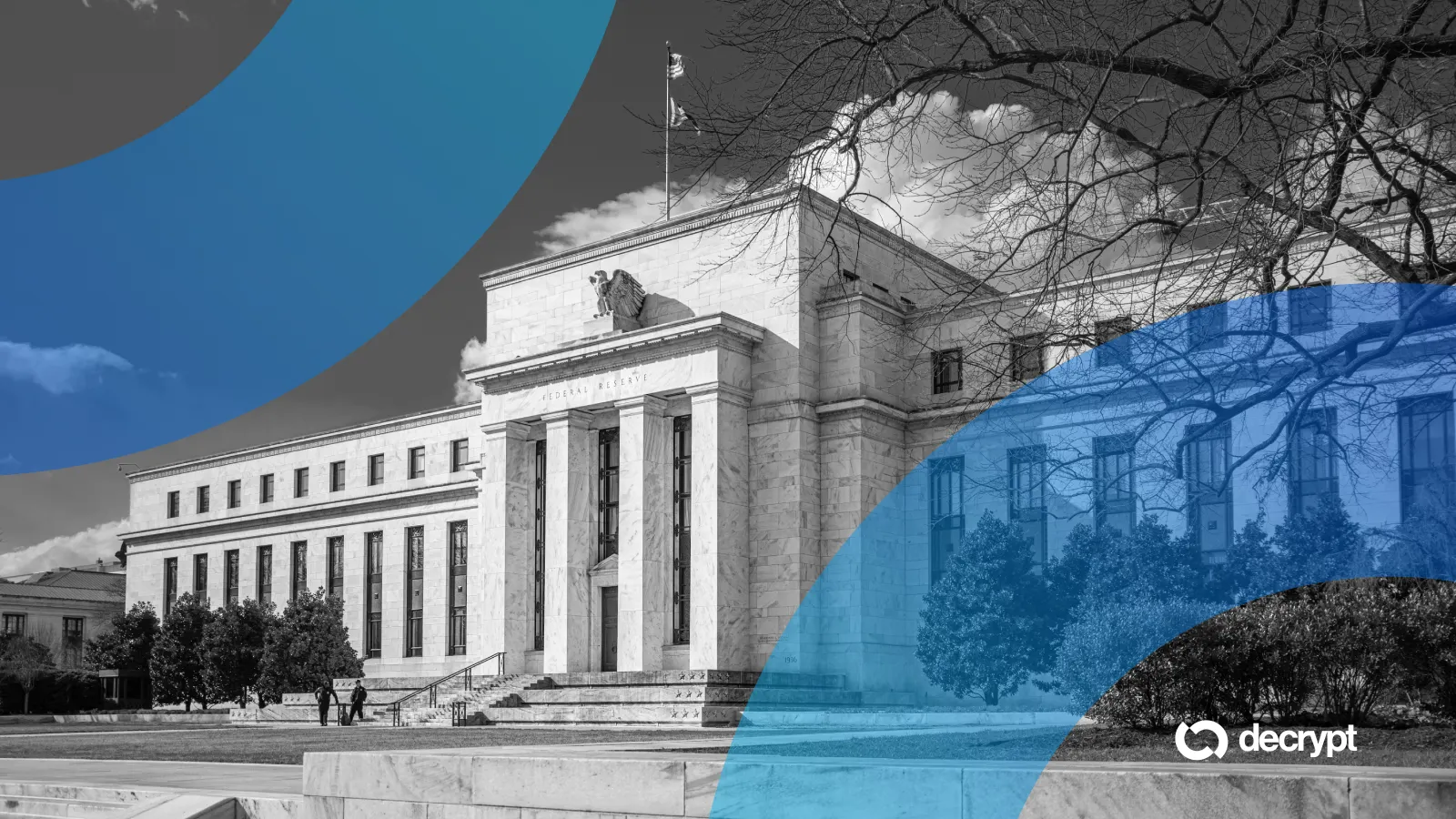
Wall Street is bracing for the Federal Reserve to implement a policy it hasn’t pursued since 2023: an interest rate increase.
The Federal Open Market Committee is concluding its two-day meeting on Wednesday, and according to CME’s FedWatch tool, the probability of a quarter-point hike stands at 94.5%, a significant jump from below 50% just a month ago. This rapid shift from an unlikely scenario to near-universal expectation was detailed in a Wall Street Journal survey published this week. The survey found that nearly every major bank now anticipates a rate hike on Wednesday. Most, including Barclays, Citigroup, JPMorgan, Morgan Stanley, and UBS, are forecasting a total of 50 basis points in tightening by the end of the year.
More hawkish projections come from Bank of America, Deutsche Bank, and RBC, which are calling for 75 basis points of tightening this year. Goldman Sachs, at the more dovish end of those expecting a hike, has penciled in only this week’s quarter-point increase and no further action. Jefferies and Oxford Economics stand out as outliers, forecasting a rate cut in December and in 2027, respectively.
Higher interest rates make borrowing more expensive, which in turn slows consumer spending and negatively impacts assets that benefit from lower investment costs, such as stocks and Bitcoin. Conversely, it makes safer government bonds more attractive, drawing capital away from riskier investments. However, the primary concern for markets is not the immediate rate hike itself, but rather the uncertainty surrounding the number of future increases. This ambiguity often leads markets to reprice assets in anticipation of the Federal Reserve’s actions and statements.
Inflationary Pressures Drive Rate Hike Decision
The rationale for a rate increase is rooted in persistent inflation that has proven resistant to moderation. In August, headline Consumer Price Index (CPI) registered an annual rate of 3.4%, with core inflation at 2.5%. Both figures remain comfortably above the Federal Reserve’s 2% target. The ongoing conflict with Iran has also contributed to rising oil prices, adding another layer of price pressure that neither tariffs nor rate cuts can easily counteract.
Internal Fed Divisions and Economic Data
The Federal Reserve maintained its benchmark interest rate at 3.50% to 3.75% in July. However, that decision was made by a narrow 9-3 vote, with three policymakers already advocating for a rate hike at that time. This internal division, coupled with a stronger-than-expected August jobs report, has evidently shifted the committee’s sentiment toward tightening policy heading into this week’s meeting.
Political Crosscurrents and Fed Independence
The impending rate hike places Federal Reserve Chair Kevin Warsh in a challenging position. President Donald Trump appointed Warsh to his role in January and, at his swearing-in ceremony in May, urged him to be “totally independent” while simultaneously expressing his expectation for lower interest rates. The current trajectory of monetary policy has not aligned with the President’s stated desires.
President Trump, Vice President JD Vance, and Treasury Secretary Scott Bessent have all publicly called for rate cuts in the past two weeks. President Trump has even gone as far as to threaten trade repercussions against countries with trade surpluses with the U.S. if interest rates are not reduced. Warsh, however, has maintained that the President has had no influence on the Federal Reserve’s decisions.
Market Reactions and Asset Performance
The rate hike is set to be announced just two months before the November midterm elections, a period when polls already indicate voter dissatisfaction with high prices and borrowing costs. The decision to raise rates is, in part, a response to inflationary pressures exacerbated by policies, such as tariffs and the approach to the Iran conflict, that President Trump himself has championed.
Bond markets have already reacted ahead of Wednesday’s announcement. The 10-year Treasury yield reached 5.04% this week, its highest level since July 2007, as traders factored in both the anticipated rate hike and a prolonged period of elevated interest rates. The two-year yield, which is more closely tied to Federal Reserve policy, hit its highest level since July 2024. Higher Treasury yields make these government securities more attractive compared to riskier assets and tend to strengthen the U.S. dollar, creating headwinds for assets like cryptocurrencies that typically benefit from low-cost capital.
Cryptocurrency Market Volatility
The cryptocurrency market is already experiencing turbulence. On Tuesday, Bitcoin was trading around $75,700, down approximately 3.2% for the day. This decline followed the failure of the Clarity Act, a long-awaited market structure bill for the crypto industry, to pass its Senate cloture vote. Bitcoin has since retreated significantly from its September peak of nearly $82,000. Technical indicators suggest that a daily close below $73,200 could lead to further declines, potentially reaching $71,000 and even $66,900, which would negate the recent price surge that also triggered Bitcoin’s current golden cross.
Divergent Views on Rate Hike Impact
Not all analysts view a rate hike as unequivocally bearish for the crypto market. Some argue that a quarter-point increase, primarily aimed at anchoring long-term Treasury yields rather than a significant tightening of financial conditions, could leave the medium-term outlook for cryptocurrencies largely unaffected. In this perspective, the key factor will be whether the Federal Reserve’s decision and Chair Warsh’s subsequent press conference introduce surprises relative to market expectations.
Higher-beta altcoins are anticipated to experience more pronounced percentage swings than Bitcoin, regardless of the outcome, due to their thinner liquidity and higher leverage.
The Federal Reserve’s statement and updated economic projections, known as the dot plot, are scheduled for release at 2 p.m. ET on Wednesday. This will be followed by Chair Warsh’s press conference at 2:30 p.m. ET. Traders will be closely scrutinizing these events for any indications of whether policymakers still foresee only one additional rate hike this year, or if their outlook aligns more closely with the two further increases projected by Bank of America, Deutsche Bank, and RBC.
Leave a Reply