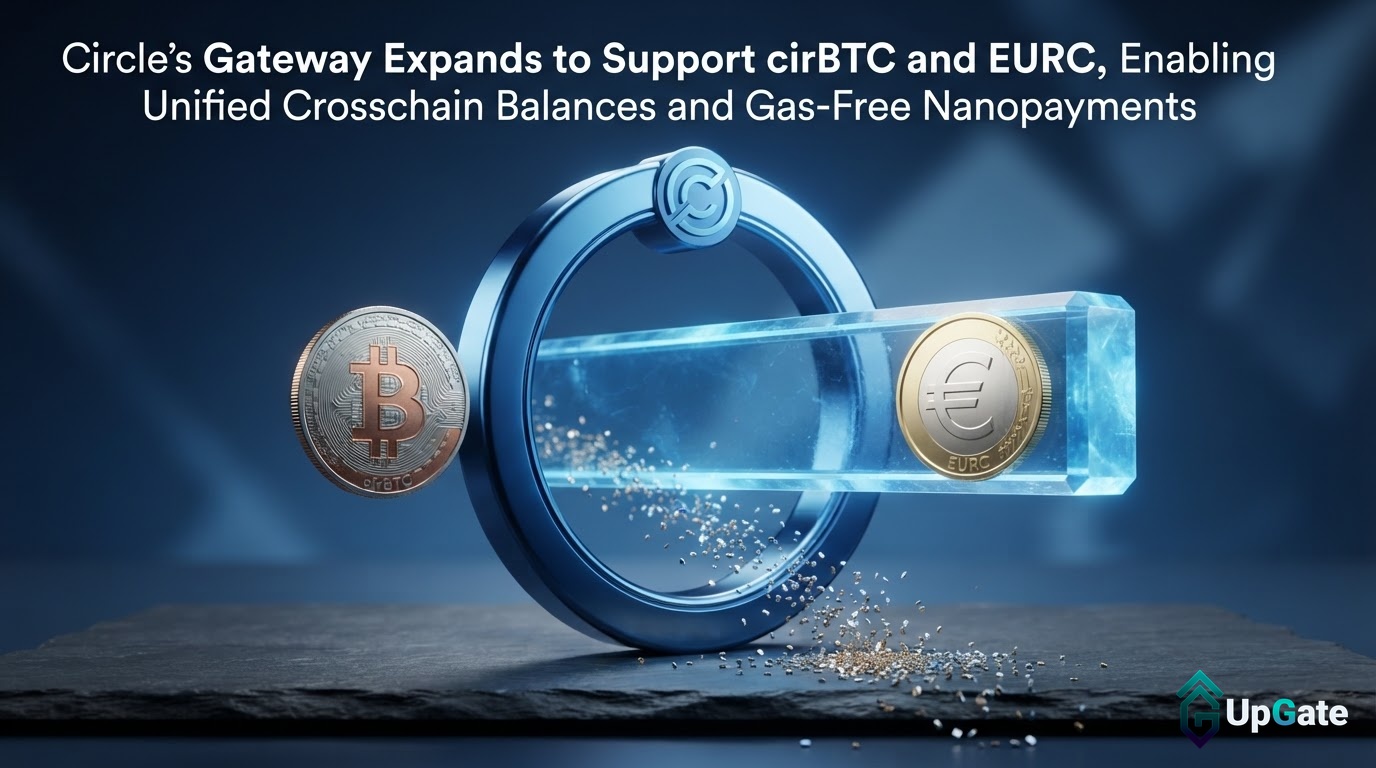
Circle has enhanced its Gateway product by adding support for cirBTC and EURC, allowing users to manage unified crosschain balances for these assets alongside USDC. The update also introduces gas-free Nanopayments for cirBTC and EURC, a feature designed to improve transaction efficiency for smaller, frequent payments.
Funds become accessible in under 500 milliseconds once a deposit is finalized. Gateway operates as a non-custodial product, and users maintain a 7-day trustless withdrawal option. By mid-October 2026, cumulative transfers through Gateway had surpassed $10 billion, according to the research findings.
Asset Details and Backing
cirBTC is Circle’s Bitcoin-backed token, with each unit backed 1:1 by native Bitcoin held by a regulated Circle entity. This token was launched on August 21, 2026. EURC, Circle’s euro stablecoin, is backed by full euro reserves and complies with the European Union’s Markets in Crypto-Assets (MiCA) framework.
Integration and Developer Impact
This expansion of Gateway follows a September 2026 update to Circle’s Cross-Chain Transfer Protocol (CCTP), which enabled native EURC transfers across multiple blockchains, including Arc and Ethereum. Developers can integrate these new assets without requiring significant modifications to their existing setups.
Transaction Efficiency and Capital Management
The introduction of gas-free payments is particularly beneficial for small, frequent transactions where network fees could otherwise outweigh the transaction value. Circle is positioning this capability for businesses, wallets, and agentic applications. The unified balance approach allows users to manage capital more efficiently, reducing the need for substantial capital buffers across multiple chains.
Market and Business Implications
For European businesses, the addition of a MiCA-compliant euro stablecoin provides a native currency option, streamlining transactions that might otherwise necessitate conversion through a dollar-denominated asset. Similarly, cirBTC offers Bitcoin exposure within applications not native to the Bitcoin network, facilitating its use in payments and treasury workflows.
Understanding Trust Nuances
It is important to distinguish between Gateway’s non-custodial nature and the custody of the underlying assets. While Gateway itself does not hold user funds, the backing of cirBTC relies on Bitcoin held by a regulated Circle entity. This means users are trusting Circle’s custody of the underlying asset, separate from the balance layer’s non-custodial operation, according to the research.
As of October 23, 2026, Circle’s Gateway product now supports cirBTC and EURC, enabling unified crosschain balances. This enhancement aims to streamline asset management and improve transaction efficiency, particularly for smaller payments, by offering gas-free Nanopayments for these stablecoins.
Why This Matters
The materials describe a narrow update: Circle has expanded its Gateway product to include support for cirBTC and EURC, allowing users to manage unified crosschain balances for these assets, in addition to USDC. The exact number of blockchains supported by Gateway.
Broader Context
Source materials place the factual news in this context: Circle has widened the scope of Gateway, its crosschain balance product.
Leave a Reply