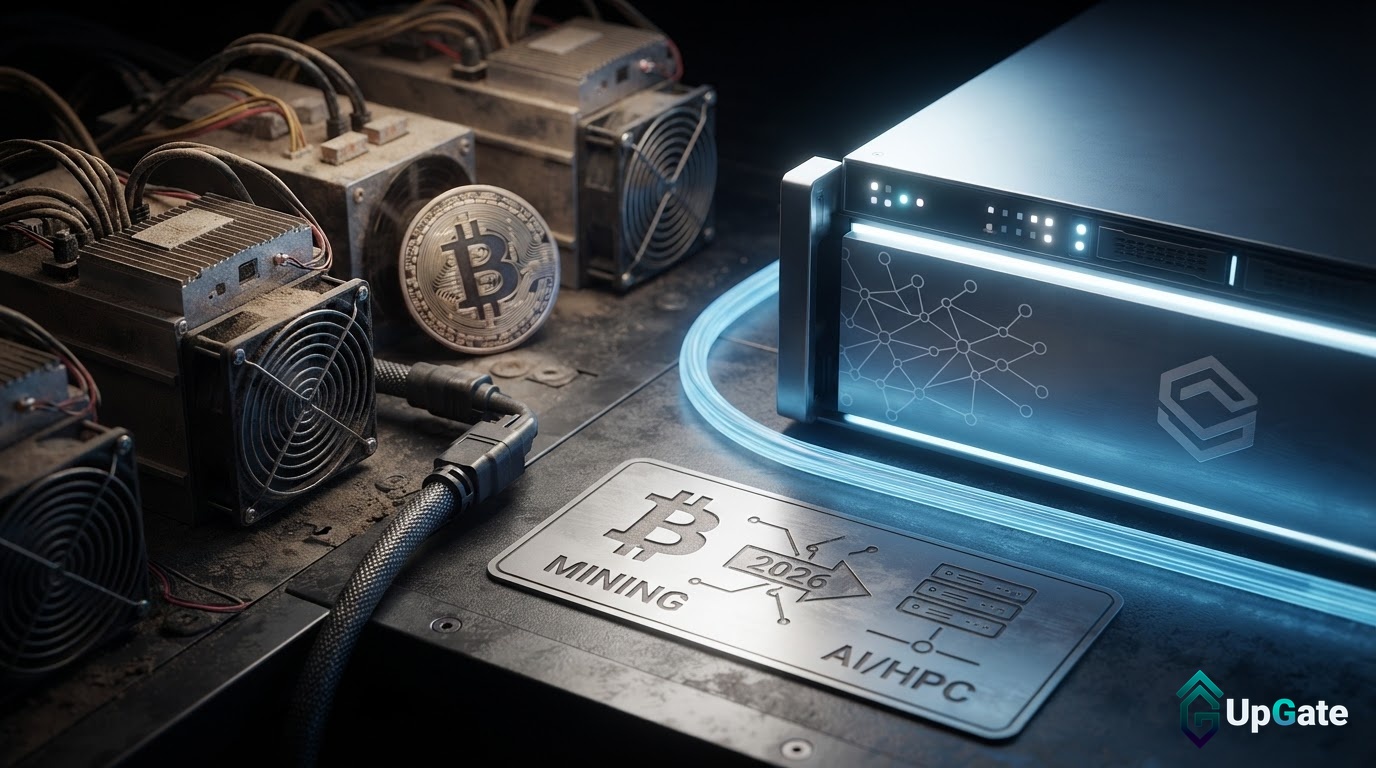
Core Scientific is strategically phasing out its Bitcoin mining operations by December 2026 to fully transition into a provider of high-density colocation services for artificial intelligence (AI) and high-performance computing (HPC) data centers. This significant shift involves reallocating power and data center capacity, leading to a substantial reduction in its Bitcoin mining fleet.
Colocation Business Drives Growth
The company reported a strong performance in its colocation business during the third quarter, with revenue climbing 58% quarter-on-quarter to $215.4 million. This growth contributed to a 42% sequential increase in total revenue, reaching $232.9 million. Core Scientific’s adjusted EBITDA saw a significant rise to $133.6 million from $41.1 million in the previous quarter, with its adjusted EBITDA margin expanding from 25% to 57%. This expansion in margin indicated improved operating performance as additional capacity came online, according to CFO Jim Nygaard.
Core Scientific recorded a net income of $1.18 billion in the third quarter, a notable reversal from a $1.16 billion net loss in the second quarter and a $144 million net loss in the same period last year. However, this result included a substantial non-cash gain from changes in the fair value of warrants, meaning the figure does not solely reflect underlying business performance.
Transition Underway Amidst Industry Pressures
The transition away from mining is already underway. By the end of September, Core Scientific had nearly 50% fewer miners online compared to the end of 2025. Concurrently, the company was billing for 485 megawatts (MW) of colocation capacity, an increase of 90 MW during the third quarter. This capacity is projected to generate over $700 million in average annualized GAAP colocation revenue. Approximately 100 MW remaining under its CoreWeave buildout is currently undergoing commissioning, with revenue recognition expected to begin over the coming months, Chief Executive Officer Adam Sullivan said.
Core Scientific is not alone in exploring new avenues as the Bitcoin mining landscape faces increasing pressure. Competition among miners remains intense, and another major Bitcoin reward reduction is anticipated within 17 months, which will further reduce mining profitability. This industry-wide challenge is prompting other publicly traded Bitcoin miners to diversify their operations. For instance, Riot is developing large-scale AI data centers, and MARA is diversifying into AI infrastructure alongside its existing mining activities.
Competitor Challenges Highlight Industry Trends
The pressures on traditional mining operations are also evident in the latest results from American BTC. The company reported $126 million in quarterly net income, but this figure was largely supported by a $197.3 million non-cash gain on its Bitcoin holdings. Its mining business showed weaker performance, with revenue declining 5.5% quarter-on-quarter to $63.4 million. The cost of mining one Bitcoin for American BTC increased approximately 15% to $42,100. Excluding the gain on its Bitcoin holdings, American Bitcoin would have reported an approximate $5.5 million loss, in addition to a $64.3 million loss on derivatives. CEO Mike Ho stated that the company continued mining Bitcoin below spot-market prices despite seasonal increases in electricity costs.
While Core Scientific’s strategic pivot to AI and HPC services shows promising growth in its colocation segment, uncertainties remain regarding the full impact and timing of this transition. The long-term profitability and market share in the AI data center space are yet to be fully determined, as is the future viability of traditional Bitcoin mining amidst evolving market conditions and technological advancements.
Why This Matters
The materials describe a narrow update: Core Scientific is phasing out its Bitcoin mining operations by December 2026 to focus exclusively on providing high-density colocation services for AI and HPC. The exact timing and full impact of the transition to AI/HPC services.
Broader Context
Source materials place the factual news in this context: Core Scientific plans to end its Bitcoin mining operations by December 2026 and enter 2027 as a dedicated high-density colocation provider focused on artificial intelligence (AI) and high-performance computing (HPC), CFO Jim Nygaard said during the company’s third-quarter earnings call on Thursday.
Leave a Reply