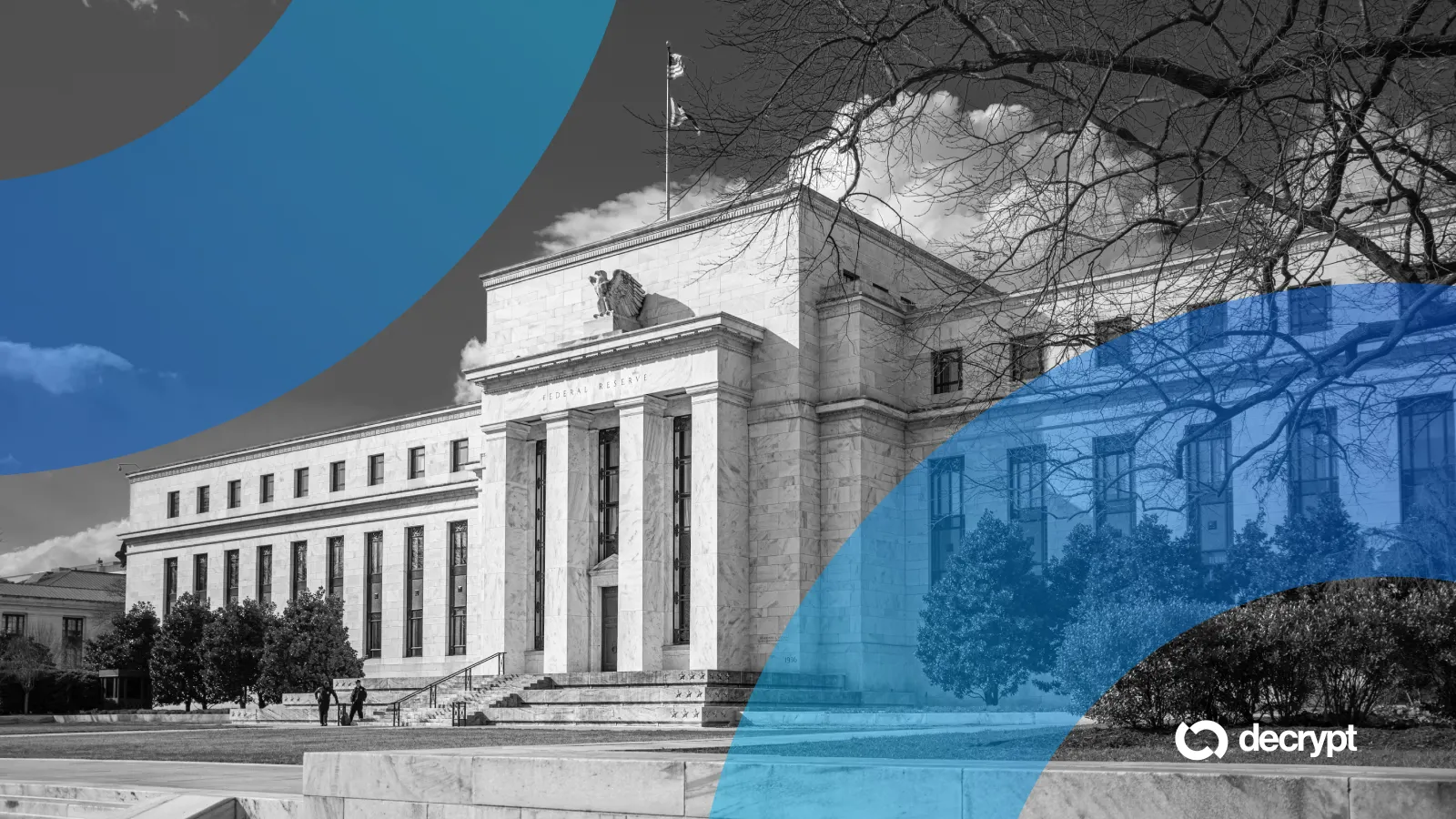
Prediction markets indicate a high probability that the Federal Reserve will maintain its current interest rate at the upcoming September meeting. However, underlying uncertainties and past policy divisions suggest that the situation warrants careful consideration.
Market Consensus Points to a Hold
The Federal Reserve’s Federal Open Market Committee (FOMC) is scheduled to meet on September 15-16, with its official statement due on September 16. Currently, multiple prediction markets show a strong consensus for no change in the benchmark interest rate. According to prediction markets, Polymarket’s ‘Fed Decision in September?’ market shows 74% odds of no change, with only a 25% probability of a quarter-point hike and a 1% chance of a rate cut. This market has seen significant activity, with $33.9 million in volume.
Similarly, Kalshi data indicates odds of no change at 73.5%, with close to $10 million wagered on the platform. Myriad data suggests ‘No Change’ is trading around 71%. This convergence across platforms suggests a market consensus for stability in monetary policy.
Underlying Uncertainties and Past Divisions
Despite this apparent consensus, historical context reveals potential for divergence. At its July meeting, the FOMC held the rate at the 3.50%-3.75% range. However, the vote was divided, with a 9-3 count, and three members advocating for a rate hike. This internal division highlights that a hold is not a foregone conclusion for all policymakers.
Furthermore, a Reuters poll found that nearly 70% of economists expect no change in rates through the rest of 2026, adding another layer to the outlook. Traders have also reportedly been bracing for a surprise hike, even with a hold being the base case scenario.
Implications for Financial Markets
The Federal Reserve’s interest rate decisions have a significant impact on financial markets. The federal funds rate influences the cost of borrowing money, which in turn affects investor willingness to take on riskier assets. When rates rise, borrowing becomes more expensive, and safer assets like Treasuries become more attractive, potentially drawing capital away from speculative investments. Conversely, rate cuts tend to encourage investment in riskier assets such as tech stocks and cryptocurrencies.
This dynamic has been observed throughout the year, with Bitcoin and Ethereum showing volatility around Fed holds and prices declining earlier in the year when strong economic data raised doubts about anticipated rate cuts. The upcoming FOMC statement will be closely scrutinized for any signals regarding future policy direction.
Broader Context
Source materials place the market analysis in this context: The FOMC meets September 15–16, with its statement due September 16.
Leave a Reply