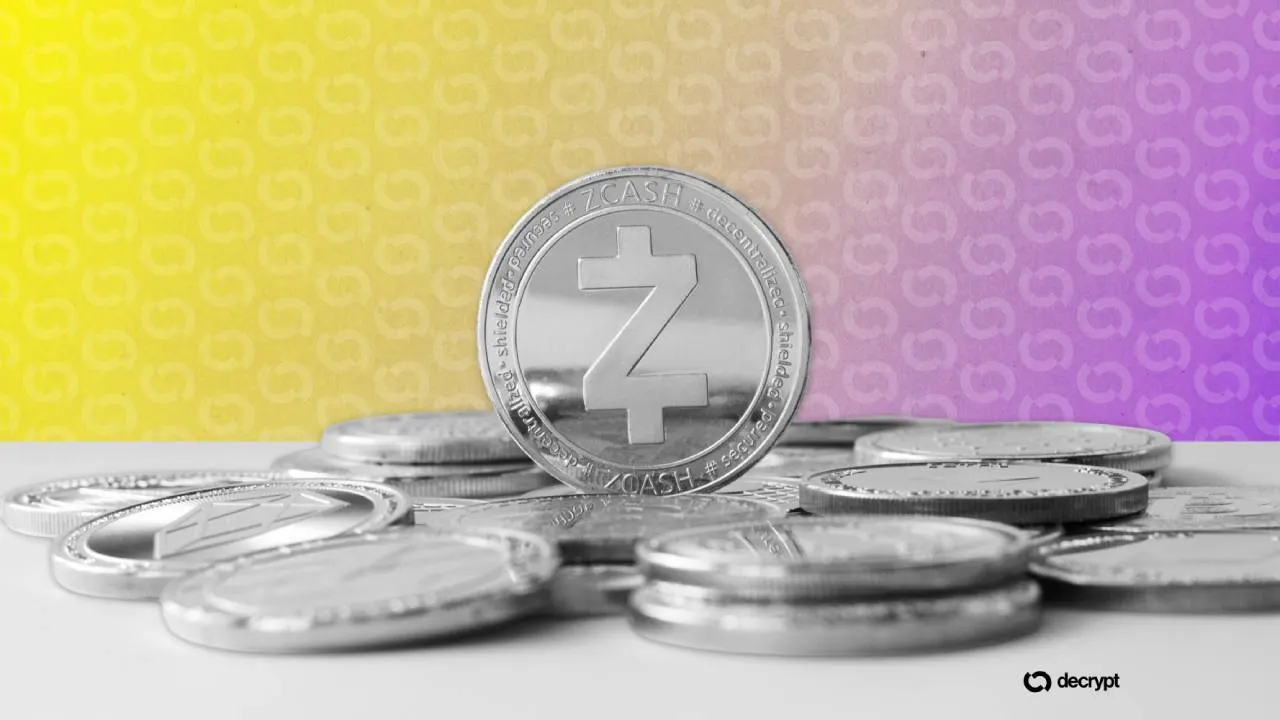
Grayscale Launches World’s First Zcash ETF Amidst Privacy Coin Scrutiny
Grayscale’s Zcash Exchange Traded Fund (ETF) commenced trading Tuesday on NYSE Arca, introducing a nine-year-old investment product to the public markets months after developers disclosed and subsequently patched a critical vulnerability within the privacy coin’s shielded transaction system.
Trading under the ticker ZCSH, the fund represents the world’s first exchange-traded product offering direct exposure to Zcash. This allows investors to track the price of ZEC through their existing brokerage accounts without the need to directly purchase or hold the cryptocurrency themselves.
“Grayscale has a long history of identifying emerging technologies and investment themes early, and our nine-year history operating this fund is the clearest signal of demand,” Steve Vanourny, Grayscale’s Head of Index, told Decrypt.
The ZCSH fund originated as the Grayscale Zcash Trust in October 2017. Grayscale filed with the Securities and Exchange Commission in November to convert the trust into an exchange-traded fund. As an ETF, shareholders do not directly own ZEC; instead, they own shares designed to mirror the value of the fund’s Zcash holdings.
Vanourny cited Zcash’s maturity, its inherent privacy features, and growing investor interest in digital assets beyond Bitcoin and Ethereum as key factors making this the opportune moment to list the established fund.
“Investors increasingly want exposure to digital assets beyond Bitcoin and Ether through the brokerage accounts they already use, and Zcash occupies a distinctive place in that landscape,” Vanourny explained. “With its nearly decade-long network history, monetary design derived from Bitcoin—including proof of work and a 21 million coin limit—in addition to optional privacy technology that Bitcoin does not possess.”
Grayscale anticipates that ZCSH will primarily attract self-directed and advised investors seeking Zcash exposure via a brokerage account, according to Vanourny.
“We view ZCSH as a focused, higher-risk satellite position within a broader digital-asset allocation that is complementary to, but not a replacement for, Bitcoin,” he stated. “It offers a distinct thesis: Bitcoin-like scarcity and proof-of-work economics, plus optional privacy, for investors who see privacy as the next major theme for the industry to address as it scales.”
While Vanourny highlighted Zcash’s fixed supply and proof-of-work model as parallels to Bitcoin, its optional privacy features presented complexities in addressing a recent critical security flaw.
In May, security researcher Taylor Hornby identified a four-year-old vulnerability in Zcash’s Orchard shielded pool that could have potentially enabled an attacker to generate counterfeit ZEC. Developers implemented an emergency patch on June 1. However, the network’s privacy features made it impossible to cryptographically verify whether the flaw had been exploited.
In July, Zcash activated the Ironwood upgrade, which replaced the Orchard shielded pool with a new one. This upgrade incorporated accounting rules designed to prevent more ZEC from exiting the retired pool than entered it, thereby trapping any potential counterfeit coins.
Looking forward, Grayscale intends to measure Zcash’s progress based on its adoption, utility, and network security, rather than solely on the token’s price.
“On the security and infrastructure side, we will be watching the continued rollout and adoption of the Ironwood upgrade, which closed the vulnerable shielded pool from the June 2026 incident and added independently audited, formally verified supply guarantees,” Vanourny said. “Grayscale will also be monitoring exchange support and regulatory treatment of Zcash and privacy assets more broadly.”
Leave a Reply