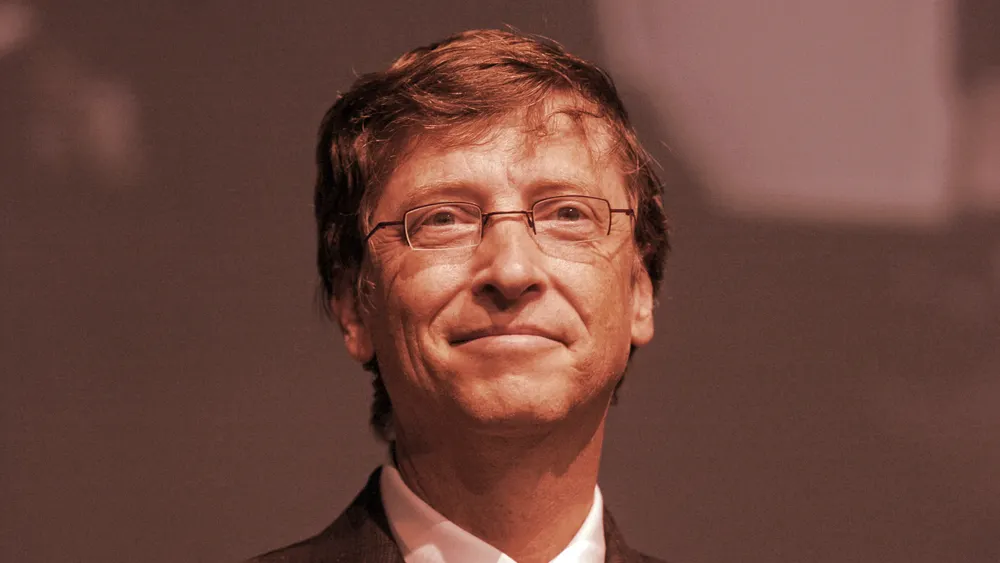
Bill Gates has put forward proposals to tax AI tokens and robots, and to designate ‘Human Reserved’ jobs, as potential strategies to mitigate widespread job displacement anticipated from artificial intelligence. According to Gates, the current tax structure inadvertently incentivizes businesses to replace human workers with machines.
In a recent essay, Gates explained that employers incur payroll taxes for human hires, while robots are typically treated as depreciable business expenses. He argues this disparity nudges companies toward automation. To address this, Gates suggests a usage tax on AI tokens and robots, which he believes would more directly influence employer incentives than a corporate tax.
Beyond taxation, Gates introduced the concept of ‘Human Reserved’ jobs – categories of work society should intentionally preserve for humans, even if AI could perform them. He likened this to a nature reserve, suggesting these roles are valuable and warrant protection. Examples he provided include childcare and jury service, estimating that under an aggressive approach, ‘Human Reserved’ jobs could comprise approximately 40% of the total workforce. Gates first proposed a robot tax in 2017.
Gates expressed significant concern about AI’s potential impact on the job market, predicting that AI could substitute for human cognition in fields such as law, customer service, medicine, software, and manufacturing within a decade. He believes this represents a faster and more profound shift than previous technological advancements, which often created new job categories over generations. Gates stated that AI will be “very bad for the job market” and frames the AI transition as a critical choice that could lead to either “the greatest equalizer ever invented” or “the worst source of injustice.”
These concerns are echoed by others in the tech industry. Anthropic CEO Dario Amodei suggests that up to half of entry-level white-collar jobs could disappear within five years.
However, current employment data has not yet shown widespread displacement attributed to AI. A study by the Yale Budget Lab and Brookings, analyzing federal employment data through July, found no signs of mass displacement. Similarly, California’s AI-unemployment tracker indicates no statewide layoff wave so far. Nevertheless, the tracker has noted rising unemployment claims among college-educated workers in AI-exposed occupations.
Gates also called for the establishment of new national coordinating bodies and an international institution to manage the transition driven by AI. He emphasized the critical nature of the decisions being made in the coming years to shape AI’s societal impact.
While the full extent and speed of AI-driven job displacement remain uncertain, Gates’ proposals highlight a proactive approach to managing the economic and social consequences of advanced AI, urging a societal conversation about the future of work and the role of human labor.
Why This Matters
The materials describe a narrow update: Bill Gates has reiterated his proposal for a tax on AI tokens and robots, arguing that the current tax system incentivizes replacing human workers with machines. The exact extent and speed of AI-driven job displacement.
Broader Context
Source materials place the factual news in this context: Bill Gates’ essay ‘The turbulent AI era is here. The choices we make now are critical.’.
Leave a Reply