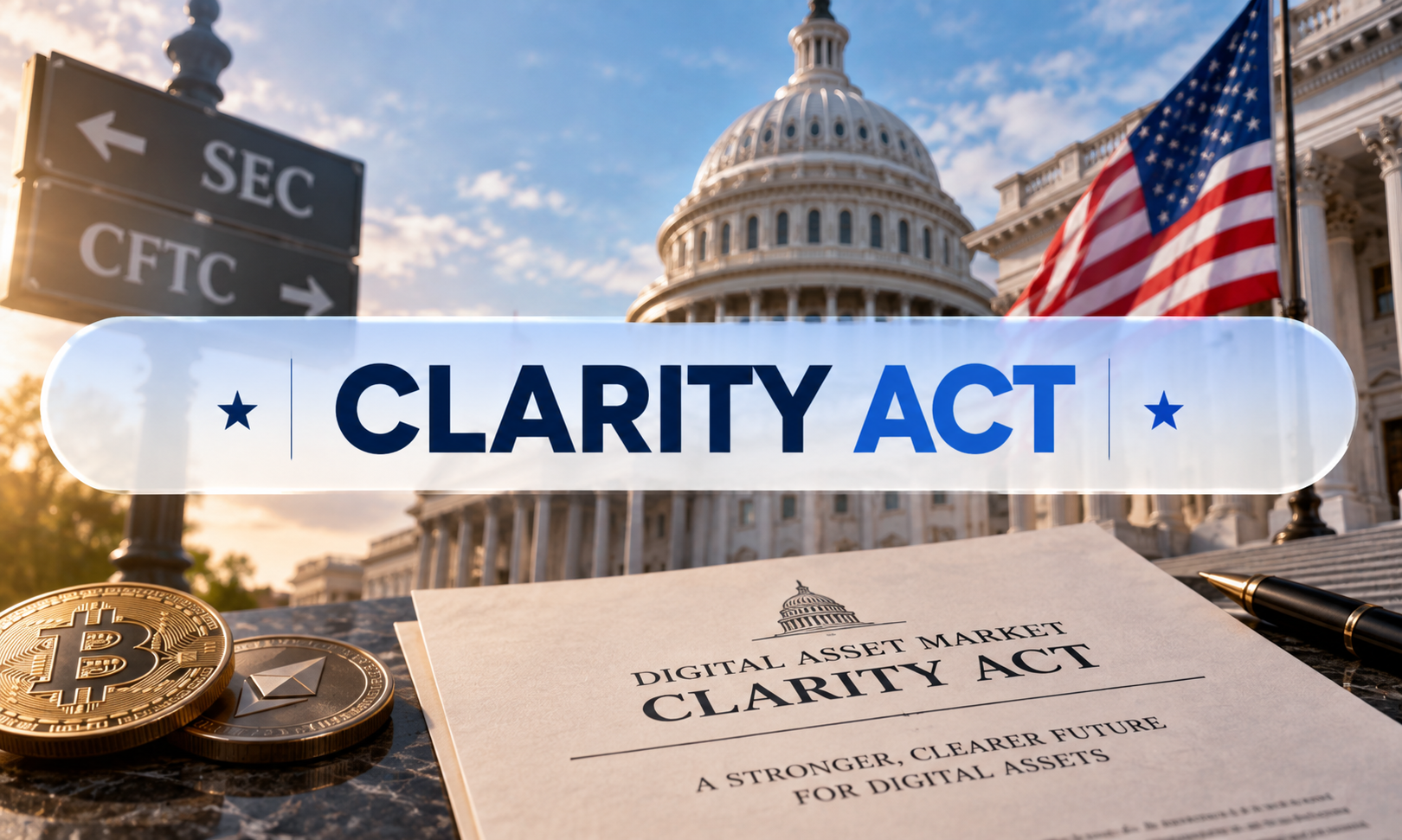
The U.S. Senate is scheduled for a procedural test vote on September 15th regarding the Digital Asset Market CLARITY Act, a legislative proposal aimed at establishing a federal regulatory framework for the cryptocurrency market. This vote, which requires 60 senators to proceed with debate (cloture), represents a procedural step that could influence the momentum for federal digital asset regulation, according to the FactSheet.
The CLARITY Act has navigated substantial legislative milestones, including passage in the House by a vote of 294-134 in July 2025 and advancement within the Senate Banking Committee with a 15-9 vote in May 2026. Its primary objective, as detailed in the FactSheet, is to address ambiguities surrounding regulatory authority between the Securities and Exchange Commission (SEC) and the Commodity Futures Trading Commission (CFTC). The proposed framework aims to maintain the SEC’s oversight of securities and specific fundraising transactions while concurrently broadening the CFTC’s jurisdiction over spot digital-commodity markets and related intermediaries.
Key Provisions Under Consideration
The legislation introduces several key provisions targeting distinct aspects of the digital asset ecosystem. Notably, it defines “ancillary assets” as network tokens whose value may be contingent on entrepreneurial or managerial efforts. These assets would be classified as commodities, necessitating specific disclosures, with obligations potentially concluding once relevant managerial efforts cease. This distinction seeks to separate the securities-law treatment of initial fundraising activities from the subsequent regulatory status of the token itself, addressing a long-standing uncertainty within the industry.
Furthermore, the CLARITY Act addresses the evolving fields of decentralized finance (DeFi) and self-custody. Recent revisions focus on non-decentralized DeFi protocols—those that present as decentralized but where identifiable parties retain significant control. Such protocols may be subject to CFTC registration requirements for spot digital-commodity activities. The bill’s broader framework evaluates discretion, control, and censorship capabilities to determine a protocol’s decentralization status. Crucially, it also provides protections for software developers and network participants whose roles are confined to software development or transaction validation. Additionally, the act stipulates that federal agencies generally cannot prohibit individuals from utilizing self-hosted wallets.
Federal Registration and Compliance
The proposed legislation also outlines a defined federal registration and supervision regime for digital-commodity exchanges, brokers, and dealers. This initiative aims to replace the current fragmented system of state regulations, enforcement actions, and overlapping federal authorities with a cohesive national structure. In line with this, the latest Senate proposal mandates that cryptocurrency intermediaries comply with Bank Secrecy Act obligations. This integration includes anti-money-laundering programs, customer identification, suspicious activity reporting, and sanction compliance within the federal framework. The bill further incorporates additional disclosures and protections designed to mitigate insider abuse, fraud, and ensure proper handling of customer assets.
Legislative Path and Future Uncertainties
The CLARITY Act’s journey began with the House passing H.R. 3633 by a vote of 294-134 in July 2025. The Senate Banking Committee followed by advancing its version with a 15-9 vote in May 2026. Prior to the August recess, Senate Majority Leader John Thune filed for cloture, setting the September 15th test vote as the next significant procedural step. Reports indicate that Senate Republicans have introduced further revisions, asserting that the bill incorporates over 115 Democratic “wins,” such as new fraud measures and changes for DeFi platforms.
Despite this legislative progress, considerable uncertainties persist. The outcome of the September 15th vote is not assured, and failing to secure the 60-vote threshold for cloture could substantially diminish the momentum behind this comprehensive regulatory effort. The CLARITY Act represents a critical step in defining the operational rules for the entire crypto market, extending beyond the mere classification of individual tokens. The result of this vote will offer insight into the immediate trajectory of federal digital asset regulation.
Why This Matters
The FactSheet indicates that the CLARITY Act, a comprehensive crypto market-structure framework, is set for a crucial Senate test vote on September 15th. A key uncertainty is whether the Senate will reach the 60 votes required for cloture on September 15th.
Broader Context
Source materials place the factual news in this context: The Digital Asset Market CLARITY Act is going to go through a very important Senate test on September 15th after more than a year of legislative work on the bill.
Leave a Reply