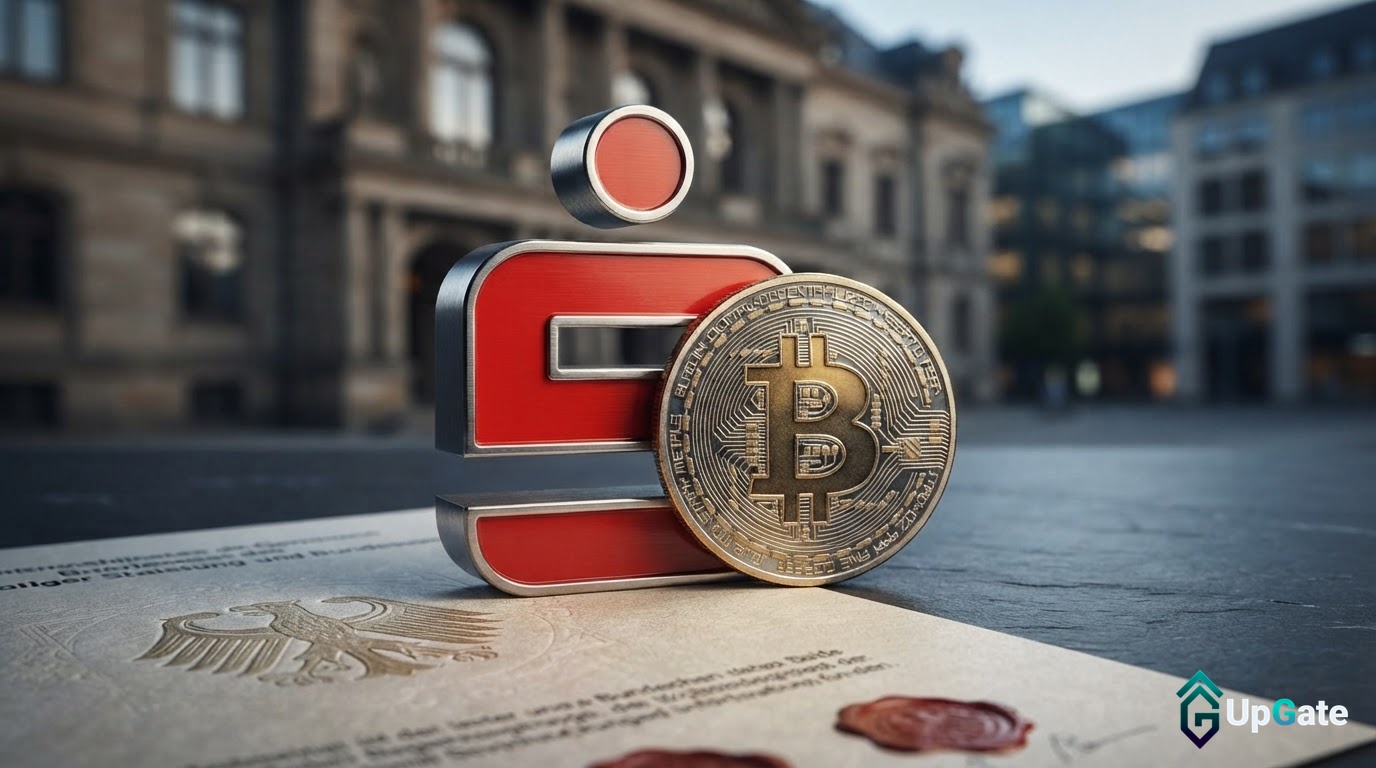
German savings banks (Sparkassen) are introducing a cryptocurrency trading service for their customers, enabling them to buy and sell five digital assets directly through the existing Sparkasse App. The service, named ‘Krypto – powered by Deka’, is provided by DekaBank, the securities firm of the Sparkassen group.
Initially, a limited number of savings banks will offer the service, with more expected to join monthly. Customers must have a current account with a participating bank and open a DekaBank crypto account within the app. A flat fee of 0.99 Euros per transaction applies, and DekaBank will provide guaranteed quotes.
The initial offering includes Bitcoin (BTC), Ether (ETH), XRP, Solana (SOL), and Polygon (POL). However, the service has significant limitations. Assets are held in a shared Omnibus Wallet by DekaBank and cannot be transferred to user-owned wallets, only to specific licensed crypto service provider (CASP) addresses. Crucially, cryptocurrency assets are not covered by statutory deposit insurance, a fact that participating savings banks will not proactively promote.
This move by Sparkassen signifies a notable step towards mainstream adoption of digital assets within Germany’s traditional banking sector, facilitated by the European Union’s Markets in Crypto-Assets (MiCA) regulation. DekaBank has completed its notification under MiCA Article 60 as a credit institution. It is permitted to offer custody, execution, and transfer services from December 1, 2025, and will add crypto-to-fiat exchange services from June 25, 2026.
The introduction of this service marks a shift from the Sparkassen group’s previous stance. In 2022, the German Savings Banks Association (DSGV) advised its member institutions against offering crypto trading due to immeasurable risks. The DSGV General Board later agreed to launch the service through DekaBank, with a target for most willing savings banks to complete integration by the first half of 2027. Approximately 337 savings banks are expected to participate by August 2026, with 30-40 institutions joining monthly.
Participating savings banks will not provide investment advice, and the service is intended for adult, self-directed customers. The banks emphasize that long-term wealth accumulation primarily relies on traditional financial instruments like securities and savings plans, positioning cryptocurrencies as a channel for self-directed investors.
The launch places Sparkassen in a competitive landscape with digital banks and fintechs such as N26, Trade Republic, and Revolut, which already offer crypto trading. DZ Bank, another cooperative banking group, has also secured MiCA approval for its crypto platform, indicating a broader trend within the German cooperative banking sector.
While the service aims to provide regulated access to digital assets, several uncertainties remain. The exact go-live date for each individual savings bank is not specified, and other potential transaction costs, such as the bid-ask spread, are not detailed. The specific licensed CASP addresses for asset transfers are also not yet public.
This development underscores a cautious yet progressive approach by traditional German financial institutions to integrate digital assets, balancing customer demand with regulatory compliance and risk management.
Why This Matters
The materials describe a narrow update: The German savings bank group (Sparkassen) is rolling out a service allowing customers to buy and sell five cryptocurrencies via their existing Sparkasse App. The exact date for each individual savings bank to go live.
Broader Context
Source materials place the factual news in this context: Sparkassen previously advised against crypto trading in 2022.
Leave a Reply