Tag: Adoption & Partnerships

  • XRPL Poised for Banks, Price Surge Not Assured

    XRPL Poised for Banks, Price Surge Not Assured

    XRP Ledger Poised for Banking and Cross-Border Payments, But Adoption Hurdles Remain

    Former Ripple advisor Anthony Welfare has asserted that the XRP Ledger (XRPL) possesses the technological capacity to support large-scale banking operations and cross-border payment systems. However, he cautioned that technological prowess alone does not guarantee widespread institutional adoption or a corresponding surge in XRP’s market value.

    Speaking on the AllinCrypto Podcast, Welfare highlighted the XRPL’s inherent strengths, including its ability to facilitate fast, low-cost transactions and its robust support for tokenized assets. He expressed confidence that the network’s infrastructure is capable of scaling to meet the demands of banks, payment systems, and governmental entities.

    “The technology is there; I don’t believe it couldn’t scale to whatever is needed for any banking system, payment system, or government,” Welfare stated, emphasizing the ledger’s capacity to process transactions in mere seconds.

    He also observed a tangible shift in the corporate landscape, with companies moving beyond mere blockchain experimentation towards pilot programs and the implementation of real-world applications, though much of this progress remains undisclosed. Welfare noted that the XRPL enables users to trade assets and transfer funds between wallets in under three seconds.

    The introduction of Ripple’s dollar-backed stablecoin, RLUSD, was cited by Welfare as a prime example of the network’s potential to underpin digital payment solutions. He envisions a future where digital representations of currencies, stocks, and other assets can be seamlessly transferred across blockchain networks.

    Despite these technological advantages, Welfare pointed out that institutions require more than just speed to embrace the XRPL. Critical factors such as sufficient liquidity, reliable asset backing, secure custody services, and robust compliance frameworks are also essential.

    Furthermore, the challenge of interoperability between different blockchain networks presents another significant hurdle. Welfare suggested that institutions might opt for a diverse range of systems, including Ethereum, Arbitrum, or private blockchains, rather than committing to a single ledger.

    “The technology is there. There’s no reason why it shouldn’t work, apart from humans,” Welfare remarked, underscoring that the obstacles are not solely technical but also involve human decision-making and strategic choices. This implies that institutions must grapple with selecting which networks to utilize and how to effectively integrate them.

    When questioned about the potential for growth in the XRPL ecosystem to trigger an XRP price rally, Welfare maintained a pragmatic stance. He acknowledged that while banks and companies can leverage the XRP Ledger for payments and asset movement, increased network usage does not automatically translate into a proportional increase in XRP’s value.

    The ultimate benefit to XRP, he explained, is contingent on its specific role in payment processes. Other crucial elements, including available capital, asset backing, secure storage, and the mechanics of payment flow, also play a significant part. Consequently, higher transaction volumes on the XRPL do not inherently guarantee increased demand or higher prices for the XRP token.

    As of this report, XRP is trading near $1.31, reflecting a broader correction within the cryptocurrency market.


  • Charles Schwab and Deutsche Bank Expand Digital Asset Services

    Charles Schwab and Deutsche Bank Expand Digital Asset Services

    Charles Schwab has expanded its direct cryptocurrency trading services to its broader retail client base, allowing customers to hold and trade digital assets alongside traditional investments. Concurrently, Deutsche Bank is reportedly preparing to launch an institutional custody service for Bitcoin and Ethereum in Germany, with plans for future expansion into Asia.

    Charles Schwab’s move, managing approximately $12 trillion in client assets, signifies a notable step in retail adoption of cryptocurrencies. The Schwab Crypto platform, supported by Schwab Premier Bank as custodian and Paxos for trade execution and sub-custody, now allows eligible US retail clients to engage in crypto trading. This follows an earlier announcement that Schwab Crypto would add support for SOL, LINK, and AVAX.

    It is important to note that, according to source claims, crypto holdings may not be covered by Securities Investor Protection Corporation protections in the same manner as traditional securities held in a conventional brokerage account.

    Meanwhile, Deutsche Bank’s reported move into digital asset custody is expected to launch in Germany within the next few weeks. The initial offering will focus on custody for Bitcoin and Ethereum. According to Reuters, the German banking giant also intends to offer tokenized deposits and issue blockchain-based securities, including digital bonds.

    Gerald Podobnik, co-head at Deutsche Bank, commented on the evolving financial landscape, stating, “I believe that, as the financial system, we will need to offer tokenized or blockchain solutions to our clients as additional services alongside our traditional ones … but not necessarily to replace what we are doing today.”

    Deutsche Bank has further ambitions, planning to expand its digital asset business into major Asian financial centers next year as part of a broader strategy to capitalize on growth in the digital economy. The exact timeline for the full rollout of Schwab Crypto to all eligible US retail clients and the specific launch date for Deutsche Bank’s custody service remain subject to further updates. The scope and timeline for Deutsche Bank’s expansion into stablecoin transactions and tokenized deposits are also not yet fully detailed.

    Why This Matters

    The materials describe a narrow update: Charles Schwab has opened direct crypto trading to its broader retail client base, allowing them to hold and trade cryptocurrencies alongside traditional investments. The exact timeline for the full rollout of Schwab Crypto to all eligible US retail clients.

    Broader Context

    Source materials place the factual news in this context: Less than two months after indicating that it may add SOL, LINK, and AVAX to its Schwab Crypto platform, Charles Schwab has opened direct crypto trading to its broader retail client base.

  • Circle Eyes 40 Developing Markets for Stablecoin Expansion

    Circle Eyes 40 Developing Markets for Stablecoin Expansion

    Stablecoin Demand Surges in Emerging Markets as Circle Eyes Expansion

    Demand for stablecoins is on the rise across Southeast Asia, Latin America, Africa, and the Middle East, as businesses and individuals increasingly seek access to the internet-based economy. Circle, a prominent stablecoin issuer, is reportedly planning to enter approximately 40 developing markets, according to CEO and Chairman Jeremy Allaire.

    Speaking on Friday on the sidelines of the IMF and World Bank meetings in Bangkok, Allaire described the current moment as an “inflection point” for blockchain technology, transitioning from an early adopter phase to mainstream scaling.

    Analysts at Bernstein have expressed optimism regarding Circle’s prospects, forecasting a new growth cycle for its USD Coin (USDC) stablecoin that could significantly benefit the company over the next year. Bernstein attributes this potential growth to several factors, including renewed momentum in cryptocurrency markets, increased regulatory clarity in the United States, the development of tokenized capital markets, and the growing adoption of stablecoins for payment purposes. The analysts also noted early indications of stablecoin usage in payments facilitated by artificial intelligence agents.

    While Tether’s USDt remains the largest dollar-backed stablecoin by market capitalization, USDC has demonstrated substantial growth in transaction activity. Bernstein data indicates that USDC’s share of adjusted stablecoin transaction volume has surged from around 40% in 2025 to over 60% in 2026, surpassing USDt in this metric.

    In a move to bolster its presence in the cross-border payments sector, Circle announced on September 8 its agreement to acquire Singapore-based platform Tazapay for $400 million in an all-stock deal, expected to finalize in 2027.

  • Deutsche Bank to Offer Bitcoin, Ethereum Custody Soon

    Deutsche Bank to Offer Bitcoin, Ethereum Custody Soon

    Deutsche Bank Set to Launch Bitcoin and Ethereum Custody Services Within Weeks

    Germany’s largest bank is poised to enter the digital asset space by offering cryptocurrency custody for Bitcoin and Ethereum in the coming weeks. This move marks a significant step in Deutsche Bank’s expansion of its digital asset business, with plans to extend its reach into Asian financial centers by 2027.

    Digital Asset Expansion

    The initial offering will cater to institutional clients, including asset managers, hedge funds, and corporations, enabling them to hold Bitcoin and Ethereum securely through the bank. This service is designed to provide a regulated, bank-backed alternative to relying solely on external cryptocurrency exchanges for asset storage.

    Deutsche Bank is collaborating with Swiss digital asset technology firm Taurus to power its custody solutions. The bank previously led a $65 million funding round for Taurus in 2023 and has been integrating the firm’s technology into its digital asset strategy.

    Future Services and Asian Expansion

    Beyond initial custody, Deutsche Bank has ambitious plans for its digital asset offerings. Future services are expected to include fiat-to-stablecoin conversions and tokenized deposits. The bank also aims to facilitate the issuance of blockchain-based securities, such as digital bonds, for its corporate clients. These initiatives are intended to bridge traditional banking with blockchain technology, offering institutional clients enhanced digital asset management capabilities.

    Gerald Podobnik, co-head of Deutsche Bank’s corporate bank, confirmed the upcoming launch during the IMF and World Bank meetings in Bangkok. He highlighted digital assets as a key component of the corporate bank’s growth strategy, which targets 8% expansion by 2028.

    Following the initial launch in Germany, Deutsche Bank intends to expand its digital asset services to Asian financial hubs, including Singapore and Hong Kong, in 2027. This expansion aims to leverage the bank’s existing corporate banking presence in the region and capitalize on the growing interest from financial institutions in crypto custody, stablecoins, and tokenized securities. The precise timeline and scope of these services will be contingent on regulatory approvals and the bank’s strategic rollout.

  • Deutsche Bank Secures BaFin Authorization for Crypto Custody Services, Eyes German Launch and Asian Expansion

    Deutsche Bank Secures BaFin Authorization for Crypto Custody Services, Eyes German Launch and Asian Expansion

    Deutsche Bank has reportedly received authorization from Germany’s Federal Financial Supervisory Authority (BaFin) to offer cryptocurrency custody services, marking a significant step for the major financial institution into the digital asset space. The bank is preparing to launch these services in Germany and has outlined plans for expansion into Asian financial centers by 2027.

    This authorization from BaFin, reported on Monday, is a key development as Deutsche Bank aims to navigate the evolving regulatory landscape for digital assets. The bank anticipates receiving further regulatory approval in October under the Markets in Crypto-Assets Regulations (MiCA).

    Deutsche Bank’s crypto custody offering will initially support a range of digital assets, including Bitcoin (BTC), Ether (ETH), and select stablecoins such as Circle USDC (USDC), EURC (EURC), and AllUnity EUR (EURAU). This move is supported by a partnership with cryptocurrency infrastructure platform Taurus, established in September 2023, which is designed to facilitate the bank’s crypto custody ambitions.

    The expansion into digital asset custody is aligned with Deutsche Bank’s broader corporate strategy, aiming to achieve a compound annual growth rate of 8% in its corporate banking division by 2028. This initiative is also driven by the observed rapid growth of the digital asset economy, which includes substantial holdings in stablecoins.

    While the immediate focus is on the German market, Deutsche Bank has set a target of 2027 for expanding its digital asset custody services to Asian financial centers. The specific countries or cities within Asia that the bank plans to target first have not yet been disclosed.

    The regulatory framework governing these services is becoming increasingly defined, with MiCA regulations playing a central role. The European Securities and Markets Authority’s interim MiCA register indicates the progress made by Deutsche Bank in securing the necessary approvals. The exact timeline for full regulatory approval, while anticipated for October, remains subject to the completion of regulatory processes.

    Why This Matters

    Deutsche Bank’s move into cryptocurrency custody services, backed by regulatory authorization and strategic partnerships, signifies a notable development in institutional adoption of digital assets. This expansion aligns with the bank’s corporate banking growth targets and reflects the increasing maturity of the digital asset economy, underscoring the evolving landscape for traditional financial institutions engaging with cryptocurrencies.

    Broader Context

    Germany’s largest bank reportedly plans to expand its digital asset custody services to Asian financial centers due to the growth of the digital asset economy.

  • Tether Capital Invests in AIsa, Platform for AI Agent Autonomous Payments

    Tether Capital Invests in AIsa, Platform for AI Agent Autonomous Payments

    Tether Capital has invested in AIsa, a platform enabling AI agents to autonomously pay for data resources using stablecoins and fiat currency. This investment aligns with Tether’s strategic focus on programmable money and AI-powered payment solutions, offering a practical environment for its agentic payment development.

    AIsa, launched in 2025, has demonstrated rapid growth. Between February and June 2026, the platform saw a 150x increase in agent users and a 200x rise in API calls and transactions. It currently hosts over 250,000 agents that have collectively processed more than 100 million transactions. AIsa’s catalog comprises over 5,000 APIs, skills, and models. The platform operates on a per-API-call pricing model, distinct from subscriptions, and allows users to set spending limits.

    To date, AIsa has raised $6.5 million in total funding. Its seed round in July 2026 was co-led by Alibaba and Tribe Capital. Tether, best known as the issuer of the USDT stablecoin, has been diversifying its investment portfolio beyond its core token business.

    The investment in AIsa is viewed as a strategic move into a business with significant user traffic. It is expected to enhance the utility of Tether’s Wallet Development Kit and QVAC, components of its developer toolkit. AIsa’s core functionality addresses the challenge of facilitating small, frequent payments, which are often ill-suited for traditional payment rails like card networks and bank transfers. Stablecoins are positioned to fill this niche by enabling micro-transactions that can occur rapidly.

    Tether is actively developing programmable money solutions, where funds can be automatically managed based on predefined rules, such as completing a task or adhering to a budget. Agentic payments, transactions initiated and completed by AI agents, are a key area of focus. AIsa’s existing stablecoin billing infrastructure provides a live testing ground with substantial transaction volume for this development.

    However, uncertainties remain regarding the future proportion of transactions on AIsa that may settle in stablecoins. It is not yet clear whether stablecoins will become the preferred payment option or simply one choice among several available on the platform.

    Tether has previously invested in the robotics sector, notably in NEURA Robotics. The investment in AIsa further underscores its commitment to exploring AI-driven financial solutions and the potential of autonomous systems in managing digital transactions.

    Why This Matters

    The materials describe a narrow update: Tether Capital made an investment in AIsa, a platform that facilitates autonomous payments by AI agents for data resources. The future share of billing that settles in stablecoins on AIsa.

    Broader Context

    Source materials place the factual news in this context: Tether is best known as the issuer of USDT, a stablecoin designed to track the US dollar.

  • Polygon Labs Secures Extensive US Regulatory Licenses for Digital Asset Exchange Through Coinme Acquisition

    Polygon Labs Secures Extensive US Regulatory Licenses for Digital Asset Exchange Through Coinme Acquisition

    Polygon Labs announced on Wednesday the completion of its acquisition of Coinme, a significant move that bolsters its regulatory standing in the United States for the bidirectional exchange of U.S. dollars and digital assets. The integrated U.S. payment business has secured 37 money transmitter licenses and 11 state exemptions, alongside FinCEN Money Services Business (MSB) registration, enabling these operations across 48 states.

    This acquisition represents the final component of a $250 million dual acquisition deal announced in January, which also included the wallet infrastructure provider Sequence. The completion of the Coinme integration is a key step in Polygon Labs’ strategic pivot towards becoming a payment-oriented blockchain company, a transformation CEO Marc Boiron stated was necessary.

    Leveraging Coinme’s existing licenses and its offline retail network, which reportedly spanned 50,000 locations and served over one million users at the time of the initial acquisition announcement, Polygon aims to establish a compliant channel for fiat on-ramps and off-ramps. According to Polygon’s official blog, this network is positioned as a critical asset for Polygon’s entry into stablecoin payments.

    The integrated payment platform is branded as ‘Open Money Stack’. This platform aims to offer businesses a more direct exchange route between stablecoins and local fiat currencies. Rahul Shinghal, co-founder and CEO of Tazapay, a client of the platform, noted its attractiveness for businesses requiring cross-border settlements.

    Acquiring Coinme’s licenses provides Polygon with a strategic advantage, allowing it to bypass the lengthy and costly process of obtaining these regulatory approvals individually. The combination of 37 money transmitter licenses, 11 state exemptions, and FinCEN’s MSB registration creates a comprehensive compliance matrix in the U.S. market, noted as being more extensive than what many crypto payment startups typically possess.

    This development is viewed as a critical execution phase in Polygon’s transformation narrative, shifting its focus from an L2 developer to a payment infrastructure provider. For the broader crypto payment industry, the acquisition underscores the importance of compliant connections to fiat currency for stablecoins to achieve mainstream commerce adoption.

    However, uncertainties remain regarding the future success of this strategy. Key factors to observe include whether Coinme’s offline locations can be effectively converted into stablecoin exchange volume and if the ‘Open Money Stack’ platform can attract a significant number of cross-border operators. The performance of this licensed model in the U.S. could potentially serve as a reference for regulators and operators in other regions, including Taiwan and Asia.

    Why This Matters

    The materials describe a narrow update: Polygon Labs finalized its acquisition of Coinme. Whether Coinme’s 50,000 offline locations can be effectively converted into stablecoin exchange volume.

    Broader Context

    Source materials place the factual news in this context: Polygon Labs is officially completing the acquisition of crypto exchange Coinme.

  • Solana Establishes Shanghai ‘Builder Station’ Focused on Developer Infrastructure Amidst China’s Crypto Regulations

    Solana Establishes Shanghai ‘Builder Station’ Focused on Developer Infrastructure Amidst China’s Crypto Regulations

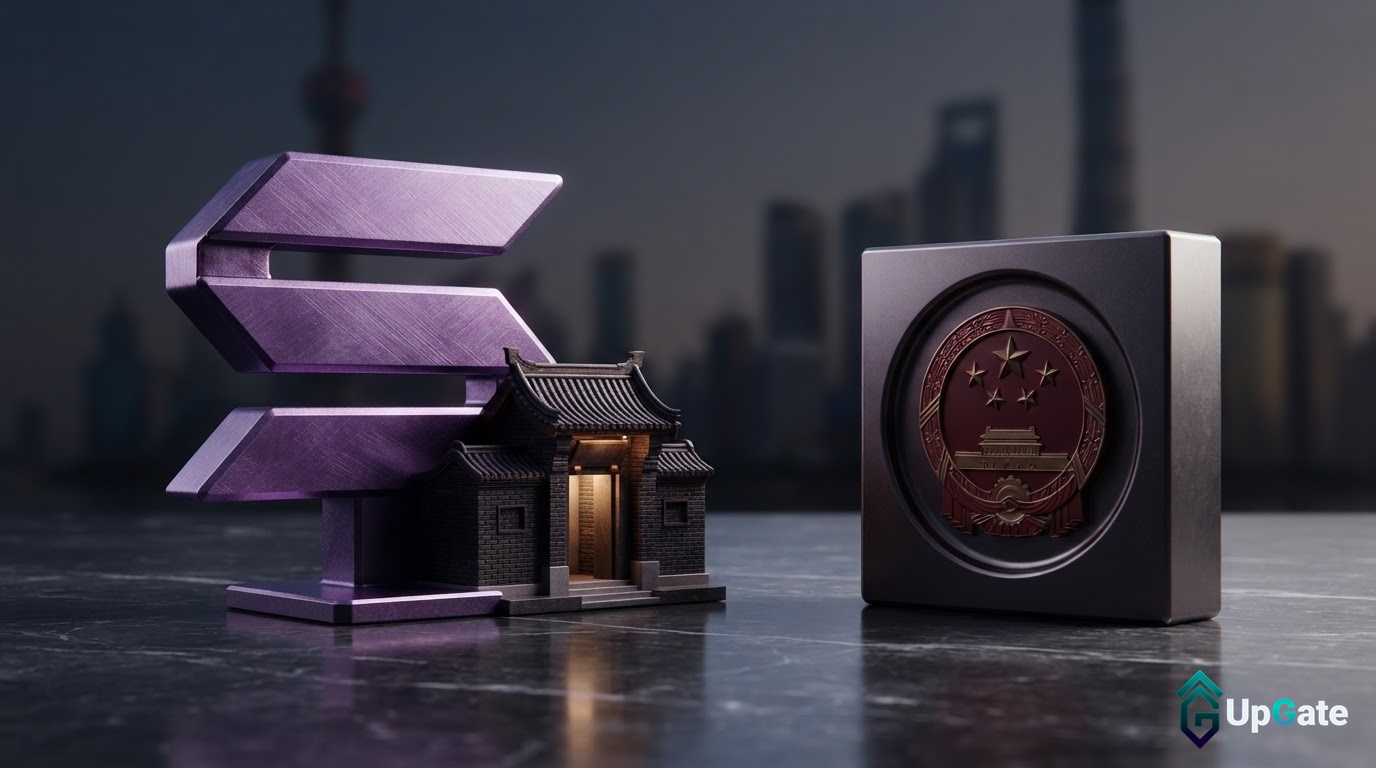
    Solana has established a physical presence in Shanghai with the opening of its first “Builder Station,” a strategic initiative aimed at fostering developer collaboration on Layer 1 infrastructure and applications. The initiative, which commenced on March 20, 2026, at the Hongqiao Alibaba Center, operates within China’s stringent regulatory environment for virtual currencies.

    The “Builder Station” is positioned as a hub for developers rather than traders, deliberately avoiding direct promotion of digital assets. This approach aligns with China’s restrictive rules on virtual currencies, focusing instead on technology infrastructure, AI development, and robotics. Solana’s Chief Product Officer Vibhu drew attention to the Shanghai location on October 14, 2026, with Solana Foundation President Lily Liu backing up his statement. A subsequent “Solana Accelerate China” tour is scheduled from October 16-22, 2026, with planned stops in Shanghai, Hangzhou, Shenzhen, and Beijing.

    The establishment of the “Builder Station” has support from the local government of Shanghai’s Minhang District. This backing suggests that local officials may see value in hosting developer activity tied to technology, even as virtual currency regulations remain strict. By focusing on infrastructure, AI, and robotics, Solana aims to engage engineers and companies in sectors that already garner significant attention in China, potentially making its blockchain proposition more accessible.

    In contrast to Solana’s reported physical presence, no comparable recent initiatives from BNB Chain in China have been documented. The strategic decision to avoid token promotion means that any benefits derived from this initiative are more likely to manifest in developer activity and partnerships rather than direct retail demand from mainland users.

    Uncertainties remain regarding the long-term success and impact of Solana’s developer-first strategy in China, the specific nature of collaborations on Layer 1 infrastructure and applications, and the verifiability of claims about the office space. The effectiveness of this approach will likely become clearer following the “Solana Accelerate China” tour and subsequent developer engagement.

    Why This Matters

    The materials describe a narrow update: Solana opened its first “Builder Station” in Shanghai on March 20, 2026, at the Hongqiao Alibaba Center, with support from the local Minhang District government. The long-term success and impact of Solana’s developer-first approach in China.

    Broader Context

    Source materials place the factual news in this context: Solana now has a physical address in Shanghai.

  • Samsung Wallet to Support USDC Transfers on Solana for Eligible US Users

    Samsung Wallet to Support USDC Transfers on Solana for Eligible US Users

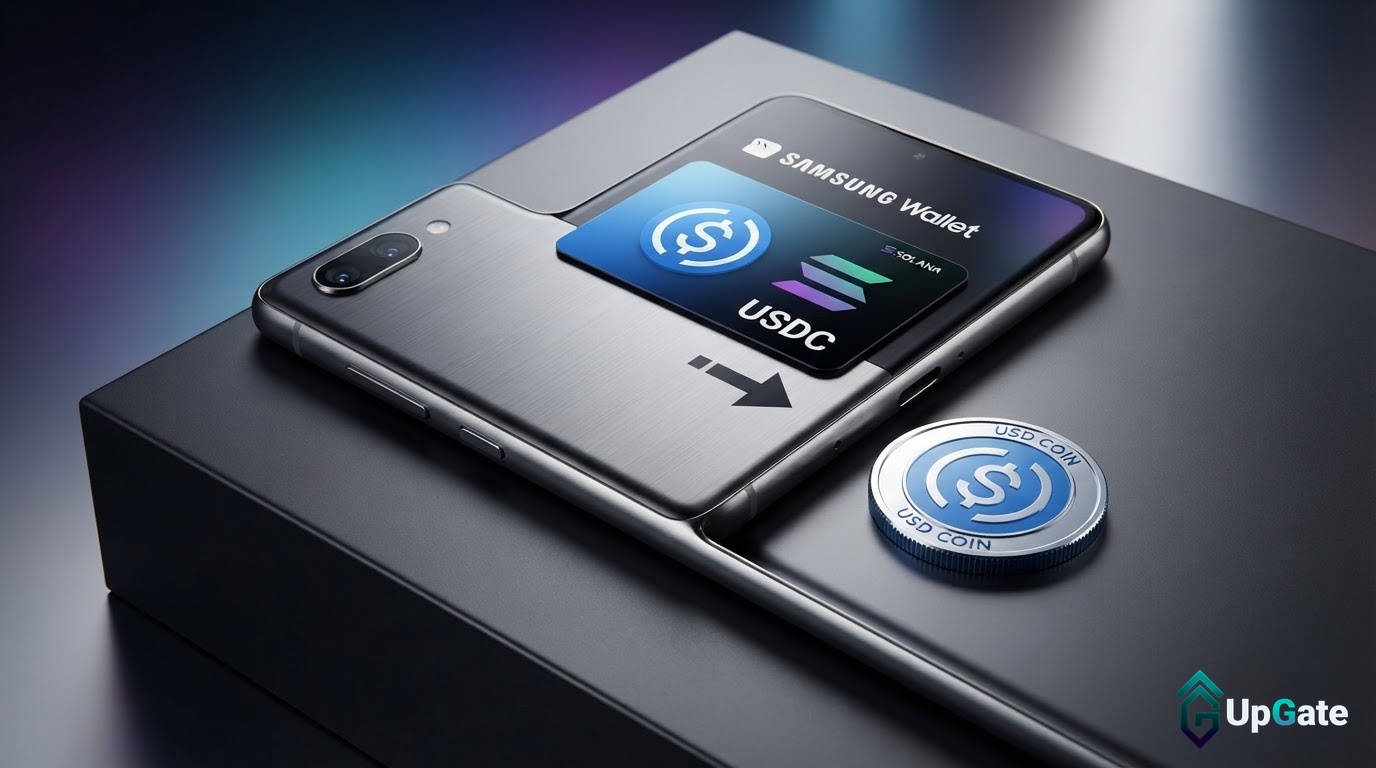
    Samsung Wallet and Pay applications are set to support USD Coin (USDC) stablecoin transfers on the Solana blockchain for eligible users in the United States. The feature is scheduled for rollout in the last week of October 2026, as announced on October 7, 2026.

    This integration will allow eligible users to send USDC to external wallets, convert it to their local currency, and deposit it into bank accounts in over 60 countries. The service will be available on 82 million compatible Galaxy devices. To be eligible, users must be 18 years or older, pass identity verification, and use biometric authentication for transactions. A compatible device running Android 13 or later is also required.

    Samsung states it may not charge a fee for sending USDC to external wallets. However, network fees or fees on the recipient’s side may still apply. The company is integrating this capability directly into its existing Wallet and Pay apps, aiming to leverage its user base without requiring new app downloads or account creations.

    Solana provides the blockchain infrastructure for these transfers. Bastion supplies a licensed stablecoin framework for the payment service, and Coinbase acts as the sub-custodian for the USDC. Sui is also listed as a supporting blockchain partner.

    The integration occurs as Solana’s stablecoin ecosystem shows growth. Stablecoin supply on the Solana network increased by nearly 20% year over year. In 2026, Solana processed more than $5.25 trillion in stablecoin transaction volume, and its stablecoin supply reached a record $17.51 billion in September 2026.

    Samsung had previously teased upcoming stablecoin features in July 2026. The October announcement clarified the use of USDC on Solana.

    Cross-border transfers are a potential use case, with the ability to cash out into local bank accounts in numerous countries. Some commentary suggests this integration could positively influence the market for Solana.

    However, the service has limitations. Expansion beyond the United States is dependent on local regulations. Not all 82 million device owners will meet eligibility criteria due to factors such as age and operating system version. Users should also be aware that network or recipient-side fees may still be incurred.

    Why This Matters

    The materials describe a narrow update: Samsung Electronics has integrated USDC stablecoin transfers on the Solana blockchain into its Wallet and Pay apps for eligible US users. Expansion to markets outside the US depends on local regulations.

    Broader Context

    Source materials place the factual news in this context: Samsung is putting a stablecoin in the same app where people keep their boarding passes.

  • Standard Chartered Enables Direct Bitcoin and Ethereum Trading for Wealthy UAE Clients

    Standard Chartered Enables Direct Bitcoin and Ethereum Trading for Wealthy UAE Clients

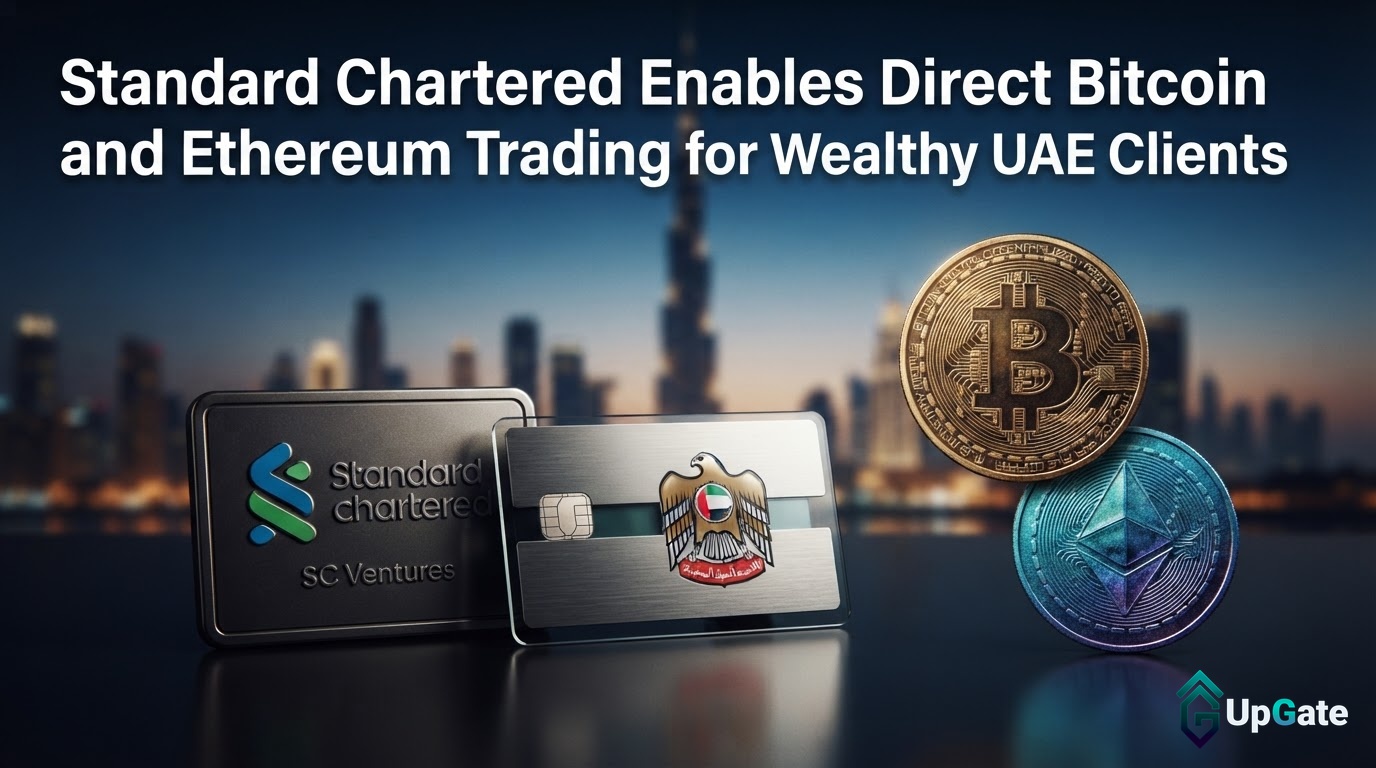
    Standard Chartered announced on Wednesday that it is enabling direct trading of Bitcoin and Ethereum for its affluent clients in the United Arab Emirates. This new service allows eligible clients to buy and sell the cryptocurrencies directly from their bank accounts, eliminating the need for separate digital wallets or third-party trading platforms.

    Broader Context

    Source materials place the factual news in this context: Standard Chartered is a British lender.

    Service Integration and Security

    The service is available to clients classified as Professional Investors and operates under licensing approval from Dubai’s Virtual Assets Regulatory Authority (VARA). Standard Chartered will handle the custody and settlement of these digital assets through a closed-loop model. The bank states this approach reduces clients’ exposure to third-party wallet risks.

    Samir Subberwal, the bank’s global head of wealth solutions, retail products, data and analytics, highlighted the significance of this integration, stating, “This launch represents a significant milestone for Standard Chartered as we bring digital assets into our core wealth offering.” He added, “Clients now want more than access, and are looking for the security that comes with buying through a regulated institution.”

    Expanding Crypto Offerings

    This move integrates digital assets into Standard Chartered’s core wealth management offering. Previously, the bank provided indirect exposure to cryptocurrencies through instruments like ETFs, structured products, and over-the-counter derivatives. Standard Chartered also brought its institutional crypto desk to the UAE last month through its unit in the Dubai International Financial Centre, which is overseen by the Dubai Financial Services Authority.

    Standard Chartered’s crypto custody service went live in the UAE in September 2024. The bank also operates a crypto custody service in the EU via a Luxembourg entity, which became operational a few months after the UAE launch.

    Context and Background

    Standard Chartered is a global systemically important bank, and the UAE is identified as one of its four global wealth hubs. The bank’s venture arm, SC Ventures, backs Zodia Markets, a digital asset infrastructure provider.

    While the bank has historically been involved in the digital asset space, including through analyst commentary, this direct trading service for wealth clients in the UAE is described as a global first for Standard Chartered and the first crypto trading offering from an international bank in the UAE. The bank has not provided specific details on the exact date of the announcement on Wednesday, nor the precise timeframe for the EU custody service launch or the UAE institutional desk launch.