Tag: Adoption & Partnerships

  • South Korean Bank Explores Bitcoin as Collateral

    South Korean Bank Explores Bitcoin as Collateral

    Bitcoin is currently trading at $83,500, having recovered from a dip into the $80,300–$80,400 range. While this rebound has stabilized the market, it has not fully offset a roughly 3% decline over the past week. The question remains whether a new application for Bitcoin by a bank could alter this near-term outlook.

    South Korean Bank Introduces Bitcoin-Backed Loans

    Jeonbuk Bank, a subsidiary of JB Financial Group, has launched a new service offering won-denominated loans to corporate clients, using Bitcoin as collateral. The initial phase of this program is limited to Bitcoin, with a specialized custodian managing the collateral. The bank will issue loans in South Korean won and retains the right to pursue recovery through court-supervised legal processes.

    This development marks a significant institutional move, with Jeonbuk Bank becoming the first in South Korea to offer such a service. The bank has indicated that the expansion of this offering will depend on client demand and evolving regulatory frameworks.

    Loan terms, including loan-to-value ratios and interest rates, have not yet been disclosed, making it difficult to gauge the potential scale of demand. Local reports on the launch have provided the primary details of the initiative.

    Market Analysis and Outlook

    The introduction of Bitcoin-backed loans is being viewed as a meaningful signal of institutional adoption. However, with Bitcoin’s price still trading below a key swing zone and facing potential macro economic shifts, the immediate focus is on whether current support levels can hold.

    Bitcoin has managed to reclaim the $80,000 mark, but the broader market structure suggests a volatile rebound within a larger pullback. The immediate support zone is identified as $79,600–$80,400. Holding this level would support the ongoing recovery narrative. A sustained move above the $83,000–$83,500 swing area would further improve the short-term technical outlook.

    Currently, Bitcoin is trading below the $84,000 resistance range. For this level to be significant, it needs to act as support rather than just a temporary breach. Daily momentum indicators have weakened, and the weekly loss of approximately 3% continues to exert downward pressure.

    Upcoming United States Consumer Price Index (CPI) data could influence interest rate expectations and overall risk appetite, with direct implications for leveraged positions in the cryptocurrency market. In a broader context, the demand and outflows from Bitcoin Exchange-Traded Funds (ETFs) will provide insights into whether institutional participation is bolstering or hindering the current recovery.

    At present, the technical chart presents a conditional setup rather than a confirmed breakout. Investors are advised to monitor key price levels and avoid interpreting the bank’s announcement as an immediate price floor.

    While Jeonbuk Bank’s initiative supports the argument that Bitcoin is finding increasing utility within traditional finance, access through collateralized lending does not automatically translate to immediate spot market demand. Furthermore, a decline in Bitcoin’s price back towards support levels could introduce liquidation risks, adding another layer to the institutional narrative. This inherent tension is a notable factor in the current market.

    Bitcoin Hyper Layer 2 Solution

    For traders looking beyond the immediate price action of Bitcoin, the Bitcoin Layer 2 solution, Bitcoin Hyper ($HYPER), is gaining attention. This project integrates the Solana Virtual Machine (SVM), positioning itself as the first Bitcoin Layer 2 to offer fast and scalable smart contract capabilities while maintaining Bitcoin’s core security and trust principles.

    Bitcoin Hyper’s stated features include low-latency transaction processing and a decentralized canonical bridge for Bitcoin transfers. The token is currently priced at $0.0136875, and its presale has raised nearly $33.2 million. A high Annual Percentage Yield (APY) of 30% is available through staking, exclusively for participants in the funding stage. Investors are encouraged to research Bitcoin Hyper and its technical aspects before the presale concludes.

  • Jeonbuk Bank Offers First Bitcoin-Backed Corporate Loans

    Jeonbuk Bank Offers First Bitcoin-Backed Corporate Loans

    Jeonbuk Bank Pioneers Bitcoin-Backed Corporate Loans in South Korea

    Seoul, South Korea – October 12, 2026 – Jeonbuk Bank has launched South Korea’s inaugural loan program that allows businesses to secure Korean won financing by using Bitcoin as collateral. The initiative, unveiled today, initially targets corporate clients requiring capital for operational expenses, with potential future expansion contingent on regulatory developments and market demand.

    The program, announced on October 12, 2026, represents a significant stride towards CEO Park Choon-won’s ambition to cultivate a “crypto bank.” Currently, only registered corporate customers are eligible to apply, and the facility exclusively accepts Bitcoin as collateral. Borrowers can utilize the secured funds for various business expenditures, including payroll, supplier payments, and other operational costs. Individual customers are not permitted to participate in this program.

    The bank has opted for Bitcoin due to its substantial market capitalization and trading volume within the cryptocurrency landscape. Jeonbuk Bank also conducted successful tests to assess Bitcoin’s performance as collateral during periods of significant price volatility.

    Jeong Sang-hoon, Vice President of Jeonbuk Bank’s Digital Division, stated, “We will continue to enhance our digital asset financial capabilities in line with future changes in relevant laws and regulations.”

    Jeonbuk Bank will not directly hold or manage the pledged Bitcoin. Instead, the cryptocurrency will be entrusted to approved custody providers that adhere to South Korea’s stringent security and regulatory mandates. These providers must possess Information Security Management System (ISMS) certification and comply with the Virtual Asset User Protection Act.

    To mitigate the impact of sharp price fluctuations on individual trading platforms, the bank will determine the collateral value of Bitcoin by calculating a weighted average price derived from multiple global exchanges.

    The program also incorporates specific protocols for managing loan defaults. In instances where a business fails to repay its loan, Jeonbuk Bank cannot unilaterally seize and liquidate the Bitcoin collateral. Under South Korea’s revised Civil Execution Rules, which became effective on October 1, 2026, the bank is required to obtain a court order to proceed with the sale of the collateral through a public auction to recover the outstanding debt. This procedural step introduces an additional layer of oversight to the lending arrangement.

    South Korea is not the sole nation exploring the potential of Bitcoin-backed loans. Global financial institutions such as JPMorgan Chase and Swiss bank Sygnum have also introduced comparable lending services, signaling a growing trend in the utilization of digital assets as collateral.

  • Jeonbuk Bank Offers South Korea’s First Bitcoin-Backed Corporate Loans

    Jeonbuk Bank Offers South Korea’s First Bitcoin-Backed Corporate Loans

    South Korean Lender Introduces Bitcoin-Backed Loans for Businesses

    Jeonbuk Bank has launched an innovative financial product, marking a first for South Korean banking: corporate clients can now secure Korean won loans using Bitcoin as collateral. The service, which commenced on October 12, 2026, is being hailed as the nation’s inaugural won-denominated loan backed by Bitcoin.

    Expanding Horizons for Digital Asset Finance

    A subsidiary of JB Financial Group, Jeonbuk Bank stated its intention to broaden the offering based on market appetite and evolving regulatory landscapes. Currently, the service is exclusively available to businesses.

    Crucially, Jeonbuk Bank does not take direct custody of the Bitcoin pledged as collateral. Instead, it partners with accredited virtual asset service providers that adhere to South Korea’s stringent custody standards. These custodians must comply with local regulations, including ISMS certification and the Virtual Asset User Protection Act. ISMS, South Korea’s information security management certification, serves as a government-backed assurance of a firm’s data and system security.

    The bank’s role is focused on the valuation of the collateral and the lending process itself, without taking ownership or management of the Bitcoin held in custody.

    Loan Details and Collateral Requirements

    The loans are specifically designated for corporate clients and are intended to fund business operations, covering expenses such as payroll, supplier payments, and general operating costs.

    Only Bitcoin is accepted as collateral, a decision attributed by the bank to its superior liquidity and higher trading volumes compared to other digital assets.

    Valuation and Default Procedures

    Jeonbuk Bank employs a multi-faceted valuation process for the collateral. It determines the price by referencing weighted average prices from multiple global exchanges, rather than relying on a single trading venue. This model also incorporates volatility medians and stress testing.

    In the event of a default, recovery procedures will be managed through court-ordered auctions, in line with revised Civil Execution Rules that became effective on October 1, 2026. This means the Bitcoin does not automatically transfer to the bank upon a borrower’s missed payments.

    The timing of this regulatory change is noteworthy, preceding the product launch by less than two weeks and providing the bank with a legal framework for recovering value from seized digital assets.

    A Vision for a “Crypto Bank”

    The president of Jeonbuk Bank has publicly expressed an ambition for the institution to evolve into a “crypto bank.” The newly launched product is being positioned as analogous to offerings from global financial institutions like JPMorgan Chase.

    By entrusting custody to licensed third parties and utilizing the court system for default resolutions, Jeonbuk Bank maintains a clear distinction between its lending activities and direct cryptocurrency holdings.

    This development is expected to have an immediate impact on South Korean companies that already possess Bitcoin, as it provides an alternative to selling their holdings to access cash.

    Jeonbuk Bank has indicated that it may consider expanding the product to a broader client base and potentially accepting other digital assets in the future, contingent on market demand and the prevailing regulatory environment.

  • Bitcoin Insurer Meanwhile Secures New Funding

    Bitcoin Insurer Meanwhile Secures New Funding

    Meanwhile Secures $37.5 Million in Funding Amidst Growing Demand for Bitcoin Life Insurance

    Bermuda-based life insurer Meanwhile, which operates exclusively with Bitcoin, has announced a new funding round totaling $37.5 million, primarily from its existing investors. The company, backed by notable figures including OpenAI CEO Sam Altman, has now amassed over $180 million in total funding.

    The latest investment was spearheaded by Bain Capital Crypto, with participation from Haun Ventures, Framework Ventures, Pantera Capital, Apollo, Northwestern Mutual Future Ventures, and Morgan Creek Digital.

    Surge in Demand Fuels Expansion

    The funding comes as Meanwhile experiences a significant uptick in international demand for its Bitcoin-denominated life insurance policies. The company cited increased interest from clients in Asia, Europe, and the Middle East, attributing this growth to prevailing global macroeconomic instability.

    “Wealthy families around the world already hold Bitcoin. What they haven’t had is a regulated way to pass it on,” stated Zac Townsend, Meanwhile’s co-founder and CEO. “Brokers came to us because their clients kept asking. This round lets us keep up with them.”

    Innovative Insurance Products for Digital Assets

    Meanwhile launched its first product, BTC 10-Pay, designed for U.S. taxpayers, followed by BTC Life 1-Pay in early 2026. The latter is a single-premium whole life policy specifically tailored for high-net-worth individuals outside the United States. These policies are structured to be held by individuals, trusts, or companies, making them suitable for succession and estate planning purposes.

    The company reported that its net long-term underwriting income has already surpassed its total for the previous year and is projected to more than double in 2026, though specific figures were not disclosed.

    In related news, global insurance broker WTW acquired crypto insurance platform Redefind in June, launching a digital asset protection service. Redefind offers coverage for digital assets held in various custody arrangements, utilizing cryptographic proof of ownership to verify insured assets.

  • Coinbase and Gennius Partner to Integrate Stablecoin Services into Latin American Banks

    Coinbase and Gennius Partner to Integrate Stablecoin Services into Latin American Banks

    Coinbase and fintech firm Gennius have announced a strategic partnership to offer the ONED USD stablecoin and a suite of digital asset services to banks across Latin America, beginning with Argentina. The collaboration, reported on October 8, 2026, aims to enable financial institutions to seamlessly integrate stablecoin payments, custody, trading, and loyalty rewards into their existing platforms without significant technological overhauls.

    Under the agreement, bank customers will have the ability to convert deposits and loyalty points into the dollar-pegged ONED USD token. This token facilitates instant transfers and can be used for spending via Visa cards. Each ONED USD token is issued on a 1:1 basis against USDC, held in Coinbase’s regulated custody.

    Why This Matters

    The materials describe a narrow update: Coinbase and Gennius have announced a partnership to provide banks in Latin America, beginning with Argentina, with access to the ONED USD stablecoin and a suite of digital asset services. Coinbase is embedding itself inside traditional banking infrastructure rather than relying solely on exchange activity.

    Broader Context

    Source materials place the factual news in this context: Coinbase has run into previous challenges in Argentina tied to local currency services.

    Operational Roles and Infrastructure

    Gennius will function as the program manager, overseeing the integration between participating banks’ systems and Coinbase’s infrastructure. The company brings extensive experience, having worked with over 85 financial institutions and managing more than 520 loyalty programs globally. Gennius also maintains existing relationships with payment networks Visa and Mastercard. Coinbase’s contribution includes providing regulated custody, issuance infrastructure, and the underlying USDC reserves.

    Strategic Market Entry

    This initiative marks a significant strategic shift for Coinbase, focusing on embedding its services directly within traditional banking infrastructure rather than solely relying on its exchange activities. This approach allows banks to offer digital dollar services, thereby retaining customer deposits and engagement within their own ecosystems. This is particularly pertinent in markets where consumers may already be seeking digital dollar alternatives outside of conventional banking channels.

    Argentina has been chosen as the initial market for this rollout. This selection may be influenced by Coinbase’s prior experiences with local currency services in the country. The partnership is designed to provide a streamlined solution for banks, enabling them to adopt new digital asset capabilities with minimal disruption to their core systems. The value proposition for banks is twofold: defensively, it helps retain customers, and offensively, it introduces new digital service offerings.

    The collaboration leverages the distinct strengths of both companies: Coinbase offers the regulated digital asset infrastructure and stablecoin backing, while Gennius contributes its established network of bank relationships and loyalty program data. This synergy is intended to drive the adoption of stablecoins and digital asset services within the Latin American banking sector.

  • Securitize Launches Tokenized U.S. Stocks on Solana, Offering Dividends and Voting Rights

    Securitize Launches Tokenized U.S. Stocks on Solana, Offering Dividends and Voting Rights

    Securitize has launched tokenized versions of U.S. stocks on the Solana blockchain, providing eligible investors with access to equities through regulated onchain infrastructure. The offering, named Securitize Stocks, includes tokenized representations of major companies such as Apple, Nvidia, Tesla, and Microsoft.

    These tokens are backed 1:1 by the underlying stocks they represent. This initiative aims to bridge traditional financial assets with decentralized infrastructure, potentially enhancing investor accessibility. Securitize Adds that the tokenized stocks are expected to incorporate features traditionally associated with stock ownership, including dividends and voting rights.

    The launch on the Solana blockchain positions Securitize to leverage the network’s infrastructure for its tokenized offerings. The company’s move into tokenizing established U.S. equities signifies a development in the integration of traditional finance and blockchain technology. The offering is described as utilizing regulated onchain infrastructure, aiming to provide a compliant pathway for investors to engage with tokenized securities.

    This development could signal an increased availability of traditional financial instruments within the digital asset ecosystem. The introduction of features like dividends and voting rights on tokenized stocks may also enhance their appeal to a broader range of investors. The focus remains on providing regulated access to equities via this new onchain mechanism.

    Why This Matters

    The materials describe a narrow update: Securitize has launched a product called Securitize Stocks, which offers tokenized versions of U. Tokenization of major U.S. stocks on Solana could increase accessibility for eligible investors.

    Broader Context

    Source materials place the factual news in this context: Securitize is taking some of Wall Street’s most recognizable names onchain.

  • Securitize Stock Surges 10% on Tokenized US Equities Launch

    Securitize Stock Surges 10% on Tokenized US Equities Launch

    Securitize Launches Tokenized US Stocks with Dividend and Voting Rights

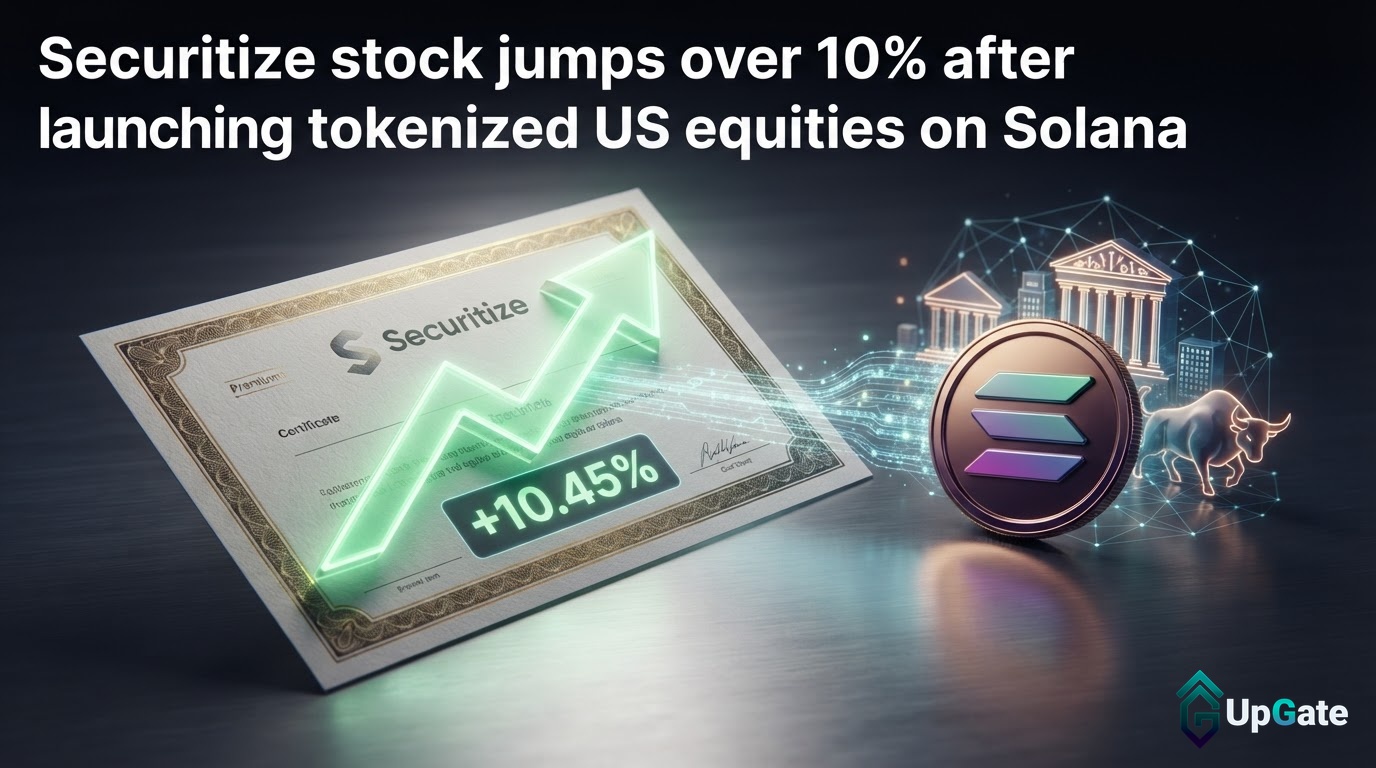
    Securitize has unveiled a new offering that grants eligible investors access to tokenized shares of 12 major U.S. companies, complete with dividend and voting rights. The company’s stock saw a roughly 10% surge on Thursday following the launch of these tokenized equities on the Solana blockchain.

    Securitize Stocks Initiative

    The new product, branded as Securitize Stocks, provides exposure to equities backed by underlying shares. The initial offering includes tokenized versions of prominent companies such as Apple, Nvidia, Microsoft, and Tesla, alongside eight other U.S.-listed firms. According to a statement released on Thursday, these tokens are backed on a one-to-one basis by actual shares and will initially be available for trading during extended market hours via Securitize’s registered broker-dealer platform.

    Securitize stated that the tokens represent security entitlements under Article 8 of the Uniform Commercial Code, ensuring that applicable shareholder benefits, including dividends and voting rights, are preserved. The company also indicated plans to make these assets available on tokenized securities platforms currently under development by the New York Stock Exchange and OKXICE, though specific launch dates for these integrations have not yet been set.

    Trading and Future Plans

    The tokens will settle in USDC on the Solana network, with Jump Trading committed to providing liquidity through its market-making services. Trading is set to commence during extended market hours, with aspirations to expand to 24/7 trading on an unspecified timeline.

    Beyond trading, Securitize is exploring broader applications for these tokenized equities. Ripple Prime intends to support the launch and investigate the integration of these assets into its institutional trading services. Additionally, the decentralized lending platform Aave has been identified as a potential venue for utilizing these tokenized stocks as collateral.

    Ripple Prime did not immediately respond to a request for further details.

    Recent Company Momentum

    Thursday’s announcement marks the second significant intraday rally for Securitize shares this week. On Tuesday, the stock climbed nearly 8% after the company announced a partnership with South Korean technology firm LG CNS to explore tokenized funds, equities, and stablecoins for financial institutions.

    This South Korean collaboration also encompasses infrastructure aimed at connecting local financial institutions with global capital markets. It follows a September memorandum of understanding with Dubai’s Virtual Assets Regulatory Authority to support regulated tokenization initiatives in the emirate.

    According to data from Yahoo Finance, Securitize shares have appreciated by approximately 54% over the past month.

    The company’s expansion aligns with a broader trend of growth in tokenized real-world assets. Data from RWA.xyz indicates that the value of distributed assets, excluding stablecoins, reached $38.88 billion as of Thursday, a notable increase from $25.36 billion a year prior.

  • EDX Markets and VerifiedX Launch Tokenized Bitcoin for Institutional Trading and Network Validation

    EDX Markets and VerifiedX Launch Tokenized Bitcoin for Institutional Trading and Network Validation

    EDX Markets has partnered with VerifiedX to introduce tokenized Bitcoin (vBTC) for institutional spot trading, with EDX Markets also set to act as a validator on the VerifiedX network. This collaboration aims to enhance institutional strategies by offering a new form of Bitcoin infrastructure.

    According to VerifiedX, each vBTC is backed one-to-one by actual Bitcoin, which remains in self-custodial addresses. The company describes the asset as non-synthetic and programmable, offering instant finality and on-chain verifiability. VerifiedX states this approach allows for native redemption without relying on synthetic wrappers, addressing a perceived need for more complete Bitcoin infrastructure beyond its current utility.

    EDX Markets, an institutional crypto exchange founded in 2022 and backed by Citadel Securities, Virtu Financial, and Fidelity Digital Assets, will offer institutional spot trading of vBTC. The exchange is designed to keep clients from holding assets directly, providing centralized clearing and non-custodial settlement. The partnership provides VerifiedX with a distribution partner, complementing its existing custody arrangements with BitGo.

    Dual Role in Trading and Validation

    In addition to its trading role, EDX Markets may participate as a validator on the VerifiedX network. This involves confirming transactions and engaging in governance. This dual capacity—acting as both a trading venue and a network governor—is a less common aspect of such partnerships and may set a precedent for future crypto infrastructure development. Observers will monitor how EDX balances these roles.

    VerifiedX recently secured $15 million in financing in September 2026, underscoring its growth and backing. The partnership is intended to support a range of institutional strategies, including Bitcoin price discovery, liquidity provision, treasury management, lending, and payments. The pitch to institutional investors emphasizes optionality, enabling various financial operations without requiring them to abandon the underlying asset.

    While the partnership offers potential benefits for institutional adoption and the development of tokenized Bitcoin, uncertainties remain. How EDX Markets may manage its dual roles as a lister and network governor, and the long-term impact of its validator function on other trading platforms, are points that may be closely watched. The broader implications for institutional markets and the development of crypto infrastructure are still unfolding.

    Broader Context

    Source materials place the factual news in this context: EDX Markets is an institutional crypto exchange backed by Citadel Securities, Virtu Financial and Fidelity Digital Assets.

  • Securitize Launches Tokenized Stocks on Solana for Eligible Investors

    Securitize Launches Tokenized Stocks on Solana for Eligible Investors

    Securitize has launched Securitize Stocks, a platform offering tokenized shares of major US companies like Apple, Nvidia, and Tesla on the Solana blockchain. The platform, which went live on October 8, 2026, enables eligible investors in the US and EU to trade these tokens, each backed 1:1 by the underlying equities.

    These Convertible Entitlement Tokens (CETs) are traded on Securitize’s PropAMM, which operates on Solana, and settle in USDC. According to Securitize, token holders will receive the economic benefits of stock ownership, including dividends and voting rights. Access is restricted to investors who meet eligibility criteria and pass Know Your Customer (KYC) and Anti-Money Laundering (AML) checks.

    At launch, the platform features 12 equities. Jump Trading is providing liquidity, while RQD is managing clearing, custody, and settlement. This initiative follows Securitize’s own listing on the New York Stock Exchange (NYSE) in July 2026 under the ticker SECZ, and the company’s prior tokenization of $295 million of its own common stock across Solana and Avalanche.

    Securitize has framed this launch as a step toward a potential future environment for 24/7 trading, though trading hours are extended at launch rather than being round-the-clock. The company is also reportedly considering the NYSE’s planned 24/7 digital trading platform as a potential future venue for these tokens.

    However, the exact timeline for a fully 24/7 trading environment remains uncertain, as do the broader regulatory implications for tokenized securities. The launch of Securitize Stocks signifies an expansion of Securitize’s tokenization services, bridging traditional equity markets with blockchain technology for a select group of investors.

    Broader Context

    Source materials place the factual news in this context: Securitize Stocks went live on October 8, 2026.

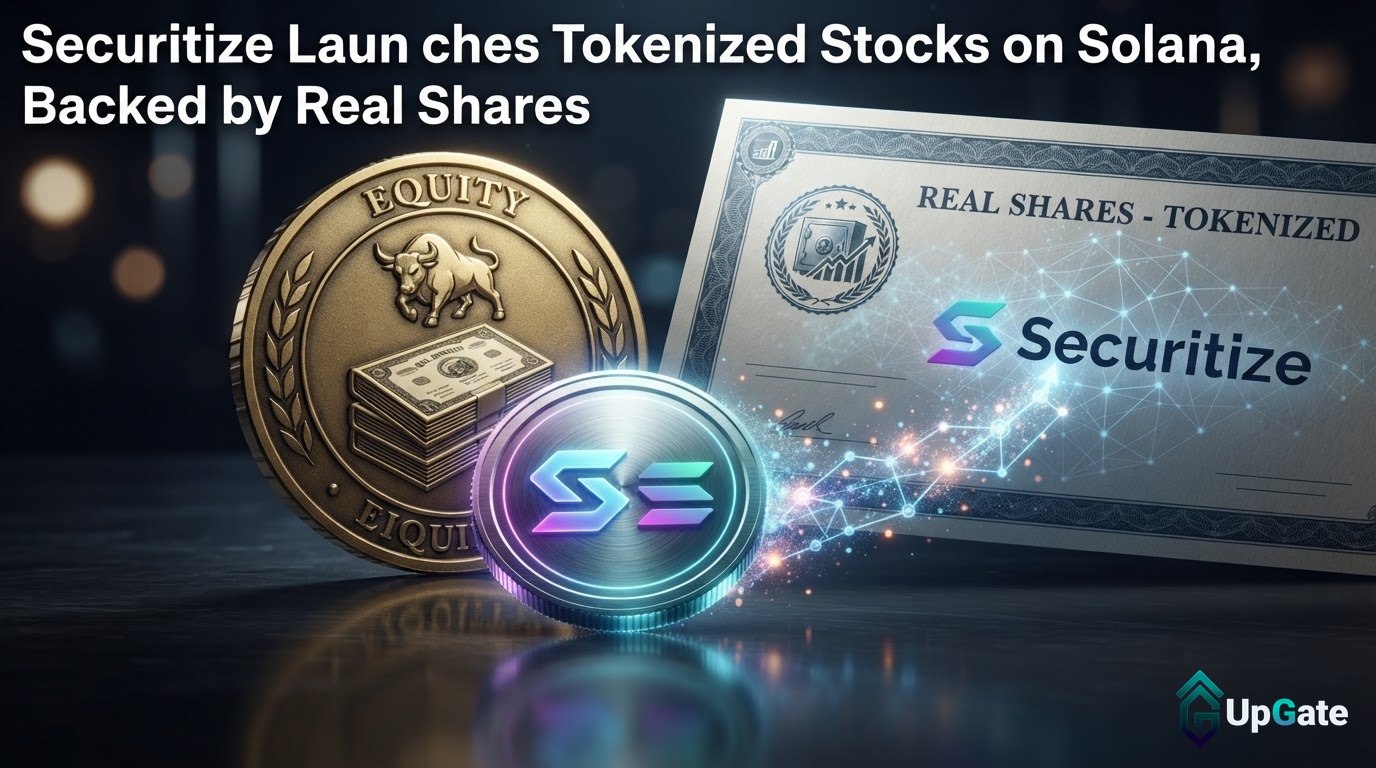
  • Securitize Launches Tokenized Stocks on Solana, Backed by Real Shares

    Securitize Launches Tokenized Stocks on Solana, Backed by Real Shares

    Securitize has launched Securitize Stocks, a new product offering tokenized equities backed one-to-one by real shares, the company announced Wednesday. These tokens represent security entitlements under the Uniform Commercial Code, preserving investor rights such as dividends and voting.

    The tokens will initially trade on Securitize’s registered broker-dealer platform on the Solana network, settling in the USDC stablecoin. The offering is available to eligible investors in the U.S., the European Union, and other permitted jurisdictions. Securitize said the shares backing the tokens will not be lent out, and holders may convert their entitlements into actual registered shares if the issuer supports it.

    Initially, the Securitize Stocks product includes 12 widely held stocks, featuring companies like Apple, Microsoft, Nvidia, Google, Tesla, Meta, Amazon, Netflix, Circle, Strategy, and Palantir. Carlos Domingo, Securitize’s chairman and CEO, stated the aim is to bring equities onchain “without leaving behind the ownership, investor protections and market infrastructure that make U.S. capital markets work.”

    Trading will be facilitated by Securitize’s Solana-based automated market maker, with Jump Trading serving as a market maker. The company has plans for 24/7 trading.

    This launch occurs amid a growing trend of tokenizing traditional securities on blockchain networks. Securitize’s own shares have been trading on Solana since its NYSE listing in July. The U.S. Securities and Exchange Commission’s (SEC) “innovation exemption” has reportedly opened a compliant path for tokenized stocks, leading to increased activity in the space from competitors such as Coinbase, the NYSE, and an OKX-ICE venture.

    Partnerships with Ripple Prime and Aave have also been named. The integration of tokenized stocks into decentralized finance (DeFi) ecosystems is seen as expanding their utility beyond simple trading, potentially allowing them to be used across onchain lending and collateral markets.

    Uncertainties remain regarding the exact launch dates for the NYSE’s planned 24/7 venue and the OKX-ICE tokenized-securities venue. Additionally, it is not yet reported whether all issuers will support the conversion of entitlements into actual registered shares.

    Why This Matters

    Securitize’s launch of tokenized stocks on Solana, backed by real shares and preserving investor rights, signifies a notable development in the ongoing trend of traditional asset tokenization. This move is driven by increasing institutional interest and regulatory clarity, as evidenced by the SEC’s “innovation exemption” which has reportedly paved the way for such offerings. The integration into DeFi ecosystems further expands the utility of these assets, positioning them for broader use in onchain markets.

    Broader Context

    Source materials place the factual news in this context: The launch lands in a fast-accelerating race to put stocks on blockchain networks.