Tag: Adoption & Partnerships

  • Crypto Card Spending Surges to Record $12.5 Billion as Jupiter Targets Stablecoin Users

    Crypto Card Spending Surges to Record $12.5 Billion as Jupiter Targets Stablecoin Users

    Crypto Card Payments Surge to Record $12.5 Billion, Driven by Stablecoins and QR Codes

    Cryptocurrency card payments have reached an unprecedented $12.5 billion, marking a substantial 140% increase since the beginning of the year. This surge is primarily attributed to the growing adoption of stablecoins and QR code payment methods.

    Jupiter Global’s card product, Jupiter Spend, is among the companies participating in this market shift. However, the headline volume figure reflects the broader industry trend, with Jupiter’s own market share being considerably smaller. The $12.5 billion total encompasses crypto card payment volume across the entire sector, and available data does not support attributing this cumulative sum solely to Jupiter Spend.

    Stablecoin Spending Hits New Highs

    In July 2026, industry-wide stablecoin card spending surpassed $1 billion in a single month for the first time. The precise figure for July reached $1.03 billion, distributed across more than 10 million transactions.

    Jupiter’s individual performance is more modest. The company reported a card settlement volume of $7.6 million in September 2026, an 8% increase from the preceding month.

    Jupiter Spend Product Details

    Launched in January 2026, the Jupiter Spend card allows users to deposit USDC or USDT via the Jupiter app on the Solana blockchain. These stablecoins are then converted into a U.S. dollar balance, which can be used for purchases at over 150 million Visa merchants globally.

    Deposits of USDC or USDT made through Solana are fee-free. For non-U.S. dollar transactions, a foreign exchange fee of either 1% or 1.8% applies, depending on the card issuer.

    QR Pay and Cashback Incentives

    A more distinctive feature of the Jupiter Spend card is its QR Pay functionality. This allows for fee-free payments in select markets within the Asia-Pacific region, with daily spending capped at $5,000 and individual transactions limited to $500.

    Jupiter offers a base cashback rate of 2% on card purchases, which can be increased to 4% through referrals. Transaction volumes for Jupiter saw a notable rise once a cashback promotion was introduced, compared to the period prior to its implementation. The July milestone of over $1 billion in industry-wide spending was largely propelled by QR Pay adoption and these cashback incentives.

    Bridging On-Chain and Off-Chain Transactions

    Stablecoins such as USDC and USDT are designed to maintain a one-to-one peg with the U.S. dollar. Products like Jupiter Spend effectively transform these digital assets into a balance akin to a checking account, facilitating the transition of on-chain funds to merchant point-of-sale terminals through Visa’s extensive network. Solana’s low-cost transfer capabilities make fee-free deposits practical, reducing friction in moving funds onto the card.

    Market Position and Future Outlook

    For Jupiter, the product possesses key advantages: access to Visa’s merchant network, the efficiency of Solana’s blockchain, fee-free QR payments in APAC, and a competitive cashback rate of up to 4%. However, its $7.6 million in monthly settlement volume indicates it remains a smaller player in a competitive landscape.

    A significant risk to monitor is the product’s reliance on cashback incentives. Jupiter’s transaction volumes were considerably lower before its cashback promotion began, raising questions about the proportion of organic versus rewards-driven usage.

  • Solana Launches Institutional Settlement Standard with J.P. Morgan Collaboration

    Solana Launches Institutional Settlement Standard with J.P. Morgan Collaboration

    Solana Foundation Targets Institutional Finance with New Settlement Tool

    The Solana Foundation is making a direct bid for institutional finance, launching an open-source program designed to enable banks to settle trades on its network with the same certainty they expect from traditional markets.

    Announced Monday, the tool, named Solana DvP (Delivery-versus-Payment), is an open-source escrow program that provides financial institutions with a standardized API for delivery-versus-payment settlement. This mechanism is fundamental to ensuring that an asset and its corresponding payment are exchanged simultaneously.

    Released under the permissive MIT license, the initiative aims to bring this settlement guarantee to public blockchain infrastructure as a reusable standard, moving away from the bespoke smart contracts that institutional trades have historically relied upon.

    The foundation stated that J.P. Morgan provided input on institutional settlement practices, which informed the design of the tool.

    “Atomic settlement removes counterparty risk that is inherent in traditional finance,” said Catherine Gu, the foundation’s head of product for digital assets. She added that the program offers institutions a single open standard “with finality in seconds instead of days.”

    Rhodel D’souza, J.P. Morgan’s head of markets digital assets, commented that a shared, open standard for atomic delivery-versus-payment is “exactly the kind of foundational infrastructure institutional market participants require.”

    In conventional markets, delivery-versus-payment involves a multi-day process through clearinghouses, depositories, and custodians, which can tie up capital for one to two days. Solana DvP streamlines this into a single atomic transaction, where both legs of the settlement occur together or not at all. The program supports SPL Token and Token-2022, including extensions crucial for regulated issuers such as permanent delegate, pausable tokens, and transfer hooks. It has also undergone external security audits. The foundation indicated plans to incorporate privacy features to ensure settlement confidentiality.

    This launch builds upon Solana’s increasing appeal among institutions focused on tokenized real-world assets.

    In August, BlackRock, the world’s largest asset manager, introduced a tokenized money market fund for stablecoin reserves, recording ownership on Solana alongside Ethereum. This fund was structured to qualify as a reserve asset under the GENIUS Act.

    Meanwhile, Kraken has utilized Solana to offer tokenized U.S. stocks to overseas customers through its xStocks product. Solana has emerged as a prominent platform for tokenized equities, and infrastructure like DvP is intended to solidify this position by providing regulated players with a trusted method for on-chain settlement.

  • Solana Unveils Open-Source DvP for Institutional Settlement

    Solana Unveils Open-Source DvP for Institutional Settlement

    Solana Unveils Open-Source DvP Program to Streamline Institutional Trades

    Solana has launched an official delivery versus payment (DvP) program, an open-source initiative designed for institutions seeking to settle trades on-chain in a single step. The program enables both parties in a transaction to settle atomically on the Solana blockchain, achieving finality in seconds rather than days, according to Decrypt. This represents a significant shift for an industry accustomed to waiting one to two business days for many trades to clear.

    DvP: Ensuring Simultaneous Exchange

    Delivery versus payment, or DvP, addresses the challenge of simultaneous exchange by ensuring that an asset and its payment are transferred at the exact same moment, or neither transaction occurs. Solana’s reference implementation applies this logic directly on-chain, facilitating the atomic exchange of tokenized securities, such as commercial paper, for payments in USDC.

    An atomic transaction is designed to either complete entirely or fail entirely, preventing scenarios where one party receives both the asset and the payment while the other is left with nothing. This structure effectively eliminates counterparty risk from the swap.

    Speed and Efficiency

    Research underpinning the implementation indicates atomic execution can occur in under one second. Solana’s finality is achieved at approximately 400 milliseconds, with transaction fees remaining very low. This stands in stark contrast to traditional settlement processes, which can take one to two days.

    The tokenized securities leverage SPL Token-2022 extensions, Solana’s advanced token standard that integrates additional features directly into the token itself. This approach eliminates the need for issuers to develop custom smart contracts to represent their assets.

    Compliance and Control

    The DvP program also incorporates compliance features, such as whitelisting, which restricts asset ownership and receipt to approved wallets. This ensures that regulated securities remain within a controlled environment.

    A Landmark Transaction

    A significant early demonstration of the program’s capabilities occurred on December 11, 2025, when J.P. Morgan facilitated a $50 million commercial paper issuance for Galaxy Digital Holdings LP on the Solana blockchain. This transaction utilized the DvP functionality for both the issuance and redemption of the commercial paper, a form of short-term corporate debt typically used for operational funding, using USDC. Galaxy Digital Holdings LP acted as the issuer in this deal.

    Solana further bolstered its enterprise offerings with the launch of its Solana Developer Platform on March 24, 2026, providing a suite of APIs for issuing and settling tokenized assets.

    Institutional Adoption

    Several major financial institutions are already exploring or implementing solutions leveraging Solana’s capabilities for asset workflows. Among them are Morgan Stanley, BNY, State Street, and Société Générale, all of whom have participated in pilots or deployed solutions.

    Open-Source Advantage

    By releasing the DvP program as open-source, Solana is lowering the barrier for institutions to review the code, customize it, and implement it without the need for lengthy proprietary license negotiations.

    Potential Market Impact

    An increase in institutions settling tokenized securities against USDC could drive demand for USDC as a settlement asset, given its role as the payment component in these transactions.

    Navigating Risks

    The primary risks associated with this development are operational and regulatory. Institutions will require assurance of the network’s reliability under heavy load, while regulators will seek clarity on how on-chain finality aligns with existing legal definitions of a completed trade.

    Future Outlook

    Key developments to monitor include whether the J.P. Morgan and Galaxy Digital deal serves as a blueprint for future issuances, the extent to which the named institutions transition from pilot programs to full production, and any subsequent growth in USDC settlement volumes related to tokenized securities in the coming months.

  • Securitize CEO Carlos Domingo Advocates for Blockchain-Based Shareholder Records

    Securitize CEO Carlos Domingo Advocates for Blockchain-Based Shareholder Records

    Securitize CEO Carlos Domingo is advocating for the adoption of blockchain technology to serve as the definitive ledger for public company ownership, a move that would fundamentally alter the current system of shareholder record-keeping reliant on multiple intermediaries.

    The Problem with Traditional Systems

    The core proposition, according to Securitize, is to replace the complex, layered infrastructure involving entities like the Depository Trust Company (DTC) with a blockchain-based register. This onchain ledger would provide issuers with direct insight into their capitalization tables and streamline communication with shareholders, dividend payments, and proxy voting processes.

    Currently, the system is described as akin to a “game of telephone,” where layers of intermediaries obscure beneficial ownership, making direct engagement with shareholders administratively challenging for companies. Securitize’s pitch is that a blockchain ledger cuts through this opacity, offering a clearer, real-time view of ownership.

    Securitize’s Blockchain Proposal

    Securitize, which is an SEC-registered transfer agent, proposes that the blockchain itself become the ledger of record, operating within existing legal and regulatory frameworks. Under this model, shareholders would retain their existing rights, with the primary change being the method of record-keeping. This approach is distinct from freely circulating crypto assets, as it incorporates mandatory Know Your Customer (KYC) checks and whitelisting for all participants, ensuring only verified parties can trade.

    Market Actions and Partnerships

    This initiative aligns with a broader trend in asset tokenization that favors issuer-led structures. Securitize has actively demonstrated this model. On July 2, 2026, the company listed on the New York Stock Exchange under the ticker SECZ, tokenizing approximately $295 million of its common stock on the Solana and Avalanche blockchains. This event marked a significant equity tokenization milestone.

    Further illustrating its commitment to this model, Securitize partnered with Computershare in April 2026 to enable US issuers to create Issuer-Sponsored Tokens (ISTs). A key feature of ISTs is that shareholders maintain their full rights, including dividends and voting, with ownership recorded on the onchain ledger. Securitize currently oversees between $4 and $5 billion in tokenized assets.

    Benefits for Issuers and Investors

    For public companies, a transparent, real-time capitalization table could significantly reduce the administrative burden associated with shareholder communications, dividend disbursements, and proxy voting. For investors, the IST model ensures that dividends and voting rights remain intact, with their ownership position visible on a ledger accessible to the issuer.

    Uncertainties and Future Outlook

    However, the widespread adoption of this blockchain-based system faces uncertainties. Key questions remain regarding how many US issuers will utilize the Computershare partnership to launch ISTs and how Securitize’s own tokenized shares will perform in practice, particularly concerning onchain dividends and voting. These factors will be crucial in observing the evolution of blockchain in corporate governance.

    Why This Matters

    The materials describe a narrow update: Securitize, an SEC-registered transfer agent, proposes using blockchain as the definitive ledger for public company ownership, aiming to provide issuers with direct insight into their capitalization tables and simplify investor communication, dividend payments, and proxy voting. How many US issuers will adopt the Computershare partnership to launch ISTs.

    Broader Context

    Source materials place the factual news in this context: Securitize CEO Carlos Domingo is advocating for companies to communicate with investors digitally, replacing paper forms and mailed proxy votes with blockchain-based shareholder records.

  • OKX, ICE to Launch 24/7 Tokenized Stock Trading

    OKX, ICE to Launch 24/7 Tokenized Stock Trading

    OKXICE Plans 24/7 Trading Venue for Tokenized U.S. Stocks

    OKXICE, a joint venture between cryptocurrency exchange OKX and Intercontinental Exchange (ICE), the owner of the New York Stock Exchange, has informed the U.S. Securities and Exchange Commission (SEC) of its intention to launch a round-the-clock trading venue for tokenized U.S. stocks. The announcement was made by co-chair Andrew Cuomo in a tweet on Monday.

    The venture published a notice dated October 4, leveraging the SEC’s “Innovation Exemption.” This exemption, in effect since September 17, permits qualifying venues to trade tokenized stocks without the need for formal exchange registration. According to the notice, OKXICE will operate its venue 24 hours a day, seven days a week.

    The SEC does not individually approve such venues. Instead, firms that meet the exemption’s conditions notify the agency and can commence operations under its purview, provided they adhere to the stipulated requirements.

    Cuomo, a former New York governor, hailed the filing as “a landmark step toward a truly global, 24/7 Wall Street.”

    The notice lists several prominent companies, including Nvidia, Tesla, Apple, Microsoft, and SpaceX, alongside crypto-focused firms such as Coinbase, Circle, Strategy, Robinhood, BitGo, and Securitize. Each tokenized stock will be traded in a pair with one of three stablecoins: USDC, USDG, or Tether’s USDT.

    In June, an OKX spokesperson indicated to Fortune that the venture would concentrate on tokenizing equities listed on the NYSE. However, Nvidia, Tesla, Apple, and Microsoft are all listed on the Nasdaq.

    The filing also reveals that chipmaker Cerebras Systems has lodged a notice of issuer objection with the venture. The exemption allows third parties to tokenize a company’s shares without its direct involvement, but the venue is obligated to notify the issuer and provide a 30-day window for objections. If an objection is raised, the tokens cannot be traded on that venue. Cerebras Systems does not appear on the notice’s list of participating companies.

    Trades will be facilitated through permissioned Uniswap v4 liquidity pools on XLayer, a layer-2 blockchain. A custom smart contract will oversee and verify every transaction. Trading and liquidity provision will be restricted to wallets holding a non-transferable soulbound token, issued after identity verification, anti-money laundering, and sanctions checks conducted by OKX’s U.S. entity.

    The notice cautions that tokenized prices, determined solely by the liquidity pools, may deviate from the prices of the underlying shares, particularly outside of regular exchange trading hours.

    The tokens themselves are sourced from an unaffiliated third party, identified only as “the Tokenizer.” This entity holds the underlying shares on a one-for-one basis through a registered broker-dealer, though its identity is not disclosed in the notice. Holders of these tokens are entitled to the same dividends and voting rights as ordinary shareholders, according to the filing.

    ICE and OKX established their 50-50 joint venture in June, three months after ICE acquired a minority stake in OKX at a valuation of $25 billion. The two entities had previously collaborated to bring crypto-native perpetual futures for oil to market for non-U.S. customers. Cuomo, who also served as New York’s attorney general, has been working with OKX since 2023.

    The SEC issued the exemption on September 17, following months of deliberation after Chair Paul Atkins revised an earlier January target due to pushback from Wall Street groups, and days after the Clarity Act failed to advance in the Senate.

    Atkins stated that the SEC was acting “within its statutory authority,” and officials characterized the exemption as a temporary measure intended to bridge the gap towards permanent rulemaking.

    Chris Hayes, executive director of the Coalition for Tokenized Markets, commented at the time that the exemption “could put DeFi trading platforms and liquidity pools in much more direct competition with traditional exchanges.”

    The notice does not specify a launch date for the trading venue.

  • OpenPayd Plans Nasdaq Listing Via SPAC Merger, Eyes US Market Entry

    OpenPayd Plans Nasdaq Listing Via SPAC Merger, Eyes US Market Entry

    OpenPayd, a crypto payment infrastructure company, is preparing for a Nasdaq listing through a Special Purpose Acquisition Company (SPAC) merger with Titan Acquisition Corp. The deal, which implies a valuation of $1.1 billion, is anticipated to be finalized by the end of 2026, with the company targeting a US service launch in April 2027.

    US Market Entry and Licensing

    According to the investor presentation on EDGAR, OpenPayd has secured 43 state Money Transmitter Licenses (MTLs) via its subsidiary MSB USA Inc. This extensive licensing is a critical step for its planned US operations, which will encompass account management, foreign exchange, domestic and international payments, and fiat-to-stablecoin conversion infrastructure.

    Financial Performance

    For the fiscal year ending April 30, 2026, OpenPayd reported $73 million in revenue, marking a 28% increase from the previous year’s $57 million. The company also achieved an EBITDA of $13 million during this period. However, a net loss of $2.8 million was recorded, largely due to $5.8 million in one-time transaction costs associated with the planned merger.

    Strategic Expansion and Market Position

    The capital from the public listing is intended to fuel OpenPayd’s US expansion and support further mergers and acquisitions. The company favors acquiring businesses for licenses and technology to expedite market entry, a strategy that can save years compared to organic application processes. OpenPayd’s existing enterprise clients include Kraken, B2C2, and OKX, and it has integrated with the Circle Payments Network and Fireblocks’ payment network.

    Risks and Uncertainties

    The planned Nasdaq listing and US expansion are unfolding against a backdrop of an evolving US regulatory landscape for digital assets and stablecoins. While legislative progress on market structure bills like the CLARITY Act has stalled, OpenPayd’s US expansion plans are reportedly unaffected. The company aims to differentiate itself as a public market crypto infrastructure firm offering both fiat and stablecoin payment capabilities.

    However, the SPAC merger process is subject to inherent uncertainties, including SEC review and shareholder approval, with potential delays from external factors. The success of the $1.1 billion implied valuation hinges on OpenPayd’s continued expansion. A key metric to watch will be the company’s ability to convert its 43 state licenses into revenue by April 2027. OpenPayd is also reportedly considering a private placement before the SPAC completion to secure additional growth capital.

    Why This Matters

    The materials describe a narrow update: OpenPayd is set to merge with a Special Purpose Acquisition Company (SPAC), Titan Acquisition Corp. The completion of the SPAC merger is subject to SEC review and shareholder approval.

    Broader Context

    Source materials place the factual news in this context: OpenPayd is a crypto payment infrastructure company.

  • XRP Asia Launches at XRP Seoul 2026, Fuels Asian XRPL Expansion

    XRP Asia Launches at XRP Seoul 2026, Fuels Asian XRPL Expansion

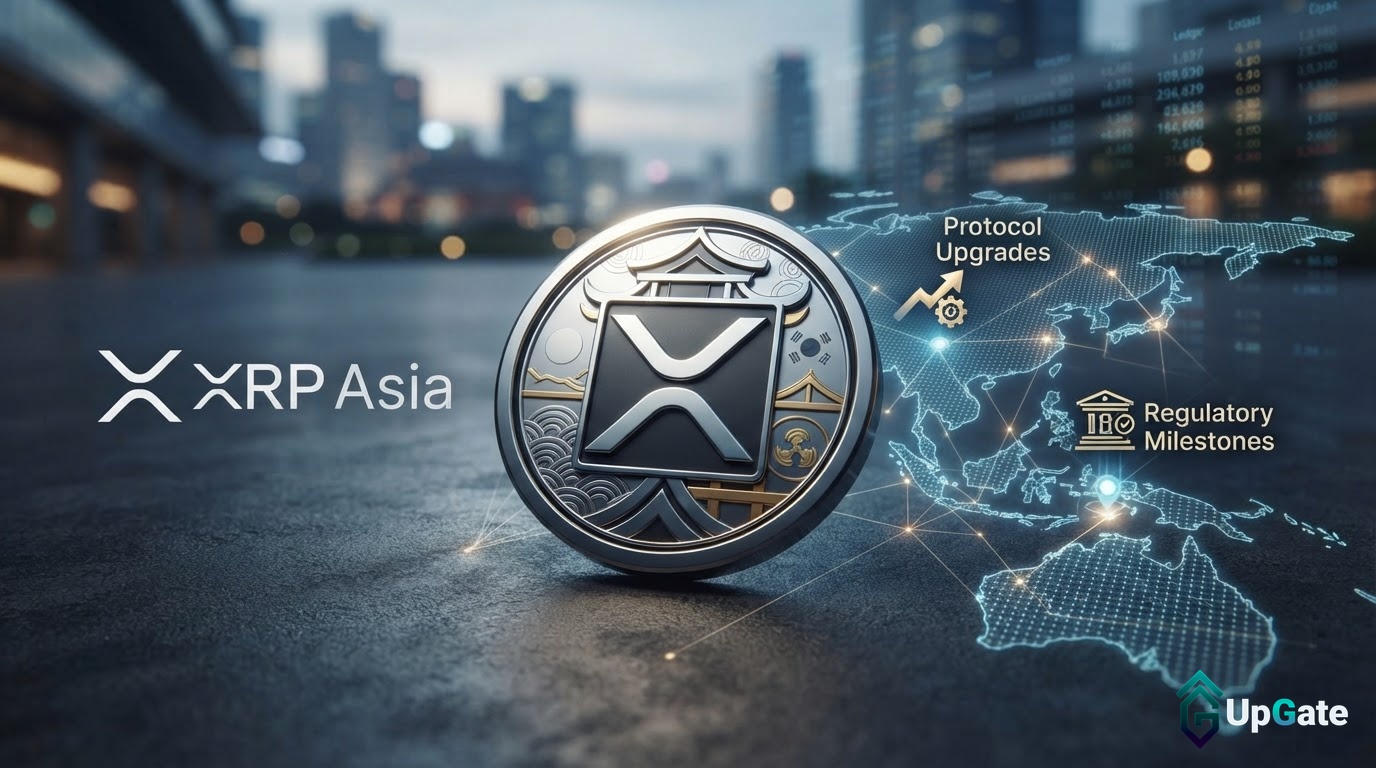
    XRP Asia Launches to Drive Ledger Adoption Across the Region

    XRP Asia has officially launched as an independent entity, aiming to significantly expand the adoption of the XRP Ledger (XRPL) throughout the Asia Pacific. The new organization, unveiled at XRP Seoul 2026, intends to onboard more businesses, developers, and financial institutions onto the network.

    Leadership and Strategic Focus

    The initiative is spearheaded by Sabrina Tachdjian, who previously served as vice president at the Hedera Foundation. Tachdjian is scheduled to address the upcoming Korea Blockchain Week on October 3rd at the Grand Hyatt Seoul. Her presentation, titled “Special Announcement: What’s Coming Next for the XRP Ecosystem in Asia,” will likely detail the group’s strategic roadmap.

    XRP Asia’s strategy is built upon four pillars: technology, startup success, community engagement, and marketing. The organization plans to provide comprehensive support to developers through training programs, micro-grants, early-stage investments, and go-to-market assistance. Its scope extends beyond decentralized finance (DeFi) to encompass retail applications, AI-driven payment solutions, and diverse enterprise use cases beyond traditional financial services.

    Ecosystem Expansion and Infrastructure Integration

    The launch of XRP Asia coincides with two significant planned upgrades to the XRPL protocol: Batch and Permission Delegation, both slated for early October 2026.

    Ripple President Monica Long indicated at XRP Seoul 2026 that the company is focused on integrating the XRP Ledger with existing payment infrastructure. She revealed ongoing credit-related pilot programs with the goal of activation next year, which may involve utilizing pooled XRP as collateral to facilitate customer payments. This strategic move follows SBI Ripple Asia’s approval under Japan’s Payment Services Act as a Third-Party Prepaid Payment Instrument Issuer, enabling regulated prepaid token activities on the XRPL.

    Upcoming Protocol Upgrades

    The regional expansion is set to be complemented by two key protocol upgrades. The Permission Delegation Infrastructure update, scheduled for October 8th, will enable companies to delegate transaction signing capabilities without relinquishing control of their primary wallets. Following this, the Batch Amendment, planned for October 9th, will allow for the consolidation of multiple transactions into a single ledger entry, thereby enhancing speed and efficiency for high-volume operations. Both upgrades will require the support of over 80% of validators for activation.

  • XRP Asia Launches to Foster XRP Ledger Adoption in Asia, Amidst Protocol Upgrades and Regulatory Milestones

    XRP Asia Launches to Foster XRP Ledger Adoption in Asia, Amidst Protocol Upgrades and Regulatory Milestones

    XRP Asia has officially launched with the stated mission to promote the growth and adoption of the XRP Ledger (XRPL) across Asia. The organization has scheduled a public event for October 3, 2026, in Seoul, South Korea, as part of its initial outreach efforts.

    Sabrina Tachdjian, who previously served as VP of Fintech & Payments at the Hedera Foundation, is leading XRP Asia as its President. The upcoming event in Seoul, titled “Special Announcement: What’s Coming Next for the XRP Ecosystem in Asia,” is set to take place during Korea Blockchain Week at the Grand Hyatt Seoul. Tachdjian is slated to co-present the event with Tatsuya Kohrogi from Ripple. The event is expected to feature participation from prominent South Korean financial institutions, including Woori Bank and Kakao Bank, with discussions anticipated to cover topics such as cross-border payments and tokenized deposits.

    In parallel with these initiatives, upcoming protocol upgrades for the XRP Ledger, named Batch and Permission Delegation, are planned for early October 2026. These upgrades are intended to enhance the capabilities of the XRPL.

    Further developments in the region include SBI Ripple Asia, a joint venture between SBI Holdings and Ripple. The company’s token issuance platform achieved a significant regulatory milestone when it was registered under Japan’s Fund Settlement Act on March 26, 2026. This registration provides an official framework for its operations. Following this regulatory approval, an announcement in early April 2026 reported the completion of the full platform’s development.

    According to the article, daily XRP trading volumes on leading South Korean exchanges, such as Upbit, have reportedly surpassed those on several major global platforms, indicating substantial regional interest. The launch of XRP Asia, the planned event with institutional participation, and the upcoming XRPL protocol upgrades collectively suggest a strengthening institutional narrative for XRP in Asia.

    However, uncertainties remain regarding the full scope of these developments. The specific details and implications of the Batch and Permission Delegation protocol upgrades for the XRP Ledger are not fully detailed. Additionally, the full scope of participation and the specific outcomes of the XRP Seoul event are yet to be determined. The extent to which XRP Asia’s efforts will directly lead to increased XRP Ledger adoption across Asia is also an area that may unfold over time.

    The registration of SBI Ripple Asia under Japan’s Fund Settlement Act, the source states, indicates that a compliant path exists for such operations in at least one major Asian market. Tachdjian’s transition from the Hedera Foundation to XRP Asia is noted as an illustration of the competitive landscape for institutional blockchain business in the region.

    Why This Matters

    The materials describe a narrow update: XRP Asia has launched with the goal of increasing XRP Ledger adoption in Asia. The specific details and implications of the Batch and Permission Delegation protocol upgrades for the XRP Ledger.

    Broader Context

    Source materials place the factual news in this context: Ripple already has a notable regional foothold through SBI Ripple Asia, a joint venture between SBI Holdings and Ripple.

  • Sam Altman Reaffirms OpenAI-Cerebras Partnership

    Sam Altman Reaffirms OpenAI-Cerebras Partnership

    Sam Altman, CEO of OpenAI, has publicly reaffirmed the company’s close partnership with AI chipmaker Cerebras Systems, addressing recent market speculation that suggested a cooling relationship. The statement, shared on the platform X, aims to clarify the ongoing collaboration despite reports of OpenAI’s newest model, GPT-6.1 Sol, initially deploying on Nvidia hardware.

    OpenAI and Cerebras Systems announced a significant multi-year partnership on January 14, 2026. Under this agreement, OpenAI committed to purchasing up to 750 megawatts of Cerebras AI inference capacity over the following three years. The initial value of this deal was reported to be over $10 billion, with potential extensions that could push the total value beyond $20 billion. Cerebras pitches its hardware specifically for ultra-low-latency inference, designed to make AI responses faster. This capacity is intended to be integrated into OpenAI’s inference stack, aiming to enhance the responsiveness of applications like ChatGPT.

    Speculation Fueled by Deployment Reports

    The reaffirmation comes after market rumors surfaced in early October 2026, suggesting that OpenAI’s GPT-6.1 Sol model was initially deployed on Nvidia GPUs rather than Cerebras hardware. According to those reports, this development, coupled with Cerebras’s focus on ultra-low-latency inference, fueled speculation among investors about a potential shift in OpenAI’s strategy and a cooling of the partnership. Cerebras shares had reportedly come under pressure following these rumors, highlighting a structural vulnerability for the company due to customer concentration, as OpenAI represents a significant portion of its business.

    Altman’s Dual Role and Investment

    Altman’s personal investment in Cerebras, dating back to at least February 2017, adds another layer to the situation. As of May 2026, he held approximately 89,373 shares in the company, which went public in May 2026. His dual role as CEO of OpenAI, a major customer, and a longtime shareholder in Cerebras makes his public reassurance notable and may continue to prompt discussions about governance.

    Complementary Hardware Strategy

    Both OpenAI and Cerebras have framed the partnership as complementary. Cerebras’s dedicated, low-latency capacity is seen as sitting alongside OpenAI’s existing general-purpose GPU fleet from suppliers like Nvidia and AMD, rather than as a replacement. The agreement is multi-year, with the capacity rollout planned in phases through 2028. Analysts believe that the market may have overstated the risk associated with the initial deployment choice for a single model, emphasizing that a one-time deployment decision does not alter a three-year purchase commitment.

    Uncertainties Remain

    While Altman’s statement on X provides clarity, the exact timing of his post remains unspecified. The potential for the total deal value to exceed $20 billion is also subject to extensions, and the extent to which governance questions will be raised regarding Altman’s dual role remains to be seen. Despite these nuances, the core message from OpenAI’s CEO is that the partnership with Cerebras remains a key component of its infrastructure strategy.

    Why This Matters

    The materials describe a narrow update: Sam Altman publicly stated that Cerebras is a close partner of OpenAI, following market rumors suggesting a cooling relationship. The exact timing of Sam Altman’s reaffirmation on X.

    Broader Context

    Source materials place the factual news in this context: The reaffirmation, shared on X, follows a stretch of speculation about whether the relationship between OpenAI and the AI chipmaker was cooling.

  • Bank of North Dakota’s Roughrider Coin Launches on Fiserv Platform, Settles on Solana

    Bank of North Dakota’s Roughrider Coin Launches on Fiserv Platform, Settles on Solana

    The Bank of North Dakota’s Roughrider Coin, a dollar-backed stablecoin, has launched on Fiserv’s digital asset platform, settling on the Solana blockchain. This initiative is designed to offer over 90 banks and credit unions in North Dakota a new method for interbank money transfers.

    Fiserv announced on October 1 that its digital asset platform is now live with financial institutional clients, with the Roughrider Coin being the first product to operate on this infrastructure. The platform aims to provide financial institutions with enhanced efficiencies in banking and payments through digital assets.

    Fiserv is providing the issuance, reserve, custody, and settlement infrastructure for the Roughrider Coin. VersaBank is handling the coin’s issuance and custody, including minting, burning, and managing reserve assets. Fireblocks is supplying the digital asset infrastructure and tokenization services, while transactions are processed on the Solana blockchain.

    “Roughrider Coin is a new tool to move money more efficiently across North Dakota’s interbank network,” according to information provided. Fiserv stated it is “helping clients unlock new efficiencies in banking and payments” while maintaining expected security and regulatory standards. David Taylor, VersaBank founder and president, described the combination of Fiserv’s scale with VersaBank’s regulated capabilities as a “trusted foundation to bring stablecoins into established banking and payments systems.”

    Participating institutions will access the Roughrider Coin via Fiserv’s Commercial Center online banking system. Fiserv’s digital asset platform also supports other services, including stablecoin card issuance, cross-border payments, programmable commerce, treasury automation, tokenized deposits, and global currency account services.

    The launch of the Roughrider Coin occurs as financial institutions navigate evolving regulatory landscapes and consumer perceptions of stablecoins. The Federal Reserve has proposed two rules under the GENIUS Act concerning stablecoin backing and issuance by supervised banks. These proposals, open to public comment for 60 days, aim to establish guidelines for reserve backing and bank issuance of payment stablecoins. The specific details and outcomes of these proposed rules remain uncertain.

    Consumer awareness and trust also present challenges for stablecoin adoption. A Visa study indicated that 56% of surveyed Americans had never heard of stablecoins. However, the study also found that 45% would be willing to use them when offered by an existing financial provider, compared to 36% in a scenario without hypothetical bank-level fraud protection and deposit insurance. The extent to which consumer confidence will grow, despite initial low awareness, is an area of uncertainty.

    Don Morgan, Bank of North Dakota’s chief executive, commented on the coin’s purpose. Sunil Sachdev is Fiserv’s head of embedded finance and digital assets.

    Why This Matters

    The materials describe a narrow update: The Bank of North Dakota’s Roughrider Coin, a dollar-backed stablecoin, has been launched on Fiserv’s digital asset platform. The specific details and outcomes of the Federal Reserve’s proposed stablecoin rules.

    Broader Context

    Source materials place the factual news in this context: The launch comes as financial institutions face questions about how stablecoins should be backed, supervised, and presented to customers.