Tag: Adoption & Partnerships

  • Bank of North Dakota’s Roughrider Coin Launches on Fiserv Platform, Settles on Solana

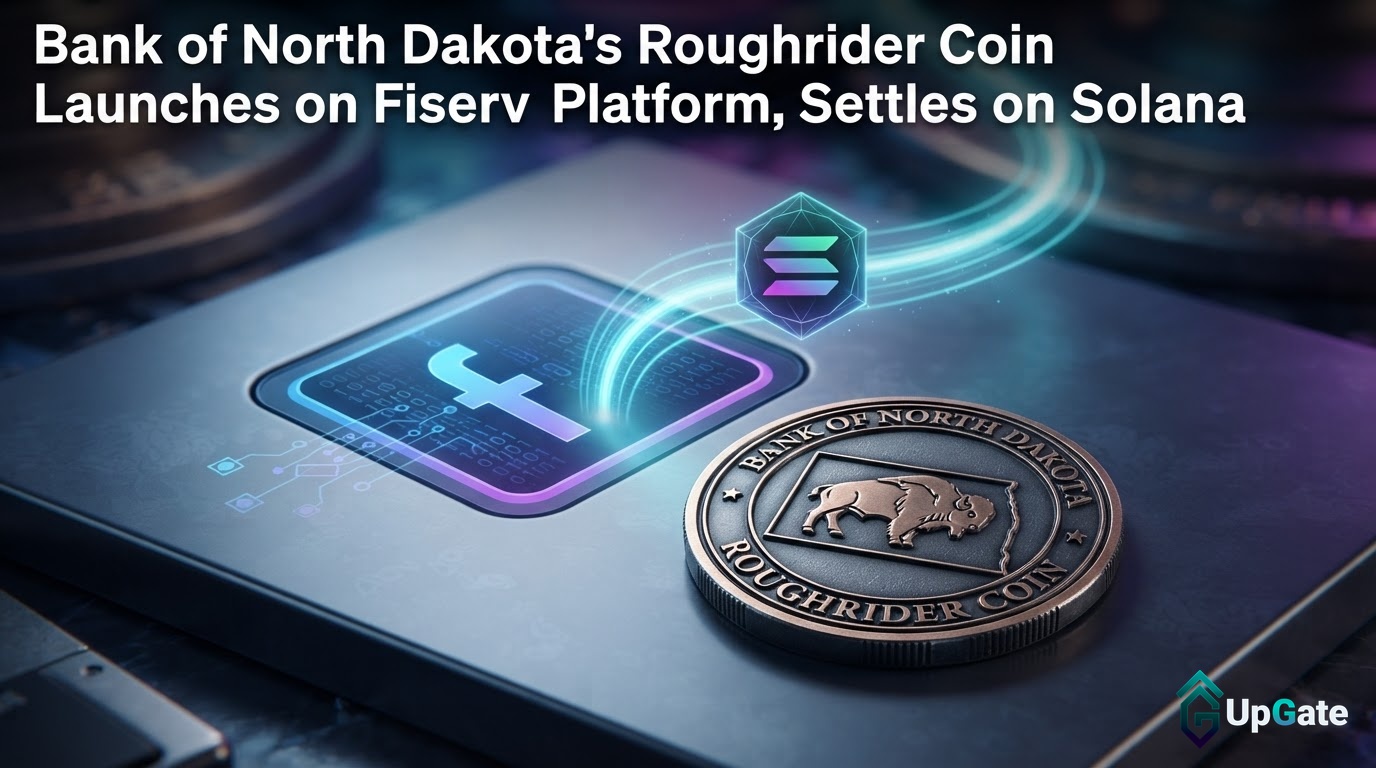
    Bank of North Dakota’s Roughrider Coin Launches on Fiserv Platform, Settles on Solana

    The Bank of North Dakota’s Roughrider Coin, a dollar-backed stablecoin, has launched on Fiserv’s digital asset platform, settling on the Solana blockchain. This initiative is designed to offer over 90 banks and credit unions in North Dakota a new method for interbank money transfers.

    Fiserv announced on October 1 that its digital asset platform is now live with financial institutional clients, with the Roughrider Coin being the first product to operate on this infrastructure. The platform aims to provide financial institutions with enhanced efficiencies in banking and payments through digital assets.

    Fiserv is providing the issuance, reserve, custody, and settlement infrastructure for the Roughrider Coin. VersaBank is handling the coin’s issuance and custody, including minting, burning, and managing reserve assets. Fireblocks is supplying the digital asset infrastructure and tokenization services, while transactions are processed on the Solana blockchain.

    “Roughrider Coin is a new tool to move money more efficiently across North Dakota’s interbank network,” according to information provided. Fiserv stated it is “helping clients unlock new efficiencies in banking and payments” while maintaining expected security and regulatory standards. David Taylor, VersaBank founder and president, described the combination of Fiserv’s scale with VersaBank’s regulated capabilities as a “trusted foundation to bring stablecoins into established banking and payments systems.”

    Participating institutions will access the Roughrider Coin via Fiserv’s Commercial Center online banking system. Fiserv’s digital asset platform also supports other services, including stablecoin card issuance, cross-border payments, programmable commerce, treasury automation, tokenized deposits, and global currency account services.

    The launch of the Roughrider Coin occurs as financial institutions navigate evolving regulatory landscapes and consumer perceptions of stablecoins. The Federal Reserve has proposed two rules under the GENIUS Act concerning stablecoin backing and issuance by supervised banks. These proposals, open to public comment for 60 days, aim to establish guidelines for reserve backing and bank issuance of payment stablecoins. The specific details and outcomes of these proposed rules remain uncertain.

    Consumer awareness and trust also present challenges for stablecoin adoption. A Visa study indicated that 56% of surveyed Americans had never heard of stablecoins. However, the study also found that 45% would be willing to use them when offered by an existing financial provider, compared to 36% in a scenario without hypothetical bank-level fraud protection and deposit insurance. The extent to which consumer confidence will grow, despite initial low awareness, is an area of uncertainty.

    Don Morgan, Bank of North Dakota’s chief executive, commented on the coin’s purpose. Sunil Sachdev is Fiserv’s head of embedded finance and digital assets.

    Why This Matters

    The materials describe a narrow update: The Bank of North Dakota’s Roughrider Coin, a dollar-backed stablecoin, has been launched on Fiserv’s digital asset platform. The specific details and outcomes of the Federal Reserve’s proposed stablecoin rules.

    Broader Context

    Source materials place the factual news in this context: The launch comes as financial institutions face questions about how stablecoins should be backed, supervised, and presented to customers.

  • Powerus tokenized stock PUSA Surges to $8M Volume on Solana in Four Hours

    Powerus tokenized stock PUSA Surges to $8M Volume on Solana in Four Hours

    Powerus Corporation’s stock has found a dynamic new avenue for trading on the Solana blockchain, experiencing significant activity just days after its Nasdaq debut.

    Tokenized Shares Surge on Solana

    On October 1, 2026, Powerus Corporation officially listed on the Nasdaq. By the following day, its stock had a parallel existence on the Solana network, where it generated substantially higher trading volumes. The tokenized $PUSA share recorded $8 million in trading volume within its first four hours of listing, a figure that more than doubled the dollar volume of the actual Nasdaq-listed stock during the same period.

    The token went live on October 2, 2026, facilitated by Backpack Securities through its Sunrise platform. Each $PUSA token is backed on a 1:1 basis by actual Powerus common stock held in custody, with holders retaining the ability to redeem their tokens for the underlying shares. By the close of its initial 24 hours of trading, the token’s total volume reached approximately $12 million.

    A key advantage highlighted for the tokenized version is its continuous trading capability. Unlike the Nasdaq, which operates within traditional business hours, the $PUSA token can be traded around the clock, including after the stock market’s closing bell.

    Powerus Corporation’s Business Focus

    Powerus Corporation is a defense technology firm specializing in autonomous drones and counter-drone systems. The company’s product line features US-built autonomous aerial and maritime systems, alongside technology designed to neutralize unauthorized drones.

    Public Market Entry and Contract Wins

    The company achieved its public market status through a merger with Aureus Greenway Holdings Inc., which was finalized on October 1, 2026. Powerus now trades on the Nasdaq Capital Market under the ticker symbol PUSA.

    This listing was preceded by significant contract awards. Powerus secured a defense purchase order valued at approximately $2.5 million for its first-person-view (FPV) aircraft, which are drones piloted via a live camera feed. Additionally, the company holds a long-term indefinite delivery, indefinite quantity (IDIQ) contract with the US Air Force for its Guardian-2 counter-drone system. This type of government contract structure establishes a potential ceiling for spending rather than a guaranteed payout, with this particular contract potentially worth up to $90 million through mid-2028.

    Growing Tokenized Equities Market

    The $PUSA token’s launch occurs within a burgeoning market for tokenized equities on Solana. Platforms such as Backpack Securities and xStocks are already facilitating substantial trading volumes in this space. Recent data indicates that 63% of trades within Solana’s tokenized equities market take place outside of traditional market hours, underscoring the appeal of continuous trading.

  • UK Financial Leaders Expect Tokenization to Reshape Sector, Lloyds Survey Finds

    UK Financial Leaders Expect Tokenization to Reshape Sector, Lloyds Survey Finds

    A significant majority of senior decision-makers in major UK financial institutions anticipate that tokenization will fundamentally transform the financial services landscape, according to a survey by Lloyds Banking Group. The findings underscore a strong industry expectation that the technology will drive efficiency and innovation.

    Lloyds Banking Group polled 100 senior figures across UK banks, insurers, asset managers, and financial sponsors. The survey revealed that 71% of these leaders expect tokenization to reshape financial services. Faster payments and settlement emerged as the most significant perceived benefit, cited by 60% of respondents as the biggest potential advantage. Improved collateral and liquidity management was also highlighted, with 41% of those surveyed pointing to this as a key benefit.

    These expectations align with a broader strategic push by the UK government and its financial regulators to integrate tokenization into the nation’s financial infrastructure. Policymakers are actively encouraging the move of tokenization beyond pilot projects towards scalable implementation, supported by projections that leadership in this area could significantly boost the UK’s economic output.

    Economic Outlook
    A government-backed industry task force has estimated that by 2035, leadership in tokenized finance could add as much as 33 billion British pounds (approximately $44 billion) to the UK’s annual economic output. The task force has also set a target for the country’s first tokenized government bond by early 2027, signaling a clear roadmap for adoption.

    Government and Regulatory Initiatives
    In line with this strategic direction, the Bank of England proposed in May to extend its core settlement infrastructure towards near-24/7 availability. Following this, a government payments blueprint called for tokenized and traditional forms of money to operate within an interoperable payments system, aiming to create a more integrated financial ecosystem.

    Industry Actions and Collaborations
    Lloyds Banking Group has also engaged directly with tokenization technology. Earlier this year, the bank collaborated with Archax and Canton Network on what was described as the UK’s first public blockchain transaction utilizing tokenized deposits to acquire a tokenized UK government bond. This practical application demonstrates the industry’s commitment to exploring and implementing tokenization solutions.

    Furthermore, the UK has been seeking greater coordination with the United States on tokenized finance. In July, the US and UK treasuries jointly recommended the creation of a private-sector group to test cross-border uses of tokenized assets. They also urged US financial regulators and the Bank of England to identify shared approaches to regulation, indicating a global effort to foster responsible development in this area.

    Rob Hale, co-head of global markets at Lloyds, commented on the next phase of development, stating, “The next phase is about turning those individual use cases into infrastructure that works at scale, with the interoperability and common standards needed to connect digital and traditional markets.” This sentiment reflects the industry’s focus on building robust and interconnected systems for tokenized assets.

    Why This Matters

    The materials describe a narrow update: A survey of 100 senior decision-makers in major UK financial institutions by Lloyds Banking Group revealed that 71% expect tokenization to reshape financial services. Faster payments and settlement emerged as the biggest potential benefit.

    Broader Context

    Source materials place the factual news in this context: The finding comes from an annual survey by Lloyds Banking Group, the UK’s largest financial services provider.

  • Shinhan Bank Pilots Solana Stablecoin for Corporate Remittances

    Shinhan Bank Pilots Solana Stablecoin for Corporate Remittances

    Shinhan Bank Completes Stablecoin Pilot for Corporate Remittances

    Shinhan Bank has successfully concluded a pilot program for stablecoin-based corporate overseas remittances, developed with technical assistance from the Solana Foundation. A key innovation of the project is its seamless integration into existing client workflows, requiring no changes for corporate users. Participants did not need to open cryptocurrency wallets or hold stablecoins, with their banking routines remaining entirely unchanged.

    Proof-of-Concept Completion

    The South Korean financial institution announced the completion of this proof-of-concept on September 30, 2026. Shinhan designed the test to meticulously replicate the actual remittance operations of a major Korean corporation, covering the entire process from counterparty registration to execution and final settlement. Stablecoin-based transfers and settlements were integrated directly into the bank’s current systems.

    Privacy and Network Considerations

    To ensure data privacy, Shinhan conducted the pilot on a private solution operating on the Solana network. The objective was to maintain the confidentiality of sensitive transaction details while still enabling transparent validation of each transaction.

    Evaluating Performance and Viability

    Shinhan stated that the trial allowed for a thorough evaluation of both the technical performance and the operational feasibility of the implemented system.

    Broader Stablecoin Initiatives

    This corporate pilot is not Shinhan Financial’s sole venture into Solana-based projects. Its affiliate, Shinhan Card, has been independently exploring retail stablecoin payments through a separate collaboration with Solana, announced on April 30, 2026. These two initiatives are distinct, with the bank’s focus on corporate treasury operations for international money transfers and Shinhan Card targeting consumer payments.

    Regulatory Landscape

    The initiatives are unfolding against the backdrop of South Korea’s evolving regulatory environment. The country’s Digital Asset Basic Act is currently under development and aims to establish a more structured legal framework for digital assets. Shinhan has indicated that its next step involves assessing the system’s potential for real-world application, ensuring alignment with emerging regulatory guidelines.

    The Invisible Stablecoin Layer

    A significant aspect of the project’s design is the unobtrusive nature of the stablecoin layer. Shinhan is not requiring corporate clients to adopt cryptocurrency; instead, it is investigating whether blockchain infrastructure can operate discreetly beneath the services clients already utilize.

    Path to Commercialization

    With the Digital Asset Basic Act still pending, Shinhan cannot launch a commercial product based solely on this proof-of-concept. The timing of any rollout will be contingent on how lawmakers define the regulations governing stablecoins and the financial institutions that handle them.

    Market Watch Points

    Industry observers are closely monitoring several key developments. Firstly, progress on the Digital Asset Basic Act is crucial, as it will likely determine whether pilot programs like this can transition into viable commercial products. Secondly, market participants will be watching for any timeline Shinhan might publish for a commercial corporate remittance service. Thirdly, the announcement of comparable trials by other Korean lenders will be significant. Finally, the parallel development of both corporate and retail tracks within Shinhan Financial will be noteworthy, given that both Shinhan Bank and Shinhan Card are now actively pursuing separate Solana-based stablecoin initiatives.

  • Evernorth Treasury Vote Clears Path for XRP Listing on Nasdaq

    Evernorth Treasury Vote Clears Path for XRP Listing on Nasdaq

    Evernorth Secures Shareholder Approval for Nasdaq Listing with 473 Million XRP Treasury

    Evernorth’s merger with Armada Acquisition Corp. II received shareholder approval on Wednesday, paving the way for its substantial 473 million XRP treasury to be listed on Nasdaq.

    The vote saw approximately 20.5 million shares in favor and 1.4 million against, according to a filing by Armada II on Thursday. This development follows the SEC declaring Evernorth’s registration statement effective on August 27.

    Evernorth anticipates the deal will officially close on October 7. The company’s shares are expected to commence trading the following day under the ticker XRPN, which is already utilized by the special purpose acquisition company (SPAC).

    The firm announced that the merger and its associated private placements have collectively raised over $1 billion, a figure that aligns with its initial projections for the transaction made in October 2025. A portion of this total was contributed by investors in XRP, with the company’s announcement not specifying a dollar valuation for these holdings.

    Evernorth’s statement indicates that approximately $300 million of the total funds raised is in gross cash. Private placements account for $225 million of this cash component. An additional $30 million is derived from convertible notes that the company agreed to sell in September.

    Investors in advance funding provided $214 million of the capital raised through private placements, as detailed in the proxy statement. Evernorth utilized these funds in late 2025 to acquire 84.4 million XRP at an average price of $2.54 per token, which are now part of its existing holdings.

    The SPAC’s trust is contributing an additional $48 million in cash. This trust held approximately $241.9 million as of the August 20 record date. Public shareholders had the option to redeem their shares from the trust at an estimated $10.52 per share until September 28. Neither Thursday’s announcement nor the vote filing specified the number of shareholders who exercised this option.

    RippleWorks supplied the largest portion of Evernorth’s XRP holdings, amounting to 211.3 million tokens, through an investment in the SPAC’s sponsor, Arrington XRP Capital Fund. The sponsor is obligated to exchange these tokens for Evernorth shares upon closing. It has committed to voting these shares according to RippleWorks’ direction. Chris Larsen, co-founder and Executive Chairman of Ripple, is a co-founder of RippleWorks and serves on its board.

    Ripple itself contributed 126.8 million XRP at the time the merger agreement was finalized. An additional 50 million XRP comes from the Larsen Lam Children’s Remainder Trust.

    Evernorth Holdings’ financial statements, included in the proxy filing, report the cost of 346.3 million of its XRP at $846.6 million. By June 30, 2026, the company carried these tokens on its books at $348.8 million. It recorded impairment charges of $233.7 million in 2025 and $264.1 million in the first half of 2026.

    Evernorth accounts for XRP at its cost basis and subsequently reduces its value to the lowest intraday price observed since each batch was acquired. This written-down value is not subsequently increased if the price of XRP recovers.

  • CSD BR Partners with Ripple to Mirror Securities Data on XRP Ledger

    CSD BR Partners with Ripple to Mirror Securities Data on XRP Ledger

    CSD BR, Brazil’s Central Securities Depository, has partnered with Ripple to mirror securities ownership data on the XRP Ledger. This integration represents a measured adoption of distributed ledger technology (DLT) by a regulated financial infrastructure provider, operating deliberately within existing regulatory frameworks.

    Mirroring Data, Not Transferring Assets

    The core of the partnership involves mirroring securities ownership data. This means information is replicated on the XRP Ledger, but CSD BR fundamentally remains the official source of record for all registrations and settlements. Consequently, this process does not alter investor rights or existing legal frameworks. The initial phase of this integration focuses on investment fund shares from BTG Pactual, identified as Latin America’s largest standalone investment bank.

    Technical Backbone and Regulatory Approach

    This collaboration leverages XRPL’s Multi-Purpose Token standard, a capability designed to accommodate a broader range of asset types. Ripple Custody provides the essential asset security layer for this integration. Significantly, the partnership was executed without the need for new regulatory approvals, underscoring a strategic approach to operate within current rules rather than challenge their boundaries.

    CSD BR manages a substantial BRL 22 trillion in registered assets across Brazil’s financial markets and processes millions of transactions. The institution operates under the oversight of Brazil’s securities regulator, the CVM (Comissão de Valores Mobiliários), and the central bank, the BCB (Banco Central do Brasil). The selection of BTG Pactual’s fund shares for the initial phase adds credibility, representing a meaningful and liquid asset class.

    Phased Innovation and Future Potential

    Executives from both CSD BR and Ripple have characterized this cautious rollout as intentional. This approach, described as real-world testing through mirroring, is positioned as a pathway toward safe innovation. The mirroring phase is explicitly designated as step one, with future phases potentially becoming more ambitious.

    The integration of securities ownership data on a public blockchain by a regulated entity like CSD BR signals an increasing adoption of DLT within traditional finance. The use of the XRP Ledger for this purpose highlights its expanding utility beyond cryptocurrency transactions. The partnership’s execution within existing regulatory frameworks emphasizes a compliance-driven strategy for DLT adoption.

    While the initial focus is on mirroring data, future phases of the partnership roadmap may include potential native asset issuance directly on the XRP Ledger and peer-to-peer trading. Specific details regarding the timeline for these future phases, as well as the exact nature of potential native asset issuance and peer-to-peer trading, remain uncertain. Brazilian equivalents of real estate and agribusiness receivables certificates, known as CRIs and CRAs respectively, are mentioned as potential assets for future phases.

    Why This Matters

    The materials describe a narrow update: CSD BR, a Brazilian Central Securities Depository, has integrated with Ripple to mirror securities ownership data on the XRP Ledger. The exact timeline for future phases of the partnership.

    Broader Context

    Source materials place the factual news in this context: CSD BR manages more than BRL 22 trillion in registered assets across Brazil’s financial markets.

  • Baillie Gifford Launches Tokenized Bond Fund, BAGEY, on Ethereum and Solana

    Baillie Gifford Launches Tokenized Bond Fund, BAGEY, on Ethereum and Solana

    Baillie Gifford, an Edinburgh-based asset manager overseeing approximately $237 billion to $260 billion in assets, has launched its Enhanced Yield Fund (BAGEY) as a tokenized bond product. This fund operates natively on both the Ethereum and Solana blockchains, settling transactions in either USDC or fiat currency and targeting a yield of approximately 7%.

    Fund Mechanics and Features
    Verified facts indicate that BAGEY is an actively managed, short-duration bond portfolio with an average credit quality rating of BBB and a duration of roughly two years. Shares are minted directly on public blockchains, with Ethereum and Solana serving as the legal register of ownership, meaning there is no traditional wrapper between the investor and the token. The minimum investment is $100, though the fund is restricted to eligible professional investors.

    Infrastructure and Partners
    Custody and tokenization services for the fund are provided by BitGo Bank & Trust, BNY, Anchorage Digital, and Archax. The fund is structured to operate with daily net asset value calculations.

    Market Context and Implications
    BAGEY officially launched on June 22, 2026, through Baillie Gifford’s digital assets unit, BGDA UK. By September 29 of the same year, its availability expanded to professional investors in Switzerland, Hong Kong, and the Cayman Islands. This launch by a major asset manager into the tokenized asset space signifies a growing trend of traditional financial institutions integrating with blockchain technology. The issuance of tokenized bond funds on multiple blockchains like Ethereum and Solana suggests a potential broader adoption of distributed ledger technology for financial instruments, supported by established digital asset infrastructure providers.

    Why This Matters

    The materials describe a narrow update: Baillie Gifford launched the Enhanced Yield Fund (BAGEY), a tokenized bond product native to Ethereum and Solana, which settles in USDC or fiat and targets a 7% yield. Tokenized bond funds are being issued on multiple blockchains.

  • BitGo CPO Focuses on Product Clarity

    BitGo CPO Focuses on Product Clarity

    BitGo, a pioneer in digital asset custody, is now shifting its focus from securing digital assets to managing the complex operations of tokenized securities. The company, which has largely solved the challenge of safeguarding private keys and building institutional-grade infrastructure, is now looking to build upon its established foundation.

    The Next Frontier: Asset Servicing for Tokenized Securities

    For nearly a decade, the digital asset industry has concentrated on perfecting secure storage solutions, often referred to as “vaults.” BitGo, founded in 2013, has emerged as a leader in this space, now supporting over 1,550 digital assets and serving more than 4,900 clients globally. However, Chief Product Officer Eugene Hahr is now directing the company’s efforts towards the next critical phase: what can be built on top of this secure infrastructure.

    The emerging answer, according to Hahr, lies in asset servicing for tokenized securities. This encompasses essential functions such as dividend distribution, proxy voting, and the transfer of claims. These are the operational intricacies that traditional financial institutions like BNY Mellon and State Street have managed for decades within equity markets, but which remain largely underdeveloped in current crypto infrastructure.

    Real-World Applications and Regulatory Tailwinds

    This strategic pivot is not merely theoretical. The London Stock Exchange is actively developing initiatives for tokenized stocks, and regulatory bodies like the U.S. Securities and Exchange Commission (SEC) are making strides to clarify the path for tokenized assets. As stocks become tokenized, the need for services that ensure holders receive dividends, facilitate proxy voting, and manage corporate actions becomes paramount. Hahr believes BitGo is ideally positioned to provide these crucial services.

    BitGo’s recent corporate developments underscore its ambition. The company went public on the NYSE in January 2026 under the ticker BTGO. It bolstered its capabilities by acquiring NYDIG’s institutional trading business, integrating execution services into its existing custody and settlement framework. Furthermore, BitGo launched BitGo Research on September 24, 2026, and strengthened its leadership in compliance and research.

    Navigating a Competitive Landscape

    BitGo is not alone in this burgeoning market. The race to establish the foundational infrastructure for tokenized real-world assets has drawn significant competition from established players such as Fireblocks, Anchorage Digital, and Coinbase’s institutional division.

    The evolving regulatory environment presents both opportunities and challenges. Progress by the SEC in establishing frameworks for tokenized securities offers companies like BitGo a clearer roadmap for development. Hahr’s approach suggests BitGo intends to make strategic bets on the direction of regulation, rather than waiting for absolute clarity before committing to building new solutions.

  • Tether Invests in Shiga Digital to Bolster Self-Custodial Finance in Africa and GCC

    Tether Invests in Shiga Digital to Bolster Self-Custodial Finance in Africa and GCC

    Tether has strategically invested in Shiga Digital, an Abu Dhabi-based fintech startup, to expand self-custodial digital asset products and financial infrastructure across Africa and the Gulf Cooperation Council (GCC). The partnership will utilize Tether’s open-source Wallet Development Kit (WDK) to enable businesses and individuals to hold and transact in USDT without central custodians.

    Shiga Digital, operational since 2016, provides services such as virtual accounts, over-the-counter (OTC) transactions, and treasury management. Its primary offering is the Enta wallet, a self-custodial solution supporting USDT, Bitcoin, and tokenized gold. The company has processed over $350 million in transaction volumes and holds a DIFC Innovation License, working with licensed financial transmitters across African and Gulf countries to ensure regulatory compliance.

    This investment addresses the challenge of currency depreciation in African economies, where rapid dollar fluctuations can impact business planning and savings. For businesses in these regions, holding USDT offers a hedge against the erosion of working capital. The partnership also aims to enhance cross-border payments between Africa and the GCC, an area where stablecoins present a significant advantage over traditional banking. Transactions that typically take three to five business days via correspondent banking networks could potentially settle on-chain in minutes at a reduced cost.

    The GCC, with the UAE, Saudi Arabia, and Qatar actively vying to become digital finance hubs, provides a fertile ground for this expansion. Abu Dhabi’s regulatory environment, particularly within the DIFC where Shiga holds its license, is designed to attract fintech companies in the digital asset space. Tether’s WDK is an open-source toolkit that aids in building secure wallets with native USDT integration, supporting the development of financial infrastructure for direct digital asset transactions.

    The collaboration between Tether and Shiga Digital is poised to enhance financial stability for businesses in Africa and the GCC by providing access to self-custodial financial tools. Shiga Digital’s established transaction volume and commitment to regulatory compliance provide a strong foundation for scaling self-custodial finance solutions. By integrating Tether’s technology with Shiga’s local expertise and infrastructure, the partnership seeks to foster a more efficient and stable financial ecosystem for the target regions.

    Why This Matters

    The materials describe a narrow update: Tether has made a strategic investment in Shiga Digital, a fintech startup, to develop and expand self-custodial digital asset products and financial infrastructure in the African and GCC regions. The partnership is designed to address the challenges of currency depreciation in African economies by offering USDT as a stable store of value.

    Broader Context

    Source materials place the factual news in this context: African economies face a particular challenge: local currencies that can depreciate rapidly against the dollar, making it difficult for businesses to plan, price goods, or hold savings with any confidence.

  • Evernorth Nasdaq Vote Looms as XRP Faces Pivotal Week

    Evernorth Nasdaq Vote Looms as XRP Faces Pivotal Week

    Armada Acquisition Corp. II Shareholders to Vote on Evernorth’s Public Listing

    Armada Acquisition Corp. II shareholders are scheduled to vote on September 30 on a proposed business combination that could see Evernorth, a cryptocurrency-focused treasury company, become publicly traded.

    A positive vote would remove the final significant hurdle for Evernorth to begin trading on Nasdaq under the ticker symbol XRPN.

    The move has garnered praise from prominent cryptocurrency commentators, particularly those who favor Ripple and its native token, XRP. BankXRP, for instance, recently emphasized that the company is “one vote away” from bringing an XRP-focused treasury to the Nasdaq. This distinction is crucial, as Evernorth is not structured as a passive XRP fund. Instead, it aims to actively manage and deploy XRP across the ecosystem through yield strategies, infrastructure investments, and capital markets activities, with the goal of increasing the value represented by each share over time.

    Evernorth currently holds approximately 473 million XRP, positioning it as one of the largest corporate holders of the asset. If the merger is approved, this substantial XRP treasury would become accessible to investors through a publicly traded U.S. equity, eliminating the need for individual investors to purchase, custody, and manage the token themselves.

    Vincent Van Code, another prominent figure within the XRP community, has argued that direct cryptocurrency ownership presents significant operational challenges for large institutions, including issues with custody, compliance, audits, insurance, and internal controls. He suggests that alternatives like Evernorth offer a more streamlined path for investors seeking XRP exposure without the burden of building their own infrastructure.

    In a social media post on September 25, 2026, Van Code highlighted the contrast between the SEC’s past lawsuit against Ripple, which alleged XRP was a security, and Evernorth’s current pursuit of a public listing as the first XRP holding company. He commented, “And people are still not bullish for crypto. It’s no wonder 90% of people live pay check to pay check.”

    CryptoPotato previously reported that Evernorth had agreed to raise an additional $30 million through 4% convertible senior PIK notes due in 2031. This financing is contingent upon the approval and finalization of Evernorth’s business combination with Armada II.

    The newly raised funds could be allocated towards further XRP acquisitions and other initiatives within the broader Ripple ecosystem. This $30 million injection follows over $1 billion in gross proceeds previously secured from investors, including Ripple, SBI Holdings, Pantera Capital, Kraken, and Arrington Capital.