Tag: Adoption & Partnerships

  • ONDO Finance Launches BlackRock-Backed Portfolios Amid 18% Rally

    ONDO Finance Launches BlackRock-Backed Portfolios Amid 18% Rally

    Ondo Token Surges as BlackRock Partnership Unveils Onchain Portfolio Products

    In a market environment where surging Treasury yields were punishing most risk assets, Ondo Finance’s native token, ONDO, charted a decidedly different course. The token experienced a significant rally, climbing approximately 18-22% within 24 hours of Ondo Finance announcing its new product line: a suite of onchain portfolio tokens built on model strategies developed by BlackRock.

    The timing of this launch appears to be either remarkably audacious or meticulously planned. The announcement coincided with U.S. 10-year Treasury yields spiking to roughly 5.14%, their highest point in 19 years, while 30-year yields reached levels not seen since 2004. Despite these headwinds, ONDO’s trading volume surged past $600 million in a single day.

    Introducing Ondo Intelligent Portfolios

    The new product, branded as Ondo Intelligent Portfolios, comprises three distinct tokenized portfolio strategies. BLKHIon is designed for high income generation, BLKDIGon aims for diversified growth, and BLKGRWon is engineered for high growth potential. Each strategy is represented by a single, transferable token that provides economic exposure to a weighted basket of tokenized assets.

    Key features of these portfolios include real-time visibility into holdings, weightings, and rebalancing activities. Investors have the ability to mint, redeem, and transfer these tokens across various wallets, exchanges, and decentralized finance (DeFi) protocols, bypassing the need for traditional brokers or the typical three-day settlement period.

    Navigating Regulatory Landscapes

    Crucially, these portfolios are accessible to eligible non-U.S. investors in permitted jurisdictions. This geographic restriction is significant, as it allows Ondo to circumvent the complex U.S. regulatory environment while still capitalizing on BlackRock’s brand recognition and intellectual capital for product design.

    It is important to clarify the roles of each entity. BlackRock provided the nondiscretionary model portfolio strategies, essentially designing the allocation blueprints. However, BlackRock is not involved in managing the onchain portfolios, handling the tokenization process, or operating any of the underlying infrastructure. Ondo Finance is responsible for all these operational aspects.

    Market Reaction and Broader Implications

    The market’s response was swift and pronounced. ONDO’s price surged to approximately $0.50, boosting its market capitalization to around $2.4 billion. The substantial 24-hour trading volume exceeding $600 million indicates that this rally was driven by more than just a few large investors seeking momentum.

    In a market where rising Treasury yields typically drive capital towards safe havens and away from speculative assets, ONDO’s performance stood out. While Bitcoin held steady near $84,000 without significant upward movement, and most altcoins remained flat or declined, ONDO convincingly bucked the trend, emerging as the top-performing altcoin of the day.

    This collaboration is not the first between Ondo and BlackRock in the tokenization space. The two entities previously partnered on tokenizing exposure to assets such as the iShares Core S&P 500 ETF (IVV), utilizing a third-party custodial model. That earlier initiative served as a proof of concept, demonstrating the feasibility of representing and transferring traditional ETF exposure onchain while adhering to regulatory requirements.

    The Intelligent Portfolios represent a significant advancement beyond single-asset tokenization. Rather than tokenizing a single ETF, Ondo is now packaging entire allocation strategies, complete with automated rebalancing, into composable onchain instruments.

    BlackRock has consistently signaled its interest in tokenization for years, and its willingness to contribute model strategies for an onchain product underscores the firm’s perception of substantial commercial potential in this sector. When an asset manager overseeing more than $10 trillion in assets lends its name and methodology to a DeFi-native platform, it sends a powerful signal to the broader traditional finance industry.

    The introduction of portfolio-level tokenized products, underpinned by institutional-grade strategy design, signifies a maturation of the real-world asset (RWA) tokenization narrative. For the past two years, discussions around RWA tokenization have largely focused on individual assets like Treasuries, money market funds, or single equities. Ondo’s latest offering shifts the conversation towards portfolio construction.

    While the restriction to non-U.S. investors narrows the immediate addressable market, it also positions Ondo to capture demand from international investors seeking exposure to U.S.-style portfolio construction without the complexities of traditional brokerage accounts.

    However, the inherent risks associated with onchain portfolio products warrant consideration. These include smart contract vulnerabilities, reliance on oracles for rebalancing, and potential liquidity mismatches between the token and its underlying assets.
  • ARK Invest Tokenizes Venture Fund on Ethereum, Enabling Onchain Transactions with USDC

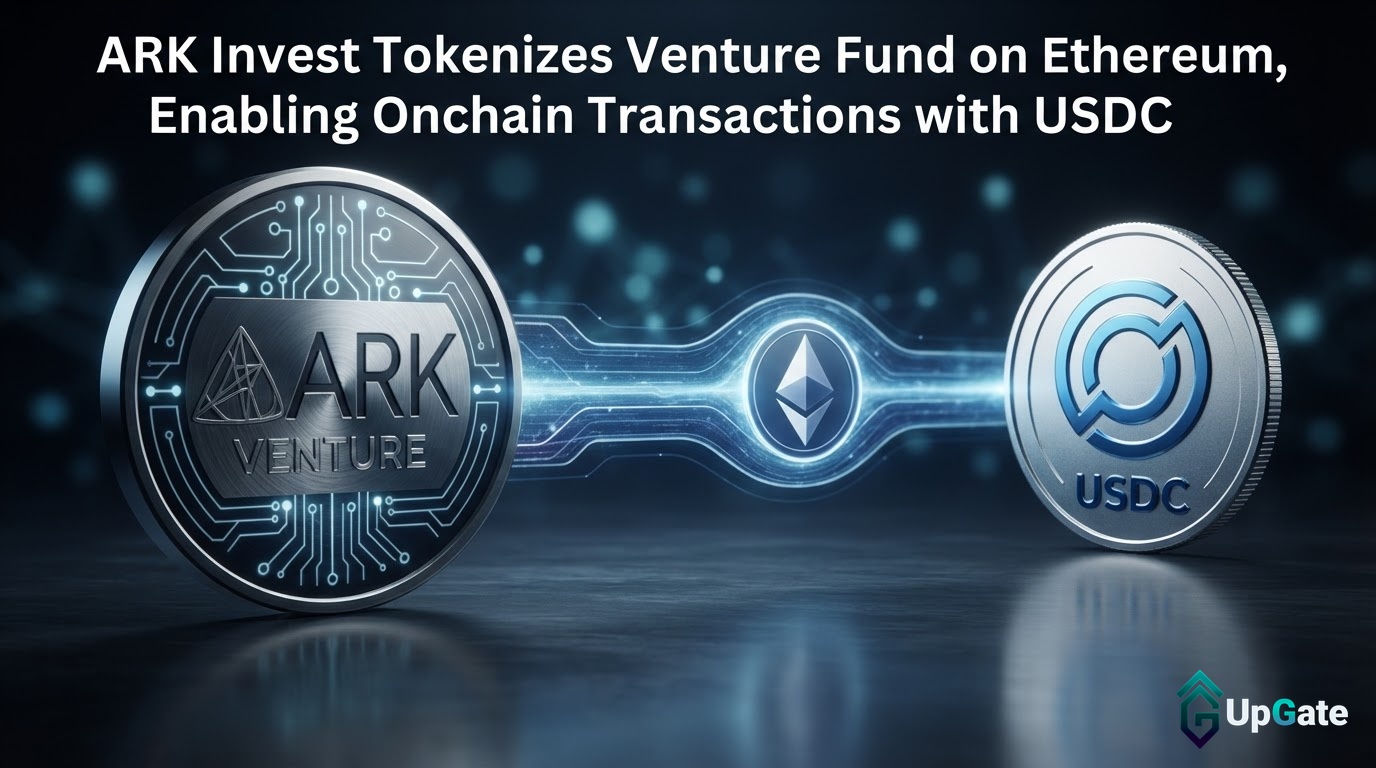
    ARK Invest Tokenizes Venture Fund on Ethereum, Enabling Onchain Transactions with USDC

    ARK Invest has tokenized its Venture Fund (ARKVX) on the Ethereum blockchain, allowing investors to subscribe and redeem holdings using the stablecoin USDC via Securitize’s platform. This development integrates a traditional investment vehicle with blockchain technology, facilitating onchain transactions while preserving the fund’s established structure.

    The tokenized ARKVX, representing a Class D share, processed its initial onchain subscriptions on September 24, 2026. The process leverages a subscription flow based on the ERC-7540 standard for asynchronous vault requests. All transactions are recorded on the Ethereum blockchain, with settlements occurring after the end-of-day Net Asset Value (NAV) is determined. Prior to the token launch on September 23, 2026, the NAV stood at $60.49 per share. A 2% subscription fee is applied before the NAV is calculated.

    Each tokenized interest provides a 1:1 claim on shares of the underlying ARK Venture Fund. BNY Mellon serves as the custodian for the actual fund shares, maintaining the legal and regulatory framework expected by investors in a traditional interval fund. The fund focuses on disruptive innovation, with concentrated exposure to sectors such as artificial intelligence and aerospace, holding stakes in private companies including SpaceX and OpenAI. The minimum investment for the tokenized fund is set at $500, a considerably lower threshold compared to the typical minimums for accredited investors in alternative investment vehicles.

    While the tokenization introduces onchain transparency for subscription and redemption requests, it does not alter the fund’s inherent liquidity structure. No secondary market is planned for the tokenized assets. Liquidity is managed through quarterly repurchase offers, capped at 5% of outstanding shares. If redemption demand exceeds this cap in any quarter, redemptions may be prorated. Although running redemption requests onchain makes the queue visible on the blockchain, it does not enhance liquidity. investors may encounter the same constraints as with a traditional interval fund, albeit with a more transparent digital record.

    As of June 30, 2026, the ARK Venture Fund managed approximately $1.3 billion in assets. The fund reported a 20.35% return in the second quarter of 2026, surpassing the S&P 500’s 15.20% gain during the same period. Year-to-date performance through mid-2026 reached 26.71%. The fund’s annual expenses are approximately 3.49%.

    ARK Invest’s strategic investment in Securitize in October 2025 highlights the firm’s commitment to the evolution of capital markets. Carlos Domingo, CEO of Securitize, emphasized the significance of integrating established financial products onto blockchain rails, rather than solely focusing on new crypto-native offerings. Cathie Wood, CEO of ARK Invest, views the launch as evidence of ARK’s dedication to this ongoing evolution.

    Potential uncertainties persist regarding the precise timing and impact of end-of-day NAV calculations on share allocation, as well as the possibility of proration in redemptions if demand exceeds the quarterly cap.

    Broader Context

    Source materials place the factual news in this context: ARKVX’s portfolio targets disruptive innovation, with concentrated exposure to sectors like artificial intelligence and aerospace.

  • Qivalis Consortium Developing Euro Stablecoin for Trade Finance, Awaiting Regulatory Decision

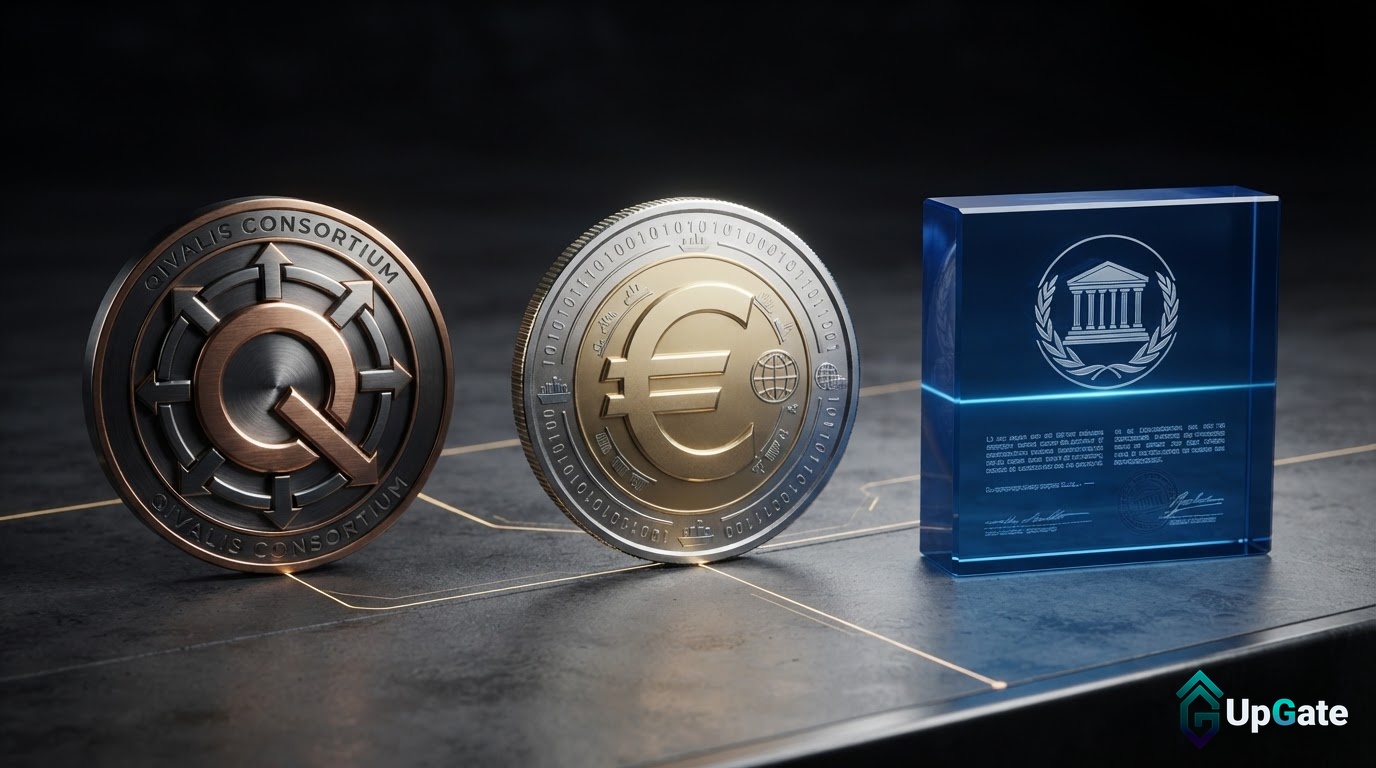
    Qivalis Consortium Developing Euro Stablecoin for Trade Finance, Awaiting Regulatory Decision

    Qivalis, a consortium comprising 37 banks across 15 European countries, is developing a euro-pegged stablecoin aimed at trade finance and cross-border settlement. The project plans to launch the token on the public Ethereum blockchain in the second half of 2026, pending a regulatory decision from De Nederlandsche Bank (DNB).

    Currently in its pre-issuance regulatory phase, Qivalis has not yet minted any tokens. The successful issuance is contingent on DNB granting authorization for Qivalis to operate as an electronic money institution under the EU’s Markets in Crypto-Assets Regulation (MiCA), which involves demonstrating compliance with capital requirements, governance standards, and consumer protection obligations.

    Structured as an electronic money token under MiCA, Qivalis plans to back its stablecoin with at least 40% in bank deposits and the remainder in high-quality euro-area sovereign bonds. The consortium selected Fireblocks as its technology partner for tokenization and compliance infrastructure in April 2026.

    Established in September 2025 and formally branded in December of that year, Qivalis has seen significant growth, expanding from nine founding member banks to its current 37. Jan-Oliver Sell leads Qivalis as CEO, with Sir Howard Davies serving as the chair of the supervisory board.

    Qivalis targets the Europe-Asia trade finance corridor, a market valued at approximately $5 trillion annually. Traditional trade finance often involves paper-based processes, numerous intermediaries, and settlement times measured in days. By introducing an on-chain euro settlement layer, Qivalis aims to shorten these settlement periods and reduce the counterparty risk inherent in multi-step transactions.

    The decision to deploy on the public Ethereum blockchain marks a departure from the preference for permissioned or private blockchains seen in many bank-led digital currency initiatives. Qivalis is instead leveraging Ethereum’s composability and existing decentralized finance (DeFi) ecosystem.

    In the broader stablecoin market, dollar-denominated stablecoins dominate with over 95% of global market share, while euro-denominated stablecoins represent a smaller fraction, between 0.2% and 1%. Although competitors such as Circle (EURC) and Societe Generale’s Forge unit (EUR CoinVertible) have introduced euro-denominated stablecoins, Qivalis’s extensive multi-bank consortium backing could offer a substantial distribution network and a competitive edge.

    Despite the potential for efficiency gains in trade finance, the project faces key uncertainties, primarily the pending regulatory decision from De Nederlandsche Bank. The future market share of euro-denominated stablecoins and the long-term value of utilizing a public blockchain remain to be determined. The project is currently on hold, awaiting confirmation of regulatory approval before it can proceed with issuing its stablecoin.

    Why This Matters

    The development of Qivalis’s euro stablecoin for trade finance is a significant institutional effort, but its success is contingent on regulatory approval from De Nederlandsche Bank and market adoption in a nascent euro stablecoin space.

    Broader Context

    Qivalis’s initiative highlights the ongoing efforts to leverage blockchain technology for trade finance, with the consortium aiming to address inefficiencies in the Europe-Asia corridor.

  • NEAR Tokenized Stock Launch Prioritizes Distribution Over Scale

    NEAR Tokenized Stock Launch Prioritizes Distribution Over Scale

    NEAR Crypto and Ondo Finance Launch Tokenized Stocks on NEAR.com

    NEAR Protocol and Ondo Finance have introduced access to tokenized U.S. stocks and exchange-traded funds (ETFs) through the NEAR.com platform, initially offering 20 assets. These include major companies like Nvidia, Tesla, Apple, Microsoft, and Amazon, as well as ETFs such as SPY and QQQ.

    Eligible users can fund their accounts using stablecoins or other supported cryptocurrencies from over 30 different networks. NEAR Intents, functioning as a cross-chain distribution layer, will eventually route these tokenized securities to connected wallets, applications, and decentralized finance (DeFi) protocols.

    This launch emphasizes distribution capabilities rather than the sheer number of assets. While Ondo’s broader tokenized stocks platform lists over 100 stocks and ETFs, NEAR’s initial rollout via Near.com provides access to approximately one-fifth of that catalog.

    NEAR Intents Powers Cross-Chain Access

    NEAR.com serves as the primary user interface for this integration, with NEAR Intents operating as the underlying cross-chain routing layer, according to information released by Ondo Finance. This distinction is significant: NEAR.com is where users create accounts and execute trades, while NEAR Intents is designed to enable other wallets and DeFi protocols to surface these real-world assets to their own user bases.

    Ondo’s comprehensive platform offers more than 100 tokenized stocks and ETFs, encompassing individual equities, indexes like QQQ and SPY, and fixed-income ETFs such as TLT, TIP, and AGG. The selection of 20 assets on NEAR is a subset of this larger offering, and the full Ondo application at app.ondo.finance remains the definitive source for the complete list.

    Transaction Flow and USDon Stablecoin

    Purchases are processed using USDon, a stablecoin that Ondo states is backed 1:1 by U.S. dollars held in an Ondo Stocks brokerage account. If a user initiates a purchase with a different stablecoin, the platform automatically swaps it into USDon before executing the tokenized stock purchase. This process is reversed upon redemption, a mechanism designed by Ondo to ensure instant buy-and-sell transactions, bypassing traditional settlement windows.

    The user experience is designed to be straightforward: eligible NEAR.com users deposit stablecoins or other supported cryptocurrencies from any of the more than 30 connected networks, then directly swap into an available tokenized stock or ETF in a single transaction. This streamlines what would typically be a multi-step bridging and onboarding process into a single action within the NEAR.com interface. The current offering is limited to 20 assets, not the full Ondo catalog, and a complete list beyond the named examples was not provided. Traders seeking specific tickers outside this initial set are advised to verify availability directly.

    Distribution Layer as Key Innovation

    The more significant aspect of this launch is the routing layer, NEAR Intents, rather than the initial ticker list. NEAR Intents is a cross-chain distribution mechanism capable of delivering Ondo’s tokenized equities to wallets, applications, and DeFi protocols beyond NEAR.com. This positions the 20-asset figure as a starting point for an expanding infrastructure, not a limitation.

    Ondo currently restricts its tokenized securities to companies listed on the NYSE and NASDAQ, with the potential to expand to other international exchanges in the future. Other platforms are exploring different distribution methods; for instance, Robinhood’s tokenized stock initiative on its own chain offers a point of comparison for how competing platforms are structuring access, though the underlying mechanics differ.

    Regulatory Considerations and Geographic Restrictions

    It is important to note that these offerings are not available to U.S. persons. Ondo’s documentation explicitly states that Ondo Stocks products are offered exclusively to organizations and individuals outside the United States and other prohibited jurisdictions, subject to their own eligibility criteria. Access is also restricted in certain regions.

    These are tokenized exposures to securities listed on the NYSE and NASDAQ, distinct from shares held in a conventional brokerage account. Regulators are still determining how to classify these distinctions across various jurisdictions. The broader U.S. regulatory stance on tokenized equities remains unsettled, and this launch does not alter the landscape for U.S.-based traders.

  • UK Banks Pioneer Interbank Tokenized Deposit Transactions

    UK Banks Pioneer Interbank Tokenized Deposit Transactions

    UK Banks Pioneer Blockchain-Based Tokenized Deposits in Landmark Trial

    London, UK – Major British banks, including Lloyds, NatWest, Barclays, and HSBC, have successfully conducted the world’s first interbank transactions using tokenized bank deposits on blockchain technology. The landmark trials, part of the Great British Tokenised Deposit (GBTD) project, signal a significant step towards faster, more programmable financial settlements within the UK’s banking sector.

    Real-World Tests Showcase Programmable Payments

    The GBTD project, announced by UK Finance, demonstrated the ability of tokenized deposits from different banks to move seamlessly across separate blockchain systems and automate payment settlements. This innovation aims to deliver the benefits of digital currency while maintaining the security and protections associated with traditional bank deposits.

    Lloyds Banking Group, NatWest, and Barclays participated in live remortgage transactions. In these tests, funds were held securely on the blockchain until the property transfer was confirmed. Upon verification, the money was automatically disbursed between the banks.

    Concurrently, HSBC led a separate trial simulating an online marketplace purchase. This test utilized programmable deposits to hold the buyer’s funds, which were then automatically released to the seller once the delivery of goods was confirmed by the system. The technology powering these transactions was provided by Quant Network.

    Supporting Regulated Digital Currency

    The successful trials align with the Bank of England’s objective to ensure digital money remains within the purview of regulated financial institutions. Unlike privately issued stablecoins, tokenized deposits represent existing bank deposits converted into digital tokens on a blockchain. This approach leverages the security of bank money while incorporating blockchain’s efficiency and programmability, enabling faster payments and the implementation of automated rules for fund transfers.

    Bank of England Governor Andrew Bailey has previously voiced concerns regarding the risks associated with privately issued stablecoins.

    Future Expansion to Digital Bonds

    UK Finance has indicated that banks are already progressing to the next phase of development, with plans to issue three tokenized digital bonds in early 2027. These bonds are expected to utilize the same tokenized deposit system for trading, clearing, and settlement, offering a platform for banks to explore blockchain applications beyond basic payments and into larger financial transactions.

    Industry analysts anticipate substantial growth in tokenized financial assets. The Citi Institute, for instance, forecasts that the market for tokenized financial assets could expand to between $5.5 trillion and $8.2 trillion by 2030.

  • 21Shares Lists Europe’s First Zcash ETP on Euronext Exchanges

    21Shares Lists Europe’s First Zcash ETP on Euronext Exchanges

    21Shares has launched Europe’s first exchange-traded product (ETP) for Zcash, listing on Euronext Paris and Euronext Amsterdam on September 22. The ETP, trading under the ticker ZCASH, offers investors regulated exposure to the privacy-focused cryptocurrency.

    The fund is physically backed, meaning it holds the underlying Zcash tokens, with BitGo serving as the institutional custodian. On its launch day, the Zcash ETP had 5,000 securities outstanding, a net asset value of $20.04 per unit, and approximately $100,000 in assets under management. The ETP charges an annual management fee of 2.5%.

    This new product aims to simplify access to Zcash for European investors by removing the operational complexities associated with direct cryptocurrency ownership, such as setting up exchange accounts or managing private keys. The ETP provides exposure to Zcash’s unique features, including its optional shielded transactions that allow users to obscure sender, receiver, and transaction amounts, a capability not present in more transparent cryptocurrencies like Bitcoin and Ether.

    Zcash, which forks Bitcoin’s code, maintains a 21 million coin cap, proof-of-work mining, and a halving schedule. Coinholders recently voted with 98.9% in favor of retaining the Bitcoin-style halving model. This structure is designed to keep inflation in check.

    The 2.5% annual management fee for the Zcash ETP is higher than those typically seen for Bitcoin or Ethereum ETPs. According to interpretations of the market, this premium is attributed to the less common nature of Zcash custody for institutional custodians, suggesting 21Shares is betting on regulated demand for privacy coin exposure justifying the increased cost.

    Recent market activity shows Zcash has experienced significant gains, with its price (ZEC) reportedly gaining over 2,700% this year. On Wednesday, ZEC pushed past $1,600, reaching an intraday high near $1,680 before settling around $1,522. The cryptocurrency’s market capitalization is reported to be near $27.5 billion.

    In related developments, Grayscale converted its Zcash Trust into the ZCSH ETF on NYSE Arca in August. Grayscale’s ZCSH has attracted over $233 million and holds close to $890 million in assets. A 3-for-1 share split for Grayscale’s ZCSH is scheduled for September 30.

    The launch of the Zcash ETP by 21Shares may indicate increased investor interest in privacy coins, a trend also reflected in the performance of ZEC and the actions of asset managers like Grayscale. The ETP offers a regulated avenue for European brokerage investors to gain exposure to Zcash’s distinct features and market dynamics.

    Why This Matters

    The materials describe a narrow update: 21Shares launched a physically backed Zcash ETP on Euronext Paris and Euronext Amsterdam, charging a 2. The ETP removes the operational headache of buying Zcash directly for investors, such as opening crypto exchange accounts or managing private keys.

    Broader Context

    Source materials place the factual news in this context: Zcash is a privacy coin that allows its users to shield balances and transfers, unlike more traditional crypto assets like Bitcoin and Ethereum, which are transparent by default.

  • NYSE and Blockchain.com Partner to Offer Tokenized US Stocks and ETFs

    NYSE and Blockchain.com Partner to Offer Tokenized US Stocks and ETFs

    The New York Stock Exchange (NYSE) and Blockchain.com have signed a memorandum of understanding to provide Blockchain.com users with access to tokenized U.S. stocks and exchange-traded funds (ETFs). This collaboration marks a significant step in bridging traditional financial markets with the digital asset space, reflecting a broader trend of convergence.

    Under the agreement, Blockchain.com users globally will be able to access tokenized U.S. equities and ETFs traded on NYSE’s planned digital alternative trading system (ATS), pending regulatory approval. The partnership also includes a reciprocal exchange of market data. NYSE affiliate ICE Data Services will distribute Blockchain.com’s crypto market data and analytics to its clients, while Blockchain.com will integrate specific ICE and NYSE market data feeds into its platform.

    The tokenized stock market is experiencing rapid growth. As of Wednesday, the total value of distributed tokenized stocks reached $3.14 billion, an increase of over 18% in the past 30 days. The number of holders for these tokenized assets has also surged by nearly 72% to 3.87 million during the same period, according to data from RWA.xyz.

    This development occurs shortly after the U.S. Securities and Exchange Commission (SEC) introduced a five-year “Innovation Exemption” for certain tokenized securities venues. This exemption permits eligible venues to use permissioned automated market maker liquidity pools for trading without being classified as exchanges under the Exchange Act. A key condition requires tokenized stocks to offer the same rights and privileges as traditional shares. However, some existing products, like Kraken’s xStocks and Robinhood’s Stock Tokens, may not fully comply with these requirements in their current form, as they provide exposure to equities but do not grant holders the same rights as conventional shareholders.

    Reid Noch, vice president of U.S. equity market structure at TD Securities, told Cointelegraph that NYSE’s planned tokenized ATS appears to be primarily targeting retail investors, citing its planned 24/7 trading and request-for-quote functionality. He noted that the transition to instant settlement would likely require minimal adjustments to existing retail workflows due to pre-funded trades. Noch emphasized that true weekend trading could be particularly impactful for heavily traded retail stocks or during significant news events.

    Tanay Ved, senior research associate at institutional digital asset technology firm Talos, observed that crypto venues are increasingly evolving into multi-asset platforms, while traditional assets are adopting the 24/7, programmable structures pioneered by crypto. This trend is evident across major exchanges, with platforms such as Kraken, Binance, Coinbase, and Robinhood exploring their own methods for bringing equities on-chain.

    SEC Commissioner Hester Peirce has stated that while the current exemption addresses one specific model for tokenized securities, other approaches outside this framework are possible. The partnership between NYSE and Blockchain.com is subject to regulatory approval, and its full impact on the evolving landscape of tokenized securities remains to be determined.

    Why This Matters

    The materials describe a narrow update: NYSE and Blockchain. The partnership is subject to regulatory approval.

    Broader Context

    Source materials place the factual news in this context: Blockchain.com users could gain access to tokenized US stocks and ETFs through NYSE’s planned digital trading platform under a new partnership, as bourses rush to deliver new trading.

  • Circle’s StableFX Goes Live on Arc Mainnet for Continuous On-Chain FX

    Circle’s StableFX Goes Live on Arc Mainnet for Continuous On-Chain FX

    Circle has launched StableFX, its on-chain foreign exchange platform, enabling 24/7 currency trading on the Arc Layer 1 blockchain just six days after the mainnet went live. The system allows institutional participants to exchange more than 20 fully reserved stablecoins with atomic payment-versus-payment settlement, meaning both sides of a trade settle simultaneously or not at all.

    The global foreign exchange market handles approximately $10 trillion daily. However, much of this volume still relies on infrastructure that closes on weekends, necessitates bilateral agreements, and takes one to two days for settlement.

    StableFX integrates off-chain request-for-quote pricing with on-chain settlement on Arc. This approach allows users to obtain price quotes through traditional methods while executing trades on a continuous, always-available network that eliminates the need to trust counterparties with funds during the settlement period.

    The core innovation lies in its atomic payment-versus-payment mechanism. In conventional FX trading, a time lag exists between when one party sends their currency and when the other delivers theirs. This gap introduces settlement risk, historically known as Hershatt risk, named after a German bank that failed in 1974 due to such timing mismatches. StableFX eradicates this gap, ensuring that both legs of a trade either complete instantaneously or fail entirely.

    The platform supports currency pairs across over 20 fully reserved stablecoins. Circle’s Partner Stablecoins program, introduced with the StableFX testnet in November 2025, has been actively onboarding regional issuers to ensure the availability of stablecoins for currencies that institutions require for trading.

    Arc itself utilizes USDC for transaction fees and provides deterministic sub-second finality, a stark contrast to Ethereum’s approximately 12-minute finality. Sub-second finality signifies that a transaction is irreversibly confirmed in less time than it takes to blink.

    Mainnet Launch and Institutional Adoption

    Arc’s mainnet commenced on September 16, 2026, with over 100 institutional participants, including prominent names like BlackRock and Visa. This broad participation suggests that Arc is not merely a crypto-native experiment seeking mainstream acceptance but rather a mainstream financial solution built on blockchain technology.

    Circle minted 10 billion ARC tokens at the mainnet genesis. However, the company has not yet disclosed any plans for a public token launch.

    StableFX followed six days later on September 22, indicating that Circle had the FX platform ready for deployment as soon as the underlying blockchain proved stable. The testnet had been operational since late 2025, providing developers and early partners months to identify and resolve issues before live trading commenced.

    Streamlining Traditional FX Operations

    The traditional FX market operates through a complex network of bilateral relationships. For instance, a bank in Singapore looking to exchange yen for euros would need a willing counterparty, often involving routing through dealer banks, incurring spreads at each step, and facing settlement delays across different time zones and banking hours.

    StableFX aims to simplify this structure. By consolidating exchange operations onto a single blockchain with atomic settlement, it eliminates the need for intermediary banks, reduces the number of counterparty relationships each participant must manage, and ensures the market remains accessible around the clock, regardless of geographical location or banking hours.

    Payment providers and fintech firms are reportedly among the early adopters, a logical development given their high volumes of cross-border transactions and the FX costs associated with them.

    For investors monitoring the stablecoin sector, the Arc launch signifies a fundamental shift in how stablecoins derive value. USDC’s utility now extends beyond trading pairs on crypto exchanges or serving as collateral in decentralized finance. It has become the native gas token for a blockchain specifically designed for institutional finance, and StableFX integrates it directly into one of the world’s largest financial markets, valued at $10 trillion daily.

  • Canada’s Big Six Banks Collaborate on Tokenized Deposit System, Bolstered by Regulatory Clarity

    Canada’s Big Six Banks Collaborate on Tokenized Deposit System, Bolstered by Regulatory Clarity

    Canada’s six largest banks are jointly developing a tokenized deposit system for Canadian dollars, a move aimed at enabling faster and eventually programmable interbank payments. This collaborative initiative, announced on September 22, involves Bank of Montreal, CIBC, National Bank of Canada, Royal Bank of Canada, Scotiabank, and TD Bank Group, and follows closely on the heels of clarifying guidance from the Office of the Superintendent of Financial Institutions (OSFI).

    On September 10, OSFI issued guidance that clarified tokenized deposits, even when utilizing distributed ledger technology, would not be treated as a separate asset class. This regulatory clarification effectively removed a significant ambiguity that had previously hindered financial institutions exploring such innovations. The timing of the banks’ announcement, just 12 days after the OSFI guidance, suggests a coordinated strategy, likely informed by discussions with regulators and Payments Canada.

    Understanding Tokenized Deposits

    Tokenized deposits represent traditional bank deposits as digital tokens on a distributed ledger. This technological approach offers potential advantages over existing interbank payment systems, including near-instant settlement, the capability for conditional payments, and more seamless movement of funds across institutions. The OSFI’s clarification provides a clearer regulatory path for banks to experiment with and implement these technologies.

    Strategic Collaboration for Network Effects

    The decision for all six systemically important banks to participate from the outset is a strategic move designed to ensure network effects and overcome potential adoption hurdles. Tokenized deposits are most effective for interbank transfers when counterparties also recognize and accept them. By launching with full participation from Canada’s Big Six, the initiative proactively avoids the “chicken-and-egg” problem that has presented challenges for similar projects in other jurisdictions.

    Global Context and Canada’s Position

    This comprehensive approach distinguishes Canada’s initiative from other international efforts. For example, Singapore’s Project Guardian, led by the Monetary Authority of Singapore, has explored tokenized deposits alongside other digital assets. Similarly, the Bank for International Settlements has overseen projects examining tokenized money across borders. However, Canada’s initiative is notable for its broad institutional buy-in at the core banking sector level, coupled with explicit regulatory backing.

    While the announcement focuses on the development of the system, specific timelines for full implementation and detailed technical specifications have not yet been publicly disclosed. The initiative aims to modernize interbank settlement by leveraging distributed ledger technology for more efficient and programmable transactions. BMO, for instance, had previously partnered with Google Cloud and CME Group in March 2026 to develop tokenized cash capabilities, indicating prior exploration of such technologies within the sector.

    The coordinated launch by Canada’s Big Six banks, directly following OSFI’s guidance, signals a proactive approach to payment innovation within a defined regulatory framework. This development could set a precedent for how financial institutions and regulators collaborate on the adoption of new digital payment technologies.

    Why This Matters

    The materials describe a narrow update: Six major Canadian banks have announced a joint initiative to create a Canadian-dollar tokenized deposit system. Tokenized deposits offer advantages over traditional systems, such as near-instant settlement, conditional payments, and seamless movement across institutions.

    Broader Context

    Source materials place the factual news in this context: Canada’s financial regulator made this approach considerably easier to pursue.

  • ECB Launches Pontes System for Tokenized Asset Settlement

    ECB Launches Pontes System for Tokenized Asset Settlement

    The European Central Bank (ECB) has launched Pontes, a new system enabling banks to settle tokenized assets using central bank money. This initiative addresses a key obstacle to institutional blockchain adoption in Europe.

    Historically, connecting market infrastructure for crypto-style assets with the finality of central bank settlement has posed a significant challenge for institutions looking to engage with blockchain technology. The Pontes system provides a direct route for banks to achieve this final settlement in central bank money.

    The rollout of Pontes is expected to remove one of the most significant barriers to institutional blockchain adoption in Europe. By offering a mechanism for settling tokenized assets with central bank money, the ECB’s system aims to facilitate greater institutional participation in markets utilizing distributed ledger technology.

    While the full implications and the pace of adoption are yet to be determined, the introduction of Pontes marks a crucial step by the ECB in bridging the gap between emerging digital asset markets and established financial infrastructure. This development is of particular interest to financial professionals, regulators, blockchain enthusiasts, and institutional investors monitoring the evolving digital asset landscape.

    Why This Matters

    The materials describe a narrow update: The European Central Bank has introduced a new system called Pontes, which allows banks to settle tokenized assets using central bank money. The rollout of Pontes could remove one of the biggest obstacles to institutional blockchain adoption in Europe.

    Broader Context

    Source materials place the factual news in this context: The European Central Bank has launched Pontes, giving banks a new route to settle tokenized assets in central bank money.