Tag: Adoption & Partnerships

  • Securitize Stock Soars on Benchmark Buy Rating and $16 Target

    Securitize Stock Soars on Benchmark Buy Rating and $16 Target

    Securitize, the company laying the groundwork for Wall Street’s blockchain future, received a significant boost after Benchmark initiated coverage with a “Buy” rating and a $16 price target. The stock climbed on the news, which positioned the tokenization platform as the leading infrastructure provider in a market analysts predict could reach tens of trillions of dollars over the next decade.

    Infrastructure for Tokenized Assets

    Securitize provides the essential framework for issuing, managing, and trading tokenized securities, generating fees at each stage, mirroring the operations of traditional exchanges and clearinghouses. Benchmark’s analysts described this strategy using a term from the Gold Rush era: a “picks and shovels” play, highlighting Securitize’s foundational role in the burgeoning real-world asset tokenization market.

    Market Dominance and Key Partnerships

    The company commands approximately 70% of the U.S. tokenization market. Its most significant client relationship is with BlackRock’s BUIDL fund, a tokenized money market product that held around $1.7 billion in assets at the time of Benchmark’s report. Benchmark set its price target at $16 per share. In July 2026, Rosenblatt followed with its own “Buy” rating and a $14 target.

    Securitize is also pursuing a public listing on Nasdaq through a merger with Cantor Equity Partners II, aiming for the ticker symbol SECZ. Furthermore, the company has partnered with the New York Stock Exchange to develop infrastructure for trading tokenized stocks and ETFs.

    Market Potential and Competitive Landscape

    Benchmark’s report projected that the tokenization sector could attract over $30 trillion in assets within the next decade. For context, the entire U.S. stock market is currently valued at approximately $50 trillion. BlackRock CEO Larry Fink has publicly expressed his conviction that tokenization represents the next evolution of financial markets, with his firm managing over $10 trillion in assets.

    The competitive environment in tokenization is intensifying. Companies such as Ondo Finance and Franklin Templeton have introduced their own tokenized products, while established custodians like BNY Mellon are developing in-house blockchain capabilities.

    Regulatory Outlook

    The primary uncertainty remains regulatory clarity. The Securities and Exchange Commission’s stance on tokenized securities will be a critical factor in determining the pace at which institutional capital enters the space.
  • Apple and Google Recruit Executives with Stablecoin and Tokenized Deposit Expertise

    Apple and Google Recruit Executives with Stablecoin and Tokenized Deposit Expertise

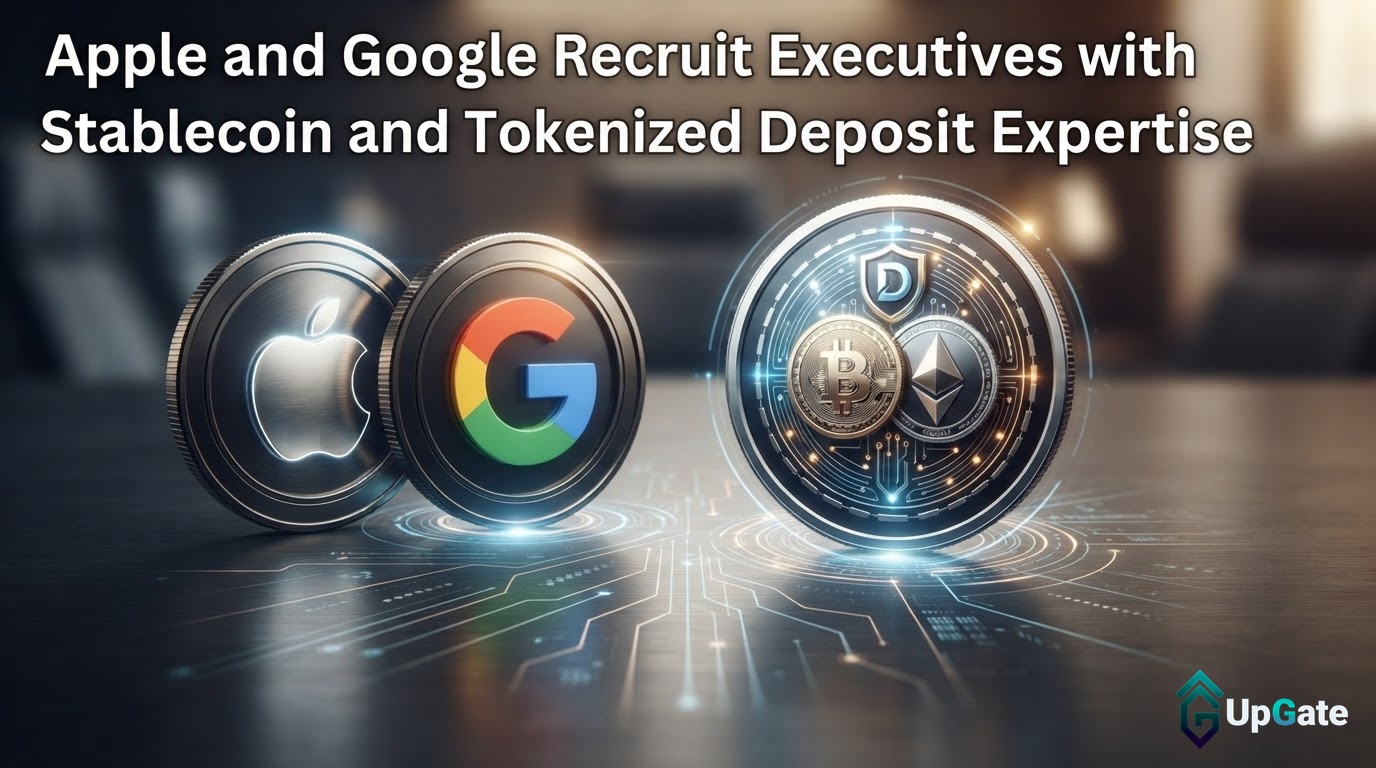
    Apple and Google are reportedly hiring executives with experience in stablecoins and tokenized deposits, signaling a strategic interest in digital assets and Web3 infrastructure. These moves suggest both technology giants are building internal expertise in these emerging financial technologies, according to job postings and industry analysis.

    Apple is seeking an ‘Apple Pay Financial Product Strategy Lead,’ with a reported annual salary range of $149,700 to $280,000. The job description indicates a need for familiarity with stablecoins, tokenized deposits, and cryptocurrency technology. While this role is part of Apple’s broader financial product strategy, the job postings do not imply that Apple is launching its own cryptocurrency product or that Apple Pay will support crypto payments. Apple’s existing financial services, such as Apple Card and Apple Cash, currently operate on traditional payment rails.

    Meanwhile, Google is recruiting for a ‘Web3 Industry Principal Architect’ in Hong Kong. This position focuses on supporting institutional digital asset projects in the Asia-Pacific region and requires experience in areas such as tokenization of real-world assets (RWA), stablecoin rails, digital asset custody, and cryptographic technologies like MPC and HSM. Google Cloud has previously engaged with blockchain technology, having launched initiatives like Universal Ledger and Agent Payments Protocol.

    The choice of Hong Kong for Google’s recruitment is notable, as the region is preparing for new regulations. Hong Kong’s stablecoin ordinance is set to take effect in August 2025, which will require licenses for issuers of fiat-pegged stablecoins. This regulatory environment may be a factor in Google’s strategic positioning.

    While these hiring initiatives indicate a growing focus on digital assets within both companies, analysis suggests the roles are more about extending enterprise infrastructure and developing strategic financial product capabilities rather than immediate public-facing cryptocurrency product launches. The infrastructure and compliance groundwork might be underway, but these hires do not suggest that Google is issuing its own stablecoins or that Apple is entering the cryptocurrency payment space. The exact nature and scope of Apple’s and Google’s future involvement in the digital asset space, as well as the specific timeline for any potential product integrations, remain uncertain.

    Why This Matters

    The materials describe a narrow update: Apple and Google have posted high-level job openings for roles requiring expertise in stablecoins and tokenized deposits, indicating a strategic interest in digital assets and Web3 infrastructure. Whether Apple or Google will launch specific cryptocurrency products or services.

    Broader Context

    Source materials place the factual news in this context: The article mentions previous news about Apple’s hardware VP disliking screen protectors and Coinbase launching perpetual futures for stocks.

  • Bank of Korea Launches Pilot for 24-Hour Korean Won Settlement Network

    Bank of Korea Launches Pilot for 24-Hour Korean Won Settlement Network

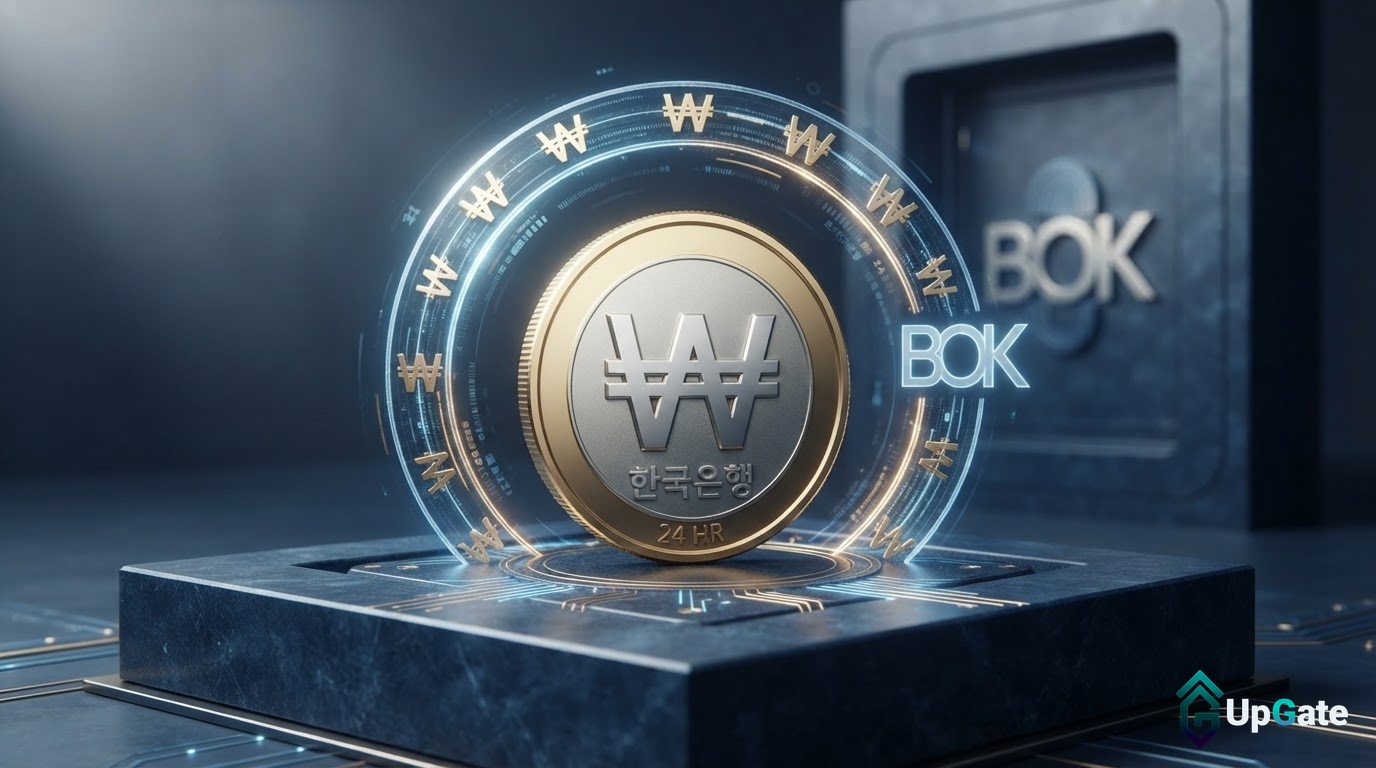
    The Bank of Korea (BOK) has initiated a pilot program for a 24-hour Korean Won settlement network, a significant step aimed at bolstering the international status of the Korean Won and enhancing foreign investor access to South Korean financial markets. The pilot, which commenced on Monday, September 21st, includes participation from four major Korean banks: KB Kookmin Bank, Woori Bank, Hana Bank, and Shinhan Bank.

    This new network enables foreign investors to settle Korean Won (KRW) transactions during their local business hours, thereby mitigating time-zone limitations that previously was associated with settlement delays. This functionality is supported by Registered Foreign Institutions for KRW Business (RFI-K) accounts, a system established by the Financial Supervisory Service (FSS) in 2021. The RFI-K framework allows eligible foreign financial institutions to provide KRW settlement services to their overseas clients without requiring a physical presence in South Korea. The pilot effectively adds 24/7 cross-border wire transfer capabilities to this existing infrastructure.

    According to the central bank’s official announcement, the full launch of the 24-hour settlement network is slated for January 2027. At that time, the network’s reach is expected to expand to include a broader range of domestic and foreign financial institutions. This initiative is viewed as a crucial development in strengthening the internationalization of the Korean Won and its underlying cross-border payment infrastructure.

    The BOK stated in its announcement that the network is anticipated to attract increased foreign capital into Korea’s bond and stock markets by improving foreign investors’ access to KRW settlement infrastructure. This development aligns with a global trend where major economies are actively promoting the internationalization of their national currencies and enhancing their payment systems. In a regional context, Korea’s launch of this 24-hour network is being observed alongside China’s digital RMB (e-CNY) and the Bank of Japan’s digital Yen experiments.

    The pilot program directly addresses a key challenge for foreign investors: settlement delays was associated with by time differences. Previously, when European or American traders were active, Korean banks were often closed, leading to postponed settlements. The full implementation of the all-day network is expected to significantly alleviate this issue.

    Beyond traditional wire transfers, Seoul is also actively engaged in tokenized cross-border payments. The Bank for International Settlements (BIS)-led Project Agorá completed cross-border payment tests in July using tokenized central bank reserves and commercial bank deposits, with KRW as one of the test currencies. Furthermore, the BOK’s Project Hangang utilizes blockchain technology and wholesale central bank digital currency (CBDC) to settle tokenized commercial bank deposits, underscoring Seoul’s broader investment in digital financial infrastructure.

    Looking ahead, the extent of participation by major European and American commercial banks in the RFI-K network following the full launch in January 2027 will be a key variable. Increased participation could potentially enhance the frequency of KRW usage as a transaction currency in the Asian region. In comparison, Taiwan has not yet introduced a similar all-weather New Taiwan Dollar cross-border settlement mechanism, and foreign investment in its domestic bond and stock markets remains constrained by bank business hours, indicating South Korea’s advancement in this area of financial infrastructure.

    Why This Matters

    The materials describe a narrow update: The Bank of Korea (BOK) has initiated a pilot for a 24-hour Korean Won settlement network, allowing foreign investors to settle KRW transactions during their local business hours. The extent of participation by foreign banks in the RFI-K network after the full launch in January 2027 is a key variable.

    Broader Context

    Source materials place the factual news in this context: 韓國央行啟動 24 小時韓元交割網路試點,KB Kookmin、Woori、Hana、Shinhan 四家銀行先行接入。外國投資者可於當地營業時間透過 RFI-K 帳戶交割韓元,不需直接在韓國開戶。全面上線定在 2027 年 1 月,屆時將擴充套件至更多境內外機構。.

  • XRP Surges: Stripe AI Integration Fuels Ripple Rally

    XRP Surges: Stripe AI Integration Fuels Ripple Rally

    XRP Surges as Stripe Integration Fuels AI Payment Potential

    XRP is experiencing a significant uptick, reaching levels not seen since August. The digital asset surpassed $1.38 on CoinGecko, marking a 2% gain over the past week. This surge follows Ripple’s integration of XRP with Stripe’s payment tools, announced on September 17. Despite this recent momentum, the token remains 54% below its 2021 peak.

    Trading Volume Spikes Amidst Key Support Test

    In the last 24 hours, XRP has seen a slight dip of 3%, falling below the crucial $1.40 support level. However, trading volume has surged to $2.8 billion, signaling robust investor interest in the token.

    AI-Driven Demand Emerges with Machine Payments Protocol

    Fresh enthusiasm surrounds Ripple’s project following news of its XRPL’s connection to the Machine Payments Protocol. This integration enables AI agents to conduct transactions for data and services using XRP and RLUSD.

    XRPL Starter Kit Update Enhances Interoperability

    Ripple released version 1.1 of its XRPL Starter Kit on September 17. This update integrates XRP with the Machine Payments Protocol, developed by Stripe and Tempo. The new version introduces two key components: Machine Payments Protocol support and the Open Wallet Standard. The latter allows software to manage wallets across multiple blockchains through a single interface.

    The standard request-price-authorize-deliver flow now supports one-time payments using XRP and XRPL-issued assets like RLUSD. This development allows programs to pay for data and services in XRP autonomously, a novel demand mechanism that has emerged recently. Given Stripe’s substantial annual transaction volume, even a small fraction flowing through XRP could significantly impact the token’s dynamics. XRP also received a notable designation in March when the CFTC classified it as one of 18 digital commodities.

    Technical Outlook Suggests Potential for Further Gains

    XRP is currently trading at $1.38 as of September 20, having recovered from a weekly low of $1.29. The token is now testing its 50-day moving average, situated near $1.45. A sustained close above this level could pave the way for a move towards $1.55, the August high.

    Analysts at crypto.news project a bullish scenario for XRP, with a potential year-end price target of $3.00. The recent partnership with Stripe introduces a significant new use case that was not present just a week ago. XRP continues to trade 54% below its all-time high established in 2021.

    A decisive break above $1.55 would represent the first higher high since May and could rapidly reignite trading volume. Furthermore, exchange-traded fund (ETF) flows remain positive, with the current week showing an inflow of approximately $9 million.

    The latest XRP news underscores the strategic Ripple-Stripe collaboration, indicating substantial investment activity within the cryptocurrency space. Such developments tend to benefit digital assets with tangible operational tools. A sustained upward movement above $1.55 would mark a significant technical milestone, potentially attracting increased trading volume.

  • Dunamu Partners with Alatau City for Digital Finance Infrastructure Development

    Dunamu Partners with Alatau City for Digital Finance Infrastructure Development

    South Korean company Dunamu has signed a Memorandum of Understanding (MOU) with the Alatau City Administration and Alatau City Bank to develop digital financial infrastructure in Central Asia. The agreement, formalized in Seoul on September 15-16, 2026, aims to establish key digital financial services, including real-world asset tokenization, security token offerings (STOs), stablecoins, and digital payment solutions.

    This partnership is a significant component of the broader Alatau City megaproject, which has an estimated total investment target of $6 billion. Dunamu, known for operating South Korea’s largest cryptocurrency exchange, Upbit, will contribute its technical expertise to the initiative. The Alatau City Administration is expected to handle regulatory coordination and local institutional connections, with Alatau City Bank serving as the operational center for the project.

    As part of the agreement, Alatau City Bank is targeting up to $60 million in tokenization pilots focused on real estate and logistics projects. These programs are slated to launch before the end of 2026, leveraging the infrastructure of the Kazakhstan Stock Exchange. This initiative positions Alatau City as a potential hub for digital finance in Kazakhstan.

    Alatau City Bank has already demonstrated progress in digital payments, having integrated Binance Pay across more than 5,000 point-of-sale terminals. The megaproject has also attracted partnerships with Halyk Bank and Solana for payment integrations, underscoring a broader effort to build a comprehensive digital finance ecosystem.

    While the MOU outlines ambitious goals, several uncertainties remain. The exact nature and success of the pilot programs are yet to be determined, as is the specific regulatory framework that may govern these proposed digital financial services in Kazakhstan. The extent of Dunamu’s technical contribution beyond its established experience and the precise roles of other partners like Halyk Bank, Solana, and Binance in the broader project also require further clarity.

    The signing of the MOU coincided with Kazakh President Kassym-Jomart Tokayev’s state visit to Seoul, suggesting a deliberate diplomatic effort to foster technology partnerships within Kazakhstan’s emerging fintech sector. The success of the tokenization pilots by the end of 2026 could serve as a key indicator of Alatau City’s progress towards its digital finance hub ambitions.

    Broader Context

    Source materials place the factual news in this context: Dunamu is the company behind South Korea’s largest crypto exchange Upbit.

    Why This Matters

    This partnership signifies a significant move towards establishing digital financial infrastructure in Central Asia, with potential implications for tokenization, stablecoins, and payment solutions. The agreement between Dunamu, Alatau City Administration, and Alatau City Bank aims to develop these services, with specific targets for tokenization pilots by 2026. However, the full success and regulatory landscape remain to be seen, highlighting the developing nature of this story.

  • Column N.A. Integrates Stablecoin and Card Issuing for Fintech Clients

    Column N.A. Integrates Stablecoin and Card Issuing for Fintech Clients

    Column N.A., a federally chartered U.S. bank, has integrated support for USD Coin (USDC) and Tether (USDT) into its core banking platform, alongside full-stack card issuing capabilities for debit, credit, and prepaid products. This offering targets fintech companies seeking consolidated financial infrastructure.

    The platform bundles stablecoin settlement, card issuing, and traditional payment networks. Column’s stablecoin support directly interfaces with its existing fiat infrastructure, enabling clients to transition between USDC, USDT, and traditional currencies across payment networks such as ACH, FedNow, RTP, Fedwire, and SWIFT. This integration aims to streamline stablecoin-to-fiat conversions by reducing reliance on prefunding requirements and third-party intermediaries.

    As a chartered bank, Column N.A. manages its own ledger, processor, and banking rails under a unified regulatory framework. This structure allows the bank to directly handle stablecoin-to-fiat conversions, potentially mitigating counterparty risk and settlement delays associated with middleware providers. The bank also provides multicurrency account capabilities with access to global banking networks, including SEPA Instant transfers.

    Column reported annualized stablecoin transaction volume in the tens of billions shortly after the platform’s launch. The exact number of clients onboarded before the public announcement is not specified. This volume suggests commercial payment flows, card funding, and cross-border settlement are among the use cases.

    This development occurs amidst increased activity in the fintech infrastructure market. Mastercard acquired stablecoin infrastructure provider BVNK in August 2026, and Marqeta, a card-issuing platform, recently partnered with BVNK to enhance its stablecoin card capabilities. Column’s direct banking approach is positioned as an architectural advantage over processors like Marqeta, which depend on partner banks for essential functions. Column’s strategy emphasizes independence from card network overhead for backend infrastructure needs.

    Founded by William and Annie Hockey, Column N.A. is founder and employee-owned, distinguishing it from many venture capital-backed fintech companies. The bank’s chartered status is highlighted as a key differentiator, enabling direct deposit holding, Federal Reserve payment clearing, and operation under a single regulatory framework, unlike the fragmented licensing required for many fintech companies.

    While Column’s card issuing capabilities still utilize existing networks for point-of-sale transactions, the integrated offering provides consolidation benefits by reducing the number of vendors and potential points of failure in a fintech’s technology stack. The competitive pressure on Marqeta could be significant, as Column’s integrated product offering potentially weakens the value proposition of standalone card processors. For Mastercard, the BVNK acquisition provides stablecoin capabilities within its existing network, serving a different market segment than Column’s direct banking approach for backend infrastructure.

    Why This Matters

    The materials describe a narrow update: Column N. The exact number of clients onboarded before the public announcement.

    Broader Context

    Source materials place the factual news in this context: Column N.A., a federally chartered US bank, just made its play for the stablecoin infrastructure market.

  • Column Bank Launches Native Stablecoin Banking Services, Solana Default

    Column Bank Launches Native Stablecoin Banking Services, Solana Default

    Column, a chartered US bank, has launched native stablecoin banking services that support the instant conversion of USDC and USDT to USD and facilitate on-chain settlements. The new service, announced on September 16, integrates stablecoin functionality directly into the bank’s ledger, allowing for immediate conversion of incoming stablecoins and rapid settlement of outgoing transfers.

    Solana has been designated as the default network for these services, with support also extended to Ethereum and other major blockchain networks. This integration means that clients can receive stablecoins on-chain, have them instantly reflected as USD in their Column account, and then transfer these funds through traditional fiat payment networks such as ACH, FedNow, Fedwire, RTP, SWIFT, and checks. Conversely, clients can initiate transfers that settle on-chain within seconds, without the need to pre-fund crypto wallets or use separate exchanges.

    Column’s approach embeds stablecoin support directly into its core banking ledger, distinguishing it from middleware providers. As a chartered bank, Column can offer integrated services across payments, cards, stablecoins, and global banking under a single regulatory framework. This direct integration ensures that incoming stablecoins are immediately recognized as USD on the bank’s ledger, subject to the same compliance and risk protocols as other deposits.

    The bank’s existing client base includes fintech firms such as Brex, Ramp, Mercury, Bilt, Slash, and Kapital. The stablecoin banking service was part of a broader product rollout that also included full-stack card issuing, global banking solutions, and multicurrency accounts. This positions Column as a comprehensive infrastructure provider in the fintech sector, potentially competing with other financial infrastructure companies.

    Why This Matters

    Column’s integration of stablecoin banking services represents a significant step in bridging traditional finance with digital assets. By offering native support for stablecoins directly within its banking ledger, Column provides a more streamlined and potentially regulated pathway for businesses to manage digital currencies alongside traditional fiat. This move could influence how other financial institutions approach digital asset integration, potentially leading to broader adoption and more robust infrastructure for stablecoin transactions within the existing financial system.

    Broader Context

    This development positions Column as a key infrastructure provider in the fintech space, offering integrated services that span payments, cards, stablecoins, and global banking under a single regulatory umbrella. The direct integration of stablecoin functionality into its core banking ledger distinguishes Column from middleware providers and highlights its strategy to offer a comprehensive suite of financial solutions.

  • Evernorth CEO: Wall Street’s Decade-Long XRP Reversal Underway

    Evernorth CEO: Wall Street’s Decade-Long XRP Reversal Underway

    RLUSD Expansion Bolsters XRP Ledger Liquidity, CEO Says

    The expansion of RLUSD, a dollar-backed stablecoin, on the XRP Ledger is crucial for enhancing liquidity across the network, according to Evernorth CEO Ashish Birla. He described the stablecoin as “paramount” to the broader XRP ecosystem. Birla noted that RLUSD’s share of the XRP Ledger supply has surged from approximately 20% to 34%, representing a 642% increase.

    Birla linked this growth to the current state of global finance, where “almost every financial product, equities, gold, and so forth, is usually paired and settled with US dollars.” He argued that a high-quality dollar stablecoin on the ledger is fundamental to developing deeper order books, benefiting both the XRP Ledger’s native exchange and decentralized platforms involved in global trade.

    Total Tokenized Asset Value Reaches Record $4.4 Billion

    The total value of tokenized real-world assets on the XRP Ledger has reached a record $4.4 billion, according to Birla. He presented this figure as evidence that institutional participation is accelerating, rather than remaining on the sidelines.

    Birla contrasted his experiences meeting with Wall Street institutions a decade ago with more recent interactions. Ten years prior, he recalled, institutions would listen to pitches about XRP and blockchain but lacked concrete plans, offering only proof-of-concept experiments. This past summer, however, his meetings with similar institutions revealed a markedly different attitude. “They’re not waiting,” Birla stated. “They are building teams. They are deploying. In their mind, this is happening.”

    He cited BlackRock’s involvement through its BUIDL fund as an example of this institutional shift, alongside ongoing regulatory clarity from the SEC under Chairman Paul Atkins.

    Evernorth’s Path to a Nasdaq Listing

    Evernorth is on track for a Nasdaq listing, pending a shareholder vote on a special purpose acquisition company (SPAC) deal and final regulatory approvals. Should the vote be successful and the listing finalized, Evernorth shares would trade under the ticker XRPN.

    XRP Liquidity Report Highlights Retail Activity Trends

    Addressing why retail account activity on the XRP Ledger has not mirrored the growth seen in institutional flows, Birla referred to Evernorth’s regularly published XRP Liquidity Report, which the company uses to monitor the ecosystem’s health. He indicated that the data suggests larger institutional accounts are now contributing a growing proportion of network volume, interpreting this as a strong institutional signal rather than a sign of declining retail participation.

    Birla did acknowledge that there is room for improvement on the retail front. He suggested that the broader XRP ecosystem needs to develop more features and use cases specifically designed to attract everyday users to engage with and build on the network, viewing this as an area for future growth rather than a current deficiency.

  • Binance Earn Unveils ETF Wealth Management

    Binance Earn Unveils ETF Wealth Management

    Binance Launches ETF Wealth Management for TradFi Access

    Binance Earn has introduced ETF Wealth Management, a new platform designed to offer users a consolidated gateway to traditional finance (TradFi) assets. The service focuses on cash management and income-generating strategies, including short-term U.S. Treasury ETFs and investment-grade bond ETFs.

    This offering serves as an information and access channel, distinct from savings products. It does not guarantee fixed returns, and ETF prices are subject to market fluctuations.

    The Binance ETF Wealth Management initially features a curated selection of 11 U.S.-listed ETFs. These are categorized to suit cash management and stable income needs, spanning time horizons of under six months (Cash Management), six to twelve months (Steady Income), and over one year (Yield Enhancement). The selection aims to meet the diverse tenor requirements of cryptocurrency users seeking TradFi yield assets like U.S. Treasuries and investment-grade bonds.

    How to Access:

    App:

    1. Navigate to the [Earn] section and select [TradFi].
    2. Choose the desired investment product and tap [Buy].

    Website:

    1. Navigate to the [Earn] section and select [TradFi].
    2. Choose the desired investment product and click [Buy].

    Further information is available on the ETF Earn Product Page, along with Frequently Asked Questions regarding ETF Earn and Binance Stock Trading.

    Binance reserves the right to amend or cancel this announcement at any time and for any reason without prior notice.

  • Binance Pay: Crypto Onramp and Onchain Payment Infrastructure

    Binance Pay: Crypto Onramp and Onchain Payment Infrastructure

    Binance Pay Unveils On-Chain Solutions to Enhance Business Payment Capabilities

    Binance Pay is broadening its business-focused payment offerings with a new suite of on-chain solutions tailored for wallets, trading platforms, decentralized applications (dApps), payment providers, merchants, and digital platforms.

    The new services are designed to enable wallets, dApps, Web3 platforms, and aggregators to convert users into funded customers without the need to develop their own standalone on-ramp experiences. Businesses can integrate Binance as an on-chain funding and payment route for wallet top-ups, account funding, deposits, and merchant payments.

    This expansion is particularly significant for payment platforms, fintech companies, trading platforms, and merchants aiming to incorporate Binance-powered on-chain payments into their customer journeys. Additionally, the solutions are engineered for API providers, developers, and AI platforms looking to build machine-to-machine and autonomous payment use cases.

    Key Features and Use Cases

    The new offerings include “On-ramp as a Service,” “Pay On-chain,” and “Agentic Payments (B402).”

    Primary Use Case:
    These solutions allow users to fund their wallets, top up accounts, make deposits, or pay merchants directly from their Binance account balances.

    Core Value:
    The primary value proposition is to convert non-crypto users into funded customers. Payments can be completed using any available Binance account balance. Furthermore, APIs and AI tools can be monetized autonomously and instantaneously on the BNB Chain.

    Settlement:
    Settlement options include direct transfers to receiving wallet addresses for “On-ramp as a Service” and “Pay On-chain,” and direct transfers to merchant wallets for “Agentic Payments.”

    Supported Assets:
    The platform supports over 400 cryptocurrencies and more than 100 fiat currencies. For “Agentic Payments,” specific stablecoins like USDT, USDC, U, and USD1 on the BSC network are supported.

    Businesses operating wallets, trading platforms, payment services, merchant platforms, dApps, API services, or AI platforms that are exploring cryptocurrency or on-chain payments are invited to explore these new capabilities. Interested parties can visit the Binance Pay Onchain page to submit an integration request, detailing their specific use case, target markets, and expected scale.