Tag: Adoption & Partnerships

  • XRP Price Update: Ripple News October 8

    XRP Price Update: Ripple News October 8

    Ripple Expands Strategic Partnerships and Stablecoin Gains Traction Amid XRP Price Volatility

    The past week has been a period of significant activity for the broader Ripple and XRP ecosystem, marked by new alliances and key developments concerning both the company and its native digital asset. This report will delve into the pivotal updates and explore contributing factors behind the recent downturn in XRP’s price.

    Strengthening Ties with Financial Giants

    Ripple has deepened its collaboration with financial powerhouse Brevan Howard, enhancing the firm’s access to multi-asset prime brokerage services. This move comes in response to escalating demand and the integration of investment infrastructure. The expanded partnership, through Ripple Prime, is designed to optimize Brevan Howard’s operations across various asset classes, encompassing both traditional and cryptocurrency markets, with the goal of improving capital efficiency. This strategic enhancement follows Ripple’s substantial $500 million investment round in 2025, in which Brevan Howard was a key participant, signifying a notable progression in their relationship post-SEC settlement.

    South Korean Market Expansion

    In parallel, Ripple has secured a significant partnership in South Korea with Meritz Securities. This collaboration aims to bolster the securities firm’s digital asset infrastructure, with a particular focus on custody and tokenization solutions. The agreement aligns with the dynamic evolution of the local market and its regulatory framework. This development is part of Ripple’s broader strategic expansion within Korea, building upon previous agreements with entities such as K Bank and Kyobo Life Insurance.

    Ripple’s Stablecoin Surges Past $2.5 Billion Market Cap

    Ripple’s native stablecoin, RLUSD, launched in December 2024, has demonstrated considerable momentum in recent weeks, experiencing notable growth in both market capitalization and utilization. The introduction of Ripple Mint, a platform designed to provide institutional clients with a unified interface for accessing, minting, redeeming, and managing the stablecoin, has significantly accelerated its adoption rate. This surge has propelled RLUSD’s market cap above the $2.5 billion mark, positioning it as the 40th-largest cryptocurrency by this metric. Furthermore, RLUSD now ranks as the eighth-largest stablecoin, narrowing the gap with PayPal USD (PYUSD), which currently holds a market cap of $2.88 billion.

    ETF Demand Plummets, On-Chain Data Signals Selling Pressure

    In contrast to the positive developments for Ripple and its stablecoin, demand for XRP through exchange-traded funds (ETFs) tracking its performance saw a dramatic decline of 94% week-over-week. Inflows dropped from over $75.5 million to below $4.75 million in the past two full weeks. The current week has shown no signs of improvement, with ETFs experiencing only one day of positive inflows ($3.14 million) and two days with no reportable data.

    XRP Price Faces Headwinds Amidst Market Correction

    Despite initial analyst optimism for a breakout above the $1.51-$1.53 resistance level, with projections from analysts like Ali Martinez and ChartNerd suggesting potential targets of $1.80-$2.00, on-chain data revealed concerning trends. CryptoQuant reported a substantial surge in XRP transfers to Binance, with approximately 1.6 billion tokens flowing into the exchange over the last 30 days, indicating increased immediate selling pressure.

    The consequences of these factors were evident. Instead of breaching the $1.51-$1.53 resistance, XRP experienced a rejection and subsequently fell below $1.40. The asset has depreciated by over 6% in the past week, and its market capitalization has dropped below $90 billion. The primary drivers behind this price correction appear to be the sharp decrease in ETF demand, heightened selling pressure stemming from large token transfers to Binance, and a broader market-wide downturn. Bitcoin (BTC) recently dipped to $82,200 for the first time in over two weeks, while Ethereum (ETH) has seen a weekly decline of nearly 6%.
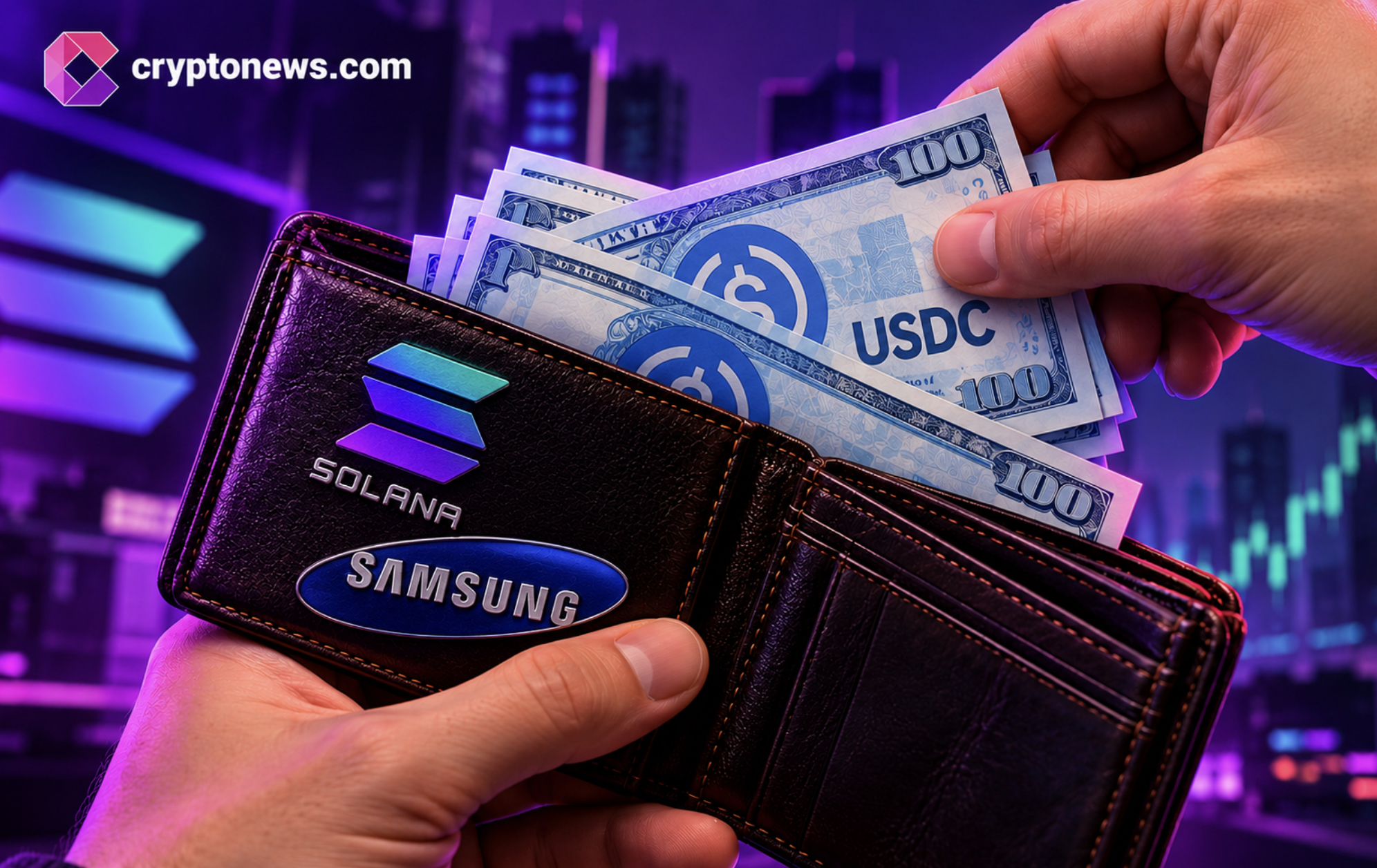
  • Samsung Wallet to Integrate USDC Transfers for US Galaxy Users in Late October

    Samsung Wallet to Integrate USDC Transfers for US Galaxy Users in Late October

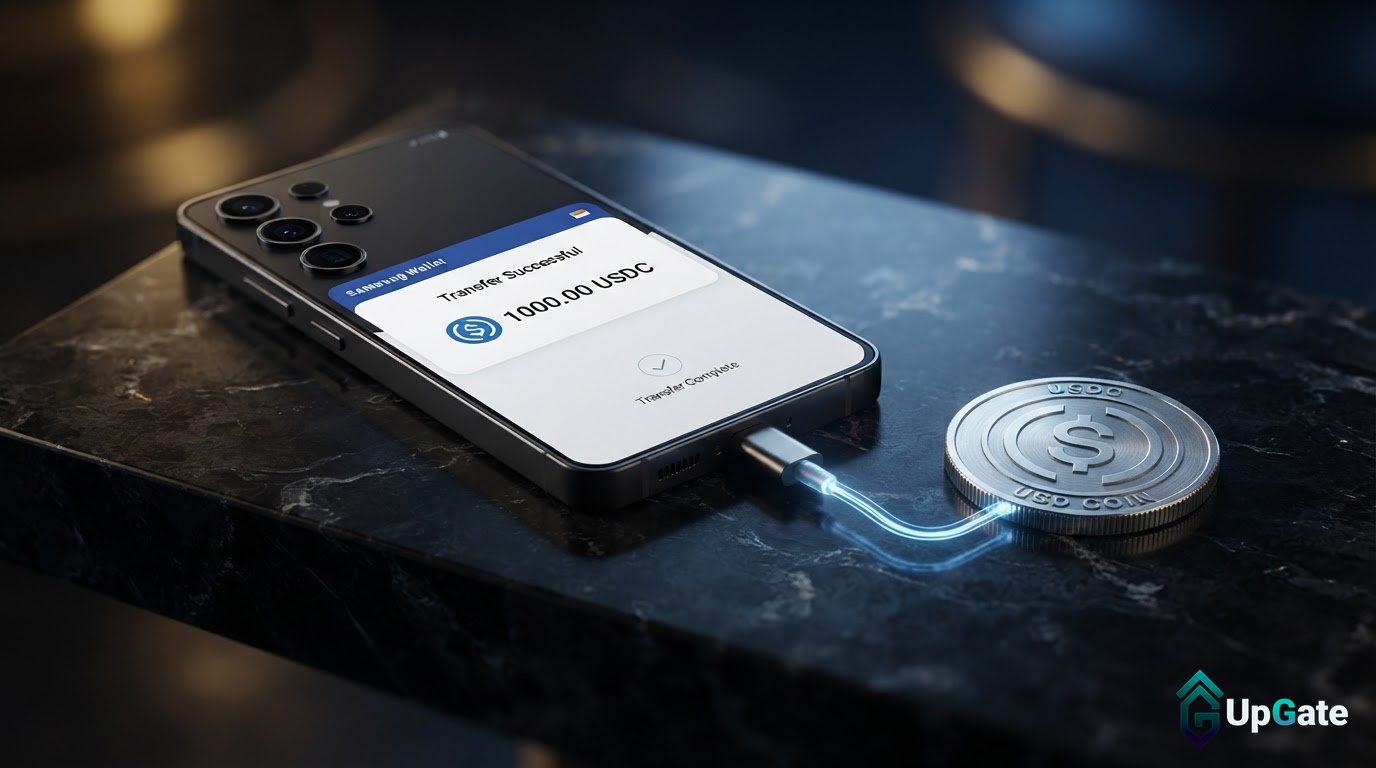
    Samsung Wallet is preparing to launch a new feature that may allow eligible users in the United States to conduct USDC (USD Coin) transfers. The functionality, expected in the last week of October, will enable users to send USDC to cryptocurrency wallets and transfer funds to bank accounts in over 60 countries.

    Samsung stated that the feature will be accessible on approximately 82 million compatible Galaxy devices in the U.S. Identity verification will be a prerequisite for accessing the service. According to Samsung, there will be no fees for transfers to external crypto wallets, though international bank transfers will incur fees. Recipients will be able to receive funds in their local currency.

    This integration involves several key partners. Bastion is providing the stablecoin account and payment infrastructure, while Coinbase will act as a sub-custodian through its Coinbase Prime Vault service. Samsung has also identified Solana and Sui as technical partners for this initiative.

    This development signifies Samsung’s strategic expansion into digital asset services, aiming to enhance user utility within its mobile payment ecosystem. By incorporating stablecoin transfers, Samsung Wallet is positioning itself to bridge traditional finance with the digital asset space. The partnerships with Bastion and Coinbase suggest a focus on security and compliance, while the involvement of Solana and Sui indicates the underlying blockchain technology supporting the feature.

    The introduction of USDC transfers is anticipated to increase the accessibility and usability of stablecoins for a broad consumer base, potentially driving further mainstream adoption of cryptocurrencies. The ability to seamlessly move funds internationally, both to crypto wallets and traditional bank accounts, addresses a key use case for digital assets.

    Why This Matters

    The materials describe a narrow update: Samsung Wallet is introducing a feature allowing eligible US Galaxy users to send USDC to crypto wallets and transfer funds to bank accounts in over 60 countries. Samsung is expanding its financial services offerings to include cryptocurrency transfers.

    Broader Context

    Source materials place the factual news in this context: Eligible US Galaxy will be able to send USDC to crypto wallets and transfer funds to bank accounts in more than 60 countries.

  • Samsung Wallet Adds USDC Support

    Samsung Wallet Adds USDC Support

    Samsung Wallet to Integrate USDC Transfers for U.S. Users

    Samsung Electronics America is set to introduce USD Coin (USDC) transfers within its Samsung Wallet application in the final week of October 2026. This expansion of stablecoin functionality will be available to eligible U.S. Galaxy users across an estimated 82 million compatible devices.

    The new feature will enable users to send USDC from Samsung Wallet to other compatible cryptocurrency wallets internationally, as well as to qualifying bank accounts in over 60 countries. Recipients of bank transfers will have the option to receive funds in their local currency, making the service accessible even to those without a cryptocurrency wallet.

    Samsung is framing this integration as a simplified approach to stablecoin transactions, aiming to eliminate the need for users to download separate cryptocurrency apps or manage private keys. The widespread availability of compatible devices presents a significant potential distribution channel, though user adoption will hinge on eligibility criteria, supported destinations, and user preference compared to existing payment methods.

    Samsung has stated that it will not impose fees for USDC transfers to external compatible wallets. However, recipients’ wallet providers or exchanges may levy their own charges. The speed of transfers will be contingent on blockchain network conditions, and transactions to sanctioned jurisdictions will be prohibited.

    For transfers to bank accounts, a different fee structure will apply, with charges varying based on the destination country and the transfer amount. Samsung Wallet will present the applicable fee and an estimated delivery time for sender confirmation. Eligibility for country and recipient bank accounts will also vary.

    The cross-border payment framework will be powered by Bastion, with Coinbase serving as Bastion’s official sub-custodian, securing USDC through Coinbase Prime Vault. Samsung has indicated that regulated partners will manage stablecoin accounts, custody, and money movement services. The company itself will not function as a bank, money transmitter, or digital asset custodian, and will not hold customer funds.

    Initiating transfers on compatible Galaxy devices will require biometric authentication. Samsung has identified Solana and Sui as partners providing infrastructure and blockchain network capabilities for the service.

    “We’re bringing USDC transfers into Samsung Wallet so eligible Galaxy users can get started without installing another app or managing private keys themselves,” said Woncheol Chai, Samsung’s Executive Vice President and Head of the Digital Wallet Team.

    The service is currently restricted to eligible U.S. residents aged 18 and older who possess a Samsung Account and a compatible Galaxy device running Android 13 or higher. Users will be required to complete account registration, identity verification, and set up biometric authentication on their registered device.

    When users select the “Buy Stablecoin” option, USDC will be presented as the default dollar stablecoin. This refers to the displayed choice of stablecoin, not a comprehensive purchase or cash-out process. The announcement does not detail all available funding methods or confirm the ability for users to convert between U.S. dollars and USDC entirely within the app.

    Users will need to select a compatible cryptocurrency wallet or an eligible bank destination, subject to supported networks, countries, and recipient account rules. For bank transfers, fees and estimated delivery times will be displayed prior to confirmation, with partner terms and delivery times applicable.

    USDC is the initial stablecoin to be supported, with the U.S. launch slated for the last week of October across eligible devices. Samsung has indicated that future capabilities may include online or in-store tap-to-pay purchases and expansion into additional international markets.

  • Solana Stablecoin Users Hit Record 14 Million

    Solana Stablecoin Users Hit Record 14 Million

    Solana Network Sees Record Surge in Stablecoin Holders

    Solana has achieved an all-time high in stablecoin holders, with over 14.02 million unique addresses on the network holding these assets as of October 7, 2026. This figure represents a significant leap from under 4 million at the close of 2024.

    Stablecoin Adoption Accelerates

    Recent data indicates that Solana has welcomed more than 4 million new stablecoin holders since the beginning of the year. Over a broader timeframe, the network has seen an influx of over 10 million new holding addresses in less than two years. The total stablecoin supply on Solana now exceeds $15 billion. Stablecoins, pegged to fiat currencies like the U.S. dollar, serve as a mechanism for transferring dollar value on a blockchain without exposure to cryptocurrency price volatility.

    In September, Solana’s stablecoin supply reached a record $17.3 billion, positioning it as the third-largest blockchain by this metric, trailing only Ethereum and Tron. While the total dollar value on the network has receded from its September peak, the number of stablecoin holders continues to grow.

    Spending and Infrastructure Developments

    User spending is also on the rise, with cumulative transaction volume on stablecoin-linked cards surpassing $1 billion. These cards enable users to spend their stablecoin balances at conventional merchants.

    This milestone in holder numbers follows a significant infrastructure release. On October 6, 2026, the Solana Foundation introduced an open-source Delivery-versus-Payment (DvP) framework. In a DvP transaction, the asset and payment are exchanged simultaneously; if one does not occur, neither does. Solana’s implementation facilitates this atomic swap through escrow, meaning the transaction either fully completes or fails entirely. The framework is designed for the settlement of tokenized assets and cash within seconds.

    J.P. Morgan played a role in developing the standard, aligning it with institutional settlement requirements. The intended applications include tokenized stocks, funds, and other real-world assets.

    Shifting Use Cases and Future Outlook

    Historically, Solana has been recognized as a hub for decentralized finance (DeFi), encompassing trading, lending, and yield generation managed by smart contracts rather than traditional financial institutions. The increasing number of stablecoin holders and the growth in card spending suggest a broadening adoption for retail and payment purposes. Concurrently, the DvP framework targets enterprises and institutions seeking to transfer tokenized real-world assets with reduced risk.

    An expansion in stablecoin holders signifies increased user interaction with the Solana network, potentially driving demand for SOL, its native token. SOL is essential for transaction fees, thus linking broader network usage directly to the token’s utility.

    It is important to note that holder counts reflect unique addresses, not necessarily individual users, as one person can manage multiple addresses. The decrease in stablecoin supply from September’s $17.3 billion high to just over $15 billion is another metric to monitor.

    Solana currently ranks behind Ethereum and Tron in terms of stablecoin supply. Ethereum remains the primary platform for institutional DeFi, while Tron has established a significant presence in dollar transfer services.

    Several key developments warrant attention moving forward. Firstly, it remains to be seen whether Solana’s stablecoin supply will rebound towards its September record or continue to decline. Secondly, the extent to which institutions will adopt and build upon the DvP framework is a crucial factor. Finally, the sustained growth of card transaction volume beyond the $1 billion mark will be closely observed.

  • Grayscale Taps BitGo Bank & Trust as Additional Custodian for Hyperliquid Staking ETF

    Grayscale Taps BitGo Bank & Trust as Additional Custodian for Hyperliquid Staking ETF

    Grayscale has appointed BitGo Bank & Trust as an additional custodian for its Hyperliquid Staking ETF. This move highlights the growing complexity of institutional custody arrangements for digital assets, particularly for altcoin and staking products.

    The addition of BitGo Bank & Trust signifies a strategic diversification of custody services for a portion of the assets held within the Hyperliquid Staking ETF. This development reflects a broader trend in institutional finance as it adapts to the unique requirements of crypto-native financial products.

    According to an SEC filing, the evolving landscape of altcoin and staking products is leading to the development of more intricate institutional custody structures. These structures are being built around assets that were once predominantly traded within crypto-native venues, indicating a maturation of the market and the infrastructure supporting institutional involvement in digital assets.

    The appointment of an additional custodian by Grayscale suggests a growing need for specialized and robust custody solutions to manage the diverse nature of digital asset investments. This trend may signal increasing institutional adoption of crypto custody solutions as firms seek to provide secure and compliant handling of these assets.

    This adaptation points towards a maturing financial infrastructure in the cryptocurrency space, where institutional players are actively developing and utilizing sophisticated custody solutions to navigate the complexities of staking and altcoin products, crucial for the continued integration of digital assets into traditional financial frameworks.

    Why This Matters

    The materials describe a narrow update: Grayscale has added BitGo Bank & Trust to provide custody services for a portion of the assets held by its Hyperliquid Staking ETF. Institutional adoption of crypto custody solutions is increasing.

    Broader Context

    Source materials place the factual news in this context: Grayscale has added BitGo Bank & Trust as an additional custodian for a portion of the HYPE held by its Hyperliquid Staking ETF.

  • XRP Surges on Ripple’s South Korean Partnership

    XRP Surges on Ripple’s South Korean Partnership

    Ripple and Meritz Securities Forge Strategic Partnership to Explore Digital Asset Infrastructure in South Korea

    Ripple, the blockchain payment company, has announced a strategic partnership with South Korean brokerage firm Meritz Securities to assess the potential integration of Ripple Custody and its tokenization infrastructure within the country’s capital markets. This collaboration comes at a pivotal moment as South Korea moves towards formal regulatory recognition of digital assets, while the price of XRP, Ripple’s native token, has recently dipped below $1.50.

    The partnership aims to introduce institutional-grade digital asset custody and tokenization services to the South Korean market. Meritz Securities stated that it is actively examining potential business avenues that could become relevant as digital assets are incorporated into the regulated financial system.

    The companies intend to commence their cooperation within the existing framework of securities business rules and regulations. Future expansion will be considered in stages, aligning with the ongoing development of South Korea’s digital asset regulatory landscape.

    While Meritz Securities is exploring various digital asset services that could benefit its capital markets operations amidst evolving regulations, the firm has not yet tied these potential activities to Ripple or confirmed their future implementation. The assessment will focus on how different digital asset services can be integrated into Meritz’s capital markets business.

    Tokenized securities, which represent financial assets on a blockchain, have issuance and investor rights that are contingent on the specific product and its legal structure. Consequently, the relationship between tokenization, ownership, and liquidity is crucial for evaluating any future offerings.

    Ripple Custody is designed as an institutional solution for safeguarding and managing digital assets, while Ripple’s tokenization infrastructure is intended for use by financial institutions. Both services are currently available to global financial institutions. The partnership with Meritz Securities will involve a joint review of how these offerings can be adapted for the Korean capital market.

    The announcement did not specify details regarding the blockchain network, custody volumes, asset issuance processes, customer segments, transaction mechanics, or operating models.

    For financial institutions, custody and tokenization represent distinct yet interconnected areas of infrastructure. Custody focuses on the secure holding and management of digital assets, whereas tokenization deals with the digital representation of assets. The specifics of how these functions will be integrated into a Korean service remain to be detailed.

    Institutional custody also encompasses operational controls and execution requirements that extend beyond mere asset safekeeping.

    Meritz Securities indicated that the arrangement seeks to leverage Ripple’s global digital asset infrastructure alongside the brokerage’s capital markets expertise. The firm plans to develop digital asset financial services incrementally as domestic regulations evolve.

    Fiona Murray, Ripple’s Managing Director for Asia-Pacific, stated that the company will investigate how digital asset infrastructure can support the continued growth of Korea’s capital markets. Neither company has provided a timeline for delivery or committed to a commercial launch.

    XRP is currently trading around $1.45, marking a 4.3% decrease over the past 24 hours and a 3.9% decline over the last seven days, according to CoinGecko. The token has also fallen from approximately $1.52 within the latest 24-hour period, suggesting that sellers currently hold the advantage in the short term.

    The market sentiment remains cautious, with XRP struggling to maintain recent gains despite Ripple’s expansion into South Korea’s capital markets. Prediction market data indicates that the $1.40 level is a significant downside support, while $1.60 represents a notable upside target for October.

    A sustained move above $1.60 could potentially lead to a stronger recovery in XRP’s price outlook. Conversely, a breach below $1.40 could expose the token to further declines. Currently, XRP appears to be trading within these boundaries, positioning the Ripple-Meritz partnership as a potential catalyst rather than an immediate driver of price action.

  • Lido Offers ETH Staking to BitGo Bank & Trust US Clients

    Lido Offers ETH Staking to BitGo Bank & Trust US Clients

    BitGo Enables Direct ETH Staking for US Clients via Lido Integration

    BitGo Bank & Trust, N.A. has announced a significant development for institutional investors in the United States, enabling eligible clients to stake Ether (ETH) directly through the Lido protocol within their existing BitGo accounts. The announcement, made on October 7, 2026, removes a key barrier for institutions looking to participate in Ethereum’s staking rewards.

    Clients will now be able to stake their ETH, receive liquid staking derivative tokens (stETH), and manage their entire position from a single, integrated platform. Liquid staking allows users to commit ETH to secure the Ethereum network and earn rewards without the traditional lock-up periods associated with direct staking. Lido issues stETH tokens, which represent a staked ETH position and can be traded or utilized elsewhere while the underlying ETH remains staked.

    This new integration streamlines the process for BitGo’s US clients, eliminating the need for additional operational workflows or the onboarding of new counterparties. All staking activities, stETH receipt, and ongoing management will now be handled seamlessly within the BitGo platform. BitGo is positioning itself as the first US-based qualified custodian to offer native ETH staking through Lido.

    Kean Gilbert, Head of Institutional Relations at the Lido Ecosystem Foundation, stated that the move provides the essential custodial support that institutions require to engage with Lido’s staking strategies. Nathan Stump, Managing Director at BitGo, highlighted that the company is maintaining its stringent security controls while ensuring the service integrates smoothly into clients’ existing asset management infrastructure.

    BitGo’s custody platform currently secures over $100 billion in digital assets, with $48 billion designated as staked assets. Lido, a leading liquid staking protocol by market share, manages over $25 billion in staked ETH, representing more than 25% of all staked ETH.

    The US launch follows an earlier expansion, with BitGo having connected clients in Europe and Asia to Lido’s staking services in July 2025. This prior rollout provided both companies with over a year of operational experience before extending the offering to the US market.

    The most immediate beneficiaries are US institutions already utilizing BitGo for ETH custody, as they can now access staking yields via Lido without needing to switch custodians or overhaul their operational systems. For Lido, this integration is expected to solidify its dominant position in the liquid staking market, potentially expanding its lead through a regulated US distribution channel.

    The move also sets a new benchmark for competitors in the custody sector. By becoming the first US qualified custodian to offer native ETH staking through Lido, BitGo has established a competitive advantage that rivals will likely seek to address.

  • Tether Partners Kazakhstan Central Bank on Stablecoins, Tokenized Assets

    Tether Partners Kazakhstan Central Bank on Stablecoins, Tokenized Assets

    Tether, the company behind the USDT stablecoin, has entered into a Memorandum of Understanding with the National Bank of Kazakhstan (NBK) and the Alatau City Authority (ACA). The agreement, signed on October 7, 2026, establishes a framework for exploring the potential applications of stablecoins, asset tokenization, and decentralized finance.

    Exploring Stablecoin and Tokenization Initiatives

    Under this agreement, the parties intend to collaborate on developing a stablecoin pegged to the Kazakhstani tenge. Additionally, they plan to initiate tokenization pilot projects in Alatau City, an emerging innovation district aiming to become a hub for fintech and smart city technologies. These pilot programs may utilize Hadron, Tether’s proprietary tokenization platform. Tokenization involves converting real-world assets, such as property or loans, into digital tokens that can be managed and traded on a blockchain.

    The scope of the agreement extends beyond technological implementation. It includes a commitment to studying international best practices for the issuance and regulation of stablecoins, as well as educational initiatives like workshops. The overarching objective is to promote financial stability and safeguard investor interests.

    Kazakhstan has set a target to tokenize projects valued at up to $60 million within Alatau City by the close of 2026. This figure comprises two key projects: the Iconic Tower, which aims for up to $50 million in financing, and the Birlik logistics center, targeting up to $10 million.

    Broader Digital Asset Ecosystem Development

    This MoU with Tether follows a separate agreement signed just days prior. On October 2, 2026, the Kazakhstan Stock Exchange (KASE) signed an MoU with the Alatau City Authority focused on establishing platforms for digital financial assets (DFAs). That earlier framework also encompasses tools for multi-currency stablecoin settlements.

    Alatau City is also collaborating with Dunamu to investigate the tokenization of real assets and the use of stablecoins.

    The strategic approach is characterized by a layered collaboration. The central bank contributes its monetary authority, the stock exchange provides market infrastructure, and Alatau City serves as a testing ground for these innovations. Tether brings its extensive experience in operating a stablecoin at scale and offers its tokenization platform to partners.

    The development of a local-currency stablecoin, such as one pegged to the tenge, could significantly enhance the currency’s presence in on-chain finance, an area where it currently has limited engagement, given the dominance of dollar-denominated stablecoins.

    It is important to note that the MoU is non-binding, and the proposed tenge stablecoin is an objective for exploration rather than a finalized product. The $60 million tokenization plan is also presented as an aspirational target.

    Key Developments to Monitor

    Several concrete developments will be crucial to observe moving forward. Firstly, the successful completion of the tokenization for the Iconic Tower and Birlik logistics center by the end of 2026 will be a key indicator. Secondly, the choice of platform for these tokenizations is significant; if Hadron is selected, it would represent a notable operational success for Tether. Finally, the progress of the tenge stablecoin initiative in conjunction with KASE’s settlement tools will be an important area to track.

  • FNB Introduces Crypto Trading for Retail Clients via VALR Partnership, Capping Transfers

    FNB Introduces Crypto Trading for Retail Clients via VALR Partnership, Capping Transfers

    First National Bank (FNB) has launched a cryptocurrency trading feature, ‘Crypto Investing,’ within its banking app, granting its approximately 9 million retail clients access to buy, sell, and trade digital assets. This new service, developed in collaboration with local crypto exchange VALR, became available on October 6, 2026, in South Africa.

    The ‘Crypto Investing’ feature supports five digital assets: Bitcoin (BTC), Ethereum (ETH), XRP, Solana (SOL), and Tether (USDT). FNB clients can begin trading with a minimum investment of R10 (approximately $0.60). The service operates 24/7, with purchases funded directly from clients’ FNB accounts. It is integrated into the bank’s existing share-trading platform, which also hosts other investment products.

    Despite the expanded access, FNB has implemented a key restriction: cryptocurrency acquired through the feature must remain within the bank’s ecosystem and cannot be transferred to external wallets or third-party exchanges. FNB attributes this limitation to two primary factors: compliance with South African exchange-control regulations and security measures designed to mitigate the risk of customers falling victim to scams or fraudulent platforms.

    FNB executives cited strong customer demand for alternative investments as a primary driver for the feature’s introduction. They framed the bank as a secure gateway to these markets, highlighting its established risk management framework. FNB has indicated plans to broaden the range of supported digital assets and intends to provide educational resources to help clients understand the complexities and risks associated with digital currencies.

    For VALR, the partnership offers a significant distribution channel, enabling access to FNB’s extensive client base. This move mirrors a similar arrangement made by Discovery Bank with crypto exchange Luno in November 2025.

    These developments occur amid growing cryptocurrency adoption in South Africa. By late 2025, an estimated over 6 million South Africans held crypto assets, with more than R25 billion in crypto assets reported under custody at major platforms. FNB’s introduction of this feature signifies a trend of traditional financial institutions integrating cryptocurrency trading into mainstream retail banking, with regulatory and security considerations shaping the implementation.

    Why This Matters

    The materials describe a narrow update: FNB has introduced a ‘Crypto Investing’ feature within its banking app, allowing approximately 9 million retail clients to buy, sell, and trade five digital assets (Bitcoin, Ethereum, XRP, Solana, and USDT) with a minimum trade of R10 ($0. The exact number of clients who will utilize the crypto trading feature.

    Broader Context

    Source materials place the factual news in this context: FNB is the retail banking arm of the FirstRand group.

  • Nvidia Nears $6 Trillion Market Cap on Record Stock Surge

    Nvidia Nears $6 Trillion Market Cap on Record Stock Surge

    Nvidia Nears $6 Trillion Valuation as Stock Hits New High

    Nvidia approached a $6 trillion market capitalization on Tuesday, with its stock climbing to another all-time high and extending a rally that has already made the chipmaker the world’s most valuable listed company.

    Stock Surge and Market Dominance

    Shares rose as much as nearly 2% on Tuesday morning, reaching a record $243.37 before paring some gains. Nvidia remained higher on the day, pushing its market value above $5.8 trillion and inching closer to a valuation milestone no company has previously achieved. To reach $6 trillion, Nvidia’s stock would need to trade at approximately $249 per share.

    The company’s stock has surged about 28% in 2026, adding roughly $1.2 trillion to its market capitalization. Apple, the second-largest company by market value, was valued at about $4.86 trillion as of Monday, creating a gap of approximately $900 billion between the two tech giants. Nvidia has also been the single largest contributor to the S&P 500’s roughly 14% advance this year, according to Bloomberg data.

    Strong Earnings Fueling Growth

    This remarkable rally follows another robust earnings report from Nvidia. The company announced $96.2 billion in fiscal second-quarter revenue, a 106% increase from the previous year. It forecast third-quarter revenue between $108 billion, with a 2% margin of error. Data center revenue for the quarter reached $89 billion, up 117% year-over-year.

    Adding further momentum, Nvidia’s board authorized an additional $150 billion for its share repurchase program in late September, bringing the total remaining authorization to $235 billion. The company anticipates completing this program by fiscal 2028.

    “This authorization reflects our confidence in the long term opportunity ahead,” said Nvidia CEO Jensen Huang. Huang has characterized Nvidia as “the world’s first and only growth value stock,” asserting that the company merges rapid expansion with a valuation that remains comparatively modest against its historical performance.

    Reversal of Fortune and Shifting Sentiment

    The current surge marks a significant turnaround from earlier in the year. As of March 30, Nvidia shares were down approximately 11% for 2026, a period when investors expressed skepticism about the potential returns from substantial investments in AI infrastructure.

    Investor sentiment has since shifted dramatically, buoyed by continued spending on AI infrastructure and Nvidia’s sustained strong revenue outlook.

    Expanding Beyond Chip Sales

    Nvidia’s expanding influence now extends beyond its core chip manufacturing business. As of July 26, the company’s equity investments in AI firms had reached $99 billion, a substantial increase from roughly $7 billion a year prior. In 2026 alone, Nvidia has committed over $40 billion to investments across frontier AI laboratories, infrastructure providers, and other entities within the AI ecosystem.

    In September, the chipmaker also announced its agreement to acquire the open-source AI platform Hugging Face for approximately $12.9 billion. This transaction includes roughly $11.9 billion for shareholders and up to $1 billion in equity-based retention awards, with the deal slated to close in the first half of 2027.

    Nvidia’s Presence in Crypto Markets

    Nvidia’s ascent has also increasingly intersected with cryptocurrency markets, coinciding with the growth of tokenized stocks on the blockchain. As the world’s largest company by market capitalization, Nvidia is now represented by several tokenized equity issuers, enabling eligible investors to gain exposure to its shares through blockchain-based assets.

    xStocks offers Nvidia as NVDAx, a token directly backed by underlying Nvidia shares held in custody. Ondo Finance provides Nvidia exposure through NVDAon, a token fully backed by underlying shares and cash in transit, available across networks including Ethereum, Solana, and BNB Chain.

    Other platforms have also brought Nvidia onto the blockchain. Coinbase offers NVDAc via its tokenized stocks platform on Base. Robinhood Europe provides its own NVDA Stock Token, though its structure differs as it operates as a derivative contract that tracks Nvidia shares rather than representing ownership of the underlying stock.