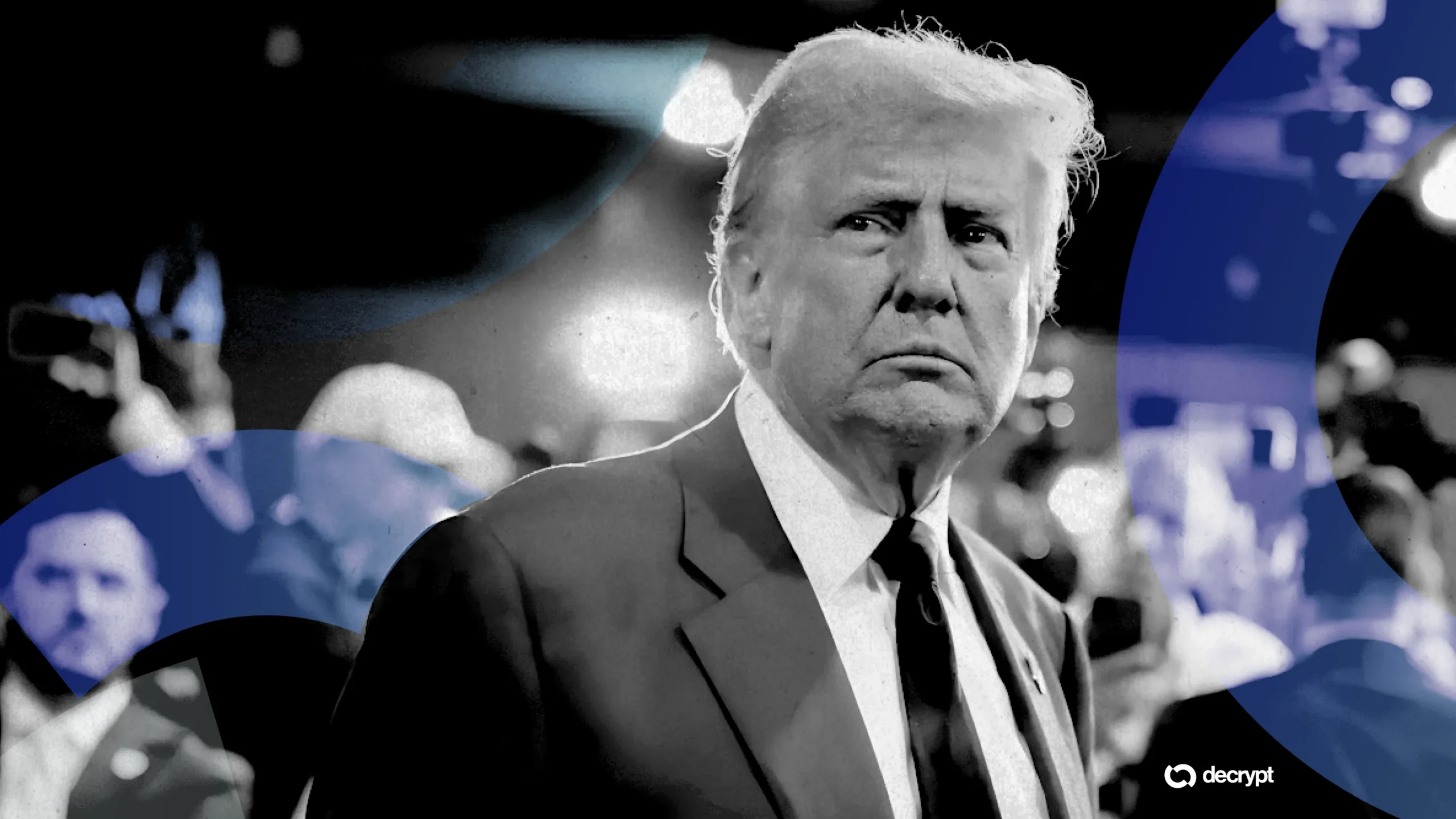
Trump Accelerates Post-Quantum Cryptography Transition, Sparking Debate
President Donald Trump’s executive orders aimed at accelerating the federal government’s shift to post-quantum cryptography by 2031 are eliciting both support and criticism from researchers. These experts suggest Washington is recalibrating its strategy in response to a rapidly evolving quantum landscape.
The executive orders, signed by Trump on Monday, advance the federal deadline for adopting post-quantum cryptography from 2035 to 2031. This move comes as governments, technology companies, and cryptocurrency developers intensify their efforts to prepare for future quantum threats.
Dr. Stefan Leichenauer, vice president of engineering and lead scientist at SandboxAQ, told Decrypt that while predicting an exact date for a cryptographically relevant quantum computer is challenging due to numerous unknowns, a timeframe of three to 10 years is plausible. “The critical point is that the consequences of a [cryptographically relevant quantum computer] are so profound that we must be prepared even for the most aggressive predictions,” he stated.
However, Leichenauer also cautioned that organizations might already be behind schedule in their migration to post-quantum cryptography. “We are moving fast on [post-quantum computing] migration, but given the long transition times for many systems, we are likely already behind schedule,” he explained. ” [Post-quantum computing] migration is a multi-year process, and a [cryptographically relevant quantum computer] is likely to appear before we finish.” He described the executive orders as a necessary “wake-up call,” emphasizing quantum security as an urgent priority.
Alex Pruden, CEO of quantum security firm Project Eleven, believes the White House’s revised timeline was long overdue. “There have been a lot of rumblings about advances in quantum computing, and other countries have updated their timelines, most recently France,” Pruden told Decrypt. “When this order came out, I guess my reaction was that’s good, that’s about time.”
Pruden considers the 2028 target ambitious but no longer implausible. Project Eleven estimates a 50% probability of a cryptographically relevant quantum computer by 2033, and a 10% chance by 2030. “I think if you asked me that question two years ago, I would say there’s a 0% chance,” Pruden remarked. “Now I think there is a material chance.”
Paul Stimers, a partner at Holland & Knight and executive director of the Quantum Industry Coalition, noted that the executive orders reflect a growing consensus that the timeline for a cryptographically relevant quantum computer is shrinking. “Quantum industry roadmaps are beginning to converge around the 2028-2030 timeframe,” Stimers told Decrypt. He cautioned, however, that public estimates might not account for classified quantum computing programs, either domestically or internationally.
Stimers also highlighted a more immediate concern: adversaries are already collecting encrypted data in anticipation of future decryption capabilities. “Because adversaries are already stealing encrypted data and holding it until they can decrypt it with a cryptographically relevant quantum computer, the threat is immediate and the time to address it is now,” he said. “Migrating to post-quantum encryption and agile cybersecurity takes time. The cybersecurity [executive order] balances urgency with realism.”
He added that coalition members have responded positively to the executive orders, appreciating their focus on manufacturing, commercialization, deployment, and industry engagement alongside research. Stimers described the administration’s post-quantum cybersecurity roadmap as ambitious yet achievable.
Mixed Reactions to Government’s Quantum Push
Not all observers view the executive orders as a proactive measure. Some critics on social media argued that the urgency surrounding post-quantum cryptography is long overdue, given that sensitive data is already being collected and stored with the expectation that future quantum computers could eventually decrypt it.
Others, including quantum physicist Anastasia Marchenkova, suggested that while the administration’s messaging around “quantum dominance” is effective in raising awareness and attracting investment, it could also foster unrealistic expectations about the industry’s ability to deliver practical results quickly.
“Getting ‘quantum’ into the national conversation genuinely helps—budget, interest, new talent in the pipeline—and that’s what moves us from research to commercialization and builds real picks-and-shovels businesses,” Marchenkova told Decrypt. “But readiness is boring and unglamorous: agility, migration, actually shipping the defense, not just hyping the offense of breaking encryption or building a quantum computer,” she added. “If the deadlines slip—and some will—the vaporware crowd gets louder,” she warned. “And now that there are public quantum companies, these announcements do move the market significantly, even though we are unsure what the long-term effects will be.”
Despite these concerns, Marchenkova stated that the executive orders are not fundamentally flawed. “The ‘how’ is what’s missing,” she noted. “We now have several standardized post-quantum algorithms and real confusion about which to use where, and which is best. The order says ‘migrate,’ not ‘here’s how to choose.’”
Christopher Tam, president and head of innovation at BTQ Technologies, believes the administration’s 2031 deadline for federal agencies to migrate high-value assets to post-quantum cryptography remains too slow, especially considering the pace of industry efforts and the potential risks posed by quantum computing. “I would have made it more urgent,” Tam told Decrypt, pointing out that companies like Google have already set 2029 targets for post-quantum migration. “It seems sort of odd that the federal government would lag behind industry by two years.”
Tam also questioned the order’s limited scope, arguing that it primarily targets federal systems, leaving significant portions of the financial sector and the broader industrial base outside its immediate purview. Nevertheless, he credited the administration for linking quantum computing and cybersecurity initiatives through separate but related executive orders. “If there’s advancements in quantum computing research and the successful development of which, then it carries with it the burden or risk of quantum cryptographic attacks,” Tam said. “That’s really why we saw these two executive orders go hand in hand.”
For cryptocurrencies, however, Tam described the challenge as more complex. While regulators can influence banks and other financial institutions, decentralized networks like Bitcoin cannot be directed through executive action. “You can’t issue an executive order for Bitcoin,” he stated. “There’s no one who will respond to that.”
Bitcoin Faces a Coordination Problem
The executive orders arrive as the cryptocurrency industry grapples with how to transition to quantum-resistant security. In March, BTQ Technologies launched a Bitcoin test network based on the quantum-resistance proposal BIP-360. In April, developers published BIP-361, a proposal designed to freeze Bitcoin held in vulnerable legacy addresses if owners fail to migrate to quantum-resistant alternatives. Meanwhile, developers behind other networks such as Stellar and Algorand have released roadmaps for adopting quantum-resistant cryptography.
Pruden noted a significant increase in awareness of the issue over the past year, but progress in implementing solutions remains limited. Unlike many blockchain networks, Bitcoin lacks a foundational body or governing entity capable of directing a migration effort. Consequently, any transition would necessitate coordination among developers, miners, exchanges, custodians, and major holders. “Awareness in people’s minds is actually where it needs to be,” Pruden said. “Now there’s a question of what’s being done.”
Leave a Reply