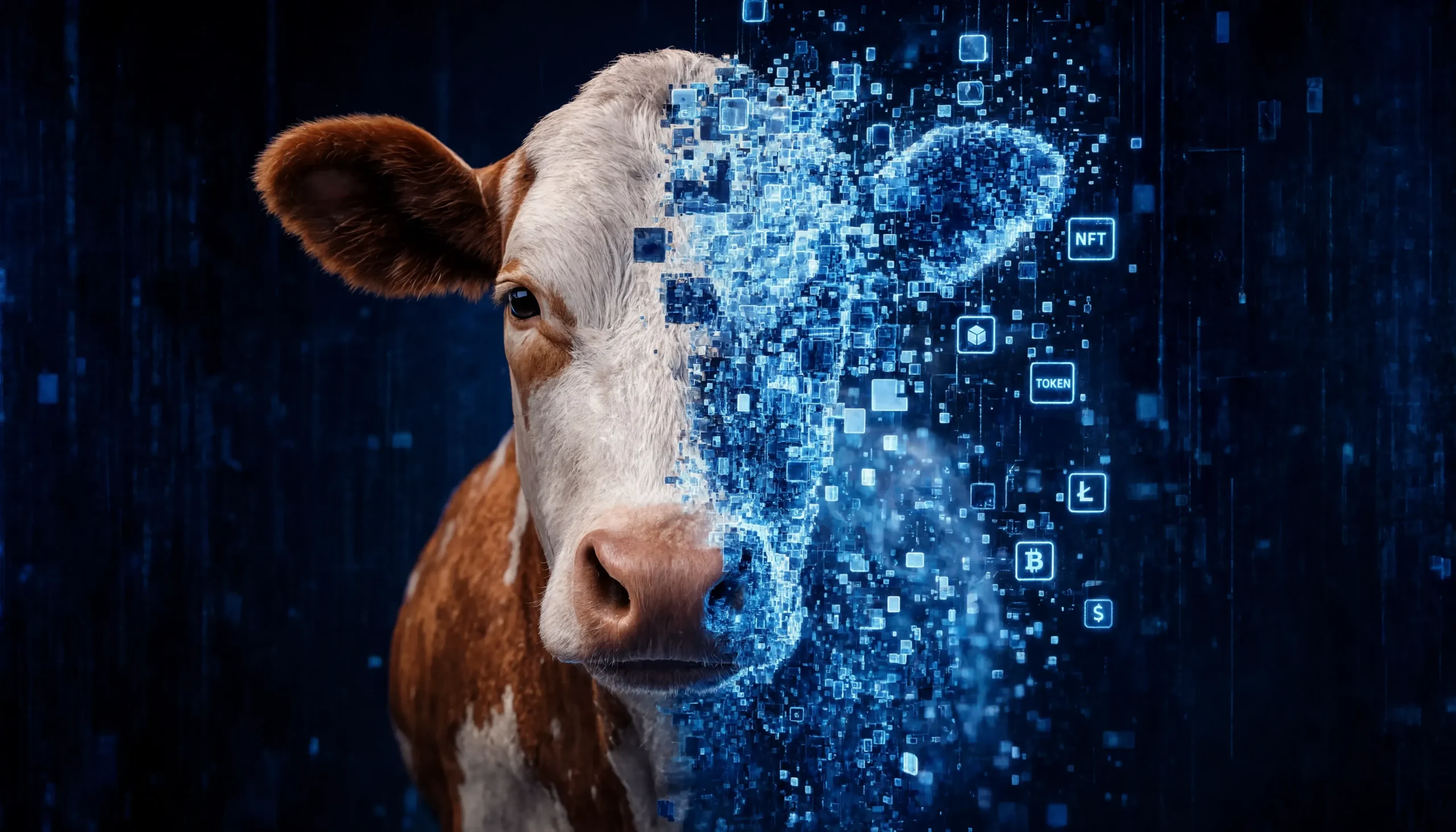
In Imbituva, Paraná, Brazil, farmers are exploring a novel approach to securing farm loans by tokenizing their livestock. Fazenda Engenho Velho has utilized ten cows, valued at R$120,000 (approximately $23,310), as collateral to obtain a R$100,000 (around $19,420) rural credit certificate (CPR-F). This method employs blockchain and artificial intelligence (AI) technology to create digital identities for the animals, potentially offering a new avenue for credit access amidst significant financial pressures in the agribusiness sector.
The process, facilitated by agricultural tech startup Cowmed and financial entities BMP and Target FIDC, involves equipping cows with AI-powered sensor collars. These collars generate unique digital IDs from health, behavioral, and location data, creating a tamper-resistant record. This data is then used to formally register the tokenized cows on B3, Brazil’s main stock exchange, as a financial security. This approach aims to provide farmers with an advantageous opportunity for financing, opening a new collateral alternative at a time of strong credit restrictions in agribusiness.
This innovation emerges as Brazilian agribusiness grapples with a challenging credit environment. Agribusiness bankruptcy protection requests in Brazil reached 1,990 in 2025, a substantial increase from the 534 filed in 2023, per Serasa Experian. High interest rates, declining commodity prices, and climate shocks have contributed to this difficult financial landscape for the sector.
Traditionally, banks often discount livestock as collateral by as much as 60%. The tokenization model, however, seeks to mitigate this uncertainty by providing reliable tracking of an animal’s condition and existence. Cowmed currently monitors 100,000 cows across 1,200 farms in Brazil and other countries, with an estimated total value of R$2 billion (approximately $395.4 million). The company projects that within two years, 20% of its monitored herd, valued at R$400 million (around $77.6 million), could be pledged as tokenized collateral.
BMP, a central bank-authorized direct credit company, facilitated the loan, with Target FIDC, a fund that purchases and monetizes receivables, acquiring the credit rights. The transaction was then registered on B3. This operation allows farmers to access credit with potentially more attractive costs and limits. Humberto Brenner, from Fazenda Engenho Velho, highlighted the potential of this new collateral alternative, while Thiago Martins, from BMP, expressed a desire to connect farmers and financial institutions with this new option.
This initiative aligns with the broader trend of Real World Asset (RWA) tokenization, where physical assets are converted into digital tokens usable as financial instruments. This application with tokenized cows is part of a global movement that has already seen significant value locked in tokenized U.S. treasuries and real estate.
Despite the potential benefits, uncertainties remain regarding the long-term success and scalability of tokenizing livestock as collateral, as well as the extent to which traditional financial institutions will adopt this new model. The full impact of climate shocks on the Brazilian farming sector also presents an ongoing challenge. The target is to reach R$5 million (around $971,000) in credit through this tokenized cow model by the end of 2026.
The reported transaction, according to Globo Rural, represents a practical test of whether tokenizing physical assets can provide a viable solution for farmers facing limited credit options. The digitalization process allows for formal registration on B3, offering a new collateral avenue in a sector experiencing significant financial strain.
Why This Matters
The materials describe a narrow update: Ten cows from Fazenda Engenho Velho were tokenized using AI-powered sensor collars by Cowmed, creating unique digital IDs. The long-term success and scalability of tokenizing livestock as collateral.
Broader Context
Source materials place the factual news in this context: Brazil’s farming backdrop sharpens the stakes.
Leave a Reply