Author: Admin_Up

  • Stablecoin Founder Map Mismatches Volume Map

    Stablecoin Founder Map Mismatches Volume Map

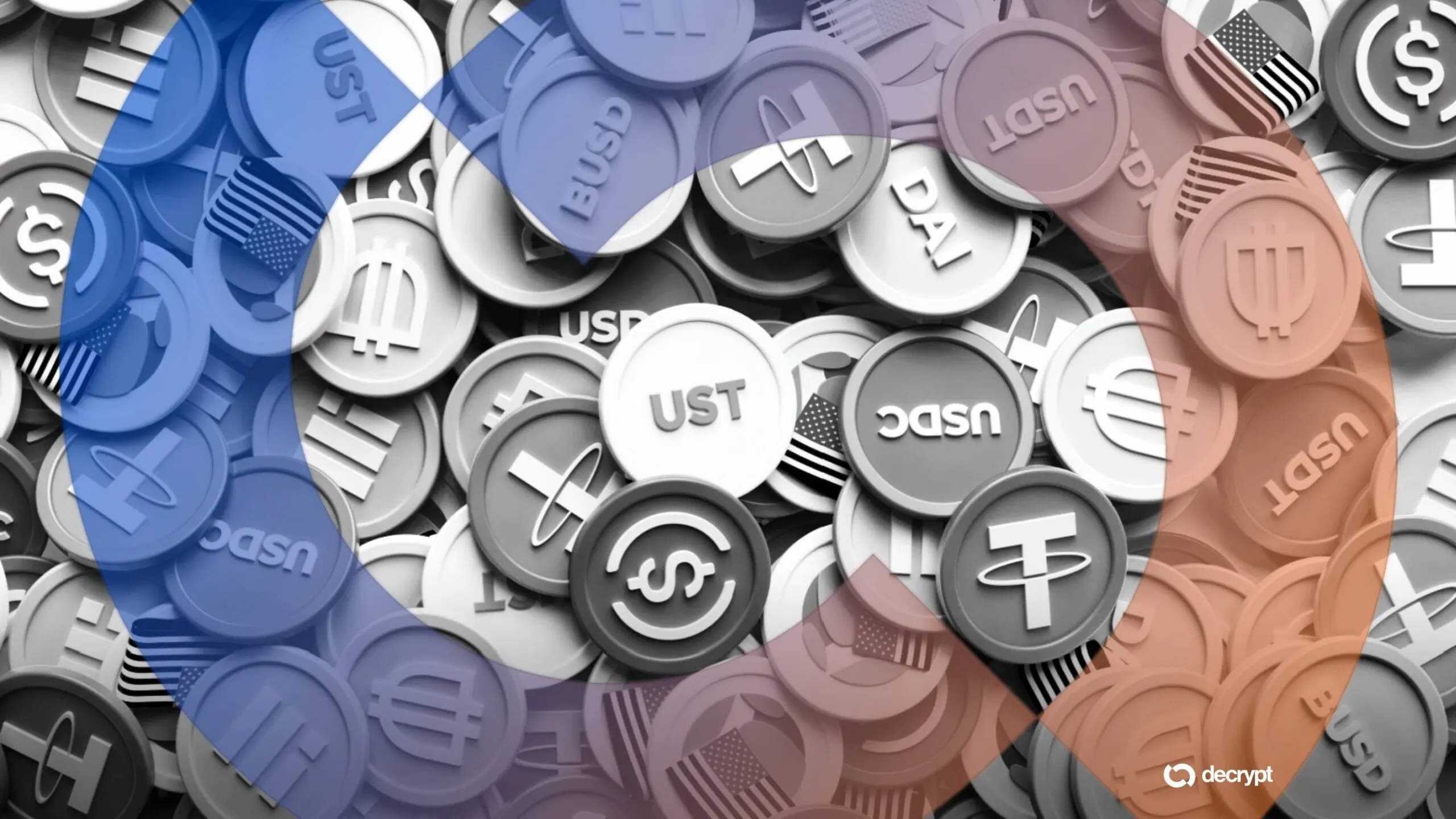
    The perceived epicenter of the stablecoin opportunity, where capital flows and venture capital firms convene, is often assumed to be in global financial hubs like New York, San Francisco, and London. However, the largest stablecoin markets globally are emerging in regions where many venture capitalists have never conducted a meeting.

    A Global Shift in Stablecoin Activity

    In 2025, global stablecoin transaction volume surged past $28 trillion, eclipsing the combined figures of Visa and Mastercard. Despite the concentration of founders and capital in the U.S. and Europe, where stablecoins are largely viewed as an institutional product, this segment is already highly competitive. Major players like BlackRock, JPMorgan, and Fidelity are actively entering the tokenized money market and enterprise settlement space, leaving limited room for venture-backed startups.

    The true demand for stablecoins is manifesting elsewhere. Nigeria alone boasts over 26 million cryptocurrency users, representing more than one in eight adults, with 59% holding USDT. In Latin America, stablecoin flows constitute 7.7% of the regional GDP, according to IMF data. The critical question is no longer whether emerging markets are significant, but why so many venture capital portfolios seem to disregard this data.

    Stablescape, a tracker of over 3,000 stablecoin and crypto-fintech companies worldwide, reports that 1,300 are based in the United States. In contrast, emerging markets across Latin America, sub-Saharan Africa, Southeast Asia, and the Middle East account for only 32% of these tracked companies, despite generating the majority of real-world stablecoin volume.

    Stablecoins as a Financial Lifeline

    In Argentina, stablecoin purchases now represent over half of all exchange transactions, a trend fueled by triple-digit inflation and currency controls that make accessing dollars a complex bureaucratic challenge. Brazil recorded $318.8 billion in crypto inflows by mid-2025, with over 90% channeled through stablecoins. Sub-Saharan Africa experienced a 52% year-over-year growth, receiving more than $205 billion in on-chain value. Yet, the founders building the infrastructure to meet this demand remain concentrated in cities where these problems are not prevalent.

    The prevailing Western narrative frames stablecoins as infrastructure for sophisticated use cases, such as programmable settlement, DeFi yields, and enterprise treasury management. In these markets, stablecoins enhance existing systems. However, in cities like Lagos, Buenos Aires, and Istanbul, the context is fundamentally different. For millions, stablecoins offer the first reliable method to hold dollar value outside of banks prone to failure, currencies susceptible to collapse, or intermediaries with the power to revoke access abruptly.

    The Rise of B2B Stablecoin Payments

    Business-to-business stablecoin payments across Latin America have seen a dramatic surge, growing from under $100 million per month in early 2023 to over $6 billion per month by mid-2025. This 60-fold increase over 30 months is primarily driven by cross-border commerce rather than retail speculation. Consumer-facing stablecoin products often face significant overheads, including compliance costs that scale with user numbers, precarious local banking relationships, and unit economics that struggle with small retail transfers. Yellow Card, operating in 34 countries, has pivoted entirely from its consumer business to focus on B2B. Similarly, Bitso established its strong position in the Mexico-U.S. corridor through business payment flows, not retail wallets. In both instances, proximity and founders’ deep understanding of their respective corridors proved advantageous.

    A Misplaced Geographic Focus

    In 2024, 30 venture capital firms secured 75% of all capital raised by U.S. funds. While these firms may grasp the macro thesis for stablecoins, their geographic focus appears to be misaligned. The pattern recognition of a Sand Hill Road fund regarding San Francisco founders offers little insight into the potential of a founder in Lagos, Buenos Aires, or Manila.

    A common counterargument is the perceived lack of viable exit opportunities in emerging markets. However, the data contradicts this. OPay is reportedly seeking a $4 billion valuation ahead of a potential IPO, built on African payment infrastructure, and Modern Treasury acquired Beam, a stablecoin cross-border liquidity startup, for $40 million. The exit market is actively forming around the same corridors that Western funds have been slow to support.

    Regulatory Clarity and Emerging Markets

    Regulatory developments, such as the GENIUS Act and MiCA, are significant, and institutional capital naturally gravitates towards regulatory clarity. However, this framing often overlooks that U.S. regulatory clarity is primarily aimed at ensuring stablecoin safety for compliance departments. The substantial volume in Nigeria and Argentina, which outpaces the U.S. market on nearly every metric, does not require additional regulatory clarity. These markets are served by companies funded by regional networks with which Western funds have no existing relationships.

    The Philippines received $39.6 billion in personal remittances in 2025, with transfer costs averaging 5% to 7%, compared to stablecoin transfer costs measured in fractions of a percent. Nigeria’s 2025 Investment and Securities Act brought virtual assets under formal oversight, with licensing regimes established across South Africa, Botswana, Mauritius, and Namibia, and regulatory sandboxes now operational across East and West Africa.

    The Next Generation of Stablecoin Companies

    These corridors are poised to produce the stablecoin companies of the next decade, much like Brazil produced Nubank. These companies succeed by serving customers overlooked by incumbent systems, leveraging local knowledge that external entrants have struggled to replicate. El Dorado, a Latin American stablecoin super-app, surpassed 600,000 users and 3 million transactions in 2025, achieving $2.7 million in annual recurring revenue through 12x annual growth, and became Venezuela’s most downloaded crypto app. Multicoin Capital and Coinbase Ventures invested after the market had already validated the model. This sequence—volume first, local validation second, and global capital third—is expected to repeat across major emerging market corridors over the next five years.

    The stablecoin market has effectively bifurcated. One segment focuses on building enterprise infrastructure for regulated Western institutions, encompassing treasury orchestration, compliance tools, and settlement rails. The other segment is dedicated to providing dollar access for billions of individuals within unstable monetary systems, where stablecoins serve as a financial lifeline rather than merely a crypto product. While one side commands the majority of venture capital, the other already holds the bulk of the demand.

    The on/off-ramp layer, where 57% of companies are locally founded in emerging markets, along with regional remittance networks and local currency issuers across MENA, Latin America, and Southeast Asia, remains significantly underfunded relative to the demand it serves. Companies like Kulipa, developing stablecoin payment infrastructure for African markets, and Mural Pay, focused on cross-border B2B payments in Latin America, represent a category that appears small by Western VC standards until the corridors they serve become impossible to ignore.

    The next generation of stablecoin companies will emerge from founders in Lagos, São Paulo, and Manila. Funds that cultivate relationships in these regions today are likely to achieve the best returns in stablecoins over the coming decade. Those that wait for these companies to appear on platforms like Crunchbase will face the same premium investors have paid in every prior emerging market cycle.

    The landscape is already defined, and the volume is demonstrably present. The only missing element is where venture capital is directing its attention.

  • DOGECOIN AT RISK: Price Collapse Looms

    DOGECOIN AT RISK: Price Collapse Looms

    Dogecoin Faces Headwinds as Seasonal Weakness Looms

    Dogecoin is currently trading at $0.073, marking a decline of over 3% today, with further downward pressure anticipated. The cryptocurrency is entering its historically weakest month of the year, and there are no immediate catalysts in sight to counter this trend. Seasonal data suggests a challenging period ahead for Dogecoin holders.

    A History of June Declines

    Dogecoin has experienced nine consecutive losing Junes, a streak it carries into the latter half of 2026. Current market data indicates that this weakness is rooted in a technical breakdown within a risk-averse market environment. Historical data reveals an average June return of -7.29% for DOGE, with a median loss of 9.94% over this losing streak. Applying this average loss to its current price suggests Dogecoin could approach $0.07 by the end of the month. Furthermore, Long Forecast’s model projects a 15.6% drop in July, potentially pushing the coin towards $0.066.

    Will Dogecoin’s Price Continue to Fall?

    Dogecoin is trading near $0.075, holding just above a critical support level around $0.074. Recent selling pressure has driven the price lower, accompanied by elevated trading volumes, indicating persistent distribution rather than a panic-driven sell-off.

    Momentum indicators remain weak but are not deeply oversold, with the Relative Strength Index (RSI) hovering near neutral territory. This suggests that sellers still have room to push prices lower. Technical signals continue to lean bearish, with resistance identified around $0.080 and subsequently in the $0.085 area.

    Should Dogecoin maintain support above $0.074 and market sentiment improve, a recovery towards the $0.080–$0.085 range could become feasible. A rebound in Bitcoin’s price could also contribute to such a move, particularly if buyers re-enter the market near current levels.

    The most probable near-term scenario involves consolidation between $0.074 and $0.082. Price action has repeatedly shown reactions around these levels, while momentum indicators are mixed, and conviction from either side of the market is limited.

    However, a decisive break below $0.074 could expose the next support zone near $0.070. In such a case, bearish momentum might accelerate as traders reduce risk exposure and await stronger signs of stabilization.

    Maxi Doge Emerges as an Alternative

    Dogecoin, currently trading 82% below its late-2024 peak, is experiencing a drawdown that is prompting traders to re-evaluate their exposure to meme coins. The upside potential for the original memecoin is currently limited by significant overhead resistance and a seasonal headwind that is expected to persist for at least another month. This imbalance between risk and potential return is a key consideration for rotational capital.

    Maxi Doge ($MAXI) is positioning itself as a presale-stage alternative for traders seeking meme coin exposure without the challenges of an asset deeply entrenched in a prolonged seasonal downtrend. The project has raised $4.8 million at a current price of $0.0002826. It is an ERC-20 token built around a “1000x leverage trading mentality.”

    The project’s community structure includes trading competitions exclusively for holders with leaderboard rewards, a Maxi Fund treasury for liquidity and partnerships, and dynamic staking APY. Its branding incorporates gym-culture meme humor, which has shown viral appeal within the meme coin space.

  • Ripple Fuels Global Blockchain Growth with $70M+ in Donations

    Ripple Fuels Global Blockchain Growth with $70M+ in Donations

    Ripple’s 2025 Impact Report Details Significant Investment in Education, Financial Inclusion, and Sustainability

    SAN FRANCISCO – Blockchain payments company Ripple has unveiled its 2025 Annual Impact Report, showcasing substantial contributions to education, financial inclusion, sustainability, and humanitarian initiatives. Since 2018, the company has collectively donated over $250 million, with more than $70 million allocated in 2025 alone.

    Blockchain Tools Drive Economic Opportunity and Financial Access

    The report underscored how Ripple’s blockchain technologies, including the XRP Ledger and its stablecoin RLUSD, have been instrumental in supporting projects aimed at fostering economic opportunity and enhancing financial access. These initiatives have spanned emerging markets, microfinance efforts, and humanitarian aid, often realized through collaborations with nonprofit organizations.

    Ripple committed $25 million in RLUSD to bolster underserved U.S. small business owners and to fund career development programs for military veterans. Furthermore, the company facilitated its partners in deploying $53.6 million and supported nearly 12,000 loans for water and sanitation projects in conjunction with Water.org.

    Long-Term Partnerships and Humanitarian Innovation

    Several nonprofit partners characterized Ripple’s financial backing as consistent, long-term support rather than ephemeral donations. The International Rescue Committee, for instance, continues to explore the potential of stablecoins as a mechanism for expediting cash assistance during humanitarian crises.

    University Blockchain Research Initiative Fuels Innovation

    Ripple’s commitment to advancing blockchain education and research is evident through its University Blockchain Research Initiative. Now in its seventh year, the program involves 62 universities, has disbursed $74 million in funding since its inception in 2018, and supported 198 XRPL projects in 2025.

    Research funded by the initiative has explored a diverse range of topics, including stablecoins, tokenized real-world assets, decentralized finance infrastructure, cryptographic security, interoperability, artificial intelligence governance, and various blockchain applications. Specific projects have focused on developing quantum-resistant enhancements for the XRP Ledger, advancing privacy technologies, and creating tools to detect price manipulation within decentralized finance markets.

    Environmental Initiatives and Carbon Footprint Reduction

    The report also highlighted Ripple’s environmental stewardship, detailing its investments in blockchain-based climate projects. The company announced an investment of $31 million in climate initiatives and the retirement of 1,000 tonnes of carbon dioxide equivalent through sustainable aviation fuel credits in 2025. Ripple has set a target to retire an additional 93,000 tonnes by 2030.

    Employee Engagement and Charitable Contributions

    Beyond its corporate environmental efforts, Ripple reported record employee participation in its social impact programs. Approximately 80% of employees engaged in volunteering and donation activities, supporting 544 nonprofit organizations and raising $550,000 for charitable causes.

    Driving Broader Blockchain Adoption

    In addition to its social and environmental endeavors, Ripple’s programs have demonstrably contributed to broader blockchain adoption. The company reported a 37% increase in active users and a 113% rise in transactions year-over-year. Tokenized real-world assets on the XRP Ledger saw significant growth, expanding from $24.7 million to $568 million during 2025. Total network transactions surpassed 3.8 billion.

  • Bitcoin’s July Outlook Hinges on Key Factors

    Bitcoin’s July Outlook Hinges on Key Factors

    Bitcoin Faces Steep June Decline, July Recovery Hinges on Key Market Shifts

    As June draws to a close, Bitcoin appears poised for a significant monthly loss, with current data indicating an 18% drop. On-chain metrics reveal several critical factors contributing to this downturn and highlight what needs to change for a stronger performance in July.

    Stalled Accumulation and Declining Demand

    Popular analyst Ali Martinez pointed out in a recent X post that Bitcoin accumulation levels have stagnated for the past seven months. “Bitcoin apparent demand has remained negative for 208 consecutive days, recently dropping to a new low of -273,000 BTC,” Martinez stated.

    This metric, which compares new Bitcoin creation to the movement of existing supply, signifies a fall in real spot market demand. The trend shifted following a substantial liquidation event in early October, which saw over $19 billion erased in a single day. From November 9, 2025, to May 31, 2026, demand “hovered quietly in negative territory between 0 and -150,000 BTC, indicating a mild but steady distribution of supply,” Martinez noted. However, the metric plummeted to -273,000 BTC after significant price drops in early and late June and has since “flatlined around this level.”

    The prolonged negative trend suggests that a considerable amount of older Bitcoin is entering the market faster than the spot market can absorb it. This divergence indicates that selling pressure is consistently outweighing new capital inflows, a crucial factor that must reverse for Bitcoin to experience a more robust July.

    Weakening US Investor Demand

    Martinez also highlighted another metric indicating a lack of broad demand for Bitcoin, with demand primarily originating from US investors. The Coinbase Premium has been deeply negative for nearly two months, entering negative territory after Bitcoin’s peak above $82,000 in mid-May and remaining there.

    US institutional demand is a significant driver of Bitcoin’s price movements and represents the second key factor that needs to improve in July.

    Spot ETF Outflows Continue

    In line with these developments, spot Bitcoin ETFs have experienced substantial outflows for weeks. The past week saw consistent daily declines, with investors pulling nearly $700 million from these funds on Thursday, the same day Bitcoin dropped to $58,000 for the first time in almost two years.

    Lacie Zhang, a Research Analyst at Bitget Wallet, told CryptoPotato that ETF outflows need to stabilize. She added that market volatility is expected to normalize following a significant $11 billion options expiry event on June 26.

    “If redemptions resume and post-expiry positioning remains defensive, the market may stay choppy around current levels,” Zhang concluded. “The key point is that Bitcoin’s July direction may be shaped less by last week’s PCE print and more by how flows, leverage, and on-chain accumulation behave in the 72 hours after expiry settles.”

  • Solana Surges Past $70, Bitcoin Battles $60K: Weekend Outlook

    Solana Surges Past $70, Bitcoin Battles $60K: Weekend Outlook

    Bitcoin’s price has been volatile around the $60,000 mark, but the cryptocurrency managed to climb above this level by Saturday morning.

    Altcoins Show Modest Gains

    Most larger-cap altcoins are trading slightly higher. XRP has surpassed $1.05, and Ethereum is hovering near $1,600. Solana (SOL) has seen the most significant gains among this group.

    Bitcoin’s Rollercoaster Week

    The trading week began positively for Bitcoin, with the cryptocurrency rebounding from a weekend slump to reach $62,500 and touching $65,500 on Monday. However, this recovery was short-lived as bearish sentiment quickly took hold, halting further progress.

    In the subsequent hours, Bitcoin fell to $62,000. It then bounced to $63,000, but a subsequent downturn proved more severe. Bitcoin dropped below $60,000 for the second time this month, reaching a low of $59,000. After another brief recovery to nearly $62,000, the asset experienced a sharper decline on Thursday, falling to $58,000 – a level not seen since late 2024.

    Market Influences and Recovery

    This latest downward trend appeared to be influenced by negative price movements in MicroStrategy’s stock (MSTR), which also hit a multi-year low below $80. Despite these pressures and ongoing geopolitical tensions in the Middle East, Bitcoin has managed to recover some ground from its recent low and is now trading just above $60,000.

    Bitcoin’s market capitalization has risen to $1.210 trillion, with its dominance over altcoins remaining below 56%.

    Ethereum and XRP Reclaim Levels

    Ethereum is gradually recovering from a recent low of $1,510 and is now trading close to $1,600 after a minor daily increase. XRP has reclaimed the $1.05 support level, marking a 2% gain since yesterday. Solana’s SOL has emerged as the top performer among larger-cap altcoins today, trading above $72.

    Other Notable Gains and Losses

    More substantial gains have been observed in AAVE, AVAX, and MORPHO. Aave’s token has seen double-digit growth, now trading above $95, while AVAX is priced above $6.6. MORPHO has approached $1.80 following a 7% increase.

    In contrast, MemeCore has continued its decline, shedding another 20% of its value and currently trading below $0.70.

    The total cryptocurrency market capitalization has recovered over $80 billion since Thursday’s low, reaching $2.170 trillion.

  • XRP’s Sub-$1.00 Drop Creates ‘Risk-Reward’ Opportunity: Analyst

    XRP’s Sub-$1.00 Drop Creates ‘Risk-Reward’ Opportunity: Analyst

    XRP is currently trading near the $1.00 mark, reflecting a decline of approximately 9% over the past seven days and a more substantial 52% drop over the last year.

    Potential for Enhanced Risk-Reward

    Despite the downturn, UK-based technical analyst ChartNerd suggests that the further the Ripple token falls from its current position, the more attractive the risk-reward setup becomes. He identifies a potential demand zone between $0.90 and $0.70 should the $1.00 level fail to hold.

    ChartNerd has been monitoring this scenario since at least June 12, when he outlined the broader market picture in a series of posts. He noted that XRP spent much of 2023 and extending into late 2024 trading below a resistance level of $0.80/$0.70, which acted as a ceiling until a breakout occurred in the fourth quarter of 2024.

    This breakout, according to ChartNerd, was instrumental in propelling XRP to its all-time high of $3.65 in July 2025. Since then, the trend has reversed, with key moving averages being lost and a weekly 20/50 Exponential Moving Average (EMA) death cross signaling a structural shift. The asset has since fallen from its January 2026 peak of $2.40 to its current trading levels.

    Revisiting Key Levels

    Earlier this year, in February, XRP reached a low of $1.12. Following this, it attempted a recovery, consolidating sideways before being rejected near $1.55. ChartNerd’s analysis indicates that this rejection initiated the current downward trend, bringing XRP to lows around $1.00 in June. This level falls within what the market observer terms his “area of interest,” a zone he has been watching for a potential cycle bottom between now and the fourth quarter of 2026.

    The significance of this zone, in his view, lies in the potential for the former resistance level from 2023 and 2024 to transform into support. If XRP can hold within the $0.90 to $0.70 range during any further market declines, the previous ceiling could indeed become a floor.

    “This is a high-interest support region, but confirmation still matters most, and we do not have it yet,” ChartNerd stated previously.

    Currently, the analyst believes XRP’s ongoing decline is pushing it deeper into this area of interest, and the more it falls, “the stronger the risk-reward setup becomes.” He also highlighted his observation of the 10-year Gaussian Channel, which XRP is now entering, noting its historical reliability as a guardrail throughout his tracking period.

    Timing and On-Chain Data

    Regarding the timing of a potential market reversal, ChartNerd indicated in a separate post that there is a “very strong likelihood” of a bounce occurring in the coming weeks as June concludes. This aligns with historical Bitcoin performance in midterm years. However, he cautioned that this might be a relief rally, potentially preceding a final downturn in the last quarter of the year.

    In parallel, analyst Ali Martinez pointed out that XRP is currently testing a significant volume block at $1.06, where on-chain data reveals over 830 million tokens have traded hands. Below this level, the next crucial clusters identified by the UTXO Realized Price Distribution are situated at $0.80, $0.62, and $0.51.

    Meanwhile, another market observer, CasiTrades, commented that XRP is at a “most critical moment” in its current cycle. He noted buy orders placed at $0.93 and a deeper Fibonacci level at $0.87, framing the prevailing fear as a natural component of bottom formation rather than a signal to sell.

  • Ethereum Plummets: $1,000 Crash Imminent?

    Ethereum Plummets: $1,000 Crash Imminent?

    Ethereum’s Price Plummets to 14-Month Low Amidst Bear Market and Internal Shake-ups

    Ethereum, the second-largest cryptocurrency by market capitalization, has experienced a significant downturn in recent months, mirroring the struggles of most major altcoins. The digital asset’s price has fallen to a 14-month low, prompting analysts to warn of a potential further slump, with some speculating a crash to a multi-year low of around $1,000.

    Internal Challenges Compound Market Pressures

    The prolonged bear market is not the sole factor contributing to Ethereum’s declining valuation. Recent internal developments have also cast a shadow. Hsiao-Wei Wang stepped down as the Ethereum Foundation’s co-executive director and board member, and shortly thereafter, the organization reduced its workforce by 20%.

    Market Cap Fluctuation and Recovery

    These negative developments contributed to a sharp decline in ETH’s price, which nosedived to just above $1,500. Its market capitalization briefly dipped below $183 billion, allowing Tether’s USDT to momentarily surpass Ethereum as the second-largest cryptocurrency. While ETH has since reclaimed its position, the lead is now marginal.

    Key Support and Resistance Levels Identified

    According to analyst Ali Martinez, Ethereum has been trading within a critical volume block between $1,584 and $1,683, where approximately 4 million coins have changed hands. Martinez suggests that establishing this “specific area” as support could pave the way for a rise to the next major supply clusters at $1,980 and $2,079.

    Conversely, the analyst cautioned that a failure to hold this baseline support, as occurred recently, could trigger a more substantial decline to $1,237 and potentially as low as $1,089.

    Divergent Analyst Outlooks

    Other market observers have offered varying predictions. X user Ryker anticipates a drop to $1,260 before a potential rally above $3,000. This forecast was highlighted by Merlijn The Trader, who noted that Ryker is the only individual on X followed by Binance CEO Changpeng Zhao (CZ).

    Earlier this month, X user Ted posited that ETH is more likely to reach its cycle bottom before Bitcoin (BTC). At that time, Ted claimed that much of the downside liquidity had been depleted, projecting a fall to the $1,300-$1,400 range. Similarly, Niels envisioned a drop to $1,200 within the current year.

    Whale Activity Signals Bearish Sentiment

    Recent activity from large investors, often referred to as “whales,” further reinforces the bearish outlook. X user Max Crypto reported that a significant investor initiated a $68 million short position on ETH with 23x leverage. Additionally, Justin Wu observed that four “OG” wallets have begun selling off their holdings.

    Whales are closely watched by retail investors due to their potential access to insider information that could influence market movements. Their actions can sometimes trigger panic selling among smaller participants.

  • Securitize’s Market Debut: Wall Street’s Next Tokenization Test

    Securitize’s Market Debut: Wall Street’s Next Tokenization Test

    Securitize Poised for Public Debut, Signaling Tokenization’s Growing Financial Clout

    Wall Street’s burgeoning interest in tokenization is set to face a real-world test next week with the anticipated public debut of Securitize, a firm at the forefront of digital asset representation. The BlackRock-backed company, which specializes in creating digital tokens for real-world assets, has announced plans to list on the New York Stock Exchange under the ticker symbol “SECZ” following its merger with a special-purpose acquisition company (SPAC) backed by Cantor Fitzgerald.

    SPAC Merger Nears Completion

    The transaction moved a step closer to finalization this week as investors holding less than 30% of Cantor Equity Partners II’s common shares opted not to redeem their holdings in the SPAC. This development means Securitize anticipates receiving approximately $400 million in proceeds from the combination and associated private financing before the deal officially closes.

    A Milestone for Tokenization

    Securitize’s public listing, eight years after its founding, represents a significant milestone for the tokenization sector. CEO Carlos Domingo described the move as a testament to the technology’s evolution from a niche market mechanism to a foundational element of modern finance.

    “The notion that major institutions would adopt tokenized securities was still largely theoretical,” Domingo stated. “Today, tokenization is entering the mainstream, and we believe becoming a public company will provide us with the visibility, credibility, and capital necessary to lead this charge.”

    Growing Institutional Adoption

    In recent years, Securitize has become a go-to resource for a range of institutions, extending beyond its prominent relationship with BlackRock, which utilized the firm for a tokenized money market fund in 2024. Other notable clients include Apollo, BNY, Hamilton Lane, and KKR. In March, Securitize also announced a collaboration with the NYSE itself to develop systems for blockchain-native securities.

    As of June, Securitize reported over $4 billion in assets under management. The firm’s largest offering by a significant margin is BlackRock’s BUIDL, which was valued at $2.4 billion as of Friday, according to data from RWA.xyz.

    The Case for “Native” Tokenization

    As infrastructure providers like DTCC increasingly engage with the tokenization space, Domingo has championed the concept of “native” tokenization. He argues that for securities to realize their full potential at scale, they must be issued directly on-chain rather than being encapsulated in digital wrappers.

    Regulatory Scrutiny and Innovation

    Last month, the Securities and Exchange Commission (SEC) reportedly postponed a decision on an innovation exemption for tokenized stocks. This delay followed concerns raised about third-party issuers, which could potentially complicate corporate actions and governance responsibilities through on-chain token issuance, as reported by Bloomberg.

    Since assuming his role as SEC chair, Paul Atkins has characterized tokenization as a technology with the “potential to transform markets” through enhanced trading efficiency. His remarks echo sentiments previously expressed by BlackRock CEO Larry Fink during the crypto market downturn in 2022.

  • Whales Move Millions to Binance Ahead of Banking News

    Whales Move Millions to Binance Ahead of Banking News

    Chainlink Tokens Flood Exchanges Ahead of Major Banking Initiative Announcement

    A significant surge in Chainlink (LINK) tokens being transferred to exchanges has been observed in the days leading up to the project’s announcement of a major banking initiative.

    On-chain data from the Ethereum network indicates that Binance saw a net inflow of over 10.2 million LINK tokens on June 19. This single-day transfer dramatically increased the exchange’s LINK reserves, pushing them from 84.1 million to 94.3 million tokens.

    CryptoQuant reported that this substantial movement caused the seven-day average netflow to spike by an astonishing 20,677% compared to its three-month average, signaling an unusual shift in exchange activity. The large-scale transfer occurred just days before Chainlink unveiled Project Pangea on June 23.

    Project Pangea is designed to facilitate T+0 foreign exchange settlement and involves more than 80 banks across Europe and South Korea, collectively managing over $10 trillion in assets. Historically, inflows of this magnitude have tended to increase the supply of tokens available for sale on exchanges, often correlating with heightened market volatility. However, LINK’s price response during this period was relatively muted, declining from approximately $8 to around $7.3.

    Further analysis revealed that these transfers were highly concentrated among a small cohort of large token holders. The “inflow_top10” metric, which tracks the top ten inflow sources, was nearly equivalent to the total inflow volume. This suggests that the majority of the tokens originated from a handful of wallets rather than widespread retail investor activity. CryptoQuant commented, “Although Project Pangea represents a potentially meaningful long-term development for the Chainlink ecosystem, the near-term on-chain picture points to increased exchange supply.”

    Despite the increased exchange supply, a growing number of users are opting to hold their LINK tokens amidst prevailing market uncertainty. Santiment data from earlier this month showed that the number of wallets holding at least 1 LINK has surpassed 535,000, reaching its highest point since December 2022. This increase in holder numbers has occurred even as LINK’s price remains significantly below its previous cycle highs.

    On the institutional front, spot LINK Exchange-Traded Funds (ETFs) experienced a return to positive net flows on June 23, following their first day of net outflows on June 22. On June 22, these funds recorded net outflows totaling $491,000. However, sentiment quickly improved, with inflows of approximately $138,000 returning on June 23. Activity then stabilized on June 24, with no net flows recorded.

    Despite these recent fluctuations, data from SoSoValue indicates that total spot LINK ETF inflows for June currently stand at $3.61 million.

  • Cardano Under Pressure, On-Chain Data Paints Different Picture

    Cardano Under Pressure, On-Chain Data Paints Different Picture

    Cardano Network Sees Surge in Activity Amidst Price Slump

    The Cardano network is experiencing a significant uptick in both user activity and online conversation, even as its native cryptocurrency, ADA, has dipped to lows not seen since December 2020.

    According to recent analysis by Santiment, daily active addresses and social dominance on the network have surged for the second time this month, positioning Cardano as one of the most talked-about assets in the cryptocurrency market.

    Data indicates that the number of active addresses on the network reached 29,025, with Cardano accounting for 0.33% of all cryptocurrency-related discussions. Santiment noted that this increase in activity is occurring concurrently with substantial price pressure and heightened volatility for ADA. The prevailing bearish sentiment appears to be influenced by recent remarks from Charles Hoskinson, who cautioned that additional Cardano projects might face failure.

    Further contributing to concerns are Hoskinson’s decision to scale back his public engagement and ongoing internal community disputes regarding treasury funding. Despite the prevailing weak sentiment, Santiment suggests that historical patterns show spikes in network activity, coupled with growing market apprehension, have often preceded modest rebounds in ADA’s price.

    Previous instances of this phenomenon include late March to early April, when active addresses rose to approximately 22,000 and social dominance exceeded 0.40%. Another similar period occurred in early June, with active addresses climbing to around 32,500 and social dominance peaking near 0.38%. In both these cases, the surge in network activity and discussion levels was followed by a moderate recovery in ADA’s price, the analysis revealed.

    As of this report, ADA is trading at $0.14, marking a decline of over 3% in the past 24 hours. The daily chart for the cryptocurrency recently generated a TD Sequential buy signal, which could potentially signal a short-term price rebound. However, crypto analyst Ali Martinez has advised traders to exercise caution, despite this bullish indicator.

    This warning follows a security incident involving a Cardano-based wallet protocol, which resulted in the theft of nearly 129 million ADA, valued at approximately $20 million.

    Martinez posited that any immediate recovery could prove to be a “bull trap,” luring buyers in before the price resumes its downward trend. Consequently, any potential relief rally is likely to encounter resistance in the $0.160 to $0.176 range. Should ADA fail to break above this resistance level, the price could descend further, potentially establishing new lows.