Category: Uncategorized

  • Ethereum Mainnet Sees Launch of Multi-Party Block Construction (MPBC)

    Ethereum Mainnet Sees Launch of Multi-Party Block Construction (MPBC)

    Multi-Party Block Construction (MPBC) has officially launched on the Ethereum mainnet, a development coordinated by the Blockspace Forum. This new system allows multiple builders to contribute transactions to a single block, aiming to enhance network efficiency and reduce centralization in block production.

    In the first 24 hours following its activation on September 16, approximately 3% of Ethereum blocks were constructed using the MPBC approach. Since testing commenced in late August, over 20,000 transactions have been included at an accelerated rate. Early data indicates that some multi-party blocks have incorporated up to 810 additional transactions compared to blocks built by a single entity. In certain instances, gas usage has seen a significant increase, jumping nearly 14-fold.

    Context: The Evolution of Block Construction

    Prior to MPBC, Ethereum’s block construction largely operated on a single-builder model. Following the adoption of Proposer-Builder Separation (PBS) after the Merge in 2022, validators propose blocks while specialized builders assemble them. Builders compete in an auction, and the winner’s block is included in the chain. This model, however, allowed a single builder to control transaction ordering within a block, potentially leading to prioritization of certain transactions over others.

    MPBC: A Shift in Dynamics

    MPBC introduces a fundamental shift by enabling multiple builders to contribute to the creation of a single block. This creates multiple inclusion paths, rather than funneling all transactions through one entity. The design of MPBC is strictly additive, meaning it does not require protocol changes, hard forks, or consensus-level modifications. The system operates at the builder and operator layer and does not depend on relays for its core functionality.

    The Blockspace Forum has been instrumental in coordinating this initiative, holding workshops throughout 2026, including a meeting in Cannes attended by 32 teams. These teams represent over 95% of out-of-protocol block contributions on Ethereum. Foundational research outlining MPBC design principles was published in May 2026.

    The implementation of MPBC aims to dilute the control that single entities have over transaction ordering and inclusion. While it does not eliminate these dynamics entirely, it distributes the influence across multiple builders. This approach can lead to fuller blocks, greater transaction diversity, and faster confirmation times for pending transactions, as service transactions gain additional pathways into blocks without competing solely within a single builder’s priority queue.

    Public documentation and a live dashboard for MPBC metrics have been released, providing transparency into the system’s operation. The current PBS model, where a single builder wins each auction, has structural issues that can compound over time. MPBC addresses this by introducing a parallel path that reduces chokepoint risks associated with a single point of control.

    Why This Matters

    The materials describe a narrow update: Multi-party block construction (MPBC) is now live on the Ethereum mainnet, allowing multiple builders to contribute transactions to a single block without protocol changes. MPBC changes the model so that multiple builders can each contribute transactions to a single block, creating multiple inclusion paths rather than funneling everything through one entity.

    Broader Context

    Source materials place the factual news in this context: Ethereum blocks have traditionally been a one-builder affair.


  • Arc Blockchain RPC Providers Compared for Stablecoin Finance

    Arc Blockchain RPC Providers Compared for Stablecoin Finance

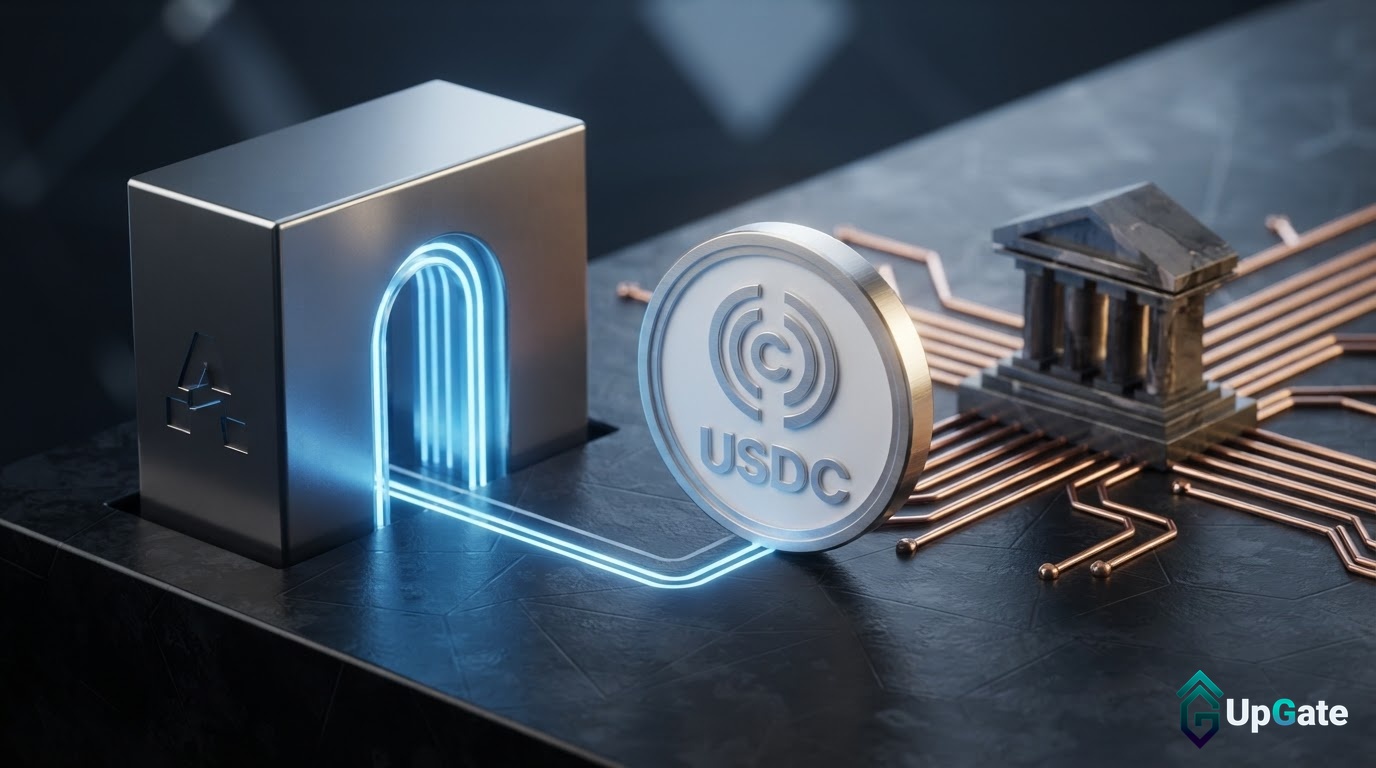
    The Arc blockchain, an EVM-compatible layer 1 developed by Circle and designed for stablecoin-native finance, has launched its mainnet. This launch necessitates a review of its available Remote Procedure Call (RPC) providers to ensure robust infrastructure for financial applications. The article compares five key providers – Chainstack, Blockdaemon, Uniblock, Alchemy, and Quicknode – evaluating their suitability for stablecoin-native financial applications, with a particular focus on compliance, deployment models, and specific tooling for the Arc ecosystem.

    Arc’s mainnet opened on September 16, 2026, following a public testnet that began in October 2025. Built by Circle, the issuer of USDC, Arc aims to facilitate stablecoin-native finance, including payments, foreign exchange, treasury operations, and capital markets settlement. The article notes that the expected builders on Arc are banks, payment networks, and licensed fintechs, underscoring the need for highly reliable and compliant infrastructure.

    Compliance and Infrastructure Standards

    According to the article, selecting an RPC provider for stablecoin-native finance applications on Arc requires higher standards than general-purpose RPC services. Key criteria include compliance certifications such as SOC 2 and ISO 27001, alongside the availability of tracing and archive access for audit trails. The article states that an endpoint lacking these features can potentially halt settlements or lead to regulatory scrutiny.

    Provider Analysis

    Chainstack is identified as the strongest overall fit for most teams. The article states that Chainstack supports Arc on both mainnet and testnet, offering debugging and tracing tools. It provides three deployment models from a single control plane and holds both SOC 2 Type II and ISO 27001 certifications. For pricing, Chainstack offers a free Developer tier with 3 million requests per month (RU/month) and a Growth plan for $49 per month, providing 20 million RU/month.

    Blockdaemon is also noted as a provider supporting Arc, positioned for institutions like banks, custodians, and funds. It also holds SOC 2 and ISO 27001 certifications. Blockdaemon offers a self-serve free tier with 3 million compute units per month and 5 requests per second (RPS). However, the article notes that details for their Enterprise tier require a sales conversation.

    Uniblock offers a unified API across over 300 blockchains, including Arc. The source claims Uniblock offers usage-based pricing with no minimums. However, the article points out that Uniblock does not publish SOC 2 or ISO 27001 certifications, which the article interprets as a potential blocker for regulated banking and payments workloads.

    Alchemy supports Arc with enhanced APIs, monitoring, and debugging tools. It provides a free tier offering 30 million compute units per month and holds SOC 2 Type II certification. The article states that Alchemy does not publish ISO 27001 certification.

    Quicknode supports Arc with managed endpoints, tracing, and globally distributed nodes. It holds dual SOC 2 Type II and ISO 27001 attestations. However, the article notes that Quicknode’s free access is trial-based and credit-based, with pricing that can quickly deplete credits for audit-heavy workloads.

    Conclusion

    The article emphasizes that compliance-grade infrastructure, including archive and trace access paired with SOC 2 attestation, is crucial for regulated payments products. Based on these criteria, Chainstack is recommended as the strongest fit due to its comprehensive offerings, deployment options, and dual certifications.

    It is important to note that the article states that mainnet availability for providers other than Chainstack needs to be reported directly with the providers, as Circle only published mainnet details at launch. The comparison reflects each provider’s testnet offering, and users are advised to suggest mainnet availability directly.

    Why This Matters

    The materials describe a narrow update: The article reviews and compares five RPC (Remote Procedure Call) providers for the Arc blockchain, focusing on their suitability for stablecoin-native finance applications. Mainnet availability for providers other than Chainstack needs to be reported directly with the providers, as Circle only published mainnet details at launch.

    Broader Context

    Source materials place the factual news in this context: Arc is the EVM-compatible layer 1 built by Circle, the issuer of USDC, purpose-built for stablecoin-native finance — payments, FX, treasury, and capital-markets settlement.

  • Saylor: Stalled Clarity Act Could Boost Bitcoin Investment

    Saylor: Stalled Clarity Act Could Boost Bitcoin Investment

    Senate Stalls CLARITY Act, Michael Saylor Sees Opportunity for Bitcoin

    The U.S. Senate’s failure to pass the CLARITY Act may prove to be a boon for Bitcoin, according to the executive chairman of Strategy Inc., the company holding the largest Bitcoin reserves globally. Michael Saylor, formerly of MicroStrategy, argued on social media that the legislative impasse could actually accelerate institutional investment in the cryptocurrency.

    Saylor’s reasoning suggests that existing regulatory bodies already possess the necessary authority to govern digital assets. The absence of new legislation, in his view, mitigates the risk of Congress enacting unfavorable rules.

    The CLARITY Act, formally H.R. 3633, was intended to delineate jurisdictional responsibilities between the Securities and Exchange Commission (SEC) and the Commodity Futures Trading Commission (CFTC) concerning digital assets. The proposal aimed to assign oversight of digital commodities like Bitcoin to the CFTC, while the SEC would retain authority over tokens functioning as investment contracts.

    The bill had previously garnered bipartisan support in the House of Representatives in July 2025 and was advanced by the Senate Banking Committee in May 2026. However, disagreements over stablecoin provisions and ethics requirements ultimately stalled the legislative process, leading to the Senate’s 49-50 vote against the bill on September 15, falling short of the 60 votes needed for advancement.

    Saylor’s Optimism Amidst Regulatory Uncertainty

    Despite the legislative setback, Saylor remains optimistic. In remarks made on September 16, he asserted that the SEC, CFTC, and Treasury Department already have sufficient power to establish digital asset regulations without new congressional mandates.

    Earlier, on August 7, Saylor articulated his perspective with the statement: “Bitcoin doesn’t need CLARITY. America needs clarity.” He further predicted that financial institutions would likely expand their Bitcoin custody services and Bitcoin-collateralized lending offerings in the current climate.

    As of mid-September 2026, Strategy Inc. holds 845,050 BTC, acquired at an approximate cost of $63.73 billion, with an average purchase price of around $75,412 per coin.

    GENIUS Act Signals Progress in Crypto Policy

    Saylor also highlighted the GENIUS Act, which specifically addresses stablecoin regulation, as evidence that Washington is not entirely paralyzed on cryptocurrency policy. The ongoing advancement of stablecoin frameworks through separate legislative channels indicates that Congress can achieve progress on more focused legislation even when broader market structure reforms falter.

  • Circle Launches Arc Mainnet, Layer 1 Blockchain for Financial Markets, Integrates USDC as Gas Token

    Circle Launches Arc Mainnet, Layer 1 Blockchain for Financial Markets, Integrates USDC as Gas Token

    Circle has launched the public mainnet for Arc, its new Layer 1 blockchain designed for financial markets, payments, and AI-powered economic activities. According to the firm’s official announcement, the network debuts with more than 100 institutional and ecosystem participants.

    A distinctive feature of Arc is the integration of USDC as its primary gas token. This allows users to pay for transaction fees directly with Circle’s stablecoin. The network is engineered to provide sub-second finality and supports assets including USDC, EURC, and tokenized real-world assets.

    Founding validators for Arc comprise a mix of traditional financial institutions and prominent cryptocurrency firms. Traditional finance participants include BlackRock, Mastercard, Visa, Standard Chartered, Galaxy, ICE, DTCC, and MoneyGram. Key crypto firms acting as founding validators are Binance, Coinbase, Kraken, Bybit, Aave, Morpho, Uniswap, and MetaMask.

    Circle has minted the initial supply of 10 billion ARC tokens, intended for future network security, utility, and governance. The company has stated that Arc may explore a transition from its current Proof of Authority consensus mechanism to Proof of Stake, potentially in 2027. This potential transition is described as an exploration, not a reported event.

    The launch of Arc represents Circle’s strategic expansion into blockchain infrastructure, specifically targeting the financial services sector. The use of USDC as the gas token could offer greater predictability for transaction fees compared to networks where gas fees fluctuate based on native token prices. While the network launches with substantial backing, its long-term adoption and impact on the financial and blockchain industries remain to be determined.

    Why This Matters

    The materials describe a narrow update: Circle has launched the public mainnet for Arc, a Layer 1 blockchain designed for financial markets, payments, and AI-powered economic activity. Whether Arc’s blockchain will become a playground for traders and on-chain enthusiasts.

    Broader Context

    Source materials place the announcement in this context: Circle is the company behind USDC.

  • Cboe VIX Sees $6M Unusual Put Trade Before Fed Decision

    Cboe VIX Sees $6M Unusual Put Trade Before Fed Decision

    A $6 Million Bet on Calm: Massive VIX Options Trade Signals Confidence Ahead of Fed Decision

    A staggering $6 million was deployed in a single options trade on the Cboe VIX Index on Tuesday, a move that analysts suggest was far from random. The transaction, the largest of its kind on the VIX that day, involved the purchase of deep in-the-money put options. This strategy, even for seasoned institutional volatility desks, is noteworthy, particularly given its timing: just one day before the Federal Reserve’s FOMC rate decision on September 16, a meeting where futures markets are anticipating an 80-90% probability of a 25-basis-point interest rate hike.

    The VIX, widely recognized as Wall Street’s “fear gauge,” tracks the expected 30-day volatility of the S&P 500, derived from options pricing. A rising VIX signals market apprehension, while a declining VIX suggests traders are more at ease. Consequently, purchasing VIX puts is typically interpreted as a wager on a decrease in market fear.

    However, these were not standard put options. The “deep in-the-money” designation means their strike prices were set significantly above the VIX’s prevailing trading level. Such options possess substantial intrinsic value and function akin to a direct short position on the underlying index. They are also less susceptible to the erosion of value over time (time decay) and fluctuations in implied volatility compared to at-the-money or out-of-the-money options.

    In the sessions leading up to the FOMC meeting, the VIX had been trading within a narrow range of 14 to 18, hovering near multi-month lows. This compressed trading band indicated that the market had largely absorbed expectations of a rate hike. The buyer of the $6 million put options appears to be betting that the upcoming announcement will not introduce any unexpected elements that could send the VIX sharply higher.

    This significant trade was not an isolated incident. Data tracked by SpotGamma reveals that multiple substantial VIX options trades, ranging from $3 million to $12 million, were recorded in recent trading sessions. This elevated volume suggests that institutional desks are actively adjusting their positions in anticipation of risks associated with binary events.

    Interestingly, while many of the other large VIX trades involved call options—typically used as a hedge against a surge in volatility—the $6 million put purchase represents a move in the opposite direction. When significant capital is allocated to both VIX calls and puts, it often signifies a market that is hedged rather than exhibiting a clear directional bias. However, a single, outsized put trade of this magnitude shifts the narrative, pointing towards at least one major player anticipating a calm resolution to the event.

    The underlying logic is straightforward. Federal Reserve meetings are inherently binary events: the outcome either meets expectations or it deviates. When the market has already priced in a specific outcome with a high degree of confidence, the actual announcement typically serves to reduce uncertainty rather than amplify it. Implied volatility, which tends to rise in anticipation of such events, usually contracts once the event has passed. This phenomenon is known as “vol crush” among traders, and it creates a favorable environment for deep in-the-money VIX puts to become profitable.

    A 25-basis-point rate hike, if delivered as anticipated, would signal a continuation of the Fed’s tightening monetary policy. For equity markets, the reaction will likely depend less on the hike itself and more on the accompanying statement from the Fed and its future economic projections.

    The subdued VIX environment leading into the decision suggests that equity markets are positioned with a degree of comfort. The options market for the S&P 500, which underpins the VIX, is not exhibiting the kind of widespread protective put buying that typically accompanies genuine market fear. Against this backdrop, the $6 million put trade appears less like a contrarian gamble and more like a calculated play on the predictable mechanics of event-driven volatility.

    The true significance of Tuesday’s trading activity lies not just in the sheer size of the trade, but in the conviction embedded within its structure. Deep in-the-money options are costly to establish and require significant capital to maintain. Committing $6 million to such a position is a decision that would not be made lightly.

  • Michael Saylor: US Regulators May Use Existing Statutes for Digital Asset Rules, Potentially Aiding Bank Services

    Michael Saylor: US Regulators May Use Existing Statutes for Digital Asset Rules, Potentially Aiding Bank Services

    Michael Saylor, executive chairman of Strategy, anticipates that U.S. regulators may advance digital asset rules by utilizing existing statutes, a move he believes could potentially enable traditional banks to expand into Bitcoin custody and collateralized lending services.

    Saylor argues that federal agencies already possess sufficient authority under current law to establish necessary guardrails for the digital asset industry. This perspective suggests a pragmatic regulatory path, potentially accelerating the integration of digital assets within traditional financial systems. Supporting this view, the SEC issued guidance on December 17, 2025, concerning broker-dealer custody obligations for crypto asset securities, and the Office of the Comptroller of the Currency has previously endorsed the ability of nationally chartered banks to custody digital assets. These actions align with Saylor’s assertion that existing legal tools are adequate for creating workable frameworks.

    This anticipated regulatory clarity could foster increased institutional adoption. Pension funds, endowments, and insurance companies, which often have mandates requiring regulated banking institutions for asset custody, could benefit significantly once major banks offer Bitcoin custody at scale. Strategy, which holds hundreds of thousands of Bitcoin, currently custodies approximately 40% of its holdings through Coinbase Custody, with additional assets managed by Anchorage Digital Bank—both U.S.-regulated entities.

    Saylor also highlighted the potential benefits of Bitcoin-collateralized loans, contending that they allow holders to access liquidity without selling their positions. This strategy is tax-efficient, as it avoids triggering capital gains. For companies like Strategy, the ability to borrow against Bitcoin holdings at competitive bank rates could offer enhanced financial flexibility.

    While legislative efforts such as the CLARITY Act aim to provide comprehensive digital asset legislation, they have not yet passed Congress. The precise nature and timing of future digital asset rules from U.S. regulators remain uncertain. However, Saylor pointed to the ongoing expansion of digital asset custody and lending services by multiple banks throughout 2026 as evidence of market movement.

    Furthermore, Saylor views a clearer stablecoin framework, potentially influenced by legislation like the GENIUS Act, as a catalyst for expanding the on-ramps between traditional finance and digital assets, which he believes would incentivize banks to develop further crypto infrastructure.

    This development signals a potential shift towards greater integration between the digital asset industry and traditional finance, driven by regulatory pragmatism rather than solely new legislation. The extent to which traditional banks will ultimately expand into Bitcoin custody and collateralized lending remains a key uncertainty.

    Why This Matters

    Michael Saylor, executive chairman of Strategy, stated that US regulators are expected to develop digital asset regulations under current laws, rather than waiting for new legislation like the CLARITY Act. The exact nature and timing of the specific digital asset rules that US regulators may create are uncertain.

    Broader Context

    Michael Saylor is the executive chairman of Strategy, formerly known as MicroStrategy.

  • MEXC Security Report: Intercepted Funds Surge, Reserves Remain Strong Amidst Rising Industry Threats

    MEXC Security Report: Intercepted Funds Surge, Reserves Remain Strong Amidst Rising Industry Threats

    MEXC’s security report for July-August 2026 reveals a significant escalation in the interception of risk-related funds and sustained strength in asset reserve ratios, positioning the platform against a backdrop of increasing cryptocurrency industry-wide cyber threats. The report also details the expansion of its Futures Insurance Fund and provides context on the broader security landscape.

    Enhanced Fund Interception and Account Security
    During the July-August 2026 period, MEXC successfully intercepted approximately 38.66 million USDT in risk-related funds across 215 reports. This marks a substantial increase, with successfully intercepted cases up by approximately 2,971% and the value of intercepted funds by approximately 12,646% compared to the previous reporting period. Concurrently, MEXC identified and restricted 20,752 accounts linked to risk-related activities, an 118.03% rise from the prior period. The platform also facilitated the return of 602,225 USDT in misdirected assets, a 75.31% increase in such recoveries.

    Financial Stability: Reserves and Insurance Funds
    MEXC’s financial resilience is further underscored by its asset reserves and insurance fund. As of September 1, 2026, the Futures Insurance Fund balance reached 791,696,422 USDT, reflecting a 5.44% increase over the preceding period. This fund serves as a critical buffer against extreme market volatility by covering negative balances during liquidations, thereby mitigating the risk of auto-deleveraging.

    The report suggests that MEXC maintained reserve ratios exceeding 100% for its key assets: BTC at approximately 288%, ETH at 113%, USDT at 115%, and USDC at 114%. According to the proof of reserves disclosed for this period, users can verify their individual account balances via the Merkle Tree.

    To bolster user asset protection, MEXC’s Guardian Fund employs a dual-reserve strategy, utilizing USDT for immediate liquidity and BTC for long-term asset stability. The platform intends to expand this fund from its current $100 million to $500 million.

    Industry Security Landscape and Evolving Threats
    In parallel with MEXC’s internal security efforts, the broader cryptocurrency industry grappled with significant threats. The July-August 2026 period saw 184 reported security incidents, leading to approximately $535 million in losses. Phishing, fraud, endpoint, and supply-chain security incidents constituted roughly 48% of these total incidents. A notable trend highlighted is the increasing use of Artificial Intelligence (AI) by attackers to automate the creation of phishing content and malware, thereby enhancing attack efficiency.

    Commitment to Trust and Transparency
    MEXC CEO Vugar Usi emphasized that “trust is the true reserve currency of this industry” and stressed the importance of decisive action and verifiable proof in protecting user assets. He affirmed MEXC’s dedication to improving its capabilities in identifying and intercepting risk-related funds, fostering cross-platform cooperation, and aiding law enforcement in asset recovery. The bi-monthly security reports are presented as a cornerstone of this commitment to transparency and accountability.

    Founded in 2018, MEXC operates as a global multi-asset trading platform, offering access to a wide range of financial instruments across over 170 markets, with a focus on zero trading fees and deep liquidity.

    While MEXC has demonstrated enhanced fund interception capabilities and maintains robust asset reserves, certain uncertainties persist. These include the precise nature of all risk-related fund reports and the specific judicial freeze procedures involved. Further details on the breakdown of industry losses by incident type and the exact timeline for the Guardian Fund expansion were not provided in the report.

    Why This Matters

    The materials describe a narrow update: MEXC’s security report for July-August 2026 indicates the interception of approximately 38. The exact nature and origin of all 215 risk-related fund reports.

    Broader Context

    Source materials place the factual news in this context: MEXC is a pioneer in 0-fee digital asset trading.

  • CLARITY Act Vote Triggers Bitcoin Demand Drop on Coinbase, Short-Term Holder Selling

    CLARITY Act Vote Triggers Bitcoin Demand Drop on Coinbase, Short-Term Holder Selling

    The US Senate’s recent vote against the CLARITY Act has coincided with a noticeable decrease in Bitcoin demand on Coinbase and an increase in selling pressure from short-term holders, according to recent data. This legislative development has introduced a layer of uncertainty into the US market, influencing investor behavior and on-chain metrics.

    Coinbase Premium Declines Amidst Legislative Setback
    The Coinbase Premium, a metric reflecting the price difference between Bitcoin on Coinbase and Binance, dropped to one-month lows of -0.079 on Tuesday. According to CryptoQuant, this negative premium indicates a comparative lack of demand from Coinbase traders relative to users on Binance. Earlier in the week, the premium had briefly turned positive, reaching 0.004, but it subsequently declined throughout Monday.

    Short-Term Holders Capitulate
    Data from on-chain analytics platform CryptoQuant highlights that short-term holders, defined as those holding Bitcoin for less than six months, have been actively moving assets to exchanges. On a rolling 24-hour basis, up to 34,000 BTC were transferred. A significant portion of these transfers, approximately 23,200 BTC, were sent at a loss, marking what CryptoQuant described as the largest short-term holder capitulation event recorded over the past month.

    Exchange Demand Divergence Observed
    On-chain analyst Willy Woo observed a divergence in selling behavior between US-based exchanges like Coinbase and offshore exchanges such as Binance, intensifying around the time of the vote. Woo stated on X (formerly Twitter) that while US investors appeared to be selling on Coinbase following the CLARITY Act’s setback, global offshore investors on Binance continued to accumulate Bitcoin. This divergence was further illustrated by Cumulative Volume Delta (CVD) data, which showed Binance’s CVD increasing while Coinbase’s declined around September 11.

    Legislative Uncertainty Lingers
    The CLARITY Act failed to secure the necessary 60 votes in the Senate on Tuesday. This outcome leaves limited options for the legislation to be reconsidered before 2027. The premium on Coinbase has spent a significant portion of 2026 in negative territory, reflecting an outflow of investor capital since Bitcoin’s all-time highs of around $126,200 in October 2025.

    While the immediate impact shows increased selling pressure from short-term holders reacting to the legislative news, the long-term implications for Bitcoin price trends and future US crypto legislation remain uncertain. The interplay between regulatory developments and on-chain activity continues to be a key factor for market participants to monitor.

    Broader Context

    Source materials place the factual news in this context: Bitcoin exchange demand on Coinbase declined after the US Senate voted against the CLARITY Act, while traders sent BTC to exchanges at an unrealized loss.

  • Coinbase Bitcoin Premium Hits One-Month Low on Fading US Demand

    Coinbase Bitcoin Premium Hits One-Month Low on Fading US Demand

    US Bitcoin Buyers Retreat as Key Indicator Turns Deeply Negative

    American Bitcoin buyers appear to be stepping back from the market, according to a closely watched gauge that tracks demand. The Coinbase Premium Index, which compares the price of Bitcoin on Coinbase to its price on global exchanges like Binance, has fallen to its lowest point in approximately a month. The index is currently in deeply negative territory, signaling a waning enthusiasm among U.S. market participants.

    Seven-Day Streak Underscores Softening Demand

    As of mid-September, the index registered a seven-day negative streak at -0.0205%. This marks its weakest sustained reading since a brief positive uptick on August 24. During this period, Bitcoin was trading in the range of $75,600 to $75,800, a price level that evidently was not sufficient to entice U.S. buyers to enter the market.

    Understanding the Coinbase Premium Index

    The Coinbase Premium Index functions as a barometer for American appetite for cryptocurrencies. When Bitcoin commands a higher price on Coinbase compared to Binance or other international exchanges, the index turns positive, indicating a willingness among U.S. buyers to pay a premium. Conversely, a negative reading suggests that U.S. demand is weaker than international demand, or that American holders are selling more aggressively than their overseas counterparts.

    A Pattern of Weakness, Not Unprecedented

    While the current downturn is significant, it is not without precedent. Prior to its brief positive turn on August 24, the index had been negative for an extended 97 consecutive days, dating back to May 19. The latest decline suggests that the August recovery may have been a temporary false signal.

    By September 16, the index had further deteriorated, with venue-specific readings fluctuating between approximately -44.47 and -59.42. A similar low was observed in May, when the index reached a bottom around -0.0983%.

    Institutional Capital’s Influence

    Coinbase serves as the primary gateway for American institutional capital into the cryptocurrency market. As the custodian for most U.S. spot Bitcoin exchange-traded funds (ETFs), its order book typically reflects the trading behavior of larger, more regulated market participants. When these institutional players reduce their activity, the premium on Coinbase tends to diminish.

    Historically, prolonged periods of negative Coinbase premium have coincided with times when U.S. institutions were net sellers of Bitcoin or were not actively accumulating the asset. If capital is flowing out of U.S.-domiciled Bitcoin products rather than into them, this selling pressure would naturally drive the Coinbase price below the global average.

    Future Trajectory Hinges on External Factors

    The low point recorded in May, around -0.0983%, was eventually followed by months of negative but improving readings before the brief positive crossover in August. Whether the current decline will follow a similar path remains largely dependent on external catalysts. These include broader macroeconomic conditions, regulatory developments, and the performance of spot Bitcoin ETF flows.

    For traders, a negative index serves as a cautionary signal. Shifts in the Coinbase premium have often preceded broader market trend changes by days or weeks. A sustained move back toward zero, or into positive territory, would indicate that U.S. institutions are regaining confidence and re-engaging with the market.

    A seven-day streak of negative readings, following a 97-day period of similar sentiment, represents a pattern that is difficult to dismiss as mere market noise.

  • Bitcoin Stabilizes Near $75,900 Amid Regulatory Uncertainty and Rate Hike Expectations

    Bitcoin Stabilizes Near $75,900 Amid Regulatory Uncertainty and Rate Hike Expectations

    Bitcoin stabilized near $75,900 after a 4% drop during the US trading session. This price action occurred against a backdrop of a failed US crypto regulatory bill and anticipation of a potential Federal Reserve interest rate hike.

    The decline in Bitcoin’s price followed the US’s failure to advance a key crypto regulatory bill, which reportedly weakened industry sentiment. This development coincided with expectations of a potential interest rate increase by the Federal Reserve. Bloomberg described the regulatory disappointment as weighing on sentiment just ahead of a potential Fed hike, placing regulatory developments and monetary policy at the center of the market’s current backdrop.

    Traders have assigned an 85% likelihood to a rate hike on September 14, according to Reuters. This expectation, influenced by recent inflation data, is tracked by CME FedWatch. Reuters also noted that elevated inflation had raised expectations of a Fed hike, contributing to long-end bond yields nearing 5%. This scenario creates more competition for capital, potentially challenging speculative assets like Bitcoin.

    The failed effort to advance the crypto regulatory bill leaves its future unresolved. The legislation aimed to address legal ambiguity regarding whether tokens qualify as securities or commodities. The Federal Reserve’s policy decision concerning the interest-rate outlook is the next scheduled policy event highlighted in the reporting. Together, these issues frame the near-term conditions facing Bitcoin.

    As of 8 a.m. in London, Bitcoin’s price stabilization point near $75,900 was reported by Bloomberg. However, the broader crypto market remained weaker following the steep declines experienced during the US session. The reporting suggests that a rate increase could present a challenge for speculative assets, including Bitcoin, and that the Fed’s decision would test the optimism that had returned to Bitcoin after its late-August rebound.

    It is important to note that while the reported backdrop includes a potential rate increase and the failure to advance the US crypto bill, the precise causal chain between any single market variable and Bitcoin’s 4% decline is not established by the available reporting. The future of the Clarity Act legislation and the Federal Reserve’s policy decision remain key points of uncertainty.

    Why This Matters

    Bitcoin’s price stabilization near $75,900 follows a 4% drop during US trading. This event is framed by two key factors: the failure of a US crypto regulatory bill and heightened expectations for a Federal Reserve interest rate hike. These developments highlight the interplay between regulatory uncertainty and monetary policy in influencing the cryptocurrency market, though the precise impact remains unclear.

    Broader Context

    Source materials place the factual news in this context: The decline came after the US failed to advance a key crypto regulatory bill, weakening industry sentiment ahead of a potential Federal Reserve interest-rate hike. Elevated inflation had raised expectations of a Fed hike, and long-end bond yields were nearing 5%, creating more competition for capital. These factors frame the near-term conditions facing Bitcoin.