Category: Uncategorized

  • Gemini AI: XRP Faces Crash Risk Without Key Development

    Gemini AI: XRP Faces Crash Risk Without Key Development

    Gemini AI Forecasts Divergent XRP Futures Based on Regulatory Clarity

    Google’s Gemini AI has presented two starkly different outlooks for the price of XRP, heavily contingent on the progress of cryptocurrency regulation. In a bullish scenario, a full-blown crypto bull market could propel XRP as high as $8 by 2026, with a firm target of $4.50 by January 1, 2027.

    However, following the recent failure of the CLARITY Act vote in the Senate, which did not secure the necessary 60 votes to advance, the same AI model predicts a significant downturn for Ripple’s token. If the CLARITY Act or similar legislation is not enacted before the end of the year, Gemini AI forecasts XRP could fall to a mere $0.60.

    Market Reaction and Technical Indicators

    XRP/USD is currently trading around $1.28, having experienced a sharp sell-off in the wake of the Senate’s CLARITY Act vote. The bullish prediction of $8 represents a potential 6.5x increase from current levels, while the $4.50 target suggests a 3.5x move.

    The regulatory landscape remains a critical factor, despite the procedural setback for the CLARITY Act. Reconsideration of the bill is still possible, particularly if Congress establishes a market-structure framework by 2026, which could alleviate regulatory concerns as crypto liquidity expands. Such a development could trigger a positive feedback loop: a bull market driving higher XRP prices, attracting increased retail and institutional interest, strengthening the XRP narrative, and consequently drawing further capital inflows. This scenario could make price targets in the $4–$5 range more attainable.

    The immediate technical outlook for XRP has deteriorated. Prior to the Senate vote, XRP was trading around $1.40, but it subsequently fell to the $1.27–$1.30 range. Current analysis identifies the $1.26–$1.28 area as crucial support, with the 50-day and 100-day exponential moving averages (EMAs) clustered in this region. XRP is currently trading below its 20-day and 200-day EMAs, which are situated around $1.35. The Relative Strength Index (RSI) has dipped below 50, and the Moving Average Convergence Divergence (MACD) has turned negative.

    Consequently, the primary technical objective is not an immediate surge to $4.50. Instead, the focus is on XRP reclaiming levels above $1.35 and then pushing towards $1.40–$1.43. A sustained move beyond $1.43 would significantly improve the technical structure, with $1.50 serving as the next notable resistance. Above that, attention would shift to the $1.65–$1.70 range, followed by the psychologically significant $2 level.

    A break above $2 with substantial volume, coinciding with Bitcoin entering a genuine late-cycle bull market, could propel XRP into price-discovery mode. This would pave the way for potential moves towards $3, $3.50, and ultimately the $4.50 target.

    CLARITY Act Setback and Future Scenarios

    The Senate’s failure to advance the CLARITY Act on September 15, with a final vote of 49–50, has altered the risk profile for digital assets. The legislation aimed to define the jurisdictional boundaries between the SEC and CFTC. Its setback triggered an immediate market reaction, with XRP experiencing a roughly 9% decline, alongside drops in Bitcoin and other cryptocurrencies.

    Regulatory clarity is paramount for XRP’s investment appeal. The Gemini AI forecast presents two distinct paths for 2026:

    • If CLARITY advances: XRP could reach $4.50, particularly if regulatory uncertainty diminishes and Bitcoin enters a bull market, potentially supporting XRP within the $3.50–$5 range.
    • If CLARITY stalls: A bearish scenario could see XRP plummet to $0.65, driven by persistent regulatory ambiguity and a broader crypto market downturn. Losses below $1.26 would be particularly concerning, with $1.20 and the $1.10–$1.15 range acting as key support levels. A decline to $0.65 would necessitate a significant risk-off environment in the cryptocurrency market.

    While XRP holders experiencing the current pullback are reasonably positioned, a move from $1.29 to $4.50 for an asset of XRP’s market capitalization represents a substantial, though not necessarily life-altering, return of over 350%. For traders seeking more significant upside potential, attention may be drawn to earlier-stage infrastructure projects.


  • NEAR Protocol Hits Historic Milestone as Price Soars 7.6% on Massive Airdrop

    NEAR Protocol Hits Historic Milestone as Price Soars 7.6% on Massive Airdrop

    NEAR Protocol Surges as Confidential Intents Reach $70 Million TVL Milestone

    NEAR, the native token of the NEAR Protocol blockchain, has seen a significant surge in value, climbing 7.59% to trade at $2.51. This upward momentum follows the successful achievement of the “Confidential Intents” milestone, which saw the network’s privacy-focused cross-chain pipeline reach $70 million in total value locked (TVL).

    Ecosystem Rewards Drive Token Performance

    NEAR Protocol incentivizes ecosystem growth by distributing NEAR tokens to eligible users when its TVL hits predetermined benchmarks. This latest airdrop, however, was specifically tied to the Confidential Intents initiative. The “Confidential Intents” Milestone Incentive Program was designed to automatically distribute 333,333 locked and non-transferable INT tokens once the confidential transactions pipeline surpassed a $70 million TVL.

    As of this report, NEAR Protocol has exceeded this target, with its TVL growing by an impressive 129.3% over the past 90 days to reach $70.79 million. The protocol has now invited users to claim their INT token airdrops via its official website.

    Eligibility and Token Redemption

    To qualify for the airdrop, eligible users were required to maintain a balance of over $100 and execute at least one confidential swap. The allocation amounts are tiered, with users who engaged in earlier activity, held higher balances, and completed more swaps receiving larger distributions.

    Notably, INT tokens will be redeemable for NEAR tokens at a 1:1 ratio once NEAR’s volume-weighted average price (VWAP) consistently remains at or above $3.33 for three consecutive days. These unlock conditions are intended to deter wash trading and short-term speculation, while simultaneously fostering growth in both network and token value.

    Broader Protocol Developments

    Beyond the TVL milestone, NEAR Protocol is also recognized as one of the first major layer-1 blockchains to achieve partial quantum-proofing, a significant advancement in blockchain security.

    Technical Analysis and Market Influences

    At its current trading price of $2.51, NEAR is positioned above the $2.44 Fibonacci support level. A sustained rise above this point could lead to a retest of the $2.65 resistance zone. Conversely, a breach of the support level might see the token retreat to $2.25, with a more substantial correction potentially pushing it down to $2.00.

    Further influencing future price action is the recent 25 basis point interest rate hike by the Federal Reserve, a development that could impact the broader cryptocurrency market.

  • Column Bank Launches Native Stablecoin Banking Services, Solana Default

    Column Bank Launches Native Stablecoin Banking Services, Solana Default

    Column, a chartered US bank, has launched native stablecoin banking services that support the instant conversion of USDC and USDT to USD and facilitate on-chain settlements. The new service, announced on September 16, integrates stablecoin functionality directly into the bank’s ledger, allowing for immediate conversion of incoming stablecoins and rapid settlement of outgoing transfers.

    Solana has been designated as the default network for these services, with support also extended to Ethereum and other major blockchain networks. This integration means that clients can receive stablecoins on-chain, have them instantly reflected as USD in their Column account, and then transfer these funds through traditional fiat payment networks such as ACH, FedNow, Fedwire, RTP, SWIFT, and checks. Conversely, clients can initiate transfers that settle on-chain within seconds, without the need to pre-fund crypto wallets or use separate exchanges.

    Column’s approach embeds stablecoin support directly into its core banking ledger, distinguishing it from middleware providers. As a chartered bank, Column can offer integrated services across payments, cards, stablecoins, and global banking under a single regulatory framework. This direct integration ensures that incoming stablecoins are immediately recognized as USD on the bank’s ledger, subject to the same compliance and risk protocols as other deposits.

    The bank’s existing client base includes fintech firms such as Brex, Ramp, Mercury, Bilt, Slash, and Kapital. The stablecoin banking service was part of a broader product rollout that also included full-stack card issuing, global banking solutions, and multicurrency accounts. This positions Column as a comprehensive infrastructure provider in the fintech sector, potentially competing with other financial infrastructure companies.

    Why This Matters

    Column’s integration of stablecoin banking services represents a significant step in bridging traditional finance with digital assets. By offering native support for stablecoins directly within its banking ledger, Column provides a more streamlined and potentially regulated pathway for businesses to manage digital currencies alongside traditional fiat. This move could influence how other financial institutions approach digital asset integration, potentially leading to broader adoption and more robust infrastructure for stablecoin transactions within the existing financial system.

    Broader Context

    This development positions Column as a key infrastructure provider in the fintech space, offering integrated services that span payments, cards, stablecoins, and global banking under a single regulatory umbrella. The direct integration of stablecoin functionality into its core banking ledger distinguishes Column from middleware providers and highlights its strategy to offer a comprehensive suite of financial solutions.

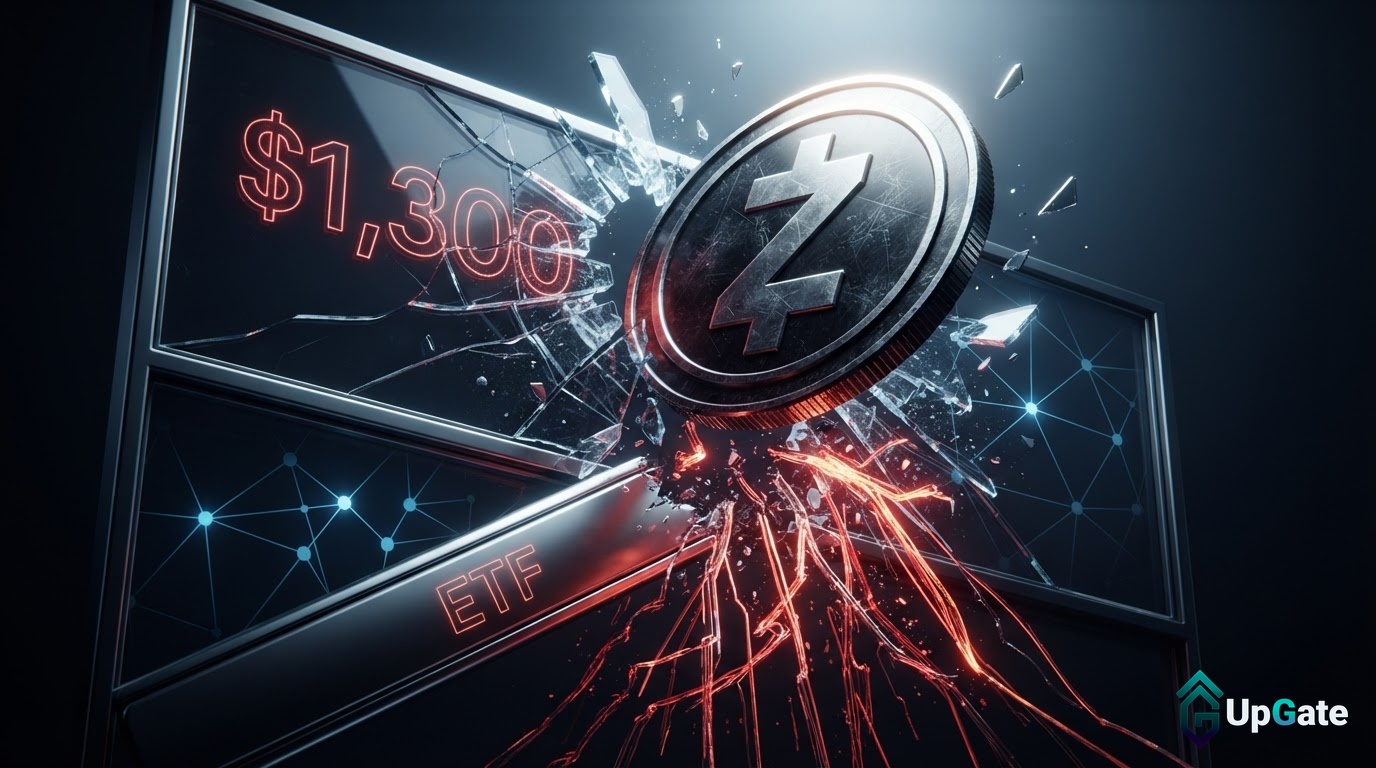
  • Zcash Price Surges Past $1,300 Amidst ETF Launch, Network Upgrade, and Short Liquidations

    Zcash Price Surges Past $1,300 Amidst ETF Launch, Network Upgrade, and Short Liquidations

    Zcash (ZEC) experienced a significant price surge on September 16, 2026, climbing above $1,300. The cryptocurrency gained approximately 10-12% within a single hour and 25% over the preceding 24-hour period. This rally occurred despite a generally cautious broader cryptocurrency market, which was anticipating a Federal Reserve interest rate decision. Prices above $1,200 had not been observed for Zcash since late 2016.

    The substantial price movement was attributed to a confluence of three key factors: the launch of Grayscale’s spot Zcash ETF (ZCSH), the successful community vote on Network Upgrade 7 (NU7) to reduce block generation time, and the liquidation of over $45 million in short positions.

    Grayscale’s Spot Zcash ETF Launch
    The debut of Grayscale’s spot Zcash ETF, ticker ZCSH, on August 25, 2026, marked a significant development. Within weeks of its launch, the ETF had accumulated over $463 million in assets, positioning it as one of the more consequential crypto ETF launches in recent memory. The approval of a spot ETF for a privacy-focused coin may also signal a degree of regulatory comfort with Zcash’s compliance posture, particularly given its optional privacy features that allow for both transparent and shielded transactions.

    Network Upgrade 7 (NU7) Approval
    Simultaneously, the Zcash governance community overwhelmingly supported Network Upgrade 7 (NU7). This upgrade is designed to reduce the block generation time from the current 75 seconds down to 25 seconds, while maintaining the existing halving schedule. The community vote saw approximately 2.4 million ZEC participating, with 99.9% in favor of the proposal. This successful upgrade is expected to improve user experience for everyday transactions and enhance Zcash’s viability as a medium of exchange.

    Market Mechanics and Short Liquidations
    The third major catalyst was activity in the derivatives market. During the rally, over $45 million in short positions were liquidated. This forced buying accelerated the upward price momentum as traders who had bet against ZEC were compelled to close their positions.

    Market Context and Uncertainties
    Zcash’s market capitalization approached $22 billion on September 16, 2026, placing it in a category that attracts attention from portfolio managers tracking large-cap digital assets. The surge occurred against a backdrop where traditional risk assets were experiencing pullbacks as investors prepared for a potential 25 basis point interest rate hike from the Federal Reserve.

    While the combination of institutional interest, network development, and market mechanics created a strong upward momentum, there are uncertainties to monitor. The long-term impact of the significant liquidation event on price stability remains to be seen. Additionally, the sustainability of the price surge will depend on the underlying demand beyond the short squeeze. The broader market’s reaction to the Federal Reserve’s decision also presents a potential headwind. The success of NU7 in enhancing Zcash’s utility as a medium of exchange will be a key factor in its future trajectory.

    Why This Matters

    The materials describe a narrow update: Zcash (ZEC) price increased by approximately 10-12% in one hour and 25% in 24 hours, reaching over $1,300 on September 16, 2026. The long-term impact of the $45 million liquidation event on ZEC’s price stability.

  • Melius Analyst: Intel Shares Poised for $200 Within Two Years

    Melius Analyst: Intel Shares Poised for $200 Within Two Years

    Analyst Sees Significant Upside for Intel, Targeting $200 Valuation

    Intel’s remarkable turnaround this year has captivated the technology sector. Now, Melius Research analyst Ben Reitzes suggests the most significant gains are yet to come, projecting a potential $200 per share valuation for the chipmaker within two years. This optimistic outlook is based on a detailed analysis of Intel’s individual business segments.

    Reitzes reaffirmed his “Buy” rating and a $165 price target for Intel on September 16, emphasizing that his sum-of-the-parts valuation indicates substantial upside beyond that figure. The $165 target itself represents a 15-20% discount to the $200 valuation he deems achievable.

    The foundation of Reitzes’ thesis rests on two key areas: Intel’s product operations and its burgeoning foundry business. He estimates that each of these segments could independently be worth more than $80 per share.

    Intel shares have already experienced a significant surge, climbing approximately 160-163% year-to-date as of mid-September 2026. However, Reitzes contends that the market has not yet fully factored in the potential of the foundry unit, especially as escalating demand for artificial intelligence continues to strain global semiconductor supply chains and prompts governments to prioritize manufacturing self-sufficiency.

    Intel recently announced a $20 billion equity raise, priced at $95 per share, to finance its long-term strategic roadmap. Reitzes interprets this move as a strong indicator of management’s confidence in the returns expected from its advanced manufacturing investments. The company’s spending plans also signal a substantial increase in capital expenditures for 2027 compared to 2026 levels.

    Coinciding with Reitzes’ analysis, reports emerged that SK Hynix, the South Korean memory chip giant, is exploring options for memory chip manufacturing in the United States, including high-bandwidth memory (HBM). One avenue under consideration involves Intel’s planned facility in Ohio, potentially through a leasing agreement or a joint venture. While these discussions are in their preliminary stages and no definitive agreement has been reached, the mere prospect was sufficient to boost Intel’s stock price on the day.

    HBM has emerged as one of the most critical components in the semiconductor industry. This type of memory is integral to Nvidia’s data center GPUs, and demand has far outpaced supply as companies accelerate their efforts to build AI infrastructure. If SK Hynix were to establish HBM production at an Intel-operated fabrication plant in Ohio, it would serve as a significant endorsement of Intel’s foundry-as-a-service model.

    For investors closely monitoring the sector, the SK Hynix discussions represent a potentially crucial near-term catalyst. A formal partnership would provide concrete evidence that major chip manufacturers view Intel’s foundry services as a viable manufacturing solution. Until such agreements are finalized, the gap between Reitzes’ $165 target and his more ambitious $200 scenario remains a reflection of the current market perception versus what Intel still needs to demonstrate.

  • Evernorth CEO: Wall Street’s Decade-Long XRP Reversal Underway

    Evernorth CEO: Wall Street’s Decade-Long XRP Reversal Underway

    RLUSD Expansion Bolsters XRP Ledger Liquidity, CEO Says

    The expansion of RLUSD, a dollar-backed stablecoin, on the XRP Ledger is crucial for enhancing liquidity across the network, according to Evernorth CEO Ashish Birla. He described the stablecoin as “paramount” to the broader XRP ecosystem. Birla noted that RLUSD’s share of the XRP Ledger supply has surged from approximately 20% to 34%, representing a 642% increase.

    Birla linked this growth to the current state of global finance, where “almost every financial product, equities, gold, and so forth, is usually paired and settled with US dollars.” He argued that a high-quality dollar stablecoin on the ledger is fundamental to developing deeper order books, benefiting both the XRP Ledger’s native exchange and decentralized platforms involved in global trade.

    Total Tokenized Asset Value Reaches Record $4.4 Billion

    The total value of tokenized real-world assets on the XRP Ledger has reached a record $4.4 billion, according to Birla. He presented this figure as evidence that institutional participation is accelerating, rather than remaining on the sidelines.

    Birla contrasted his experiences meeting with Wall Street institutions a decade ago with more recent interactions. Ten years prior, he recalled, institutions would listen to pitches about XRP and blockchain but lacked concrete plans, offering only proof-of-concept experiments. This past summer, however, his meetings with similar institutions revealed a markedly different attitude. “They’re not waiting,” Birla stated. “They are building teams. They are deploying. In their mind, this is happening.”

    He cited BlackRock’s involvement through its BUIDL fund as an example of this institutional shift, alongside ongoing regulatory clarity from the SEC under Chairman Paul Atkins.

    Evernorth’s Path to a Nasdaq Listing

    Evernorth is on track for a Nasdaq listing, pending a shareholder vote on a special purpose acquisition company (SPAC) deal and final regulatory approvals. Should the vote be successful and the listing finalized, Evernorth shares would trade under the ticker XRPN.

    XRP Liquidity Report Highlights Retail Activity Trends

    Addressing why retail account activity on the XRP Ledger has not mirrored the growth seen in institutional flows, Birla referred to Evernorth’s regularly published XRP Liquidity Report, which the company uses to monitor the ecosystem’s health. He indicated that the data suggests larger institutional accounts are now contributing a growing proportion of network volume, interpreting this as a strong institutional signal rather than a sign of declining retail participation.

    Birla did acknowledge that there is room for improvement on the retail front. He suggested that the broader XRP ecosystem needs to develop more features and use cases specifically designed to attract everyday users to engage with and build on the network, viewing this as an area for future growth rather than a current deficiency.

  • SEC, CFTC Signal Independent Regulatory Path After CLARITY Act Fails in Senate

    SEC, CFTC Signal Independent Regulatory Path After CLARITY Act Fails in Senate

    The Securities and Exchange Commission (SEC) and the Commodity Futures Trading Commission (CFTC) have indicated their readiness to advance regulatory frameworks without further congressional action, following the Senate’s failure to pass the CLARITY Act. This development signals a potential shift towards independent regulatory action in the absence of legislative consensus.

    On Tuesday, the CLARITY Act did not pass the Senate. The following day, the Chairman of the CFTC described the outcome of the Senate vote as “unfortunate.” In parallel, both the SEC and CFTC conveyed their readiness to proceed with regulation, suggesting they are prepared to move forward without additional input from Congress.

    The failure of the CLARITY Act in the Senate has created a situation where regulatory bodies are signaling their intent to fill the void. This move by the SEC and CFTC indicates a proactive stance in shaping the regulatory landscape, particularly concerning financial clarity.

    The SEC and CFTC indicated their readiness to proceed with regulation, a statement that underscores their capacity and willingness to act independently. This readiness is a key signal that regulatory bodies are prepared to take the lead in establishing rules and guidelines, even when legislative processes stall.

    The CFTC Chairman stated that the outcome of the Senate vote was unfortunate. This sentiment, coupled with the agencies’ stated readiness to regulate, highlights the dynamic between legislative inaction and regulatory agency initiative. The SEC and CFTC’s preparedness to move forward without Congress suggests a commitment to establishing regulatory clarity through their own established authorities.

    Why This Matters

    The materials describe a narrow update: The Senate failed to pass the CLARITY Act. Regulatory bodies (SEC, CFTC) are prepared to act independently following legislative failure.

    Broader Context

    Source materials place the factual news in this context: Following the failed Senate vote on Tuesday concerning the CLARITY Act, several high-profile individuals shared their two cents on the matter.

  • Payward to Launch US Perpetual Futures on Hyperliquid

    Payward to Launch US Perpetual Futures on Hyperliquid

    Payward Aims to Launch US-Registered Perpetual Futures on Hyperliquid Blockchain

    Payward, the parent company of cryptocurrency exchange Kraken, has announced its intention to become the first US-registered exchange to offer perpetual futures on the Hyperliquid public blockchain. The contracts will be listed on the Bitnomial Exchange, regulated by the Commodity Futures Trading Commission (CFTC), but will be confined to a HIP-3 restricted market. This means US users will not have direct access to Hyperliquid’s existing decentralized trading.

    Navigating US Regulatory Landscape for Perpetual Futures

    US cryptocurrency trading regulations have long presented a barrier to perpetual futures. Payward now seeks to create an opening.

    Arjun Sethi, Co-CEO of Payward, revealed the company’s plan to deploy a perpetual futures market on the Hyperliquid public blockchain, positioning it as the first US-registered exchange to do so. This move leverages Payward’s acquisition of Bitnomial in 2025 for $550 million, which granted it CFTC-registered Designated Contract Market (DCM) status.

    A Hybrid Approach to On-Chain Trading

    The innovation lies not just in “going on-chain,” but in how it is being done. Jon Pham, Payward’s Head of US Derivatives, explained that US customers will open accounts through Payward’s registered brokerage. Trades will be executed on Hyperliquid for new perpetual contracts, with clearing handled by Payward’s existing clearinghouse, Bitnomial Clearinghouse. Payward’s futures broker, NinjaTrader Clearing, will manage customer accounts.

    Crucially, Payward will not grant US customers direct access to Hyperliquid’s existing decentralized perpetual futures market. Instead, it will utilize HIP-3, a third-party market deployment protocol developed by Hyperliquid. This protocol allows external institutions to establish and manage their own permissioned perpetual futures markets on the Hyperliquid blockchain.

    Bitnomial Exchange will act as the HIP-3 deployer, creating, owning, and managing these markets, with contracts listed under CFTC oversight. US customers will require approval from both NinjaTrader Clearing and Bitnomial to open trading accounts.

    This design keeps trade matching and record-keeping on the Hyperliquid public blockchain while bringing regulatory responsibility back within the CFTC’s jurisdiction. Hyperliquid’s existing perpetual futures markets will remain inaccessible to US users.

    Tapping into a Multi-Trillion Dollar Market

    Since their introduction in 2016, perpetual futures have largely been traded in offshore, unregulated markets. According to CoinGecko’s “State of Perpetual Futures 2026” report, global perpetual futures trading volume exceeded $8.5 trillion in 2025, a scale of capital that US regulators cannot ignore.

    Hyperliquid currently holds a significant position within the overall perpetual futures market. Data from DefiLlama indicates that the decentralized exchange (DEX) settles approximately 9% of global open perpetual positions.

    For Payward, bringing a product from an $8.5 trillion offshore market into a compliant framework represents a potential market for US institutions and compliant retail investors. However, this comes with the cost of adhering to CFTC approval processes, Know Your Customer (KYC)/Anti-Money Laundering (AML) requirements, and restricted trading conditions.

    Hyperliquid’s Potential Gains and Challenges

    The specific economic terms of the agreement between Payward and Hyperliquid, including fee sharing, revenue distribution, or projected trading volumes, have not been disclosed. A Kraken spokesperson declined to comment on potential revenue.

    However, Hyperliquid’s financial data suggests a need for new revenue streams. According to DefiLlama, Hyperliquid’s revenue in the second quarter of 2026 was approximately $202 million, a 43% decrease from the third quarter of 2025.

    Payward’s HIP-3 deployment offers two potential benefits for Hyperliquid: first, the establishment of a CFTC-registered entity as an on-chain operator, enhancing the blockchain’s institutional credibility; and second, the generation of on-chain activity from the US market. The ultimate scale of this transaction remains uncertain.

    A Test Case for On-Chain Derivatives Compliance

    The substantive significance of Payward’s proposal lies not in Hyperliquid finally serving US users, but in its testing of a compliance framework: overlaying the matching capabilities of a decentralized protocol with the shell of a CFTC-registered exchange.

    The replicability of this framework hinges on three conditions: the CFTC’s stance on HIP-3 restricted markets, the willingness of other Layer 1/Layer 2 solutions to introduce similar third-party market protocols, and Payward’s ability to demonstrate that trading volumes under this structure can justify compliance costs.

    If Payward succeeds, this pathway could become a standard template for perpetual futures entering the mainstream US market. If it fails, it will serve as a clear indication of the CFTC’s compliance boundaries for on-chain derivatives. Payward has not yet announced a launch date or fee structure, and the proposal is currently in its initial stages.

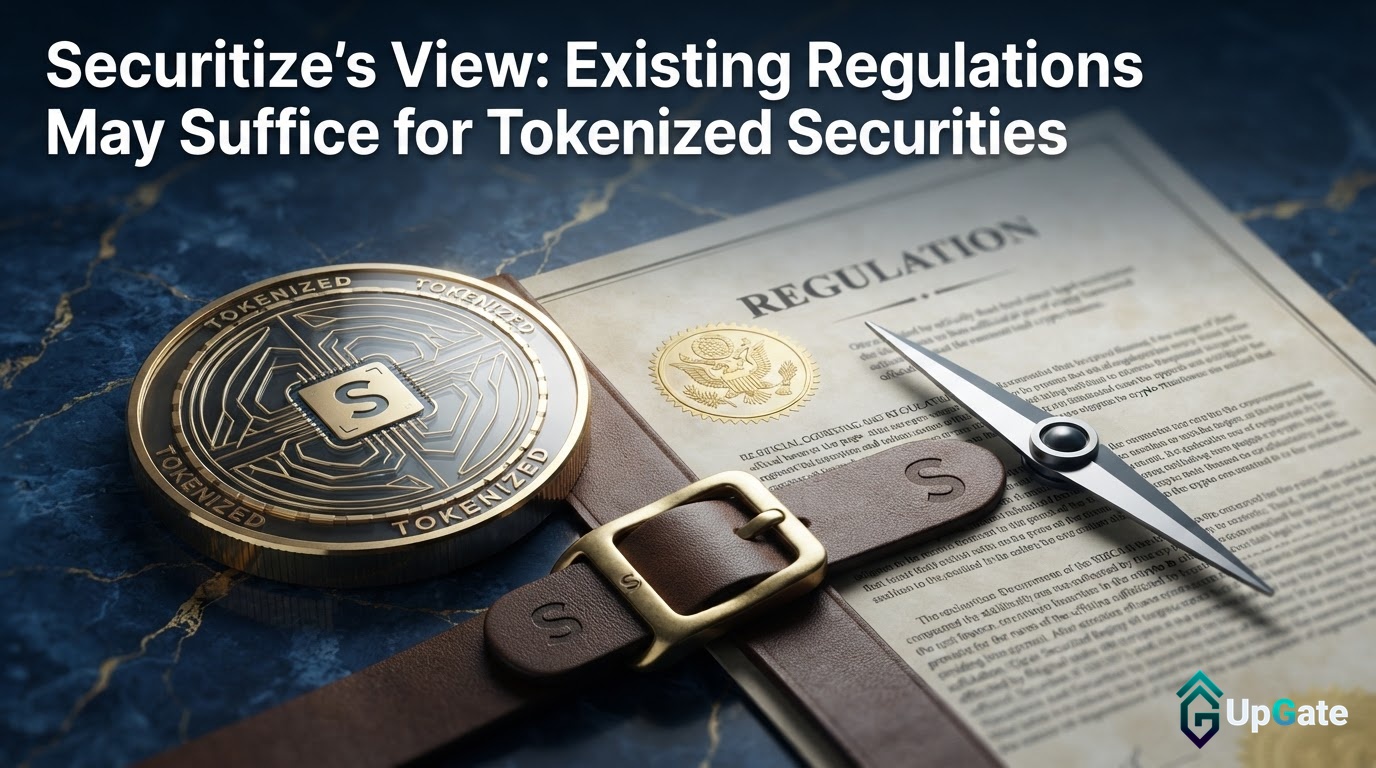
  • Securitize’s View: Existing Regulations May Suffice for Tokenized Securities

    Securitize’s View: Existing Regulations May Suffice for Tokenized Securities

    Securitize’s Head of Ecosystem, Graham Ferguson, has indicated that tokenized securities operating under current regulatory frameworks may not require new legislation, such as the proposed Digital Asset Market Clarity Act. This perspective suggests that existing U.S. securities laws could be adequate for the functioning of tokenized assets.

    Securitize operates as an SEC-registered entity, functioning as a broker-dealer, transfer agent, and alternative trading system operator. The company facilitates the issuance, custody, settlement, and trading of tokenized assets on public blockchains, including Solana and Avalanche. According to Securitize, its issuer-sponsored model ensures that all tokens it creates already conform to regulatory standards. The firm currently oversees more than $4 billion in tokenized real-world assets across various funds.

    The Digital Asset Market Clarity Act, a bipartisan bill aimed at defining jurisdictional boundaries between the SEC and CFTC concerning digital assets, passed the House with a 294-134 vote in July 2025. A procedural vote in the Senate followed on September 15, 2026. Graham Ferguson joined Securitize in 2025.

    Securitize’s operational approach has been demonstrated through significant market milestones. On July 2, 2026, the company went public on the NYSE under the ticker SECZ, with its IPO deal valued at approximately $400 million. Simultaneously, Securitize tokenized its shares on both Solana and Avalanche, marking a dual blockchain listing alongside its traditional exchange debut. The company has also secured FINRA approval for on-chain custody and atomic settlement against stablecoins, a process where both sides of a trade settle simultaneously and automatically.

    Furthermore, Securitize has established a partnership with BlackRock, the world’s largest asset manager, which adds institutional credibility to its operations. Ferguson’s assertion that tokenized securities built on existing regulatory frameworks do not need new legislation is supported by Securitize’s demonstrated ability to operate compliantly within the current legal landscape.

    However, uncertainties remain regarding the ultimate fate and impact of the Digital Asset Market Clarity Act on the broader crypto industry, as well as the specific details of the jurisdictional boundaries it aims to define. The practical implications of these legislative efforts for market participants and the evolution of tokenized securities continue to be a subject of discussion.

    Broader Context

    Source materials place the factual news in this context: The CLARITY Act, a bipartisan bill designed to sort out jurisdictional boundaries between the SEC and CFTC over digital assets, passed the House with a 294-134 vote in July 2025. A Senate procedural vote followed on September 15, 2026.

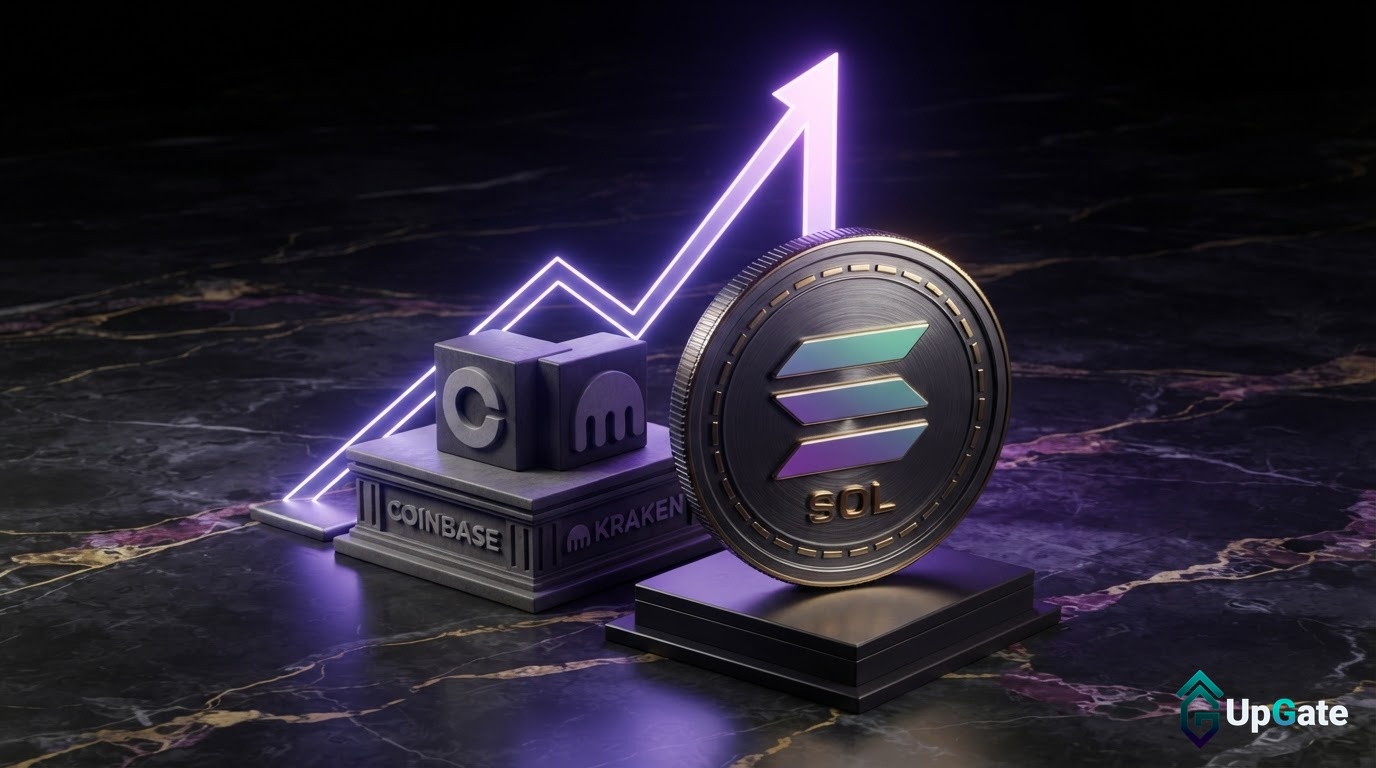
  • Solana DEX Volume Surpasses Coinbase and Kraken Combined, Achieves Global Second Place

    Solana DEX Volume Surpasses Coinbase and Kraken Combined, Achieves Global Second Place

    Solana’s decentralized exchange (DEX) ecosystem has surpassed the combined spot asset volume of major centralized exchanges Coinbase and Kraken, securing second place globally in trading volume for a sustained period during the summer of 2026.

    During the week of June 12-18, 2026, Solana’s DEX ecosystem recorded approximately $7.19 billion in spot asset volume. This figure exceeded the combined volumes of Coinbase, which posted roughly $6 billion, and Kraken, which recorded around $4 billion during the same week. Collectively, Solana’s DEX protocols processed more dollar volume than these two institutions combined.

    In the global context for the week of June 12, Binance led with approximately $34.39 billion in volume, followed by Bybit with about $9.47 billion. Solana’s DEX volume ranked third globally during this specific week.

    However, by late July 2026, Solana had climbed to second place in global trading volume. This position was maintained for at least nine consecutive weeks through late August. For comparison, Binance’s weekly volume in mid-June was approximately 4.8 times that of Solana’s DEX volume.

    Several factors are contributing to Solana’s growing DEX volume. The platform’s low fees and fast settlement times make it an attractive venue for high-frequency, low-margin token speculation, particularly with meme coins. Additionally, the emergence of tokenized equities is noted as a significant driver. The ability to trade representations of traditional stocks on-chain, around the clock, and without a broker has attracted a new segment of users to DEXs, with Solana’s throughput making this experience practical.

    While Solana’s performance through the summer of 2026 highlights a shift in trading activity, it does not signal the end of centralized exchanges. However, the trend indicates a growing importance of on-chain volume and decentralized trading platforms. As reported by the article, exchanges tend to follow volume, and this volume is increasingly occurring on-chain.

    Uncertainties remain regarding the long-term sustainability of Solana’s DEX volume growth, the precise definition of ‘spot asset volume’ across different platforms, and whether the trend of volume shifting to DEXs will continue indefinitely. The source states that the hierarchy of trading volume on centralized exchanges is quietly changing, and the direction of travel is clear.

    Why This Matters

    The materials describe a narrow update: Solana’s decentralized exchange (DEX) ecosystem has seen its spot asset volume exceed the combined volume of Coinbase and Kraken. The long-term sustainability of Solana’s DEX volume growth.

    Broader Context

    Source materials place the factual news in this context: For most of crypto’s history, the trading volume leaderboard has looked roughly the same: Binance at the top, followed by a handful of centralized exchanges, with decentralized platforms fighting for scraps.