Category: Uncategorized

  • XRP Analyst Predicts $27 Price Target Based on Long-Term Pattern

    XRP Analyst Predicts $27 Price Target Based on Long-Term Pattern

    Chart Analyst Identifies Major XRP Pattern, Targets $27

    A prominent chart analyst, known as ChartNerd, has identified an 8.5-year cup-and-handle pattern on XRP, suggesting the cryptocurrency is approaching a key Fibonacci retracement level that could pave the way for significant long-term price appreciation. The analyst posits that XRP could eventually reach targets of $8, $13, and $27.

    This bullish outlook comes as XRP currently trades near $1.06, having experienced a substantial correction that has erased most of its gains from the past year.

    In a post on X on August 4, ChartNerd described XRP’s cup-and-handle formation as “one of the largest macro setups” in the market. The analyst highlighted the token’s proximity to the 0.618 Fibonacci retracement level, which he believes could serve as a foundation for a move towards the aforementioned Fibonacci extension targets.

    ChartNerd expressed strong conviction in these targets, stating they are a matter of “when, not if.” However, he also cautioned that short-term price action remains unpredictable. The analyst attributed XRP’s recent weakness not to inherent issues with the asset itself, but rather to a broader market correction affecting the cryptocurrency space.

    Alternative Scenarios and Divergent Views

    Despite the long-term bullish thesis, ChartNerd presented an alternative scenario where XRP might consolidate around the $1 mark for the remainder of the year. He drew a parallel to the asset’s bottoming process in June 2022, where a Gaussian channel indicator gradually caught up to the price rather than experiencing a sharp decline.

    This consolidation scenario, ChartNerd clarified, is an alternative to an earlier projected target range of $0.90 to $0.70 and does not negate the long-term outlook. He noted that the initial roadmap toward the $1 area was developed when XRP was trading significantly higher, between $1.80 and $2.

    However, not all market participants share ChartNerd’s optimistic projections. Trader CryptoBull, in a recent post, dismissed the lower short-term targets, expressing confidence that XRP would bypass levels like $0.87 and $0.73 entirely. “Those waiting for $0.87 or $0.73, I will see you at $23,” CryptoBull stated.

    Other Analysts Weigh In on XRP’s Technicals

    Other analysts have also focused on XRP’s current technical standing. EGRAG CRYPTO pointed out that the Ripple token has fallen below its 50-day moving average and is approaching the 100-day exponential moving average, a level he described as historically crucial for long-term support.

    According to EGRAG CRYPTO, a move towards the $1 to $0.95 range could represent a normal retest if XRP manages to hold this area. He outlined a potential downside target near $0.80 if the token breaks towards the lower boundary of its long-term channel, while maintaining his own long-term targets of $15, $27, and above $50.

    Analyst Ali Martinez also identified $1.06 as a pivotal level for XRP’s next directional move. In a report dated August 4, Martinez suggested that holding this price could open the door to $1.35 and $1.64, whereas a failure to do so could lead to a decline towards $0.62.

    At the time of reporting, XRP was trading around $1.06. Data from CoinGecko indicated a decline of approximately 2% over the past seven days and more than 6% over the last 30 days. Year-to-date, XRP has fallen by about 65%, placing it nearly 71% below its all-time high of $3.65.

  • Bybit to Support SOMNIA Network Upgrade

    Bybit to Support SOMNIA Network Upgrade

    Bybit to Support SOMNIA Network Upgrade, Trading Uninterrupted

    Cryptocurrency exchange Bybit has announced its support for the upcoming SOMNIA (SOMI) Network Upgrade, scheduled for August 6, 2026, at 11:00 AM UTC.

    In preparation for the upgrade, Bybit will temporarily suspend SOMNIA (SOMI) deposits and withdrawals beginning at 10:30 AM UTC on August 6, 2026. The exchange has assured users that trading activities will not be impacted by this maintenance.

    Bybit has stated that no further announcements will be made regarding the resumption of deposit and withdrawal services. Users wishing to be notified when these services are back online are advised to visit the Deposit or Withdrawal page and activate the “Set Alert” function.

    Further details concerning the network upgrade can be found in the official release notes.

  • Chainlink’s Exchange Activity and Ecosystem Growth Present Mixed Signals

    Chainlink’s Exchange Activity and Ecosystem Growth Present Mixed Signals

    Chainlink has recently recorded significant net exchange outflows, with 1.26 million tokens moving off exchanges in a 24-hour period, marking the largest such movement since June 29. This activity, alongside increased whale engagement, presents a complex signal for market observers. While a reduction in tokens available on exchanges can sometimes suggest lower immediate selling pressure, the precise implications of these on-chain movements are difficult to interpret and require further observation.

    Whale activity has reportedly increased, which may reflect greater confidence among major holders. However, definitive conclusions about the immediate impact on price are not yet clear and necessitate continued monitoring.

    Ecosystem Momentum Amidst On-Chain Movements

    In parallel with these on-chain movements, Chainlink’s ecosystem has seen notable developments. In July, the Depository Trust & Clearing Corporation (DTCC) processed trades of tokenized U.S. securities, listing Chainlink among its technology providers. This highlights the growing integration of blockchain technology in traditional finance infrastructure.

    Furthermore, Chainlink’s Cross-Chain Interoperability Protocol (CCIP) has expanded its reach, increasing support across both institutional and cryptocurrency networks, including Canton and the Robinhood Chain. This expansion is a key indicator of the protocol’s growing utility and adoption.

    The network has also been recognized for its development in the Real World Assets (RWA) sector, ranking second in Santiment’s RWA development ranking, behind Hedera. According to Santiment, this suggests increased activity and focus on bridging traditional assets with blockchain technology.

    Several projects have recently transitioned to or integrated Chainlink’s technology. Kraken’s kBTC, as well as Solv Protocol’s SolvBTC and xSolvBTC, have switched to Chainlink’s infrastructure. Additionally, BitGo announced its decision to move its cross-chain infrastructure to Chainlink’s CCIP. This migration trend is partly attributed to increased scrutiny following earlier incidents, such as the $292 million KelpDAO bridge event.

    Price Action and Future Uncertainty

    Chainlink’s LINK token experienced price fluctuations throughout July, starting near $7.85, briefly dipping below $7.6, before climbing above $8 and reaching approximately $8.86. By August, the price saw a pullback toward $8.2.

    According to the trader, the current market structure has strengthened, but confirmation is still needed. Uncertainty remains regarding the asset’s ability to break out of a recent downtrend. A break above the resistance level of $11.62 could signify a technical shift, but the focus is on whether buyers can establish higher highs and higher lows while maintaining support above the demand zone. If this structure falters, LINK could remain within its broader trend.

    It is important to note that while these developments are significant, they do not guarantee future price movements. The interpretation of on-chain data and market signals is complex, and continued observation of both network activity and broader market conditions is necessary. The current situation presents a nuanced picture, where substantial token movements are occurring within a context of expanding technological adoption and development.

    Why This Matters

    Chainlink recorded 1.26 million tokens in net exchange outflows over 24 hours, the largest daily outflow since June 29. This significant on-chain activity, occurring alongside substantial ecosystem growth and adoption, presents a complex picture for market observers, with uncertainty remaining about its direct impact on future price action.

    Broader Context

    Source materials place the factual news in this context: In July, the DTCC processed tokenized US securities trades with Chainlink listed among its technology providers.

  • Meta AI’s XRP Price Outlook: Catalysts, Uncertainties, and Market Signals

    Meta AI’s XRP Price Outlook: Catalysts, Uncertainties, and Market Signals

    Interpreting AI-driven market signals, such as Meta AI’s recent XRP price forecast, requires careful consideration of the underlying assumptions and the inherent uncertainties in predicting future asset performance. While Meta AI suggests a potential supply-driven repricing for XRP, labeling the current setup as the cleanest since 2017, this analysis is built upon four key catalysts rather than a single trigger. However, the path forward is marked by significant uncertainties that temper the optimism of any price prediction.

    Why This Matters

    The materials describe a narrow update: Meta AI has analyzed XRP’s current market conditions and predicts a potential surge in its price, citing four key catalysts. The exact timing and magnitude of ETF approval and inflows.

    Broader Context

    Source materials place the market analysis in this context: The article discusses a price prediction for XRP made by Meta AI.

    ETF Super Cycle Potential

    The first catalyst identified is an “ETF super cycle.” Following the SEC’s settlement with Ripple and the reclassification of XRP as a commodity, 11 spot ETF filings have reportedly emerged. Bloomberg places approval odds for these ETFs between 87% and 95%, with five ETFs already listed on the DTCC. Since November 2025, approximately $1.3 billion in inflows have been recorded with zero outflows, and projections suggest $5 to $8 billion more could arrive in 2026, a figure Standard Chartered links to its $8 bull case target for XRP.

    Ripple’s Banking Initiatives

    Ripple’s banking initiatives form the second pillar of the prediction. The company has secured initial approval from the OCC for a federal trust bank charter, positioning RLUSD as the first stablecoin under both state and federal oversight. RLUSD is now operational on over 40 chains, with BNY Mellon, a custodian managing substantial assets, serving as its primary custodian. This development is seen as a step towards greater institutional integration.

    Institutional Adoption on XRPL

    Institutional adoption on the XRP Ledger (XRPL) itself constitutes the third catalyst. Ripple is targeting 2026 as a key year for banks and asset managers to utilize on-chain liquidity pools. The XRPL EVM Sidechain currently holds over $105 million in total value locked (TVL), and projects like an SBI blockchain bond valued at $64.6 million, alongside Archax’s involvement in equity and debt tokenization, are expected to drive settlement demand by mid-2026.

    Regulatory Tailwinds and Supply Contraction

    Regulatory tailwinds are cited as the fourth catalyst. Potential legislation like the CLARITY Act could unlock Real World Asset (RWA) tokenization. Concurrently, 1.35 billion XRP has been withdrawn from exchanges, contributing to a tightening of available supply. These factors, according to the analysis, create a favorable environment for XRP.

    Quantifying Uncertainty and Risk

    Despite these catalysts, significant uncertainties persist. The exact timing and scale of ETF approvals and subsequent inflows remain to be seen. The success of Ripple’s banking ventures and the adoption rate of XRPL by institutions are not guaranteed. Furthermore, the passage and impact of new regulatory frameworks are subject to political processes. Meta AI acknowledges these uncertainties, outlining a bear case scenario where downside risk could extend to $0.86-$1.00, particularly if regulatory progress stalls and ETF inflows remain below a certain threshold. The analysis suggests that while supply contraction may limit deep downturns, the market could still experience a 16% decline from current levels in a bear scenario, with a target of $1.60.

    Technical Indicators and Price Levels

    From a technical perspective, the current chart action does not indicate an imminent notable move. The signal lines are nearly flat, suggesting a period of consolidation. For Meta AI’s base case price target of $2.45 to $2.80 to become plausible, XRP would first need to decisively clear the $1.60 resistance level, a mark not touched since before a significant price gap down in February. The bull case, projecting prices between $4.94 and $8.00, is contingent on substantial ETF flows and XRPL capturing a significant share of the tokenization market.

    The analysis also touches upon the nature of trading, contrasting traditional spot exposure with event trading platforms like Kalshi, which allow for more precise bets on specific outcomes and timing. This perspective highlights that while predictions can be informative, the instrument used to trade on them carries its own set of risks and exposures.

    In conclusion, Meta AI’s prediction for XRP is based on a confluence of potential catalysts, including ETF momentum, Ripple’s expanding ecosystem, and evolving regulatory landscapes. However, the realization of these catalysts is subject to considerable uncertainty. Investors and traders should approach such forecasts with a balanced perspective, acknowledging both the potential upside scenarios and the significant risks and technical hurdles that remain.

  • CLARITY Act Faces Senate Recess Deadline, Introducing Regulatory Uncertainty for Crypto

    CLARITY Act Faces Senate Recess Deadline, Introducing Regulatory Uncertainty for Crypto

    The US Senate’s approaching August recess presents a critical deadline for the CLARITY Act, legislation designed to offer regulatory clarity to the crypto industry. A potential failure to pass the bill before the recess on August 7 could introduce significant regulatory uncertainty, impacting investor sentiment and capital allocation.

    To have a chance at a vote before the break, lawmakers must file for cloture on the CLARITY Act by Wednesday, August 5. If it does not pass this week, the legislation might enter a ‘walking dead’ state, though renewed efforts could emerge in a September session or during a December lame-duck session, as Congress often combines measures into year-end omnibus legislation.

    This legislative uncertainty is a concern for some professional investors, who may be delaying capital commitments to the crypto space until the CLARITY Act’s outcome is clearer. They are reportedly observing market reactions to the bill’s potential passage or failure. Paradoxically, some analysts suggest that if the bill fails this week, a sharp drop in its market odds could help remove uncertainty, potentially positioning the crypto market for a fall rally.

    Despite legislative hurdles, the crypto industry’s underlying momentum remains robust, supported by alternative regulatory pathways. According to Matt Hougan, Chief Investment Officer at Bitwise, the Securities and Exchange Commission (SEC) is prepared to introduce rules addressing many of the same issues covered by the CLARITY Act. Hougan noted that SEC rules might offer more short-term support for crypto and innovation than a bipartisan congressional bill, but cautioned that a future administration could appoint a less supportive SEC chair, potentially reversing such policies.

    Chris Dixon of Andreessen Horowitz shares a similar view, suggesting the CLARITY Act could help prevent future crises like FTX by granting regulators clearer oversight of crypto exchanges and establishing rules for disclosure, fraud, and insider trading. Dixon emphasized that the market outside stablecoins, estimated at 85% of the total market, still lacks a comprehensive federal regulatory framework.

    The crypto industry is also seeing increased involvement from major financial institutions and fintech firms. BlackRock has a Bitcoin ETF, while Nasdaq and JPMorgan are exploring asset tokenization. Visa, Mastercard, Stripe, and Coinbase are collaborating on a stablecoin platform, and Robinhood has developed a blockchain connecting with decentralized finance (DeFi) applications. Additionally, the Office of the Comptroller of the Currency has granted trust charters to firms like Circle, Ripple, and Paxos, integrating them further into the US banking system.

    Internationally, other jurisdictions are advancing crypto-friendly legislation, including the European Union, Japan, and Russia. This global progress, combined with domestic industry innovation, suggests that crypto’s development is unlikely to be halted by regulatory setbacks.

    Historically, regulatory progress has not always been linear. Hougan drew a parallel to the early internet, where Congress’s failure to advance major telecommunications reform in 1994 did not impede the internet’s rapid expansion, with companies like Netscape, Amazon, and eBay emerging before the eventual passage of the Telecommunications Act of 1996.

    While agencies like the SEC and the Commodity Futures Trading Commission (CFTC) can address many issues, legislation offers more lasting rules and greater confidence for long-term business investments. The potential failure of the CLARITY Act this week introduces a period of uncertainty, but the crypto industry’s established momentum, diverse technological advancements, and the availability of alternative regulatory mechanisms point towards its continued evolution and growth.

    Why This Matters

    The materials describe a narrow update: The CLARITY Act may not pass the US Senate before their August recess, potentially entering a ‘walking dead’ state. Whether the CLARITY Act will pass the US Senate before the August recess.

    Broader Context

    Source materials place the factual news in this context: The US Senate is scheduled to leave for its August recess on Friday, August 7, and return on September 14.

  • Visa Expands Stablecoin Payment Capabilities with Zerohash Integration

    Visa Expands Stablecoin Payment Capabilities with Zerohash Integration

    Visa is expanding its stablecoin payment offerings through a new arrangement with crypto infrastructure provider Zerohash. The integration allows eligible Visa Direct clients to prefund accounts and send payouts using stablecoins, a move designed to offer businesses greater liquidity management flexibility outside traditional banking hours and recipients the option to receive payouts directly in stablecoins.

    According to Zerohash, the enhanced capabilities will be accessible via Visa Direct, Visa’s money movement network. “Unlocking stablecoin use cases at the core network level further accelerates adoption globally,” stated Edward Woodford, Zerohash founder and CEO. This functionality enables businesses to fund Visa Direct accounts with stablecoins prior to making payments, thereby managing liquidity more effectively outside standard banking hours. Recipients also have the choice to receive their payouts in stablecoins.

    Zerohash, founded in 2017, provides crypto infrastructure for financial institutions. The company applied for a national trust bank charter in March to expand its custody and settlement services. In July, Zerohash was instrumental in powering Morgan Stanley’s introduction of Bitcoin, Ethereum, and Solana trading on E*Trade.

    This partnership represents Visa’s latest initiative in the stablecoin sector. In January, Visa collaborated with BVNK to pilot stablecoin prefunding and payouts on Visa Direct. This was followed by the launch of the Visa Stablecoin Platform in July, which equips banks and fintechs with tools to issue, hold, and transfer stablecoins, integrating them into existing treasury and payment systems.

    “Stablecoins are creating new opportunities to make money movement faster and more flexible, particularly for cross-border use cases,” said Mark Nelsen, Visa’s global head of product. “Working with Zerohash helps us bring stablecoin capabilities to our clients at scale, in a way that’s reliable and interoperable with the financial systems they already rely on today.”

    Why This Matters

    The materials describe a narrow update: Visa is expanding its stablecoin payment offerings by partnering with Zerohash. The integration lets businesses fund Visa Direct accounts with stablecoins before making payments, allowing them to manage liquidity outside traditional banking hours.

    Broader Context

    Source materials place the factual news in this context: Visa is expanding its stablecoin payment offerings through an arrangement with crypto infrastructure provider Zerohash, allowing eligible Visa Direct clients to prefund accounts and send payouts using stablecoins.

  • Circle’s Arc Blockchain Mainnet Set for September 16 Launch with Major Financial Backing

    Circle’s Arc Blockchain Mainnet Set for September 16 Launch with Major Financial Backing

    Circle is scheduled to launch the public mainnet of its Arc blockchain on September 16, bolstered by a founding validator cohort that includes prominent financial institutions such as BlackRock, Visa, and Mastercard. The company also reported robust second-quarter financial results, highlighting growth in USDC utility and partnerships, and achieving net income.

    Arc Blockchain Launch and Validator Support
    The Arc blockchain’s mainnet launch will be secured by a consortium of traditional finance firms, including BlackRock, DTCC, Galaxy, Global Payments, ICE, Mastercard, MoneyGram, SBI Group, Standard Chartered, Sumitomo Corporation, and Visa, in addition to Circle. Circle CEO Jeremy Allaire characterized this group as “a cohort of network validators no other network can match.”

    Financial Performance and Growth
    In its second-quarter financial reporting, Circle announced total revenue and reserve income of $701 million, marking a 7% increase year-over-year. The company achieved a net income of $48 million, a significant improvement from a loss in the prior year. USDC in circulation closed the quarter at $73.3 billion, up 19%, and on-chain transaction volume reached $14.8 trillion, an increase of 151%.

    Circle’s share of the fiat-backed stablecoin market decreased to 27% during the quarter. The company’s distribution agreement with Coinbase has been renewed on its existing terms. Circle also reported that its Circle Payments Network reached $14.7 billion in annualized transaction volume, up 76% quarter-over-quarter, with this figure growing to $23 billion by July 31.

    Regulatory Milestones and Future Outlook
    Further solidifying its operational framework, Circle received final approval from the Office of the Comptroller of the Currency (OCC) to establish Circle National Trust. This federal bank charter enables Circle to hold regulated digital asset custody and potentially manage the USDC reserve itself. Allaire indicated that this infrastructure bank “becomes a way to project Circle’s infrastructure into global markets for payments, for capital markets, and for use of digital dollars in corporations all around the world.”

    Circle has also revised its full-year guidance for other revenue upwards, now projecting between $310 million and $330 million, a substantial increase from the previous guidance of $150 million to $170 million. The company attributes this upward revision partly to recognized revenue from the ARC token presale.

    While the Arc testnet has processed over half a billion transactions across nearly 3 million wallets, and the private mainnet has over 100 builders, uncertainties remain. These include the exact deployment details of BlackRock’s BUIDL on Arc and the precise timeline for DTCC enabling asset tokenization beyond the second half of 2027. The ongoing weakness in digital asset markets also presents a factor for future performance.

    Circle’s Q2 results indicate continued growth and profitability, with increasing USDC utility, liquidity, and partnerships. The OCC National Trust Bank charter positions Circle as one of the first stablecoin issuers to hold a federal bank charter, enhancing its regulatory standing and operational capabilities.

    Why This Matters

    The materials describe a narrow update: Circle’s Arc blockchain public mainnet is scheduled to launch on September 16. The exact nature and extent of BlackRock’s BUIDL deployment on Arc.

    Broader Context

    Source materials place the factual news in this context: Circle will open the public mainnet of its Arc blockchain on September 16, and named a founding validator cohort drawn almost entirely from traditional finance alongside second-quarter results on Wednesday.

  • Cardano Surges 20% Weekly, Igniting Trader Interest

    Cardano Surges 20% Weekly, Igniting Trader Interest

    Cardano’s ADA Surges Amidst Broader Crypto Slump, Igniting Bullish Speculation

    While Bitcoin (BTC), Ethereum (ETH), and other major cryptocurrencies have struggled in the past week, Cardano’s ADA has bucked the trend with a significant double-digit price increase. This unexpected rally has captured the attention of market observers, with some forecasting that the upward momentum may just be beginning.

    A Resurgence After a Prolonged Downturn

    ADA had been among the digital assets most heavily impacted by the extended bear market, with its price briefly falling below $0.14 in June, a level not seen since 2020. However, a notable resurgence occurred last weekend, potentially fueled by the return of significant investors, often referred to as “whales,” who collectively purchased over 240 million tokens in less than a week.

    Technical Indicators and Analyst Projections

    The upward trajectory has continued, with Cardano’s native token trading around $0.193 at press time, marking a 20% gain over the past seven days. Analyst JAVON MARKS has drawn parallels between ADA’s recent performance and its trajectory in 2020-2021, a period that preceded a substantial price surge. Based on this historical comparison, MARKS has set a price target of $2.90.

    Other analysts, Sssebi and CW, have also weighed in. Sssebi pointed out that ADA is nearing a cross above its 20-week Moving Average after being heavily oversold, a technical setup that has historically preceded significant price increases. Meanwhile, CW observed that ADA is approaching a key resistance level at $0.2305, suggesting that a successful breach of this mark could signal the end of its prolonged downtrend.

    Wallet Activity and Shifting Market Dynamics

    Interestingly, the rally in ADA’s price is occurring at a time when the number of active Cardano wallets has been declining, according to analytics platform Santiment. The firm suggests this divergence indicates that stronger buyers are absorbing available supply, while retail investors have yet to fully re-engage with the market. Santiment noted, “Rising price with falling holders can mean stronger buyers are absorbing supply, and retail confidence has not fully followed the move yet.”

    In contrast, recent data from Martinez indicates a substantial increase in trader interest in ADA. Futures trading volume has reportedly surged by 380% in a single week, rising from $150 million to $650 million. Such a sharp increase in volume typically signals heightened market participation and could lead to increased volatility for the asset in the short term.

  • BNB Chain Hackathon Aims to Build Official AI Agent Marketplace Amidst Growing Ecosystem

    BNB Chain Hackathon Aims to Build Official AI Agent Marketplace Amidst Growing Ecosystem

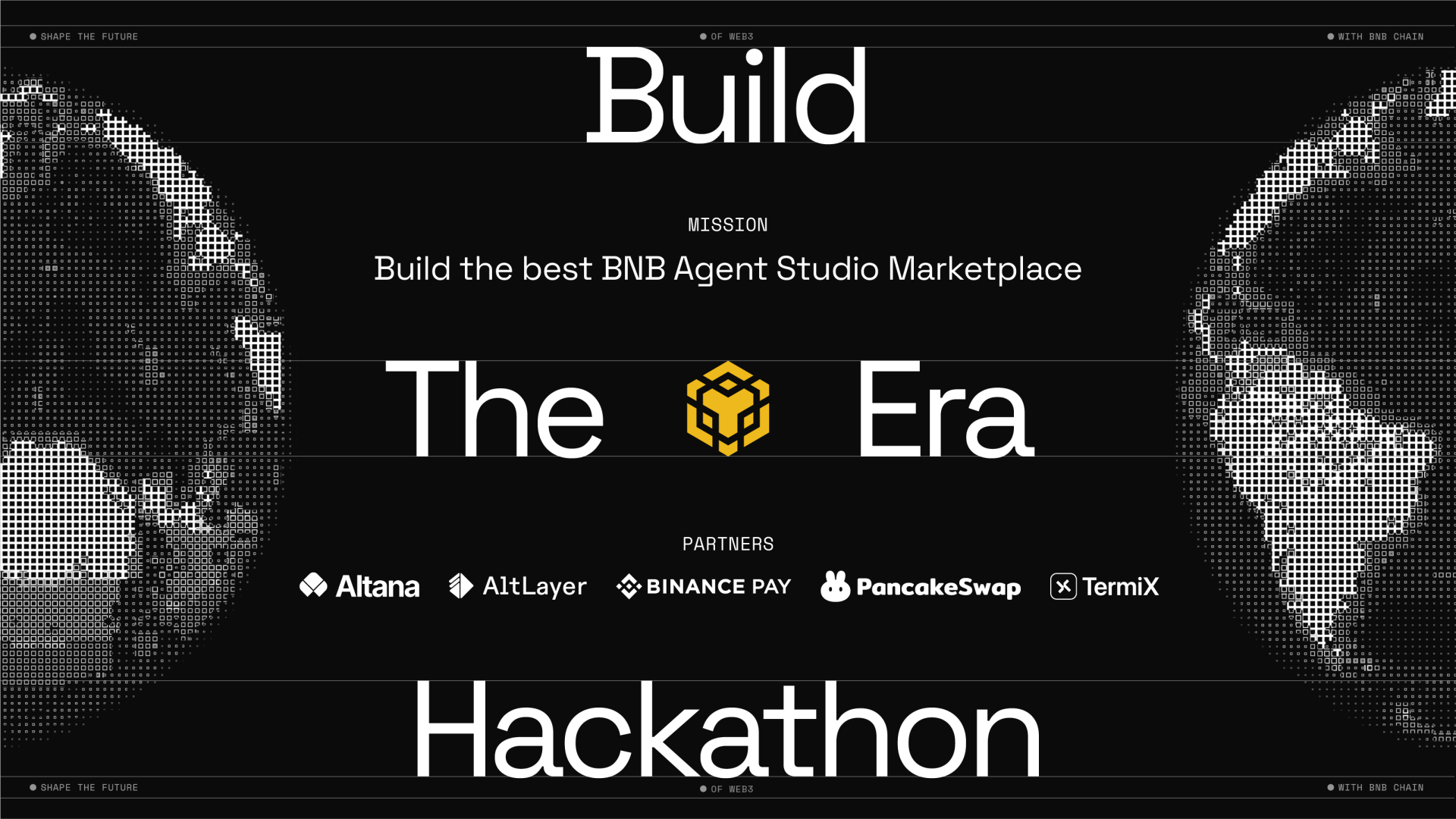
    BNB Chain has announced the ‘Build the Era’ hackathon, an initiative designed to foster the development of an official AI agent marketplace on BNB Smart Chain (BSC). This event addresses the increasing challenge of discoverability for the more than 200,000 AI agents currently registered on BSC under the ERC-8004 standard.

    The hackathon’s core objective is to encourage developers to create a functional and user-friendly marketplace that may facilitate the identification and utilization of AI agents. The winning submission has the potential to be adopted as the official BNB Agent Studio marketplace, receiving backing and resources from BNB Chain to operate as a standalone product with its own brand and team.

    To guide participants, BNB Chain will share reference agents and skills across four categories: monitoring, grid trading, health factor, and yield agents. The hackathon offers a total prize pool exceeding $40,000, contributed by BNB Chain and its partners, to incentivize participation and innovation.

    Submissions will be evaluated based on functionality, data quality, agent diversity, and potential for real-world application. While specific judging criteria for the main hackathon will be released at the start of the build period, partner tracks will be judged according to each sponsor’s individual criteria.

    BNB Chain operates as a community-driven decentralized blockchain ecosystem supporting a wide range of Web3 applications, including DeFi, AI, gaming, and consumer use cases. Its multi-chain architecture comprises BNB Smart Chain, opBNB, and BNB Greenfield, designed to support large-scale application deployment. The hackathon represents a strategic move to enhance the utility and accessibility of AI agents within this ecosystem, addressing a key challenge that has emerged as agent activity has scaled.

    This initiative aims to make autonomous agents more accessible, allowing users on BSC to more readily find, hire, and deploy them for various tasks. The central task for participants involves making agent data legible and understandable for individuals seeking to hire AI agents. This effort is part of BNB Chain’s broader strategy to organize and improve the utility of its rapidly expanding AI agent ecosystem.

    Why This Matters

    The materials describe a narrow update: BNB Chain has launched an open hackathon called ‘Build the Era’ to encourage developers to create a marketplace for AI agents on BNB Smart Chain. The exact criteria for judging submissions will be available when the build period opens.

    Broader Context

    Source materials place the announcement in this context: BNB Chain is one of the most active blockchain ecosystems worldwide.

  • RippleX Revives Risky Features: Can Validators Trust the Rewrite?

    RippleX Revives Risky Features: Can Validators Trust the Rewrite?

    RippleX Prepares Major Update with Revamped Security Features

    RippleX is gearing up to release xrpld version 3.3.0 the week of August 1, 2026, a significant update that includes five proposed amendments for validator consideration. Among these are rewritten versions of the Batch and Permission Delegation features, both of which were previously halted before mainnet activation due to critical authorization flaws identified by security researchers. No funds were lost as a result of these vulnerabilities. The upcoming release now hinges on whether the XRP Ledger ecosystem has sufficient trust in the revised implementations to achieve the required 80% validator approval threshold.

    Batch Amendment: Addressing Signature Validation Flaws

    The original Batch amendment contained a bug in its signature validation logic. This flaw could have allowed an attacker to execute internal transactions from any victim account without possessing the victim’s private keys. According to an official XRPL vulnerability disclosure, researcher Pranamya Keshkamat and Cantina AI’s autonomous audit tool Apex identified this issue on February 19, 2026, while the amendment was still undergoing the voting process. UNL validators were subsequently advised to vote against it, and an emergency release, rippled 3.1.1, was issued to mark both Batch and its related fixBatchInnerSigs amendment as unsupported, thereby preventing any activation path.

    The root cause of the Batch vulnerability was identified as a loop-exit error. When the code encountered a new account whose signing key matched its own, it incorrectly declared success and exited without verifying the remaining signers. This meant that a forged signer entry for any victim account would go unchecked. The exploit path could have enabled an attacker to drain a victim’s account down to its minimum reserve through unauthorized Payment transactions. The replacement, BatchV1_1, has been redesigned with revised authorization logic and is currently flagged in the 3.3 development registry as supported, with a default “No” vote pending validator approval.

    Permission Delegation: Rectifying Fee Deduction Errors

    Permission Delegation presented a different security concern. A disclosure in September 2025 detailed how an invalid offline-signed transaction could still incur a transaction fee on the delegated account before failing authorization. This occurred because the code checked permissions prior to verifying the signature, and tec-type errors are designed to carry a fee. A malicious actor could have exploited this by repeatedly submitting such transactions with elevated fees, silently depleting a victim account’s XRP balance. The fix reclassifies the relevant error from tec to ter and reorders the checks to ensure no fee is deducted before signature verification. The replacement, PermissionDelegationV1_1, carries the same default “No” designation in the 3.3.0 registry. This pattern of identifying and addressing bugs before mainnet activation aligns with the XRPL’s ongoing security maintenance practices, which have included multiple hotfix releases to resolve protocol-level issues.

    New Amendments Target Institutional Tokenization

    The remaining three amendments in the xrpld 3.3.0 release are new features designed to cater to the institutional tokenization market. Confidential MPT (Multi-Purpose Token) utilizes elliptic-curve cryptography and zero-knowledge proofs to keep balances and transfer amounts of MPTs private on the public ledger, while still allowing for auditability by designated entities, such as regulators. This feature directly addresses a primary concern for financial institutions evaluating public blockchain infrastructure: the visibility of counterparty exposure. It is intended for tokenized government bonds, real estate, equities, and private credit – asset classes where confidentiality is a fundamental operational requirement.

    Sponsored Fees and Reserves will enable banks, issuers, or platforms to cover transaction fees and reserve requirements on behalf of their users, thereby eliminating the need for end-users to hold XRP to transact. This is expected to significantly reduce onboarding friction for institutional deployments. However, it also reignites a structural debate about demand dynamics, as a reduced need for end-users to hold XRP could shift demand towards institutional settlement volume rather than retail token utility.

    Dynamic MPT is the third new amendment, allowing token issuers to modify specific properties, fees, metadata, and predefined parameters after issuance without needing to migrate to a new token.

    Jazzi Cooper, RippleX’s head of product, announced the five amendments on X, emphasizing that the XRP Ledger has already proven its capability to support tokenized assets at scale. She framed the new features as crucial infrastructure for global transfers, trading, collateralization, and settlement. Cooper confirmed that all five amendments require validator voting before they can be activated.