Category: Uncategorized

  • Crypto Trading Volumes Decline in 2026, DEX Share Grows

    Crypto Trading Volumes Decline in 2026, DEX Share Grows

    Crypto trading volumes have significantly decreased in 2026, reaching lows not seen since the beginning of the year, with ongoing debate about the underlying causes and implications for the market. Daily spot trading volumes across 44 tracked exchanges have fallen to approximately $15 billion, a 70% decrease from peak levels observed in January. The average daily volume trend has also declined by 50% since December 2025, settling around $20 billion.

    This downturn is accompanied by a notable shift in market dynamics, as decentralized exchanges (DEXs) have increased their share of total trading activity. According to data from The Block, DEX volume has climbed from a ratio near 20% in April to about 24% in July and surged to over 46% so far in August. This trend suggests a migration of activity from centralized platforms to decentralized ones.

    While overall trading volumes have contracted, some segments of the crypto market show resilience. Stablecoin volume and active addresses have both increased from the previous month. Furthermore, the number of holders of tokenized real-world assets jumped by 51% in the last 30 days, reaching 1.57 million. This suggests that while speculative trading activity may be waning, the underlying user base and interest in specific asset classes are growing.

    Major cryptocurrencies are trading well below their all-time highs. Bitcoin (BTC) is currently priced near $64,000, representing a 2% increase in the past 24 hours but a nearly 50% decline from its October 2025 peak. Ethereum (ETH) is trading around $1,900, down 62% from its highest point. Other significant assets like XRP and Solana (SOL) have experienced even steeper declines, dropping 70% and 75% from their respective all-time highs.

    Interpretations of these trends vary among market participants. Some, like pseudonymous researcher Emperor Osmo, argue that the drop in trading volume on centralized exchanges (CEXs) primarily reflects changing exchange dynamics, with CEXs losing market share to DEXs. Trader Jeff made a related point, noting that stablecoin volume and active addresses are up, suggesting that “the traders left, but the users stayed.” Jake O, head of OTC at Wintermute, called the current market conditions a healthy shakeout, where volume consolidating on stronger venues is a net positive for the industry.

    Conversely, some observers view the decline as indicative of a longer-term move away from crypto, with artificial intelligence emerging as a stronger competitor for investor attention and capital. However, other participants, including Korean trader Frontier Bet, believe that regulatory developments, such as the potential approval of the CLARITY Act, could attract capital back into crypto markets. The legislative path for such acts remains uncertain, particularly following recent political developments involving proposed ethics provisions.

    Key uncertainties remain regarding the precise drivers of the overall decline in crypto trading activity and the long-term impact of competing technologies like AI. The completeness of August’s DEX volume figures also requires further clarification. Despite these uncertainties, the data indicates a significant contraction in trading volumes and a clear shift in market structure towards decentralized platforms.

    Broader Context

    Source materials place the factual news in this context: Crypto trading activity has fallen to its lowest level of 2026.

  • Senators Demand SEC Investigate Trump Meme Coin for Billions in Investor Losses

    Senators Demand SEC Investigate Trump Meme Coin for Billions in Investor Losses

    Senators Demand SEC Probe into Trump Meme Coin Amidst Billions in Investor Losses

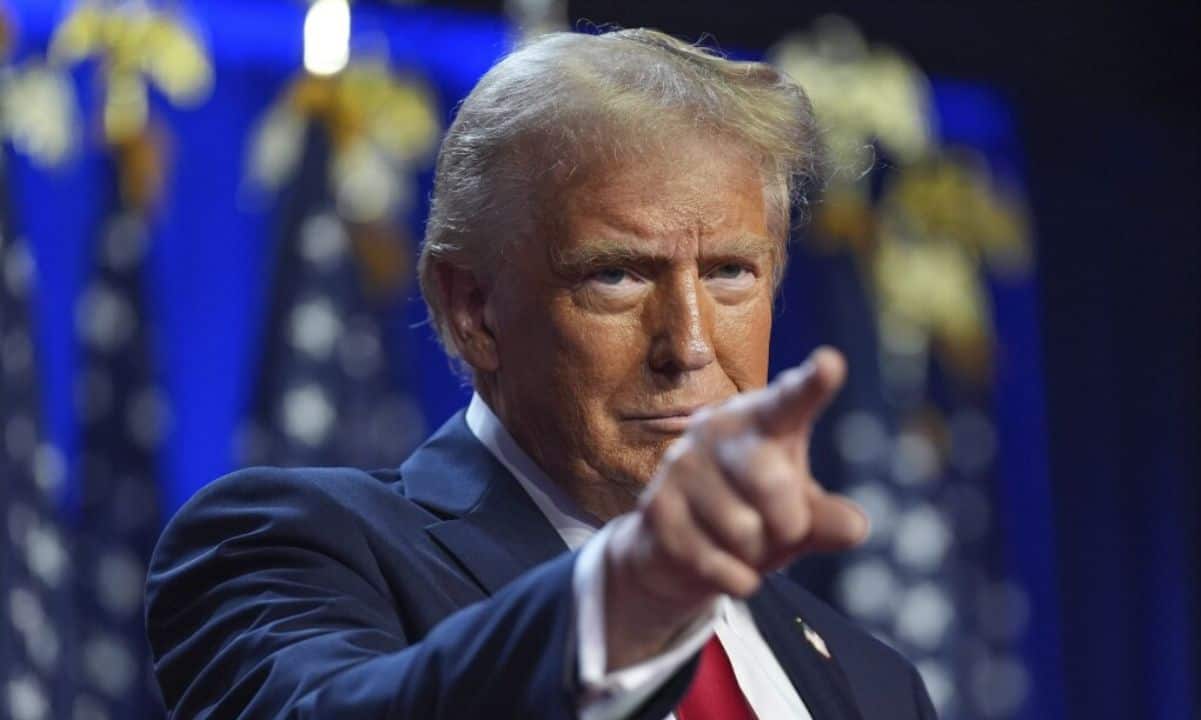
    U.S. Senators Elizabeth Warren and Richard Blumenthal have formally requested that the Securities and Exchange Commission (SEC) investigate a meme coin associated with former President Donald Trump. In a letter addressed to SEC Chair Paul Atkins, the lawmakers expressed concerns that the digital asset may have been used to facilitate fraud or illicit gains at the expense of everyday investors.

    The senators cited reports indicating that approximately one million investors collectively lost over $3.8 billion on the token between its launch in January 2025 and the close of June 2026. This period predates Trump’s inauguration by mere days.

    During the same timeframe, the former President and his family reportedly amassed around $636 million through trading fees and other revenue streams tied to the token.

    Warren and Blumenthal argued that the stark disparity between investor losses and insider profits necessitates a formal SEC inquiry into the project’s structure and marketing practices. They highlighted allegations suggesting that certain traders may have profited from the meme coin’s launch before the general public had an opportunity to participate, raising suspicions of potential insider trading.

    The senators contended that these actions, coupled with the subsequent 98% decline in the TRUMP token’s price from its peak, bear the hallmarks of a “soft rug pull.”

    The letter references past SEC enforcement actions against comparable cryptocurrency schemes and recent advisories from state regulators, including New York’s, warning about pump-and-dump schemes and rug pulls prevalent in the meme coin sector.

    The “Official Trump” token experienced a rapid surge, exceeding $70 within hours of its debut. However, its value has since plummeted, trading below $1.50 as of press time. The token, which once ranked among the top 20 digital assets and was the second-largest meme coin, has fallen out of the top 100 altcoins by market capitalization a year and a half after its launch.

    Meanwhile, the team behind the token has been reportedly involved in numerous sales as the price continued to decline.

  • XRP Price Analysis: AI Forecasts Navigate Uncertainties and Market Factors

    XRP Price Analysis: AI Forecasts Navigate Uncertainties and Market Factors

    The reliability of artificial intelligence-driven price predictions for cryptocurrencies like XRP, such as those from Microsoft Copilot AI forecasting a 2026 price range of $5 to $8, remains subject to a confluence of uncertain regulatory, technological, and market factors. While AI models can process vast amounts of data to identify potential trends, their forecasts are inherently speculative and contingent on numerous variables that are difficult to predict.

    Why This Matters

    The materials describe a narrow update: Microsoft Copilot AI predicts XRP could reach $5 to $8 by the end of 2026, a significant increase from its current price. Whether the four pillars for XRP’s bull case will converge.

    Broader Context

    Source materials place the market analysis in this context: Microsoft Copilot AI.

    Factors Influencing XRP’s Trajectory

    Microsoft Copilot AI predicts that XRP could reach between $5 and $8 by the end of 2026. This outlook is based on several potential catalysts. These include anticipated inflows into Bitcoin Exchange-Traded Funds (ETFs), which have already exceeded $2 billion, the prospect of regulatory clarity in the United States, potentially through legislation like the CLARITY Act, and Ripple’s strategic expansion into new markets, such as Japan with its planned RLUSD stablecoin. Furthermore, the ongoing growth of asset tokenization on the XRP Ledger and potential supply contraction are considered contributing factors. Copilot combines these with the possibility of broader market tailwinds from a Bitcoin rally.

    However, the AI also outlines a bear case scenario. This scenario suggests that stalled regulatory progress, competition from Ripple’s own stablecoin offerings, or a tightening macroeconomic environment could cap XRP’s price between $0.85 and $1.50. Copilot still calls the bullish trajectory the more likely path, projecting a base case of $2.50 to $4.50, with the potential for higher prices if institutional adoption accelerates.

    Current Market Snapshot and Historical Context

    Currently, XRP is trading near the midpoint of the AI’s flagged bear case range. The price closed at $1.07051, down 0.41% in its recent session, with trading occurring between $1.06900 and $1.08092. Technical indicators suggest a neutral momentum. The Relative Strength Index (RSI) reads near 47, with the signal line close behind at 49. This indicates that momentum has flattened, with price action grinding sideways rather than showing strong directional conviction. For the bullish $5 to $8 prediction to materialize, XRP would first need to reclaim key resistance levels, notably the $1.20 mark, which it has not closed above in two months. Support is identified at the $1.00 level, a price point that has held firm on multiple tests since June.

    Past price action provides further context. XRP experienced a significant peak above $2.40 in January, followed by a sharp decline in February that halved its price. Subsequent rallies in April, May, and July saw progressively lower highs, topping out near $1.65, $1.55, and $1.35 respectively. The current price action reflects this pattern of consolidation.

    Understanding Market Exposure and Trading Limitations

    The analysis of AI predictions also highlights broader market dynamics. Traditional spot trading exposes investors to a wide array of factors beyond the specific asset’s fundamentals, including liquidity, market sentiment, and unrelated global events. Platforms like Kalshi, a CFTC-regulated exchange, offer event trading where prices are set by traders taking real positions, potentially allowing odds to move before headlines. However, event trading carries its own risks; contracts can expire worthless, and being directionally correct on a slow timeline does not guarantee profit if the contract’s expiration is missed.

    Ultimately, the AI’s price prediction for XRP serves as a starting point for analysis rather than a definitive forecast. The confluence of regulatory developments, technological advancements by Ripple, broader market sentiment, and macroeconomic conditions will collectively shape XRP’s future trajectory. Investors should focus on understanding these underlying factors and uncertainties rather than solely on specific price targets.

  • AI Enthusiast’s Recording of Toddler Sleepover Sparks Privacy Debate

    AI Enthusiast’s Recording of Toddler Sleepover Sparks Privacy Debate

    Widespread criticism erupted online after an AI enthusiast shared an AI-processed recording of his toddler’s sleepover conversation, raising significant privacy and consent concerns. Nicholas Charriere, CEO of AI website builder Mocha, recorded his daughter and her cousin during a sleepover, then used the AI model Claude to transcribe, segment, and title the audio. He subsequently shared the processed conversation online, framing it as a “treasure” and a source of family memories.

    The public reaction was overwhelmingly negative, with many users expressing strong disapproval and labeling the action a violation of privacy. Commenters noted, “I’d hate my parents if I found out they did this,” and “No respect for privacy. Those are people, not miniature versions of yourself made for the purpose of amusing you.” This sentiment was echoed by figures like history podcaster Mike Duncan, and the controversy gained enough traction to generate its own headline on X’s trending tab.

    Charriere stated that the recording, which captured over an hour of the toddlers’ conversation, was “pure joy from everyone” and that the AI processing was “pretty great.” He also mentioned it had been listened to multiple times by family members. However, critics argued that using AI in place of genuine human connection was a detrimental application of the technology. Furthermore, concerns were raised that the children, being toddlers, could not legally consent to being recorded and having their private conversations processed by AI and shared publicly. The extent to which the cousin’s parents were aware of the recording and its subsequent AI processing and sharing remains uncertain.

    This incident highlights a growing ethical debate surrounding the use of AI in sensitive personal contexts, particularly involving children. It brings to the forefront questions about consent, privacy, and the potential for AI to commodify or surveil intimate family moments. The situation is further contextualized by previous discussions from prominent tech figures, such as Sam Altman, CEO of OpenAI, who suggested parents could use AI to create daily podcasts about their children’s lives by feeding it information from family calendars and children’s interests. Altman’s comments on the Tonight Show with Jimmy Fallon, where he discussed using ChatGPT for parenting, also drew criticism.

    Experts and psychologists have previously warned about the potential risks of AI in childhood, including AI-enabled toys collecting data from children and the formation of emotional attachments to AI that could displace human relationships. State attorneys general have also flagged concerns about “sexualized” chatbots. The core of the controversy lies in the unresolved questions about where the boundaries of AI use should be drawn when it comes to the privacy and autonomy of minors.

    While Charriere viewed the AI-processed recording as a valuable keepsake, thousands of strangers perceived it as a significant privacy breach and a concerning application of artificial intelligence. The incident underscores the need for clearer ethical guidelines and public discourse on the responsible use of AI in family life and concerning children’s data.

    Why This Matters

    The materials describe a narrow update: Nicholas Charriere secretly recorded his daughter and her cousin talking during a sleepover, used the AI model Claude to transcribe, segment, and title the conversation, and then shared it on a family webpage and social media. Whether the cousin’s parents were aware of the recording.

    Broader Context

    Source materials place the factual news in this context: Nicholas Charriere’s daughter was spending her first night ever sharing a room with her toddler cousin.

  • OpenAI Accused of Leaking Apple Employee Texts in Trade Secret Fight

    OpenAI Accused of Leaking Apple Employee Texts in Trade Secret Fight

    OpenAI has publicly challenged Apple’s trade secrets lawsuit, releasing emails, text messages, and a detailed rebuttal that accuses the iPhone maker of factual errors prior to filing its complaint.

    Rebuttal to Apple’s Claims

    In a blog post published Monday, OpenAI stated that Apple had confused two employees with similar names, falsely claimed the company ignored its outreach, and incorrectly asserted that Apple’s external counsel had spoken with OpenAI General Counsel Che Chang before initiating legal action.

    The release of emails and text messages follows Apple’s lawsuit filed in July. Apple accused OpenAI, former Apple engineer Chang Liu, former Apple design executive Tang Tan, and io Products of misappropriating hardware trade secrets as OpenAI expanded its consumer hardware initiatives after acquiring Jony Ive’s startup in 2025.

    “Apple is one of the greatest companies of all time, and built a reputation for obsessing over the smallest details,” OpenAI wrote. “This careless, aggressive and oddly personal lawsuit sadly doesn’t live up to that reputation.”

    Allegations in Apple’s Lawsuit

    In its lawsuit, Apple alleged that former Apple engineer Chang Liu retained a company laptop after his departure, exploited an authentication bug to access Apple’s internal systems, and downloaded confidential engineering documents. The lawsuit also claimed that former Apple executive Tang Tan used confidential Apple information to benefit OpenAI’s hardware efforts and that the company’s recruitment process encouraged prospective hires to bring sensitive Apple materials.

    OpenAI’s Counterarguments

    OpenAI disputes these allegations, asserting that Apple contacted the wrong individual after confusing two employees with similar surnames and incorrectly claimed its lawyers had communicated with OpenAI General Counsel Che Chang before filing suit.

    To support its position, OpenAI published iMessage exchanges between Liu and Apple employees sent after he left the company in January. These messages show Apple employees asking for assistance with locating files, transferring documents, and answering technical questions. OpenAI contends these conversations undermine Apple’s claims that Liu improperly retained access to confidential information.

    According to OpenAI, these exchanges demonstrate that Apple employees relied on Liu’s access, and any remaining access was a result of Apple’s own offboarding process rather than deliberate misconduct.

    Regarding Tan, OpenAI stated that the former Apple executive was repeatedly instructed not to bring or use confidential information from his previous employer. The company also argued that Apple’s request for a preliminary injunction, which could restrict OpenAI’s activities during the legal proceedings, is unnecessary.

    “Apple’s request for a preliminary injunction is both based on false information and completely unnecessary because we do not have, nor want, any of their trade secrets,” the company wrote. “We’re much more interested in building innovative products and technologies that push the frontier.”

  • AVAX Surges 7% as Market Stalls: Key Catalysts Revealed

    AVAX Surges 7% as Market Stalls: Key Catalysts Revealed

    AVAX Surges Nearly 7% Amid Ecosystem Developments

    AVAX, the native token of the Avalanche blockchain, has seen a significant uptick, gaining nearly 7% in the past 24 hours. The cryptocurrency briefly touched $6.92 on Tuesday before settling back to $6.79, and is also up just over 5% on a weekly basis.

    This price movement coincides with a series of developments bolstering activity across the Avalanche ecosystem.

    Securitize’s Growing Impact

    Securitize, a digital asset securities firm, has now distributed $976 million in asset value on the Avalanche blockchain. This represents a substantial 123% increase over the last 30 days, underscoring growing adoption of the platform for asset management.

    Helicon Upgrade Enhances C-Chain Functionality

    The Avalanche ecosystem has also made notable progress with its Helicon upgrade. This upgrade, which was deployed on the Fuji Testnet on July 28, introduces several key enhancements to the C-Chain. A primary feature is decoupled, continuous transaction execution, which separates transaction processing from block generation. This innovation is designed to improve the efficiency with which smart contracts handle data.

    Furthermore, Helicon introduces Auto-Renewed Staking, allowing validators to automatically renew their stakes. This feature aims to streamline operations for network administrators by reducing manual administrative tasks. The upgrade also lowers the minimum staking duration, meaning tokens can be locked for staking for shorter periods. Additionally, Helicon incorporates more efficient pricing mechanisms intended to stabilize transaction costs on the network.

    Stablecoin Network Strength and RWA Position

    Avalanche continues to maintain its position as a leading blockchain for stablecoin activity, with its stablecoin market capitalization currently hovering around $1.5 billion.

    In terms of Real World Asset (RWA) holders, Avalanche ranks as the ninth-largest blockchain, boasting 9,218 holders, according to data from RWA.xyz. It trails behind networks such as Robinhood, Solana, BNB Chain, Plume Network, Ethereum, Base, Polygon, and Stellar, while maintaining a lead over Arbitrum.

    Progmat’s Migration Boosts Tokenized Assets

    A significant development for Avalanche originated from Japan, with Progmat, the country’s largest security token platform, completing its migration to the blockchain last month. This move has brought over $2.7 billion in tokenized assets onto the network.

    Progmat transitioned from a private Corda-based ledger to a dedicated public Avalanche Layer 1. The platform is responsible for over 64% of Japan’s security token issuance value and includes major projects involving tokenized real estate and corporate bonds.

    Market Analysis and Future Outlook

    AVAX’s recent recovery follows a period of volatile price action over the past month. The cryptocurrency is currently trading within a long-term historical demand zone identified by market expert ‘The Boss’ as the $6.4-$7.5 range. According to their analysis, buyers are actively working to curb the decline, suggesting this area could serve as a potential “inflection point rather than just another support level.”

    ‘The Boss’ further elaborated on the significance of this zone, stating, “What happens next will define the broader structure. A sustained defense of this demand zone could lay the foundation for a long-term accumulation phase, while a confirmed monthly breakdown would signal that sellers still control the higher-timeframe trend.”

  • Italian Bank Slashes Bitcoin Holdings, Boosts Staked Ether

    Italian Bank Slashes Bitcoin Holdings, Boosts Staked Ether

    Italy’s Largest Bank Slashes Bitcoin Trust Holdings, Boosts Ethereum

    Italy’s largest banking group, Intesa Sanpaolo, significantly reduced its reported exposure to BlackRock’s iShares Bitcoin Trust (IBIT) in the second quarter. Concurrently, the bank more than tripled its holdings in staked Ether (ETH).

    According to its latest Form 13F filing, Intesa Sanpaolo held 40,723 IBIT shares as of June 30, a substantial decrease of 93.7% from the 646,809 shares reported on March 31. The filing also revealed a dramatic shift in its reported call position in the fund. The underlying share amount linked to its held-call row plummeted from 2,496,500 shares to 18,000, representing a decline of over 99%.

    In parallel, a new put position equivalent to 500,000 IBIT shares emerged in the June 30 disclosure. However, the reported figures do not indicate that the bank has adopted a net bearish strategy on Bitcoin.

    Meanwhile, Intesa Sanpaolo’s holdings in the iShares Staked Ethereum Trust ETF increased from 116,200 shares to 349,600. Conversely, its position in the Bitwise Solana Staking ETF saw a sharp drop, falling from 2,817 shares to just seven.

    This latest filing follows Intesa Sanpaolo’s initial direct Bitcoin purchase in January 2025, when it acquired 11 BTC for approximately $1.03 million. In July 2024, the bank also utilized the Polygon network to underwrite Italy’s first on-chain digital bond, valued at $25.6 million. Later that year, it established a dedicated desk to offer options, futures, and spot ETFs linked to digital assets.

    The bank’s strategic adjustment is noteworthy, as some BlackRock clients have recently mirrored this trend. For instance, reports indicate that customers of the asset management giant sold approximately $60 million worth of IBIT last week, while simultaneously purchasing over $20 million worth of BlackRock’s ETHA spot Ethereum ETF.

    While Intesa Sanpaolo scaled back its IBIT position, the broader U.S. spot Bitcoin ETF market has experienced a different trajectory. These funds recorded a record monthly net outflow of about $4.5 billion in June. This trend reversed in July, with the funds attracting $172.4 million, marking a turnaround after two consecutive months of significant withdrawals. This influx contributed to Bitcoin’s price recovery towards $64,000 mid-month.

    This positive sentiment appears to have persisted into August, as the ETFs have attracted an additional $170 million so far. BlackRock’s IBIT continues to lead the market, having garnered nearly $61 billion in total inflows since its inception.

  • XRP Navigates Critical $1.06 Level Amid Divergent Analyst Views

    XRP Navigates Critical $1.06 Level Amid Divergent Analyst Views

    XRP’s price is currently trading near the $1.06 level, a zone of significant attention for market analysts who hold differing views on its potential impact on future price movements. Over the past month, XRP has experienced a 5% decline, settling at approximately $1.07, just above this crucial area.

    Analysts are closely monitoring the $1.06 level, with some suggesting it could influence the next significant price action. According to Ali Martinez, holding this level could potentially lead to a rally towards $1.35 and possibly $1.64. Conversely, Martinez suggests that a failure to maintain support at $1.06 might result in a slump, with a potential target as low as $0.62.

    Further technical analysis from ChartNerd indicates that while XRP has found support at $1.06, substantial resistance remains in the $1.08-$1.23 range. ChartNerd also noted the loss of prior ascending support, identifying $1.16 as a key obstacle ahead of the moving averages (EMAs). This analyst suggests that downward pressure may persist, and XRP could potentially move below $1 in the near future, a scenario they described as a potential buying opportunity.

    EGRAG CRYPTO offers a perspective that XRP has lost the 50-day moving average (MA) and is approaching the 100-day exponential moving average (EMA), a zone historically recognized for providing strong long-term support. EGRAG CRYPTO suggests a potential retest of the $1-$0.95 range as a healthy correction while holding the 100 EMA. The downside target is placed at $0.80 as maximum downside if XRP falls to the lower boundary of a long-term channel.

    Despite these short-term considerations, EGRAG CRYPTO maintains that long-term price targets of $15, $27, and $50+ remain viable. However, reaching a $15 price point would necessitate XRP’s market capitalization to skyrocket to nearly $1 trillion, a scenario that remains highly speculative.

    In contrast, JAVON MARKS presents a more immediate bullish outlook, claiming that XRP has demonstrated a clear notable move of a key resistance trend. Marks suggests that this notable move could lead to the price moving beyond $3.50.

    The current market structure and the varying interpretations highlight the uncertainty surrounding XRP’s immediate trajectory. While some analysts focus on the immediate support and resistance levels around $1.06, others maintain optimistic long-term price expectations. The coming months are anticipated by some to set the stage for significant market repricing, though the direction and magnitude remain subjects of ongoing analysis and speculation.

    Why This Matters

    The materials describe a narrow update: XRP’s price has recently declined by 5% over the past month, settling just above the $1. Whether XRP will hold the $1.06 level.

    Broader Context

    Source materials place the market analysis in this context: Ripple’s cross-border token has plunged by 5% over the past month to the current $1.07.

  • Alibaba Frees Top AI, Rivals Claude and ChatGPT

    Alibaba Frees Top AI, Rivals Claude and ChatGPT

    Alibaba Unveils Qwen3.8-Max, Its Most Capable Model Yet

    Alibaba announced Monday the release of Qwen3.8-Max, a model the company is touting as its most capable to date. The model’s weights are slated to become available on Hugging Face and ModelScope next week, marking the first time Alibaba has released a model at its “Max” scale for public access.

    The technical specifications are substantial, featuring a total of 2.4 trillion parameters, with 95 billion actively engaged at any given moment. Parameters, in essence, represent the number of variables a model can manage. This architecture is designed for significant efficiency, meaning it will not demand excessive computational resources to operate. The company likens it to an expansive library where only the relevant sections are illuminated for each query, enabling smaller businesses and laboratories with adequate hardware to run a state-of-the-art model without the infrastructure costs of a massive data center.

    Alibaba’s announcement eschews the typical focus on benchmark performance, instead emphasizing the model’s endurance and self-sufficiency. In one demonstration, Qwen3.8-Max spent 16 days autonomously developing a coding tool, generating 265 commits, 127 pull requests, and addressing 151 issues without any human intervention. In another test, it spent five days replicating a research paper for which it had no prior code exposure, ultimately surpassing the paper’s original results by 2.7 points. Furthermore, in a 24-hour machine learning competition, the model outperformed 458 out of 526 participating human teams.

    Qwen3.8-Max includes integrated instructions for Claude Code and Codex, coding tools developed by Anthropic and OpenAI, respectively. Alibaba’s API is compatible with both companies’ protocols, and many of the coding benchmarks were conducted using Claude Code.

    However, these benchmarks do not uniformly favor Qwen3.8-Max. Across 31 text-based tests, Anthropic’s Fable 5 secured first place in 15 categories, OpenAI’s GPT-5.6 Sol took nine, and Qwen achieved seven. In the 12 coding tests, Qwen emerged victorious in only one. Despite this, the model is presented as exceptionally cost-effective and efficient in terms of intelligence processing. This suggests that even if more iterations or complex reasoning are required, the overall cost to achieve a task is significantly lower, reportedly around 30% of the cost charged by Claude Fable 5.

    The landscape shifts dramatically when considering multimodal tasks, such as document analysis, video processing, and spatial reasoning. In these areas, Qwen3.8-Max takes the lead across most benchmarks.

    This release also signals a strategic pivot for Alibaba. In April, the company discontinued the free tier for Qwen Code, with its development team reportedly moving towards closed, paid models following leadership changes. A previous review of Qwen 3.7 Max had indicated that the “Plus” version would remain open-source, while the “Max” version would be accessible only via API.

    This barrier has now been removed, and the timing appears deliberate. Chinese open-weight models have seen a dramatic surge in usage, growing from less than 2% of tokens on OpenRouter in late 2024 to approximately 61% by mid-2026. Qwen has also surpassed Meta’s Llama to become the most self-hosted model globally.

    Concurrently, the United States imposed export controls on Fable 5 and Mythos 5 in June, and reports suggest Beijing is considering its own restrictions on Chinese models being exported.

    In this context, Alibaba may be conceding ground in terms of raw performance metrics but is making significant gains in distribution. For users who can access a highly capable model for free, even if it’s not the absolute top performer, the value proposition is compelling.

  • Ethereum Approaches $2,000: Analysis of Potential Price Movement and Market Outlook

    Ethereum Approaches $2,000: Analysis of Potential Price Movement and Market Outlook

    Ethereum (ETH) is currently consolidating around the $1,850 mark, nearing a significant psychological price barrier of $2,000. This proximity has drawn the attention of market observers, with some analysts predicting potential price movements that could influence the broader altcoin market. However, the path forward is characterized by considerable uncertainty.

    In July, Ethereum demonstrated a notable rebound, with its price increasing by 18.5%. This recent price movement has intensified focus on the $2,000 level. Analysts are closely monitoring whether ETH can successfully breach this resistance. Should it achieve this, some anticipate further price appreciation for ETH and a potential positive spillover effect into the wider altcoin sector.

    Supporting a more bullish outlook, on-chain data reveals that the amount of ETH held on centralized exchanges has fallen to approximately 15.1 million coins. This figure represents a 10-year low and suggests reduced selling pressure, as fewer coins are readily available for sale on exchanges.

    Analyst Perspectives on Ethereum’s Trajectory
    Various market analysts have shared their perspectives on Ethereum’s potential price movements. Some observers expect stronger upside momentum, believing that ETH’s progress could influence altcoins. For instance, analyst Ted reportedly predicted a surge to $2,000 if the current zone holds. Michael van de Poppe is cited as assuming that holding the $1,800 support level could lead to breaking the $2,000 barrier, potentially followed by a rapid ascent to $2,300 and higher.

    Further contributing to optimistic sentiment, analyst Celal Kucuker is reported to have described ETH’s chart as one of the strongest he has observed, envisioning a significant price increase to as high as $13,000 by 2026-2027. Another perspective from the X user Dami-Defi suggests that ETH is on the verge of breaking a one-year downtrend, which could precede a substantial rally and be bullish for altcoins.

    Regulatory Landscape and Broader Market Implications
    Beyond price action, the regulatory environment presents another factor. The CLARITY Act, a proposed U.S. crypto bill aimed at establishing clear rules for digital assets, has seen its progress stall, with the White House yet to respond to a counterproposal from Senators Thom Tillis and Ruben Gallego. According to one X user, the passage of the CLARITY Act could potentially accelerate ETH’s price movement, though its current stalled status introduces regulatory uncertainty.

    Despite the positive indicators and analyst optimism, significant uncertainties persist. Ethereum’s ability to decisively break and sustain above the $2,000 level is not guaranteed. Furthermore, the extent to which any potential ETH rally would impact the altcoin market remains speculative. The long-term price predictions, such as ETH reaching $13,000 by 2026-2027, are considered highly speculative, especially given current market conditions.

    In conclusion, Ethereum stands at a critical juncture, approaching a key resistance level. While supportive on-chain data and optimistic analyst sentiment are present, the market must navigate regulatory ambiguities and the inherent volatility of cryptocurrency prices. The potential for broader altcoin market movements remains contingent on ETH’s performance and overall market dynamics.

    Why This Matters

    The materials describe a narrow update: Ethereum’s price has shown a significant rebound in July, increasing by 18.5%. Whether Ethereum may successfully break the $2,000 barrier remains a key question.

    Broader Context

    Source materials place the market analysis in this context: July was quite successful for the second-largest cryptocurrency, with its price rebounding by 18.5%.