Category: Uncategorized

  • XRP Market Signals Show Divergence Amidst Analyst Uncertainty

    XRP Market Signals Show Divergence Amidst Analyst Uncertainty

    XRP’s market signals present a complex picture, with whale accumulation and reduced exchange holdings contrasting with a historically unreliable TD Sequential indicator and a significant year-long price decline. Currently trading around $1.11, XRP has seen a modest 1% increase over the past week, yet it remains down 62% over the last year. This performance backdrop sets the stage for an analysis of recent on-chain activity and technical indicators, which have coincided with a wide spectrum of speculative price predictions from market observers.

    Investor Behavior Shifts
    Recent data indicates a notable activity in investor behavior. Over the last week, large investors have acquired approximately 70 million XRP tokens, increasing their total holdings to around 3.8 billion units. This accumulation represents roughly 6% of XRP’s circulating supply. Such activity may suggest growing confidence among major holders, potentially contributing to price stabilization and attracting broader investor interest. Concurrently, the amount of XRP held on exchanges, specifically Binance, has decreased to approximately 2.61 billion tokens. This figure marks the lowest level of XRP stored on Binance since February, indicating that a growing number of investors are moving their holdings to self-custody wallets. This trend could reduce immediate selling pressure in the market.

    Technical Indicators and Historical Context
    Technical analysis also offers a signal, with XRP’s TD Sequential indicator flashing a buy signal. However, the reliability of this indicator has been inconsistent in recent months. For instance, a buy signal in December was followed by a price increase, but a similar signal in January 2026 preceded a significant correction. This historical performance introduces a layer of uncertainty regarding the current buy signal’s predictive power.

    Divergent Analyst Outlooks
    In light of these mixed signals, analysts on X have offered a wide range of price targets for XRP. Some observers, like Gerla, suggest that if XRP can maintain the $1.10 support level, it could potentially reach $1.24. More optimistic forecasts come from Crypto Patel and Celal Kucuker, who envision XRP reaching $9 and $7, respectively. JAVON MARKS has presented an even higher target, arguing that $15 or more could be achievable in the next market wave. Conversely, some analysts remain cautious. Diana, for example, has warned that XRP might drop to $0.87 before a new bull run commences, suggesting that the cycle’s bottom may not yet have formed.

    The current market environment for XRP is characterized by these divergent signals and speculative outlooks. While whale accumulation and reduced exchange holdings offer potential positive indicators, the historical unreliability of the TD Sequential indicator and the wide variance in analyst predictions underscore the inherent uncertainty in forecasting XRP’s future price movements. Investors are advised to consider these mixed signals and the speculative nature of price targets when evaluating XRP’s market potential.

    Why This Matters

    The materials describe a narrow update: The article discusses potential bullish signals for XRP, including significant whale accumulation, a TD Sequential buy signal (with caveats), and a decrease in XRP held on Binance, suggesting reduced selling pressure. Whether the TD Sequential indicator will reliably predict a price increase this time.

    Broader Context

    Source materials place the market analysis in this context: Despite rebounding from a local bottom near $1, Ripple’s cross-border token remains heavily suppressed in the current bear market and hasn’t been able to stage a decisive comeback.

  • XRP ETF Inflows Plummet Amidst Declining Institutional Demand and On-Chain Activity

    XRP ETF Inflows Plummet Amidst Declining Institutional Demand and On-Chain Activity

    XRP ETF Inflows Plummet as Institutional Demand and On-Chain Activity Decline

    U.S. spot Ripple XRP exchange-traded funds (ETFs) recorded a meager $107,000 in inflows on July 10, a figure that pales in comparison to the over $100 million absorbed by the product complex just two months prior.

    The total assets under management (AUM) for the seven XRP funds have now dipped below $1 billion, settling around $996 million. This marks the end of what had appeared to be a sustained period of institutional accumulation within the current cryptocurrency ETF cycle.

    The stark data raises a critical question: has institutional appetite for XRP cooled, or is this the beginning of a more significant withdrawal? The answer holds direct implications for XRP’s price, which has managed to remain above $1 despite a simultaneous drying up of both retail and institutional demand.

    The decline in crypto ETF flows for Ripple XRP has been remarkably swift. In May, the product complex saw inflows exceeding $100 million for the entire month, with consistent weekly additions. July, however, presents a starkly different picture. Several days this month have registered zero inflows, and July 8 alone saw net outflows of $7.29 million, one of the largest single-day losses since March.

    While the pace of accumulation has decelerated from a steady climb to a near standstill in just six weeks, the concentration of July’s outflows within a single issuer suggests this may be driven by fund-specific redemption pressures rather than a broad, coordinated institutional exit. This distinction is crucial as July’s flow data continues to develop.

    Meanwhile, Ripple’s RLUSD stablecoin is already facilitating approximately $2.5 billion in volume on the XRP Ledger, and around $4 billion in tokenized real-world assets are now active on the network. The ledger’s upcoming major upgrade will introduce native lending capabilities, and an Ethereum-compatible sidechain is already operational. If these use cases can generate sustained on-chain demand, measured by active addresses and new wallet growth rather than just volume figures, the network activity landscape could shift, potentially drawing ETF demand back into an accumulation phase.

    However, if these catalysts fail to gain traction, XRP may continue to drift sideways, supported by its large-holder base as institutional allocators await clearer signals before increasing their positions. The bearish scenario for XRP’s price is not a sudden collapse, but rather a prolonged period of stagnation where the support from cold storage gradually erodes if persistent ETF outflows signal a fundamental shift in institutional conviction rather than a temporary pause.

    The broader cryptocurrency ETF flow environment also plays a role. A reacceleration of Bitcoin ETF inflows and an improvement in macro risk appetite could lead to renewed inflows for XRP ETFs as institutional capital rotates back into the market.

    The July data serves as a significant warning sign, but it is one data point within a product complex that has cumulatively attracted nearly $1.5 billion in inflows since its launch. Institutional patience has been evident, but whether it can withstand another month of sub-$1.10 prices and dormant on-chain metrics remains to be seen as July’s remaining flow data unfolds.

  • AEHRUSDT Perpetual Contract Launched with 20x Leverage

    AEHRUSDT Perpetual Contract Launched with 20x Leverage

    Bybit Lists AEHRUSDT Perpetual Contract, Offering Up to 20x Leverage

    Cryptocurrency exchange Bybit has announced the listing of the AEHRUSDT Perpetual Contract, enabling traders to engage in leveraged trading of Aehr Test Systems (AEHR) against Tether (USDT). Trading for the new contract is now live, with leverage options extending up to 20 times.

    The AEHRUSDT Perpetual Contract is also accessible through Bybit’s suite of Futures bots, including Futures Grid, Futures Martingale, and Futures Combo, providing automated trading strategies for users.

    Key details of the AEHRUSDT Perpetual Contract include:

    • Underlying Asset: Aehr Test Systems (AEHR)
    • Settlement Asset: USDT
    • Tick Size: 0.01
    • Maximum Leverage: 20x
    • Capped Funding Rate: 2.5%
    • Funding Fee Settlement Interval: Every 8 hours
    • Trading Hours: 24/7

    Aehr Test Systems is a provider of semiconductor test and burn-in equipment. The company’s official website can be found at https://www.aehr.com/.

  • POETUSDT Perpetual Contract Launches with 20x Leverage

    POETUSDT Perpetual Contract Launches with 20x Leverage

    Bybit Launches POETUSDT Perpetual Contract with Up to 20x Leverage

    Cryptocurrency exchange Bybit has announced the listing of the POETUSDT Perpetual Contract, enabling trading with leverage of up to 20x.

    The new contract is accessible through Bybit’s Futures bots, including Futures Grid, Futures Martingale, and Futures Combo.

    The POETUSDT Perpetual Contract is based on the underlying asset Poet Technologies Inc (POET) and settles in USDT. It features a tick size of 0.001, a maximum leverage of 20, and a capped funding rate of 2.5%. Funding fees will be settled every 8 hours, and trading will be available 24/7.

  • DOGE’s Next Surge: Musk, SpaceX Factor

    DOGE’s Next Surge: Musk, SpaceX Factor

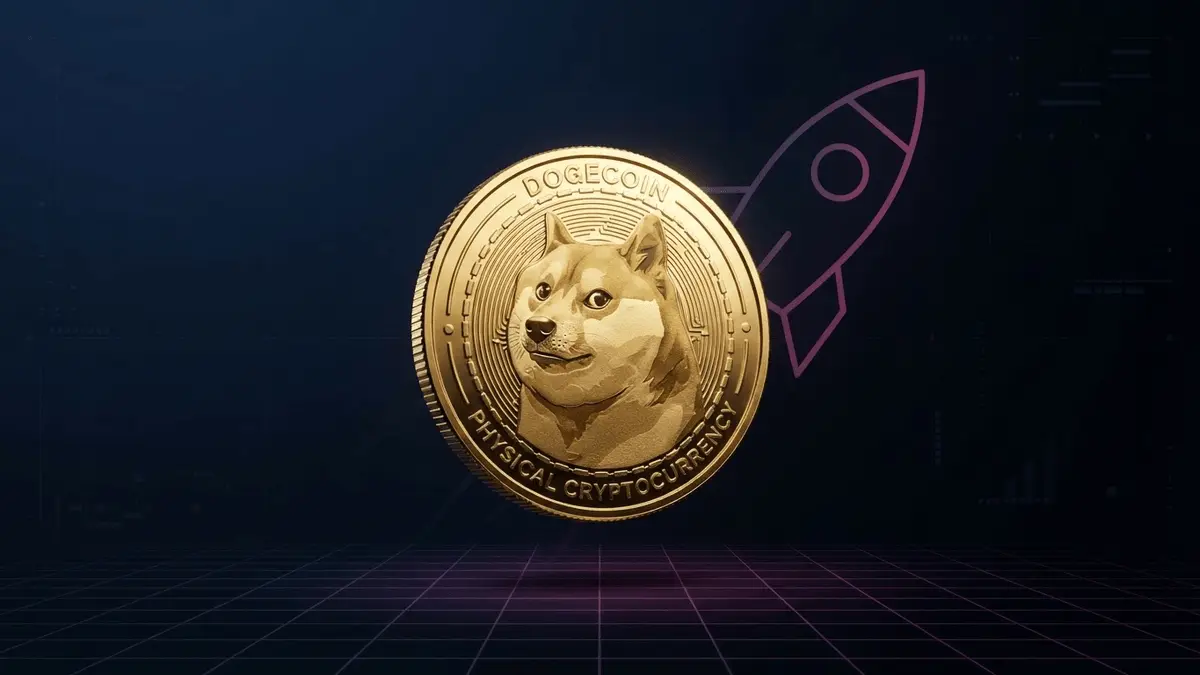
    Dogecoin is currently trading in the mid-$0.07 range, marking a significant 55% decline from a year ago, even as much of the broader cryptocurrency market has recovered from previous losses. This stagnation has led traders to question whether the so-called “Musk effect” still holds sway over the meme coin’s valuation.

    A recent point of discussion emerged on July 11, when Mark Yusko of Morgan Creek Capital suggested that Dogecoin’s value is heavily reliant on Elon Musk and other major holders refraining from significant sell-offs. This perspective highlights DOGE’s vulnerability to concentrated ownership, a narrative that typically deters institutional investment.

    Potential Catalysts for Dogecoin

    Despite the current headwinds, a list of potential catalysts for Dogecoin has been circulating, including:

    • Doge Twitter Tip Jar integration
    • Doge Payments for Twitter Blue
    • Tesla accepting Doge for car purchases
    • Development of an ETH bridge and smart contracts
    • Dogecoin Core v1.21 update
    • BIG3 Basketball League partnerships
    • SpaceX’s DOGE-1 Mission to the Moon
    • Libdogecoin and Gigawallet initiatives
    • SpaceX and Starlink accepting Doge

    However, SpaceX, Elon Musk’s aerospace company, is reportedly at an all-time low, and the Dogecoin ETFs launched in late 2025 have had minimal impact on the prevailing trend. The largest of these funds currently manages only approximately $13.7 million in net assets. Even Musk’s AI-generated “Dogefather” post in March failed to significantly move the market. While Dogecoin once surged on a single tweet, its current momentum is considerably more subdued.

    Sentiment and Price Action

    Market sentiment remains fragile, with the Crypto Fear and Greed Index still indicating fear. Furthermore, only about 40% of the past 30 trading days have closed in positive territory. Despite this cautious outlook, Dogecoin has shown resilience, refusing to collapse. This standoff between subdued sentiment and persistent price action could make the latter half of July a period of interest.

    Dogecoin is currently trading around $0.0748, showing a modest gain of roughly 3.0% over the past week. Daily trading volume hovers near $550 million in the last 24 hours, a healthy figure for a market taking a breather but still short of the surge typically associated with a sustained rally.

    Technical Outlook

    Technically, the $0.07 level remains a critical support. Buyers have consistently stepped in at this price point, making it a level traders frequently revisit. Meanwhile, resistance between $0.08 and $0.09 has thwarted every recent attempt at a rally. Projections from Changelly, which forecast a 2026 ceiling near $0.0810 and an average price around $0.0793, align with this picture of a market confined within a narrow range.

    Potential Future Scenarios

    Three potential paths lie ahead for Dogecoin. In a bullish scenario, a resurgence in Bitcoin’s momentum, coupled with renewed interest in meme coins, could propel DOGE to challenge the $0.09 mark again. A more neutral scenario anticipates DOGE trading between $0.07 and $0.08 through August, a less dramatic but not uncommon market behavior.

    The bearish outlook would require a significant catalyst, beyond a slow news cycle. A weekly close below the $0.07 support level could lead to a decline towards $0.055. This support level is therefore crucial to monitor, as a breakdown could trigger a rapid downward trend.

    Looking further ahead, some analysts still consider targets between $0.20 and $0.24 to be realistic if new catalysts emerge. Retail investors continue to express hopes for a $1 Dogecoin, though these aspirations remain contingent on events that have yet to materialize. The DOGE-1 lunar mission, for instance, is still unscheduled, leaving its narrative incomplete.

    The Challenge for Large-Cap Meme Coins

    Dogecoin’s range-bound performance illustrates a core challenge for large-cap meme coins: as market capitalization grows, the potential for significant upside diminishes, catalysts become harder to engineer, and the advantage of being an early mover belongs to a previous market cycle. Investors seeking exposure to meme coins are increasingly rotating towards earlier-stage projects with substantially lower entry valuations. This shift in investor behavior is already evident in the growing inflows into meme coin presales.

    One such project is Maxi Doge ($MAXI), an ERC-20 meme token built around the concept of a powerful canine embodying high-leverage trading, infused with gym-bro humor and community-driven competition.

    The presale for Maxi Doge has reportedly raised $4.8 million, with the token currently priced at $0.0002829, an entry-level valuation not seen in Dogecoin for years. The project features dynamic staking APY, exclusive trading competitions for holders with leaderboard rewards, and a Maxi Fund treasury designated for liquidity and partnerships.

    The project’s meme-centric marketing approach, with taglines like “Never skip leg-day, never skip a pump,” is designed for rapid social media traction. Investors are advised to conduct thorough research on Maxi Doge before committing capital.

  • Bybit Alpha: Token Delisting – July 16, 2026

    Bybit Alpha: Token Delisting – July 16, 2026

    Bybit to Delist OPG Token, Offering Users Conversion Options

    Bybit announced that it will be delisting the OPG token from its Bybit Alpha platform, with the cryptocurrency no longer supported moving forward.

    Delisting Details

    The delisted asset is OPG, with the contract address 0x45db70e1c808dae42f9c4dfea74ba5e6a113bdc1.

    Sell/Convert Period

    Holders of OPG tokens will have until July 23, 2026, at 8:00 AM UTC, to sell their holdings. During this period, users can also convert their OPG into supported settlement currencies, including USDT, USDC, SOL, or bbSOL, through Bybit Alpha.

    Automatic Liquidation

    After July 30, 2026, at 8:00 AM UTC, any remaining OPG holdings will be automatically liquidated. The assets will be sold in the following order of priority: USDT, USDC, SOL, and then bbSOL. The execution time and final settlement price will be contingent on on-chain liquidity, and a 0.5% liquidation fee will be applied.

    Important Considerations

    Assets acquired on Bybit Alpha are not eligible for withdrawal and can only be sold into the specified supported settlement currencies. To mitigate potential losses stemming from liquidity or price volatility, Bybit strongly advises users to sell their affected assets before the established deadline. Following automatic liquidation, any proceeds will be credited to users’ Unified Trading Accounts.

    Risk Disclosure

    Trading cryptocurrencies carries substantial risk and may lead to the loss of invested capital. Users are urged to ensure they fully comprehend the inherent risks, consider their experience level and investment objectives, and seek independent financial advice if necessary. Bybit disclaims any liability or responsibility for losses incurred through trading on its platform.

  • Binance VIPs Get Exclusive Copy Trading Fee Perks

    Binance VIPs Get Exclusive Copy Trading Fee Perks

    Enhanced VIP Fee Tier for Lead Traders

    Eligible Lead Traders can now access an upgraded VIP fee tier. This enhancement specifically applies to the trading fee component of VIP status and does not extend to other VIP privileges, such as benefits related to sub-accounts.

    For comprehensive details regarding this program, please consult the accompanying FAQ.

    Understanding Copy Trading

    Copy Trading enables users to replicate the portfolios of experienced traders in real time. Once an investment amount is set, the system automatically mirrors trades executed from the portfolios of selected lead traders. This feature offers novice traders a pathway to familiarize themselves with the cryptocurrency market and develop their strategic and trading methodologies.

    Related Information

    • What Is Futures Copy Trading
    • How to Lead Trade on Binance Futures
    • How to Use Copy Trading on Binance Futures
  • Pi Network Sets July 22 Deadline for Protocol v25 Amidst PI Token Price Volatility

    Pi Network Sets July 22 Deadline for Protocol v25 Amidst PI Token Price Volatility

    The Pi Network team has announced a July 22 deadline for the completion of Protocol v25, an update designed to enhance network stability and introduce support for privacy-preserving smart contracts. This development comes as the native PI token continues to experience significant price volatility.

    Protocol v25 Development
    The Pi Network team has been actively developing its protocol, with a series of updates leading up to the planned v25. Previous versions, including v19.6 in mid-Q1, v20.2 which laid the groundwork for smart contracts, and v22 and v23 in May, have been implemented. Protocol v24 was deployed in early June, with the latest announcement indicating that v25 is now targeted for completion by July 22.

    According to the Pi Network team, Protocol v25 will primarily focus on improving network stability and reliability. Additionally, it is set to support new capabilities designed for more efficient and privacy-preserving smart contracts. The team has encouraged users to visit the Pi mining app for further details.

    PI Token Price Action
    Concurrently, the PI token has been subject to considerable price fluctuations. In recent days, the token reportedly broke down below the $0.10 support level, reaching all-time lows of just over $0.07. While there was a rebound of over 15% yesterday, pushing the price past $0.085 at one point, this upward movement was followed by a rejection. As of the latest reports, the PI token is trading below $0.074, marking an 8% decrease in the past 24 hours. Over the past two weeks, the token has seen a decline of more than 35% and remains over 97% below its all-time high recorded in February of the previous year.

    Context and Uncertainty
    The upcoming v25 upgrade introduces a degree of uncertainty regarding its potential impact on the PI token’s price. While the upgrade aims to bolster the network’s infrastructure, the immediate effect on market performance remains unclear. The PI token’s price trajectory has been characterized by sharp declines and minor rebounds, suggesting that market sentiment may not be directly or immediately influenced by development milestones alone.

    Further context on the protocol’s development shows a slight slowdown in the pace of upgrades during Q2, despite the migration to versions v22 and v23 in May and the implementation of v24 in early June. The six weeks following v24’s deployment passed without major clarification on v25 until the recent announcement.

    The Pi Network team’s announcement of the July 22 deadline for Protocol v25 provides a concrete target for the next phase of network development. The stated goals of enhancing stability and smart contract capabilities are key objectives for the project. However, the ongoing volatility of the PI token’s price highlights the complex relationship between technical development and market speculation in the cryptocurrency space. Whether the v25 upgrade will offer any sustained relief to the PI token’s price remains to be seen.

    Why This Matters

    The materials describe a narrow update: The Pi Network Core Team announced that Protocol v25 is scheduled to be completed by July 22, focusing on network stability, reliability, and enhanced smart contract capabilities. Whether the upcoming v25 upgrade will provide relief for the PI token’s price.

    Broader Context

    Source materials place the factual news in this context: Pi Network’s team has been trying to improve the overall ecosystem for months.

  • Cryptocurrency Social Media Activity Low; Analysts Note Potential Market Signal Amid Uncertainty

    Cryptocurrency Social Media Activity Low; Analysts Note Potential Market Signal Amid Uncertainty

    Discussion volume across cryptocurrency-related social media platforms has fallen to its second-lowest daily level since October 2024. This decline in retail interest is being observed by some analysts as a potential indicator for Bitcoin, though broader macroeconomic factors continue to influence the market.

    Santiment, a crypto analytics firm, has noted that periods of low retail engagement have historically coincided with market turning points. According to Santiment, when discussion rates are this low, even a modest change in demand can have a more noticeable effect on prices than the general market sentiment might suggest. This observation implies that periods of reduced social media chatter could make markets more amenable to accumulation by large investors, as fewer retail traders are actively participating in or influencing trades.

    Bitcoin is currently trading in the mid-$60,000 range, having recently been around $64,500. The cryptocurrency briefly touched $65,000 before pulling back. Recent market sentiment has seen some uplift following a stronger-than-expected Consumer Price Index (CPI) reading, which has influenced near-term expectations.

    While the current low level of social media activity might appear bearish at first glance, Santiment suggests it reflects weak retail interest. Historically, some of crypto’s strongest rebounds have occurred when retail attention was low, sentiment was exhausted, and markets faced less resistance. Previous market cycles have shown periods where large investors had room to accumulate before retail investors recognized a market recovery.

    Dean Chen believes that if Bitcoin manages to hold above its current support level, it stands a good chance of sustaining upward momentum. However, Bitcoin’s future price movements are expected to remain influenced by several macroeconomic developments. These include ongoing assessments of inflation trends, the Federal Reserve’s policy decisions based on economic data, and potential shifts in global liquidity driven by factors such as changes in Japanese capital flows.

    The interpretation of low social media activity as a signal for Bitcoin remains uncertain. Whether inflation continues to cool even if energy prices rebound, whether the Federal Reserve sticks to its data-driven approach when making policy decisions, and whether changes in Japanese capital flows lead to shifts in global liquidity are all factors that could impact Bitcoin’s trajectory. The market continues to navigate uncertainty surrounding inflation, monetary policy, and global financial flows.

    Why This Matters

    The current situation highlights a notable decrease in cryptocurrency social media discussion volume, reaching its second-lowest point since October 2024. This metric’s historical correlation with market turning points, as observed by Santiment, suggests potential implications for Bitcoin, though its predictive power is tempered by ongoing macroeconomic uncertainties.

    Broader Context

    Bitcoin continues to face pressure from macroeconomic uncertainty, swings in spot ETF flows, and a cautious risk appetite. Key factors influencing its trajectory include inflation trends, Federal Reserve policy decisions, and shifts in global liquidity.

  • Claude AI Predicts Massive Solana Price Surge

    Claude AI Predicts Massive Solana Price Surge

    Solana, a high-throughput network renowned for its rapid transaction processing and minimal fees, is poised for a significant price surge, according to predictions from Claude AI. The artificial intelligence model forecasts an “explosive” rally that could drive notable price increases by the end of 2026.

    Network Activity and Memecoin Boom

    Recent on-chain data highlights Solana’s sustained high levels of activity. Weekly transaction volumes have reached record figures, and participation in decentralized exchanges (DEXs) remains robust. The burgeoning memecoin sector has been a significant contributor to this surge, attracting both retail investors and injecting substantial liquidity into the network.

    Solana recently reclaimed the top spot in DEX trading volume, processing $1.14 billion, surpassing Robinhood Chain’s $808 million and all other networks.

    Analyst Projections and Potential Price Targets

    Analysts have put forth various projections for Solana in 2026, with some scenarios suggesting a price of $500 under favorable conditions. These optimistic outlooks hinge on factors such as increased institutional adoption and ongoing technical advancements. Such forecasts are underpinned by Solana’s existing infrastructure advantages and its capacity to support fast, low-cost applications.

    Solana’s technical capabilities, including processing thousands of transactions per second at very low costs, have fueled its strong performance in the memecoin market. A recent example, The Black Bull (ANSEM), saw a nearly 20,000% increase in value within seven days in late June 2026, eventually achieving a market capitalization exceeding $95 million.

    Claude AI anticipates that the synergy between Solana’s network performance and its vibrant memecoin ecosystem could generate further price momentum throughout the remainder of the year. The AI model also predicts that Solana’s inherent advantages in speed and cost will continue to attract users and developers as the market landscape evolves.

    Current analyst projections for Solana in 2026 present a range of potential outcomes. Some models place the SOL token between $75 and $500 by year-end. The higher end of this spectrum represents a bullish scenario that would necessitate sustained institutional investment, broader adoption for payments, and the successful implementation of network upgrades like Alpenglow. From current trading levels near $75-$85, reaching $500 would signify a substantial appreciation driven by continued ecosystem growth.

    Bitcoin Hyper: A Solana VM-Powered Layer 2

    Bitcoin Hyper, a Bitcoin Layer 2 solution, leverages Solana’s Virtual Machine for its execution. The project aims to facilitate faster and more cost-effective transactions on a Bitcoin-secured base layer, utilizing zero-knowledge proofs and settlement on Bitcoin Layer 1. Its supported use cases include payments, decentralized applications, and memecoins.

    The presale for Bitcoin Hyper is currently active, allowing participants to acquire HYPER tokens. Users can purchase tokens by holding SOL or another accepted asset in a compatible wallet, connecting to the presale page, selecting their purchase amount, and completing the transaction. A buy-and-stake option is also available, offering a 35% APY, with card payments accepted as an alternative method.

    Token allocation includes 30% for development, 25% for treasury, 20% for marketing, 15% for rewards, and 10% for exchange listings. The project has raised over $32 million to date. The presale remains open but is subject to change based on demand.

    Claude AI predicts that projects built on high-performance infrastructure, such as Solana, may gain increased relevance if market conditions improve, aligning with recent analyses.