Category: Uncategorized

  • Bitcoin and Ethereum ETFs See Net Inflows, Breaking Eight-Week Outflow Streak

    Bitcoin and Ethereum ETFs See Net Inflows, Breaking Eight-Week Outflow Streak

    Spot Bitcoin and Ethereum Exchange-Traded Funds (ETFs) have recorded net inflows in the past week, signaling a potential shift after an eight-week period of consistent net outflows. This development, reported by CryptoPotato, coincides with recent price rebounds for both cryptocurrencies.

    In the week ending around July 2, 2024, spot Bitcoin ETFs saw nearly $200 million in net inflows, marking the first positive flow week in two months. Spot Ethereum ETFs also reported net inflows totaling $84.42 million during the same period. This contrasts sharply with the preceding weeks, during which investors withdrew substantial amounts from these crypto-backed investment vehicles.

    Previous Outflow Trend

    Before this recent positive turn, both Bitcoin and Ethereum ETFs experienced eight consecutive weeks of net outflows. According to CryptoPotato, the outflow streak for Bitcoin ETFs began around the week ending May 15. Over this eight-week span, total withdrawals exceeded $8 billion. The last full week of June saw particularly significant outflows, with Bitcoin ETFs losing $1.79 billion, followed by an additional $526 million in the week ending July 2.

    The Ethereum ETF market followed a similar pattern, with cumulative net flows decreasing from $12.09 billion to $10.89 billion during its eight-week streak of net withdrawals. The $84.42 million in net inflows for Ethereum ETFs in the past week represents their highest weekly inflow since the week ending April 24.

    Daily Flows and Price Movements

    While the past week concluded with net inflows, the daily performance for Bitcoin ETFs showed some variability. Net outflows were recorded on Wednesday ($84.86 million) and Thursday ($95.30 million) of that week. However, these were offset by inflows on other days, including $265.69 million on Monday and $90.44 million on Friday, contributing to the overall weekly net inflow.

    Ethereum ETFs also experienced daily fluctuations. On July 9, these ETFs saw net outflows of $52.08 million. Nevertheless, other days registered positive flows, such as $20.66 million on Monday, $27 million on Tuesday, $70.48 million on Wednesday, and $18.43 million on Friday.

    In parallel with these ETF flow changes, the prices of Bitcoin and Ethereum have shown upward movement. Bitcoin is currently trading above $64,000, reflecting a weekly increase of approximately 3%. Ethereum is challenging the $1,800 mark, with a weekly gain of about 2.7%.

    Uncertainties and Outlook

    It is important to note that while the past week’s data indicates a break in the outflow streak, the long-term trend remains subject to market dynamics. Points of uncertainty include the exact end date of the “past week” for reporting and the precise duration of the “eight weeks” of outflows. Additionally, a mention of “February 2025” in relation to past outflows appears to be a typographical error, and specific date ranges for Ethereum ETFs’ “past few months” and “eight consecutive weeks” of performance are not detailed. These inflows may suggest renewed investor interest, but whether this marks a sustained reversal of the previous outflow trend requires further observation. The data is reported as of CryptoPotato’s analysis.

    Why This Matters

    The materials describe a narrow update: Spot Bitcoin ETFs recorded nearly $200 million in net inflows in the past week, breaking an eight-week streak of net outflows. The exact end date of the “past week” for reporting inflows/outflows.

    Broader Context

    Source materials place the factual news in this context: The article is from CryptoPotato.

  • AI Models Offer Varied Outlooks on Bitcoin, Ethereum, and XRP Potential in H2 2026

    AI Models Offer Varied Outlooks on Bitcoin, Ethereum, and XRP Potential in H2 2026

    Artificial intelligence models are presenting varied predictions regarding the potential for Bitcoin (BTC), Ethereum (ETH), and XRP to achieve significant gains in the latter half of 2026. These AI analyses highlight different risk-reward profiles and underlying rationales for each cryptocurrency, offering a spectrum of potential outcomes rather than a unified forecast.

    Several prominent AI models, including ChatGPT, Perplexity, Gemini, and Grok, were tasked with assessing which of these three digital assets holds the most promise for substantial appreciation in H2 2026. Their responses reveal a nuanced landscape, with some favoring XRP for its potential percentage upside, others leaning towards ETH for a balance of fundamental strength and theoretical gains, and Bitcoin being recognized for its higher probability of a rally but comparatively lower return potential.

    ChatGPT’s Projections and Analysis

    ChatGPT projected potential peaks for BTC between $95,000 and $135,000, for ETH between $3,200 and $4,500, and for XRP between $2.50 and $4.50 in H2 2026. According to ChatGPT, XRP offers the greatest percentage upside, followed by ETH, while BTC is seen as having the highest probability of a rally but the lowest potential returns.

    Gemini’s View on Upside and Catalysts

    Gemini’s analysis identified Ethereum as a contender with significant theoretical upside, particularly citing the upcoming Glamsterdam update as a potential catalyst. Gemini also categorized XRP as possessing the clearest binary catalyst, while Bitcoin was viewed as having the highest probability for a run but the lowest percentage potential. Gemini further elaborated that XRP’s upside multiplier could be massive due to its compressed starting level.

    Grok’s Perspective on XRP’s Beta and Risk

    Grok suggested that XRP edges out the others for potential relative gains, attributing this to its smaller market capitalization and its narrative potential, which includes payments and regulatory resolution. Grok described XRP as a “high beta play among the three,” noting that while it can amplify moves in risk-on environments, it also carries higher risk if macroeconomic conditions weaken or catalysts are delayed.

    Perplexity’s Outlook on Asymmetric Potential and Stability

    Perplexity’s outlook indicated that Ethereum likely possesses the best asymmetric rally potential in H2 2026. Perplexity also suggested that Bitcoin is the most likely to remain steady, while XRP is viewed as a wild card with sharp upside potential if catalysts materialize, but also the highest execution risk.

    Comparative Risk-Reward Profiles

    Across these AI perspectives, a common theme emerges regarding the risk-reward profiles. XRP is frequently cited for its high percentage upside potential, often linked to its narrative and potential catalysts, but this is consistently paired with higher risk and execution uncertainty. Ethereum is often seen as a balanced option, offering substantial upside potential, sometimes linked to technical developments like the Glamsterdam update, and a blend of utility and adoption.

    Bitcoin, while predicted to have a high probability of a rally, is generally characterized as a potentially stable asset for a significant upward move, offering more stability but lower percentage returns compared to XRP and ETH. This suggests that while BTC may be more reliable for a broad market rally, it might not offer the same speculative upside as the other two assets.

    It is important to note that these are AI-generated predictions and are subject to significant uncertainties. Factors such as macroeconomic conditions, the actual impact of technological updates like Glamsterdam, the resolution of regulatory issues surrounding XRP, and the timing of specific catalysts all play a crucial role in the future performance of these cryptocurrencies. The current year prior to H2 2026 has seen these assets in unfavorable territory, with all three experiencing year-to-date declines and local lows, framing the context for these future outlooks.

    Why This Matters

    Several AI models (ChatGPT, Perplexity, Gemini, Grok) have offered varied predictions for the potential performance of Bitcoin, Ethereum, and XRP in the latter half of 2026. These predictions highlight differing risk-reward profiles and potential catalysts, underscoring the speculative nature of such forecasts.

    Broader Context

    The article discusses the performance outlook for major cryptocurrencies in the latter half of 2026, based on AI-generated analyses.

  • Apple Sues OpenAI Over Alleged Trade Secret Theft

    Apple Sues OpenAI Over Alleged Trade Secret Theft

    Apple has filed a lawsuit against OpenAI and two former employees, alleging that the artificial intelligence company used stolen trade secrets in its consumer hardware development.

    Lawsuit Details

    The complaint, lodged on Friday in the U.S. District Court for the Northern District of California, names Chang Liu, a former senior system electrical engineer at Apple, and Tang Yew Tan, an ex-executive involved in iPhone and Apple Watch design. OpenAI Foundation, OpenAI Group PBC, and io Products are also listed as defendants.

    Apple claims that Liu, who departed the company in January after an eight-year tenure, failed to return a company laptop and subsequently gained access to Apple’s internal systems through an authentication vulnerability.

    “While employed by OpenAI, Mr. Liu also exploited a rare, previously unknown authentication bug to access Apple’s shared network folders,” Apple’s attorneys stated in the complaint. “Upon discovering that he had this unauthorized access to Apple’s systems, Mr. Liu did not report it, return his stolen Apple-issued work laptop, or delete the program that allowed the access.”

    The tech giant alleges that Liu downloaded numerous confidential hardware files, including details on unreleased products, engineering presentations, technical specifications, and proprietary project data.

    Allegations Against Former Executive

    Apple also accuses Tan, who spent 24 years at Apple before becoming OpenAI’s chief hardware officer, of leveraging confidential information from his time at Apple to benefit OpenAI.

    The lawsuit asserts that Tan used internal Apple project names during OpenAI interviews and inquired about unreleased products. Apple further alleges that candidates were instructed to bring “actual parts” for “show and tell.”

    Additionally, Apple claims that OpenAI’s recruitment process solicited “CAD/design artifacts,” prototypes, supplier information, and specifics about employees’ work on Apple hardware.

    Representatives for Apple and OpenAI did not immediately respond to a request for comment.

    Broader Context

    This legal action follows OpenAI’s recent $6.4 billion acquisition of io Products, a hardware startup founded by former Apple designer Jony Ive. Ive is not named in the current complaint.

    According to the filing, OpenAI’s hardware division has recruited over 400 former Apple employees. Apple states it approached OpenAI in February with concerns about confidential information being transferred to the company but received no response.

    The lawsuit emerges amidst a separate trade secret dispute between OpenAI and Elon Musk’s xAI. In September, xAI sued OpenAI, alleging that the ChatGPT maker recruited former employees to acquire confidential source code, training methodologies, and data center strategies. OpenAI denied these accusations, and a federal judge dismissed the lawsuit in June, ruling that xAI failed to demonstrate that OpenAI encouraged a former employee to disclose confidential information.

    The current lawsuit marks a significant shift from the earlier relationship between Apple and OpenAI. In 2024, Apple had integrated OpenAI’s technology to power Siri as part of its Apple Intelligence initiative. However, earlier this year, Apple opted to partner with Google’s Gemini to power its next generation of AI models, following delays that impacted its own rollout.

  • Euro Coin (EURC) Activity Surges, Signaling Growing Demand for Regulated Stablecoins in Europe

    Euro Coin (EURC) Activity Surges, Signaling Growing Demand for Regulated Stablecoins in Europe

    Euro Coin (EURC) has recently achieved record levels of on-chain activity, including daily active addresses and new wallet creation. According to analytics firm Santiment, this surge may signal increasing demand for regulated, euro-denominated stablecoins within Europe’s evolving digital asset market.

    The heightened engagement with EURC occurs against the backdrop of the European Union’s Markets in Crypto-Assets (MiCA) framework. MiCA aims to establish a clear regulatory pathway for crypto assets, encouraging compliant digital assets among exchanges, payment providers, and applications. This regulatory clarity is anticipated to foster the adoption of stablecoins that meet European standards.

    Santiment indicates that the latest on-chain data suggests euro liquidity is becoming increasingly important across blockchain networks. The firm also attributed the rise in activity to developments within Circle’s ecosystem, the broader cross-chain expansion of stablecoins, and a renewed interest in compliant payment infrastructure. While stablecoins typically do not experience price rallies, the elevated activity around EURC points to growing underlying demand within Europe’s blockchain-based payment ecosystem.

    Circle’s EURC, issued by Circle SAS, is a prominent euro-backed stablecoin available on networks including Ethereum and Cronos. The market for MiCA-compliant euro stablecoins now comprises eight fully authorized tokens, offering regulated options for various users. EURC leads this group in market capitalization, joined by other MiCA-compliant stablecoins such as Société Générale’s EURCV, Monerium’s EURE, Schuman Financial’s EUROP, StablR’s EURR, Quantoz Payments’ EURQ, Banking Circle’s EURI, and AllUnity’s EURAU.

    In the past year, the combined market capitalization of these eight euro stablecoins has grown significantly, from approximately $295 million to $669 million, marking a 126% increase. This expansion in the broader market for regulated euro stablecoins provides context for the increased on-chain activity observed for EURC.

    Despite these positive indicators, uncertainties remain regarding the precise drivers behind EURC’s on-chain activity surge beyond the general influence of MiCA. It is also unclear whether this trend represents a sustained shift in market behavior or a temporary fluctuation. The growing importance of euro liquidity and the adoption of regulated stablecoins are key signals to monitor as the European digital asset landscape matures under the MiCA framework.

    Why This Matters

    The materials describe a narrow update: On-chain activity for Euro Coin (EURC), including daily active addresses and new wallet creation, reached all-time highs. The exact reasons for the surge in EURC’s on-chain activity beyond the general influence of MiCA.

    Broader Context

    Source materials place the factual news in this context: The EU’s Markets in Crypto-Assets (MiCA) framework encourages exchanges, payment providers, and crypto applications to adopt compliant digital assets.

  • Democrats Demand Senate Hearings on Trump’s Crypto Windfall

    Democrats Demand Senate Hearings on Trump’s Crypto Windfall

    Senators Demand Hearings on Trump’s Crypto Holdings After $1.2 Billion Income Revealed

    Democratic senators are calling for congressional hearings into President Donald Trump’s cryptocurrency holdings, citing new financial disclosures that revealed over $1.2 billion in income for him last year.

    Five Senate Democrats—Elizabeth Warren (D-MA), Richard Blumenthal (D-CT), Gary Peters (D-MI), Dick Durbin (D-IL), and Ron Wyden (D-OR)—stated that the disclosures have raised significant concerns regarding potential conflicts of interest, foreign influence, and Trump’s role in shaping cryptocurrency policy while simultaneously profiting from the industry.

    “The disclosures heighten concerns about the president pushing Congress to pass crypto legislation in favor of the very industry he’s cashing in on, the administration’s moves to exempt cryptocurrencies and service providers from existing financial services regulations, and its steps to weaken enforcement, including by disbanding the Department of Justice’s National Cryptocurrency Enforcement Team,” the lawmakers said in a statement Friday.

    The senators who signed the letter are the leading Democrats on the Senate Banking, Investigations, Homeland Security, Judiciary, and Finance committees, respectively. They have formally requested that all of these bodies convene hearings to examine the president’s cryptocurrency dealings.

    The group specifically highlighted that Trump’s disclosures indicated that unknown “third-parties” hold a stake in his family’s crypto company, World Liberty Financial. Notably, UAE royals purchased a 49% stake in the firm last year.

    This request for hearings comes as the Trump administration is actively urging Congress to pass the Clarity Act, a significant bill aimed at formally legalizing most cryptocurrency activities in the United States. The legislation has faced considerable delays, primarily due to disagreements over ethics provisions that would govern the president’s ability to issue and endorse digital assets while in office.

    Trump’s financial disclosure report, released last month, showed he earned more than $1.2 billion from crypto-related ventures. This includes over $635 million tied to his Trump meme coin and more than $588 million from token sales connected to World Liberty Financial. The disclosures also revealed that Trump holds tens of millions of dollars worth of Bitcoin and Ethereum.

    The Clarity Act advanced out of the Senate Banking Committee in May, with two Democrats breaking ranks to support its progression. However, the lawmakers cautioned that a resolution on ethics language remains a prerequisite for their votes on the Senate floor.

    Supporters of the legislation contend that it must be passed by Congress by August to become law this year, given the approaching November midterm elections.

  • Crypto Fundamentals Strengthen Despite Third Straight Negative Quarter

    Crypto Fundamentals Strengthen Despite Third Straight Negative Quarter

    Crypto Market Faces Third Consecutive Quarterly Decline, But Fundamentals Strengthen

    New York, NY – The cryptocurrency market experienced its third consecutive quarter of losses in Q2 2026, with Bitwise’s 10 Large Cap Crypto Index shedding 15.4% over the past three months. This marks the longest downturn since 2022, according to a recent market review by the asset manager.

    Mixed Performance Among Major Cryptocurrencies

    Despite the overall negative trend, the report highlighted that the broader crypto sector, encompassing stablecoins, tokenized assets, and prediction markets, has shown signs of strengthening. Within the 10-asset index, eight constituents ended the second quarter in negative territory.

    Cardano (ADA) was the weakest performer, plummeting nearly 40% in Q2 and registering a year-to-date decline of over 56%. Ethereum (ETH) and XRP (XRP) also saw significant drops, losing 24.66% and 20.79% respectively. Solana (SOL) experienced a more modest 10.87% dip in Q2, though its year-to-date performance showed a substantial 40.61% plunge.

    Bitcoin (BTC) endured its worst June in four years, falling below the $60,000 mark. At the time of writing, the leading cryptocurrency was approximately 49% below its all-time high of over $126,000 reached in October 2025, extending a downturn that has lasted for about nine months.

    Outliers and Altcoin Weakness

    However, two assets within the Large Cap Crypto Index managed to defy the downward trend. Hyperliquid (HYPE) surged by 79% in Q2, while Stellar Lumens (XLM) gained over 10%. Year-to-date, XLM has seen a 6.71% decrease, but HYPE has maintained its upward momentum, climbing nearly 158%.

    A separate analysis from CryptoQuant indicated that approximately 40% of altcoins are trading near their all-time lows. This figure rose to around 45% when Bitcoin dipped below $60,000.

    Growth in Niche Markets and Infrastructure

    The Bitwise review also noted a decline in on-chain activity, trading volume, and total value locked (TVL) in decentralized finance (DeFi). However, prediction market volumes reached a record $43.2 billion in Q2, an increase of nearly 18 times compared to the previous year.

    Tokenized real-world assets have seen significant growth, rising more than 50% year-to-date to nearly $33 billion. Furthermore, crypto-focused equities have outperformed the broader digital asset market, with the Bitwise Crypto Innovators 30 Index gaining 30.6%.

    The asset manager also pointed out that stablecoins settled 2.3 times more value than Visa and collectively hold more U.S. Treasuries than several countries, including Norway, India, Brazil, and Saudi Arabia. Revenue generation among crypto applications has become more concentrated, with Hyperliquid, PancakeSwap, and Aave each generating approximately $900 million over the past year.

    Infrastructure Outpaces Price Action

    Comparing current activity levels to the same period in the 2022 cycle, Bitwise observed a stark contrast that extends beyond price charts. Ethereum transaction counts are approximately 13 times higher, and DeFi TVL remains more than 60% above its 2022 levels. Stablecoin assets under management have also doubled.

    The report concludes that only prices have failed to keep pace with the increasing usage and infrastructure development. The market is currently valuing crypto at levels associated with the last bear market, despite the industry operating at nearly twice the scale and benefiting from greater liquidity and clearer participation from traditional finance firms.

  • STC, SATA Reach $10B Monthly Trading Milestone Amidst Below-Par Prices

    STC, SATA Reach $10B Monthly Trading Milestone Amidst Below-Par Prices

    STRC, SATA Hit Record $10 Billion Monthly Trading Volume Amid Bitcoin Sell-Off

    Bitcoin-backed preferred shares STRC and SATA achieved their highest combined monthly trading volume on record in June, exceeding $10 billion. This surge occurred even as a sell-off in Bitcoin (BTC) pushed both securities below their $100 par value.

    According to data from BitcoinTreasuries.net (BTN), Strategy’s STRC generated $8.7 billion in trading volume last month, while Strive’s SATA recorded $1.5 billion. This activity took place as the price of BTC declined, approaching the $57,000 level.

    The latest corporate adoption report from BitcoinTreasuries indicates that the $8.7 billion volume for STRC represented a 20.8% increase from May’s $7.2 billion and was 11.5% higher than April’s $7.8 billion. This figure also marked a more than 52% jump compared to the shares’ performance in March, following a more subdued start to the year.

    Strategy’s perpetual preferred stock volumes had reached $2.2 billion in February, before climbing 159.1% in March. January saw $2.4 billion in volume, following $1.2 billion in December 2025.

    The BTC treasuries market aggregator identified June as the first significant stress test for these digital credit products. Both STRC and SATA dropped well below their $100 par value starting June 18. The firm noted that margin calls compelled leveraged traders of STRC and SATA to liquidate their positions after an extended period of trading near par.

    Following Bitcoin’s drop below the $60,000 mark, STRC recovered to approximately $87 by July 2, after having fallen as low as $75. SATA, meanwhile, traded near $97. A survey conducted by BTN revealed that investors remained largely resolute despite the volatility. More than half of the respondents indicated that the price decline was not a significant concern. Furthermore, 84% of investors did not sell either stock during the decline, and 52% purchased one or both after June 18.

    “The instinct after June 18 is to ask whether STRC and SATA are safe,” the survey stated. “That is the wrong question. Strategy holds 847,363 BTC acquired at an average cost of approximately $75,651. The dividend obligation is a cash flow question, not a solvency question.”

    The report also highlighted that none of the issuers had missed a payment, and their credit quality remained unchanged since mid-June.

    In the investor confidence segment of the BTN study, respondents projected the strongest issuance potential for Strategy. The most common expectation was for new digital credit issuance between $10 billion and $30 billion for the Michael Saylor-led firm by the end of 2027.

    Strive secured second place with a forecast of $2 billion to $5 billion in additional issuance. Metaplanet, Smarter Web Company, and Bitmine followed, respectively.

    When asked which digital credit issuers appeared most promising, 78.4% of poll participants ranked Strategy first, 74.5% selected Strive as second, and Metaplanet took third place with 49%.

  • Pi Network Token Distribution: High Concentration Amidst Price Volatility and Development

    Pi Network Token Distribution: High Concentration Amidst Price Volatility and Development

    An analysis of Pi Network’s PI token distribution reveals a significant concentration of tokens among a small number of holders, while the majority hold very few. This disparity, coupled with a recent sharp decline in the token’s price, raises questions about its ecosystem utility and market value.

    Token Distribution Breakdown
    According to data reported by BSCN, a mere 21 accounts hold over 10 million PI tokens each. Further breakdown shows that 9,961 users possess between 1 million and 10 million PI, while 766 accounts hold between 100,000 and 1 million PI. A larger segment, comprising 353,340 wallets, holds between 1,000 and 10,000 PI, and 1,503,374 accounts have between 100 and 1,000 PI.

    In stark contrast, approximately 80% of all Pi Network users, estimated at over 14.5 million individuals, hold fewer than 10 PI coins. The exact method by which large token holders acquired their PI remains uncertain, with some claiming they could not have mined such an enormous amount and arguing they had bought them on exchanges, while others noted that the overwhelming majority of Pioneers hold extremely small balances, making it difficult for them to contribute to the ecosystem via staking or other utility-driven features.

    Price Performance and Recent Trends
    The PI token has recently experienced a significant price drop, reaching a new all-time low of around $0.09. This represents a 20% plunge over the past month and a 97% collapse from its all-time high of $3 witnessed at the start of 2025. This price decline has occurred despite recent updates and feature releases by the Pi Network Core Team.

    Recent developments include the launch of SoloHost, Pi Sign-in, and PiVerify on Pi2Day (June 28), aimed at expanding the ecosystem. Additionally, the Pi App Studio released two updates to assist creators in developing applications, including backend support and an AI-assisted planning phase.

    Implications and Uncertainties
    However, the token’s distribution raises concerns. The overwhelming majority of Pioneers hold extremely small balances, making it difficult for them to contribute to the ecosystem via staking or other utility-driven features. The exact method by which large token holders acquired their PI remains uncertain.

    Further adding to market uncertainty, over 127.5 million PI tokens are scheduled for release in the next 30 days. This upcoming unlock, combined with the rising number of tokens held on crypto exchanges, suggests the price could experience a further short-term pullback, according to some analyses. The metric does not suggest price direction.

    The Pi Network continues to introduce new features and updates, aiming to grow its ecosystem. However, the current token distribution, with a significant concentration in a few hands and minimal holdings for the majority, presents a notable challenge for widespread ecosystem participation and utility. The recent price performance underscores the volatility and uncertainties surrounding the PI token.

    Why This Matters

    The materials describe a narrow update: An analysis of Pi Network’s PI token distribution shows that only 21 accounts hold over 10 million PI. Whether whales acquired their large token holdings through mining or purchasing on exchanges.

    Broader Context

    Source materials place the factual news in this context: The controversial cryptocurrency project continues to draw attention across the industry after releasing key features and unveiling big upgrades.

  • Housing Bill With CBDC Ban Likely to Become Law Despite Presidential Objection

    Housing Bill With CBDC Ban Likely to Become Law Despite Presidential Objection

    A significant housing bill that includes a ban on the issuance of a U.S. central bank digital currency (CBDC) through the end of 2030 is poised to become law, even though President Donald Trump has stated he will not sign it. This development is due to the bill having passed both the House of Representatives and the Senate with veto-proof majorities, meaning it can automatically become law if the president does not actively veto it by the end of Friday.

    President Trump announced on Thursday that he would not sign the 21st Century ROAD to Housing Act, citing the Senate’s failure to pass the SAVE America Act as one reason for his refusal. However, under the U.S. Constitution, a bill passed by Congress automatically becomes law after 10 days if the president does not sign or veto it, provided Congress remains in session. This deadline for the housing bill expires at the end of Friday.

    The legislation previously cleared the Senate with a vote of 85-5 and the House with a vote of 358-32. These margins indicate that Congress could potentially override a presidential veto if one were issued. A White House spokesperson, reached by Decrypt, declined to comment on whether Trump intends to issue a formal veto before the deadline, directing inquiries to the president’s Truth Social post.

    The 21st Century ROAD to Housing Act is primarily designed to stimulate U.S. housing construction by reducing regulations and limiting the ability of institutional investors to purchase residential properties. A key provision added to the bill prohibits the Federal Reserve from issuing a central bank digital currency until the end of 2030. Privacy advocates have expressed concerns that a government-issued digital dollar could enable federal surveillance of Americans’ financial transactions, and this CBDC ban was reportedly welcomed by such groups.

    The Federal Reserve has been researching CBDC technology but has previously stated that it would not issue such a currency without explicit authorization from Congress.

    Despite President Trump’s stated intention not to sign, the bill’s strong bipartisan support in Congress suggests it is likely to become law. The primary uncertainty remains whether the president will formally veto the legislation before the Friday deadline. If a veto is issued, Congress would need to muster a two-thirds majority in both chambers to override it, a threshold they have already demonstrated they can meet.

    Why This Matters

    The materials describe a narrow update: President Trump announced he would not sign the 21st Century ROAD to Housing Act because it included a ban on a U.S. central bank digital currency (CBDC). The bill is expected to automatically become law if the President does not veto it by midnight Friday, as it previously passed both chambers of Congress with veto-proof majorities. Whether President Trump intends to formally veto the legislation before midnight Friday remains uncertain.

    Broader Context

    Source materials place the factual news in this context: President Donald Trump said Thursday he will not sign a bipartisan housing bill that includes a multi-year ban on the issuance of a U.S. central bank digital currency, or CBDC. The bill is expected to automatically become law if the President does not veto it by midnight Friday, as it previously passed both chambers of Congress with veto-proof majorities.

  • Circle Receives OCC Approval for National Trust Bank, Navigating Regulatory Landscape

    Circle Receives OCC Approval for National Trust Bank, Navigating Regulatory Landscape

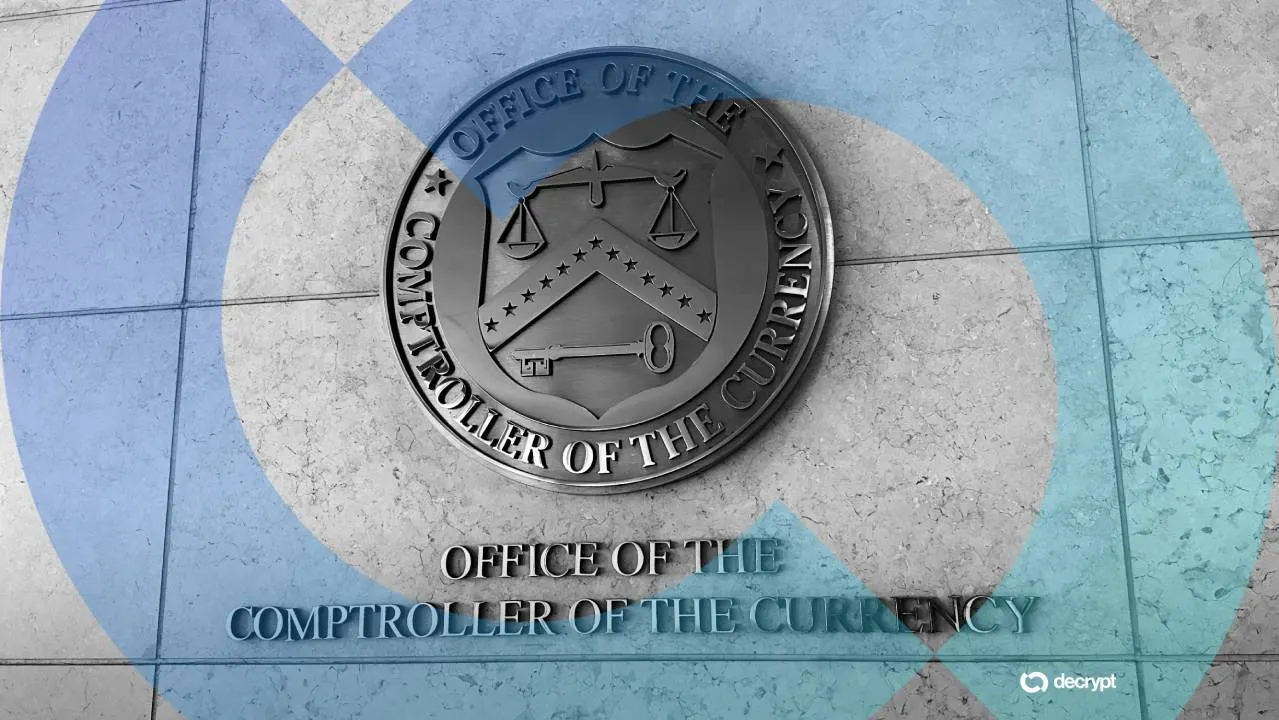
    Circle, the issuer of the stablecoin USDC, has received final approval from the U.S. Office of the Comptroller of the Currency (OCC) to establish a national trust bank. This development signifies a transition for the company from state-specific regulations to a federal banking framework.

    Circle has stated that this transition is intended to enhance its capabilities in safeguarding customer assets and managing reserves. The company indicated that the OCC approval integrates the infrastructure supporting its $73.2 billion stablecoin, USDC, into a federal banking system designed for safety, soundness, and transparency. Circle has described this move as a step toward building a new fundamental money layer for the internet.

    On Friday, the day of the announcement, Circle’s stock price reportedly increased by 8.4%, reaching as high as $73.80 during pre-market trading. The stablecoin USDC currently holds a valuation of $73.2 billion.

    This approval aligns with a broader trend of increased banking access for crypto firms under the current administration. In December, entities such as Ripple, BitGo, Fidelity Digital Assets, and Paxos received similar approvals from the OCC. More recently, Sony Bank indicated it had received conditional OCC approval for a national trust bank.

    Market Competition and Industry Dynamics

    The stablecoin market is also experiencing increased competition. Late last month, over 140 financial and technology firms, including Mastercard and BlackRock, backed a new initiative called Open USD. This development suggests a growing landscape of potential alternatives and challenges to existing stablecoin models.

    Circle’s relationship with Coinbase is also noteworthy. Coinbase has a revenue-sharing agreement with Circle concerning the interest income generated from USDC reserves, which are largely held in U.S. Treasuries. Coinbase CEO Brian Armstrong has previously praised such developments.

    Regulatory Scrutiny and Uncertainties

    However, these approvals have faced scrutiny. Some lawmakers, including Sen. Elizabeth Warren, have raised concerns regarding the process by which these charters were granted. Trade groups like the Digital Chamber have defended the OCC’s actions.

    While Circle’s move into a federal banking framework is reported, uncertainties remain regarding the long-term impact of the OCC’s approach to digital assets, the extent to which other crypto firms will pursue national charters, and the competitive response to initiatives like Open USD. It is important to note that Circle’s approval does not constitute a formal endorsement of all stablecoins by the OCC, nor does it may provide the future success or stability of any specific crypto firm.

    Why This Matters

    Circle’s OCC approval signifies a significant regulatory step, moving it into a federal banking framework. This could have implications for its operations and the broader stablecoin market, which is facing increasing competition and ongoing regulatory debate.

    Broader Context

    Under President Donald Trump’s second administration, financial regulators have shifted their stance toward digital assets, leading to increased banking access for crypto firms. This trend has coincided with both opportunities for digital asset companies and scrutiny from lawmakers.