Category: Uncategorized

  • XRP Tests $1 Support Amidst Declining Volume and Mixed Technical Signals

    XRP Tests $1 Support Amidst Declining Volume and Mixed Technical Signals

    XRP’s price is currently testing the critical $1 support level, a key psychological and technical juncture. However, the market’s conviction remains unclear, with declining trading volume and mixed technical indicators painting an ambiguous picture of XRP’s immediate future.

    Why This Matters

    The materials describe a narrow update: XRP’s price has fallen back to test the $1 support level after a brief rally. Whether the $1 support level can halt the decline.

    Broader Context

    Source materials place the market analysis in this context: XRP’s price has approached $1 in recent weeks, and now the key question is whether that level can halt the decline.

    The $1 Crossroads

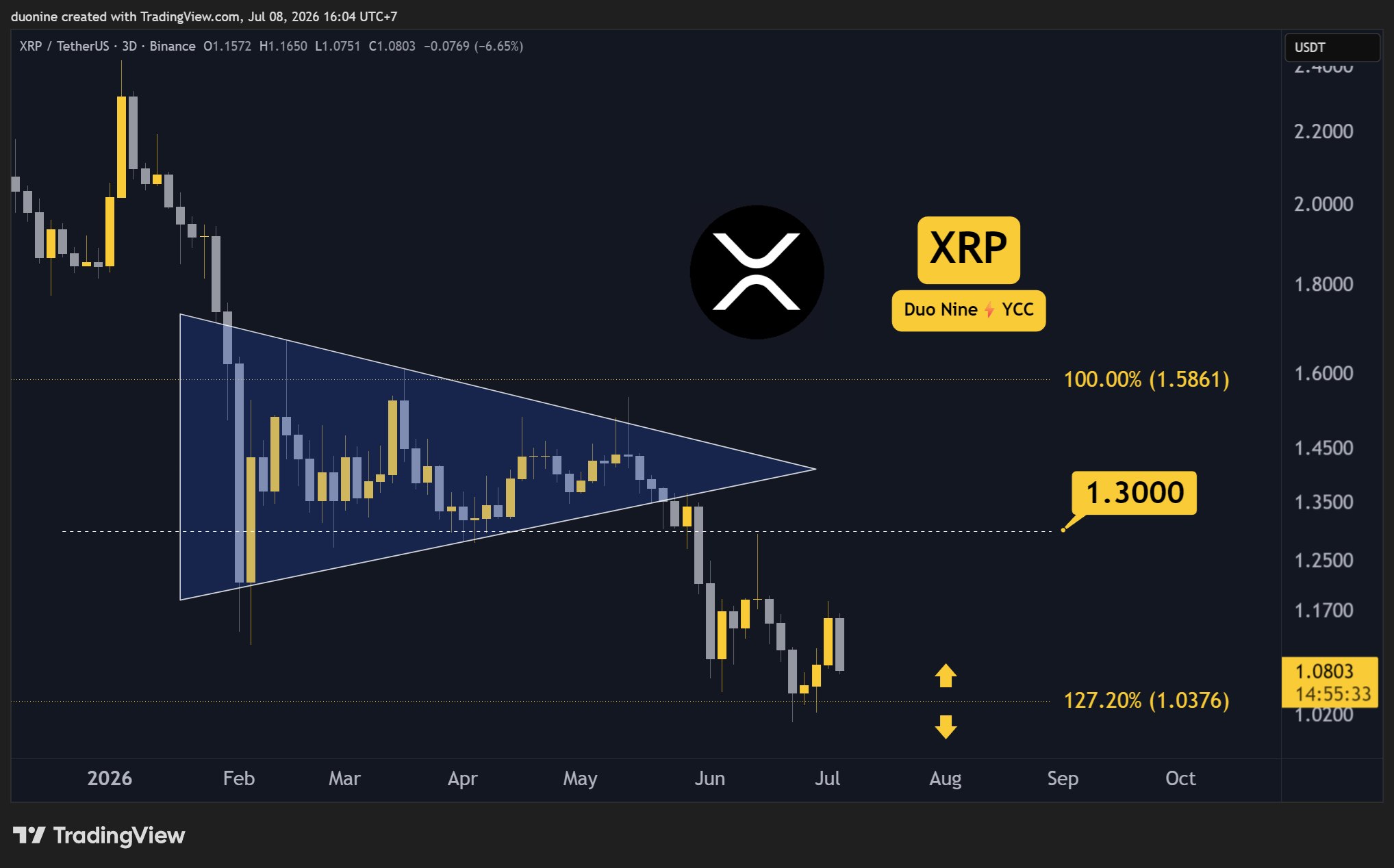
    XRP’s price action this week has seen it fall back towards the $1 mark after a brief rally that reached approximately $1.18. Sellers have re-entered the market, and the asset is once again probing this significant support level. This follows a period in late June where XRP hovered above $1 for several days before buyers managed to push the price higher. The current situation raises questions about whether this level can halt the ongoing decline or if it represents a temporary pause before further losses.

    Volume and Conviction: A Fading Signal?

    A notable observation in the current market environment is the declining trading volume. Despite sellers appearing to be in control, the decrease in volume suggests a lack of strong conviction from either side. According to CryptoPotato, this could indicate that buyers are waiting for a more opportune moment to re-enter the market, rather than a definitive capitulation. This lack of conviction makes it difficult to ascertain the true strength of the selling pressure.

    Technical Indicators: Conflicting Narratives

    Technical indicators are also presenting a mixed narrative. The Relative Strength Index (RSI) on the daily timeframe has shown conflicting signals. This summer, the RSI made two attempts to move beyond the 50 level, a threshold often seen as a dividing line between bullish and recent price movement. However, on both occasions, the price experienced a full reversal, erasing any initial optimism. This pattern can be interpreted as bearish, as it suggests that attempts to gain recent price movement have been thwarted.

    Conversely, the RSI is currently exhibiting higher lows and higher highs. While this is generally considered an encouraging sign and could point to a developing bullish divergence, it remains unconfirmed. The analysis emphasizes that unless the price action mirrors these higher lows and highs, the divergence will not be validated, leaving its potential impact on the trend uncertain.

    Contextualizing the Support Level

    The overall trend for XRP remains bearish, a factor that weighs heavily on current price action. The collapse of buy pressure as soon as the price touched $1.18, paving the way for sellers to regain control, underscores this prevailing sentiment. The possibility that the current price action could be a ‘dead cat bounce’ before reaching new lows cannot be dismissed given the bearish trend.

    Key support for XRP is identified at $1, with resistance levels noted at $1.3, $1.6, and $2. The market is watching closely to see if the $1 support can hold. The absence of buyers from the order book since last Sunday further adds to the uncertainty surrounding XRP’s immediate price direction. The situation highlights a period of indecision, where the prevailing bearish trend is being challenged by subtle, unconfirmed bullish signals within technical indicators, all against a backdrop of waning trading volume.


  • Kansas Athletics Partners with Ripple; XRP Price Remains Stable Amidst Branding Initiative

    Kansas Athletics Partners with Ripple; XRP Price Remains Stable Amidst Branding Initiative

    Kansas Athletics has entered into a multi-year partnership with Ripple, which will feature Ripple’s branding across various sports team uniforms and during broadcasts. This collaboration aims to enhance Ripple’s brand awareness and credibility through exposure during Big 12 conference events and associated social media. Despite the announcement, XRP’s price action has remained relatively stable, trading near $1.09, suggesting the market is awaiting more substantial catalysts beyond branding efforts.

    The partnership will see Ripple’s branding integrated into uniforms for Kansas Athletics’ football, basketball, baseball, volleyball, softball, rowing, and other programs. This initiative is characterized as a branding push focused on credibility, rather than an immediate strategy to acquire new users. According to the article, while increased brand awareness is beneficial, markets typically require tangible proof of adoption or demand before significantly impacting an asset’s price.

    XRP’s Trading Range and Technical Outlook

    Currently, XRP is trading within a familiar range, generally between $1.00 and $1.20. Technical analysis indicates support levels are situated around $1.00 to $1.05, with resistance noted between $1.15 and $1.20. The source states that the current chart favors a wait-and-see approach, with recent price movements appearing indecisive. Neither bulls nor bears have significant cause for celebration as XRP remains consolidated between these key levels.

    For XRP to experience a sustained upward movement, stronger adoption or fresh institutional demand would likely be necessary. The article suggests that while the partnership is a positive headline, price charts have not yet reflected a significant shift. Traders are reportedly seeking stronger catalysts before chasing higher prices, and the current setup points towards continued sideways trading in the base case scenario, between $1.05 and $1.15.

    Losing the $1.05 support level could place the $1.00 mark under pressure, potentially leading to a deeper pullback if that level is breached. Conversely, a decisive move above $1.20, supported by solid volume, could shift momentum towards the $1.40 area, though this is presented as a potential target after a breakout rather than an immediate expectation.

    Broader Market Context

    In a broader market context, the article briefly mentions infrastructure plays as areas where traders are seeking asymmetric returns while larger-cap cryptocurrencies consolidate. LiquidChain ($LIQUID), described as a Layer 3 infrastructure project aiming to address fragmented liquidity across Bitcoin, Ethereum, and Solana, has reportedly raised $890,000 in its presale, with the current price of $LIQUID at $0.01478. This mention serves to highlight other market activities rather than drawing a direct comparison to XRP’s current situation.

    Ultimately, the partnership between Kansas Athletics and Ripple is viewed as a positive development for brand recognition. However, as reported by Cryptonews, the market’s reaction underscores the principle that even compelling stories require tangible buyer interest and fundamental growth drivers to translate into significant price appreciation. Macro events, regulatory developments, or fresh institutional demand are cited as potential factors that could eventually influence XRP’s trajectory beyond its current trading range.

    Why This Matters

    The materials describe a narrow update: Kansas Athletics has entered into a multi-year partnership with Ripple, which will include Ripple’s branding on uniforms for football, basketball, baseball, volleyball, softball, rowing, and other sports programs. Whether the partnership will lead to increased XRP adoption or demand.

  • Paradigm Secures $1.2B Fund as Crypto VC Eyes AI

    Paradigm Secures $1.2B Fund as Crypto VC Eyes AI

    Paradigm Raises $1.2 Billion Fund, Expanding Beyond Crypto into AI

    Venture capital firm Paradigm has announced the closure of a $1.2 billion fund, signaling a significant expansion of its investment focus beyond its traditional cryptocurrency stronghold into artificial intelligence (AI) and robotics.

    Founded in 2018 by Matt Huang and Coinbase co-founder Fred Ehrsam, Paradigm established itself as a prominent backer of the crypto industry. This latest move marks a notable broadening of its investment scope. The firm has already allocated capital to companies outside the crypto space, including drone-delivery firm Zipline, valued at $7.6 billion, and space-defense startup True Anomaly, valued at $2.2 billion.

    The shift is not entirely unexpected. AI startups captured approximately 70% of global venture funding in the last quarter, while cryptocurrency deal volumes have seen a sharp decline, with Bitcoin down about 30% year-to-date. Managing partner Alana Palmedo described the move as capitalizing on opportunity rather than a retreat from crypto, telling Bloomberg that while crypto remains an “exciting frontier,” there is “so much else happening right now that’s pretty hard to ignore.”

    Paradigm maintains that it is not abandoning its crypto investments. The firm recently co-led Morpho’s $175 million funding round in June and led a seed round for a tokenized-Treasuries startup this month. It also holds stakes in prediction-market firms like Kalshi. Huang has long advocated that crypto and AI are not mutually exclusive, and Paradigm is evaluating AI deals with its existing technical team, rather than establishing a separate division. Nevertheless, the distinction between crypto and AI is increasingly blurring at the investor level.

    BNB Chain Unveils New Layer-1 Blockchain for AI Agents

    BNB Chain has revealed its roadmap for the second half of 2026, which centers on the development of a new Layer-1 blockchain specifically designed for “agentic trading.” This technology aims to support autonomous AI agents capable of executing trades, managing portfolios, and providing liquidity independently.

    The proposed blockchain is engineered to handle over 100,000 transactions per second, with preconfirmation times under 50 milliseconds and finality under one second. The goal is to achieve the speed of centralized exchanges while maintaining self-custody capabilities. This new network would be the fourth in the BNB ecosystem, joining BNB Smart Chain, opBNB, and Greenfield. A testnet is slated for late 2026, with the mainnet expected in early 2027.

    The infrastructure is being built with machines, rather than humans, as the primary users. To accommodate the millisecond execution needs of AI agents, the chain will eliminate the public mempool—the shared waiting area for pending transactions—and replace it with a private flow to prevent front-running and sandwich attacks. The roadmap also incorporates native privacy features, account abstraction, AI-powered security, and research into post-quantum cryptography. This hybrid approach will layer quantum-resistant protection over current cryptography without requiring users to migrate their addresses.

    BNB Chain enters a competitive landscape of high-throughput blockchain solutions, which already includes Solana’s Firedancer, Monad, and MegaETH. The venture is based on a market that is still nascent, with autonomous agents having settled only $73 million across 176 million blockchain transactions in the past year. However, the trajectory suggests significant future growth, as major companies like Google, Coinbase, and Visa are developing agentic payment systems, and McKinsey projects that retail agentic commerce could reach $5 trillion by the end of the decade. The feasibility of BNB Chain delivering an ambitious new Layer-1 on schedule remains an open question, but the project represents a significant undertaking.

  • Robinhood Chain: Wall Street to Memecoins – Bridging Safely

    Robinhood Chain: Wall Street to Memecoins – Bridging Safely

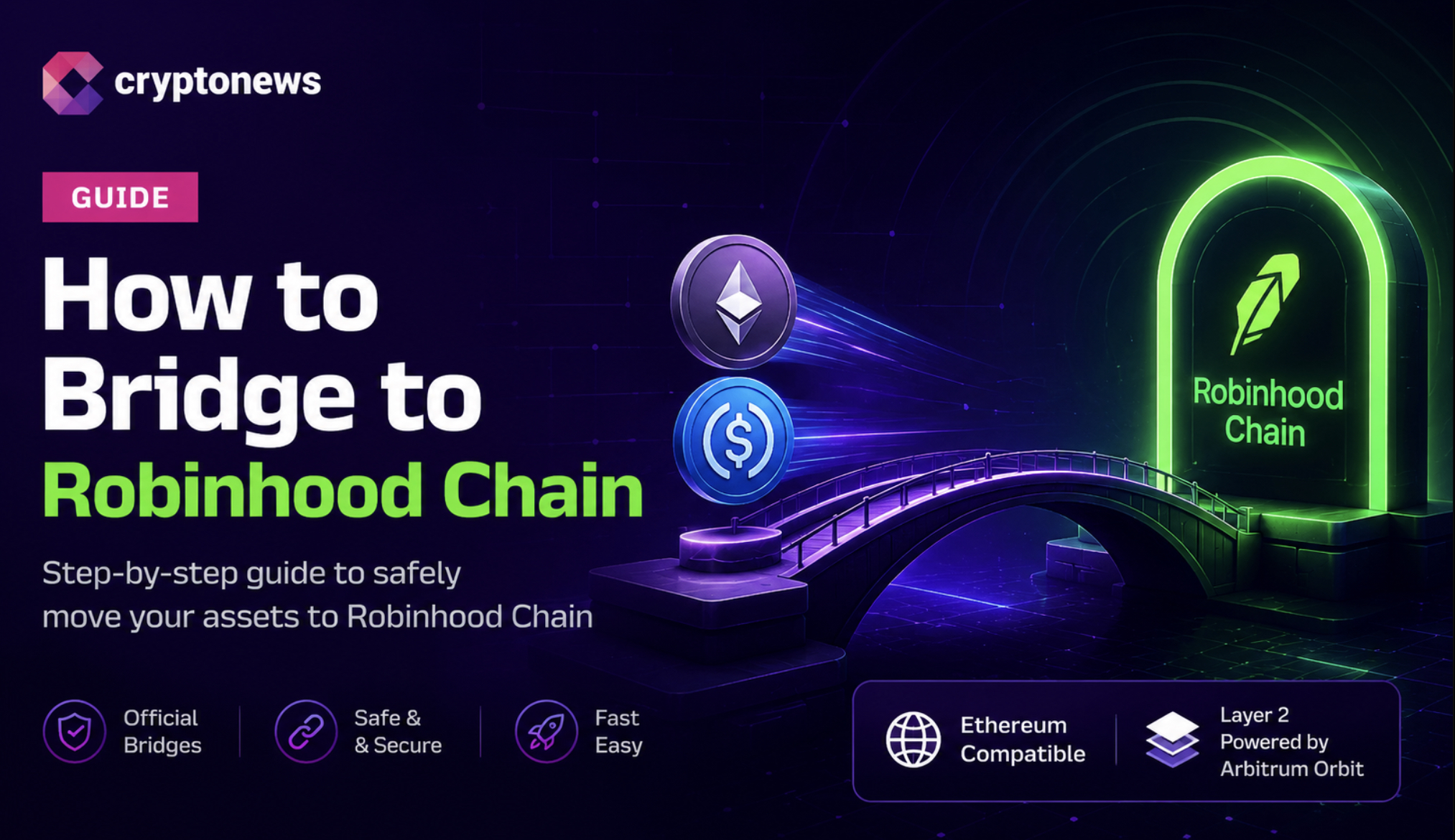
    Robinhood, a company that once revolutionized stock trading by eliminating commissions for everyday investors, has ventured into the cryptocurrency space with the launch of Robinhood Chain. Founded in 2013 by Vlad Tenev and Baiju Bhatt, the firm initially gained prominence with its mobile-first brokerage app, conceived in the wake of the 2008 financial crisis with the mission to “make investing accessible to everyone.”

    The platform experienced a surge in popularity during the 2021 meme stock phenomenon, as retail traders flocked to stocks like GameStop. Now, five years later, Robinhood has expanded beyond traditional finance with the introduction of Robinhood Chain. Launched on mainnet in July, it is a permissionless, Ethereum-compatible Layer 2 network built using Arbitrum Orbit technology. The chain utilizes ETH for gas fees and is designed to facilitate the tokenization of real-world assets on the blockchain.

    Robinhood Chain’s Features and Early Adoption

    A key offering on Robinhood Chain is its Stock Tokens, which provide users with economic exposure to major companies such as NVIDIA, Apple, and Google. The network also supports AI-driven trading applications, 24/7 markets, and integration with decentralized finance (DeFi) protocols. Uniswap serves as its primary decentralized exchange, while Chainlink provides oracle services, and LayerZero enables cross-chain interoperability.

    While Robinhood Chain was initially conceived with tokenized stocks in mind, early trading activity revealed a different user preference. Within days of its launch, memecoins emerged as the network’s most popular sector, leading to a significant spike in Uniswap trading volume. Daily volume briefly surpassed $500 million as speculators rushed into newly launched tokens.

    Memecoin Frenzy Drives Record Activity

    Robinhood Chain’s decentralized exchange (DEX) trading volume reached a new high of over $560 million on July 8. Daily active addresses approached 200,000, with more than 140,000 being new users making their first transaction on the network.

    One of the notable beneficiaries was the memecoin CASHCAT, which rapidly achieved a market capitalization exceeding $100 million and attracted tens of millions of dollars in daily trading volume. Some early investors reported turning $86 into $2 million, a life-altering gain that drew comparisons to the explosive memecoin cycles seen on Solana.

    CEO Acknowledges Memecoin Popularity

    Robinhood CEO Vlad Tenev acknowledged the trend, posting on X that while Robinhood Chain was developed to be the premier network for real-world assets, it has also proven to be highly effective for memecoins. This statement marked a shift in tone from earlier in 2025, when Tenev had expressed a focus on moving beyond memecoins towards tokenized securities. Instead of resisting the speculative activity, Robinhood appears willing to embrace it as a means to attract users and liquidity.

    This strategy is not unprecedented. Memecoins often serve as an accessible entry point into the cryptocurrency ecosystem due to their low technical barriers and relatively small capital requirements. Their viral nature can draw new users into the blockchain space, many of whom may later explore DeFi, tokenized assets, or other blockchain applications.

    Solana, for instance, experienced a resurgence in network activity and a return of retail traders following the FTX collapse, largely driven by the BONK memecoin. Robinhood Chain appears to be following a similar trajectory, with speculative trading generating liquidity that could potentially benefit its Stock Tokens and the broader DeFi ecosystem.

    How to Access and Trade on Robinhood Chain

    For those interested in trading memecoins on Robinhood Chain, the process involves a few key steps. Users will need an EVM-compatible wallet, some ETH for gas fees, and access to an official bridge to transfer funds onto the network.

    Best Wallet is presented as a user-friendly option, a non-custodial crypto wallet that allows users to manage assets across multiple blockchains from a single application. After downloading the app, users can create a new wallet or import an existing one using their recovery phrase, emphasizing the importance of securely backing up this seed phrase.

    If Robinhood Chain is supported in the user’s version of Best Wallet, they can simply select it from the available networks. Otherwise, it can be added manually using the official network details provided by Robinhood. Other compatible wallets include Robinhood Wallet, MetaMask, and Rabby.

    Once the wallet is set up, users can transfer ETH from the Ethereum mainnet to Robinhood Chain using an official bridge or a bridging platform like Rocket. The Arbitrum Bridge is recommended as a secure option, while partners such as Across, LayerZero, Stargate, Relay, and LiFi offer faster transfers for supported assets. It is advised to always access these services through their official websites to avoid phishing attempts.

    After ETH arrives on Robinhood Chain, users can visit Uniswap, switch their wallet to the Robinhood Chain network, and swap ETH for supported memecoins like CASHCAT or other tokens. Before confirming any trade, it is crucial to verify the token’s contract address using the project’s official website or a verified social media account, as newly launched chains can attract fake tokens.

    Users are also advised to send small test transactions before moving larger amounts, double-check wallet addresses, review all transactions before signing, and avoid granting unlimited token approvals unless necessary. For significant crypto holdings, using a hardware wallet is recommended for enhanced security.

    Robinhood Chain is still in its early stages, and the memecoin market is highly volatile. While early traders may experience substantial gains, most new tokens do not achieve long-term success. The advice emphasizes sticking to official wallets, bridges, and decentralized exchanges, investing only what one can afford to lose, and prioritizing security alongside the search for the next viral token.

  • Sony Bank’s Stablecoin Plan Advances with Conditional OCC Charter

    Sony Bank’s Stablecoin Plan Advances with Conditional OCC Charter

    Sony Bank has received conditional approval from the U.S. Office of the Comptroller of the Currency (OCC) to establish a national trust bank, a step toward its plan to issue a dollar-backed stablecoin. The approval, reported on July 6, allows its subsidiary, Connectia Trust, to prepare for operations expected in 2027, pending the fulfillment of remaining regulatory conditions.

    Connectia Trust, a wholly owned subsidiary, is slated for establishment this month with $40 million in capital. This entity will manage the issuance and reserves for a dollar-denominated stablecoin. Sony Bank stated the trust aims to create a “medium- to long-term business foundation” for its digital asset ventures. The bank previously indicated to Nikkei its intention for U.S. customers to use the token for digital content purchases across Sony’s ecosystem, potentially lowering transaction fees.

    The U.S. market for this stablecoin initiative is enabled by the GENIUS Act, federal legislation passed last year that outlines reserve and disclosure rules for dollar-pegged tokens. This aligns with Sony’s broader digital asset strategy, including the launch of its Ethereum layer-2 network, Soneium, in early 2025. Sony’s blockchain partner, Startale, introduced a separate dollar stablecoin on Soneium last year. For its own token, Sony Bank has engaged infrastructure firm Bastion for issuance, reserve management, and custody.

    Sony Bank’s application follows similar moves by other crypto and payment firms seeking federal trust status. In December, the OCC conditionally approved Circle, Ripple, BitGo, Fidelity Digital Assets, and Paxos. A national trust charter allows firms to custody assets, manage reserves, and issue stablecoins under federal supervision, but prohibits them from accepting cash deposits or making loans.

    Despite the conditional approval, Sony’s initiative faces opposition. The Independent Community Bankers of America urged the OCC to reject the Connectia Trust application in November, arguing it would permit Sony to issue deposit-like stablecoins while circumventing the insurance and regulations governing traditional banks. Senator Elizabeth Warren (D-MA) has also contended that the OCC has improperly granted charters to firms not qualifying under the National Bank Act. Cody Carbone, CEO of the Digital Chamber, countered in May that these criticisms “misread both the statute and the OCC’s longstanding charter authority.” A U.S. banking lobby has also considered legal action regarding these charters.

    Connectia Trust currently exists as a plan. The conditional nod requires Sony Bank to satisfy all outstanding OCC conditions before its stablecoin can launch, a process anticipated to conclude in 2027. The global stablecoin market cap is currently over $308 billion.

    Broader Context

    Source materials place the factual news in this context: Sony Bank has secured conditional approval from the U.S. Office of the Comptroller of the Currency to establish a national trust bank, moving Japan’s Sony Financial Group closer to issuing its own dollar-backed stablecoin.

    Why This Matters

    This development signifies Sony Bank’s strategic move into the stablecoin market, aiming to integrate digital assets into its existing ecosystem and potentially reduce transaction costs for consumers. The initiative is supported by the GENIUS Act, which provides a regulatory framework for such tokens in the U.S., and aligns with Sony’s broader digital asset strategy, including its Ethereum layer-2 network, Soneium. However, the path forward involves meeting remaining regulatory conditions and navigating opposition from traditional banking groups and political figures concerned about the implications of national trust charters for stablecoin issuers.

  • New Assets Added for Margin Trading, Crypto Loans, Savings, and Institutional Services

    New Assets Added for Margin Trading, Crypto Loans, Savings, and Institutional Services

    New Asset Support for Spot Margin, Loans, and Savings

    Bybit has announced the expansion of its platform offerings with the addition of DATA, effective July 13, 2026, at 4:00 AM UTC. The asset will be integrated across Spot Margin Trading, Crypto Loans, Savings, and Institutional Loans.

    The specific service availability is as follows:

    • Spot Margin Trading: DATA/USDT
    • Crypto Loans: DATA
    • Savings: DATA
    • Institutional Loans: DATA

    DATA will be supported as both a collateral asset and a borrowing asset for Crypto Loans and Unified Trading Account (UTA) borrowing. Additionally, it will serve as collateral for Institutional Loans.

    Utility and Trading Features

    Users can leverage the new asset in the following ways:

    • Margin Trading: Execute trades with up to 10x leverage on supported pairs via the Unified Trading Account.
    • Collateralized Borrowing: Utilize DATA as collateral to secure funds for trading or withdrawals.
    • Institutional Services: Deploy the asset as collateral within the Institutional Loans framework.

    Collateral Value Ratios and specific parameters for UTA, Crypto Loans, and Institutional Loans will be published on the platform’s official website once the asset is officially listed.

  • Delisting of KORUUSDT Perpetual Contract

    Delisting of KORUUSDT Perpetual Contract

    Bybit to Delist KORUUSDT Perpetual Contract

    Cryptocurrency exchange Bybit has announced the upcoming delisting of its KORUUSDT Perpetual Contract, effective July 13, 2026, at 10:00 AM UTC.

    Following the delisting, trading for the KORUUSDT Perpetual Contract will no longer be supported. The exchange has outlined the following procedures for the transition:

    • Order Cancellation: All active and conditional orders for the KORUUSDT Perpetual Contract will be automatically canceled.
    • Position Liquidation: Any open positions in the contract will be closed automatically. The final settlement price will be determined by the average index price recorded during the 30-minute window preceding the delisting.
    • Trading Bots and Copy Trading: The KORUUSDT Perpetual Contract will be removed from all Trading Bot services. Additionally, all unfilled orders associated with the contract within the Copy Trading platform will be automatically canceled.

    Bybit has advised users to manage their positions accordingly ahead of the scheduled delisting.

  • Interpol: 20-Year-Old Moved $123M in Romance Scam Crypto

    Interpol: 20-Year-Old Moved $123M in Romance Scam Crypto

    Global Anti-Fraud Operation Nets Thousands of Arrests, Millions in Seized Assets

    A sweeping global anti-fraud operation has resulted in over 5,800 arrests and the interception of $293 million in illicit assets, Interpol announced. The initiative, dubbed Operation First Light 2026, targeted sophisticated criminal networks engaged in social engineering fraud and money laundering, highlighting the pervasive nature of these crimes across 97 countries and territories.

    Romance Scams and Crypto Laundering at the Forefront

    Among the notable cases highlighted by the operation was a 20-year-old individual whose cryptocurrency wallet moved more than $122.5 million in just 10 months. This activity was part of a scheme to launder money stolen from victims of romance scams. Thai police apprehended two individuals in connection with this case. Interpol stated that the operators funneled proceeds into a mix of cryptocurrencies and employed cross-chain token swaps, a technique that shifts funds between different blockchains to obscure their origin and destination.

    Operation First Light 2026: A Coordinated Global Effort

    The coordinated crackdown, which ran from mid-January to the end of April, saw authorities make 5,811 arrests. In addition to the financial assets seized, investigators identified over 142,000 victims. The operation also led to the blocking of 31,014 bank accounts and the analysis of more than 152,000 cases. Some of these asset freezes were facilitated by I-GRIP, an Interpol mechanism designed to halt the flow of both traditional and virtual assets.

    Exploiting Human Psychology for Criminal Gain

    Tomonobu Kaya, head of Interpol’s financial crime and anti-corruption center, emphasized that criminal syndicates “exploit human psychology to manipulate their targets.” He added that global security against such threats requires a united front, stating, “no country can stay safe unless all of them push back together.”

    The “Pig Butchering” Scam Modus Operandi

    Romance scams, often referred to as “pig butchering,” typically begin with a stranger cultivating a relationship over an extended period before directing the victim towards a fraudulent cryptocurrency investment. Once victims’ funds are transferred, launderers rapidly move to obfuscate the trail by transferring funds across blockchains and swapping between different tokens, making it difficult for investigators to track the money.

    Evolving Tactics in Crypto Laundering

    This pattern has become more entrenched as enforcement efforts have intensified. According to Ari Redbord, a former U.S. Treasury official now with blockchain analytics firm TRM Labs, criminal operations are increasingly relying on stablecoins, low-fee blockchain networks, and rapid cross-chain swaps. These tactics are used to “fragment movement and buy time,” a trend observed after Interpol officially designated scam-compound networks as a transnational threat impacting victims in over 60 countries.

    The Scale of Financial Losses

    The financial implications of these scams are substantial. United Nations investigators estimate that “pig butchering” operations generated tens of billions of dollars between 2020 and 2024, with many operations originating from fortified compounds in Southeast Asia that utilize trafficked and coerced labor. Cambodia has since enacted legislation that could result in life imprisonment for scam operators, and U.S. courts have imposed lengthy sentences, including a 20-year prison term for an individual linked to a $73 million laundering scheme.

    Thailand: A Frontline in the Fight Against Crypto Fraud

    Thailand, bordering regions in Myanmar and Cambodia where many scam compounds operate, finds itself on the front lines of this battle. According to a 2025 case study by TRM Labs, Thailand’s Cyber Crime Investigation Bureau receives approximately 800 complaints daily, the majority involving cryptocurrency-enabled fraud or money laundering. Bangkok has become a frequent location for the arrest of suspects, including a Portuguese national accused of $580 million in crypto and card fraud, who was apprehended there in 2025.

    AI and Layered Networks Fueling Scam Inflows

    Blockchain analytics firm Chainalysis estimated a surge in cryptocurrency scam inflows in 2025, with the average scam payment more than tripling to $2,764. This increase is attributed to fraudsters incorporating artificial intelligence, phishing kits, and layered laundering networks into their operations.

    Operation First Light, funded by China’s Ministry of Public Security and supported by regional policing bodies, represents one campaign within a broader global effort. Interpol’s identification of over 142,000 victims within a single four-month period underscores the immense challenge facing law enforcement agencies worldwide.

  • Pi Network July Upgrade: Key Details for Pioneers

    Pi Network July Upgrade: Key Details for Pioneers

    Pi Network Rolls Out Major July Upgrades, But Token Price Continues to Plummet

    Pi Network’s development team unveiled significant updates yesterday, detailing their functionality and user benefits on the social media platform X. However, the cryptocurrency’s underlying asset has continued its downward trend, reaching new lows with no immediate end in sight.

    CryptoPotato previously reported on two key enhancements: an AI-assisted App Planning Phase, empowering developers to build products from initial concepts, and an improved backend support system. In a subsequent announcement, the Pi Network team elaborated on the latter upgrade, highlighting its core features and how “Pioneers” can leverage them.

    “Backend capabilities begin with persistent storage for newly created App Studio applications, allowing apps to save and retrieve user-specific data across sessions,” the team stated. This means developers can now create applications on the Pi App Studio that retain user experiences even after users close and reopen them. For instance, games can remember high scores, productivity apps can re-display to-do lists, and note-taking applications can automatically preserve user notes.

    Previously, these applications were largely confined to frontend-only, single-session experiences, meaning app data such as preferences or progress would be lost upon exiting. The team emphasized that the introduction of persistent storage is a “significant App Studio platform milestone because it expands what AI-created apps can practically do on Pi Network.” This foundational capability is expected to enable a wider range of practical applications.

    Despite the team’s consistent release of protocol updates, Pi Network’s native token has failed to experience a notable recovery. Instead, its price has largely trended downwards.

    The token hit an all-time low of under $0.115 at the end of June during a broader market correction. It saw a modest rebound to between $0.12 and $0.13 for approximately a week before declining sharply again at the start of the current business week. Yesterday, it plunged to $0.1033, marking a new record low, with further downward pressure observed several hours ago.

    According to CoinGecko data, the latest low stands at $0.1002. Although the token has seen a slight rebound of 1.5% since then, PI remains at risk of falling below the $0.10 mark in the immediate future, influenced by overall market sentiment and a perceived lack of confidence in the token.

  • XRPL v3.2.0 Upgrade: High Validator Adoption, Slower Node Uptake

    XRPL v3.2.0 Upgrade: High Validator Adoption, Slower Node Uptake

    Ripple released a new software update, v3.2.0, for the XRP Ledger (XRPL) over three weeks ago. While a substantial portion of the Unique Node List (UNL) validators have adopted the new version, the overall adoption rate among general validator nodes remains notably lower.

    Data from XRPScan indicates that as of the reporting date, only 43% of XRPL nodes, equating to 357 out of 828 total nodes, have upgraded to v3.2.0. In contrast, 51% of nodes, or 426 out of 828, are still running on the previous version, v3.1.3. This disparity highlights a gap in the network’s immediate uptake of the latest software.

    Network Activation Amidst Adoption Gap

    Despite the lower adoption among general nodes, the XRPL network considers upgrades activated once a sufficient percentage of UNL validators have upgraded. Currently, 89% of the UNL validators are running on the new v3.2.0 software. The XRPL protocol requires 80% of the UNL to activate network upgrades, a threshold that has been met. Specifically, 31 out of 35 UNL validators have cleared the necessary threshold for v3.2.0 activation.

    The v3.2.0 upgrade introduces several changes, including the rebranding of the core server software from ‘rippled’ to ‘xrpld’. It also aims to reduce operating costs and memory usage by an estimated 30% to 40%, which could optimize institutional usage and improve network efficiency.

    Amendment Voting Faces Deficit

    However, an aspect of the v3.2.0 rollout is the ongoing voting process for an amendment titled ‘fixCleanup320′. This amendment is intended to deploy fixes for various components, including single-asset vaults, lending protocols, multi-purpose tokens, permissioned domains, and permissioned decentralized exchanges. To be approved, the amendment requires 28 out of the 35 UNL votes. As of the reporting date, only 17 UNL votes have been received for fixCleanup320, representing approximately 48.57% of the trusted validators having voted so far. This indicates a deficit in the votes needed for the amendment’s approval.

    The timeline for the remaining nodes to upgrade to v3.2.0 remains uncertain. Similarly, the outcome of the vote for the fixCleanup320 amendment is yet to be determined. The exact release date of the v3.2.0 upgrade is also not precisely specified, beyond being over three weeks ago.

    While the network technically considers the v3.2.0 upgrade active due to high UNL validator adoption, the slow uptake by general nodes and the current voting deficit for the fixCleanup320 amendment present ongoing points of observation for the XRPL network’s progression and security.

    Why This Matters

    The materials describe an update: Ripple released software update v3. The timeline for the remaining nodes to upgrade to v3.2.0.

    Broader Context

    Source materials place the factual news in this context: The latest infrastructure upgrade introduces several new features to the XRPL.