Category: Uncategorized

  • SpaceXAI’s Grok 4.5: A Strategic Play on Cost and Efficiency for Coders

    SpaceXAI’s Grok 4.5: A Strategic Play on Cost and Efficiency for Coders

    SpaceXAI has launched Grok 4.5, a new AI model strategically positioned as a cost-effective and efficient solution for coders and knowledge workers. Released on Wednesday, the model prioritizes speed and efficiency over achieving top-tier raw performance, entering a competitive AI market alongside established players like Anthropic and OpenAI.

    Grok 4.5 is priced at $2 per million input tokens and $6 per million output tokens, offering a significant cost advantage. For comparison, Anthropic’s Claude Opus 4.8 is priced at $5 per million input tokens and $25 per million output tokens, while OpenAI’s GPT 5.6 Sol, also released on Wednesday, costs $5 per million input tokens and $30 per million output tokens. Elon Musk, associated with SpaceXAI, described Grok 4.5 as “roughly comparable to Opus 4.7, but much faster,” emphasizing a deliberate tradeoff between speed, cost, and raw capability.

    Benchmark results for Grok 4.5 present a mixed performance profile. On the DeepSWE 1.1 benchmark, which measures AI models’ ability to fix software bugs, Grok 4.5 achieved a 53% success rate. This score trails behind Claude Opus 4.8 (59%), GPT 5.5 (67%), and Claude Fable 5 (70%). Similarly, on the SWE Bench Pro, a benchmark assessing resolution rates for software engineering problems, Grok 4.5 posted a 64.7% resolution rate. While this surpasses GPT 5.5’s 58.6%, it falls short of Opus 4.8’s 69.2% and Claude Fable 5’s 80.4%.

    SpaceXAI highlights Grok 4.5’s efficiency as a key advantage. The model averaged 15,954 output tokens per job on SWE Bench Pro tasks, significantly less than Opus 4.8’s 67,020 tokens for equivalent work. SpaceXAI suggests this token efficiency, combined with a speed of 80 tokens per second, translates into substantial cost savings for high-volume AI users. For developers engaged in such tasks, the cost per input token is approximately 60% less than that of Opus 4.7, offering comparable capability at a lower price point.

    The model was trained using developer session data from Cursor, incorporating debugging traces and real code edits. This training utilized tens of thousands of Nvidia GB300 GPUs within the Colossus supercomputer, a facility with a total capacity exceeding 200,000 GPUs. SpaceXAI notes that competitors with higher benchmark scores do not possess comparable hardware infrastructure.

    Despite the substantial compute resources, SpaceXAI’s models have consistently achieved competitive, though not leading, benchmark scores. The company’s strategy appears focused on delivering a capable model at a significantly lower cost and with greater efficiency, particularly for high-volume coding tasks.

    Grok 4.5 is accessible via API, on Hermes, and within the Grok build, featuring a context window of half a million tokens (approximately 400,000 words). European users can expect availability in mid-July.

    It is noteworthy that SpaceXAI’s benchmark comparisons were made against GPT 5.5, not the GPT 5.6 Sol model that also launched on Wednesday. A preliminary test of Grok build on Hermes yielded underwhelming results for creative writing but was deemed acceptable for a simple coding task. As Elon Musk has acknowledged in court, xAI’s training practices have faced scrutiny in the past, and the current training pipeline involves a platform SpaceX is in the process of acquiring.

    This release underscores a strategic shift in the AI market, where cost-effectiveness and efficiency are becoming as crucial as raw performance for specific user segments. Grok 4.5’s positioning highlights the growing importance of accessible AI tools for developers and knowledge workers, reflecting a broader trend of specialized AI solutions catering to distinct market needs.

    Why This Matters

    The materials describe a narrow update: SpaceXAI released Grok 4. The exact capabilities of GPT 5.6 Sol, as benchmarks were compared against GPT 5.5.

    Broader Context

    Source materials place the factual news in this context: SpaceXAI released Grok 4.5 on Wednesday, its first public model since the SpaceX-xAI merger closed in February and SpaceX’s pending $60 billion deal to acquire Cursor.

  • Altcoins Near All-Time Lows Amidst Market Underperformance and Low Liquidity

    Altcoins Near All-Time Lows Amidst Market Underperformance and Low Liquidity

    A significant portion of altcoins are currently trading near their all-time lows (ATL), reflecting widespread market underperformance. This situation is compounded by low liquidity, a challenge that is expected to lead to a high failure rate for many projects in the cryptocurrency space.

    Current Altcoin Market Snapshot
    According to a report from market analysis platform CryptoQuant, approximately 40% of altcoins are trading around their ATL. This dynamic highlights an extreme level of underperformance among most projects. The situation has been particularly challenging when Bitcoin (BTC) has struggled to maintain its price above the $60,000 mark. For instance, when BTC fell below this threshold last month, the percentage of altcoins near their ATL climbed to 45%.

    The Liquidity Squeeze
    CryptoQuant analyst Darkfost noted that the extreme underperformance of altcoins reflects the harsh reality for projects that have launched tokens. He explained that his Percentage of Altcoins Near ATL chart, initially designed to visualize coins trading below 25% of their all-time low, now shows a substantial number of assets near their respective bottoms. Darkfost indicated that as the bear season progresses and BTC experiences further declines, altcoins’ performance is likely to worsen.

    A major contributing factor to this underperformance is the low liquidity in the market, despite a high volume of new cryptocurrencies being introduced daily. Data from CoinMarketCap indicates that there are currently 53.5 million cryptocurrencies in existence, with approximately 60,000 new ones added every day. The analyst suggested that without strong incoming liquidity, a majority of these cryptocurrencies are likely to fail.

    Analyst Insights and Market Realities
    These observations echo sentiments previously expressed by CryptoQuant founder Ki Young Ju in early December 2024. At that time, Ju commented on the good altcoin market sentiment but predicted that an altseason might not unfold as expected due to a lack of fresh liquidity entering the sector. He noted that the lack of liquidity hampered the growth of many assets. The current market conditions appear to have intensified this liquidity issue, leading to even poorer performance for most altcoins.

    Looking Ahead: Uncertainty and Selectivity
    Darkfost advised that investors should now be highly selective about the projects they choose to engage with. He believes the cryptocurrency market has evolved, and only a limited number of projects are likely to survive the current bear phase. The analyst’s comments underscore the uncertainties surrounding the future viability of many altcoin projects.

    While the exact number of altcoins trading below 25% of their all-time low remains uncertain, the current data points to a challenging environment. The precise impact of the growing lack of liquidity on the long-term survival of altcoin projects is also a subject of uncertainty. Furthermore, future performance and the possibility of a significant recovery for altcoins remain unclear. It is important to note that definitive statements about altcoins being guaranteed to recover, all new cryptocurrencies failing, or Bitcoin’s price definitively staying above or below $60,000 cannot be made based on the available information.

    Why This Matters

    The materials describe a narrow update: Approximately 40% of altcoins are trading near their all-time low (ATL), indicating extreme underperformance. The exact number of altcoins trading below 25% of their all-time low.

    Broader Context

    Source materials place the factual news in this context: The bear cycle is heavily affecting altcoins as expected.

  • Paradigm Launches $1.2 Billion Fund, Broadening Investments to AI and Robotics

    Paradigm Launches $1.2 Billion Fund, Broadening Investments to AI and Robotics

    Venture capital firm Paradigm has announced the launch of its fourth fund, a $1.2 billion vehicle that may expand its investment scope beyond cryptocurrency to include artificial intelligence, robotics, and other emerging technologies. This strategic expansion signals a shift in the firm’s approach to investing in rapidly evolving technological frontiers.

    Paradigm, founded in 2018 by Matt Huang and Coinbase co-founder Fred Ehrsam, has historically been a significant investor in the digital asset space. The firm previously raised a $2.5 billion crypto fund in 2021 and an $850 million early-stage blockchain fund in 2024. The latest $1.2 billion fund represents a diversification of its investment strategy, aiming to capture opportunities across a wider spectrum of cutting-edge fields.

    According to the firm, the expansion into AI and robotics reflects a belief in the convergence of these technologies with the crypto ecosystem. Paradigm stated that “sufficiently steep exponentials are indistinguishable from magic, and we see more global-scale exponentials at work than ever before.” The firm added that “this era favors those open-minded enough to throw out existing playbooks and recompute new views of reality frequently,” a mindset it shares with the founders it backs.

    The firm highlighted several investments that illustrate its evolving focus. In the realm of AI and autonomous hardware, Paradigm has invested in companies such as Zipline, an autonomous drone developer, and True Anomaly, a space defense startup. It also noted investments in Nous Research, the AI company behind Hermes Agent.

    On the crypto side, Paradigm pointed to its continued support for the digital asset ecosystem through investments in the decentralized exchange Hyperliquid, the prediction market platform Kalshi, and Tempo, a stablecoin-focused blockchain co-founded with Stripe. The firm also mentioned internal projects like Foundry and Reth, which are Ethereum development tools, the AI agent project Centaur, and EVMbench, a blockchain security benchmark developed in collaboration with OpenAI.

    The announcement comes as crypto companies are increasingly building infrastructure to support AI agents capable of executing financial transactions. Companies like Coinbase and Stripe have developed payment tools designed to enable AI agents to utilize wallets and stablecoins for completing tasks with minimal human intervention.

    Paradigm’s broadened investment mandate reflects a growing trend within venture capital, where firms are increasingly looking at the intersections of various advanced technologies. The firm’s approach emphasizes staying close to the technology, conducting research, and building alongside founders, a strategy it aims to continue with its new fund.

    Why This Matters

    The materials describe a narrow update: Paradigm, a crypto venture firm, has launched its fourth fund totaling $1. Paradigm is broadening its investment focus beyond digital assets to include AI, robotics, and other emerging technologies.

    Broader Context

    Source materials place the factual news in this context: Paradigm’s fourth fund will expand investments into AI, autonomous hardware, and other emerging technologies while continuing its research-driven approach.

  • SEC’s 2026 Agenda Proposes Crypto and IPO Rule Changes, Awaiting Public Input

    SEC’s 2026 Agenda Proposes Crypto and IPO Rule Changes, Awaiting Public Input

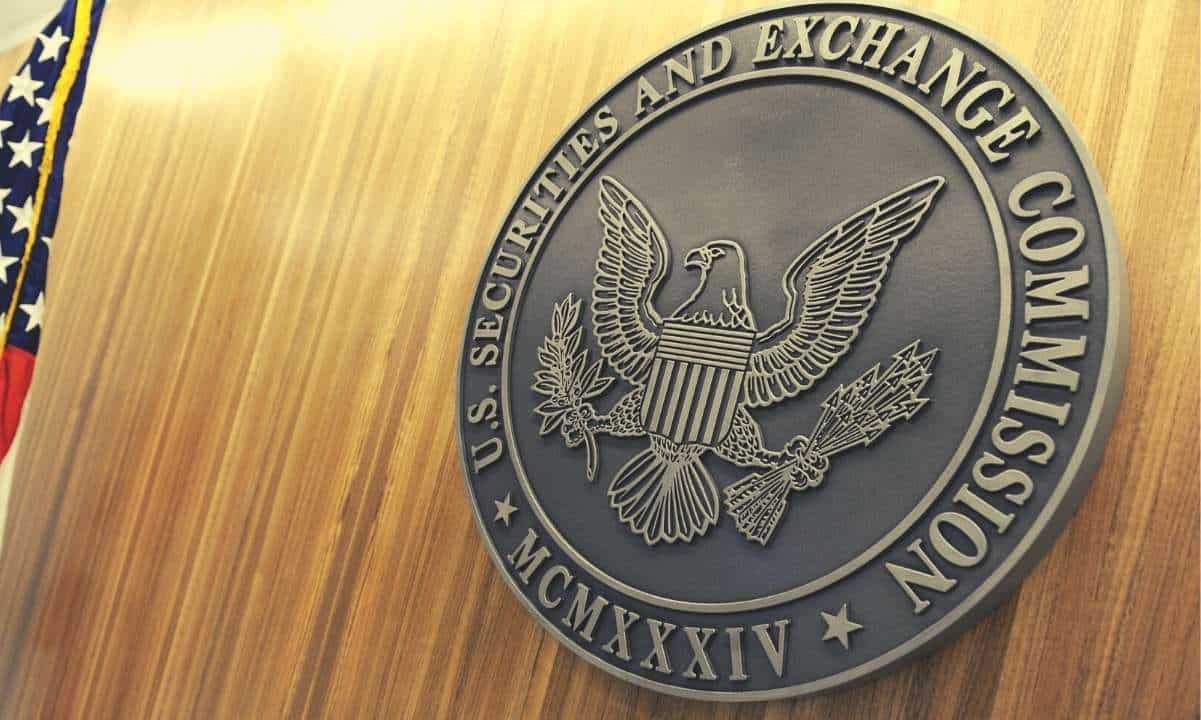
    The U.S. Securities and Exchange Commission (SEC) has unveiled its 2026 Regulatory Agenda, detailing 38 proposed rules designed to ease compliance for cryptocurrency firms and reduce costs for initial public offerings (IPOs). These proposals are now subject to a public comment period and further review before any final rules are enacted.

    Key Crypto Initiatives Under Consideration

    The agenda outlines several key initiatives for the crypto sector. These include the development of tokenization standards, modernization of custody rules for on-chain assets, and the potential introduction of a safe-harbor framework to ease compliance burdens for early-stage crypto projects. The SEC is also reviewing the definition of ‘qualified custodian’ to better accommodate tokenized assets and is examining broker-dealer requirements for digital assets to align them with their unique characteristics. Furthermore, proposed amendments to Crypto Market Structure aim to update the rules governing cryptocurrency trading on alternative trading systems.

    Proposed IPO Cost Reductions

    For companies pursuing public offerings, the SEC suggests lowering costs through revised disclosure forms and modified eligibility criteria for simplified registration. SEC Chairman Paul Atkins indicated that these proposed changes are intended to encourage more domestic IPOs and bolster business confidence in innovating within the U.S. market.

    Stated Goals and Investor Protection

    SEC Chairman Paul Atkins stated that the regulator aims to support President Trump’s objective of making America the crypto capital of the world. He also emphasized that investor protection measures will remain functional, even as the agency continues to pursue securities law violations. “We are embracing innovation to bring more products onshore, creating clear rules of the road for capital raising with crypto assets, and providing clarity as to how market participants can custody and facilitate trading of tokenized securities on-chain,” Atkins wrote. He added that the primary goal is to instill confidence in businesses to innovate in the U.S. market.

    The Regulatory Path Forward

    The proposed rules are now entering a public comment phase, with final rules expected to be considered later this year. The ultimate outcome of these proposals remains uncertain, as they must undergo review and potential modification based on public feedback.

    Related Legislative Developments

    In parallel, legislative efforts continue. The CLARITY Act, which addresses rules for cryptocurrency trading on alternative trading systems, missed its July 4 signing target. Having passed the House in 2025 and cleared the Senate in May, the bill is currently awaiting a full Senate floor vote. Lawmakers have a limited window before the August recess to finalize work on this crypto market structure bill.

    The SEC’s 2026 Regulatory Agenda signifies a notable activity in the agency’s approach to digital assets and capital markets. However, the proposed nature of these rules means their final form and impact are contingent upon the regulatory process, including public input and further deliberation.

    Why This Matters

    The materials describe a narrow update: The SEC’s 2026 Regulatory Agenda includes 38 proposed rules aimed at easing compliance for crypto companies and providing regulatory safeguards for blockchain transactions. The exact year the CLARITY Act passed the House and cleared the Senate.

    Broader Context

    Source materials place the factual news in this context: The US Securities and Exchange Commission (SEC) has launched its 2026 Regulatory Agenda.

  • Bitcoin and Ethereum Face Conflicting Signals Amidst Market Downturn

    Bitcoin and Ethereum Face Conflicting Signals Amidst Market Downturn

    The cryptocurrency market is navigating a complex period in early July, with both Bitcoin and Ethereum experiencing significant price downturns. While technical indicators are flashing bearish signals, a confluence of historical patterns, contrarian sentiment indicators, and evolving market structures introduces considerable uncertainty about the potential for a market bottom.

    Bearish Technicals Signal Continued Downturn

    The prevailing mood in the crypto market is one of caution, bordering on fear. Bitcoin has recently touched 21-month lows, briefly dipping below $58,000. As of this week, it is trading around $61,749, down approximately 2.89% for the week. The $64,000–$65,000 range has proven to be a significant resistance ceiling since early June, a level Bitcoin has struggled to overcome. Prediction markets, such as Myriad, reflect this bearish sentiment, with traders placing nearly 73% odds that Bitcoin may reach $55,000 before it hits $84,000. This sentiment flipped from bullish to bearish around June 2.

    Technically, Bitcoin’s Average Directional Index (ADX) stands at 30.7, indicating a strong existing trend with bearish directionality reported. The Relative Strength Index (RSI) is at 36.8, suggesting the asset is approaching oversold conditions, though not yet there. While Bitcoin’s 50-week exponential moving average (EMA) remains above its 200-week EMA, forming a technical golden cross, this pattern is narrowing, raising concerns about a potential future death cross, which historically precedes deeper declines.

    Ethereum is also under pressure, trading below $1,750 and down around 4% on the day, with a year-to-date decrease exceeding 30%. The most significant bearish development for Ethereum is the confirmation of a weekly death cross, where its 50-week EMA has fallen below its 200-week EMA. This pattern, which has been present on Ethereum’s daily chart since November 2025, signifies a prolonged structural deterioration and tends to define entire market phases rather than short-term moves. Traders on Myriad are pricing in a 72% chance that Ethereum may reach $1,500 before $3,000. Ethereum’s ADX is at 26.5 with bearish directionality, and its RSI is at 36.9, mirroring Bitcoin’s bearish but not yet oversold status.

    Potential Bottoming Signals and Evolving Market Dynamics

    Despite these bearish technicals, several factors introduce a degree of uncertainty and potential for a market bottom. The Fear & Greed Index currently sits at 23, indicating “extreme fear,” a level that has historically served as a contrarian signal, often preceding market reversals.

    Furthermore, Spot Bitcoin ETFs have recently seen a significant inflow of $221.7 million on July 2, snapping a 10-day, $2.7 billion outflow streak. Since then, these ETFs have attracted approximately $510 million. Similarly, ETH spot ETFs experienced positive inflows of $29.1 million on July 2.

    On-chain data from Glassnode suggests that long-term Bitcoin holders are returning to accumulation. Historically, major Bitcoin bear cycles have concluded with periods of extreme fear and flush-out events, often followed by a pre-halving compression phase before the next upward trend. With the next Bitcoin halving roughly 21 months away, some analysts suggest that accumulation phases may be becoming relevant.

    However, the current market environment differs from previous cycles due to increased institutional involvement. The presence of spot Bitcoin ETFs, formal accounting standards, and a developing legislative framework for digital assets indicate a fundamentally altered landscape. While this doesn’t eliminate volatility, it suggests that the players and dynamics within this bear market may be distinct.

    Analysts at Citi have offered cautious forecasts, downgrading their 12-month Bitcoin forecast to $82,000 with a bear case at $53,000. For Ethereum, Citi’s bear case is set at $1,094. The technical Fibonacci target for Bitcoin below current prices is $57,735, while for Ethereum, it is $1,500.

    Navigating Uncertainty

    Ultimately, the market presents a dichotomy: strong bearish technical signals for both Bitcoin and Ethereum are countered by historical contrarian indicators and the evolving institutional landscape. The confirmation of Ethereum’s weekly death cross and Bitcoin’s struggle at resistance levels point towards potential further declines. Yet, the extreme fear readings, recent ETF inflows, and the fundamental shifts in market structure introduce significant uncertainty. Whether these factors will accelerate or delay a market bottom remains an open question, with evidence suggesting that definitive conclusions cannot yet be drawn.

    Why This Matters

    The materials describe a narrow update: Bitcoin has fallen to 21-month lows and is struggling to break resistance zones, while Ethereum has reported a weekly death cross, indicating a significant bearish trend. Whether the current market players and institutional involvement will speed up or delay the market bottom.

    Broader Context

    Source materials place the market analysis in this context: The crypto market enters the second week of July in rough shape.

  • Bitcoin ETFs See Inflows After Record Outflows, Uncertainty Remains

    Bitcoin ETFs See Inflows After Record Outflows, Uncertainty Remains

    Bitcoin exchange-traded funds (ETFs) have experienced three consecutive days of net inflows, following an eight-week period of record outflows totaling $8 billion. These recent inflows, amounting to approximately $510 million since Friday, may reflect changing conditions in investor sentiment, though the sustainability of this trend remains uncertain.

    The preceding eight-week slump saw Bitcoin ETFs shed $8 billion, representing 8% of their assets under management. This outflow level is comparable to activity observed during cycle lows in 2018. Year-to-date outflows for these funds have now reached $2.8 billion. While the duration of the recent outflows set a record, their intensity has not matched the peak daily net outflows seen last year, which reached $733 million, according to CoinGlass.

    Adding to the complexity, data indicates that many investors who allocated to Bitcoin ETFs during the recent surge are currently underwater. The average cost basis for these investors is around $83,800, meaning most acquired Bitcoin at a price significantly higher than its current trading value. On Wednesday, Bitcoin was trading around $62,000, a 4% increase over the past week according to CoinGecko, but down from a high of $126,000 in October. Earlier this month, Bitcoin fell as low as $58,000.

    Further downward price pressure has come from large holders, or whales, who have sold over $40 billion worth of Bitcoin since its price peaked last year. This outflow trend from ETFs is also being compared to a similar drawdown last February, which saw investors withdraw $5.2 billion.

    The sustainability of the recent inflows remains a key uncertainty. Market observers suggest that expectations of tighter monetary policy in the U.S., as the Federal Reserve continues to combat inflation, could limit Bitcoin’s ability to break out of its current trading range. Geopolitical tensions in the Middle East also add a layer of complexity, as Bitcoin’s price remains sensitive to inflation outlooks influenced by such events.

    While the recent inflows may indicate a notable activity, the prevailing macroeconomic conditions and the current underwater position of many ETF investors introduce significant uncertainty about the future trajectory of Bitcoin ETF flows and the broader digital asset market. Whether these inflows represent a sustained trend reversal or a temporary pause in outflows is yet to be determined.

    Why This Matters

    The materials describe a narrow update: Bitcoin ETFs experienced an $8 billion outflow over an eight-week period, marking a record slump. Whether the current inflows represent a sustained trend or a temporary rebound.

    Broader Context

    Source materials place the factual news in this context: Despite their overwhelming popularity in recent years, Bitcoin ETFs have shed $8 billion over the past eight weeks, with investors seeking shelter as the digital asset plunged to a 21-month low.

  • Trader Realizes Significant Profit from Meme Coin Investment on Robinhood Chain

    Trader Realizes Significant Profit from Meme Coin Investment on Robinhood Chain

    A trader, identified by the Ethereum address ‘0xeEE2’, has realized substantial profits from an initial investment of approximately $85 in the CashCat meme coin on Robinhood Chain. The investment, made on June 18, 2026, grew to a peak valuation of over $2.3 million by July 8, 2026. The trader has since sold a portion of their holdings for $585,000 and retains tokens currently valued at around $1.6 million.

    The Investment and Its Growth

    This significant profit occurred within a short timeframe, between June 18 and July 8, 2026, on the Robinhood Chain, a new layer-2 network developed by Robinhood. The initial investment consisted of approximately 17.4 million CashCat tokens purchased for about $85, or 0.05 ETH. By July 8, 2026, the value of the trader’s holdings had surged, with the CashCat token price reaching $0.138 and the market capitalization hitting $138 million. At its all-time high, the trader’s full balance of CashCat tokens approached $2.5 million, a gain of approximately 27,000x from the initial stake, according to on-chain analytics platform DEXScreener.

    Robinhood Chain and Meme Coin Activity

    The performance of CashCat on Robinhood Chain has coincided with increased attention on meme coin activity on the platform. Robinhood CEO Vlad Tenev commented on July 8, 2026, via X (formerly Twitter), stating that while Robinhood Chain is designed for real-world assets, it “works great for memes too.” This statement followed a period where at least two other meme coins on the network were reported to be among the top 20 tokens by trading volume over the preceding 24 hours, according to data from DEXScreener.

    Market Context and Contrasting Performance

    The surge in meme coin activity on Robinhood Chain may be contributing to a shift in trading focus. This is suggested by the performance of the ANSEM token, a Solana-based token. The momentum of newly surging meme coins on Robinhood Chain has coincided with a steeper pullback in ANSEM. On July 8, 2026, ANSEM was trading at $0.26 with a market cap of $260 million, down 37% from its all-time high of $0.44, which had a market cap of $400 million. The ANSEM token had previously seen a significant gain of 190,000% over the preceding 13 days.

    Risk and Speculation

    While the CashCat investment demonstrates the potential for extraordinary gains in the meme coin space, it also underscores the inherent risks and speculative nature of such assets. The trader’s realized profit of $585,000 from selling 4 million tokens highlights the volatility. The remaining 12.3 million CashCat tokens held by the trader are valued at approximately $1.6 million as of July 8, 2026. The exact dates of the token’s all-time high market cap and the specific timing of the trader’s partial sale remain uncertain.

    Why This Matters

    This event highlights a significant, albeit speculative, financial outcome on a new blockchain network, prompting an examination of the underlying mechanics and risks involved. The substantial profit realized from a meme coin on Robinhood Chain, alongside the platform’s growing role in meme coin activity, illustrates the high-risk, high-reward dynamics present in this emerging market.

  • BNB Chain Plans New Layer-1 Blockchain for High-Frequency Trading and AI Agents, Researching Quantum Security

    BNB Chain Plans New Layer-1 Blockchain for High-Frequency Trading and AI Agents, Researching Quantum Security

    BNB Chain has announced plans to develop a new layer-1 blockchain designed to support high-frequency trading, AI agents, and quantum-resistant security measures. This new network will operate in parallel with the existing BNB Chain, aiming to significantly enhance transaction speeds and efficiency.

    According to BNB Chain, the new blockchain is being developed to handle demanding applications, including AI-driven transactions and automated payments, with ambitious performance targets. The network is projected to process over 100,000 transactions per second (TPS), suggest transactions in under 50 milliseconds, and finalize blocks in less than one second. These capabilities are intended to bring blockchain performance closer to that of traditional financial markets.

    A key component of the new layer-1 architecture will be TxStream, a system designed to remove the public mempool. By sending transactions directly to block leaders, TxStream aims to reduce latency and mitigate front-running opportunities, according to its developers.

    In addition to performance enhancements, BNB Chain is actively researching quantum-resistant security. The developers stated that this research is focused on preparing for future threats posed by advanced quantum computers. The team is exploring quantum-safe protections through account abstraction, which would allow users to upgrade their security without needing to change their wallet addresses. This work remains in the research phase, with developers testing hybrid protections and methods for user adoption.

    The roadmap indicates a testnet launch for the new layer-1 blockchain is expected by the end of 2026, with a mainnet release planned for early 2027. These developments follow recent upgrades to the existing BNB Smart Chain in the first half of 2026, which reduced block intervals from 750ms to 450ms and increased benchmark throughput from approximately 2,800 TPS to 5,200 TPS.

    The development of BNB Chain’s new layer-1 blockchain aligns with a broader industry trend of building infrastructure to support AI agents. Recently, companies like Tempola launched payments-focused layer-1 blockchains, while MoonPay introduced the Open Wallet Standard to facilitate transactions between AI agents. Amazon Web Services, in partnership with Coinbase and Stripe, has also launched initiatives enabling AI agents to use stablecoins for payments, and Coinbase has introduced tools for AI agents to trade crypto and manage portfolios.

    While BNB Chain is preparing for future technological shifts, including quantum computing, the exact timeline for the full implementation of quantum-safe protections and the specific methods to be employed are still under exploration. BNB Chain did not immediately respond to a request for comment.

    Why This Matters

    The materials describe a narrow update: BNB Chain announced plans for a new layer-1 blockchain to support high-frequency trading, automated payments, and AI-driven transactions, aiming for speeds comparable to traditional financial markets. The exact timeline for the full implementation of quantum-safe protections.

    Broader Context

    Source materials place the factual news in this context: The news comes as crypto and technology companies are building infrastructure for AI agents that can move money and execute transactions without constant human approval.

  • SEC’s 2026 Crypto Rulemaking Agenda Signals Proactive Regulatory Path

    SEC’s 2026 Crypto Rulemaking Agenda Signals Proactive Regulatory Path

    The U.S. Securities and Exchange Commission (SEC) has formally placed three cryptocurrency-related rulemaking initiatives on its 2026 regulatory agenda, signaling a proactive approach to establishing market structure and offering clarity for digital assets. This move compresses the timeline for market participants who may have anticipated regulatory changes primarily through legislative action.

    Broader Context

    Source materials place the factual news in this context: The CLARITY Act remains unsigned as of early July.

    Scope of Rulemaking

    The three core areas targeted for rulemaking include the offer and sale of crypto assets, amendments to broker-dealer financial responsibility rules as they apply to crypto assets, and Exchange Act amendments concerning crypto trading on alternative trading systems (ATSs) and national securities exchanges. According to the Agency Rule List, these initiatives aim to provide a structured exemptive regime and clarity for the evolving digital asset landscape.

    Implications for Market Participants

    For token issuers navigating registration ambiguity, the potential for codified safe harbor provisions is a significant development. The SEC has previously proposed an innovation exemption for tokenized securities, and this rulemaking could formalize or refine those conditions. The specifics, thresholds, timelines, and the definition of sufficiently decentralized governance remain unresolved, which is precisely why the rulemaking notice is consequential, according to the primary source.

    The agenda also addresses broker-dealer rules, specifically targeting rules such as 15c3-1, 15c3-3, 17a-3, and 17a-4. Furthermore, the rulemaking aims to clarify whether existing ATS registration frameworks apply as-is or require a parallel crypto-specific track for crypto trading. The coming rulemaking could codify previous conditions outlined by the SEC for DeFi platforms to operate without registering as broker-dealers, or potentially tighten them, a distinction that may determine compliance burdens for interface providers and aggregators.

    Political and Executive Context

    According to the primary source, SEC Chair Paul Atkins framed the agenda as embracing innovation, bringing more products onshore, and providing clarity regarding tokenized securities. This framing aligns with an executive mandate, with the Commission’s efforts reportedly tied to President Trump’s goal to make the U.S. the world’s crypto capital. The political tailwind behind the crypto regulation overhaul is noted, though political will and regulatory execution are described as separate variables, with these agenda items being proposals, not final rules.

    The SEC’s decision to queue its own rulemakings now compresses the timeline for market participants, suggesting a Commission building its own regulatory framework in parallel with Congress rather than waiting for legislation. This proactive stance may accelerate market participant adaptation to new regulations.

    Uncertainties and Next Steps

    However, significant uncertainties persist. The precise details, thresholds, timelines, and the definition of sufficiently decentralized governance for crypto asset offerings are yet to be determined. Additionally, it remains unclear whether existing ATS registration frameworks will apply as-is or require a parallel crypto-specific track, and whether front-end interface providers and aggregators will face full broker-dealer registration burdens or a narrower compliance path.

    These rulemaking items are proposals, and the SEC’s agenda reflects an intent to provide clarity and potentially create safe harbors, aligning with broader political objectives. The specifics of these initiatives will be crucial for market participants seeking to navigate the evolving regulatory landscape.

  • XRP Price: Critical Level to Defend Against Breakdown

    XRP Price: Critical Level to Defend Against Breakdown

    XRP Faces Persistent Selling Pressure, Key Support Level Under Scrutiny

    XRP is currently experiencing sustained downward pressure against both Tether (USDT) and Bitcoin (BTC). Despite intermittent attempts at recovery, sellers continue to dictate the prevailing trend. While the USDT chart indicates buyers are actively defending a crucial support zone, the XRP/BTC pair is trading near multi-month lows, underscoring XRP’s ongoing relative weakness compared to the market leader.

    Technical Outlook for XRP/USDT

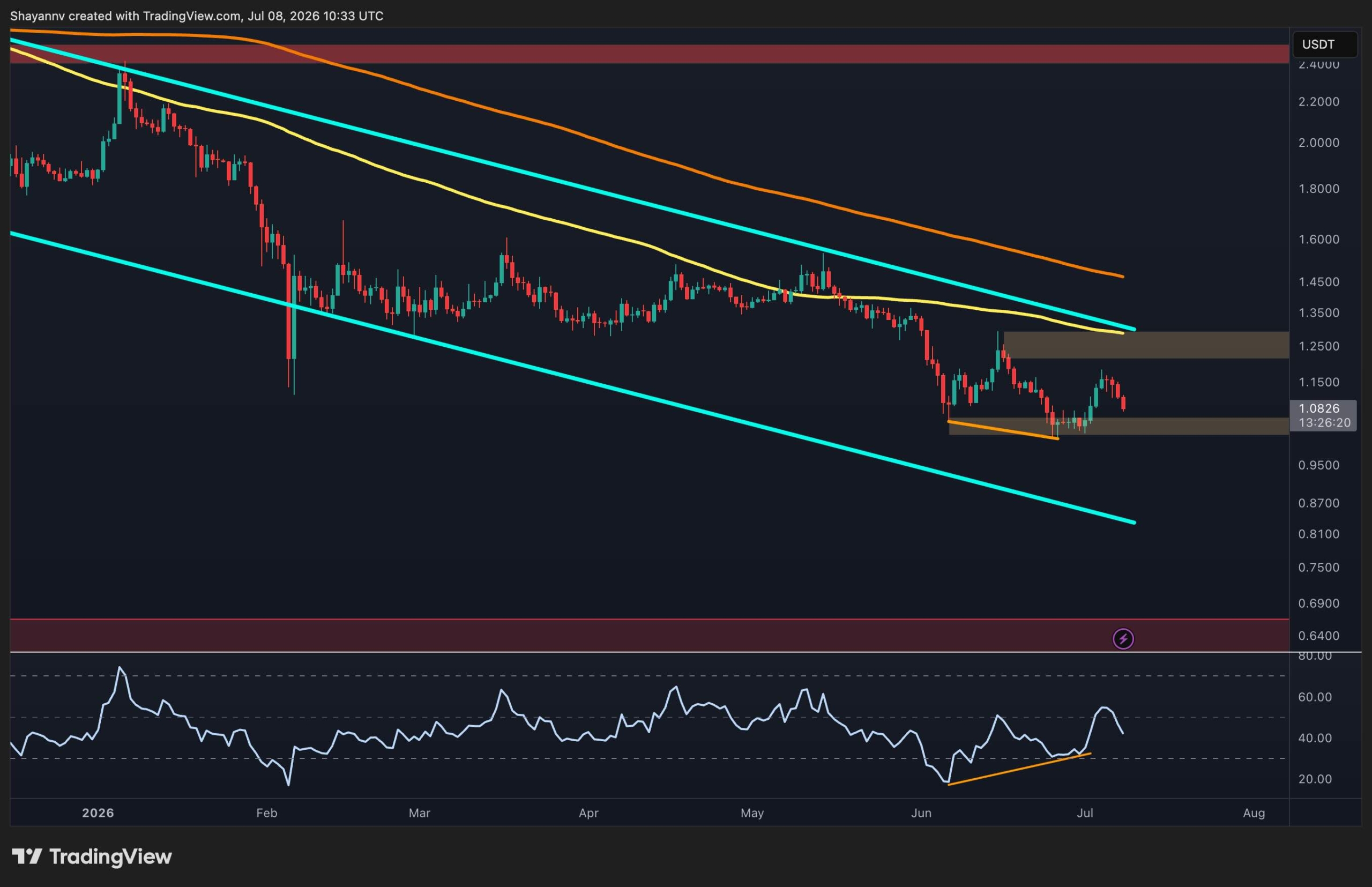
    On the daily chart, XRP remains confined within a clearly defined descending channel, signaling a firmly bearish market structure. The cryptocurrency is trading below both its 100-day and 200-day moving averages, which are both trending downwards and acting as dynamic resistance points above $1.25. This technical alignment suggests that seller momentum is still dominant, and a significant trend reversal would be required to shift the balance.

    Following the loss of the $1.25 level in early June, XRP found demand around the critical $1 mark. This region has repeatedly seen buyers step in to halt further declines and has now emerged as the most important support level to monitor. As long as this $1 support holds, the market may continue to establish a short-term base.

    On the upside, the immediate significant resistance is located around $1.25. This area coincides with the descending 100-day moving average and the upper boundary of the channel, presenting a substantial obstacle for any sustained recovery. A successful breach above this level would then target the 200-day moving average near $1.45. Conversely, a failure to hold the $1 support could trigger another downward move, potentially testing the channel’s lower trendline around $0.80.

    Meanwhile, the Relative Strength Index (RSI) has been printing higher lows, even as the price has made lower lows near $1. This developing bullish divergence suggests that bearish momentum may be waning, and buyers could initiate another recovery attempt if resistance levels begin to falter.

    XRP/BTC Pair Shows Continued Weakness

    Against Bitcoin, XRP’s technical picture remains weaker. The pair is trading below both major moving averages, which are continuing their downward trajectory and reinforcing the long-term bearish structure.

    After several weeks of range-bound trading, XRP/BTC is once again testing key horizontal support at approximately 1,700 satoshis. This level has served as the floor for recent consolidation, and another breakdown attempt is currently underway. A confirmed daily close below 1,700 satoshis would likely invalidate the current trading range and increase the likelihood of a decline toward the next significant demand zone, situated between 1,450 and 1,500 satoshis.

    To regain bullish momentum, buyers must first reclaim the 1,850 satoshis resistance area, which also aligns closely with the declining 100-day moving average. Until this resistance is overcome, rallies are likely to be viewed as corrective within the broader downtrend, potentially leading to further depreciation of XRP against Bitcoin.