Category: Uncategorized

  • Coinbase Secures UK License for Stocks and Derivatives Trading

    Coinbase Secures UK License for Stocks and Derivatives Trading

    Coinbase Secures UK License, Enabling Stocks and Derivatives Trading

    Coinbase, the largest US-based cryptocurrency exchange, has significantly broadened its regulatory reach globally by obtaining the necessary approval to offer investment services in the United Kingdom. This marks one of the company’s most substantial market expansions in the UK since its launch several years ago.

    The approval will empower Coinbase to provide traditional financial products alongside cryptocurrencies through a unified platform, according to a company statement. This new authorization permits the exchange to move beyond digital assets and introduce a suite of new products, including derivatives and equities, to its UK user base.

    Coinbase has indicated that institutional and sophisticated traders will soon have access to crypto, equity, and commodity perpetual futures. Simultaneously, retail investors will be able to trade stocks directly on the platform for the first time.

    This investment services authorization will complement the exchange’s existing UK e-money license and crypto registration. The company anticipates this will solidify its standing as the most comprehensively regulated cryptocurrency entity in the market.

    Coinbase has characterized this development as a “significant step” toward its overarching goal of creating an “everything exchange,” where users can access a diverse range of financial products from a single account.

  • Risk Limit Adjustment for BLURUSDT, FARTCOINUSDT Perpetual Contracts (Jul 8, 2026)

    Risk Limit Adjustment for BLURUSDT, FARTCOINUSDT Perpetual Contracts (Jul 8, 2026)

    Bybit to Adjust Risk Limits and Leverage for Select Perpetual Contracts

    Cryptocurrency exchange Bybit announced it will be adjusting the risk limits and applicable leverage for a number of its Perpetual Contracts. The changes are intended to enhance the trading experience for users.

    Implementation Timeline

    These adjustments are scheduled to take effect and be automatically applied to user accounts by approximately 7:30 AM UTC on July 8, 2026.

    Affected Contracts

    The following Perpetual Contracts will see their risk limits modified:

    BLURUSDT, FARTCOINUSDT, SIGNUSDT, WCTUSDT, AUSDT, AGLDUSDT, PLUMEUSDT, COMPUSDT, THETAUSDT, RENDERUSDT, CAKEUSDT, STRKUSDT, VIRTUALUSDT, IMXUSDT, DASHUSDT, XMRUSDT, CRVUSDT, ZROUSDT, JASMYUSDT, NEOUSDT, EGLDUSDT, JTOUSDT, 0GUSDT, WUSDT, KAIAUSDT, RESOLVUSDT, FFUSDT, DEXEUSDT, VANRYUSDT, TLMUSDT, MUBARAKUSDT, RAREUSDT.

    Updated risk limit information can be found on Bybit’s website.

    Position Management Requirements

    If, by the July 8, 2026, 7:30 AM UTC deadline, a user’s existing position does not meet the new margin requirements and the adjustment cannot be applied to their account, they will only be permitted to reduce their affected Perpetual Contract position. Any orders aimed at increasing the position size will be restricted until the user selects a supported risk limit or leverage.

    Bybit strongly recommends that users manage their positions and account risk by transferring additional funds or adjusting their settings by July 25, 2026, 7:30 AM UTC to prevent potential liquidations.

    Impact on Copy Trading and Trading Bots

    These changes will also extend to positions held within Bybit’s Copy Trading and Trading Bot services. Existing positions managed by a Trading Bot will not be automatically closed, and the bot will not place new orders during a specified buffer period. Users are advised to manually terminate their bots or increase their investment within the bot before the buffer period concludes to accommodate the new risk limits.

    Further details regarding Bybit’s risk limit rules are available in their help center.

  • Bybit Lists GROVE (GROVE) on Spot

    Bybit Lists GROVE (GROVE) on Spot

    Bybit to List GROVE on Spot Trading Platform

    Cryptocurrency exchange Bybit has announced the upcoming listing of GROVE on its Spot trading platform, signaling a new opportunity for users to engage with the digital asset.

    Listing Schedule

    Deposits for GROVE are slated to open on July 7, 2026, at 4:00 AM UTC. The token will officially be listed for trading on July 7, 2026, at 3:00 PM UTC. Withdrawals for GROVE will become available on July 8, 2026, at 10:00 AM UTC. Both deposit and withdrawal services will be facilitated through the ETH Network.

    About GROVE

    Grove aims to leverage the stablecoin economy by bringing real-world assets and use cases onto the blockchain. The project intends to build the next generation of global financial markets through institutional-grade allocation, financing, and liquidity solutions.

    Risk Advisory

    Trading cryptocurrencies carries substantial risk and may lead to the loss of invested capital. Prospective traders are advised to ensure they fully comprehend the associated risks, assess their experience level, consider their investment objectives, and seek independent financial counsel if required. Bybit disclaims any liability for losses incurred through trading on its platform.

  • Coinbase AI Predicts Norway Victory Over Brazil Pre-Match

    Coinbase AI Predicts Norway Victory Over Brazil Pre-Match

    Coinbase Investigates AI Prediction Market Glitch After Erroneous World Cup Alert

    Coinbase CEO Brian Armstrong has confirmed the cryptocurrency exchange is investigating an artificial intelligence-generated prediction market alert that mistakenly informed users of a “breaking news” event: a supposed 3-2 victory for Norway over Brazil in the FIFA World Cup, prior to the match’s scheduled kickoff at MetLife Stadium.

    The premature notification also claimed Manchester City forward Erling Haaland had scored twice to secure a quarterfinal berth for Norway.

    Intriguingly, Coinbase’s own prediction market page indicated the match had been postponed due to adverse weather conditions. However, the situation became even more peculiar as Norway did, in fact, go on to defeat Brazil when the game was eventually played, albeit with a different scoreline, and Haaland did score two goals.

    The discrepancy was first highlighted by Jay Drain Jr., managing partner at Relay Digital, who posted on X (formerly Twitter) that Coinbase’s AI was “hallucinating results for a World Cup game that hasn’t even been played yet.” He criticized the notification sent to millions of users as “factually incorrect” and labeled it “dangerous and irresponsible.”

    Coinbase Chief Executive Brian Armstrong later responded to the post, stating the company had initiated a review of the incident. Max Branzburg, the firm’s head of consumer and business products, provided an update, announcing that the team had “fixed the incorrect story” and implemented updates to prevent similar errors in the future.

    “It’s awesome to see the power of AI-enabled 24/7 insights for trading, but obviously still need to tune it to address these types of issues,” Branzburg commented. He added, “And hey, it turns out Norway did win and Haaland did score 2 goals, so maybe the AI knew something we didn’t!”

    As previously reported, the FIFA World Cup has significantly boosted trading volumes on leading prediction markets. Volumes surged from approximately $65 million in early June to a peak of $5.6 billion by the end of the month, with Kalshi capturing a substantial portion of this activity.

    Amidst this surge in capital, a number of traders have experienced significant losses. One Polymarket user, identified by blockchain analytics platform Lookonchain on June 6, reportedly lost $11.63 million over a 10-day betting spree on World Cup markets.

    According to Polymarket records, the user, operating under the pseudonym “Coldsway,” placed bets across 15 soccer markets, with a total trading volume of $48.19 million. Of these, only four positions resulted in wins, while 11 closed with complete losses, resulting in a win rate of 26.7%.

    Coldsway’s largest winning position yielded $1.12 million from a $689,318 bet on a draw between Australia and Egypt. They also profited $962,940 from a $1.48 million wager predicting Egypt would not win their July 3 fixture.

    However, these profits were overshadowed by several substantial losing bets. The single largest loss amounted to $4.95 million, stemming from Morocco’s 3-0 victory over Canada on July 4. Another significant loss of $3.10 million occurred on a prediction that Canada would not defeat South Africa on June 28.

  • UN Chief Warns Against Vague AI Governance

    UN Chief Warns Against Vague AI Governance

    UN Chief Warns AI Outpacing Governance, Humanity Conducting Unplanned Experiment

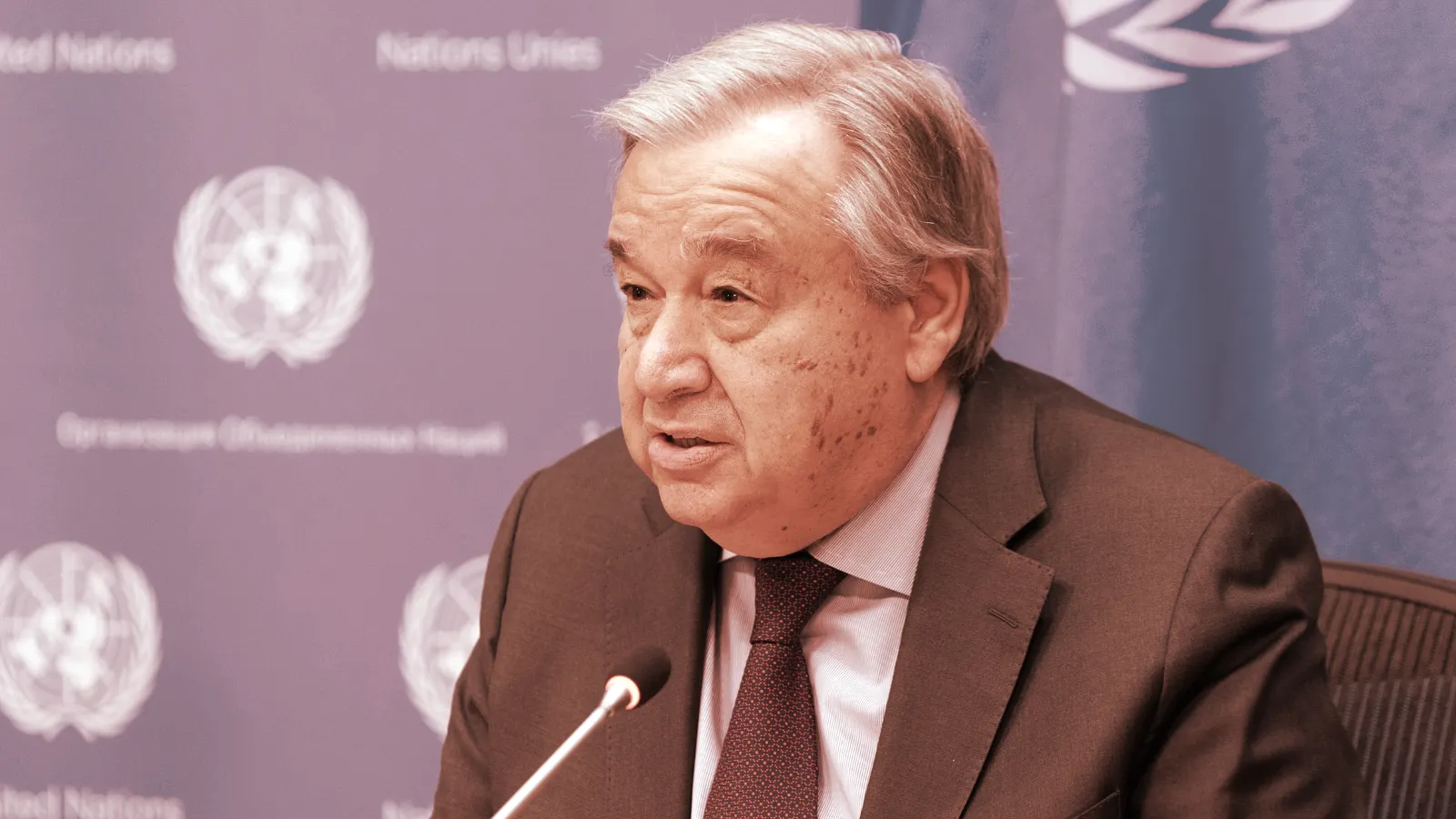
    Geneva – United Nations Secretary-General António Guterres opened the inaugural Global Dialogue on AI Governance in Geneva on Monday, warning representatives from 193 nations that artificial intelligence is advancing at a pace that has already outstripped the institutions designed to regulate it. He characterized humanity’s current approach to AI as an experiment “without a plan, and without consent.”

    “Artificial intelligence is advancing at runaway speed,” Guterres stated in his keynote address. “A technology that can reshape economies, transform the world of work, sway elections, and tilt the balance of security is being deployed faster than anyone—including the people building it—can keep up.”

    The gathering in Geneva brought together all 193 UN member states for the first Global Dialogue on AI Governance, a multilateral effort to establish oversight for a technology that has rapidly surpassed existing regulatory frameworks.

    Guterres employed the concept of “vibe coding” to illustrate the risks of ungoverned AI. This term, coined by Andrej Karpathy, a founding member of OpenAI and former director of AI at Tesla, describes programming by intuition—instructing an AI on desired outcomes and allowing it to handle the execution without close scrutiny. Merriam-Webster recently added the term to its dictionary.

    While acknowledging that “vibe coding can do wonders” as public trust in AI-generated products grows, Guterres emphasized, “We cannot vibe-code the truth. We cannot vibe-code the future of humanity.”

    The urgency of his message was underscored by stark statistics. Guterres noted that it took the internet 15 years to reach one billion users, while AI achieved the same milestone in just two years. He described current AI systems as “no longer tools awaiting instruction—they are writing code, acting online, and making choices with less and less human oversight.”

    “Our institutions were built to govern machines that follow commands,” he asserted. “They are not ready for machines that decide.”

    The dialogue itself stems from the 2024 Global Digital Compact, which for the first time established international AI governance as a UN mandate. The opening session also received the preliminary report of the Independent International Scientific Panel on Artificial Intelligence, comprising 40 scientists from 140 countries. Last week, the panel published findings indicating that no one can currently guarantee that AI will not cause catastrophic harm.

    Speed was one of three critical warnings Guterres highlighted from the panel’s report. The second was power, referring to the concentration of computing resources, data, and talent within a small number of companies and countries, leaving much of the world excluded from decisions that are already shaping their future. This concentration of power is a concern shared by other AI experts, including Yann LeCun, Andy Kowinski, and Yoshua Bengio.

    The third warning concerned truth, as machine-generated falsehoods can now be as persuasive as verified facts, steadily eroding what Guterres termed “the integrity of our information ecosystem.”

    Child Safety and Autonomous Weapons

    Among Guterres’ concrete proposals is an AI Child Safety Pledge. This would require companies to demonstrate AI safety through independent testing before any AI product is made available to children. It also mandates zero tolerance for the generation of child sexual abuse imagery and calls for distressed children to be connected to human support rather than being left with chatbots. “No child should be a guinea pig for unregulated AI,” he declared.

    Furthermore, Guterres addressed the issue of “killer robots.” He described lethal autonomous weapons—machines capable of selecting and engaging targets without human judgment—as “morally repugnant” and called for an international legal ban.

    He stressed that states are already engaged in discussions on these matters and urged them not to delay action.

    The Global Dialogue on AI Governance is scheduled to reconvene in New York in 2027. Guterres also called on the General Assembly to establish a Global Fund for AI, specifically aimed at improving computing access for developing countries. He further challenged every major AI company to power all their data centers with renewable energy by 2030, estimating that by that year, these facilities will consume more electricity than all but five nations combined.

  • AI Risks Existential Threat, Warns UK Foreign Secretary

    AI Risks Existential Threat, Warns UK Foreign Secretary

    Governments Urged to Act on AI Regulation Before Crisis

    London, UK – Governments worldwide risk repeating the cautionary tales of the nuclear age if they delay establishing regulations for artificial intelligence, warned Yvette Cooper, the UK’s Foreign Secretary.

    In an article published Monday, Cooper highlighted that while AI offers significant advancements, it also presents escalating risks as the technology becomes more potent and accessible.

    “Last month, in Shenzhen, China, I witnessed the extraordinary promise of AI and robotics applied to life-saving healthcare,” Cooper wrote. “However, these same technologies are also alarmingly reshaping the future of warfare, crime, and social cohesion.”

    Cooper asserted that managing the dangers posed by AI could become “the greatest security challenge of the next decade.” She argued for the necessity of international agreements on frontier technologies before a crisis compels action.

    She drew a parallel between the current drive to develop AI systems and the early nuclear arms race, noting that global safety accords only materialized after nations experienced the destructive power of atomic weapons.

    “Regarding nuclear technology, international agreement only emerged after the world witnessed the terrifying power of the new technology at Hiroshima,” Cooper stated. “We cannot afford to wait for an AI equivalent of Hiroshima before we act.”

    Cooper called on Britain to leverage its diplomatic influence to convene the United States, China, and other leading AI nations to forge shared safety principles and standards. She pointed to the 2023 AI Safety Summit at Bletchley Park, where global leaders from 29 countries and the European Union convened to discuss the emerging risks of AI, as an example of the UK’s capacity to “rally the world on AI security.”

    Cooper’s warning follows months of mounting concerns over how governments should oversee increasingly sophisticated AI systems.

    In May, the UK’s AI Security Institute cautioned about rapid advancements in AI cybersecurity capabilities after OpenAI’s GPT-5.5 became the second model to successfully execute a simulated cyberattack without human intervention, following Anthropic’s Claude Mythos Preview.

    Days later, the International Monetary Fund issued a warning that AI could “amplify” cyberattacks against the global financial system by reducing the expertise required to exploit vulnerabilities. The IMF urged policymakers to address cybersecurity as a financial stability issue, rather than solely a technical concern.

    In June, President Donald Trump signed an executive order establishing a voluntary framework for reviewing advanced AI models prior to their release, expanding AI cybersecurity programs, and directing agencies to assess potential national security risks associated with frontier AI models.

    That same month, calls for more stringent regulations also emerged from within the AI industry. Anthropic CEO Dario Amodei argued that transparency requirements are no longer sufficient and advocated for mandatory third-party testing of frontier models. This demand was followed by a U.S. government order for Anthropic to restrict access to Claude Fable 5 and Mythos 5 due to national security concerns, an order that was later rescinded in July.

  • ByteDance, Alibaba Remove AI Agents Amid China’s Humanlike AI Crackdown

    ByteDance, Alibaba Remove AI Agents Amid China’s Humanlike AI Crackdown

    While U.S. lawmakers grapple with the mental health implications of AI chatbots through a lens of transparency and safeguards, Beijing appears set to ban AI personalities outright.

    Tech giants ByteDance and Alibaba announced over the weekend they are disabling custom agent features in their flagship consumer AI products, citing “product function adjustments” ahead of new regulations governing such services.

    ByteDance’s Doubao informed users in a Friday night notice that its agent feature would cease operation on July 15. After October 15, related data will be managed under the company’s privacy policy and will become unrecoverable. Alibaba’s Qwen, according to the South China Morning Post, acted more swiftly: “humanlike interactive agents and user-created agent functions” will be removed by July 10, with broader agent services to follow on July 15.

    The catalyst for these moves is China’s Interim Measures for the Administration of AI Anthropomorphic Interaction Services, jointly issued on April 10 by five government bodies: the Cyberspace Administration of China, the National Development and Reform Commission, the Ministry of Industry and Information Technology, the Ministry of Public Security, and the State Administration for Market Regulation. These rules are set to take effect on July 15.

    The regulation specifically targets AI services designed to simulate human personality traits, thought processes, and communication styles for “sustained emotional interaction.” This effectively means AI girlfriends, AI therapists, AI companions, and the custom-persona bots that Doubao and Qwen users spent months developing are now prohibited.

    Both applications had previously offered a range of customizable agents designed for specific tasks, speaking styles, and fixed personas. Users could transform a general-purpose chatbot into a named assistant, tutor, role-playing character, or companion with a consistent tone. All of these capabilities are now being removed from the Chinese market.

    The official government justification is precise. The measures impose restrictions on services offering “virtual relatives, virtual companions or other intimate relationships to minors,” according to the policy announcement. The document also highlights risks such as extremist content, privacy breaches, harm to physical and mental health, and AI addiction.

    Services that do not engage in emotional interaction are explicitly excluded. This means customer service bots, knowledge Q&A tools, workplace assistants, and educational software are permitted, provided they do not cross the line into sustained emotional engagement.

    Legal analysts at MMLC Group characterized the measures as treating emotional AI as a “governance problem” rather than solely a content issue. The argument posits that when AI begins to compete with genuine human social connections, regulation must address system design itself, not just harmful outputs.

    Research supports these concerns. A USC study released in June found that even leading frontier AI models from OpenAI, Anthropic, Google, and Alibaba violated social-interaction safety guidelines more than 27% of the time, frequently encouraging emotional attachment and presenting themselves as human. A separate survey of young partnered adults revealed that one in seven regularly used AI romantic companions, with nearly 70% concealing the full extent of this usage from their partners.

    China is the first country to establish a dedicated regulatory framework for this specific category of AI. Hogan Lovells described the measures as “the first set of regulatory rules in China specifically targeting AI-driven emotional interaction.” While the EU, U.S., and other nations have voiced similar concerns, they have not yet enacted legislation with the same level of restriction.

  • Yield Guild Shuts Down Game Publishing, Cuts 35 in AI Shift

    Yield Guild Shuts Down Game Publishing, Cuts 35 in AI Shift

    Yield Guild Games, a prominent blockchain-based gaming organization, announced Monday the closure of YGG Play, its publishing arm focused on crypto-infused casual games. The decision comes amid a significant downturn in the cryptocurrency market and broader challenges facing the video game industry.

    Strategic Shift

    The closure signifies a retreat from a strategy that Yield Guild Games had actively promoted this year: the development of “casual degen” games. These were designed as bite-sized titles incorporating crypto incentives, aimed at crypto enthusiasts who may not identify as traditional gamers.

    YGG Play had launched its original game, LOL Land, as a proof of concept and had secured nine additional game titles. The unit also partnered with the Pudgy Penguins NFT brand and debuted a token launchpad. By the first quarter of 2026, YGG Play reported cumulative revenue exceeding $9 million.

    Market Headwinds

    However, the broader crypto gaming industry has faced considerable difficulties in recent years. Numerous prominent blockchain-based games have ceased operations since early last year, and investors have largely steered clear of crypto game studios. Compounding these issues, cryptocurrency prices have plummeted since late last year, with Bitcoin, for instance, falling nearly 50% from its October peak. Simultaneously, the traditional video game industry has experienced widespread layoffs, including recent cuts at Xbox on Monday.

    Restructuring and Pivot

    In light of the prevailing market conditions, the team decided to shutter the publishing division. This move will result in 35 job cuts. Yield Guild Games stated that this restructuring will provide the company with extended operational runway as it pursues a pivot towards an AI-driven strategy.

    “Sunsetting YGG Play is a heavy decision, but it is a market decision, not a product decision,” said Yield Guild co-founder Gabby Dizon in a statement. “I am proud of what this team achieved under such tough conditions, and what they built is a testament to their talent and dedication. Although this business unit is sunsetting, YGG’s vision and mission hasn’t changed. We are still fully dedicated to using technology to open up new economic opportunities for people globally.”

    In a social media post, Dizon elaborated, “Sad news today – we are sunsetting our Web3 game publishing unit @YGG_Play, and 35 jobs will be affected as a result. We’re committed to paying 8 additional weeks for our team to manage the transition and will help them find new roles.” The post also listed YGG Play games including @LOLLandGame and @waifusweeper.

    Future Direction

    The YGG Play website, its launchpad, and games such as LOL Land and Waifu Sweeper are scheduled to be retired by August 1. Two games, Gigachatbat and Ragnarok Breaker, will continue to operate under their original developers following a transition period.

    Yield Guild Games intends to redirect its resources toward supplying data for artificial intelligence training. The company believes that the decision-making processes of video game players can generate valuable behavioral datasets for AI developers. As of the first quarter, YGG reported a treasury of $20.6 million in assets, which it anticipates will extend its operating runway to four years post-restructuring.

    Yield Guild Games emerged as a notable entity during the 2021 play-to-earn boom. It was a key supporter of the growth of the monster-battling game Axie Infinity through its “scholarship” program, which lent NFT assets to players in exchange for a share of their in-game token earnings. The company secured funding from venture capital firm Andreessen Horowitz in August 2021, amidst the surge in crypto gaming.

    Following the economic collapse of Axie Infinity in 2022 and the broader decline of the play-to-earn movement, Yield Guild Games pivoted in 2024 to launching blockchain infrastructure for guilds across various crypto games, before launching YGG Play in 2025.

    The company’s YGG token saw a modest increase of approximately 4% on the day, trading at $0.023. However, it has fallen about 84% over the past year and remains down 99.8% from its peak price of $11.17, which was set in 2021.

  • Coinbase AI Predicted World Cup Outcome Prematurely

    Coinbase AI Predicted World Cup Outcome Prematurely

    Coinbase AI News System Sends False World Cup Alert

    Coinbase’s artificial intelligence-powered news system faced criticism over the weekend after it erroneously informed users of a World Cup match outcome hours before the game commenced.

    The alert, disseminated on Sunday, falsely stated that Norway had defeated Brazil 3-2 in a World Cup knockout match at MetLife Stadium, with Erling Haaland scoring twice. However, the match had not yet begun, and Coinbase’s prediction market page indicated the game was delayed.

    Screenshots of the notification circulated widely on X, prompting Coinbase CEO Brian Armstrong to announce an investigation into the matter. Max Branzburg, Coinbase’s head of consumer and business products, subsequently confirmed that the company had rectified the error and updated its systems.

    “We fixed the incorrect story and made some updates to avoid these types of inaccuracies in the future,” Branzburg stated on X. “It’s awesome to see the power of AI-enabled 24/7 insights for trading, but obviously still need to tune it to address these types of issues.”

    While the AI’s predicted score differed from the actual result, Norway did ultimately defeat Brazil 2-1 in East Rutherford, New Jersey, with Haaland scoring two goals in the second half.

    “And hey—it turns out Norway did win and Haaland did score 2 goals, so maybe the AI knew something we didn’t!” Branzburg added.

    Coinbase declined to provide further comment, directing inquiries to Branzburg’s statement on X.

    This error occurs as Coinbase diversifies its offerings beyond cryptocurrency trading, integrating AI-powered tools and prediction markets as part of its strategy to broaden its platform’s utility. In January, Coinbase launched prediction markets in partnership with Kalshi, enabling users to trade contracts based on events such as sports outcomes, elections, and economic data.

    The company has also intensified its focus on AI agents, introducing tools designed to automate aspects of the cryptocurrency experience, including AI-powered wallets and agents capable of autonomously interacting with blockchain applications.

  • Solana Rally Puts $100 and $120 Levels in Focus

    Solana Rally Puts $100 and $120 Levels in Focus

    Solana (SOL) has staged a significant recovery, with its price surging over 13% in the past week and monthly gains now exceeding 30%. At the time of this report, the cryptocurrency was trading around $80, even as the broader market experienced a downturn following a sale by Strategy.

    Network Growth Accelerates

    The price momentum has been accompanied by a notable increase in on-chain activity. Crypto analyst Ali Martinez reported that the Solana network added 1.60 million new addresses in the last two weeks, signaling an acceleration in network growth.

    Bullish Technical Signals Emerge

    Martinez also highlighted a new buy signal generated by the SuperTrend indicator on Solana’s three-day chart. This marks the first such signal since October 10, 2025, when the Average True Range (ATR) trailing stop moved below the price. He noted that the previous SuperTrend sell signal preceded a 74% price correction. According to Martinez, the current signal indicates a shift from a bearish to a bullish trend, potentially propelling SOL towards the $100 mark.

    Expert Outlook Remains Optimistic

    Michaël van de Poppe, founder of MN Fund, echoed this bullish sentiment. He observed that Solana is re-entering its trading range and anticipates a brief pullback before further upward movement. Van de Poppe emphasized the importance of the $75-$77 range holding as support, suggesting that if it does, SOL could not only advance towards $100 but potentially reach $120 in the coming weeks or months.

    Solana-Focused Companies See Gains

    Several digital asset treasury (DAT) companies focused on Solana have also experienced positive performance. Sol Strategies (STKE) shares have risen 13.64% over the past month, while Solana Company (HSDT) gained approximately 12%. Forward Industries (FWDI) also saw an increase of over 7% during the same period.

    Robust Transaction Volume and User Activity

    Broader usage trends also underscore Solana’s strength. Grayscale Research data indicates that the Solana network has processed an average of over 100 million transactions daily this year, equating to more than 1,200 transactions per second. During the same timeframe, the network recorded an average of 4.3 million unique daily users and generated roughly $100 million in transaction fees, driven by applications in DeFi, social trading, and decentralized infrastructure.

    Furthermore, Solana-based decentralized exchanges have handled over $360 billion in trading volume year-to-date, significantly outpacing other blockchain ecosystems.