
Category: Uncategorized

  • FCA Unveils Landmark Crypto Rules, Aiming for UK Global Hub Status

    FCA Unveils Landmark Crypto Rules, Aiming for UK Global Hub Status

    FCA Finalizes Landmark Crypto Rules, Ushering in New Era of Regulation

    The Financial Conduct Authority (FCA) has unveiled its “landmark” rules for firms involved in the buying, trading, and holding of cryptoassets in the UK, completing a regulatory roadmap that has been years in development. The new framework mandates that trading platforms, intermediaries, custodians, stablecoin issuers, and staking providers must obtain authorization from the regulator to operate within the UK.

    This marks a pivotal moment for cryptoasset regulation in the United Kingdom. Firms facilitating consumer engagement with cryptoassets will be required to adhere to clear standards under these new rules, with an effective date set for October 2027.

    New Requirements for Crypto Firms

    Under the finalized rules, firms will face stringent financial-resilience requirements, including capital adequacy and stress testing. They will also need to comply with new market-integrity rules designed to combat insider trading and market manipulation.

    Stablecoins, which are designed to maintain a stable value, will have their own specific standards aimed at building trust in their usage. Trading platforms will assume a gatekeeper role, tasked with vetting tokens and publishing disclosure documents to an FCA-managed central repository before most assets can be listed.

    Crypto firms will also be brought under the FCA’s Consumer Duty, and retail customers will gain access to the Financial Ombudsman Service for the first time. The regulations extend to decentralized finance (DeFi) where an “identifiable controlling entity” exists, with further guidance anticipated.

    Streamlined Approach and Industry Reaction

    Following extensive consultation, the FCA has simplified certain aspects of the regime to enhance its practicality. This includes introducing lighter capital requirements for stablecoin issuers and tailoring trading rules to the operational realities of crypto markets. Notably, a key stablecoin capital coefficient has been reduced from 2% to 1%.

    David Geale, the FCA’s executive director of payments and digital finance, stated that the framework allows firms to “choose between regulatory certainty and room to innovate.” He added that providers will be “held to similar standards to other financial providers, though we can’t regulate away risk.”

    The new rules stem from February legislation that brought cryptoassets under the FCA’s purview, representing one of the most significant expansions of its oversight in recent years. Until the regime officially takes effect, the watchdog’s authority is limited to policing financial promotions and anti-money-laundering controls. Pre-application meetings are scheduled to commence in July, with firms able to apply for authorization between September 30, 2026, and February 28, 2027. The mandatory regime will go live on October 25, 2027.

    Industry groups have largely welcomed the increased clarity. Su Carpenter of CryptoUK commented that the finalized guidance will enable the UK to “move forward with more certainty” as a “competitive jurisdiction.” UK Finance praised the “balanced approach that encourages innovation and protects consumers.” The FCA is also collaborating with the Bank of England, which will oversee large, “systemic” stablecoins, on a joint regulatory regime.

    Hannah Meakin, a partner at law firm Norton Rose Fulbright, described the rules as “a significant step in bringing crypto into a more established regulatory framework in the UK.” She noted that the regulator aims to address “key risks that may have held back wider adoption,” by applying established financial services standards to areas such as consumer protection, governance, and market integrity.

    This regulatory package concludes a period of intense policymaking in the UK’s crypto sector. The FCA outlined its regulatory path through a consultation in April, and last week, the Bank of England relaxed its stablecoin rules, replacing individual holding caps with an overall issuance limit of £40 billion.

    For crypto firms, Meakin advised, “the focus will now be on preparing for authorisation and ensuring they have the necessary systems, controls and organisational arrangements in place well ahead of implementation.”

  • Ripple (XRP) Price Watchlist This Week

    Ripple (XRP) Price Watchlist This Week

    XRP Faces Steep Decline: Key Support Levels Tested Amidst Bearish Trend

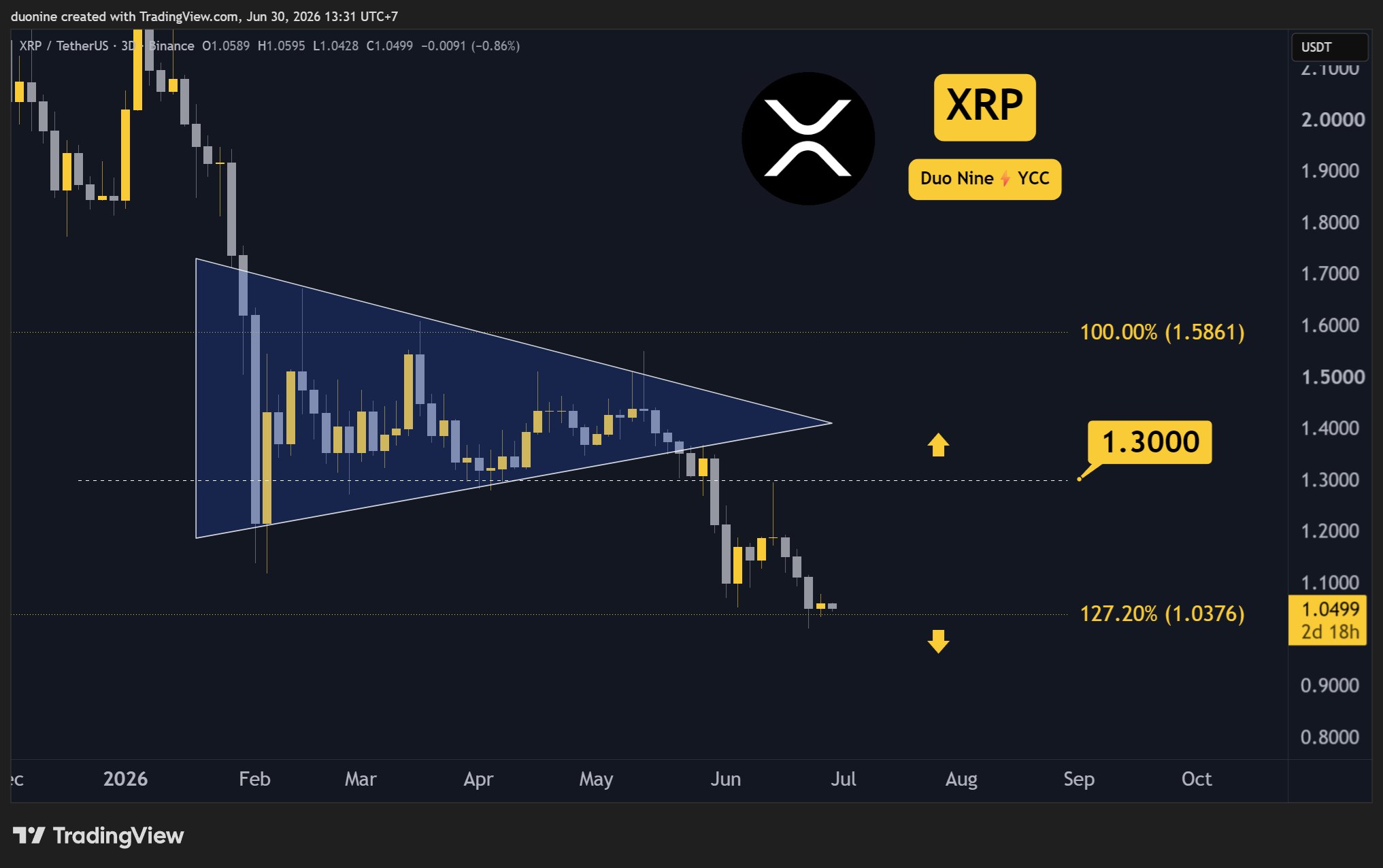
    XRP has experienced a significant downturn, shedding 6% over the past week and testing the crucial $1 support level for the third time in two weeks. This repeated failure by buyers to push the price away from this key threshold signals a potentially bearish outlook.

    Support and Resistance

    Key support levels for XRP are identified at $1, with the next significant floor at approximately 80 cents. Resistance levels to watch are $1.3, $1.6, and $2.

    Bearish Trend Intensifies

    The cryptocurrency is currently entrenched in a bearish trend, characterized by consistently lower highs and lower lows. Analysts suggest that if selling pressure continues to mount, the $1 support could break, potentially flipping into resistance. In such a scenario, buyers might be forced to retreat to the 80-cent mark for the next major support. The current price action indicates a strong possibility of further declines in the coming weeks, with $1 likely to become a resistance zone.

    Momentum Indicators Signal Caution

    Momentum indicators further reinforce the bearish sentiment. The 3-day Relative Strength Index (RSI) is hovering near the 30-point mark, a common indicator of a bearish trend. As long as the RSI remains below 50, bears are expected to maintain control of the market.

    MACD Suggests Deeper Downturn

    Adding to the concerns, the weekly Moving Average Convergence Divergence (MACD) is showing signs of a bearish cross. If confirmed, this would be the first such occurrence in 2026 and could signal a prolonged period of recovery challenges for XRP.

    Outlook for the Remainder of the Year

    The outlook for XRP in the latter half of the year appears negative, with the potential for further price drops. Investors are advised to await confirmation of a market bottom before considering new entries into XRP.

  • Senate Faces CLARITY Act Deadline Amid DeFi Exemption Pushback

    Senate Faces CLARITY Act Deadline Amid DeFi Exemption Pushback

    White House Seeks to Bridge Divide on Crypto Bill as Senate Deadline Looms

    The White House convened a meeting on Monday with law enforcement groups that have voiced opposition to the Digital Asset Market Clarity Act, aiming to address concerns surrounding Section 604. This provision, derived from the Blockchain Regulatory Certainty Act (BRCA), seeks to shield software developers from being classified as money transmitters.

    Patrick Witt, the White House’s lead crypto adviser, is spearheading these engagement efforts. However, the bill still faces a significant hurdle, requiring 60 votes in the Senate to pass, with approximately four weeks of legislative time remaining before the August recess.

    According to Punchbowl News, Senate Majority Leader John Thune is reportedly prepared to bring the CLARITY Act to the Senate floor in the coming weeks, irrespective of Democratic readiness.

    Senate Banking Committee Chairman Tim Scott underscored the urgency on Monday via X, stating, “The Senate should vote on crypto market structure legislation in July.” The political calculus, however, remains complex.

    The bill previously passed the House with a comfortable margin of 294–134 on July 17, 2025, and cleared the Senate Banking Committee 15–9 on May 14, 2026. While these votes indicate broad support within the respective chambers, navigating the Senate floor presents a distinct challenge.

    Section 604: The Core of the Legislative Standoff

    The legislative battleground is largely focused on Section 604 of the CLARITY Act, the provision originating from the BRCA. This section aims to prevent software developers who do not exert ultimate control over their tools from being categorized as money transmitters under the Bank Secrecy Act (BSA). The cryptocurrency industry views this protection as fundamental to the continued development of decentralized finance (DeFi) in the United States.

    In a May letter to Senate Banking Committee leaders, the National Sheriffs Association argued, “No good reason supports giving mixers, tumblers, and DeFi a blanket exemption. While some software developers are not engaged in money transmitting or other activity that should subject them to BSA regulation, plenty of others are.” The association had been invited to a prior two-day White House session in June but did not attend, prompting Monday’s targeted meeting.

    Law enforcement’s objection is not to the principle of the BRCA protection itself, but rather to the perceived overbreadth of the current language. Investigators involved in cases of sanctions evasion and crimes facilitated by mixers contend that the exemption, as written, blurs the lines of enforcement for developers whose tools are functionally equivalent to financial intermediaries.

    This perspective is not isolated; it is shared by multiple law enforcement organizations that participated in the June White House sessions.

    Witt’s Counterargument and Unresolved Issues

    Patrick Witt’s counterargument posits that the bill introduces new prosecutorial tools and that the existing regulatory ambiguity is, in itself, an enforcement problem. “We’re putting real regulatory constraints on businesses and actors that currently live in a state of uncertainty,” Witt stated at an industry event earlier this month. He further argued to skeptical law enforcement officials that they “should be the biggest cheerleaders for this bill, because this is really what is missing.” Monday’s meeting is designed to ascertain whether this framing can sway the National Sheriffs Association from its current stance.

    Beyond the BRCA dispute, three other significant issues remain unresolved. Firstly, the bill’s provisions expand the Commodity Futures Trading Commission’s (CFTC) jurisdiction over crypto market structure, and ensuring the agency is fully staffed for this expanded role is an ongoing negotiation.

    Secondly, an ethics provision that would prohibit senior government officials, including the president, from holding personal cryptocurrency interests. Several lawmakers have explicitly stated they will not vote for the bill without this provision, including the sole Democrats who supported it during the Senate Banking Committee markup.

    This ethics provision presents a structural dilemma. Democrats, whose votes are crucial for the White House, are conditioning their support on a provision that the White House may resist. Senators Catherine Cortez Masto and Mark Warner have both indicated that the ethics provision is a non-negotiable requirement, not a bargaining chip. This issue remains unresolved, merely deferred.

    Thirdly, former President Trump’s broader legislative approach introduces another layer of uncertainty. His prior refusal to sign a major housing affordability bill, demanding a voter-identification bill first, has already impacted congressional timelines.

    TD Cowen policy analyst Jaret Seiberg predicted on Monday that the housing bill would become law through the constitutional ten-day automatic-passage window, with an effective date projected for Friday, July 10. It remains unclear whether Trump will apply similar resistance to the CLARITY Act, but the precedent is established.

  • XRP, XLM Eye Breakouts: Which Will Hold?

    XRP, XLM Eye Breakouts: Which Will Hold?

    Ripple (XRP) is trading near $1.04–$1.06 with minimal movement in the past 24 hours. In contrast, Stellar (XLM) is showing more immediate strength, currently priced at $0.18 with a 3.91% gain for the day. This divergence is reigniting the classic XRP versus XLM debate among relative-value traders.

    Looking ahead to 2026, both assets have attempted to break out of multi-week consolidation periods, but neither has yet confirmed sustained upward momentum. The key question is not the existence of momentum, but whether either cryptocurrency possesses sufficient structural support to prevent a retreat back into their previous trading ranges.

    Coinpedia characterized the recent price action as “a massive upswing as bullish momentum revives after weeks of consolidation,” framing it as a technical breakout attempt rather than a definitive trend shift.

    XRP faces significant resistance between $1.30 and $1.37. Stellar’s immediate hurdle is at $0.22–$0.23; a clean reclaim of this level could pave the way toward $0.26 and subsequently $0.30. The XRP/XLM trading pair is currently at 7.59, up 2.15%, indicating that XRP still holds relative value dominance within the pair, even as XLM demonstrates stronger short-term momentum.

    The price action at these critical inflection points over the next few trading sessions will likely determine whether traders are witnessing a sustained rally or a potential bull trap in a market highly sensitive to headlines.

    XRP’s Technical Outlook

    XRP’s technical chart suggests a short-term correction within a broader breakout attempt. TradingView data places XRP’s price at approximately $1.058. The near-term support zone is identified between $1.08 and $1.10, a floor that must hold for any bullish scenario to remain viable.

    A confirmed bounce from this support zone, accompanied by increased trading volume, would bring the $1.30 level back into play. Some price models projecting significantly higher targets by the end of 2026 assume this resistance band will be cleared without substantial selling pressure.

    Bull Case: XRP reclaims $1.10, consolidates briefly, and then pushes towards the $1.30–$1.37 resistance on strong volume. A decisive break above this band could open the door to $1.45 and $1.60.

    Base Case: The price consolidates between $1.04 and $1.20 for another week, forming a tighter base before initiating a directional move.

    Bear Case (Invalidation): A close below $1.04 with subsequent selling pressure would reintroduce the possibility of a return to sub-$1.00 levels.

    Stellar’s (XLM) Setup

    XLM’s technical setup appears cleaner in percentage terms. Starting from its current price of $0.18, with immediate resistance at $0.22–$0.23, a 22–28% move to the first key target is achievable if the breakout is sustained.

    The Stellar network’s inherent utility in cross-border transactions provides a macro narrative that could attract institutional investment once risk appetite returns. However, at this juncture, the price action on the chart is the primary driver.

    Traders should monitor $0.18 as a critical support level. A failure to hold this price on any pullback would shift the market interpretation from “breakout confirmed” to “consolidation continues.” While both scenarios have merit, XLM’s current setup is more binary.

    Market Cap and Future Potential

    With XRP at $1.06 and XLM at $0.18, both cryptocurrencies already represent significant market capitalizations. Even a clean breakout to $1.45 for XRP or $0.26 for XLM would represent incremental gains from their current levels.

    Traders who entered these positions earlier are experiencing compressed upside potential relative to their entry risk. This reality highlights the growing appeal of early-stage infrastructure projects.

    LiquidChain ($LIQUID) Emerges

    LiquidChain ($LIQUID) is a Layer 3 infrastructure project positioning itself as a cross-chain liquidity layer. Its unique selling proposition is the fusion of liquidity from Bitcoin, Ethereum, and Solana into a single execution environment, enabling developers to deploy applications once and access all three ecosystems.

    According to the project’s presale data, $LIQUID is currently priced at $0.01475, with $880,132.41 raised to date. Key features include a Unified Liquidity Layer, Single-Step Execution, Verifiable Settlement, and a Deploy-Once Architecture. These infrastructure-level components address a significant fragmentation issue across the three largest ecosystems by liquidity depth.

  • USDT Perpetual Contracts: Max Order Size Changes July 1, 2026

    USDT Perpetual Contracts: Max Order Size Changes July 1, 2026

    Bybit Adjusts Maximum Order Sizes for Perpetual Contracts to Enhance User Protection

    Cryptocurrency exchange Bybit announced it will implement adjustments to the maximum order sizes for a range of perpetual contracts, a move intended to bolster user protection. The changes are scheduled to take effect on July 1, 2026, at 7:30 AM UTC.

    The adjustments will impact both market and limit order sizes for several trading pairs. Notably, some contracts will see a significant increase in their maximum order size, while others will experience a reduction. For instance, the CLUSDT contract’s maximum market order size will increase from 250 to 1500 coins, and its limit order size will rise from 2500 to 3000 coins. Conversely, the BEATUSDT contract’s maximum market order size will decrease from 165,000 to 18,000 coins, and its limit order size will be reduced from 825,000 to 36,000 coins.

    Other contracts affected by these changes include OPUSDT, MUSDT, NEXUSDT, IDUSDT, DEXEUSDT, UBUSDT, OPGUSDT, ARKUSDT, AVNTUSDT, NIGHTUSDT, SQDUSDT, OPNUSDT, ASPUSDT, BLENDUSDT, BLASTUSDT, REDUSDT, SIRENUSDT, HEMIUSDT, MYXUSDT, RAYDIUMUSDT, DIAUSDT, QUSDT, AKEUSDT, 1000BTTUSDT, CGPTUSDT, and PIXELUSDT. The specific changes for each contract are detailed in the table below:

    | Contract Name | Max. Market Order Size (Before) | Max. Market Order Size (After) | Max. Limit Order Size (Before) | Max. Limit Order Size (After) |
    |—|—|—|—|—|
    | CLUSDT | 250 | 1500 | 2500 | 3000 |
    | OPUSDT | 84130 | 540000 | 841260 | 1080000 |
    | BEATUSDT | 165000 | 18000 | 825000 | 36000 |
    | MUSDT | 11000 | 56000 | 25000 | 112000 |
    | 10000NEXUSDT | 445000 | 1800000 | 2225000 | 3600000 |
    | IDUSDT | 134700 | 980000 | 760200 | 1960000 |
    | DEXEUSDT | 4000 | 1200 | 20000 | 2400 |
    | UBUSDT | 1000000 | 300000 | 10000000 | 600000 |
    | OPGUSDT | 30080 | 190000 | 150400 | 380000 |
    | ARKUSDT | 35400 | 210000 | 220400 | 420000 |
    | AVNTUSDT | 40000 | 240000 | 200000 | 480000 |
    | NIGHTUSDT | 1950000 | 800000 | 9750000 | 1600000 |
    | SQDUSDT | 102600 | 540000 | 513000 | 1080000 |
    | OPNUSDT | 50000 | 250000 | 250000 | 500000 |
    | ASPUSDT | 170000 | 600000 | 850000 | 1200000 |
    | BLENDUSDT | 48420 | 250000 | 242100 | 500000 |
    | BLASTUSDT | 12000000 | 43000000 | 60000000 | 86000000 |
    | REDUSDT | 25000 | 130000 | 125000 | 260000 |
    | SIRENUSDT | 40000 | 270000 | 100000 | 540000 |
    | HEMIUSDT | 250000 | 2000000 | 1250000 | 4000000 |
    | MYXUSDT | 11000 | 85000 | 55000 | 170000 |
    | RAYDIUMUSDT | 26000 | 12000 | 130000 | 24000 |
    | DIAUSDT | 13000 | 67000 | 29000 | 134000 |
    | QUSDT | 890000 | 350000 | 4450000 | 700000 |
    | AKEUSDT | 36000000 | 15000000 | 180000000 | 30000000 |
    | 1000BTTUSDT | 56000000 | 30000000 | 280000000 | 60000000 |
    | CGPTUSDT | 660000 | 400000 | 3300000 | 800000 |
    | PIXELUSDT | 2500000 | 1500000 | 12500000 | 3000000 |

    In light of these upcoming changes, Bybit is advising its users to trade responsibly and consider utilizing lower leverage levels to mitigate potential account risks. The exchange also recommends that traders adjust their trading strategies accordingly to align with the new maximum order sizes. Bybit expressed its understanding for any inconvenience these adjustments may cause.

  • RedotPay Partners with OpenPayd for Global Stablecoin Payments

    RedotPay Partners with OpenPayd for Global Stablecoin Payments

    RedotPay Taps OpenPayd to Bolster Global Stablecoin Payment Infrastructure

    London, United Kingdom – June 30th, 2026 – RedotPay, a global fintech firm specializing in stablecoin-based payments, has chosen OpenPayd, a prominent financial infrastructure provider, to enhance its treasury operations, multi-currency payment capabilities, and cross-border remittance services for its international customer base.

    This strategic collaboration is set to fortify RedotPay’s payment infrastructure, facilitating a more fluid global fund transfer experience. The integration aims to empower users to effortlessly transition between local and digital currencies.

    As a direct outcome of this integration, RedotPay customers will experience accelerated and more efficient cross-border remittances, alongside seamless multi-currency payment options. The partnership also streamlines the management of liquidity behind the scenes, ensuring secure and timely transaction processing irrespective of the user’s geographical location.

    By harnessing OpenPayd’s robust infrastructure and merging traditional and digital finance elements into a unified, user-friendly platform, RedotPay is enabling its users to navigate between local and digital currencies with ease. This move supports RedotPay’s ongoing global expansion, reinforcing its commitment to delivering a fast, flexible, and customer-centric payment experience.

    Jonathan Chan, Head of Partnerships and Co-Founder of RedotPay, stated, “Our core mission has always been to make digital finance accessible and practical for daily use. By partnering with world-class infrastructure providers, we are effectively removing the friction associated with cross-border payments. This collaboration empowers RedotPay users with effortless multi-currency payments and faster cross-border remittances, enabling us to better serve our customers as our global reach continues to grow.”

    Lux Thiagarajah, Chief Commercial Officer at OpenPayd, commented, “RedotPay is cultivating a highly compelling payment experience at the nexus of traditional finance and digital assets. As they scale globally, the ability to seamlessly move between different payment rails, currencies, and stablecoins becomes a significant competitive advantage. OpenPayd is proud to provide the foundational infrastructure that allows RedotPay to deliver faster, more efficient, and more flexible money movement for customers worldwide.”

    RedotPay operates as a global stablecoin-based payment fintech, integrating blockchain solutions with established banking and financial infrastructures. Its intuitive platform is designed to enable millions globally to spend and send digital assets, promoting faster, more accessible, and inclusive financial services. The company is dedicated to advancing financial inclusion for the unbanked and supporting crypto enthusiasts, driving the worldwide adoption of secure and flexible stablecoin-powered financial solutions for real-world applications.

    OpenPayd is focused on building the universal financial infrastructure for the digital economy. Established in 2018 by Dr. Ozan Ozerk, its platform is designed to be agnostic to various payment rails, allowing businesses to move and manage funds globally across both fiat and digital assets through a single, powerful API. OpenPayd offers embedded accounts, foreign exchange services, domestic and international payments, Open Banking capabilities, and stablecoin on/off ramps, thereby ensuring interoperability between traditional finance and digital assets. With one of the most extensive banking networks available, OpenPayd facilitates real-time money movement across all regions.

    Trusted by major global brands including eToro, Kraken, OKX, and B2C2, OpenPayd processes over $240 billion in annual transaction volumes for more than 1100 businesses, serving as the underlying infrastructure for the next generation of financial services.

  • XRP Surges as FOMO Hits 3-Month Peak

    XRP Surges as FOMO Hits 3-Month Peak

    XRP Holds Key Support Amidst Growing Optimism and Network Activity

    XRP is currently trading near $1.04, maintaining its position above the critical $1.00 support level. This comes after the cryptocurrency experienced a dip to a 19-month low of approximately $1.01 on June 25.

    Despite recent price volatility, data from analytics firm Santiment indicates sustained interest in the XRP Ledger. The network saw 4,941 new wallet creations in a single day, marking the highest level of network growth in over three months. Santiment noted that this surge in new users entering the ecosystem occurred while XRP’s price was under pressure.

    Concurrently, social sentiment surrounding XRP has shifted towards optimism. Santiment’s analysis reveals a ratio of 3.7 bullish comments for every bearish comment, the most positive sentiment observed in three months. This suggests that many traders are viewing the $1.00-$1.05 price range as an opportunity to buy the dip, reflecting a growing fear of missing out (FOMO).

    Santiment attributes this optimism to several factors, including XRP’s historical ability to rebound after significant price drops, ongoing discussions about Exchange-Traded Funds (ETFs) and institutional adoption, and observations that larger holders have continued to accumulate assets during the downturn. The firm emphasized the importance of monitoring whether the increase in new wallets translates into sustained buying demand or proves to be a short-term FOMO-driven trend.

    In parallel, separate data from CryptoQuant highlights a shift in whale activity. While overall whale activity on centralized exchanges has become more prominent, its concentration on Binance has decreased. Whales appear to be diversifying their trading activities across multiple platforms.

    Even as XRP’s price faces challenges, investment products linked to the cryptocurrency have attracted new capital. On June 29, U.S.-based spot XRP ETFs recorded net inflows totaling $15.34 million. The Bitwise XRP ETF led these inflows with $11.94 million, followed by Canary XRPC with $3.40 million.

    Cumulatively, June’s inflows for spot XRP ETFs have exceeded $62 million, bringing the total net inflows across all such products to $1.48 billion, according to data compiled by SoSoValue.

  • Altcoins Plummet: 84% Show ‘Total Underperformance’

    Altcoins Plummet: 84% Show ‘Total Underperformance’

    Altcoins Face Prolonged Downturn, Analysts Divided on Future Prospects

    The altcoin market has borne the brunt of the ongoing bear market, with a staggering 84% of these digital assets trading below their 200-day moving average and exhibiting a “state of total underperformance,” according to insights from CryptoQuant analyst ‘Darkfost’ on Tuesday.

    Darkfost noted that “every attempt at a momentum recovery has failed outright,” and the total market capitalization for altcoins, excluding Ethereum, continues to decline. A weekly close below the 200-day moving average has now been confirmed, marking a significant downturn. This prolonged period of stagnation, which has battered altcoins for the past eight months, represents the second-longest underperformance streak observed since 2020. The analyst described the situation as a “prolonged period of stagnation across the majority of altcoins, one that is pushing investors to their limits.”

    However, Darkfost concluded on a cautiously optimistic note, suggesting that such periods have “historically also presented medium-term opportunities.” He cautioned, though, that identifying these opportunities “demands significantly more rigorous asset selection” compared to previous market cycles.

    Market Capitalization and Performance Metrics

    The broader cryptocurrency market has seen its capitalization shrink by approximately 51% from its peak, currently standing at $2.15 trillion. Within this landscape, high-capitalization altcoins such as BNB, XRP, and Solana have experienced declines ranging from 60% to 75% from their respective peaks. The majority of lower-cap altcoins have fared even worse, with losses between 80% and 90% from their all-time highs.

    Despite the widespread downturn, the top three altcoin season indexes are currently hovering between 48 and 51 out of 100, indicating a neutral sentiment.

    Contrasting Outlooks Emerge

    In contrast to the somber assessment of altcoins’ current performance, permabull analyst ‘Sykodelic’ expressed a bullish outlook, stating that “things are shaping up very well for altcoins.” He acknowledged the difficulty in believing this given the “soul-destroying performance of alts over the last few years,” but insisted that “things really are looking very constructive here,” as he remarked on Monday.

    This optimistic view is partially supported by technical analysis, which shows the 1-week MACD entering positive territory for the first time in over two years. The chart is reportedly forming a “strong bottom position,” mirroring the market bottom observed in the 2020 cycle.

    Brief Market Movements

    While most altcoins remain at bear-market lows, a few have seen marginal gains today, including Solana, Hyperliquid, and Zcash. Bitcoin briefly reclaimed the $60,000 mark but fell back below this psychological level during the Tuesday morning Asian trading session. Similarly, Ether managed to surpass $1,600 following a purchase by Bitmine, but this recovery was short-lived, with the asset trading at $1,590 at the time of writing.

  • OKX Lists ACTUSD and AAVEUSD Expiry Perps

    OKX Lists ACTUSD and AAVEUSD Expiry Perps

    New Derivatives Products Launched for ACTUSD and AAVEUSD

    A new suite of derivatives products, dubbed “Expiry Perps” or “X-Perp,” has been launched for ACTUSD and AAVEUSD trading pairs. The updates encompass the platform’s web and app interfaces, as well as its API.

    Trading Pair Availability

    Trading for ACTUSD UM (X-Perp) is scheduled to commence on June 30, 2026, at 08:15 UTC.

    Subsequently, AAVE USD UM (X-Perp) trading will become available on June 30, 2026, at 08:30 UTC.

    The X-Perp product is engineered to provide users with a more adaptable and streamlined approach to derivatives trading. Traders are strongly encouraged to thoroughly understand the inherent risks associated with leveraged trading and to manage their positions with appropriate diligence.

  • OKX Lists CAPUSD Expiry X-Perp

    OKX Lists CAPUSD Expiry X-Perp

    CAPUSD Equity USD Expiry Perp (X-Perp) Officially Launched

    Crypto exchange CAPUSD has officially launched its new CAPUSD Equity USD Expiry Perp (X-Perp) product, enhancing its derivatives trading offerings. The update encompasses improvements to its web and app interfaces, as well as its API.

    Trading Pairs and Launch Details

    Trading for the CAP USD UM (X-Perp) pair is scheduled to commence at 08:45 UTC on June 30, 2026.

    The X-Perp product is engineered to provide users with a more flexible and efficient derivatives trading experience. CAPUSD advises all users to thoroughly understand the inherent risks associated with leveraged trading and to manage their positions with appropriate diligence.