Category: Uncategorized

  • Japan to Regulate Crypto Like Stocks, Paving Way for ETFs

    Japan to Regulate Crypto Like Stocks, Paving Way for ETFs

    Japan to Regulate Crypto Like Stocks, Potentially Paving Way for ETFs

    Japan’s parliament is on the verge of enacting legislation that will bring cryptocurrencies under the same regulatory framework as traditional stocks. The bill cleared the lower house of Parliament today and is anticipated to become law next year, following approval by the upper house.

    The proposed legislation could classify cryptocurrencies as financial instruments, subjecting assets like Bitcoin and Ethereum to more stringent trading rules. Concurrently, it may offer a reduced tax burden for investors. This development follows a previous government approval of a bill that already granted crypto the status of financial instruments, signaling an effort to bring digital assets under closer oversight, akin to securities.

    A key aspect of this legislative reform is its potential impact on taxation. Historically, cryptocurrency gains in Japan have been taxed as miscellaneous income, with rates potentially reaching as high as 55%. Under the new framework, these gains could be taxed at a rate closer to 20%, aligning with the tax applied to stock market profits. This shift is expected to significantly enhance the attractiveness of Japan’s cryptocurrency market for both retail and institutional investors, particularly in contrast to the current system, which industry participants have long criticized for being overly restrictive.

    Furthermore, the move could facilitate the introduction of new regulated products, such as spot cryptocurrency exchange-traded funds (ETFs). Reports indicate that the bill may help clear the path for ETFs, offering investors a regulated avenue to gain exposure to cryptocurrencies like Bitcoin without the need for direct ownership.

    However, the proposed legislation is not solely focused on market expansion. By integrating cryptocurrencies into the regulatory sphere governing stocks, Japan is also establishing stricter safeguards for trading activities. This includes enhanced controls over insider trading, more robust disclosure requirements, and broader restrictions.

    These measures are designed to align the cryptocurrency market more closely with Japan’s existing financial market structure, where investor protection and market transparency are paramount. The next crucial step will be the upper house’s approval of the bill and the subsequent detailed definition of regulations before the anticipated implementation next year.

  • 1win’s World Cup Mega Tournament: Football, Crypto, and $5 Million in Rewards

    1win’s World Cup Mega Tournament: Football, Crypto, and $5 Million in Rewards

    1win Launches $5 Million USDT Rewards Tournament for FIFA World Cup 2026

    Willemstad, Curaçao – June 11, 2026 – Online entertainment platform 1win has announced a major rewards tournament for its users, offering a total of 5,000,000 USDT during the FIFA World Cup 2026. The “Football World Cup tournament” will run from June 11 to July 19, 2026, coinciding with the global football spectacle.

    The tournament allows registered users to compete for prizes by participating in online games and placing bets on their favored teams. The top-ranked players stand to win rewards of up to 500,000 USDT. With a substantial prize pool of 5,000,000 USDT, thousands of participants will have the chance to earn rewards based on their performance and leaderboard standings.

    How to Enter the Tournament

    Participation in the tournament is based on accumulating points, which are awarded according to wager amounts and tournament multipliers. Users who earn more points will climb higher on the leaderboard.

    The Football World Cup tournament is accessible in regions where 1win operates and where local laws permit participation. However, regional restrictions are in place for users in Australia, the United Kingdom, Hong Kong, Israel, Iran, Kazakhstan, Malaysia, North Korea, Singapore, the United States, Taiwan, and the Philippines.

    Winners are scheduled to be announced by August 7, 2026, after the tournament concludes and results are verified. Comprehensive details regarding tournament rules, eligibility criteria, prize distribution, and any applicable restrictions are available on the official 1win website.

    About 1win

    Established in 2016, 1win is a global online entertainment platform with a focus on cryptocurrency. The company provides a diverse array of gaming products tailored to various regional markets. 1win has forged collaborations with prominent international figures, including actor Johnny Sins, martial artist Jon Jones, and Olympic champion and UFC fighter Gable Steveson. In 2026, the platform also welcomed UFC champion Ilia Topuria and rapper Tyga to its VIP community.

  • XRP Faces Continued Downside Risks

    XRP Faces Continued Downside Risks

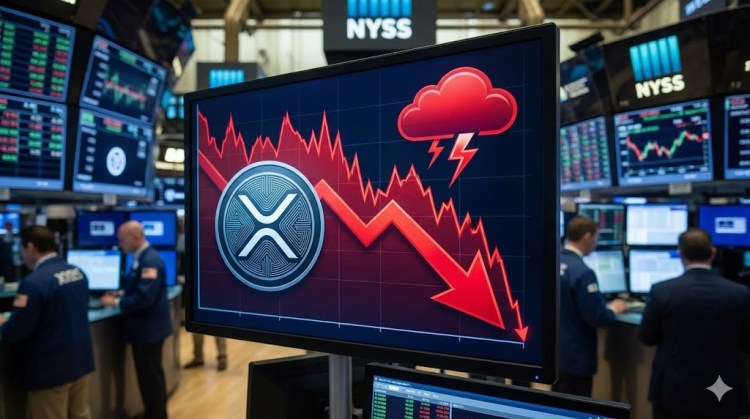
    XRP Price Faces Downside Pressure, Potential for Further Decline Below $1.080

    XRP has entered a period of correction, trading below the $1.150 mark and showing bearish signals that could lead to further declines, potentially testing the $1.080 level.

    XRP Price Turns Red

    The cryptocurrency struggled to maintain its position above the $1.1550 zone, initiating a downward correction that mirrors movements seen in Bitcoin and Ethereum. XRP’s price has fallen below key levels, including $1.150 and $1.1420, and has even dipped below the 50% Fibonacci retracement level of its recent upward move from a swing low of $1.050 to a high of $1.1862.

    Despite the bearish trend, bulls are currently defending the $1.10 support area. However, a bearish trend line has formed on the hourly chart of the XRP/USD pair, with resistance identified at $1.120. The price is currently trading below $1.1350 and its 100-hourly Simple Moving Average, suggesting continued downward pressure.

    Should XRP attempt a recovery, it may encounter resistance near the $1.120 level. The first significant resistance barrier lies around $1.1350. A decisive break above this level could propel the price towards $1.1420, and a sustained move beyond that might target the $1.1550 resistance. Further gains could then aim for the $1.1650 resistance, with the next major hurdle for buyers anticipated near $1.1840.

    Downside Continuation?

    Conversely, if XRP fails to overcome the $1.1350 resistance zone, a fresh decline could ensue. Initial support is observed around the $1.10 level. The next critical support is situated near $1.080, which also corresponds to the 76.4% Fibonacci retracement level of the recent upward swing.

    A breakdown below the $1.080 level, accompanied by a sustained close beneath it, could trigger further losses, pushing the price towards $1.0650. The subsequent major support is located in the $1.050 zone, and a break below this could lead to a test of the $1.020 level. Any additional downward momentum might see XRP retesting the $1.00 mark.

    Technical Indicators

    • Hourly MACD: The Moving Average Convergence Divergence for XRP/USD is currently losing momentum within the bearish territory.
    • Hourly RSI: The Relative Strength Index for XRP/USD has fallen below the 50 level.

    Major Support Levels: $1.1000, $1.0800
    Major Resistance Levels: $1.1200, $1.1350

  • Cardano Whales Stir: Data Reveals Shifting Holdings

    Cardano Whales Stir: Data Reveals Shifting Holdings

    Cardano Sees Significant Outflow as Investors Move ADA to Self-Custody Wallets

    Approximately 16 million ADA tokens moved from cryptocurrency exchanges to self-custody wallets within a single 24-hour period, according to data from Coinglass. This significant shift suggests a period of quiet accumulation for Cardano (ADA) even as its price remains under pressure.

    Key Data Points Highlight Exchange Exodus

    Coinglass’s spot flow data for Cardano revealed that while $30 million worth of ADA entered exchanges during the analyzed period, outflows reached $32.62 million. This resulted in a net exchange flow of -$2.54 million, which, at ADA’s current price of $0.16, equates to roughly 16 million tokens leaving trading platforms.

    This exodus from exchanges follows a separate but related observation by market intelligence platform Santiment on June 10. Santiment’s data indicated that wallets holding ADA for extended durations had begun moving their holdings again after months of dormancy. This activity was tracked through two on-chain metrics: Mean Dollar Invested Age and Age Consumed.

    Understanding the On-Chain Metrics

    Mean Dollar Invested Age measures the average age of the capital invested in ADA wallets. This metric had been steadily increasing since early May, signaling a prolonged period where coins were not being actively traded. However, this upward trend paused for the first time in five weeks during the first week of June.

    Concurrently, Age Consumed, which tracks the number of tokens moved and the duration they had been idle before the movement, registered several sharp increases between June 4 and June 9. The most substantial spike occurred on June 9, marking the largest such surge since April.

    Dormant Holders Re-Engage Amidst Price Slide

    When analyzed together, Santiment suggests these metrics indicate that older, long-term holders are re-entering the market after a significant period of inactivity. The platform linked the timing of this renewed activity directly to the recent price decline, noting that the market correction appears to have prompted these longer-term participants to take action.

    Cardano has experienced a substantial drop, falling over 80% from its cycle high of $1.30, with selling pressure continuing to impact prices in recent weeks. Historically, significant increases in Age Consumed, coupled with a plateauing Mean Dollar Invested Age, have often preceded turning points in price direction.

    While Santiment stopped short of predicting a definitive recovery, the platform noted that these conditions could support a price rebound. However, they also cautioned that movements from dormant wallets do not exclusively signal buying activity; they can equally represent distribution or repositioning by holders. What distinguishes the current situation, according to Santiment, is that the largest spike in months occurred precisely as prices were reaching new lows.

  • Crypto Hackers Steal $36M+ Via Unverified Contracts

    Crypto Hackers Steal $36M+ Via Unverified Contracts

    Hackers Exploit Unverified Smart Contracts, Draining Millions

    A cryptocurrency hacker who siphoned $26 million from the Ethereum-based protocol Truebit in January likely honed their technique on smaller targets beforehand, according to blockchain analytics firm Chainalysis.

    A Contract Left Exposed for Years

    The Truebit exploit was the most significant of four incidents identified by Chainalysis in a new report covering the past six months. Collectively, these attacks—targeting Truebit, Trusted Volumes, Aperture Finance, and Ekubo—resulted in approximately $37 million in losses. All of these incidents were traced back to smart contracts whose source code had never been publicly verified on blockchain explorers.

    The Truebit contract had been deployed on Ethereum since 2021. It was compiled using Solidity v0.5.3, a version released before automatic overflow protections became standard. An attacker exploited an integer overflow flaw within its bonding curve mechanism, enabling them to mint large quantities of tokens at minimal cost before converting them to ETH.

    Why Closed Code Creates Open Risk

    Verified contracts undergo scrutiny. Bug bounty hunters examine them, and independent researchers flag potential issues before attackers can. Unverified contracts, however, lack this oversight. Many bug bounty programs specifically exclude them from coverage, meaning vulnerabilities can persist for years while significant funds flow through the affected code.

    Chainalysis suggests that attackers are now capitalizing on this gap. Each of the four compromised contracts lacked publicly available source code. Instead, attackers worked with decompiled bytecode, converting raw on-chain code into a readable format using tools such as Dedaub, Heimdall, and Panoramix. Once decompiled, the code can be processed by AI systems capable of identifying reentrancy flaws, arithmetic errors, and access-control weaknesses at a scale far beyond human capacity.

    While the $36.7 million figure represents a fraction of the total DeFi losses during the same period—Chainalysis estimates broader six-month theft totals exceeding $1 billion—the firm argues that the unverified contract problem could escalate. This is due to the increasing affordability and ease of use of automated analysis tools, which allow attackers to scan numerous dormant contracts and prioritize them by exploitability.

    The Vulnerabilities Varied, But the Pattern Did Not

    The specific vulnerabilities differed across the four incidents, with reported weaknesses ranging from integer overflow and access-control failures to input-validation errors and identity verification flaws.

    What these incidents shared was a common security gap: the absence of public source code, external review, and real-time monitoring to detect abnormal activity before funds were drained.

    Chainalysis recommends that protocols establish source-code verification as a fundamental requirement for any contract holding user assets. The firm also advises that audits and bug bounty coverage should extend to implementation contracts situated behind proxy structures—components that often remain unreviewed even when the front-facing contract is verified.

  • Bitcoin Enters Distribution Phase Amidst Investor Sell-Off

    Bitcoin Enters Distribution Phase Amidst Investor Sell-Off

    Bitcoin Enters Distribution Phase as Investors Increasingly Sell Into Strength

    The bullish momentum that propelled Bitcoin earlier this year appears to have waned, with the cryptocurrency now entering a distribution phase. This shift is characterized by investors opting to sell their holdings as prices rise, rather than increasing their exposure.

    According to the latest Bitfinex Alpha report, both on-chain data and market flow indicators suggest that Bitcoin has moved beyond the accumulation phase that fueled its earlier rally. This transition signals an impending period of significant selling pressure, potentially driving BTC prices down to levels not seen since early to mid-2024.

    Bitcoin experienced a notable dip below the $60,000 mark on June 5, a decline attributed to substantial outflows from spot exchange-traded funds (ETFs) and ongoing macroeconomic challenges. While the asset has since recovered, climbing back above this threshold in the past two days, analysts suggest this rebound may mask a more fundamental shift towards a distribution regime.

    During last week’s downturn, Bitcoin fell to a multi-year low of $59,200, a price point last observed in October 2024. This represented a 53% decrease from its all-time high in October 2025, a 28.5% drop from mid-May levels, and a 20% decline from the June monthly opening price. The cryptocurrency struggled to maintain the $60,000 level, a key support since February.

    Having retreated to its first-quarter 2026 consolidation zone, Bitcoin now faces two potential scenarios. The more optimistic outlook suggests a trading range between $60,000 and $72,000. Conversely, the worst-case scenario involves a price discovery phase at levels not witnessed since the maturation of the spot ETF market.

    Analysts believe the pessimistic scenario will materialize if Bitcoin breaks below $60,000 and remains there for an extended period. Current price movements are already constrained by previous range lows, influenced by factors such as ETF outflows and strategic Bitcoin sales.

    Additional contributors to Bitcoin’s current price trajectory include rising energy costs, robust labor market data, and tightening financial conditions imposed by the Federal Reserve. However, the most impactful factor is the contraction in spot demand, evident in a sharp reversal of the Spot Cumulative Volume Delta.

    “Spot Cumulative Volume Delta has transitioned into a clearly negative regime, reaching depths reminiscent of the significant liquidations seen in February. The data confirms that aggressive distribution, particularly by recent buyers, is currently the dominant force on exchange order books,” the analysts explained.

    As observed in previous distribution phases, Bitcoin can only re-enter an accumulation regime once sustained spot demand returns.

  • Anthropic CEO Cautions on AI Power Amidst New Release

    Anthropic CEO Cautions on AI Power Amidst New Release

    Governments Must Act on AI Safety, Anthropic CEO Urges

    Dario Amodei, CEO of AI firm Anthropic, asserted on Wednesday that governments can no longer afford to merely study the issue of artificial intelligence regulation. He called for the United States to implement binding safety requirements for its most powerful AI models.

    In an essay titled “Policy on the AI Exponential,” Amodei argued that current transparency mandates are insufficient and advocated for mandatory regulation of “frontier AI” systems.

    “AI is advancing at a lightning pace—in only four years, AI models have gone from barely being able to write a coherent line of code to writing most of the code at major AI companies,” Amodei wrote.

    Amodei’s essay coincides with Anthropic’s expansion of access to Claude Mythos, its restricted frontier AI model designed for cybersecurity organizations and government partners. The company launched Mythos 5 on Tuesday. Researchers, including those at the UK’s AI Security Institute, have reportedly found that the model can autonomously execute complex cyber attacks.

    Amodei stated that his regulatory proposal draws inspiration from the framework used by the Federal Aviation Administration.

    “Frontier AI models, like airplanes, should be required to go through technical testing and auditing, and their release should be blocked or reversed as a threat to public safety if they do not meet high standards of safety,” he wrote. “I am grateful to see the Trump administration’s Executive Order move incrementally towards a greater role for government in AI, though Anthropic’s proposal recommends even further action.”

    A Proposed Regulatory Framework

    Under Amodei’s proposed framework, advanced AI models would undergo mandatory third-party testing. The government would be empowered to halt unsafe deployments and require companies to secure model weights, conduct safety assessments, and report significant incidents. He also urged governments to prepare for AI-driven job displacement and advancements in drug development, to limit the use of surveillance and autonomous weapons in domestic law enforcement, and to enhance cooperation among democratic nations on critical AI technologies.

    “First, enduring job displacement is undesirable and dangerous, and we should do everything we can to minimize or prevent it, not to bring it about,” Amodei wrote, referencing past warnings he has issued regarding job displacement. “Second, any response to AI-driven job displacement needs to address both the need to provide for everyone economically, and the need for people to find meaning, purpose, and agency.”

    Public Release and Industry Scrutiny

    The essay was released in the same week Anthropic launched Claude Fable 5, a public-facing version of Claude Mythos 5. This version redirects certain requests related to cybersecurity, biology, chemistry, and AI development to the less capable Claude Opus 4.8 as a safeguard against misuse. However, the launch has drawn criticism from developers and researchers. Concerns have been raised about Fable’s higher token usage, mandatory 30-day data retention policies, and safeguards that can diminish the model’s capabilities without user notification.

    Amodei’s call for policy changes in AI development comes as Anthropic prepares for a potential public offering. Earlier this month, the company filed paperwork with the U.S. Securities and Exchange Commission for an initial public offering, following a reported $65 billion Series H funding round that valued the company at a reported $965 billion.

    Debate Over AI Risks and Regulation

    While Amodei has framed the issue as a race between technological progress and public policy, critics have questioned whether calls for stricter AI regulation truly serve the public interest. In April, OpenAI CEO Sam Altman accused Anthropic of employing “fear-based marketing” to promote Claude Mythos. Altman suggested that concerns about advanced AI could be used to justify concentrating control of the technology within a small group of companies.

    “You can justify that in a lot of different ways, and some of it’s real, like there are going to be legitimate safety concerns,” Altman stated. “But if what you want is like ‘we need control of AI, just us, because we’re the trustworthy people’, I think fear-based marketing is probably the most effective way to justify that.”

    Amodei rejected the notion that concerns about advanced AI are primarily a public relations issue. He contended that fears surrounding the technology stem from legitimate concerns that require addressing.

    “People are worried about AI because they correctly perceive that its risks are real, not because AI CEOs have been insufficiently Panglossian,” he said, referencing the character from Voltaire’s “Candide” known for his unshakeable optimism.

    “I believe it is my duty as an AI leader to continue to be transparent about these risks, and public concern in response to this transparency constitutes democratic accountability working as it should,” Amodei concluded.


  • Bitcoin Obituaries Persist, CZ Remains Skeptical

    Bitcoin Obituaries Persist, CZ Remains Skeptical

    Bitcoin experienced its lowest weekly close since the latter half of 2024 last week, concluding a seven-day period that saw the cryptocurrency shed over 8% of its value and drag the broader crypto market to levels not observed since the beginning of the year.

    A Pattern Worth Watching

    The weekly relative strength index is currently printing higher lows, even as the price of Bitcoin makes lower ones. This divergence, which last appeared before Bitcoin’s recovery from the 2022 bear market bottom, is a detail technical traders are closely monitoring. Whether this historical parallel will repeat itself remains to be seen.

    On Monday, as Bitcoin traded below $62,000, Binance founder Changpeng Zhao, widely known as CZ, posted a two-line message on X. “Bitcoin won’t be dead for too long,” he wrote, concluding with a reference to Douglas Adams’ famous line: “don’t panic,” rendered in large, friendly letters. The message was concise, deliberate, and timed to coincide with a period of significant market weakness and low sentiment.

    Support Holds, For Now

    Bitcoin has so far managed to bounce from the $60,000 level each time it has been tested in recent days. The next significant resistance is anticipated between $65,000 and $66,200, with a more substantial ceiling forming between $67,000 and $77,000.

    Analysts suggest that a breach below $60,000, while not considered the most probable near-term outcome given the ongoing unwinding of oversold signals, could open the door to the $53,000–$55,000 range.

    The rest of the cryptocurrency market has seen even steeper declines. Ethereum has fallen nearly 14% in the past seven days, trading around $1,640. XRP has dropped 6% to $1.13, while Solana has given up 14% and is trading near $64.

    CZ’s Moment To Speak

    CZ commands one of the largest followings in the cryptocurrency industry. His post on Monday arrived at a time when retail sentiment across crypto forums and social media platforms was overwhelmingly negative. The total market capitalization of the crypto sector has retreated to levels last seen in early 2026.

    The $60,000 support level continues to be the critical line for most traders in the coming days. While it has held thus far, each test of this level intensifies scrutiny on what might transpire if it ultimately fails.

  • Coinbase Asks Congress to Treat Stablecoins as Cash, Lower Crypto Taxes

    Coinbase Asks Congress to Treat Stablecoins as Cash, Lower Crypto Taxes

    Coinbase VP Urges Lawmakers to Simplify Crypto Tax Rules

    Coinbase’s Vice President of Tax, Lawrence Zlatkin, urged lawmakers on June 9 to reconsider the requirement for Americans to calculate capital gains on every stablecoin transaction or blockchain fee. His testimony came before the House Ways and Means Committee during a hearing focused on six proposed bills designed to modernize the U.S. tax code for digital assets, addressing issues from mining and staking taxation to charitable donations and broker reporting.

    Seeking Clarity and Parity for Digital Assets

    The House Ways and Means Committee stated its intention to examine legislation aimed at bringing “clarity, parity, and administrability” to the digital asset landscape. Zlatkin, representing Coinbase, argued that current tax regulations compel consumers to meticulously track minor gains and losses on routine cryptocurrency transactions. He specifically advocated for federally regulated stablecoins pegged to the U.S. dollar to be treated equivalently for tax purposes, given their design to maintain a one-to-one value with the dollar. Zlatkin contended that forcing users to calculate cost basis for every stablecoin expenditure generates excessive paperwork without yielding significant tax revenue.

    Proposals for De Minimis Exemptions and Fee Waivers

    Furthermore, Zlatkin expressed support for a proposal by Congressman Rudy Yakym to waive tax reporting requirements for transaction fees, often referred to as gas fees, up to $10. He also called on Congress to establish a broader de minimis exemption for small cryptocurrency purchases. Under Coinbase’s proposed framework, individuals making low-value transactions with Bitcoin (BTC) or other non-stablecoin cryptocurrencies would be relieved of the obligation to calculate taxable gains for each purchase. This comes after Coinbase CEO Brian Armstrong faced accusations in March of lobbying against a BTC tax exemption, claims he vehemently denied, stating he had personally advocated for a Bitcoin de minimis rule.

    Support for Mining and Staking Tax Deferral

    Regarding mining and staking, Coinbase endorsed a bill introduced by Congressman Mike Carey. If enacted, this legislation would allow validators to defer taxes on block rewards until those assets are sold, rather than upon receipt. Zlatkin drew an analogy, stating, “A farmer is never taxed when a bushel of wheat sprouts from the ground; they are taxed when they harvest that crop, bring it to market, and execute a sale.”

    Addressing Wash-Sale Rules and Implementation Challenges

    Finally, Zlatkin reiterated Coinbase’s stance on wash-sale rules, which disallow investors from claiming a tax loss if they repurchase the same asset within 30 days of selling it. While Coinbase agrees these rules should apply to crypto, the company highlighted a significant practical hurdle: the 24/7 nature of crypto trading across diverse exchanges, liquidity pools, and self-custody wallets. Currently, there is no unified data infrastructure to effectively track wash-sale violations in real-time across this fragmented environment. Zlatkin emphasized the need for an implementation runway of at least 18 to 24 months before such rules take effect, allowing for the development of necessary software infrastructure. He warned that immediate compliance mandates would likely result in widespread reporting errors and an increase in IRS audits.

  • Raydium DEX Loses $1.34M in AMM Exploit

    Raydium DEX Loses $1.34M in AMM Exploit

    Raydium Suffers $1.34 Million Exploit Linked to Outdated Program

    Raydium, a decentralized exchange operating on the Solana blockchain, announced Wednesday that it had been the victim of an exploit resulting in a loss of $1.34 million. The incident is tied to the platform’s retired automated market maker (AMM) V3 program.

    Raydium Pools Drained

    The protocol reported that the attacker siphoned approximately 150,000 RAY tokens, 5,600 SOL, and nearly 900,000 USDC stablecoins from Raydium pools that included RAY-SOL, USDC-RAY, and SRM-RAY pairings.

    Raydium attributed the security breach to a flaw in how its older AMM V3 program handled liquidity provider (LP) mints. The platform stated that the vulnerability “stemmed from insufficient validation of the LP mints, which in practice allowed the attacker to bypass intended proportion checks.”

    According to the technical explanation, the legacy AMM V3 program failed to properly verify the LP mint address. This deficiency enabled an attacker to create a new mint and utilize it as the LP token, thereby circumventing the checks designed to regulate asset accounting within Raydium’s pools.

    The exchange stressed that the compromised AMM V3 program is no longer accessible through Raydium’s interface. It clarified that the legacy AMM V3 program was decommissioned in 2021 and is effectively unreachable via Raydium’s current user tools.

    Funds Traced Across Two Blockchains

    Details regarding the alleged money laundering activities were provided by blockchain security firm PeckShield. PeckShield outlined how the attacker’s funds were initially sourced from the KuCoin exchange and subsequently bridged from Solana to the Ethereum blockchain.

    PeckShield reported that 810 ETH had already been transferred to Tornado Cash, a privacy-focused cryptocurrency mixer, and an additional 7 ETH was moved to FixedFloat, a cryptocurrency exchange service. These movements were characterized as part of an active effort to launder the stolen Raydium funds.

    In its own analysis of the exploit, Raydium reiterated that its current programs remain unaffected by the incident. The exchange also confirmed that its core contributors are currently undertaking a comprehensive security review of all mainnet programs.