Category: Uncategorized

  • Trump Supports CFTC on Prediction Markets, Slams State Officials

    Trump Supports CFTC on Prediction Markets, Slams State Officials

    Trump Advocates for Federal Oversight of Prediction Markets

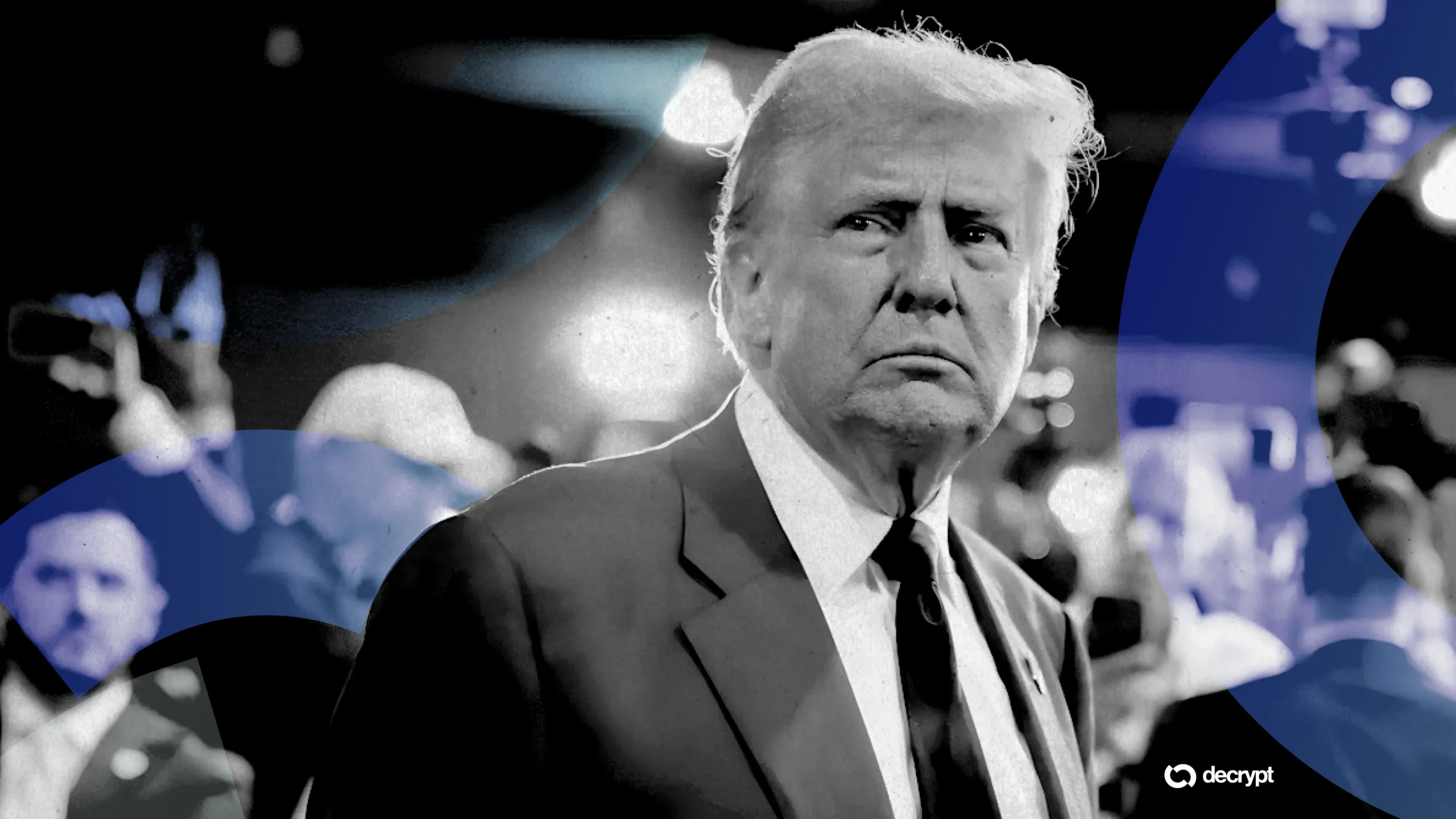
    Former U.S. President Donald Trump urged federal regulators on Tuesday to maintain control over prediction markets, calling it a “critically important” issue as states move to regulate the rapidly expanding sector under their own laws.

    “We cannot have SCUM like Chris Christie, Letitia James, Tim Walz, and JB Pritzker setting the rules,” Trump wrote on Truth Social, adding that the Commodity Futures Trading Commission’s (CFTC) “exclusive authority” should be maintained as other countries pursue what he described as a new form of financial market.

    Trump stated that prediction markets should “thrive” under federal “rules of the road,” arguing that other countries are actively developing the market and linking the issue to his broader efforts to keep cryptocurrency activity within the U.S.

    Trump’s position on prediction markets has evolved in recent months. In April, he stated he was “never much in favor” of prediction markets, claiming they had contributed to turning the world into “somewhat of a casino.” When asked days later if his administration would alter its stance, he said that “very smart” people supported the sector and that the U.S. could be “left out in the cold” if other countries acted first.

    “A lot of other countries are doing it, and when the other countries do it, we get left out in the cold if we don’t,” Trump told Decrypt.

    Prediction markets allow users to bet on outcomes across various areas, including crypto, traditional markets, sports, weather, politics, and culture. The sector has grown quickly over the past two years and is projected to reach $1 trillion in market volume by 2030.

    Federal regulators currently treat prediction markets as event contracts overseen by the CFTC, placing them under derivatives rules rather than state-level gambling laws. State officials have sought to apply gambling laws to prediction market contracts, including through legal actions against Kalshi in Arizona and Nevada. The Trump administration has responded with lawsuits asserting that state attempts to ban prediction markets illegally interfere with federal authority.

    Trump’s statements on Wednesday connected the dispute to the CFTC’s current rulemaking efforts, praising Chairman Mike Selig as “doing a great job.”

    Selig has called for a framework that would bring exchanges onshore, warning that a failure to establish clear U.S. rules could push activity overseas and lead to FTX-style “implosions.” He added that exchanges should register in the U.S. under rules for fair markets, investor and customer protections, and guardrails.

    Industry Concerns and Perspectives

    These efforts have faced pushback from lawmakers across the political spectrum, who have raised questions about how federal oversight would address issues such as insider trading, war and death markets, sports-style contracts, consumer risk, and offshore platforms that may still reach U.S. users.

    “Prediction markets shouldn’t be a partisan issue,” Farokh Sarmad, co-founder and president of prediction market platform Myriad, told Decrypt. “We’ve already seen this happen with crypto, it set the industry back years and didn’t do lawmakers any favors either.”

    He said the Trump administration, through CFTC Chair Mike Selig, is “doing great things to build a framework around prediction markets,” adding that, “The last thing we need is a war.”


  • Base Network Unveils AI-Powered Crypto Tool, Expanding Layer-2 Offerings

    Base Network Unveils AI-Powered Crypto Tool, Expanding Layer-2 Offerings

    Base Launches AI Agent Tool

    Coinbase’s Layer-2 network, Base, has launched Base MCP, a new Model Context Protocol tool designed to connect cryptocurrency wallets directly to AI agents. This enables autonomous on-chain execution without requiring custom integration for each decentralized application (dApp).

    The launch represents the latest development in Coinbase’s coordinated infrastructure push, encompassing agent wallets, machine-to-machine payments, and developer tools, all converging on Base as the execution layer.

    Base MCP allows users to connect an AI agent to their Base Account, enabling the agent to swap, trade, and manage their portfolio using plugins from leading applications on Base.

    For traders monitoring the AI-agent infrastructure sector, this release is not an isolated event. It contributes to a rapidly growing category of wallet-automation tools that are attracting both developer interest and early investment across the Layer-2 ecosystem.

    Technical Details

    The Base MCP is built on the Model Context Protocol (MCP) framework, an emerging standard that allows AI systems to communicate with external tools via a standardized interface.

    In the context of cryptocurrency, this means an AI agent can check wallet balances, send funds, swap tokens, sign messages, and process payments via Coinbase’s x402 protocol, all from a Base Account, without requiring specific smart contract logic for each integration.

    This builds upon Coinbase’s Agentic Wallets infrastructure, introduced in early 2025, which provided dedicated wallet architecture for autonomous agents with built-in functionalities: Authenticate, Fund, Send, Trade, and Earn. These wallets operate gas-free on Base, with USDC as the primary payment method.

    The x402 machine-to-machine payments protocol, which integrates stablecoin transfers directly into HTTP requests, had already processed approximately 50 million transactions prior to the launch of MCP.

    MCP serves as a plug-and-play interface layer on top of this infrastructure. Instead of requiring developers to implement wallet logic for each application, MCP integration makes agent-to-wallet connectivity a standard feature.

    Security Measures

    Security is managed through trusted execution environments, where private keys are generated and stored within a secure enclave that the AI agent cannot directly access. Infrastructure-level controls, such as per-agent spending limits and whitelisted counterparties, are implemented to facilitate institutional and enterprise adoption.

    Base’s position as Coinbase’s Ethereum Layer-2 provides a distinct distribution advantage. Gas-free transactions and significant USDC liquidity reduce the friction for agent-driven activities in ways that competing blockchains have not fully achieved.

  • XRP Price Poised for Sharp Rebound

    XRP Price Poised for Sharp Rebound

    XRP Price Analysis

    The price of XRP is currently trading at $1.33, experiencing a slight decrease today. However, technical analysis suggests an impending upward movement. The price has consolidated within a symmetrical triangle pattern on the 4-hour timeframe, and the next 48 to 72 hours could determine XRP’s price trajectory for the coming weeks.

    Over the past day, the trading volume reached $1.57 billion, while the market capitalization stands at $82 billion, trailing behind BNB. Some analysts have noted a two-week 20/50 EMA death cross, which is typically viewed as a bearish technical signal. Despite this, they also suggest that XRP could potentially rally towards the EMA cluster near $1.70.

    On the weekly chart, a similar death cross occurred in January 2026, coinciding with a lower high at $2.40. Subsequently, there was a countertrend rally towards the 20-week EMA at $1.50, followed by a rejection in May. This pattern aligns with the two-week death cross.

    The weekly chart also reveals an echo pattern, mirroring the death cross at the January lower high near $2.40, followed by a countertrend surge to the 20-week EMA at $1.50 before the May rejection.

    Market Sentiment and Technical Indicators

    Sentiment in the altcoin market remains mixed. However, the compressed volatility in XRP, coupled with a well-defined support level, suggests a potential for a significant price movement.

    The Relative Strength Index (RSI) is at 40, below its moving average of 44, indicating a lower-neutral position, not yet oversold. This suggests that buyers have not fully committed, but have not capitulated either. The Moving Average Convergence Divergence (MACD) remains below the signal line, with a slightly negative histogram, indicating weak bearish pressure, but not a significant decline.

    Key price levels are crucial, as XRP is currently trading below the 7, 14, and 30-day moving averages, which are acting as resistance. Immediate resistance is between $1.34 and $1.38. The major trigger band is between $1.40 and $1.45, defined by the 100-day moving average and the upper boundary of the descending channel.

    The coin is currently in a breakout zone. A decisive close above this zone could trigger a rapid price increase, while a rejection could push the price back towards the $1.30 to $1.20 range.

    The current XRP price action indicates an imminent decision point.

    Investment Strategy

    After a 42% annual decline, XRP presents a potential for a rebound. However, with an $82 billion market capitalization, even a 30% rally would require significant capital compared to assets with global recognition.

    Traders are increasingly shifting a portion of their large-cap exposure into early-stage infrastructure projects with structural utility before price discovery.

    LiquidChain ($LIQUID) is an L3 infrastructure project designed to address the fragmented liquidity across different blockchains. Its Unified Liquidity Layer integrates Bitcoin, Ethereum, and Solana liquidity into a single execution environment.

    LiquidChain features a deploy-once architecture with verifiable settlement and single-step cross-chain execution, providing a crucial middleware layer for DeFi.

    The presale has raised over $810,000, with a current token price of $0.01463. There is a 1400% APY bonus for buyers. LiquidChain allows developers to deploy once and access all three major ecosystems.

  • Crypto Groups Lobby Senate for CLARITY Act

    Crypto Groups Lobby Senate for CLARITY Act

    More than 100 cryptocurrency firms and organizations, spearheaded by the Digital Chamber, the Crypto Council for Innovation, and the Blockchain Association, have intensified their lobbying efforts in the U.S. Senate to advance the CLARITY Act. They are positioning its passage as the industry’s final viable opportunity to secure federal regulatory clarity before congressional momentum wanes.

    Bill’s Progress and Stakes

    The Senate Banking Committee approved the bill in mid-May after months of bipartisan negotiations, but the debate on the Senate floor has barely begun.

    The implications are significant: for exchanges like Coinbase, Kraken, and Gemini, the bill directly safeguards the fiat on/off-ramps that have been quietly undermined by informal banking pressures for years.

    Crypto-related equities saw a surge following the committee vote, but analysts are already highlighting the procedural obstacles that remain before the bill can be signed into law.

    Industry Concerns and Proposed Solutions

    The coalition’s April 23 letter to the Senate Banking Committee directly addressed the core issue: federal regulators, including the Federal Reserve, the Federal Deposit Insurance Corporation (FDIC), and the Office of the Comptroller of the Currency (OCC), have been conducting what the industry calls “Operation Choke Point 2.0.” This involves an informal campaign to pressure banks into severing ties with crypto clients without formal rulemaking, due process, or a documented record that advocacy groups can challenge in court.

    The CLARITY Act aims to address this by mandating formal rulemaking processes to replace the current system of supervisory letters and guidance documents.

    The over 100 signatories of the April letter include Coinbase, Circle, Kraken, Ripple, ConsenSys, Anchorage Digital, Galaxy Digital, Andreessen Horowitz, and Paradigm, representing a broad coalition of institutional infrastructure, venture capital, and retail-facing platforms.

    Stand With Crypto university chapters also signed the letter, indicating that the campaign is simultaneously pursuing constituent pressure alongside institutional lobbying.

    Lobbying Strategies and Political Landscape

    The Digital Chamber’s Crypto Banking campaign is focusing on swing-vote senators within both the Banking Committee and the broader Democratic caucus, where bipartisan support is considered essential to reach the 60-vote threshold required to advance the bill on the Senate floor.

    The Crypto Council’s CEO has warned that failure to pass the bill could lead to the U.S. losing its competitive advantage in the global market, a message designed to resonate with skeptical centrists by emphasizing national competitiveness.

    Treasury Secretary Scott Bessent added institutional support during a Senate hearing on the FY2027 budget, arguing that the CLARITY Act is “critical to maintaining U.S. financial leadership and the dollar’s reserve status.”

    This alignment between the administration and industry lobbyists is noteworthy, but it has not yet eliminated Democratic concerns that the bill could weaken enforcement in a sector where former President Trump’s family has business interests.

    Prediction market odds on the CLARITY Act have already demonstrated how quickly Senate sentiment can change, with passage probabilities declining sharply following earlier procedural setbacks.

  • XRP Price: Expert Reveals Key to $200 Target

    XRP Price: Expert Reveals Key to $200 Target

    The Hurdles to XRP Reaching $200

    The prospect of XRP reaching $200 may seem ambitious, but according to market analysts, it hinges on a significant expansion of the cryptocurrency market, a feat the industry has yet to achieve. In a recent report, market expert Sam Daodu argues that the gap between XRP’s current trading price and the $200 target is substantial, requiring all key conditions to align simultaneously, rather than sequentially.

    The Need for a Larger Crypto Market

    Currently trading at $1.34, XRP is approximately 63% below its all-time high of $3.65, reached last year. The debate surrounding a $200 valuation remains unresolved. Daodu highlights the supply side as the initial challenge. With over 61.8 billion XRP tokens in circulation, a $200 target would equate to a total value of roughly $12.4 trillion. This figure is about five times the current total value of the entire crypto market, which stands at $2.6 trillion.

    Daodu’s analysis centers on this comparison. He believes a $12.4 trillion market capitalization for XRP is unattainable within the current crypto market size, necessitating a market-wide expansion exceeding any previous industry growth.

    Furthermore, Daodu asserts that Bitcoin (BTC) must lead this expansion. Historically, major XRP rallies have followed Bitcoin’s performance, suggesting that capital would likely flow into XRP only after Bitcoin demonstrates sustained strength.

    Institutional involvement is another crucial factor, according to Daodu. For XRP to attract the substantial inflows needed to support such a valuation, Bitcoin would need to be in a sustained breakout, with institutions already invested.

    Beyond a Price Target

    XRP’s historical performance provides context for the challenges ahead. The token spent approximately 18 months consolidating between 2015 and 2017 before its first major cycle. Later, following years of legal challenges from the U.S. Securities and Exchange Commission (SEC), the altcoin rallied from $0.50 to its July 2025 peak.

    Daodu emphasizes that significant XRP movements have historically been supported by a long base, a favorable regulatory environment, and a Bitcoin-led market. He suggests that these factors are unlikely to align quickly.

    The current cycle follows the same pattern, with XRP down 63% from its current price peak and largely trading within the $1.30 to $1.50 range throughout 2026. The token is still awaiting the regulatory catalyst of the CLARITY Act and remains more reliant on retail investment than institutional flows from exchange-traded fund (ETF) activity. Consequently, Daodu estimates the earliest timeframe for these factors to converge around 2030.

    Despite these constraints, Daodu does not dismiss the possibility of XRP reaching $200. He argues that the market is building something that extends beyond price, including payment rails, institutional partnerships, and a regulatory framework.

  • Chainlink Whales Reach Record Holdings

    Chainlink Whales Reach Record Holdings

    Chainlink Whale Wallets Reach All-Time High

    On-chain data indicates that the number of large Chainlink (LINK) wallets has reached a new all-time high, signaling increased interest from significant investors in the network.

    According to data from on-chain analytics firm Santiment, the number of Chainlink wallets holding at least 100,000 LINK has reached a record high. This metric, known as “Supply Distribution,” tracks the total number of addresses within a specific group based on their LINK holdings.

    These investor groups are categorized by the number of tokens held. For this analysis, the focus is on wallets holding a minimum of 100,000 LINK, which, at current exchange rates, equates to approximately $957,000. This threshold typically includes large-scale investors, often referred to as “whales,” whose activities can significantly influence the network.

    A chart shared by Santiment illustrates the change in Supply Distribution for these Chainlink investors over the past few months. The graph shows a rise in the number of wallets holding 100,000 LINK or more, indicating a growing presence of large investors on the network. Specifically, the Supply Distribution of LINK whales has increased by 8.2% over the last seven weeks.

    This influx of large investors has occurred while the cryptocurrency has generally traded sideways. Currently, there are 805 wallets holding at least 100,000 LINK, a new all-time high. Santiment noted that “Key stakeholders are showing bullishness toward the #16 market cap in crypto.”

    It remains to be seen whether this optimism among LINK whales will translate into price appreciation for the cryptocurrency.

    In contrast to the accumulation trend observed in Chainlink, Bitcoin has seen distribution from its large holders. Analyst Ali Martinez highlighted in a separate X post that the supply held by Bitcoin whales has recently declined. The chart indicates that Bitcoin whales sold 18,447 BTC between the 18th and 21st of this month, equivalent to approximately $1.41 billion.

    LINK Price

    At the time of writing, Chainlink is trading around $9.57, unchanged from one week ago.

  • XRP Could Surge to $10 on Ledger Update

    XRP Could Surge to $10 on Ledger Update

    XRP Price Prediction: Tomorrow’s XRP Ledger Update Could Send XRP Toward $10

    XRP is currently trading sideways, with no clear price prediction indicating its next move. The XRP Ledger Foundation’s version 3.1.3 release introduces fixes across non-fungible tokens (NFTs), permissioned domains, vaults, and the lending protocol, and operators have been urged to upgrade nodes immediately.

    XRP Ledger Foundation Announces Upgrade

    On May 8, the XRP Ledger Foundation announced on X that rippled v3.1.3 is available. This is a maintenance and bug-fix upgrade that requires no manual voting. The fixCleanup313 amendment bundles patches for NFT logic, permissioned domain handling, vault mechanics, and the lending protocol.

    Technically, it is a housekeeping release. However, tomorrow’s mainnet upgrade could potentially push XRP above its current flatline zone.

    Forced Upgrade Deadline

    The XRP Ledger has a forced upgrade deadline on Tuesday, and nodes that miss it will go dark. Joel Katz, XRPL co-creator and Ripple CTO, confirmed that the rippled 3.1.3 amendment activates on May 27. Nodes that do not upgrade will become amendment-blocked, losing the ability to validate the ledger.

    Market Position and Potential Price Movement

    XRP holds an $83 billion market capitalization, maintaining its position as the world’s fifth-largest cryptocurrency, competing with BNB. With altcoin sentiment shifting towards a constructive phase, the upgrade arrives at a moment when even a modest narrative shift could influence the price.

    Currently, $1.37 represents the first significant resistance level, with $1.39 as the next potential ceiling. Short-term momentum appears neutral, with the intraday trend showing limited directional conviction.

    While there is no breakout signal yet, the range is coiled. The v3.1.3 upgrade could act as a sentiment catalyst if it attracts renewed developer and institutional attention to the XRPL ecosystem, particularly regarding its lending protocol and vault infrastructure.

    If XRP can surpass $1.40 due to upgrade momentum, it could target $1.90, with a long-range base scenario placing XRP in the $10+ region in the long run.

    However, a break below $1.30 would suggest the consolidation is resolving lower, negating near-term bullish setups entirely. The $10 headline target remains a multi-year thesis, with this week’s upgrade serving as a foundational step.

    Market Dynamics and Alternative Investments

    XRP’s $82.6 billion market cap means that even a doubling from current levels would require billions in fresh capital. While not impossible, early-stage infrastructure plays may offer greater potential.

    Bitcoin Hyper is positioning itself at a category-defining intersection: the first-ever Bitcoin Layer 2 with full Solana Virtual Machine (SVM) integration. This means sub-second finality and fast smart contract execution built on top of Bitcoin’s security layer, not on a sidechain compromise, but a genuine infrastructure bridge.

    The project has raised close to $33 million at a current presale price of $0.0136, with 36% APY staking available for presale participants. The core thesis is to address Bitcoin’s three core limitations: slow transactions, high fees, and zero programmability, while preserving BTC’s trust model.

    Hyper also features a Decentralized Canonical Bridge for BTC transfers and high-speed, low-cost transaction execution via SVM integration.

  • Hayes Predicts Significant Gains for NEAR and Zcash.

    Hayes Predicts Significant Gains for NEAR and Zcash.

    Hayes on Privacy-Focused Crypto

    Arthur Hayes, Chief Investment Officer of Maelstrom, has identified NEAR Protocol and Zcash as the core of his privacy-focused cryptocurrency investments, arguing that the market is beginning to reprice assets tied to private value transfer, sovereignty in the age of AI, and sound protocol economics. In an interview with The Rollup, Hayes stated that NEAR could offer “20x potential,” while Zcash might have “5x potential” over the next year. He framed these assets as part of a broader reaction to the influence of “big tech, big government,” and AI-driven surveillance.

    Macroeconomic Shift Fuels Investment

    Hayes’ investment thesis is rooted in a macroeconomic shift. Earlier this year, he adopted a cautious stance, believing that Bitcoin had already priced in an “AI deflationary credit event.” He anticipated that monetary authorities would be hesitant to aggressively print money until a crisis forced their hand. However, he believes this changed after the Iran conflict, which crystallized a liquidity-positive environment for markets. “Governments print money to win war. AI is part of war. The AI capex will be underwritten, both in the United States and China, by the governments,” Hayes said. He added that governments in the US, China, and Europe would likely fund a wartime economy and AI infrastructure through monetary expansion, with some of that liquidity flowing into Bitcoin and select crypto assets.

    The Case for NEAR and Zcash

    Hayes’ strongest comments were reserved for privacy-focused cryptocurrencies. He reaffirmed Zcash as his “second biggest bag” and stated that the asset had become investable again after earlier concerns about its trusted setup, issuance profile, and developer subsidy faded. He views the current Zcash trade as cleaner, more liquid, and more relevant to the current political and technological climate. “There’s nothing wrong with wanting to have private money over the internet,” Hayes said. “And that’s what Zcash represents, that’s what Monero represents. And as we are learning the ability for big tech, big government and AI to essentially know everything about us and to trace everything that’s going on in our lives, to have pure, just cryptographically proven privacy with money is going to be super needed.”

    Hayes’ renewed interest in Zcash was spurred by a conversation with Naval Ravikant during Tokyo 2049. According to Hayes, Ravikant argued that Monero’s ring signatures were weaker than commonly assumed, referencing a Japanese law enforcement case involving deanonymization. Hayes subsequently purchased $1 million of Zcash and continued accumulating the asset as he researched the thesis further.

    NEAR’s Role in Private Value Transfer

    Hayes’ price targets are linked to NEAR’s role in facilitating private value transfer across assets and chains. He argues that while shielded Zcash is important, the greater opportunity lies in the ability of users to move from shielded ZEC into other assets, including stablecoins, through NEAR Intents. “Within the ZODL app, I can now send any crypto asset I want to anyone across the Internet in an anonymous way. From Shielded Zcash, using Near Intents. Now I’m into, you know, USDT on Tron and I’ve sent it to whoever I’m going to send it to in an anonymous fashion. That’s huge,” Hayes said.

    He believes Zcash remains the primary expression of the privacy trade, but NEAR may offer a more asymmetric setup due to its connection to the execution layer behind confidential transfers. “I think Near has a 20x potential where, you know, Zcash might have a 5x potential over the next year or something like that,” he said.

    NEAR’s Economic Fundamentals

    NEAR co-founder Illia Polosukhin reinforced the economic side of the argument, stating that NEAR Intents is approaching $20 billion in lifetime volume, with $18.9 billion cited during the interview, and has generated $33 million in fees. He explained that NEAR takes a fee from every transaction and uses it to buy back NEAR, while the ecosystem has already halved inflation and may push for further reductions as revenue grows.

    Hayes also highlighted NEAR’s token structure, noting that it benefits from being “fully diluted,” avoiding the large overhang of venture allocations that still affect many Layer-1 assets. He believes this clean supply profile is advantageous for a token expected to perform well in an upmarket.

    Risks and Outlook

    Hayes acknowledges that the primary risk to his thesis is macroeconomic. He intends to hold his positions until the broader liquidity backdrop changes, but he cautioned that reduced government support for AI capital expenditure or a worsening war scenario could alter the setup. For now, he sees privacy, AI-linked sovereignty, and exchange revenue as the trades with the clearest market validation.

    At the time of this report, Zcash was trading at $624.

  • XRP Faces Renewed Price Pressure, Potential Weekly Breakdown Looms

    XRP Faces Renewed Price Pressure, Potential Weekly Breakdown Looms

    XRP Price Faces Downward Correction

    The price of XRP has begun a downward correction, falling below the $1.350 mark. Currently exhibiting bearish signals, the cryptocurrency may decline further, potentially dropping below $1.3120.

    Technical Analysis

    XRP’s price initiated a downward correction after failing to sustain its position above $1.350. It is now trading below $1.340 and the 100-hourly Simple Moving Average. A bearish trend line is forming, with resistance at $1.3580 on the hourly chart for the XRP/USD pair, according to data from Kraken. The pair could continue its downward trajectory if it remains below $1.3550.

    Price Dips Below Support

    XRP struggled to maintain its position above $1.3650, triggering a fresh decline mirroring movements in Bitcoin and Ethereum. The price dipped below the $1.3550 and $1.3500 levels, subsequently falling below $1.340. This move included a clear break below the 61.8% Fibonacci retracement level, calculated from the upward movement between the $1.30 swing low and the $1.3740 high. A bearish trend line is also forming, with resistance at $1.3580 on the hourly chart for the XRP/USD pair. The price is currently trading below $1.340 and the 100-hourly Simple Moving Average.

    If the price attempts an upward move, it may encounter resistance near $1.3340. Initial major resistance is near $1.340, above which the price could rise to test $1.350. A decisive move above the $1.350 resistance could push the price towards the $1.3580 resistance and the trend line. Further gains might lead to a test of the $1.3650 resistance, with the next significant challenge for bulls potentially near $1.3740.

    Potential for Further Decline

    If XRP fails to surpass the $1.340 resistance zone, a fresh decline could be initiated. Initial support on the downside is near $1.3175. The next major support levels are near $1.3125 and the 83.2% Fibonacci retracement level, calculated from the upward movement between the $1.30 swing low and the $1.3740 high. A break and close below $1.3125 could lead to a continued decline towards $1.3020. Further support is expected near the $1.30 zone, with a potential for further losses towards $1.2920. Additional losses might lead to a test of $1.2880.

    Technical Indicators

    The Hourly MACD for XRP/USD is currently gaining momentum in the bearish zone. The Hourly RSI (Relative Strength Index) for XRP/USD is now below the 50 level.

    Major Support Levels: $1.3175 and $1.3125.

    Major Resistance Levels: $1.3400 and $1.3580.

  • Render Token Surges 30% Amid On-Chain Gains

    Render Token Surges 30% Amid On-Chain Gains

    Render’s value has surged to a four-month high, driven by increased demand for AI infrastructure and a surge in on-chain activity. Over the past week, Render has risen by more than 30%, bucking the trend of consolidation seen across the broader cryptocurrency market.

    Recent Performance

    The altcoin’s recent performance is illustrated in the following chart. Last Tuesday, RENDER was trading around $1.80, but has since climbed to $2.35. This represents an increase of over 30% in the last seven days, bringing the asset’s value to its highest point since January.

    Factors Driving the Surge

    Several factors may be contributing to this rally. Render differs from many cryptocurrencies in that its network functions as a marketplace for GPU computing power. The decentralized platform connects users seeking GPU rendering capabilities with those willing to rent out their hardware. As the AI sector has experienced recent growth, demand for GPUs has increased significantly. This has positively impacted platforms like Render, potentially explaining some of the momentum seen by the network’s native token.

    On-Chain Activity

    This momentum has been accompanied by a rise in the blockchain’s activity-related metrics, according to data from on-chain analytics firm Santiment.

    Santiment noted on X that Render has seen a notable jump in Daily Active Addresses and Network Growth recently. Daily Active Addresses tracks the total number of addresses making at least one transaction on the blockchain each day, providing an estimate of daily user participation. Network Growth measures activity from newly generated wallets, indicating the level of adoption the chain is experiencing.

    The following chart, shared by Santiment, illustrates the changes in these two indicators for RENDER over the past month. The chart shows a rise in both Network Growth and Daily Active Addresses alongside the recent price rally, indicating increased user adoption and activity. Currently, there are 394 active addresses and 118 new wallets on the network, the highest daily levels since March.