Category: Uncategorized

  • Evernorth Treasury Vote Clears Path for XRP Listing on Nasdaq

    Evernorth Treasury Vote Clears Path for XRP Listing on Nasdaq

    Evernorth Secures Shareholder Approval for Nasdaq Listing with 473 Million XRP Treasury

    Evernorth’s merger with Armada Acquisition Corp. II received shareholder approval on Wednesday, paving the way for its substantial 473 million XRP treasury to be listed on Nasdaq.

    The vote saw approximately 20.5 million shares in favor and 1.4 million against, according to a filing by Armada II on Thursday. This development follows the SEC declaring Evernorth’s registration statement effective on August 27.

    Evernorth anticipates the deal will officially close on October 7. The company’s shares are expected to commence trading the following day under the ticker XRPN, which is already utilized by the special purpose acquisition company (SPAC).

    The firm announced that the merger and its associated private placements have collectively raised over $1 billion, a figure that aligns with its initial projections for the transaction made in October 2025. A portion of this total was contributed by investors in XRP, with the company’s announcement not specifying a dollar valuation for these holdings.

    Evernorth’s statement indicates that approximately $300 million of the total funds raised is in gross cash. Private placements account for $225 million of this cash component. An additional $30 million is derived from convertible notes that the company agreed to sell in September.

    Investors in advance funding provided $214 million of the capital raised through private placements, as detailed in the proxy statement. Evernorth utilized these funds in late 2025 to acquire 84.4 million XRP at an average price of $2.54 per token, which are now part of its existing holdings.

    The SPAC’s trust is contributing an additional $48 million in cash. This trust held approximately $241.9 million as of the August 20 record date. Public shareholders had the option to redeem their shares from the trust at an estimated $10.52 per share until September 28. Neither Thursday’s announcement nor the vote filing specified the number of shareholders who exercised this option.

    RippleWorks supplied the largest portion of Evernorth’s XRP holdings, amounting to 211.3 million tokens, through an investment in the SPAC’s sponsor, Arrington XRP Capital Fund. The sponsor is obligated to exchange these tokens for Evernorth shares upon closing. It has committed to voting these shares according to RippleWorks’ direction. Chris Larsen, co-founder and Executive Chairman of Ripple, is a co-founder of RippleWorks and serves on its board.

    Ripple itself contributed 126.8 million XRP at the time the merger agreement was finalized. An additional 50 million XRP comes from the Larsen Lam Children’s Remainder Trust.

    Evernorth Holdings’ financial statements, included in the proxy filing, report the cost of 346.3 million of its XRP at $846.6 million. By June 30, 2026, the company carried these tokens on its books at $348.8 million. It recorded impairment charges of $233.7 million in 2025 and $264.1 million in the first half of 2026.

    Evernorth accounts for XRP at its cost basis and subsequently reduces its value to the lowest intraday price observed since each batch was acquired. This written-down value is not subsequently increased if the price of XRP recovers.

  • Bitcoin Shows Strength in September Amid ETF Inflows and Easing Economic Concerns, but Key Uncertainties Remain

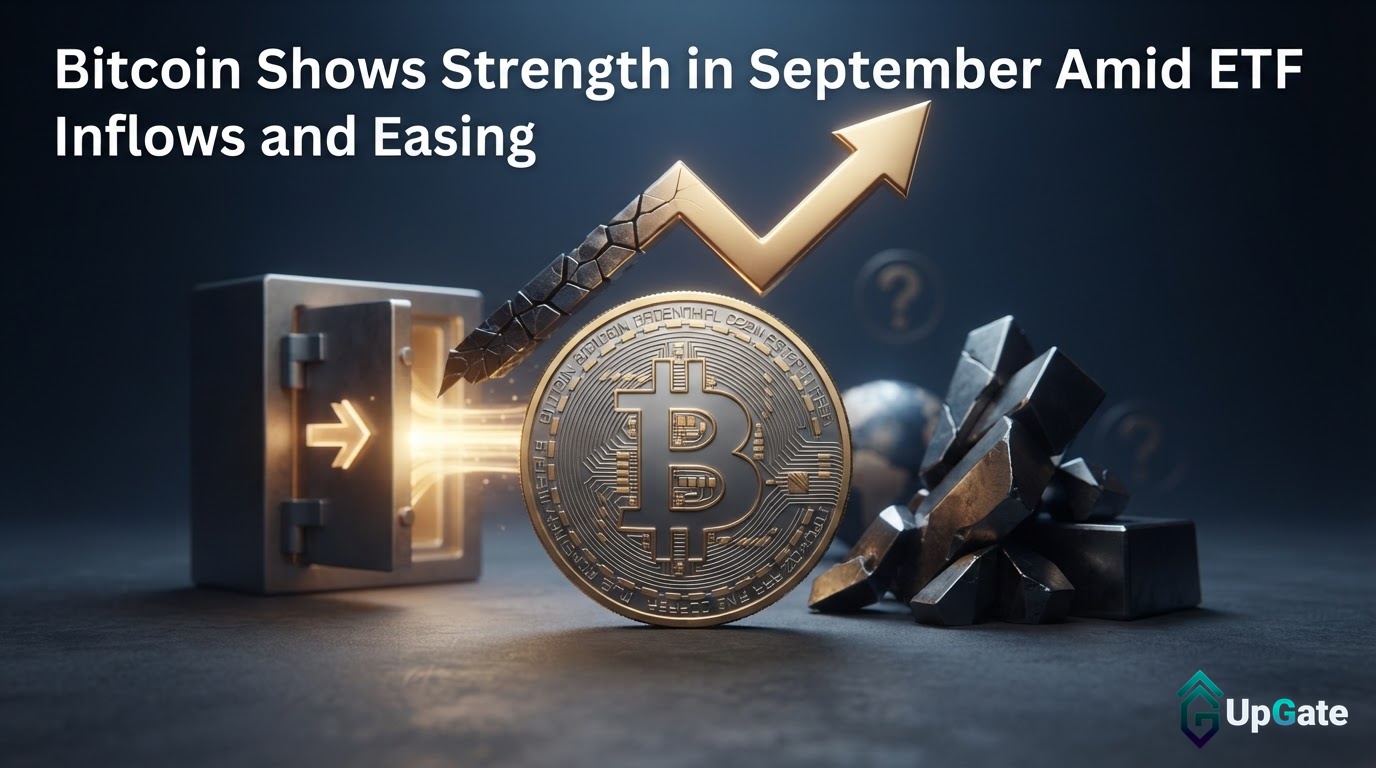
    Bitcoin Shows Strength in September Amid ETF Inflows and Easing Economic Concerns, but Key Uncertainties Remain

    Bitcoin began the fourth quarter on a stronger footing than traditional markets in September, buoyed by substantial inflows into U.S.-listed spot Bitcoin ETFs, ongoing corporate accumulation, and improving economic conditions. The cryptocurrency saw a gain of approximately 8% during the month, significantly outperforming the S&P 500, which remained largely flat, and gold, which experienced a decline of over 6%.

    Several key factors underpinned Bitcoin’s rally. U.S.-listed spot Bitcoin ETFs attracted billions of dollars in September, signaling a resurgence in institutional interest. Corporate entities also continued to expand their Bitcoin holdings, with Strategy acquiring an additional 1,665 BTC and Strive purchasing 1,107 BTC for $94.5 million. This consistent corporate accumulation is viewed as a positive indicator for market sentiment.

    The macroeconomic landscape also contributed to Bitcoin’s upward movement. Lower-than-expected U.S. inflation data for August helped to alleviate concerns regarding further Federal Reserve rate hikes, consequently reducing pressure on Treasury yields. This shift in the economic outlook fostered a more favorable environment for risk assets, including cryptocurrencies, which demonstrated stronger gains compared to traditional markets that showed a more muted response.

    According to Santiment, crypto markets are entering Q4 with several potential growth drivers. These include sustained ETF demand, continued corporate accumulation, progress in regulatory clarity, and renewed participation from altcoins. While acknowledging that elevated yields and crowded leverage can still precipitate sharp pullbacks, the analytics firm noted that “crypto currently has catalysts that traditional assets simply haven’t matched.”

    From a technical standpoint, Bitcoin is currently trading near the $86,000 level. Crypto Patel suggests this price point could be pivotal in determining Bitcoin’s future direction. A sustained breach above $86,000 might open the possibility for a move towards $100,000. However, if Bitcoin fails to maintain this level, traders may be closely watching support zones at $82,886, $80,300, and $76,400.

    Analysis of whale wallets, specifically those holding between 10 and 10,000 BTC, reveals significant accumulation, with these wallets adding 41,025 BTC in just 10 days, bringing their total holdings to 13.64 million BTC. Bitcoin’s longer-term outlook also appears robust, as evidenced by the MVRV Z-Score remaining above its 365-day moving average. Historically, this level has served as support during broader rallies. CryptoQuant’s analysis indicates that if the Z-Score sustains its position above this average, the broader valuation trend remains supportive of further upside. However, a sustained drop below the 365-day average could signal a weakening of the longer-term structure.

    Despite these positive indicators, several uncertainties persist. The critical factor to monitor is Bitcoin’s ability to break and hold above the $86,000 resistance level. Furthermore, the behavior of the MVRV Z-Score relative to its 365-day moving average will be crucial in assessing the sustainability of the current trend. A sustained break below this average could indicate potential weakness in the longer-term structure, and specific support levels to watch if the $86,000 level fails include $82,886, $80,300, and $76,400.

    Why This Matters

    The materials describe a narrow update: Bitcoin gained approximately 8% in September, outperforming the S&P 500 and gold. Whether Bitcoin may break above $86,000 and hold remains a key uncertainty.

    Broader Context

    Source materials place the factual news in this context: Bitcoin outperformed stocks and gold in September as it entered the fourth quarter on a high note, according to Santiment.

  • Perplexity AI Forecasts XRP Rally Through 2026

    Perplexity AI Forecasts XRP Rally Through 2026

    Perplexity AI has forecast a significant surge for XRP, predicting it could reach as high as $4.25 by the end of 2026 in a full bull market. While this figure might appear modest to some, it represents a substantial return for investors over the coming three months.

    Beneath the surface of XRP’s price movements, Perplexity AI observes a notable shift. Activity on the XRP Ledger is accelerating, coinciding with increased institutional engagement and ongoing network upgrades.

    In August and September, active addresses on the XRP Ledger saw an impressive 84% increase, reaching 43,543, while daily payments surpassed 2.6 million. This influx of users and transactions provides the XRP rally with a crucial element that speculation alone cannot: demonstrable network demand.

    The latest iteration, XRPL v3.3.0, further enhances XRP’s utility. Confidential Transfers introduce Zero-Knowledge (ZK) privacy features for tokens, and atomic Batch transactions are designed to support more complex settlement workflows, including institutional use cases involving real-world assets (RWAs).

    Furthermore, regulated demand is beginning to materialize. Recent 13F filings from the Bank of Montreal and the National Bank of Canada revealed exposure to XRP ETFs, integrating XRP into portfolios that collectively manage hundreds of billions of dollars.

    Technical indicators are starting to signal a bullish trend. XRP, which experienced a decline from over $3.00 last year, has recently shown signs of recovery, reclaiming the critical $1.50 level.

    This juncture, however, represents a pivotal test rather than a confirmed reversal. Immediate support is situated around the $1.00 mark; a breach of this level could trigger a downward movement, potentially ranging between $0.90 and $0.75. For bullish momentum to reassert itself, XRP must first regain the approximately $1.10 to $1.20 range.

    XRP concluded trading at $1.51, marking an 8.2% decrease overnight, after fluctuating between $1.48 and $1.63. The Relative Strength Index (RSI) indicates heightened selling pressure, currently standing at 35.75 against a signal line of 40.64. This deficit of 4.89 points suggests that short-term momentum is favoring sellers.

    While XRP is approaching oversold territory, its current low price does not automatically guarantee an imminent reversal. If XRP can maintain its position above $1.50 and break its pattern of lower highs, it would establish a robust technical foundation for Perplexity AI’s $3.50 forecast.

    XRP’s optimistic outlook is significantly tied to advancements in its network capabilities for payments, tokenization, and institutional settlements. Projects like LiquidChain aim to address market fragmentation by enabling seamless capital movement across major ecosystems, rather than treating each blockchain as an isolated unit.

    LiquidChain is currently developing a Layer 3 execution environment designed to unify liquidity across Bitcoin, Ethereum, and Solana. Its architecture prioritizes unified liquidity, streamlined execution, and verifiable settlement, thereby eliminating the need for developers to duplicate product development efforts across different networks.

    This approach offers a novel perspective for the forthcoming crypto cycle. Should capital begin to shift away from established large-cap cryptocurrencies, infrastructure that facilitates cross-chain liquidity could become instrumental in this market reevaluation.

    However, this emerging opportunity is accompanied by the inherent risks typical of early-stage projects. LiquidChain will need to demonstrate its viability through adoption, successful execution, and presale liquidity as it transitions from a conceptual framework to functional infrastructure.

  • Altcoin Volume Surges 4x Bitcoin’s Amid Trader Exodus

    Altcoin Volume Surges 4x Bitcoin’s Amid Trader Exodus

    Altcoin Trading Volume Surges to Four Times That of Bitcoin Amid Market Overheating Concerns

    The altcoin market is exhibiting signs of overheating, with spot trading volumes now four times higher than that of Bitcoin. This surge in activity has also led to increased leverage across the market.

    In response to these conditions, one prominent trader has opted to take profits and reduce their exposure to altcoins. The trader, known as Doctor Profit, reported selling ONDO with a 73% profit and closing a position in HBAR with a smaller gain. XRP remains under observation, with a potential entry point being eyed at a more favorable price. The trader expressed a lack of interest in acquiring more altcoins while market conditions remain so heated, describing them as a “great distraction and liquidity grab.”

    “This is why I’m out of Alts!” Doctor Profit declared.

    Instead, the trader is anticipating a correction in Bitcoin, a stance they have previously articulated. A short position was initiated at $86,200, with additional short orders placed between $86,500 and $89,500.

    While maintaining an overall bullish outlook, Doctor Profit had previously indicated a potential pullback toward $79,000, near the 50-week moving average, before the broader uptrend resumes. The analyst had identified bearish signals across the Relative Strength Index (RSI), MACD/PPO, and Money Flow Index (MFI), while the Average Directional Index (ADX) suggested weakening trend strength.

    Earlier this week, analyst Darkfost also highlighted several warning signs. According to Darkfost, Total2, a metric tracking the altcoin market capitalization excluding Ethereum, has seen inflows exceeding $371 billion since June 2026, representing a 45% increase in just a few months.

    This shift is also evident on the Binance exchange, where 87% of listed altcoins are trading above their 200-day moving average. This marks a significant change from August, when 80% were trading below this key trend level. Darkfost interpreted this move as indicative of growing euphoria surrounding altcoins, a sentiment that has historically proven difficult to sustain over extended periods.

    Another signal is the increase in altcoin deposits to exchanges. Weekly deposit transactions have surpassed 22,700 on Binance and 8,300 on Coinbase, with approximately 32,000 additional deposits across other platforms. While these numbers remain below the levels observed at the beginning of the previous bull cycle, Darkfost also pointed to a developing bearish divergence on Total2’s RSI, suggesting that altcoin momentum may begin to cool following the recent surge.

  • Latvia Grants Dual Crypto License Under MiCA to UK-Backed Firm, Enabling EU Market Access

    Latvia Grants Dual Crypto License Under MiCA to UK-Backed Firm, Enabling EU Market Access

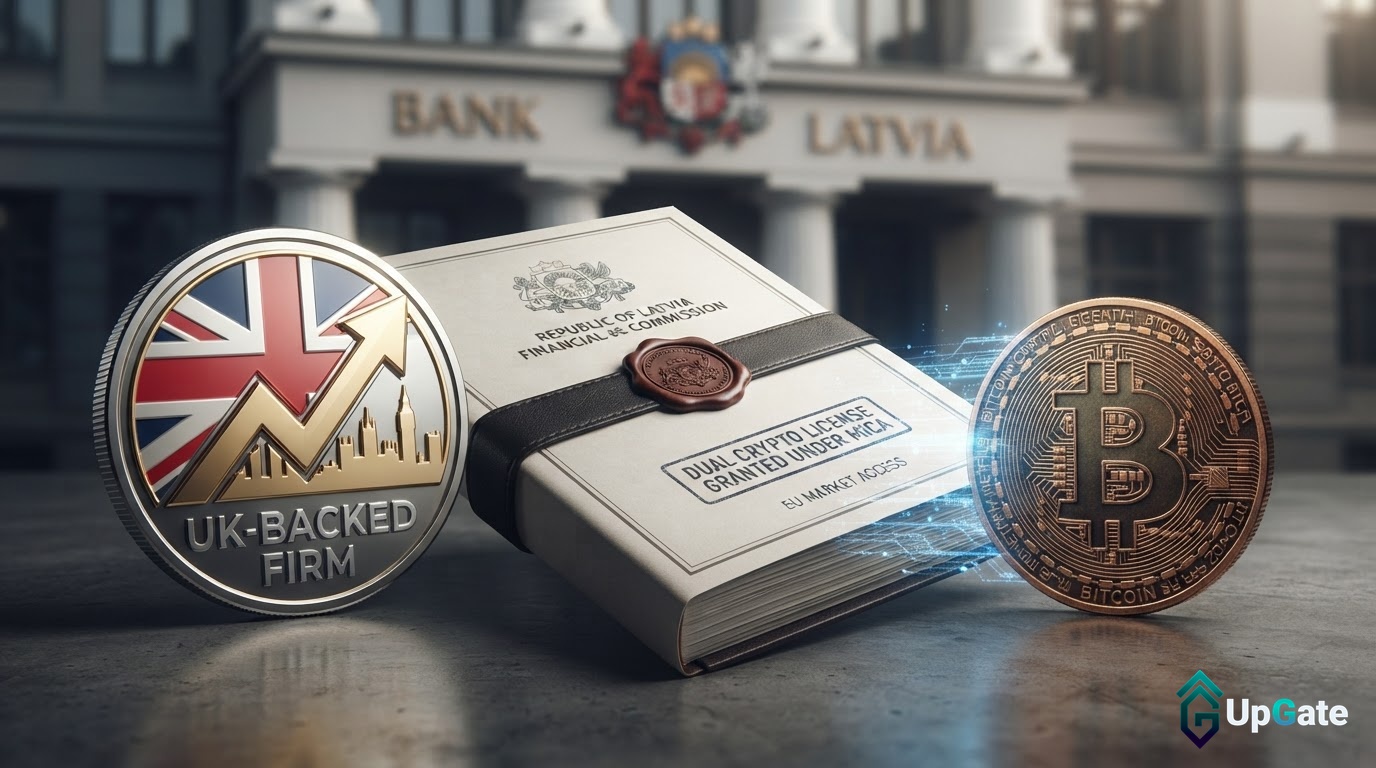
    Latvijas Banka, Latvia’s central bank, has issued a dual crypto license to Noah LV SIA, a subsidiary of the UK-based Noah HQ Ltd. This authorization, granted under the European Union’s Markets in Crypto-Assets (MiCA) framework, allows Noah LV SIA to operate as both a crypto-asset service provider and a payment institution, granting it passporting rights across the European Union (EU) and the European Economic Area (EEA).

    The license, officially granted on September 30, 2026, enables Noah LV SIA to leverage its Latvian base to access the broader European market. Established in July 2026, the company’s move signifies a strategic positioning within the EU regulatory perimeter.

    MiCA Framework and Passporting Rights

    The EU’s MiCA framework establishes a harmonized regulatory environment for crypto assets. A MiCA license, such as the one issued to Noah LV SIA, grants authorized firms the ability to offer services in any EU or EEA country without requiring separate authorizations in each jurisdiction. This passporting mechanism is crucial for companies seeking to scale their operations across the bloc.

    Latvia’s Strategic Role

    Latvia’s active role in issuing these licenses aligns with a broader strategy to position the country as a fintech and crypto-friendly jurisdiction within the EU. The issuance of licenses to entities like Noah LV SIA, which has roots outside the EU, highlights Latvia’s function as a gateway for non-EU firms aiming to access the European market.

    As of October 1, 2026, Latvijas Banka had issued a total of 12 MiCA licenses. This active issuance rate underscores Latvia’s commitment to facilitating compliant crypto operations and contributing to the EU’s objective of a regulated digital asset market.

    Trend of Non-EU Firms Seeking EU Entry

    Among the entities that have received MiCA-related authorizations in Latvia, BlockBen SIA was granted the first MiCA license in December 2025. More recently, on June 25, 2026, Bleap SIA received an approval with a narrower scope. The trend of UK firms, such as Noah LV SIA and Bleap SIA, seeking EU market access through Latvian authorizations suggests a pattern of companies establishing a base within the bloc to serve European customers under the new regulatory regime.

    Why This Matters

    The materials describe a narrow update: Latvijas Banka issued a license to Noah LV SIA, a subsidiary of UK-based Noah HQ Ltd, allowing it to operate as both a crypto-asset service provider and a payment institution under the EU’s MiCA regulations. Latvia’s approach fits a broader strategy of positioning the country as a fintech and crypto-friendly jurisdiction.

    Broader Context

    Source materials place the factual news in this context: The authorisation comes under the EU’s Markets in Crypto-Assets framework, better known as MiCA. It is the bloc’s rulebook for crypto businesses that want to operate legally across member states.

  • Bitcoin Achieves 44% Quarterly Gain in Q3 2026 Amid Strong ETF Inflows

    Bitcoin Achieves 44% Quarterly Gain in Q3 2026 Amid Strong ETF Inflows

    Bitcoin concluded the third quarter of 2026 with its most significant quarterly gain in over two years, climbing 44%. This performance marks its strongest third-quarter showing since 2017 and ends a streak of three consecutive losing quarters for the cryptocurrency, which historically averages an 8% to 9% return in the third quarter.

    According to the data, Bitcoin opened Q3 2026 between $58,500 and $58,600 and closed the quarter between $84,000 and $86,000, representing a price increase of approximately $26,000. Each month within Q3 2026 closed in positive territory.

    ETF Flows Reverse Course

    The primary driver behind this surge was a notable reversal in the flow of funds through US spot Bitcoin ETFs. The analysis indicates that at the end of July 2026, these funds experienced year-to-date outflows totaling roughly $5 billion. However, by late September, this trend had flipped, with the ETFs recording approximately $1 billion in net inflows. This shift represents a swing of about $6 billion from the July low, which included a single-week inflow record of $2.39 billion.

    This reversal in ETF flows may suggest a return of institutional capital, according to the article. If these inflows persist, it could signal renewed institutional buyer interest.

    Outperforming Traditional Assets

    Bitcoin’s Q3 performance significantly outpaced traditional assets. Gold saw a gain of approximately 8.7% over the same period, while major US stock indices rose by about 2%.

    The SEC’s issuance of exemptions for certain tokenized-stock platforms on September 17, 2026, while not directly impacting Bitcoin, is seen by some as a signal of regulatory openness to blockchain-based financial products.

    Future Outlook and Uncertainties

    Despite the strong quarterly performance, Bitcoin would need to increase by approximately 50% from its late September trading levels of $83,000 to $84,000 to revisit its all-time high of nearly $126,000, which was set in October 2025.

    Looking ahead to Q4 2026, the article notes that this period has historically been strong for Bitcoin. However, macroeconomic conditions present potential risks. Rising Treasury yields could make safer assets more attractive, and shifts in Federal Reserve policy might influence overall risk appetite. It is uncertain whether the current ETF inflows will be sustained.

    Investors are advised to monitor weekly ETF flow data closely, as this has been a key indicator of institutional investor activity. The sustainability of these inflows and the broader macroeconomic environment will be critical factors influencing Bitcoin’s trajectory in the coming months.

    Why This Matters

    The materials describe a narrow update: Bitcoin’s price increased by approximately 44% during the third quarter of 2026, marking its strongest quarterly performance since Q1 2024 and ending a streak of three consecutive losing quarters. Whether the current ETF inflows will hold.

    Broader Context

    Source materials place the factual news in this context: Bitcoin’s Q3 2026 performance is compared to its Q1 2024 performance and its third-quarter performance in 2017.

  • Solana CEO on China’s Crypto Future and Regulation

    Solana CEO on China’s Crypto Future and Regulation

    Solana Co. CEO Foresees China Embracing Regulated Crypto Activity

    Joseph Chee, CEO of Solana Co., has predicted that China will eventually permit a greater degree of cryptocurrency activity, albeit under strict regulatory oversight. Chee shared this outlook during an interview conducted on the sidelines of Korea Blockchain Week.

    Historical Context and Market Relevance

    China was once a significant hub for Bitcoin trading and mining. However, in 2017, mainland authorities mandated the closure of domestic cryptocurrency exchanges and prohibited fundraising through new digital tokens. This history lends weight to Chee’s perspective, but it also establishes a high threshold for considering any potential policy shift as a concrete market catalyst.

    Chee’s remarks were made at a blockchain industry event in South Korea, placing his comments within a relevant sector context. However, his executive position does not elevate his personal forecast to the level of official Chinese policy or a formal announcement from Solana.

    Regional Dynamics and Policy Uncertainty

    The question of China’s approach to cryptocurrency attracts attention due to the regional context. South Korea is actively debating cryptocurrency market oversight, and Korea Blockchain Week serves as a platform for industry participants to engage in these discussions. Nevertheless, policy developments in another market, such as comments from an executive at a Solana-affiliated company, cannot definitively predict Beijing’s future actions.

    Recent statements from China’s Ministry of State Security have characterized anonymity in cryptocurrency as a “false proposition” and an “illusion,” suggesting that foreign intelligence agencies exploit this perceived anonymity for espionage recruitment.

    Broader Market Interest and Caution

    Interest in Solana and its native token, SOL, extends beyond China, encompassing ecosystem activities such as meme-coin trading. This broader market activity does not, however, serve as evidence of Chinese demand or regulatory endorsement. Any attempt to factor a potential future opening of the Chinese market into SOL’s valuation would require more than a general forecast; it would necessitate concrete regulations and demonstrable inclusion of the asset or network within those frameworks.

    Hong Kong’s Regulatory Framework

    Hong Kong’s distinct approach offers a regional example of cryptocurrency operations under formal supervision. The city has established a licensing framework for virtual asset trading platforms, with its Securities and Futures Commission outlining specific requirements for operators.

    Similar caution is warranted regarding stablecoins. Hong Kong’s regulatory work on virtual assets and stablecoins demonstrates that a Chinese jurisdiction can create supervised channels for certain segments of the sector. This does not, however, prove that mainland authorities intend to replicate these rules, nor does it guarantee that a future mainland framework would permit open access to stablecoins or public-chain tokens.

    Practical Implications for Investors

    For traders, the practical takeaway is limited: Chee’s statement keeps the possibility of a future, tightly regulated Chinese cryptocurrency market on the horizon, but it provides no actionable timing or asset-specific signals.

    Until mainland authorities issue concrete regulations, China’s cryptocurrency policy remains a factor to monitor rather than a confirmed source of new demand for SOL.

  • Citi Boosts Bitcoin Target to $113K, Ether to $3,028

    Citi Boosts Bitcoin Target to $113K, Ether to $3,028

    Citigroup Boosts Bitcoin Price Target to $113,000, Cites ETF Inflows and Macro Conditions

    Citigroup has significantly raised its 12-month price target for Bitcoin, projecting the cryptocurrency could reach $113,000, a substantial increase from its previous $82,000 forecast. This upward revision reflects a more bullish outlook driven by renewed cryptocurrency activity, improving macroeconomic conditions, and anticipated inflows into crypto exchange-traded funds (ETFs).

    Bitcoin’s Path to New Target

    Bitcoin is currently trading around $83,773. To reach Citigroup’s new 12-month target of $113,000, the digital asset would need to appreciate by approximately 34.8%.

    Shifting Outlook on Bitcoin

    This latest adjustment marks a reversal from Citigroup’s more cautious stance earlier in the year. The bank had initially set a $143,000 target for the start of 2026, subsequently lowering it to $112,000 in March and then to $82,000 in July. The recent upward revision suggests a renewed confidence in Bitcoin’s potential.

    Ether Price Target Also Raised

    In addition to Bitcoin, Citigroup also increased its 12-month price target for Ether (ETH). The new forecast stands at $3,028, up from a previous target of $2,240. With Ether currently trading around $2,700, this represents a required growth of roughly 12.1% to meet the revised target.

    Key Drivers for the Bullish Forecast

    Citigroup attributes its upgraded outlook to several factors:

    • Stronger Crypto Activity: The bank has observed a resurgence in engagement and trading within the cryptocurrency market.
    • Supportive Macroeconomic Backdrop: Easing inflation and other favorable economic indicators are contributing to a more positive environment for risk assets.
    • Resuming ETF Inflows: Citigroup forecasts approximately $5 billion in crypto ETF inflows over the next 12 months. This influx of capital is expected to provide significant support for cryptocurrency prices.

    Gradual Inflow Expected

    While optimistic about ETF demand, Citigroup does not anticipate a sudden surge of buying activity. Instead, the bank expects inflows to return at a more measured, yet consistent, pace. This gradual increase is attributed to financial advisors and brokerages slowly integrating Bitcoin into their clients’ portfolios.

    Additional Supporting Factors

    Citigroup also highlighted a softer U.S. dollar and buybacks of longer-dated U.S. Treasury bonds as elements contributing to the recent recovery in cryptocurrency markets. The bank noted that while the failure of the CLARITY Act vote initially presented a challenge to market structure legislation, subsequent announcements from the Securities and Exchange Commission (SEC) helped to mitigate negative sentiment.

    Ether’s Performance

    Ether has shown strong performance in recent months, gaining nearly 68% over the past three months. However, it remains down approximately 9% year-to-date.

  • Backpack Exchange’s BP Token Surges to Record High After SEC Exemption

    Backpack Exchange’s BP Token Surges to Record High After SEC Exemption

    Backpack Exchange’s native token, BP, surged to an all-time high of $1.65 on October 1, 2026, a dramatic leap from its trading price below $0.50 in mid-September.

    Regulatory Catalyst Fuels Token Surge

    The significant price movement was directly attributed to a regulatory development. On September 17, the U.S. Securities and Exchange Commission (SEC) unveiled what it terms the “Innovation Exemption.” This exemption permits limited on-chain trading of tokenized stocks, a move that proved exceptionally timely for Backpack Exchange, which has been actively developing its business model around this very concept for months.

    Understanding the Innovation Exemption

    The exemption specifically applies to qualifying Tokenized Securities Venues (TSVs). These designated venues are authorized to facilitate limited on-chain trading of tokenized National Market System (NMS) stocks. NMS stocks broadly encompass shares listed on major U.S. exchanges, representing what most investors recognize as the core of the stock market.

    However, this regulatory relief is not without its conditions and limitations. The exemption is temporary, set to expire in September 2031, providing a five-year window. Furthermore, TSVs are subject to strict trading volume caps, limited to 0.25% of the average daily volume for prominent securities.

    BP Token Performance and Tokenomics

    The BP token’s trajectory mirrored the market’s reaction to the exemption. It climbed from below $0.50 in mid-September to its peak of $1.65 on October 1, marking a more than threefold increase in approximately two weeks.

    The token currently boasts a market capitalization of roughly $375 million, with a circulating supply of about 250 million tokens. The total supply is capped at 1 billion BP, with only a quarter currently in circulation, a factor that could influence future dilution for investors.

    BP was launched on March 23, 2026, with 25% of its total supply airdropped to the community, and no allocations reserved for insiders.

    Backpack’s Proactive Development

    Backpack Exchange did not await regulatory clarity before building its infrastructure. On July 10, 2026, the exchange commenced round-the-clock trading of tokenized U.S. equities, notably backed by actual shares. This distinction is crucial, as many tokenized stock products are synthetic, merely tracking an asset’s price without granting ownership of the underlying security. Backpack’s model is designed to ensure users hold actual shares.

    The operational framework for this model is managed by Backpack Securities, a subsidiary of Backpack Exchange. The exchange has also forged partnerships with platforms such as Sunrise on Solana to bolster its trading capabilities.

    Initial listings for tokenized equities on the platform include those tied to prominent companies like SpaceX, Micron, and SanDisk.

    On-Chain Market Dominance

    Backpack Exchange has demonstrated significant influence in on-chain markets. In certain periods, the exchange has captured approximately 73% of issuer-level decentralized exchange (DEX) volume for tokenized equities, despite holding only about 5% of the total supply share within this category.

    BP Token Utility Beyond Speculation

    The BP token offers utility beyond speculative trading. Holders can stake BP to receive fee discounts on the exchange. More significantly, staking may unlock potential equity conversion rights. After a one-year staking period, these rights could extend up to 20% of the company’s aggregate shares. This feature is described as a potential conversion right linked to an Initial Public Offering (IPO), rather than a guaranteed claim on equity at present.

  • XRP Price Outlook: October Surge Expected

    XRP Price Outlook: October Surge Expected

    XRP Enters October on a High Note, But Historical Patterns Hint at Caution

    XRP is heading into October following three consecutive months of gains, prompting questions about whether the cryptocurrency can sustain its recovery or is due for a correction based on past market behavior.

    The digital asset saw a 2.10% increase in July and a significant 29.94% surge in August. September was also on track to close positively, with estimates placing the monthly gain between 6% and 10%.

    However, historical data reveals a recurring pattern: XRP’s price has tended to decline after periods of three straight months of positive performance. XRP has experienced four prior instances of three consecutive “green” monthly candles. In each of these cases, the subsequent month concluded with a price decrease.

    These past declines have been substantial, averaging approximately 40% in 2014, 39% in 2017, 18% in 2023, and 29.3% during the 2024-25 period. Furthermore, the three months following these drops were also negative in three out of the four recorded instances. XRP fell 66% in 2014, 26% in 2017, and 27.8% in 2025. The exception was in 2023, when XRP managed to gain about 2% in the subsequent three months.

    Shifting Market Dynamics

    Despite these historical precedents, the current market setup presents some differences from earlier periods. The previous rallies were often followed by much larger monthly price increases, whereas XRP’s gains in July and August of this year have been more moderate. This divergence makes it uncertain whether the current three-month advance signals a temporary pause before a correction or the commencement of a more significant price movement.

    Inflows and Accumulation Signal Demand

    Adding to the complex picture, XRP-focused exchange-traded funds (ETFs) have recorded consistent inflows in recent weeks. Data indicates 14 positive weeks out of the last 15, with notable weekly inflows including approximately $3.96 million, $75 million, $9.56 million, and $18.98 million. These sustained inflows suggest ongoing demand for XRP investment products. The key question remains whether this demand can counteract a potential seasonal or technical correction.

    Further bolstering the bullish sentiment, large XRP holders, often referred to as “whales,” have been increasing their stakes. These entities accumulated nearly 500 million XRP over a five-day period around September 24. While such accumulation can be an indicator of heightened buying activity, it does not, in isolation, definitively establish the future direction of XRP’s price.

    Upcoming Events and Technical Outlook

    Several major industry events are scheduled for the coming weeks, including Korea Blockchain Week, XRP Seoul 2026, Token2049, Money20/20, and Ripple Swell. Ripple Swell, in particular, is likely to attract significant attention from XRP investors, as any announcements regarding partnerships or business developments could influence market sentiment.

    XRP has recently been trading around the $1.50 level, with $1.58 identified as a critical level to monitor. A sustained move above $1.70 could reinforce the current upward trend and bring the $2 mark into focus. Conversely, a decline below key support levels could elevate the risk of a pullback. Short-term technical analysis also suggests an overbought reading, indicating that XRP might experience increased volatility before its next significant price move.