Category: Uncategorized

  • Solana Co. Chairman Suggests China May Shift Crypto Stance From Prohibition to Management

    Solana Co. Chairman Suggests China May Shift Crypto Stance From Prohibition to Management

    Joseph Chee, Executive Chairman of Solana Co., has suggested that China may transition from its current strict prohibition of cryptocurrency activities towards a system of management and regulation. Speaking at Korea Blockchain Week, Chee indicated that such a shift could be influenced by the regulatory framework being adopted in Hong Kong.

    China has historically maintained a stringent stance against cryptocurrencies. In 2017, Beijing banned initial coin offerings (ICOs) and crypto-based fundraising. This was followed by a significant expansion of these restrictions in 2021, when China declared crypto transactions illegal and moved to restrict mining operations. Despite these measures, Chee’s observations suggest that interest in crypto from investors, academics, and developers has persisted within China.

    Chee’s perspective is that China might find it more practical to manage crypto activities rather than maintain a complete ban. This potential shift could involve allowing more crypto activity over time while maintaining strong oversight. He noted that the process is likely to be gradual.

    Hong Kong’s approach offers a potential model for such a transition. In 2023, Hong Kong introduced a licensing regime that permits approved platforms to serve retail crypto investors. This dual-track system, where strict rules remain on the mainland and a more flexible, licensed environment operates in Hong Kong, could provide a blueprint for future mainland policy. Chee suggested that if Hong Kong’s regulated market continues to operate without major issues, it could strengthen the argument for crypto being manageable through supervision rather than outright prohibition.

    Solana Co., a treasury company focused on acquiring the SOL token, has an interest in potential shifts in Chinese demand for crypto. Chee’s company is a separate entity from the Solana Foundation. The company’s push into Chinese cities, with events like Solana Accelerate APAC in Shenzhen in October 2025 and further events scheduled for October 2026, suggests a desire to establish relationships in anticipation of any policy changes.

    However, significant uncertainties remain regarding China’s crypto policy. The exact timing of any potential shift, the specific methods of management, and the extent to which existing bans will be modified are unclear. China’s stated concerns regarding crypto have historically centered on speculation, fraud, capital flight, and financial instability. The existing bans on domestic trading, mining, and related activities on the mainland remain in force.

    Chee’s argument is partly based on the observation that despite China’s attempts to remove crypto from its financial system, interest has persisted. Developer meetups, focusing on building and technical education rather than trading, have continued, presenting a different profile from the activities China has outlawed. Nevertheless, the risks associated with crypto activities in China are real, and even developer events have drawn police attention in the past.

    Ultimately, Chee’s remarks suggest a potential direction of change—a slow drift toward management—rather than a definitive timeline or immediate policy reversal. The situation remains fluid, with existing prohibitions still in effect on the mainland.

    Why This Matters

    The materials describe a narrow update: Joseph Chee, Executive Chairman of Solana Co. The exact timing of any potential shift in China’s crypto policy.

    Broader Context

    Source materials place the factual news in this context: China banned crypto trading years ago. The interest never really left.

  • SEC FAQ Clarifies ‘Managerial Efforts’ for Functional Crypto Assets Under Howey Test

    SEC FAQ Clarifies ‘Managerial Efforts’ for Functional Crypto Assets Under Howey Test

    The U.S. Securities and Exchange Commission (SEC) has issued a Frequently Asked Questions (FAQ) document to clarify how federal securities laws apply to certain crypto assets and transactions, with a particular focus on the “managerial efforts” prong of the Howey Test after a crypto system becomes functional.

    The FAQ, released by the SEC’s Division of Corporation Finance, aims to address ambiguities in prior guidance. It clarifies when ongoing efforts by issuers or participants in a crypto system, once functional, would no longer be considered “managerial efforts.” This distinction is critical for determining if a crypto asset qualifies as an investment contract, and thus falls under federal securities laws.

    According to the SEC, activities such as providing security, maintenance, improvement, or enhancement services for a functionalized crypto system, or promoting network effects, do not constitute managerial efforts. The FAQ clarifies that if a functionalized crypto system lacks a central controlling entity, it is generally unlikely for an issuer’s statements to form a new investment contract. Additionally, announcing a buyback program for a functionalized non-security crypto asset does not, by itself, imply a promise of profit through managerial efforts, a contrast to scenarios involving non-functionalized systems.

    The FAQ also addresses other industry-specific issues, including the classification of staking receipt tokens, redeemable wrapped tokens, the definition of “receipts,” promotional statements, and the role of trading platforms as promoters. For instance, staking receipt tokens from liquid staking providers might be classified as digital commodities, intrinsically linked to the programmatic execution of a functionalized crypto system. “Receipts” are defined as proof of deposit and ownership without altering asset rights or providing additional benefits, with the issuer unable to use the deposited assets.

    It is crucial to note that the FAQ is not a formal rule and carries no legal effect. It serves to delineate the regulator’s understanding of the boundary between “non-security crypto assets” and “investment contracts.” The SEC stated that vague, visionary statements about future utility may not necessarily constitute promises of managerial efforts unless other factors are present, and promotional information does not automatically equate to such promises.

    Regarding trading platforms, the FAQ clarifies they are considered promoters only if they meet the specific definition under Securities Act Rule 405. The FAQ also touches upon functionalization and decentralization, noting that issuer-defined standards are key, rather than the terms themselves determining compliance.

    For the crypto industry, these clarifications may influence token issuance, market promotion, network operations, and buyback arrangements. The FAQ provides a new reference for understanding the U.S. crypto asset securities regulatory boundary, though certain uncertainties remain. These include the specific “other factors” that might cause promotional information to be considered a promise of managerial efforts, the precise criteria for determining when a crypto system is sufficiently “functionalized” or “decentralized” in practice, and the exact conditions under which a staking receipt token might be classified as a digital commodity versus a digital instrument.

    Why This Matters

    The materials describe a narrow update: The SEC’s Division of Corporation Finance issued a FAQ to address ambiguities in previous guidance regarding crypto assets and investment contracts. The specific ‘other factors’ that would cause promotional or marketing information to constitute a promise of managerial efforts.

    Broader Context

    Source materials place the factual news in this context: SEC released crypto asset FAQ, clarifying the regulatory boundary of key managerial efforts after functionalization.

  • SEC’s Innovation Exemption Offers DeFi a Conditional Path to Test Tokenized Stock Trading Efficiency

    SEC’s Innovation Exemption Offers DeFi a Conditional Path to Test Tokenized Stock Trading Efficiency

    The U.S. Securities and Exchange Commission (SEC) has introduced an innovation exemption, providing a conditional, five-year pathway for select decentralized finance (DeFi) entities to test the efficiency of blockchain technology in trading tokenized U.S. stocks under regulatory supervision. This framework, effective from September 17, 2026, to September 17, 2031, aims to create a controlled environment for DeFi to demonstrate its potential advantages over traditional market structures.

    A Controlled Testbed for Blockchain Efficiency

    The exemption permits Tokenized Securities Venues (TSVs) and liquidity providers to conduct permissioned trading of tokenized U.S.-listed National Market System (NMS) stocks. Designed with automated market makers (AMMs) and liquidity pools on public blockchains in mind, this framework offers an alternative to traditional exchanges. AMMs use asset pools and pricing formulas for trade execution, differing from the order book model with intermediaries. Crucially, the exemption allows these pools to operate without requiring parties to register as traditional exchanges or dealers, provided they implement sanctions screening and obtain issuer consent.

    Industry Involvement and Regulatory Distinctions

    Christopher Montagano, Chief Legal Officer at Orca, noted that this exemption allows DeFi to test its efficiency claims against established markets. Orca has been engaged in discussions with the SEC on similar frameworks since at least 2025, and has facilitated trading of tokenized stocks, including Forward Industries common stock, on its platform since November 2025. The SEC has emphasized that this exemption is not a broad ruling on DeFi but a specific pathway for entities willing to build permissioned layers, establish issuer relationships, and implement compliance controls. This approach clearly distinguishes it from fully permissionless DeFi, where trading is open to any wallet holder.

    Adoption and Future Outlook Remain Uncertain

    The exemption incentivizes projects that develop these compliance-focused layers, while protocols prioritizing open access may fall outside its scope. The ultimate success of this initiative hinges on market adoption: the number of TSVs launched, the liquidity drawn to tokenized stock pools, and the willingness of issuers to permit on-chain trading of their shares. As the exemption is conditional and time-limited, its outcome by September 17, 2031, could shape whether a permanent regulatory framework emerges or if the experiment concludes. This provides DeFi a critical opportunity to gather real-world data on the efficiency of on-chain trading for listed stocks, a long-standing claim within the DeFi community when compared to traditional Wall Street operations. The broader implications for market structure and the future of tokenized securities remain uncertain pending observed adoption and performance.

    Broader Context

    Source materials place the factual news in this context: DeFi has spent years claiming it can move markets faster and cheaper than Wall Street. Now it gets a chance to suggest it under regulatory supervision.

  • Binance Shifts Value Transfers to Solana from Tron, Ethereum

    Binance Shifts Value Transfers to Solana from Tron, Ethereum

    Binance Appears to Shift Key Operations to Solana Network

    On-chain data suggests that Binance, the world’s largest cryptocurrency exchange, may have altered its internal money transfer mechanisms, now utilizing the Solana blockchain for value transfers to market makers and other exchanges. Previously, these operations relied on the Tron and Ethereum networks.

    Network Shift Revealed

    The change was detected through transaction tracking on Solana’s public block explorer. A cryptocurrency analyst brought the observed pattern to public attention on October 1, 2026, after monitoring Binance-associated transfers across the Solana network. The transactions in question are not related to retail customer deposits or withdrawals but rather to the movement of funds between trading venues, essential for maintaining market liquidity.

    Binance has yet to issue an official statement regarding this apparent shift. The exchange has not provided any explanation for its reasoning, nor has it disclosed which digital assets are involved or the volume of transactions that may have migrated.

    Evolving Network Roles

    Historically, Tron served as a preferred network for cost-effective stablecoin transfers, particularly USDT, due to its efficient transaction processing. Ethereum, on the other hand, was typically used for larger, higher-value transactions where the network’s established reputation was prioritized over transaction fees.

    Solana now appears to be consolidating both of these functions. While Binance has not confirmed this, the network’s appeal likely stems from its speed and low transaction costs, with fees often falling below one cent and achieving sub-second transaction finality.

    This move also aligns with broader trends of increasing institutional adoption and infrastructure development on the Solana network.

    Implications for Tron and Ethereum

    For Tron, its established role as a primary network for cheap stablecoin transfers represents a significant use case. A reduction in Binance’s activity on this front could represent a notable impact, contingent on the actual volume of transactions that have shifted.

    Future Monitoring and Uncertainty

    Several factors warrant close observation. Without official confirmation from Binance, the permanence of this change, the extent of any reallocation, or whether it is a temporary test remains unknown.

    Key indicators to watch include any public comments from Binance, continued growth in Binance-linked transaction volumes on Solana, and whether other major exchanges begin to adopt similar strategies. A decrease in activity on Binance’s associated wallets on Tron and Ethereum would further support the observed pattern.

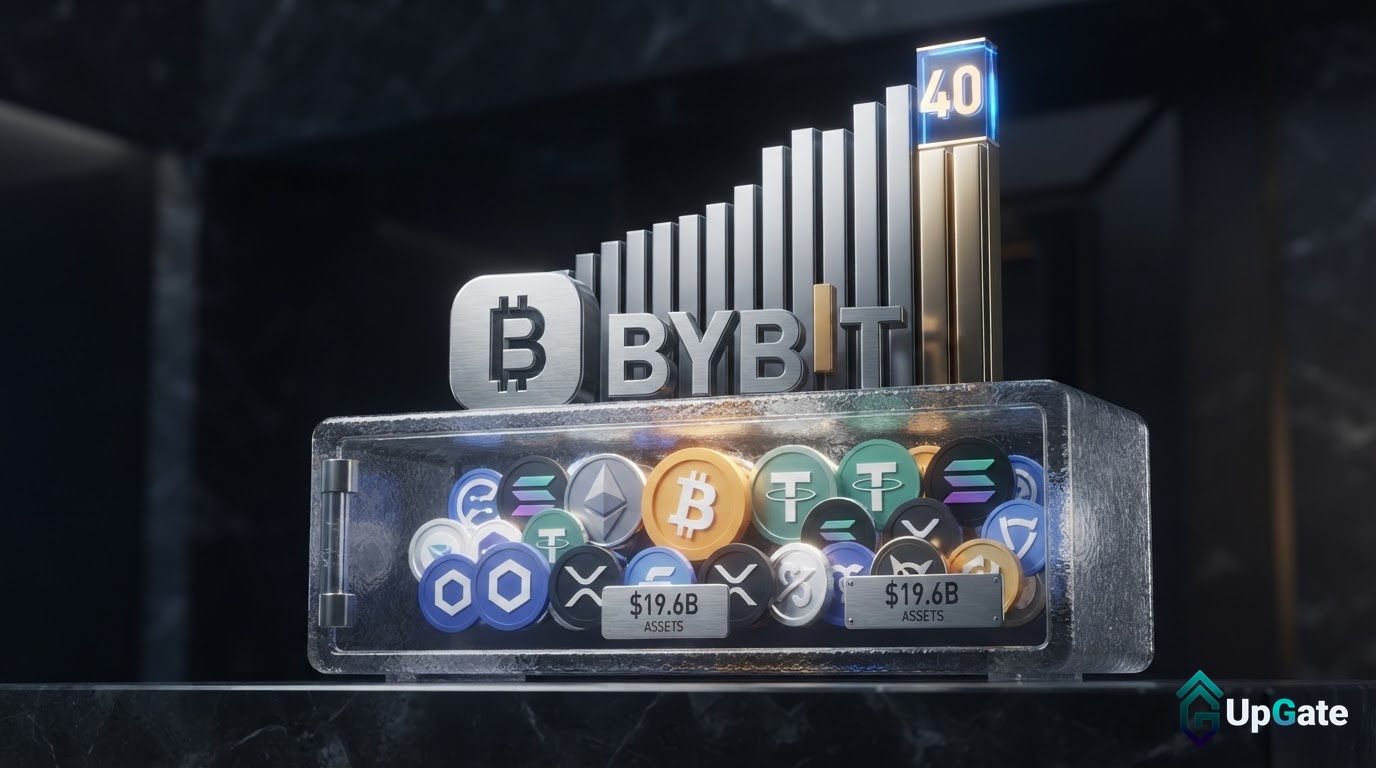
  • Bybit’s 40th Proof-of-Reserves Report: $19.6B in Assets, Driven by Expanded Token List

    Bybit’s 40th Proof-of-Reserves Report: $19.6B in Assets, Driven by Expanded Token List

    Bybit’s 40th proof-of-reserves report, released around September 30, 2026, shows covered assets totaling $19.6 billion as of a September 23, 2026 snapshot. This figure represents an increase from the previous report’s $18.1 billion, a rise primarily attributed to the addition of 10 new tokens, expanding the total covered to 50. According to the report, all 50 tokens maintain a reserve ratio of 100% or higher, verified by Hacken.

    The report, based on data from 03:00 UTC on September 23, 2026, details Bybit’s covered assets at $19.6 billion. This is up from approximately $18.1 billion in the prior report. The expansion of the in-scope list to 50 tokens, an increase of 10 new assets, is cited as the primary reason for this growth, rather than solely an increase in user deposits. The 10 newly added tokens reported reserve ratios ranging from 101% to 125%.

    Key asset reserves remain robust. Bitcoin user assets were approximately 56,131 BTC against reserves of 58,722 BTC, yielding a 104% reserve ratio. Ethereum user holdings stood at 551,869 ETH with reserves of 570,018 ETH, a 103% reserve ratio. For Tether (USDT), liabilities were around $3.59 billion with reserves at approximately $3.96 billion, showing a 110% reserve ratio.

    Bybit initiated its proof-of-reserves program in December 2022 and has issued monthly reports since then. The verification process utilizes Merkle trees, a cryptographic method ensuring data integrity. The exchange reports serving over 80 million users.

    It is important to note that this report reflects balances at a specific moment in time. Assets outside the list of 50 tokens are not included in this verification. The monthly report aims to provide transparency in an industry where exchange solvency is a recurring concern.

    As stated in the report, every token in scope was fully backed at the time of the snapshot. However, the report also acknowledges the inherent limitations of snapshot data, noting that assets outside the specified list are not part of this particular verification.

    Broader Context

    Source materials place the factual news in this context: In an industry where exchange solvency is a recurring worry, a monthly receipt like this gets read closely.

    Why This Matters

    Bybit’s consistent monthly proof-of-reserves reporting, now encompassing 50 tokens, offers a degree of transparency in an industry frequently concerned with exchange solvency. The latest report highlights robust reserve ratios across all covered assets, with the increase in total covered value primarily driven by the expanded token list rather than solely new deposits.

  • Google Launches Gemini 4 Argon AI Model with Advanced Cybersecurity Focus

    Google Launches Gemini 4 Argon AI Model with Advanced Cybersecurity Focus

    Google has unveiled Gemini 4 Argon, its latest flagship AI model, emphasizing significant advancements in cybersecurity capabilities. The model is initially being made available to vetted security teams through the Fairwind Program, with a phased public rollout to follow.

    Gemini 4 Argon has demonstrated strong performance across key benchmarks. On the DeepSWE v1.1 test, which assesses AI performance in software engineering tasks, Gemini 4 Argon achieved a score of 77.9%. This score surpasses previous models, as Gemini 3.6 Flash recorded 49% on the same test in July. For comparison, Claude Opus 5.5 scored 74.2% and GPT-6 Astra scored 74.1% on the DeepSWE v1.1 test.

    The model’s cybersecurity features are a primary focus. On Gray Swan’s Indirect Prompt Injection benchmark, designed to test an AI’s susceptibility to malicious instructions embedded within content, Gemini 4 Argon achieved a low score of 0.7%. This indicates improved resilience compared to competitors such as Claude Opus 5.5 and Claude Fable 5.1, which scored 1.0%, and GPT-6 Astra at 8.5%. Google also reports that Gemini 4 Argon attained a 70.9% score on the Wiz Penetration Test Benchmark, outperforming Gemini 3.8 Flash Cyber’s 58.2% score.

    Google states that Gemini 4 Argon can process up to 1 million tokens in a single reply, a substantial increase from the 64,000 tokens of previous models. The company also noted that Argon assisted the security firm Wiz in identifying a critical flaw within healthcare software.

    A notable aspect of Gemini 4 Argon’s release is its operation “without cyber guardrails.” Google’s stated rationale is that defenders require AI models capable of emulating attacker tactics to identify and patch vulnerabilities before they can be exploited. Acknowledging the dual-use potential of these capabilities, Google indicated that a phased rollout is considered the safest approach. The company is also participating in the U.S. government’s voluntary process for pre-release model access.

    The Fairwind Program, Google’s initiative for controlled access to cyber defense tools, launched on September 2 with over 650 partners, including government entities and critical infrastructure operators. This program serves as the initial access channel for Gemini 4 Argon.

    Broader access to Gemini 4 Argon will commence with paid API customers and subscribers of Google AI Ultra. Introductory pricing is set at $2 per million input tokens and $10 per million output tokens. Standard rates will be $4 per million input tokens and $20 per million output tokens, with Google yet to specify the end date for the introductory period.

    This release occurs within a competitive AI development landscape, marked by recent introductions of new models from competitors like Anthropic and OpenAI. Google’s leadership has also signed a voluntary AI accord previously unveiled by President Trump.

    Why This Matters

    The materials describe a narrow update: Google has launched Gemini 4 Argon, its most capable AI model, which demonstrates advanced performance in coding, office tasks, and particularly in cybersecurity. The exact end date for introductory pricing of Gemini 4 Argon.

    Broader Context

    Source materials place the factual news in this context: Gemini 4 is finally here, one week after the release of Claude Opus 5.5 and one day after GPT 6.1 Sol, proving American labs are very much committed to slowing down AI development. Please excuse our sarcasm.

  • Robinhood to Debut Crypto Perpetual Futures in US

    Robinhood to Debut Crypto Perpetual Futures in US

    Robinhood to Introduce Perpetual Futures for US Customers

    Robinhood is preparing to launch perpetual futures contracts for eligible customers in the United States within the coming months. The move signals an expansion of the trading platform’s offerings into more complex derivatives.

    CEO Touts “First True Perps”

    CEO Vlad Tenev announced the upcoming product on X, formerly Twitter, stating that Robinhood is bringing “America’s first true perps” to market. He noted that profits and losses on these contracts will be settled every 15 minutes. The announcement was made Tuesday at the company’s HOOD Summit in Houston.

    Expanded Crypto Offerings

    Customers will have the ability to go long or short on a range of cryptocurrencies, including Bitcoin (BTC), Ethereum (ETH), Solana (SOL), XRP, Dogecoin (DOGE), Cardano (ADA), Chainlink (LINK), and Hype (HYPE).

    A perpetual future is a type of leveraged contract that mirrors an asset’s price without a fixed expiration date, allowing traders to maintain positions as long as they can cover potential losses. Robinhood’s Bitcoin and Ethereum contracts will offer up to 10x leverage, while the other six cryptocurrencies will be capped at 3x leverage. Robinhood Derivatives will provide these contracts in partnership with Bitstamp.

    Competitive Trading Costs and Features

    The trading platform is introducing a promotional fee of one basis point (0.01%) per trade through the end of the year, which Robinhood claims is among the lowest in the industry. Additionally, users will be able to set stop-loss and take-profit orders, monitor their liquidation price in real-time, and receive alerts when a position is at risk.

    “Ownership doesn’t work without markets, and markets don’t work without traders,” Tenev said, emphasizing Robinhood’s ambition to become “the best place in the world for active traders” by providing tools previously accessible only to institutional investors.

    AI Tools and Earnings Contracts

    In parallel, Robinhood has unveiled an in-app artificial intelligence tool called Robinhood Agents. This feature is designed to assist customers in developing trading strategies, researching markets, and executing trades within predefined limits, with manual trade approval enabled by default. Since its launch in May, over 15,000 users have reportedly opened agentic trading accounts, with agents interacting with Robinhood tools nearly 30 million times daily.

    The firm is also introducing earnings contracts linked to company performance metrics such as revenue targets and earnings results. These binary options contracts will be available through Cboe and will require options trading approval.

    Broader Industry Trends

    Robinhood’s move into derivatives is part of a wider trend in the financial industry. Notably, Coinbase filed registrations with the U.S. Securities and Exchange Commission (SEC) in early September to offer single-stock perpetual futures to American investors, though a launch timeline has not been confirmed.

    Competitors are also expanding their derivatives offerings. Bybit, for instance, launched forex perpetuals on September 8, allowing leverage of up to 100x and operating 24/7, a significantly higher leverage ceiling than Robinhood’s 10x.

    It is important for traders to remember that perpetual futures carry funding costs and liquidation risks, as positions can be closed if losses exceed a certain threshold. Robinhood has not yet provided a specific launch date for its perpetual futures, only indicating “the coming months.”

  • NEAR Traders Bet Against Rally on Hyperliquid

    NEAR Traders Bet Against Rally on Hyperliquid

    Traders Face Steep Losses as NEAR Surges Against Market Sentiment

    A significant portion of top traders on the derivatives platform Hyperliquid have found themselves on the wrong side of a powerful rally in the NEAR cryptocurrency, incurring substantial unrealized losses. While many are betting against the market, the NEAR token’s impressive ascent in September has proven costly for bearish positions.

    Bears Squeezed by NEAR’s Price Surge

    The most prominent short position on NEAR on Hyperliquid is currently facing approximately $13 million in unrealized losses. In stark contrast, the largest long position has seen gains of around $17.35 million.

    Data from September 30, 2026, revealed that the top NEAR short held a notional value of roughly $22.78 million, employing 3x leverage. This position had accumulated unrealized losses of approximately $12.83 million.

    The leading bullish position, however, tells a different story. According to research data, this top long had a notional value of approximately $30.87 million, utilizing 10x leverage. Its unrealized gains were estimated to be between $17.13 million and $17.55 million.

    The pressure on bearish traders extends beyond a single entity. Two specific addresses, identified as 0xfe7c… and 0xdd53…, collectively held about 4.31 million NEAR in short positions. As of September 27, their combined unrealized losses surpassed $25 million, with each individual facing losses exceeding $12 million.

    Price Action Drives Losses

    The significant losses for short sellers can be directly attributed to NEAR’s price performance. The token experienced a dramatic climb throughout September, moving from the low-$2 range to approximately $5.37-$5.39.

    This price surge was accompanied by a notable increase in trading activity. NEAR perpetual open interest reached approximately $345 million between September 23 and September 30.

    The recent introduction of NEAR/USDC spot markets on Hyperliquid coincided with this heightened trading volume. The resulting market conditions have significantly benefited traders who were positioned for an upward price movement.

    Platform-Wide Sentiment vs. NEAR Specifics

    Across the entire Hyperliquid platform, whale data indicated a general bearish bias, with short positions accounting for 53.33% of the open notional value. However, when focusing specifically on NEAR, the sentiment shifts. Among NEAR whales, long positions totaled $80.43 million, significantly outweighing the $59.16 million in short positions. This suggests that while many of the platform’s top traders are leaning bearish, the largest capital allocated to NEAR is positioned for gains.

    Hyperliquid operates as a venue for perpetual futures, a type of derivative allowing traders to speculate on price movements without a set expiration date. The platform’s transparency, which enables public tracking of positions and wallet addresses, makes significant whale movements a subject of considerable interest.

    The addition of spot NEAR/USDC trading provided an additional avenue for engaging with the token on the platform, and this development is believed to have contributed to the surge in activity observed in September.

    Risks and Outlook

    The most immediate risks lie with the short positions. Those carrying losses of $12 million or more are under considerable pressure, and new short positions were still being initiated in real-time as of late September.

    Conversely, the top long position, operating with 10x leverage, faces the risk that even a minor pullback from the $5.37-$5.39 range could significantly erode its substantial paper gains.

    The $345 million in open interest is a key figure to monitor. Elevated open interest, coupled with high funding rates, typically signals an environment ripe for volatility, as a large number of participants are leveraged in opposing directions simultaneously.

  • Crypto Group Backed by Coinbase Announces Midterm Picks After Clarity Act Fails

    Crypto Group Backed by Coinbase Announces Midterm Picks After Clarity Act Fails

    Crypto Advocacy Group Backs Bipartisan Slate in Key Midterm Races

    Stand With Crypto, the advocacy organization launched by Coinbase in 2023, revealed a bipartisan list of endorsements for Senate and House races on Wednesday, intensifying its electoral efforts just a month before November’s midterm elections and two weeks after the collapse of the Clarity Act in the Senate.

    The group’s initial Senate endorsements cover three contests. In Ohio, it is supporting Republican Senator Jon Husted, who is competing against Sherrod Brown, the former Chair of the Senate Banking Committee and a long-standing skeptic of cryptocurrency.

    Stand With Crypto also announced its backing for Republican Representative Ashley Hinson, who is running for a Senate seat in Iowa, and Democratic Representative Chris Pappas, campaigning in New Hampshire against former Republican Senator John Sununu. The organization stated that its candidate selections are based on their stances on cryptocurrency policy, “regardless of party affiliation.”

    On the House side, endorsements include Iowa Republican Mariannette Miller-Meeks and Alabama Democrat Shomari Figures. The group indicated it plans to increase its advertising in six House campaigns. This follows an earlier round of endorsements in August, when Stand With Crypto backed 32 incumbent House members it described as “proven digital asset policy champions.”

    The timing of these endorsements is particularly significant, given the recent failure of the Clarity Act and the subsequent, thinly veiled threats issued by the lobbying group towards lawmakers who voted against it.

    The Senate failed to advance the Clarity Act last month in a 49-50 vote, with Democrats voting as a unified bloc amid concerns regarding President Donald Trump’s cryptocurrency dealings. Stand With Crypto characterized this legislative setback as a pivotal moment, warning at the time that senators’ votes would be recorded on its public scorecard and that its supporters would hold lawmakers accountable at the ballot box.

    Executive Director Mason Lynaugh has stated that the group’s more than three million advocates are now fully concentrated on electing pro-cryptocurrency candidates.

    These endorsements emerge amidst a significant influx of political funding into the cryptocurrency sector. Unlike super PACs, Stand With Crypto does not make direct campaign contributions. Instead, it focuses on voter mobilization and evaluates candidates through its Voter Hub.

    However, candidates who receive high ratings from the group often benefit from funding from industry-aligned PACs. The Fairshake super PAC, for instance, recently launched a $30 million spending campaign targeting Brown, and combined political spending from cryptocurrency-aligned groups has approached approximately $200 million for the current election cycle.

    The endorsement of Husted highlights the critical nature of the Ohio race. Brown’s potential return to the Senate would grant cryptocurrency skeptics a powerful voice on the Senate Banking Committee, making Ohio a crucial test case for the industry’s electoral influence and its ability to sway voter behavior.

    For the moment, the message from the grassroots wing of the cryptocurrency sector is unambiguous: with legislative progress stalled in Congress, the battleground has shifted to the campaign trail.

  • Standard Chartered Projects Ethena’s USDe at $40B, ENA at $2

    Standard Chartered Projects Ethena’s USDe at $40B, ENA at $2

    Standard Chartered Predicts Ethena’s USDe to Reach $40 Billion by 2028, ENA Token to Surge Sevenfold

    British multinational bank Standard Chartered has issued a bullish forecast for Ethena, projecting its USDe stablecoin supply to expand eightfold to $40 billion by the end of 2028. This growth is anticipated as the protocol diversifies its yield generation strategies beyond traditional cryptocurrency markets.

    ENA Token Price Target Set at $2

    In a research report released Wednesday, Standard Chartered initiated coverage of Ethena’s native token, ENA, setting a year-end 2028 price target of $2. This represents a roughly sevenfold increase from the token’s price of $0.28 cited in the report. The bank also anticipates that USDe will grow at a slightly faster pace than the overall stablecoin market during the same period.

    Outperforming Bitcoin and Ether

    Standard Chartered’s projections suggest that ENA could outperform both Bitcoin (BTC) and Ether (ETH) through 2028. The bank forecasts BTC to reach $300,000 and ETH to hit $18,000 by the end of the forecast horizon.

    Diversification Beyond Crypto Yield

    The report highlights that declining returns from USDe’s traditional crypto basis trade—which involves holding spot crypto while shorting perpetual futures—has prompted Ethena to explore new avenues. These include expanding into decentralized finance (DeFi) and institutional lending, real-world assets, and basis trades linked to equities and commodities. These diversified sources currently contribute a blended yield of 5.2%, providing Ethena with greater capacity for scaling.

    Standard Chartered also forecasts a significant expansion in the tokenized asset market, predicting it will grow from approximately $350 billion today to $4 trillion by the end of 2028. This expansion will broaden the pool of assets available for Ethena to generate yield.

    ENA Buybacks Tied to USDe Growth

    A key element of Standard Chartered’s valuation thesis for ENA is the direct link between USDe’s growth and token buybacks. An Ethena governance-approved “fee switch” implemented in early September mandates that 95% of net revenue from its business lines be directed towards ENA buybacks once USDe reaches specific supply milestones.

    Ethena estimates that at a USDe supply of $25 billion, this mechanism could facilitate annual ENA buybacks totaling $375 million, assuming a 6% gross protocol yield and a 25% net revenue take rate.

    Sustainable Buyback Rate

    Standard Chartered estimates that if USDe reaches its projected $40 billion supply and ENA’s price remains static, annual buybacks could represent roughly 23% of ENA’s circulating market capitalization. The bank deems such a rate unsustainable, anticipating that ENA’s price will need to rise to a level where buybacks stabilize at a lower percentage of its market value.

    As a point of comparison, Standard Chartered cited Uniswap, noting that UNI’s annualized buyback rate has stabilized between 3% and 4% as its token price has appreciated.

    As of Wednesday, ENA was trading around $0.27, marking an approximate 28% increase over the past week and a 77% rise over the past month, according to CoinGecko data. The token currently holds a market capitalization of approximately $2.65 billion.