Tag: Adoption & Partnerships

  • Citadel Securities Invests $400 Million in Crypto.com at $20 Billion Valuation, Eyes Tokenized Assets

    Citadel Securities Invests $400 Million in Crypto.com at $20 Billion Valuation, Eyes Tokenized Assets

    Citadel Securities has injected $400 million into Crypto.com, a strategic investment that values the cryptocurrency platform at $20 billion. This significant funding round, the first institutional capital raise in Crypto.com’s ten-year history, signals a notable evolution in Citadel Securities’ engagement with the digital asset sector.

    The substantial capital infusion is designated for expansion into key areas, including tokenized securities, derivatives, prediction markets, and other real-world assets. This strategic allocation suggests Citadel Securities’ focus is on developing the foundational infrastructure for future financial markets, rather than a broad endorsement of cryptocurrencies themselves.

    Historically, Citadel Securities, a prominent firm in U.S. equity trading founded by Ken Griffin, adopted a cautious approach to the crypto market, gradually entering market-making activities. This investment marks a clear shift towards more active participation and a strategic commitment to the evolving digital asset landscape.

    The increasing convergence of traditional finance and the cryptocurrency sector is underscored by this move. Institutions once hesitant are now investing in the infrastructure that underpins digital assets, such as tokenization and 24/7 markets. This trend points to a broader integration of traditional financial systems with the capabilities offered by blockchain technology.

    Reported by Tyler Warner for Decrypt, this development highlights a strategic pivot by a major financial entity towards the operational and infrastructural aspects of the crypto industry. The investment in Crypto.com is framed as a move to acquire and develop the ‘rails’ for future financial transactions, emphasizing tokenization and continuous markets over direct cryptocurrency speculation.

    Why This Matters

    The materials describe a narrow update: Citadel Securities invested $400 million in Crypto. The exact timeline of Citadel Securities’ shift from sidelines to active participant in crypto.

    Broader Context

    Source materials place the factual news in this context: Morning Minute is a daily newsletter written by Tyler Warner.

  • Citadel Securities Invests $400 Million in Crypto.com at $20 Billion Valuation Amid Market Downturn

    Citadel Securities Invests $400 Million in Crypto.com at $20 Billion Valuation Amid Market Downturn

    Citadel Securities has made a strategic investment of $400 million in the cryptocurrency exchange Crypto.com, valuing the company at $20 billion. This significant funding round, announced on Thursday, July 16, 2026, marks Crypto.com’s first institutional funding and signals continued traditional finance interest in the digital asset sector, even as the broader crypto market experiences a downturn.

    The investment aims to accelerate Crypto.com’s expansion into various asset classes, including tokenized securities and derivatives. “The size of the opportunity in front of us is staggering, as crypto increasingly becomes the rails for finance,” according to a statement from the company, framing the investment as pushing the industry into “a new era of institutionalization.”

    This deal hands the market maker founded by billionaire Ken Griffin a stake in the Singapore-based exchange. It is the latest in a series of traditional finance firms staking out positions in crypto infrastructure. Citadel Securities itself invested $200 million in rival exchange Kraken in November, alongside market-making competitor Jane Street. Intercontinental Exchange, which owns the New York Stock Exchange, has taken a stake in OKX, while Nasdaq invested $50 million in Gemini.

    Market Context
    The investment lands even as crypto prices sag. Bitcoin is down 28% this year, and the broader crypto market is valued at approximately $2.2 trillion. Crypto.com won conditional approval for a U.S. national trust bank charter in February, and Coinbase added stock trading for U.S. users in the same month, indicating a push by crypto platforms to broaden their offerings.

    Company Profile and Ties
    Crypto.com ranks 11th among exchanges by trading volume, according to CoinMarketCap. The exchange offers crypto, stocks, and prediction markets to retail traders. The company has also built ties with the Trump administration, acting as a business partner and investor in Trump Media & Technology Group, and its affiliated CRO token was used to pay bonuses to winners of a UFC bout staged on the White House lawn.

    Why This Matters
    This investment by Citadel Securities in Crypto.com underscores a broader trend of traditional financial institutions increasing their engagement with digital asset infrastructure. Despite a current downturn in the crypto market, evidenced by Bitcoin’s 28% year-to-date decline, such investments signal a strategic bet on the future evolution of financial markets. The convergence of traditional finance and digital asset infrastructure, as highlighted by this deal, points to potential improvements in market efficiency and the expansion of crypto platforms into new asset classes like tokenized securities and derivatives, according to the FactSheet.

  • 1win Expands Prediction Markets to Include Cryptocurrency Forecasts

    1win Expands Prediction Markets to Include Cryptocurrency Forecasts

    1win, an international betting brand, has expanded its Markets product to incorporate cryptocurrency-themed prediction markets, allowing users to speculate on major industry milestones and events. This strategic move aligns with a growing trend of cryptocurrency speculation within the broader prediction market space.

    The new crypto-themed forecasts on 1win Markets utilize a simple binary format, where users can make ‘Yes’ or ‘No’ predictions on various crypto-related topics. According to 1win, this approach makes speculating on digital asset industry events interactive and easy to understand, even for those unfamiliar with traditional betting.

    “Crypto-related forecasts are becoming a natural extension of prediction markets, giving users another way to engage with some of the biggest narratives in the crypto industry. Though on 1win Markets, we have made it an interactive and easy-to-understand format,” stated Mike Danshin, CMO 1win Crypto.

    This expansion signifies a convergence between cryptocurrency communities and binary prediction platforms. Users are increasingly interested in predicting outcomes beyond traditional areas like sports and politics, extending their speculative interests to the digital asset industry. By adding these crypto-focused markets alongside existing categories such as sports, politics, technology, entertainment, and global events, 1win aims to broaden its crypto-driven ecosystem.

    Founded in 2016, 1win operates as a crypto entertainment platform across Asia, Latin America, and Africa. The brand has established collaborations with various public figures, including Luis Suarez, Jon Jones, Gable Steveson, Tyga, and Ilia Topuria. For the 2026 FIFA World Cup, football legend Luis Suarez will serve as the official 1win football expert.

    While the expansion is noted, specific details regarding the exact cryptocurrency topics or the precise nature of the ‘major industry milestones’ available for prediction are not yet detailed. The introduction of these markets on July 17th, 2026, however, positions 1win to capitalize on the growing user interest in predicting changes within the dynamic digital asset sector.

    Why This Matters

    The materials describe a narrow update: 1win, an international betting brand, has added new cryptocurrency prediction markets to its Markets product, allowing users to speculate on major industry milestones and events using a simple binary ‘Yes’ or ‘No’ format. Specific cryptocurrency topics covered in the new prediction markets are not detailed.

    Broader Context

    Source materials place the factual news in this context: Cryptocurrency has become one of the fastest-growing categories within prediction markets, as traders and investors increasingly look beyond price charts to speculate on major industry milestones.

  • Morgan Stanley’s E*TRADE Platform Now Offers Spot Trading for Bitcoin, Ethereum, and Solana

    Morgan Stanley’s E*TRADE Platform Now Offers Spot Trading for Bitcoin, Ethereum, and Solana

    Morgan Stanley’s E*TRADE platform has launched spot trading for Bitcoin, Ethereum, and Solana, enabling eligible customers to buy, sell, and hold these digital assets. This integration marks a significant step in bringing cryptocurrencies to a traditional brokerage service.

    The trading is facilitated through a partnership with Zero Hash, a digital asset infrastructure provider. Under this arrangement, digital assets are held in linked Zero Hash accounts, not directly by Morgan Stanley. A 50-basis-point fee will be applied to all trades, with the company anticipating the rollout of crypto transfer functionality later this year.

    This offering aligns with Morgan Stanley’s expanding digital asset strategy. Earlier this year, the firm filed registration statements with the SEC for spot Bitcoin and Solana exchange-traded funds. In April, Morgan Stanley also indicated exploration into tokenization, tokenized money market funds, and tax-management tools for digital assets, alongside the introduction of a money market fund for stablecoin issuers under the GENIUS Act.

    Morgan Stanley had previously disclosed plans in September 2025 to introduce crypto trading on E*TRADE, initially supporting Bitcoin, Ethereum, and Solana via Zero Hash. The current launch fulfills this plan, integrating direct spot crypto trading into the firm’s brokerage services.

    Company representatives highlighted the move as a response to evolving client needs. “Our clients’ needs are evolving, and they want to invest, trade, bank, and plan for the future all in one place,” said Matt Jones, Head of E*TRADE. “Whether they’re buying their first share, exploring crypto, participating in an IPO, or planning for retirement, our job is to meet them where they are – with the confidence and trust that comes from being part of Morgan Stanley.”

    Chad Turner, head of Morgan Stanley Wealth Management Platforms, added, “With the rollout of crypto trading on E*TRADE we’re advancing our digital assets strategy and bringing new capabilities to clients in an integrated way.”

    The E*TRADE platform update also includes enhancements such as retirement planning tools, fractional share trading, an updated IPO Center, and new features for active traders. A key aspect of this integration is the ability for eligible customers to view their cryptocurrency holdings alongside their stocks and other investments.

    Why This Matters

    The materials describe a narrow update: Morgan Stanley has enabled eligible customers on its ETRADE platform to buy, sell, and hold Bitcoin, Ethereum, and Solana through a partnership with Zero Hash. The new offering lets investors view their cryptocurrency holdings alongside stocks and other investments in ETRADE.

    Broader Context

    Source materials place the factual news in this context: Morgan Stanley has launched spot cryptocurrency trading on its E*TRADE platform, allowing eligible customers to buy, sell, and hold Bitcoin, Ethereum, and Solana through a partnership with digital asset infrastructure provider Zero Hash.

  • Visa Launches Stablecoin Platform for Financial Institutions

    Visa Launches Stablecoin Platform for Financial Institutions

    Visa has launched a new enterprise platform, the Visa Stablecoin Platform (VSP), designed to enable financial institutions to issue, hold, and transfer stablecoins. The VSP integrates stablecoin minting, redemption, wallet infrastructure, and treasury management, allowing banks and fintech companies to conduct stablecoin operations within their existing payment and settlement workflows without needing to build their own blockchain infrastructure.

    According to Visa, the platform aims to simplify the operational aspects of stablecoins for institutions by providing a single place to manage these operations with the controls, security, and network reach expected from Visa. Initially, the VSP supports Open USD (OUSD), alongside Visa’s existing support for Circle’s USDC and Paxos’ USDG.

    Stablecoins are cryptocurrencies designed to maintain a fixed value, typically pegged to a fiat currency like the U.S. dollar. The stablecoin market is currently valued at approximately $304 billion, according to CoinGecko. This launch follows Visa’s strategic engagement with digital assets. In October, Visa published research suggesting that stablecoins could potentially bring portions of the $40 trillion global credit market onto blockchain rails, citing over $670 billion in stablecoin lending in the previous five years.

    Visa’s prior involvement in stablecoin infrastructure includes joining the Canton Network as a Super Validator in March, a role aimed at helping banks utilize stablecoins for payments, settlement, and treasury operations on a privacy-focused blockchain. In April, Visa expanded its stablecoin settlement program to include Base, Polygon, Canton, Arc, and Tempo, bringing the total number of supported blockchain networks to nine. At that time, Visa reported its annualized stablecoin settlement volume had reached $7 billion and that it supported more than 130 stablecoin-linked card programs across over 50 countries.

    The Visa Stablecoin Platform is currently available to select beta users. Specific details of this beta program and the timeline for wider availability remain uncertain.

    Why This Matters

    The materials describe a narrow update: Visa has introduced the Visa Stablecoin Platform (VSP), an enterprise system that integrates stablecoin minting, redemption, wallet infrastructure, and treasury management. The specific details of the beta user program.

    Broader Context

    Source materials place the factual news in this context: Visa has introduced a new platform that enables banks, fintechs and payment providers to issue, hold and transfer stablecoins through its payments network.

  • Bitunix Card Offers Crypto Spending and Potential Yield, With Conditions

    Bitunix Card Offers Crypto Spending and Potential Yield, With Conditions

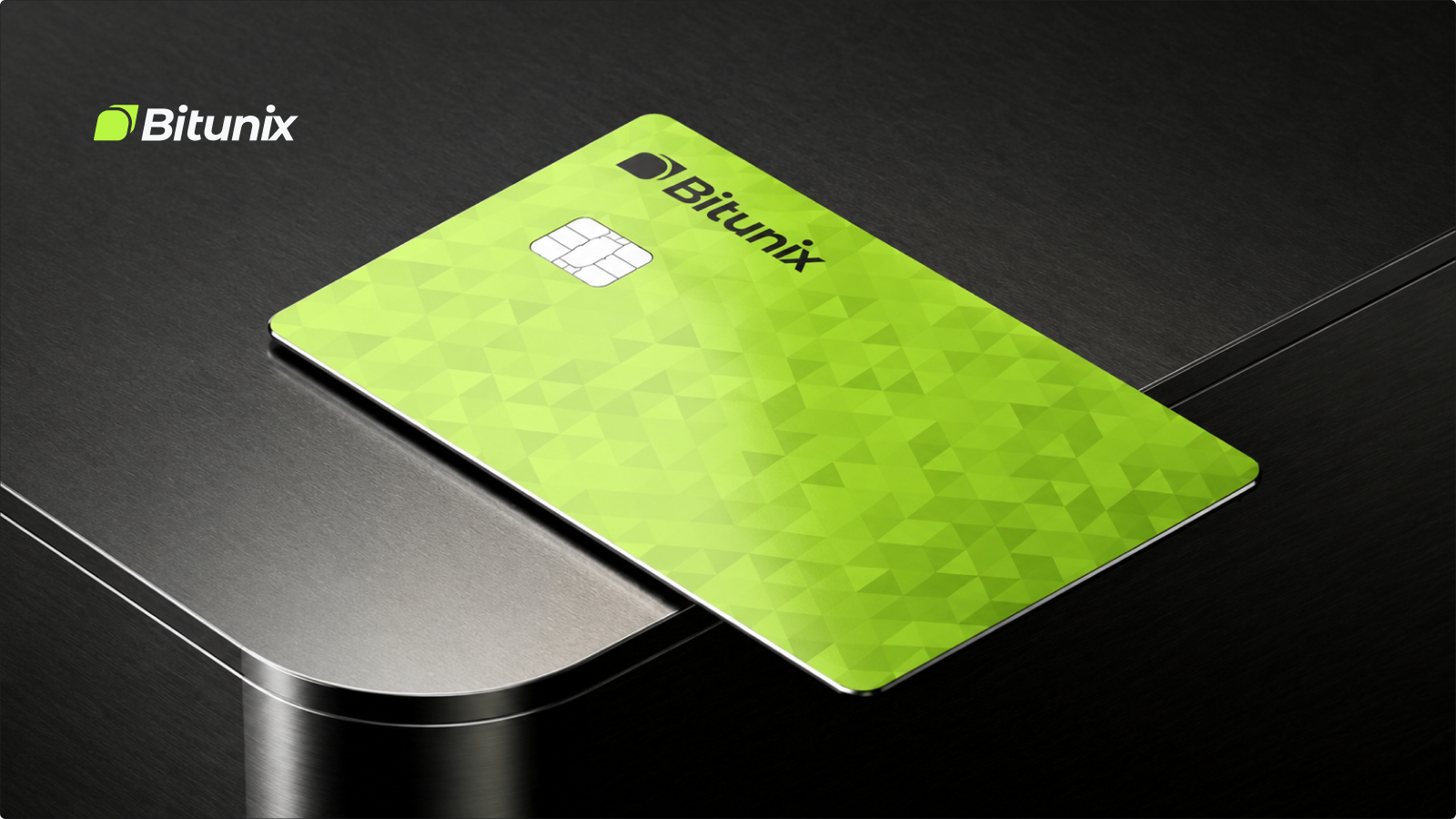
    Bitunix has launched the Bitunix Card, a Visa-powered debit card that allows users to spend cryptocurrency on everyday purchases and potentially earn yield on their balances. Introduced on July 16th, 2026, the card aims to integrate digital assets with daily financial needs by connecting with traditional payment infrastructure.

    According to Bitunix, the card is accepted globally at over 130 million merchants that accept Visa. It also supports integration with major digital wallets, including Apple Pay, Google Pay, and Paypal, alongside selected regional payment platforms, facilitating cryptocurrency spending for daily transactions.

    The Bitunix Card offers users the potential to earn yield on eligible balances, with Bitunix stating that these can accrue annual yield up to 11.6%. Additionally, the card provides up to 8% cashback on eligible spending, capped at 1,000 USDT monthly. The company notes that specific yield percentages and cashback rates may vary based on conditions and user VIP tiers.

    To activate the card, a minimum balance of 100 USDT must be transferred to the card account. Bitunix has stated there are no issuance or monthly maintenance fees associated with the card.

    Bitunix operates as a global cryptocurrency derivatives exchange serving over 5 million users across more than 150 countries. The platform emphasizes liquidity, trading capabilities, and user experience, supported by security measures like Proof of Reserves and the Bitunix Care Fund.

    The introduction of the Bitunix Card aligns with a broader trend in fintech towards creating practical crypto products that bridge digital assets with daily commerce. By combining spending and earning functionalities, Bitunix seeks to offer users enhanced ways to utilize their digital assets beyond trading.

    Why This Matters

    The Bitunix Card launch represents an effort to increase the practical utility of cryptocurrency for everyday use. The card enables users to spend cryptocurrency for daily transactions and potentially earn yield on their holdings, reflecting a growing demand for crypto products that connect digital assets with everyday spending.

    Broader Context

    Bitunix is a global cryptocurrency derivatives exchange trusted by over 5 million users across more than 150 countries. The platform is built for traders who expect more, committed to providing Ultra Trust, Ultra Products, and Ultra Experience. Bitunix offers a fast registration process and a user-friendly verification system to ensure safety and compliance. With global standards of protection through Proof of Reserves (POR) and the Bitunix Care Fund, the exchange prioritizes user trust and fund security.

  • Ripple Expands Initiatives Amidst XRP Market Volatility and Divergent Price Predictions

    Ripple Expands Initiatives Amidst XRP Market Volatility and Divergent Price Predictions

    Ripple has recently announced a series of strategic partnerships and initiatives, including a significant focus on veteran support and membership in the x402 Foundation. These developments occur as the XRP token experiences market volatility, with analysts offering a wide spectrum of price predictions.

    Ripple’s Corporate Initiatives

    In its commitment to supporting veterans, Ripple has partnered with a nonprofit organization aimed at assisting unemployed veterans in finding employment. The company has pledged to match donations up to $10,000 towards this cause, which aims to help 200,000 people by 2030. Furthermore, Ripple announced that 25 veterans have been selected to receive a $10,000 grant.

    Expanding its reach into open-source standards, Ripple has joined the x402 Foundation as a premier member, alongside companies like Coinbase and Circle. This foundation focuses on developing open-source standards for AI-powered payments, which could facilitate trusted, interoperable machine-to-machine transactions. Markus Infranger, senior vice president of RippleX, commented on the collaboration, highlighting its potential for future payment systems.

    Ripple has also secured authorization as a Crypto Asset Service Provider (CASP) in the European Union and has established a marketing partnership with the Kansas Jayhawks. These moves underscore Ripple’s ongoing efforts to broaden its operational footprint and influence within the digital asset space.

    XRP Market Dynamics

    Meanwhile, the XRP token has seen varied market activity. The launch of spot XRP ETFs in the US in November 2025, initially met with significant investor enthusiasm and consistent inflows, has recently experienced a shift. In the last week of June, over $7 million exited XRP funds, breaking a period of sustained positive flows. This trend may indicate a reduction in exposure by conservative investors, such as pension funds and hedge funds, which could impact XRP’s price.

    As of July 15, XRP is trading around $1.11, marking a 3% increase on a daily scale. This uptick appears to be influenced by lower-than-expected US inflation data released on July 14, which positively affected the broader cryptocurrency market.

    Divergent Outlooks

    Despite these market movements, XRP remains a subject of diverse price predictions. Some analysts on platforms like Crypto X foresee new all-time highs, with figures like Crypto Patel projecting a rise to $9 and Celal Kucuker suggesting a potential increase to $7 later this year. Conversely, other market observers express caution. X user Diana noted that XRP recently dipped below the $1.08 support level, a development that could potentially lead to a short-term sell-off towards $0.87.

    The future price trajectory of XRP remains uncertain, with a wide range of predictions reflecting the inherent volatility and speculative nature of the cryptocurrency market. While Ripple continues to expand its corporate initiatives and regulatory standing, the market’s reaction to XRP is influenced by a complex interplay of investor sentiment, broader economic data, and varied analyst outlooks.

    Why This Matters

    The materials describe a narrow update: Ripple has announced several recent activities, including a partnership with a nonprofit to assist unemployed veterans, matching donations up to $10,000, and selecting 25 veterans for $10K grants. The future price of XRP is subject to a wide range of predictions, from new all-time highs to a significant crash.

    Broader Context

    Source materials place the factual news in this context: The company behind the popular cryptocurrency XRP has been quite active lately, announcing strategic partnerships and unveiling interesting initiatives.

  • Ripple Partners with x402 Foundation for RLUSD AI Payments; XRP Price Outlook Uncertain

    Ripple Partners with x402 Foundation for RLUSD AI Payments; XRP Price Outlook Uncertain

    XRP Price Edges Higher Amid AI Payment Developments, Chart Resistance Remains

    XRP’s price is once again drawing attention as it hovers around $1.11, marking a roughly 3.6% increase over the past 24 hours. Despite this upward movement, the cryptocurrency continues to face a significant resistance zone that has thwarted several intraday rallies this week.

    The current market action has been characterized by a gradual ascent rather than a decisive breakout. However, Ripple’s reported collaboration with the x402 Foundation to support AI payments powered by RLUSD is providing a renewed impetus to the long-term narrative surrounding the digital asset.

    The x402 initiative aims to establish RLUSD, Ripple’s dollar-backed stablecoin, as a settlement asset for autonomous AI agents. This concept has gained considerable traction, particularly after the XRP Ledger successfully processed over one million agentic transactions, each utilizing a fixed network fee of 0.0002 XRP. The x402 Foundation boasts an impressive roster of major industry players, including AWS, Google, Visa, Mastercard, Stripe, Circle, and Coinbase, underscoring the project’s substantial industry backing beyond mere promotional efforts.

    Ripple has expressed pride in joining the x402 Foundation as a Premier Member, stating, “As AI agents begin to take on more of the transaction lifecycle, they’ll need a way to pay that’s as fast and reliable as the way they already exchange data. We’ve been helping build that future on the XRP Ledger…”

    Concurrently, macroeconomic conditions have shown signs of improvement. The US consumer inflation rate for June registered at 3.5% year-over-year, aligning with expectations as energy prices contributed to a moderation in the monthly index. This development has somewhat alleviated concerns regarding tighter monetary policy, fostering a more positive sentiment across both equity and cryptocurrency markets.

    Ripple’s focus on payment solutions has been a consistent theme for months, and RLUSD continues to broaden its reach. Nevertheless, the price action needs to validate this narrative. Until buyers can engineer a clear breakout, XRP is likely to remain in a cautious, wait-and-see mode, with fundamental developments providing a supportive backdrop while technical charts present a degree of restraint.

    XRP is currently trading around $1.11, having climbed approximately 3.5% in the last 24 hours. The trading session saw a range between $1.06 and $1.12, with its market capitalization nearing $69 billion. The price is still consolidating below the $1.12 mark, a pattern that often suggests the market is accumulating energy before its next significant move.

    Support levels are holding firm around $1.05 to $1.06, areas where buyers have consistently emerged. Meanwhile, resistance extends from $1.11 to $1.15, a zone that sellers have defended on multiple occasions. Trading volume has also seen an uptick, hinting at potential accumulation, though a decisive close above $1.12 would lend further credence to this possibility.

    Three potential scenarios are currently in play. The most optimistic outlook involves a daily close above $1.15, which could pave the way for a move towards the $1.20 to $1.30 range over time. The base case scenario anticipates XRP trading within the $1.07 to $1.13 range as traders assess incoming macroeconomic data. This period of consolidation can sometimes be a deliberate market strategy to encourage patience.

    Conversely, the bearish scenario is straightforward. A decisive breach below $1.05, supported by substantial trading volume, would shift momentum back to sellers and could drive XRP prices down to the mid-$0.90s. While longer-term price forecasts remain constructive, the immediate future of XRP’s price action appears to be dictated by technical chart patterns.

    At a price of $1.10 and a market cap of $68 billion, XRP represents a substantial asset. However, the asymmetric upside potential that early adopters experienced is structurally less accessible at this scale. This mathematical reality often prompts traders to seek opportunities in earlier-stage projects.

    Technical analysis of XRP suggests that the next significant price movement could take several weeks to materialize, a timeframe that aligns with the investment window offered by presale opportunities.

    Maxi Doge ($MAXI), an ERC-20 meme token, has emerged with a unique concept: a formidable canine entity embodying 1000x leverage trading energy, coupled with community-driven mechanics that extend beyond typical meme coin pumps. The project has successfully raised $4.8 million, with its current presale price at $0.0002829 and offering a dynamic staking APY to holders. Key features include exclusive trading competitions for holders with leaderboard rewards, a Maxi Fund treasury dedicated to liquidity and partnerships, and a marketing strategy rooted in viral “gym-bro” culture.

  • Finassets Adjusts Affiliate Revenue Share Program, Offering 40% First-Year Payout

    Finassets Adjusts Affiliate Revenue Share Program, Offering 40% First-Year Payout

    Finassets, a crypto payment gateway, has updated its affiliate revenue share program, introducing a 40% payout for processing revenue generated by a referred merchant in the first year. Following this initial period, the revenue share will be 20% for the subsequent five years, establishing a total earning window of six years per merchant.

    The company, founded in 2021 and registered in Panama, aims to differentiate its offering in the competitive crypto affiliate program market. This revised model emphasizes sustained earnings derived from ongoing merchant processing volume, a departure from programs that focus primarily on short-term trading activities. According to Finassets, this structure is designed to allow partners to benefit from merchant relationships over an extended period without continuous new referral efforts.

    “Most cryptocurrency affiliate programs ask partners to keep generating referrals just to keep earning,” stated Vitalijs F., CEO of Finassets. “We built this revenue share model so one merchant relationship can keep paying out for years, without additional marketing efforts from the partner after the introduction.”

    The program is available to eligible B2B participants in selected international markets, subject to Finassets’ terms and applicable jurisdictional requirements. Operational aspects for partners include same-day crypto payouts and dedicated account managers, with deposits typically reported within approximately 30 seconds of network confirmation.

    Several program specifics remain undisclosed. The criteria for ‘eligible B2B participants’ and the scope of ‘selected international markets’ are not detailed. Furthermore, the precise ‘programme terms’ and ‘applicable jurisdictional requirements’ are not fully outlined, nor is the ‘merchant profile’ used for extending the earning term beyond the initial six years.

    Finassets provides services including crypto invoicing, payment links, payment buttons, mass payouts, API integration, and crypto checkout, supporting approximately 70 cryptocurrencies.

    Why This Matters

    Finassets, a crypto payment gateway, has adjusted its affiliate revenue share program. The company’s stated aim is to provide a more lucrative and stable earning potential for partners tied to ongoing merchant processing revenue. However, specific details regarding eligibility for B2B participants and the selected international markets are not yet disclosed.

    Broader Context

    Finassets operates as a crypto payment gateway for businesses. The company was founded in 2021 and is registered in Panama. This update to its affiliate program is presented as a strategic move to attract and retain B2B partners by offering a longer earning window and a higher initial revenue share compared to some industry alternatives.

  • Ripple XRP Surges on SWIFT Blockchain News

    Ripple XRP Surges on SWIFT Blockchain News

    SWIFT Launches Blockchain-Based Ledger for 24/7 Tokenized Cross-Border Payments

    SWIFT has officially moved its blockchain-based shared ledger into live operational use, enlisting 17 pioneer banks to facilitate round-the-clock tokenized cross-border payments. The financial messaging giant’s payments framework also lists over 30 institutions with existing ties to Ripple XRP.

    This development marks a significant shift, with banks increasingly embracing blockchain technology rather than opposing it. SWIFT’s new ledger, built on Hyperledger Besu and Chainlink CCIP, is currently being tested by 17 banks for 24/7 tokenized cross-border payment capabilities.

    From Pilot to Production: A Nine-Month Evolution

    The SWIFT pilot program has been in development for nine months, representing a decisive transition from a prototype to a production-ready system. The 17 participating banks are now live on a blockchain-based shared ledger that manages tokenized bank deposits, not public cryptocurrencies. This enables real-time settlement capabilities for the institutions involved.

    SWIFT’s native ledger settles transactions using tokenized bank deposits, distinct from XRP. The token itself is not integrated into the standard payment flow and is not a requirement for SWIFT’s native ledger or payment processes.

    Indirect Ties to Ripple and XRP

    However, an indirect connection exists through Ripple’s On-Demand Liquidity (ODL) product, which utilizes XRP as a bridge asset for instant settlement. The extent to which this route is utilized depends on how individual banks implement Ripple’s liquidity services.

    The move by SWIFT confirms a broader trend within the financial industry, aligning with Ripple’s long-term vision of always-on, programmable settlement that aims to eliminate the need for pre-funded nostro accounts in various destination currencies.

    Broader Framework and Ripple Relationships

    The more than 30 banks listed within SWIFT’s wider payments framework, which have existing relationships with Ripple, represent a group separate from the 17 live pilot participants. The degree of overlap between these groups has not been specified. Inclusion in SWIFT’s framework does not automatically signify that these institutions have activated ODL or routed liquidity through XRP.

    Many of these banks currently leverage RippleNet solely for messaging purposes, without engaging with the token. The potential for an upgrade path from messaging to liquidity provisioning, where actual XRP demand could materialize, remains at the discretion of each bank.

    Ripple has continued its pause on programmatic XRP sales, concentrating on over-the-counter sales to provide increased XRP liquidity to customers utilizing RippleNet’s ODL service, branded as “Ripple Payments.” This enhanced liquidity is considered crucial as ODL evolves and expands into new markets.

    SWIFT’s Future Ambitions and Ripple’s Institutional Growth

    SWIFT has also articulated its future strategy, aiming to become a platform for programmable money and agentic commerce. The organization envisions a future where payments execute automatically upon meeting predefined conditions, without requiring manual authorization for each transaction.

    In parallel, Ripple has strengthened its institutional positioning. The company joined SWIFT earlier in 2026, facilitating direct global bank access and unified management of both fiat and cryptocurrency flows. Ripple has also partnered with Kyobo Life Insurance for real-time tokenized government bond settlement.

    Ripple’s institutional credibility has been bolstered by its engagement with European regulators, a key prerequisite for the institutional adoption that the SWIFT partnership represents.

    SWIFT’s Development: A Credibility Boost, Not Immediate XRP Demand

    The SWIFT development is viewed as a significant credibility event for Ripple’s ecosystem, rather than an immediate driver of XRP demand. The token’s potential upside is contingent on banks actively utilizing XRP-enabled On-Demand Liquidity routes in live payment corridors, thereby creating genuine settlement demand. Without this, the SWIFT-Ripple connection remains a structural alignment rather than a direct adoption of the token.

    In the near term, the success of XRP hinges on institutions moving beyond messaging to incorporate XRP-enabled liquidity for tokenized cross-border payments. Ripple’s ongoing institutional build-out, including its involvement in the UK’s wholesale digital markets taskforce, suggests a regulatory environment that is becoming more conducive to such decisions.

    The performance of XRP is also influenced by the strength of Bitcoin and broader altcoin sentiment. A sustained increase in Bitcoin’s market dominance above 59% could exert pressure on XRP and other altcoins. The SWIFT narrative signifies genuine structural progress for Ripple, but this progress does not yet mandate XRP demand in the same way that direct token adoption would.